Zhong Guo Huan Jing Bao

Search documents
泸州推动土壤污染防治先行区建设
Zhong Guo Huan Jing Bao· 2025-04-30 03:42
Group 1 - The demolition of the entire site of Luzhou Xinfeng Chemical Co., Ltd. has officially started, which is significant for eliminating major environmental risks along the Yangtze River [1] - The demolition action is monitored by an environmental management unit using various technical methods to prevent secondary pollution during the process [1] - Luzhou City has introduced an environmental supervision mechanism to ensure industrial enterprises achieve "ecological exit" through comprehensive soil pollution prevention and risk control [1] Group 2 - Luzhou City focuses on key regulatory units and risk points in soil pollution prevention, establishing a comprehensive monitoring system for soil and groundwater pollution [2] - Key enterprises have invested over 140 million yuan in green upgrades to reduce soil pollution risks in critical areas [2]
“一次查清”既方便企业也方便执法
Zhong Guo Huan Jing Bao· 2025-04-30 01:34
Core Viewpoint - The Jiangsu Province Suqian City Ecological Environment Bureau has introduced six measures to optimize the business environment, including the implementation of "appointment-based inspections to clarify issues at once" to help enterprises identify and resolve potential ecological and environmental problems effectively [1][2] Group 1: Measures and Implementation - The "appointment-based inspection" allows enterprises to proactively apply for inspections, ensuring precise departmental coordination and expert on-site services to comprehensively identify and address environmental issues [1] - During the inspection, personnel will review environmental impact assessment reports, pollution discharge permits, and self-monitoring reports, while also checking for leaks and other non-compliance issues on-site [1] - This comprehensive approach aims to create a problem list for enterprises, guiding them in rectification and enhancing the specificity of operational and maintenance work [1] Group 2: Challenges and Recommendations - The "once clarified" approach poses significant challenges for enforcement personnel and experts, who must provide a complete environmental risk checklist and clear recommendations to enterprises [2] - To achieve the desired policy effects, it is essential to promote awareness among relevant enterprises and provide incentives for those who proactively apply for inspections, such as funding opportunities, honors, and reduced inspection frequency [2] - Companies are encouraged to leverage external expertise to identify gaps and improve both product quality and environmental protection simultaneously [2]
风光发电装机首次超过火电意味着什么?
Zhong Guo Huan Jing Bao· 2025-04-29 23:19
Group 1 - In the first quarter of 2023, China's wind and solar power generation capacity increased by 74.33 million kilowatts, reaching a total installed capacity of 1.482 billion kilowatts, surpassing coal-fired power capacity for the first time [1] - The achievement reflects China's commitment to energy structure adjustment and clean energy development, driven by policy support, technological innovation, and market forces [1] - The investment in non-fossil energy sources accounted for 86.6% of the total power investment in 2024, indicating a rapid development of the clean energy industry chain [1] Group 2 - China's advancements in renewable energy technology provide valuable experience and motivation for global renewable energy development [2] - The International Renewable Energy Agency reported that over the past decade, the average cost of wind and solar power generation has decreased by more than 60% and 80%, respectively, largely due to Chinese innovation and manufacturing [2] - China's overseas clean energy investments span major countries and regions, supporting green and low-carbon energy development in those areas [2] Group 3 - Despite historical achievements in renewable energy, challenges remain in consolidating advantages and transforming scale expansion into system resilience [3] - The intermittency and instability of renewable resources necessitate urgent demand for new energy storage solutions [3] - Optimizing power system regulation and improving market mechanisms are essential for better integration and utilization of renewable energy [3]
规范涉企行政检查,以“专精特新实”让帮扶更有效
Zhong Guo Huan Jing Bao· 2025-04-29 03:07
Core Viewpoint - The State Council emphasizes strict regulation of administrative inspections related to enterprises, promoting a more accommodating and prudent law enforcement approach to optimize the business environment [1][2]. Group 1: Specialization and Expertise - Focus on establishing guidance and support teams and expert databases, leveraging resources from environmental protection research institutions and universities to create collaborative platforms [1]. - Utilize professionals in environmental management and pollution control to address the issue of "who can help" and avoid information asymmetry [1]. Group 2: Precision in Support - Tailor assistance to meet the specific needs of enterprises, ensuring that the experts providing guidance have relevant backgrounds and experiences that align with the challenges faced by the businesses [2]. - Implement a "one enterprise, one policy" approach to provide personalized support [2]. Group 3: Innovation in Technology - Promote technological innovation through guidance and support actions, including the introduction of new policies, management concepts, and pollution control technologies [2]. - Encourage the adoption of health management services and environmental liability insurance to enhance risk prevention capabilities for enterprises [2]. Group 4: Practical Implementation - Assist enterprises in establishing self-inspection and self-correction mechanisms, creating a list of legal risk points based on industry characteristics and public administrative penalties [3]. - Develop a dynamic checklist for hidden risk inspections, ensuring comprehensive identification and rectification of issues [3].
如何抓好美丽县域建设?四川两年实践经验可供参考
Zhong Guo Huan Jing Bao· 2025-04-29 02:37
新时代新征程,县域承载着新的功能和使命,既是全面推进乡村振兴的主战场,也是城乡融合发展的关 键切入点,还是美丽中国建设的重要载体。在推进美丽县域建设的过程中,党委政府要做好统筹,调动 各部门包括人民群众的积极性,系统谋划打好美丽建设总体战。结合美丽四川建设先行试点县两年来的 工作经验,笔者提出以下建议。 坚持规划引领,紧扣目标定位。要充分衔接美丽中国、美丽省域、美丽城市、美丽乡村等重要政策文件 的目标指标,同时要分解落实分领域行动方案及上位政策规划要求,高质量编制实施方案,因地制宜提 出鲜明的战略定位、明确的目标指标、具体的任务举措、有效的保障措施等基本内容,形成各美其美的 建设路径。在制定目标和任务时要有前瞻性,既确保可行性,又有助于推动形成绿色生产方式和生活方 式。 突出系统谋划,打造标志性工程。深刻理解"外美、内丽、气质佳"的美丽中国建设内涵,将"生态环境 美、高质量发展、制度机制优"作为衡量美丽建设成效的重要标准。结合地方实际,将系统谋划和分步 推进相结合,按照"近期可实施、长期有储备、定期可滚动"的原则,精心谋划实施一批示范性、引领 性、拉动性强的工程项目,将重大工程作为美丽建设的一项重要抓手,在衔 ...
钟寰平:以法治之力推进生态文明建设
Zhong Guo Huan Jing Bao· 2025-04-29 01:14
Core Viewpoint - The draft of the "Ecological Environment Code of the People's Republic of China" was presented for the first review at the 15th meeting of the 14th National People's Congress Standing Committee, marking a significant step in the legal framework for ecological civilization and environmental protection in China [1][2]. Group 1: Legislative Framework - The Ecological Environment Code consists of five parts: General Principles, Pollution Prevention, Ecological Protection, Green Low-Carbon Development, and Legal Responsibilities, totaling 1188 articles [1]. - This code is the second law in China to be named a "code," following the Civil Code, and represents a major legal initiative by the central government to promote harmonious coexistence between humans and nature [1][2]. Group 2: Systematic Integration - The compilation of the Ecological Environment Code aims to address the fragmented nature of existing environmental laws, which have led to inconsistencies and inefficiencies in regulatory frameworks [2]. - The code will not only compile existing laws but also integrate and innovate the legal system to enhance its systematic, holistic, and timely nature, adapting to new challenges and requirements [2][3]. Group 3: Focus Areas - The code will encompass comprehensive laws related to ecological protection and pollution prevention, while also addressing critical areas of green low-carbon development and climate change [3]. - It aims to incorporate essential legal norms related to water basins, natural resources, biodiversity, and circular economy, ensuring the code remains open and compatible with future developments [3].
技术赋能、机制创新、利益协调,上海在新污染物协同治理上有这些经验
Zhong Guo Huan Jing Bao· 2025-04-29 00:11
Core Viewpoint - The article emphasizes the establishment of a collaborative governance and environmental risk control system for new pollutants, highlighting Shanghai's proactive approach in developing a localized governance model for the entire lifecycle of new pollutants [1] Group 1: Systematic Exploration and Technological Empowerment - Shanghai is actively exploring systematic approaches to new pollutant governance, focusing on a framework that integrates technology, innovative mechanisms, and stakeholder coordination [1] - The city has launched a localized environmental management information system to enhance risk assessment capabilities and is leveraging AI algorithms for pollution source tracing [2] - A dynamic monitoring network is being developed through the integration of IoT, big data, and AI technologies, transitioning from reactive responses to proactive prevention in new pollutant governance [2] Group 2: Mechanism Innovation and Collaborative Governance - New pollutant governance is recognized as a complex, long-term endeavor requiring a well-structured "actor network" that is not merely a loose combination but an organic system supported by institutional strength, market vitality, and social collaboration [3] - Shanghai has established a governance system that includes party leadership, government implementation, departmental collaboration, and district-level coordination, ensuring clear responsibilities and effective execution [3] Group 3: Professional Support and Research Collaboration - The city is leveraging its research institutions to create a collaborative platform focused on evaluating the health impacts of new pollutants, facilitating interdisciplinary research and data sharing [4] - A key laboratory has been established to study the entire chain of new pollutants from environmental migration to health risks, with successful evaluations and academic exchanges planned for 2024 [4] Group 4: Inclusive Governance and Benefit Integration - Shanghai is focusing on integrating interests to transition from fragmented governance to inclusive governance, prioritizing public interest and extending regulatory boundaries [5] - A comprehensive control system covering the entire chain from source prevention to end treatment has been developed, with strict regulations on new chemical substances and enhanced monitoring of pollutant emissions [6] - The city is implementing flexible incentive mechanisms to stimulate active participation in governance, balancing environmental protection with the needs of various stakeholders [7]
专访中央党校尹建军:农业全面绿色转型如何与美丽中国建设一体推进?
Zhong Guo Huan Jing Bao· 2025-04-28 23:22
Core Viewpoint - The article emphasizes the importance of accelerating the comprehensive green transformation of agriculture as a core aspect of building a strong agricultural nation in China, as outlined in the recently issued "Planning for Accelerating the Construction of a Strong Agricultural Nation (2024-2035)" [1][5]. Summary by Relevant Sections Green Transformation and Agricultural Strength - The planning document positions green and low-carbon development as the fundamental aspect of building a strong agricultural nation, aiming for efficient resource utilization, clean production modes, and optimized industrial structures to enhance agricultural comprehensive benefits [5][6]. Resource Protection - The green transformation aims to solidify resource foundations and ensure stability in the upstream of the industrial chain. The plan includes a three-pronged protection system for arable land quantity, quality, and ecology, maintaining the red line of 1.865 billion acres of arable land [5][6]. Ecological Value Transformation - The green transformation is expected to foster new industrial forms and expand value-added space in the middle chain by promoting the resource utilization of agricultural waste and developing a circular agricultural model [6][9]. Technological Innovation - The plan prioritizes key tasks such as seed industry breakthroughs and agricultural machinery research and development, emphasizing technological independence to support industrial chain security and enhance international competitiveness [6][10]. Industry Integration - The green transformation promotes urban-rural integration and the sharing of industrial upgrade benefits, creating new employment forms and improving farmers' skills and income through green production methods [7][9]. Social Benefits - The green transformation is projected to significantly enhance agricultural economic benefits through cost reduction and value chain extension, while also contributing to ecological improvements and sustainable development [7][10]. Current Stage of Green Transformation - The article outlines the evolution of China's agricultural green transformation through various stages, highlighting the transition from initial exploration to systematic deepening, with the current phase focusing on comprehensive advancement across all chains and links [8][9]. Synergy with Pollution Prevention and Beautiful China Initiative - The article discusses the need for coordinated efforts in resource protection and pollution control, emphasizing the integration of circular economy principles with pollution reduction and carbon emission goals [9][10]. Phase-Specific Work Focus - The planning document outlines specific work focuses for the green transformation from 2024 to 2035, with the initial phase (2024-2027) concentrating on resource protection, technology reserves, and institutional frameworks, while the latter phase (2027-2035) aims for comprehensive breakthroughs [12][13]. Detailed Goals for 2024-2027 - Key actions include enhancing arable land quality, achieving technological breakthroughs, and promoting institutional innovation to establish a solid foundation for green transformation [13][14]. Detailed Goals for 2027-2035 - The focus will shift to comprehensive upgrades in production methods, expanding ecological value, and developing climate-resilient agriculture to achieve significant advancements in green transformation [14].

建设“亲绿、滨水、田园、生境”生态空间 打造可亲可近的美丽上海
Zhong Guo Huan Jing Bao· 2025-04-28 04:48
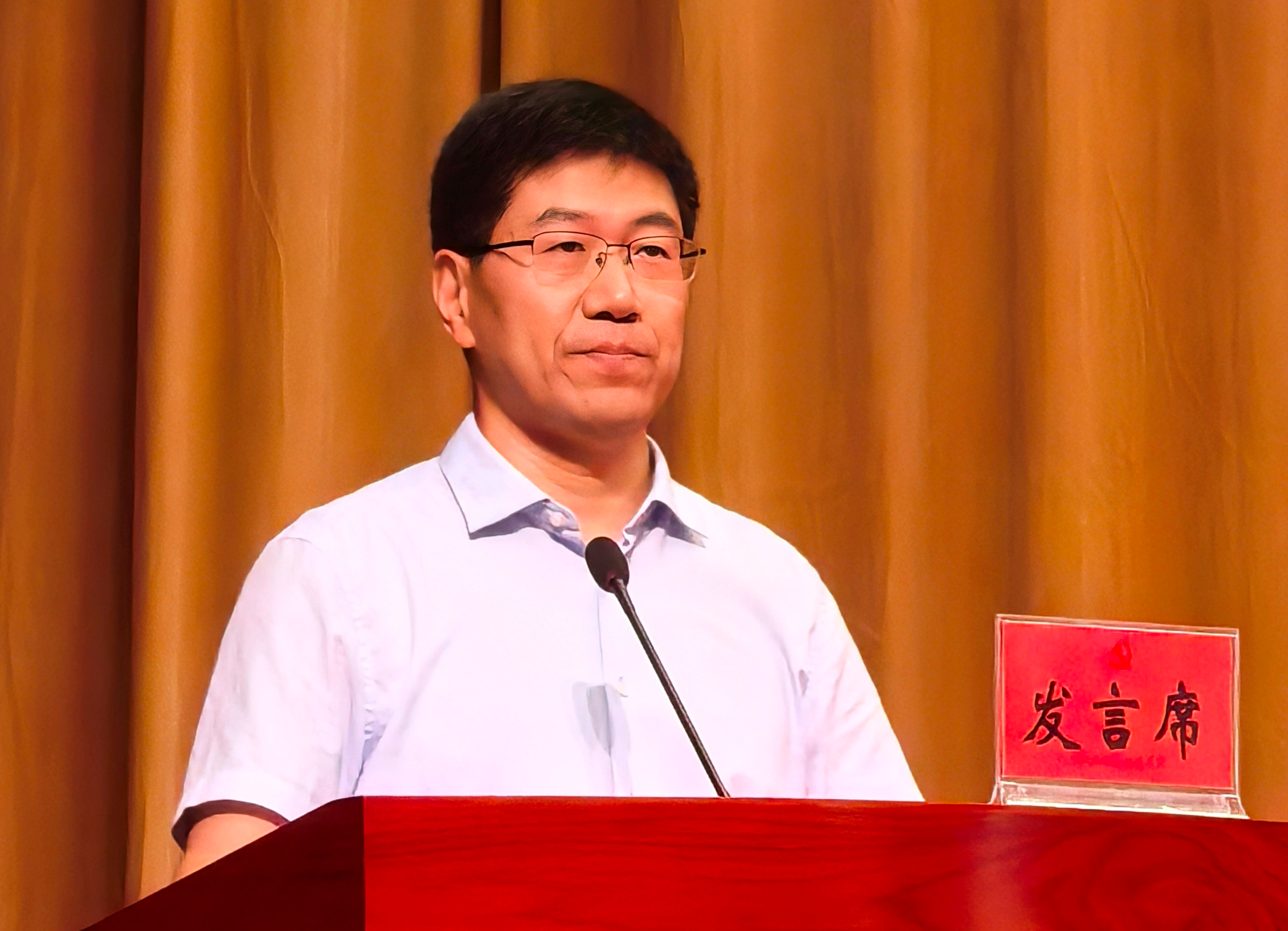
上海市生态环境局局长晏波日前在《2025上海民生访谈》节目中说,要建设"亲绿、滨水、田园、生 境"四类生态空间,为市民创造可亲可近的美丽上海。 晏波介绍,上海正推进外环绿带和五个新城绿环建设。预计今年底将建成105公里外环绿道、50座环上 公园及40座驿站。 作为河网密布的城市,在滨水空间打造上,上海市4.6万多条(个)河湖、超3万公里河道水质持续改 善。徐汇区蒲汇塘从"臭河浜"变身"田林小滨江",黄浦江、苏州河"一江一河"累计贯通超100公里,浦 东新区陆家嘴水环形成12.5公里慢行亲水空间,青浦区与江苏省吴江区共建的元荡湿地成为长三角生态 共治典范……2024年,镇管以上河湖断面优Ⅲ类比例达90.0%,较2020年上升21.3个百分点。首批21条 (个)美丽幸福河湖名单公布。 "美丽的乡村田园既是村民的幸福家园,也是城里人的'诗和远方'。"晏波说。上海郊野乡村面积占全市 超60%,全市95%以上行政村完成了环境整治,建成了339个市级美丽乡村示范村和149个乡村振兴示范 村。晏波表示,目前,上海的乡村正从"干净整洁有序"向"生态美丽宜居"蝶变,成为承载乡愁的生态空 间。 在社区层面,生境花园作为超大城市生 ...
补短板、提能力、求实效,福建南安加快建立现代化生态环境监测体系
Zhong Guo Huan Jing Bao· 2025-04-28 03:05
Core Viewpoint - The Nanan Environmental Monitoring Station in Quanzhou, Fujian Province, has significantly enhanced its ecological environment monitoring capabilities, contributing to the high-quality development of Nanan [1] Group 1: Strengthening Monitoring Capabilities - The station integrates political theory and business knowledge into its operations, aiming for a dual improvement in grassroots party building and monitoring business capabilities [4] - It actively participates in the site selection and construction of automatic monitoring stations for water quality, enhancing real-time monitoring and early warning capabilities for water pollution incidents [4] Group 2: Infrastructure and Equipment Investment - The station has secured over 15 million yuan in funding for hardware improvements, acquiring 135 sets of conventional monitoring equipment and 20 emergency monitoring devices, covering various environmental aspects [5] - The monitoring capabilities now include 72 project/parameter categories and 101 methods, addressing key industries and major environmental risks [5] Group 3: Talent Development and Data Quality Management - The station collaborates with South China Normal University to enhance technical exchanges in water pollution prevention and intelligent monitoring technologies [5] - A quality improvement plan for monitoring capabilities has been implemented, ensuring the accuracy and completeness of monitoring data through various assessment methods [5]