Zhong Guo Huan Jing Bao

Search documents
陕西生态环境质量持续向好
Zhong Guo Huan Jing Bao· 2025-04-01 01:22
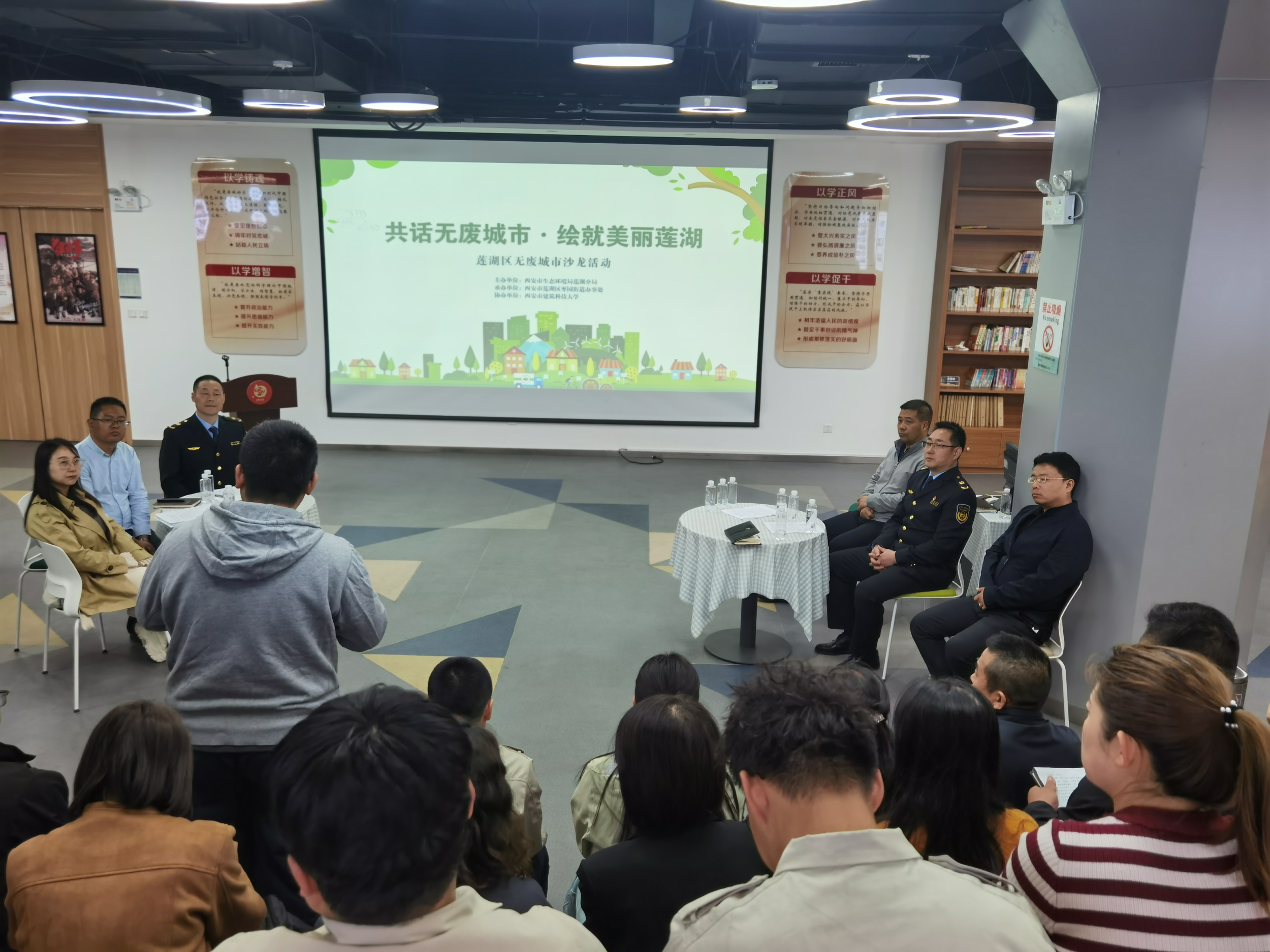
守好三个生态屏障 陕西省始终牢记"国之大 者",持续筑牢秦岭区域、黄河流 域、南水北调中线工程水源地"三 大屏障"。 当好秦岭卫士。加强秦岭地 区跨区域生态保护协同合作,健 全常态长效保护机制,开展秦岭 生态环境保护督导执法检查,秦 岭陕西段生态质量指数达到"一 类"最高类别,秦岭区域12个县 (区)被评为国家生态文明建设示 范区。 守好黄河母亲河。持续实施 黄河生态保护治理攻坚行动,签 订黄河流域(音陕蒙段)横向生态 补偿协议,开展黄河流域生态环 境监督执法,实施"一市一策"驻 点科技帮扶,黄河流域26处地级 以上城市黑臭水体保持"长治久 清",黄河干流陕西段连续三年保 持Ⅱ类水质。 责编:徐小雪 电话:(010)67139791 传真:(010)67139791 E-mail:dfxcb@vip.sina.com 陕西生态环境质量持 2024年.优良天数同比增加11.7天,【类一Ⅲ类水质断面比例达96.5 ◆肖颖 普毛毛 陕西省政府日前召开新闻发 布会,发布2024年全省生态环境 质量状况。2024年,陕西省以建 设美丽陕西为目标,统筹推进"三 大屏障"建设,2024年生态环境 质量持续向好。 最新数据显 ...

独家专访黄河流域局局长范治晖:让沿黄各地“攥指成拳”
Zhong Guo Huan Jing Bao· 2025-04-01 00:39
4月1日是《中华人民共和国黄河保护法》(以下简称《黄河保护法》)施行两周年。 自从黄河流域生态保护和高质量发展上升为国家战略,"协同""系统""整体"这些词被反复强调,统筹协调的重要性不言而喻。 作为黄河流域生态环境监督管理机构,我们首先要想方设法抓落实。 《黄河保护法》的正式施行,为构建完善黄河流域生态大保护大协同格局提供了法治保障。一直以来,如何实现协同治理,既是国家战略部署反复强调 攻坚的重点,也是《黄河保护法》着力推动解决的问题,更是黄河流域生态保护工作始终在探索的关键命题。 可喜的是,探索有了新的进展和成果。2024年5月,生态环境部黄河流域生态环境监督管理局(以下简称黄河流域局)联合9省区共同发布《关于印发< 黄河流域生态环境监督管理协调机制>的通知》,标志着黄河流域生态环境监督管理协调机制(以下简称协调机制)正式实施。 最新数据显示,协调机制运行以来,共发现黄河流域突出生态环境问题286个,整改完成率达83.92%,沿黄9省区从"各自为战"到"攥指成拳"……这是落 实《黄河保护法》,把纸面条文转化为行动力的鲜活实践。 在《黄河保护法》施行两周年之际,记者走进协调机制的牵头制定单位——黄河流域局, ...
创新!让科技更好赋能生态环境保护,地方要这样发力
Zhong Guo Huan Jing Bao· 2025-04-01 00:18
在方向布局上发力,差异化确定科技创新重点和布局。不同地区的自然禀赋、发展阶段、产业结构、科 教资源等存在较大差异,面临的突出生态环境问题也不同,生态环境领域的研究基础、要素投入等不均 衡。地方在生态环境领域的科技创新中,应避免追求"大而全"的布局,充分结合本地生态环境领域的科 技创新需求和优势。着重结合当前紧迫需求和未来产业规划,加强"AI+环保"等先导性、基础性、战略 性布局,着力培育一批高能级绿色低碳平台,统筹推进基础研究、应用研究和技术开发,实现精准发 力。 在资金投入上发力,加大研发资金投入和项目支持。既要积极争取并充分利用国家科技资金支持,同时 主动参与生态环保重点研发项目;又要通过各地区,尤其是省级科技计划资金、自然科学基金、社会科 学基金等,加大生态环境领域科技创新的投入,稳定对重点领域的投入,加大多污染物协同减排、新污 染物治理、温室气体减排、新型固废高值化利用等领域的研究投入。加强有组织项目的提炼和布局研 究,主动攻克地方急需解决的科学问题。引导社会资金有序投入,探索发展耐心资本,投入起步较晚、 研发周期较长的绿色低碳科技创新领域,产出一批硬科技和"拳头"技术装备。 在转化应用上发力,以创新 ...
多行业协同释放碳交易市场新活力|全国碳排放权交易市场扩围系列解读③
Zhong Guo Huan Jing Bao· 2025-03-31 23:40
二是彰显市场机制减排价值实现能力,释放产业链减排协同势能。《方案》在进一步压实行业减排责任 的同时,也为更多行业企业主体提供了减排价值实现的市场化工具,为企业的低碳转型和减排努力提供 直接的经济回报,激励主动减排,为实现全社会碳减排目标提供内生动力。依托新扩围行业价格成本传 导能力,进一步扩大碳市场影响力,将碳价信号沿供应链逐级传递,带动上下游行业深挖减排潜力,形 成减污降碳协同效应,推动经济绿色转型行稳致远。 近日,生态环境部发布《全国碳排放权交易市场覆盖钢铁、水泥、铝冶炼行业工作方案》(以下简称 《方案》),标志着全国碳排放权交易市场首次扩围正式启动。此次扩围是推动碳市场建设迈向更广覆 盖、更深影响的关键一步,将进一步扩大市场规模、提升市场活力,为更多行业绿色低碳转型注入动 力,同时也为实现"双碳"目标提供更加坚实的市场化机制支撑。 《方案》赋能全国碳排放权交易深化发展 我国政府高度重视全国碳市场建设,近年来在一系列重大会议和重要政策文件中就全国碳市场扩围工作 作出重要部署,提出要"建成更加有效、更有活力、更具国际影响力的碳市场"。2025年政府工作报告明 确指出要"扩大全国碳排放权交易市场行业覆盖范围" ...
民间河长如何激活河湖治理新动能?
Zhong Guo Huan Jing Bao· 2025-03-31 03:26
Core Viewpoint - The article emphasizes the need for a comprehensive ecological environment governance system for major river basins, highlighting the significance of the River Chief System, which has shown remarkable results since its implementation in 2016. The focus is shifting from emergency remediation to long-term governance and from engineering construction to meticulous management, with a particular emphasis on the role of grassroots river chiefs [1]. Group 1: Organizational System - The article suggests enhancing the organizational system by incorporating local residents and social organizations into the grassroots river chief framework to address the growing needs for water environment governance. This approach aims to consolidate dispersed grassroots efforts, supplement government capabilities, and foster a collaborative governance model [1]. Group 2: Strengthening Party Leadership - It is recommended to leverage the leadership role of party organizations in the implementation of the River Chief System. Establishing party organizations within grassroots river chief associations can facilitate collaboration between local party committees and river management offices, while also encouraging more community involvement through the example set by party member river chiefs [2]. Group 3: Promoting Digital Governance - The article highlights the importance of modern information technologies such as cloud computing, big data, and artificial intelligence in enhancing the intelligence of water environment governance. The development of mobile governance platforms, like the "Green Water Coin" app in Zhejiang Province, is crucial for enabling grassroots river chiefs to access real-time river information and participate in governance activities [2]. Group 4: Institutional Safeguards - To ensure the sustained and effective participation of grassroots river chiefs, a comprehensive institutional framework is necessary. This includes establishing management guidelines, training and assessment mechanisms, regular communication between administrative and grassroots river chiefs, and incentive systems to enhance motivation and recognition among grassroots participants [3].
以水为脉向“美”而行 供港之水“深”生不息——深圳市罗湖区全力打造超大城市中心城区水源地绿色发展典范
Zhong Guo Huan Jing Bao· 2025-03-31 01:46
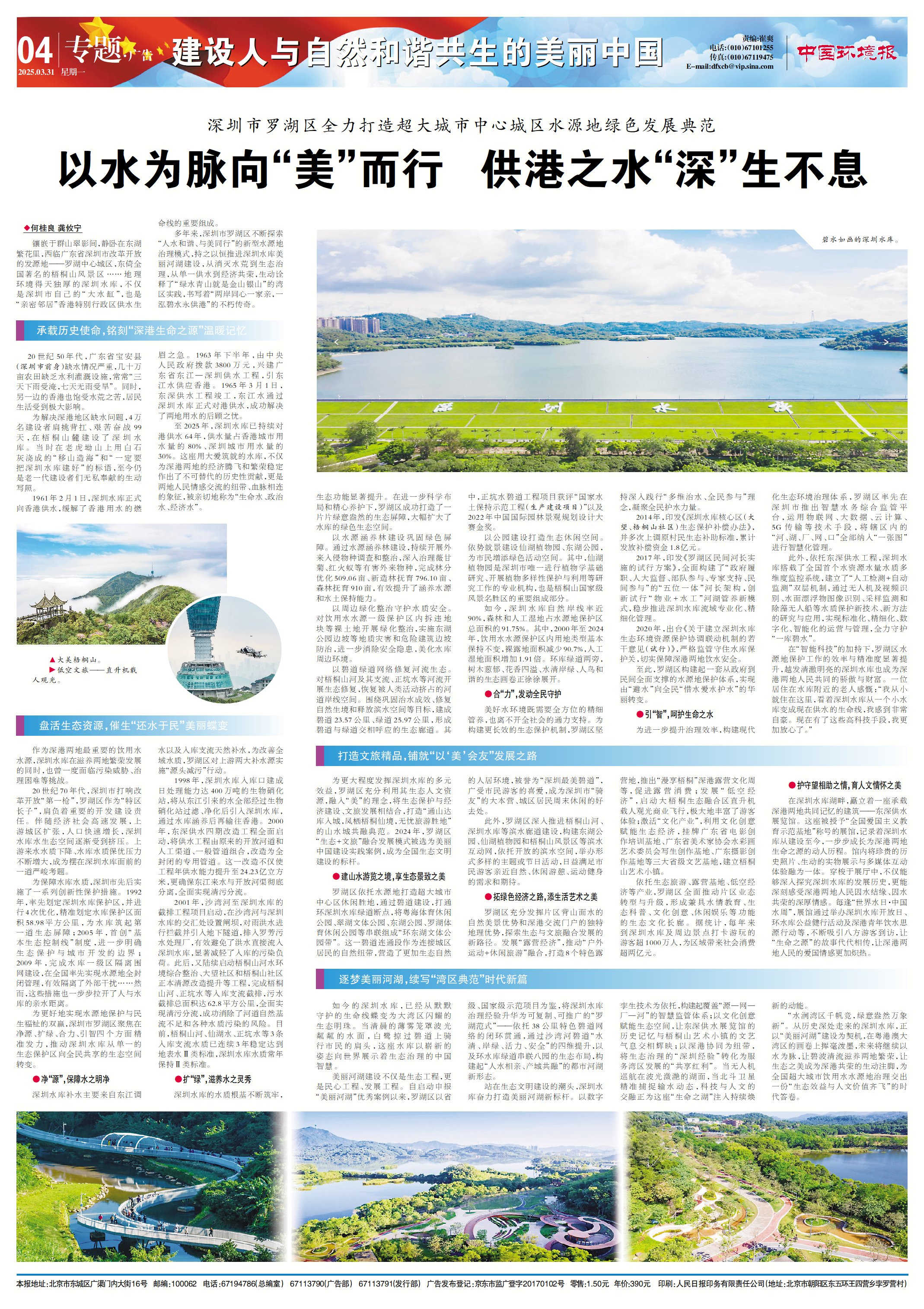
Core Viewpoint - The Shenzhen Water Reservoir serves as a vital water source for both Shenzhen and Hong Kong, embodying the concept of harmonious coexistence between humans and nature while promoting ecological and economic prosperity [1][3][15]. Group 1: Historical Context - The Shenzhen Water Reservoir was constructed in the 1950s to address severe water shortages in both Shenzhen and Hong Kong, with 40,000 builders working tirelessly for 99 days to complete it [2][18]. - Since its official supply to Hong Kong began on February 1, 1961, the reservoir has become crucial, providing 80% of Hong Kong's urban water supply and 30% of Shenzhen's [3][18]. Group 2: Ecological and Environmental Initiatives - The reservoir has undergone significant ecological improvements, including the establishment of a green ecological barrier and the implementation of measures to combat invasive species [6][23]. - Various projects have been initiated to enhance water quality, including the construction of a biological nitrification station and the transformation of water supply systems to ensure clean water delivery [21][22]. Group 3: Community and Economic Development - The integration of ecological protection with community welfare has led to the transformation of the reservoir from a mere ecological protection zone to a shared ecological space for the public [20][27]. - The development of recreational areas and cultural tourism around the reservoir has attracted over 10 million visitors annually, generating significant social consumption [33][34]. Group 4: Technological Advancements - The introduction of smart water management systems utilizing IoT, big data, and 5G technology has improved the efficiency and precision of ecological governance [28][36]. - The establishment of a multi-dimensional monitoring system for water resources has enhanced the protection of water quality and the overall management of the reservoir [28][36]. Group 5: Future Vision - The Shenzhen Water Reservoir aims to set a benchmark for ecological civilization construction, promoting a model that combines ecological benefits with cultural values [36][37]. - The ongoing efforts to enhance the reservoir's ecological and cultural significance are expected to contribute to the prosperity of both Shenzhen and Hong Kong, reinforcing their interconnectedness [37].
下降5.4%,江苏宿迁以“444工作法”提升信访质效
Zhong Guo Huan Jing Bao· 2025-03-31 01:44
"四个不可"严核查,筑牢问题处置"铁规红线"。一是不可先入为主臆断。针对举报线索,仔细分析,认 真处理,坚决避免主观介入、先入为主。二是不可走马观花调查。对涉及废气、废水、噪声等举报,均 组织开展监督性监测,以监测数据为依据,用监测事实取信于民。三是不可证据材料疲软。对于每件信 访件的调查核实,严格按照相关工作要求,做到过程留痕、全程可溯,依法依规、严肃查处。四是不可 模棱两可答复。坚持以"沟通解释要耐心、排忧解难要真心、处理问题不偏心"做好信访回复,以现场调 查核实情况为基础,实事求是、有一说一。 "四项举措"强保障,构建矛盾化解"全周期闭环"。一是聚焦源头治理。制订《生态环境领域"深化源头 治理 化解信访矛盾"专项工作方案》,建立"三张清单"机制,定期排查梳理,落实源头治理。二是上下 联动推进。持续组织开展领导带案下访工作,深入推动重复环境信访攻坚,化解环境信访矛盾,2024年 全市累计带案下访40余批次,解决了一批重点难点问题。三是开展专项检查。紧紧围绕群众反映强烈的 环境信访问题,开展"靶向性""点穴式"专项执法检查,严查恶意违法行为,持续保持执法高压态势, 2024年全市共开展执法检查12批次,发现 ...
如何打造美丽中国建设的“丽水样板”?|深化生态文明体制改革推进美丽中国建设⑥
Zhong Guo Huan Jing Bao· 2025-03-31 00:14
Core Viewpoint - Lishui is actively pursuing high-level ecological civilization construction and high-quality green development, aiming to create a "Lishui model" for beautiful China construction, guided by the principle that "lucid waters and lush mountains are invaluable assets" [1] Group 1: Ecological Protection and Governance - Lishui is a core area of the Yangtze River Delta ecological security barrier and has implemented a series of ecological governance reforms, establishing a comprehensive ecological environment regulatory framework with nearly 40 policy documents [2] - The city has significantly improved its ecological environment quality, ranking ninth in air quality and fourth in water quality among 168 key cities in China by 2024 [2] Group 2: Ecological Restoration and Innovative Projects - Lishui has initiated integrated protection and restoration projects in the Oujiang River source area, with notable projects recognized by international organizations, such as the "United Nations Decade on Ecosystem Restoration" [3] - The city is transforming abandoned mining sites into cultural tourism attractions, promoting a sustainable development model [3] Group 3: Economic Development and Ecological Integration - Lishui has developed a unique high-quality green development path by integrating ecological products into the economy, focusing on industries like ecological agriculture, health medicine, and cultural tourism [4] - The city aims to create a hundred-billion-level characteristic industrial cluster by enhancing the value chain of its advantageous industries [4] Group 4: Green Initiatives and Community Engagement - Lishui promotes green consumption and lifestyle choices, implementing initiatives like "waste-free cities" and exploring various ecological development paths [5] - The city is enhancing its cultural influence through international events and promoting eco-friendly tourism and agricultural practices [5] Group 5: Biodiversity and Environmental Monitoring - Lishui is establishing a comprehensive biodiversity monitoring system and has been recognized as a "charming city" by the United Nations for its biodiversity efforts [8] - The city plans to further develop its biodiversity index evaluation system and enhance protective measures for ecosystems [8] Group 6: Future Directions and Goals - Lishui will continue to deepen ecological civilization reforms, advance the construction of beautiful gardens, and enhance the ecological economy to contribute to the broader goals of beautiful China [8]
全面推进水泥、铝冶炼、钢铁行业碳排放数据高质量管理|全国碳排放权交易市场扩围系列解读②
Zhong Guo Huan Jing Bao· 2025-03-30 23:30
稳步推进并全面加强新行业数据质量管理 全国碳排放权交易市场是推动实现碳达峰碳中和目标的重要政策工具,高质量碳排放数据是市场有效运 行、切实发挥减排作用的根基。2024年9月起,生态环境部相继印发了水泥、铝冶炼、钢铁行业(以下 简称三行业)温室气体排放核算报告指南及核查技术指南,为全国碳排放权交易市场扩大行业覆盖范围 工作提供了数据质量管理制度和技术支撑。近日,又印发了《全国碳排放权交易市场覆盖钢铁、水泥、 铝冶炼行业工作方案》,标志着三行业正式纳入全国碳排放权交易市场,对我国构建完善碳排放统计核 算体系和健全碳排放权交易制度、推动绿色低碳发展和实现"双碳"目标具有重要意义。 高质量碳排放数据是我国实现"双碳"目标的基础支撑 以高质量数据为核心要素,助力碳达峰碳中和相关政策落地和目标实现。真实、完整、准确的碳排放数 据是碳排放交易体系的关键要素。经初步统计,作为传统高耗能、高排放行业,钢铁、水泥和铝冶炼行 业年温室气体排放量超过2.6万吨的企业约1500家,年温室气体排放量约30亿吨,此前已连续多年开展 年度碳排放报告及核查工作。三行业纳入全国碳排放权交易市场后,市场管控的重点排放单位数量将增 至4000家左右 ...
西安莲湖各界共话无废城市建设
Zhong Guo Huan Jing Bao· 2025-03-29 10:34
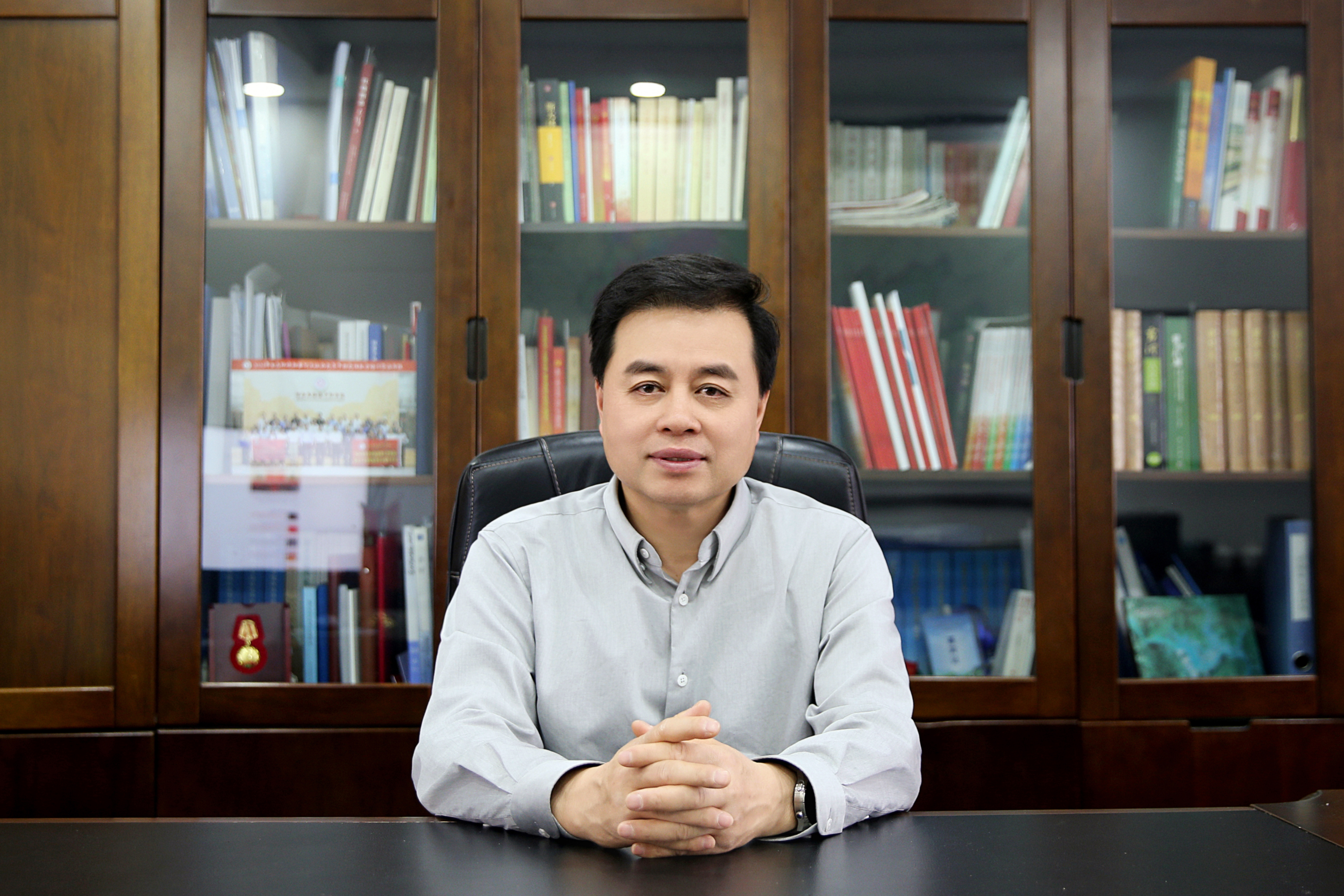
陕西省西安市生态环境局莲湖分局近日联合莲湖区枣园街道办事处以及西安建筑科技大学,开展了"共话无废城市 绘就美丽莲湖"主题沙龙活动,通过 交流与互动,进一步推动"无废城市"建设理念深入人心。 当天参与活动的嘉宾,既有专家学者,也有企业代表,既有深耕基层的社区工作者,也有普通群众,大家虽视角不同,但都怀揣着共同的美好愿景:让 我们的城市天更蓝、水更清、环境更优美。 来自西安建筑科技大学的王宝教授以"建设无废城市 共享美好环境"为题目,向大家深入讲解"无废城市"建设的理论知识与实践经验。随后,枣园街 办、红庙坡街办等基层工作者介绍了各自在"无废城市"建设方面的亮点;嘉宾们回答了现场群众的提问。 据了解,莲湖区各街道社区向居民普及"无废城市"理念和垃圾分类知识,进一步完善社区垃圾分类设施配备。加强对辖区内各类废弃物产生和处理的日 常监管,建立常态化巡查制度,及时发现并解决废弃物乱堆乱放、违规排放等问题。充分整合辖区内的各类资源,共同推动"无废城市"建设在基层落地生 根。通过垃圾分类、资源回收和污染治理,逐步构建起 "无废细胞" 的雏形,以 "试点带动、综合执法、宣传引导" 为抓手,推动无废社区、无废小区的创 建。 自 ...