
Zhong Guo Huan Jing Bao

Search documents
内蒙古自治区主席包钢主持召开政府常务会议 创建美丽中国先行区和国家生态文明试验区
Zhong Guo Huan Jing Bao· 2025-11-13 03:52
Group 1 - The Inner Mongolia Autonomous Region is focusing on high-quality development and modernizing its economy, emphasizing the urgency of planning for the 14th Five-Year Plan and next year's work [1] - The government aims to enhance high-level openness and promote the construction of a free trade zone, while also improving the capabilities of comprehensive bonded zones [1] - There is a strong emphasis on protecting and utilizing cultural heritage, as well as advancing ecological initiatives such as the "Three North" project and creating a national ecological civilization pilot zone [1] Group 2 - The region plans to strengthen modern agriculture and animal husbandry, focusing on brand cultivation and the revitalization of the dairy and seed industries [2] - There is a push for deep integration of technological and industrial innovation, including the establishment of a national-level innovation platform and a green computing power demonstration zone [2] - The government aims to leverage its energy industry advantages, promote renewable energy development, and enhance the coal chemical industry chain [2] - Infrastructure improvements are prioritized, including high-speed rail, highways, and civil aviation, to reduce logistics costs and develop a hub economy [2] - The government is committed to reforming state-owned enterprises and ensuring social stability through enhanced basic livelihood guarantees and risk prevention measures [2]
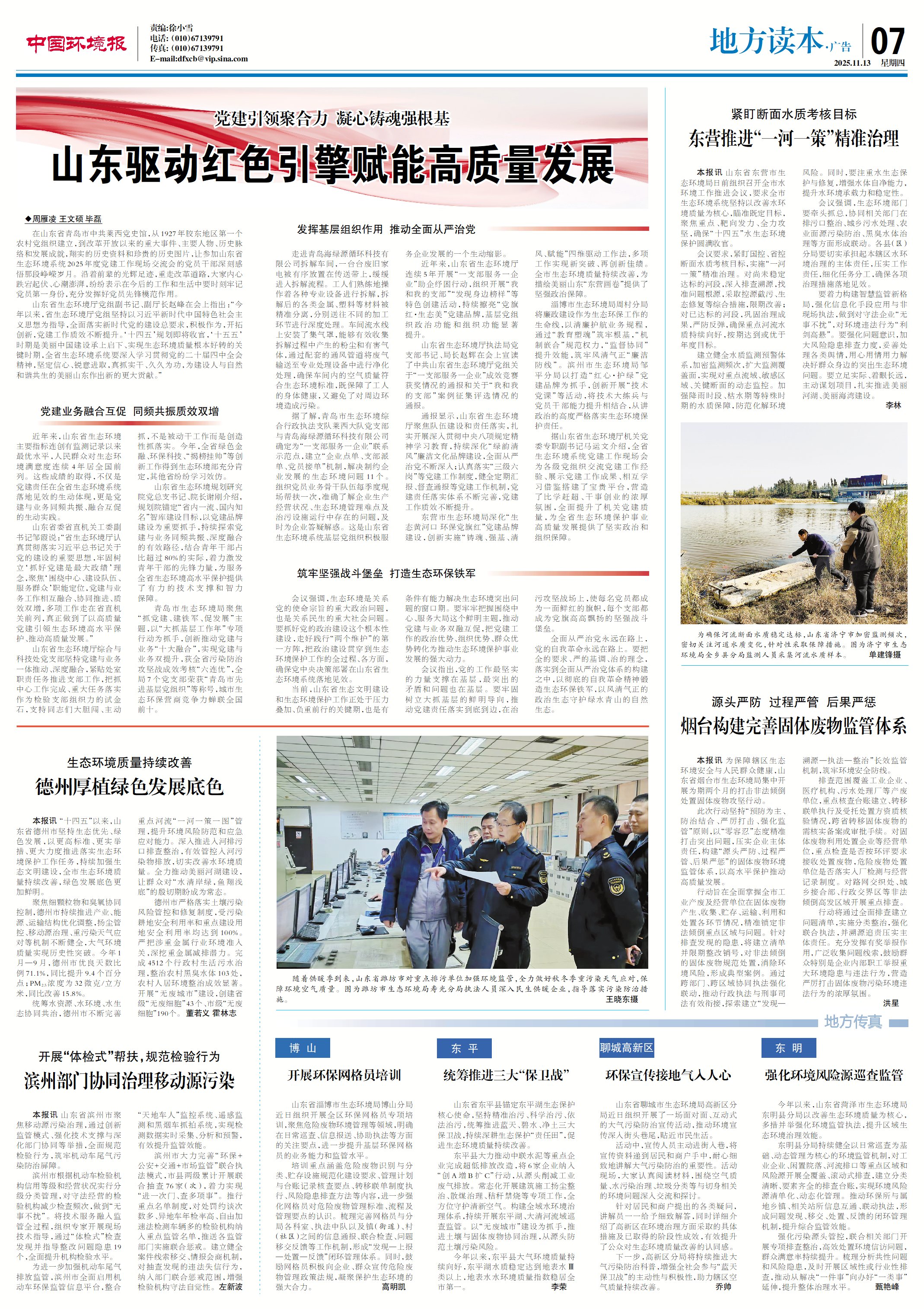
山东驱动红色引擎赋能高质量发展
Zhong Guo Huan Jing Bao· 2025-11-13 01:44
Core Viewpoint - The article emphasizes the integration of party building and business operations within the ecological environment system in Shandong Province, highlighting the achievements in ecological protection and the importance of leadership in driving these initiatives forward [2][3][14]. Group 1: Party Building and Business Integration - The Shandong Provincial Ecological Environment Department has achieved record-high levels in key ecological indicators, with public satisfaction regarding the ecological environment ranking among the top in the nation for four consecutive years [2][14]. - The department's leadership has focused on the idea that "good party building is the greatest political achievement," ensuring that party building and business operations are mutually reinforcing and enhancing overall effectiveness [3][14]. - The integration of party building with business operations has led to innovative practices in green finance and environmental technology, which have been recognized by the Ministry of Ecology and Environment [3][14]. Group 2: Grassroots Initiatives and Community Engagement - The Qingdao Ecological Environment Bureau has implemented a "one branch serves one enterprise" model, establishing a mechanism to address ecological issues faced by local businesses, resulting in the resolution of 11 environmental problems [5][16]. - The department has conducted a five-year initiative to support enterprises, enhancing the political and organizational functions of grassroots party organizations [17]. - Training programs for environmental grid workers have been organized to improve their capabilities in managing hazardous waste and ensuring compliance with environmental standards [12][18]. Group 3: Achievements in Ecological Protection - The city of Dezhou has reported a 71.1% rate of good air quality days from January to September, an increase of 9.4 percentage points year-on-year, with PM2.5 concentration improving by 15.8% [7][8]. - The implementation of strict soil pollution risk control measures has resulted in a 100% safety utilization rate for contaminated farmland and key construction sites [8]. - The city of Binzhou has enhanced its vehicle emission monitoring through a comprehensive regulatory framework, improving the efficiency of inspections and compliance [9].

以纪检监督赋能生态环境行政执法规范化建设
Zhong Guo Huan Jing Bao· 2025-11-12 23:30
Core Viewpoint - The article emphasizes the importance of standardized ecological and environmental administrative law enforcement as a crucial means to combat pollution and improve ecological quality, highlighting the need for effective collaboration between disciplinary supervision and administrative law enforcement [1] Group 1: Improvement of Supervision Mechanism - The traditional disciplinary supervision in ecological and environmental law enforcement focuses on accountability for ecological issues, which limits its effectiveness in preventing non-compliance from the source [2] - A full-cycle closed-loop supervision mechanism is proposed, encompassing "prevention before action, control during action, and rectification after action" to enhance the normative and effective nature of law enforcement [2] - Key risk points in the law enforcement process will be identified, with clear responsibilities and timelines established for prevention, control, and rectification [2] Group 2: Reconstruction of Governance Logic - The article advocates for a dual empowerment system that combines supervision with incentives to motivate law enforcement personnel while ensuring compliance [3] - A differentiated management mechanism will be established to allow for tolerance of minor procedural flaws in exploratory law enforcement, preventing excessive accountability that may deter action [3] - The focus will be on transforming problem rectification into institutional improvement, ensuring that lessons learned from enforcement cases lead to broader regulatory enhancements [3] Group 3: Strengthening Education Models - A dual education model combining positive guidance and warning education is recommended, utilizing typical cases to educate law enforcement personnel and reinforce discipline [4] - Regular warning education mechanisms will be established to promote learning from local cases, while exemplary practices will be highlighted to encourage adherence to regulations [4] Group 4: Targeted Supervision in Key Areas - The article stresses the need to focus on high-risk areas and key links in ecological and environmental law enforcement, moving away from a generalized approach to targeted supervision [5] - Special supervision teams will be formed to address high-risk areas such as hazardous waste disposal and heavy metal pollution control, ensuring focused oversight [5] Group 5: Risk Prevention in Key Positions - Establishing dynamic risk profiles for key law enforcement positions will help monitor and mitigate risks associated with long-term assignments [6] - Regular discussions and specialized warning education will be conducted for personnel in critical roles to maintain vigilance against corruption [6] - Concentrated rectification efforts will be directed at prominent issues such as excessive enforcement and power rent-seeking, with clear channels for public reporting established [6]
“生态包袱”为何能华丽变身为“绿色财富”?
Zhong Guo Huan Jing Bao· 2025-11-12 06:49
Core Insights - Beijing's municipal parks have transformed previously viewed "ecological burdens" of fallen leaves and branches into "green wealth" through a resource recycling system, achieving a 20% year-on-year increase in the utilization of green waste [1] Group 1: Resource Utilization - The construction of a green waste recycling system in Beijing parks has allowed for the conversion of fallen branches and leaves into soil conditioners, artistic landscaping materials, and insect habitats [1] - Innovative technologies are the driving force behind the high-value utilization of green waste, with the city converting 20,000 cubic meters of green waste into 4,000 cubic meters of organic substrate annually, saving over one million yuan [1] Group 2: Social Engineering - The resource utilization of green waste is not only a technical issue but also a social engineering project that closely relates to people's livelihoods [1] - Examples include the creation of a "machine dog" flower pot from waste wood at Yuyuantan Park and benches made from cut-down poplar branches at Zhongshan Park, showcasing the artistic transformation of waste [1] Group 3: Community Engagement - Beijing is actively promoting a collaborative governance model for green waste management, including initiatives like the "Golden Ideas" campaign to encourage public participation [1] - The involvement of students in design projects highlights the integration of youthful creativity in transforming waste into green art [1] Group 4: Future Implications - The practices in Beijing suggest that advancing the resource utilization of green waste requires a spirit of exploration and tailored approaches, marking significant steps towards a green and low-carbon future [2]
生活垃圾治理需要从硬件建设向文化引领深化
Zhong Guo Huan Jing Bao· 2025-11-12 05:44
Group 1 - The core viewpoint emphasizes the need for ecological culture to lead waste management efforts in China, moving from hardware construction to cultural guidance [1][2][3] - Significant achievements have been made in waste management, with the "garbage siege" phenomenon largely eliminated, resulting in cleaner urban environments [1] - Current challenges include over-reliance on incineration and transfer stations, low public participation, and difficulties in forming waste classification habits [1] Group 2 - Promoting source reduction requires the value guidance of ecological culture, with opportunities arising from events like the "Double Eleven" shopping festival to advocate for resource utilization [2] - Various channels such as education, community outreach, and new media should be utilized to spread knowledge about waste classification and ecological concepts [2] - Innovative waste collection models, such as the "garbage does not touch the ground" approach, have shown positive results but require strong support from ecological culture for sustainability [2] Group 3 - Long-term governance in waste management necessitates institutional support for ecological culture, requiring collaboration among government, enterprises, and communities [3] - The government should focus on green transformation and management rather than solely on construction achievements [3] - The goal is to shift waste classification from a requirement to a habit, fostering active participation in waste management [3]
全面禁止捡拾落叶值得商榷
Zhong Guo Huan Jing Bao· 2025-11-12 03:09
深秋时节,枫叶正红,吸引了不少游客驻足欣赏。不少人想捡拾几片落叶作为纪念,却听到景区反复提 醒:"禁止采摘枫叶、手持枫叶,捡的也不行。"在笔者看来,尽管这样的规定初衷在于保护枫树资源, 但其"一刀切"的管理方式值得商榷。 枫叶之美,早已不仅是自然的馈赠,更是文化情感的载体。杜牧那句"停车坐爱枫林晚,霜叶红于二月 花",便生动写出了枫叶在中国传统文化中的地位。而如今,包括本溪枫叶节在内,各地以枫叶为主题 的节庆活动,更让这份秋色焕发出时代新意。 作为自然保护工作者,笔者始终认为,生态保护的重点应落在更关键的环节,例如,合理规划枫树资源 的开发、推动景区设施生态化改造、加强生态环境理念的传播等。对于游客捡拾落叶的行为,景区可以 不主动提倡,但不必明令禁止。与此同时,不妨考虑推出以枫叶为元素的纪念品或文创产品,既满足游 客"带走一片秋色"的愿望,也减少对自然落叶的随意捡拾。 在枫叶文化底蕴深厚的景区,需要在欣赏与保护之间找到平衡点。唯有如此,每一片飘落的枫叶,才能 不仅装点秋意,更成为人与自然和谐相处的动人见证。 那么,全面禁止捡拾落叶是否确有必要?笔者认为值得商榷。枫叶在变红后自然凋落,本是一种可再生 资源。一棵 ...
从技术深耕到公益播种:台达的绿色公益实践
Zhong Guo Huan Jing Bao· 2025-11-12 02:30
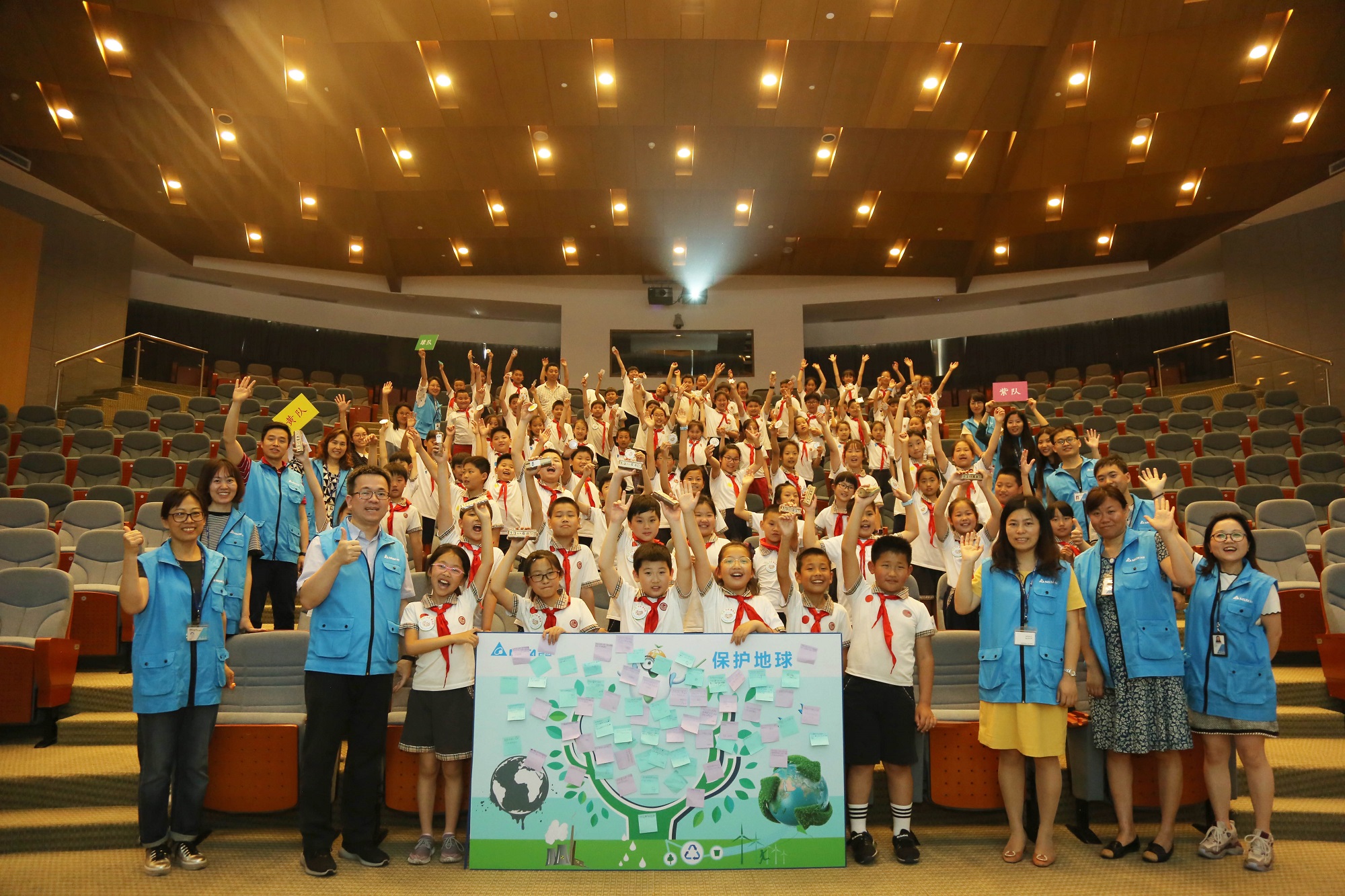
台达集团自1971年成立以来,始终以"环保 节能 爱地球"为经营使命,在公益领域深耕二十余年。 10月25日,"2025中达环境法论坛"在西安西北大学举办。台达中国公益事务部总监陈奕祥向中国环境全面介绍了台达以技术赋能公益、用长期行动传递可持 续发展理念的生动实践。 中国环境:聚焦环境领域,台达做了哪些公益实践? 陈奕祥:首先是和本次活动相关的关于环境法学科发展的资助。我们有一个项目是"中达环境法学教育促进计划"。自2005年起,台达陆续资助8所重点高校 发展环境资源与能源法学科,奖励具有突出成绩和创新思维的教学和研究人才,并于2011年起先后设立"中达环境法学者计划"和"中达环境法学教育促进计 台达中国公益事务部总监陈奕祥(左二)与台达志愿者在公司为当地学生开展能源教育, 孩子们参观后,在环保树上粘贴了爱护环境宣言 划"。通过与清华大学、北京大学、中国人民大学、中国政法大学、武汉大学、中南财经政法大学、上海交通大学以及郑州大学8 所重点高校的合作,推动 高校环境法相关学科的学术交流和人才培养,助力环境法治建设的发展。 此外还持续举办"台达杯国际太阳能建筑设计竞赛"(以下简称台达杯竞赛)。台达最早于2006年 ...
构建多元科普体系 助力美丽中国建设——深圳环科院新污染物治理科普实践探索
Zhong Guo Huan Jing Bao· 2025-11-12 01:05
Core Viewpoint - The article emphasizes the transition of ecological environment protection in China from addressing visible pollution issues to managing new pollutants, which are less perceptible but pose long-term risks. This shift is essential for achieving the "Beautiful China" goal and requires a robust scientific outreach and innovation strategy [1]. Group 1: New Pollutants and Public Awareness - New pollutants include persistent organic pollutants, endocrine disruptors, antibiotics, and microplastics, characterized by strong biological toxicity and environmental persistence. Public awareness is low, with about 80% of respondents unaware of perfluorinated compounds and 60% underestimating the pollution risks of daily chemicals [2]. - The Shenzhen Environmental Science Research Institute (Shenzhen ESI) has developed a strategy focusing on "cognitive enlightenment—behavior guidance—co-governance participation" to enhance public understanding and involvement in new pollutant management [2]. Group 2: Innovative Communication Strategies - Shenzhen ESI has implemented three innovative strategies: modular content, scenario-based formats, and targeted communication. This includes breaking down complex knowledge into relatable themes, utilizing online and offline platforms for engagement, and customizing content for different audiences such as businesses, schools, and communities [2]. - The institute has created engaging IP characters like "New Xiao Wei" and the "Four Families of New Pollutants" to simplify complex scientific concepts and enhance public engagement [4]. Group 3: Multimedia and Educational Initiatives - The "Unveiling New Pollutants" video series, produced in collaboration with the National Key Laboratory of Environmental Benchmarking and Risk Assessment, has gained significant traction, with over one million views and multiple awards for its educational impact [5]. - Various educational activities have been organized for different age groups, including lectures for government and universities, training for businesses, and interactive events for students, fostering a culture of participation in environmental protection [6]. Group 4: Achievements and Future Directions - Shenzhen ESI has established a comprehensive science popularization system that has reached over one million people, significantly enhancing public awareness and willingness to act on new pollutants [8]. - The institute plans to continue expanding its efforts in scientific innovation and public education, aiming to create a collaborative governance model involving government, enterprises, and the public for effective new pollutant management [8].

“十五五”时期,安徽生态环境保护重点在哪里?
Zhong Guo Huan Jing Bao· 2025-11-12 00:31
Core Points - The 20th Central Committee's Fourth Plenary Session outlines China's development blueprint for the next five years, providing fundamental guidance for Anhui Province's "14th Five-Year" ecological environment protection planning [1] - During the "14th Five-Year" period, Anhui Province has made significant progress in ecological environment protection, with PM2.5 average concentration expected to be 35.2 micrograms per cubic meter in 2024, a 9.7% decrease from 2020 [2] - The "15th Five-Year" period is crucial for the construction of a beautiful China and for achieving fundamental improvements in ecological environment [3] Environmental Quality Improvement - Focus on improving environmental quality and advancing pollution prevention efforts, with a particular emphasis on air quality and the "Blue Sky Defense War" [4] - Implementation of comprehensive measures for water pollution prevention across various river basins, including the Yangtze and Huaihe rivers [4] - Continuous efforts in soil pollution prevention and the promotion of "waste-free cities" [4] Ecological Safety - Emphasis on optimizing ecosystems through integrated protection and restoration of natural resources [5] - Strict protection of important ecological spaces and implementation of differentiated management [5] - Promotion of biodiversity protection and ecological construction projects to enhance ecosystem stability [5] Green and Low-Carbon Transition - Accelerating the transformation of traditional industries towards greener practices, including the upgrade of cement and coke industries [6][7] - Implementation of clean production audits and strict project approvals to control high-pollution projects [6] - Encouragement of green consumption and production practices to foster a sustainable lifestyle [7] Beautiful Anhui and Regional Cooperation - Commitment to building a beautiful Anhui while contributing to the beautiful Yangtze River Delta [8] - Strengthening regional ecological environment cooperation and joint pollution control efforts [8] - Development of a market-oriented ecological compensation mechanism to enhance collaborative environmental protection [8]
四中全会首提“片区化推进乡村振兴”,有何深意?
Zhong Guo Huan Jing Bao· 2025-11-11 23:23
Core Viewpoint - The 20th Central Committee of the Communist Party of China emphasizes the need for "livable and workable beautiful rural construction" and introduces "classified and orderly, area-based promotion of rural revitalization" as a new path for agricultural work in the new era [1] Summary by Sections Area-based Governance - Area-based governance addresses the challenges of traditional rural environmental management by treating adjacent villages as an organic whole for unified planning and resource sharing [2] - This approach shifts from a "point" to a "surface" strategy, optimizing resource allocation and governance efficiency [2] Benefits of Area-based Governance - The model generates a "1+1>2" aggregation effect, enhancing scale efficiency by consolidating environmental funds from multiple villages, leading to significant cost savings [2][3] - It facilitates shared infrastructure, allowing for the construction of high-standard wastewater treatment facilities that serve multiple villages, overcoming the limitations of individual village capabilities [3] - The approach promotes integrated ecological restoration across village domains, exemplified by successful projects that enhance local ecosystems [3] Implementation Strategies - Effective implementation requires aggregating scattered construction land and funds to provide spatial and financial support for area-based environmental infrastructure [4] - Breaking down administrative barriers and fostering collaboration among villages is crucial, as demonstrated by successful cooperative models [4] - Ensuring that ecological and industrial benefits are interconnected through cooperative structures can lead to sustainable development and increased farmer income [4] Conclusion - Area-based governance represents a scientific methodology for comprehensive rural revitalization, transforming environmental governance and development concepts [5]