Jing Ji Wang

Search documents
中联重科2025上半年盈利27.65亿元
Jing Ji Wang· 2025-09-03 09:39
Core Insights - Zhonglian Heavy Industry reported a revenue of 24.855 billion yuan for the first half of 2025, representing a year-on-year growth of 1.30% [1] - The net profit attributable to shareholders reached 2.765 billion yuan, up 21% year-on-year, while the net profit excluding non-recurring items was 1.925 billion yuan, reflecting a 30% increase [1] - The company plans to distribute a mid-term cash dividend of 2 yuan per 10 shares (tax included) [1] Group 1: Financial Performance - In Q2, the net profit excluding non-recurring items was 1.051 billion yuan, showing a significant year-on-year growth of 50% and further acceleration compared to the previous quarter [1] - Overseas revenue for the first half was 13.815 billion yuan, marking a 15% increase and accounting for 55.58% of total revenue, up 6.48 percentage points year-on-year [1] Group 2: Market Expansion and Product Development - The company has established a unique "end-to-end, digital, localized" overseas business system, increasing investment in global market resources [1] - The concrete machinery and engineering hoisting machinery sectors saw a recovery in domestic sales exceeding expectations, while the market share for construction hoisting machinery remains the highest [2] - The earth-moving machinery segment experienced a revenue growth of 22%, contributing nearly 20% to total revenue, with export growth surpassing the industry average for over three consecutive years [2] - The mining machinery sector (including mining excavators and mining machines) showed rapid year-on-year growth [2] - The company is accelerating the industrialization of humanoid robots, having developed three new models, including one wheeled and two bipedal robots, with several units already deployed in factories [2]
全国统一大市场“四梁八柱”撑起经济新空间
Jing Ji Wang· 2025-09-03 03:05
Group 1: Market Environment Improvement - The establishment of a unified national market has led to clearer rules, more efficient circulation, fairer competition, and better resource allocation [1] - The "negative list" for market access has been reduced from 117 items in 2022 to 106 items, with national management measures decreasing from 486 to 469 [2] - The optimization of the business environment has been felt by enterprises, with significant improvements in operational efficiency reported by leading companies like Juhua Home [2][3] Group 2: Infrastructure and Logistics Enhancement - The construction of a comprehensive infrastructure network has been a focus during the "14th Five-Year Plan," resulting in the world's largest high-speed rail, highway, and postal networks [4] - Logistics costs are projected to decrease by over 400 billion yuan, with transportation costs alone reduced by approximately 280 billion yuan [4] - The opening of special trains has significantly shortened transportation times and reduced logistics costs, leading to a more than 30% increase in foreign trade orders for some companies [4] Group 3: Fair Competition and Regulatory Framework - The implementation of the "Fair Competition Review Regulations" aims to eliminate behaviors that hinder fair competition, with a comprehensive framework established for oversight [6] - Local governments, such as Zhejiang Province, have actively responded to these regulations, reviewing over 2,000 major policy measures to ensure fairness in competition [6][7] - The continuous improvement of regulatory enforcement is expected to further enhance the unified market, facilitating economic circulation and supporting high-quality development [7]

金秋消费季 各地真金白银促消费
Jing Ji Wang· 2025-09-03 03:05
Core Viewpoint - The "Golden September and Silver October" period is recognized as a traditional peak consumption season in China, with various regions launching distinctive promotional activities to stimulate consumer spending and support steady economic growth [1][7]. Group 1: Consumption Promotion Activities - The Ministry of Commerce encourages local governments to host unique consumption promotion events, leading to a nationwide response with diverse activities aimed at unlocking consumer potential [2][7]. - In Chongqing, the "Shopping in China · Love Chongqing 2025 Golden Autumn Consumption Season" will run from September 1 to October 31, featuring over 500 promotional events and an investment of more than 1.7 billion yuan, expected to directly drive consumption exceeding 10 billion yuan [2]. - Jilin Province launched its "Golden Autumn Consumption Season" with a 63-day campaign, involving over 1,300 enterprises and hundreds of promotional events across various sectors, aiming to create a vibrant consumer atmosphere [3]. Group 2: Local Resource Utilization - Regions are leveraging local特色资源 to create unique consumption experiences, such as cultural tourism events in Xi'an and autumn-themed tourism routes in Liaoning, enhancing consumer engagement and market vitality [4][5]. - In Shandong, the city of Heze is innovating consumption scenes by organizing diverse activities that highlight local intangible cultural heritage, while Guangdong plans to launch a "Golden Autumn Cultural and Tourism Consumption Season" with a budget of 20 million yuan for consumer vouchers [5]. Group 3: Policy and Financial Support - Local governments are implementing supportive policies and utilizing financial resources to boost consumption, including a 1% interest subsidy on personal consumption loans from September 1 to August next year [6]. - The People's Bank of China in Chongqing is facilitating financial institutions to enhance auto consumption financing services, with over 600 million yuan allocated for promotional activities in the automotive sector [6]. Group 4: Market Outlook - Experts indicate that the combination of distinctive promotional activities, the cultivation of new service consumption hotspots, and robust policy support is revitalizing the consumption market, contributing to sustained economic growth [7].
消费贷“国补”启动首日
Jing Ji Wang· 2025-09-03 01:20
Core Viewpoint - The implementation of the personal consumption loan interest subsidy policy aims to reduce borrowing costs for consumers, stimulate consumption, and support economic growth through a collaboration between fiscal and financial mechanisms [1][5]. Group 1: Policy Implementation - The personal consumption loan interest subsidy policy was officially implemented on September 1, with participation from six major state-owned banks, twelve national joint-stock commercial banks, and five larger consumer finance companies [1]. - Many banks have completed preparations to ensure consumers can benefit from the new subsidy policy promptly [1][2]. Group 2: Loan Details and Subsidy Structure - The subsidy covers two types of consumption scenarios: daily consumption loans under 50,000 yuan and key area consumption loans of 50,000 yuan or more, including categories like home appliances, education, and healthcare [2]. - The subsidy standard is set at an annual interest rate reduction of 1 percentage point, with a maximum subsidy of 1,000 yuan for loans under 50,000 yuan and 3,000 yuan for loans above that amount [2][3]. Group 3: Application Process - Consumers can apply for the subsidy through regular loan processes, with banks automatically deducting the subsidy from the interest owed once eligibility is confirmed [3]. - If consumers believe they qualify for the subsidy but do not see it reflected, they can appeal at bank branches with supporting documents [3][4]. Group 4: Compliance and Risk Management - The subsidy is only applicable to the portion of loans that are actually used for consumption, and any misuse of funds for investment or real estate will result in penalties [4][6]. - Banks are advised to implement strict risk controls and compliance measures to ensure that funds are used appropriately and to prevent fraudulent activities [6]. Group 5: Impact on Banking Sector - The subsidy policy is expected to positively impact banks' consumer credit business, encouraging them to enhance service quality and operational efficiency [5][7]. - Banks are focusing on simplifying the subsidy process and improving customer experience to better align with consumer needs and government policy objectives [7].



收评:A股三大指数集体调整,半导体板块大幅下挫,CPO概念等回调
Jing Ji Wang· 2025-09-03 01:20
Market Overview - The three major A-share indices experienced fluctuations and adjustments throughout the day, with the Shanghai Composite Index closing at 3858.13 points, down 0.45% and a trading volume of 12,227.78 billion [1] - The Shenzhen Component Index closed at 12,553.84 points, down 2.14% with a trading volume of 16,522.14 billion [1] - The ChiNext Index closed at 2872.22 points, down 2.85% with a trading volume of 7,973.41 billion [1] Sector Performance - The semiconductor sector saw a significant decline, while sectors such as military, pharmaceuticals, non-ferrous metals, liquor, and brokerage also experienced downturns [1] - Concepts related to CPO and liquid-cooled servers underwent corrections [1] - Conversely, the banking, power, and automotive sectors rose against the market trend, with industrial mother machines and robotics concepts showing active performance [1]
消费贷“国补”落地
Jing Ji Wang· 2025-09-03 01:20
Group 1 - The personal consumption loan interest subsidy policy officially implemented on September 1 aims to provide financial support to consumers, allowing them to benefit from interest subsidies on loans taken for consumption purposes [1][2] - The policy is the first of its kind from the central government, running from September 1, 2023, to August 31, 2024, with eligible consumers able to receive up to 3,000 yuan in subsidies [1][2] - Banks have prepared for the implementation of this policy, ensuring that systems are in place to automatically identify eligible consumption transactions and apply the subsidies during the repayment process [2][3] Group 2 - The implementation of the subsidy policy requires banks to conduct extensive system testing to ensure accurate identification of loan usage, which includes analyzing large volumes of transaction data [2] - The policy is designed to support genuine consumption behavior, with eligibility limited to personal consumption loans from 18 designated banks and institutions, necessitating a supplementary agreement for transaction information access [2][3] - The policy is expected to lower borrowing costs for consumers and businesses, thereby stimulating growth in personal consumption loans and enhancing the overall consumer market [3]
创新驱动+加速出海,山河智能上半年盈利近5000万
Jing Ji Wang· 2025-09-01 13:11
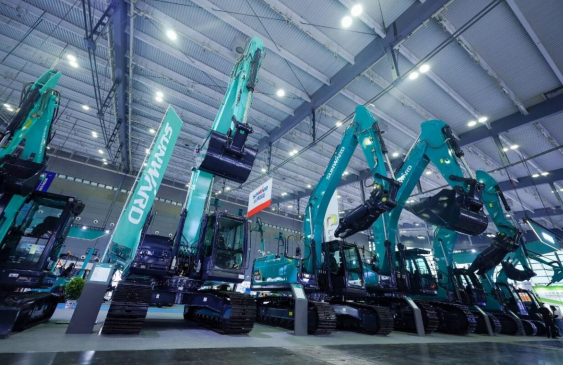
Core Viewpoint - The company reported a decline in revenue but a significant increase in net profit, indicating a focus on innovation and international expansion as key growth strategies [1][2][5]. Financial Performance - In the first half of 2025, the company's operating revenue was 3.411 billion yuan, a year-on-year decrease of 6.32% [1]. - The net profit attributable to shareholders was 49.881 million yuan, reflecting a year-on-year increase of 46.12% [1]. Innovation and Development - The company has established a "leading innovation" model, applying for 102 patents in the first half of 2025, with 43 being inventions [2]. - The company undertook 115 projects and successfully launched 20 prototypes, with 9 products entering mass production [4]. - Key achievements include a significant reduction in fuel consumption and increased operational efficiency for new products [4]. International Expansion - The company has seen a substantial increase in overseas sales, with a 75% year-on-year growth in revenue from the African market [6]. - The company secured over 100 million yuan in orders in the European market, particularly for its rotary drilling rigs [6]. - The company's products are now sold in over 180 countries, with a 40% increase in sales of rotary drilling rigs [6].


AI治理,需要多元工具协同应用
Jing Ji Wang· 2025-09-01 09:01
Core Viewpoint - The establishment of effective governance mechanisms for artificial intelligence (AI) is crucial for promoting technological innovation while managing potential risks associated with its rapid development [1][6]. Group 1: AI Governance Dimensions - AI governance is a dynamic, multi-dimensional process involving various tools and stakeholders aimed at shaping the direction and boundaries of AI development to align with social values [3][4]. - The ethical and value dimension focuses on fundamental ethical principles that AI systems should adhere to, such as safety, transparency, fairness, and accountability [3][4]. - The policy support and market incentive dimension emphasizes the role of government in fostering AI innovation through financial investment, research funding, and regulatory frameworks [4][5]. - The regulation and standards dimension includes legal frameworks, technical standards, and compliance mechanisms essential for effective governance [5][6]. Group 2: Global AI Governance Challenges - The first challenge is the differentiation in governance due to varying technological paths across countries, leading to discrepancies in risk perception and governance tools [6][8]. - The second challenge is the mismatch between the rapid pace of AI technological advancement and the slower evolution of governance frameworks, resulting in a lag in regulatory responses [7][9]. - The third challenge involves the complexity of global governance mechanisms, which often lack coordination and can lead to inefficiencies and conflicts among different regulatory bodies [8][9]. - The fourth challenge is the impact of geopolitical factors, which can hinder international cooperation on AI governance, making it difficult to address cross-border risks effectively [10][11].

海洋经济踏浪逐梦
Jing Ji Wang· 2025-09-01 09:01
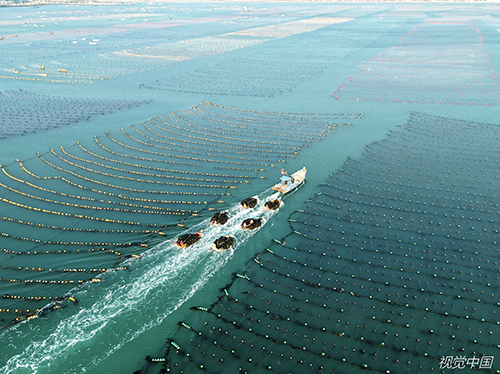
Core Insights - China's marine economy is entering a new phase of high-quality development, focusing on sustainable practices and technological advancements [1] Group 1: Marine Economy Development - The development of modern marine ranching and deep-sea food production is being emphasized, with initiatives like "耕海牧渔" and the creation of "deep blue granaries" [1] - The scale of offshore wind power in China is leading globally, contributing to the transition of ecological value in marine carbon sinks [1] - The manufacturing of marine engineering equipment is advancing towards high-end technology, with significant breakthroughs in technical barriers [1] Group 2: Policy and Industry Integration - Continuous policy benefits are being released under the goal of becoming a maritime power, promoting deep integration of industry, academia, and research in deep-sea technology [1] - Industries such as energy development, high-end equipment, biomedicine, and cultural tourism are experiencing rapid growth [1] Group 3: Infrastructure and Logistics - The intelligent transformation of ports and the upgrade of shipping service systems are enhancing global marine logistics connectivity [1] - The successful launch of China's first large cruise ship, "爱达·魔都," marks a new high in passenger traffic at the Qingdao cruise home port [13]
宏观政策与结构改革需共同发力
Jing Ji Wang· 2025-09-01 09:00
Group 1 - The core issue facing China's economic growth is insufficient demand and confidence, which are interrelated [4] - Current macroeconomic policies in China have been significantly strengthened, with an emphasis on both short-term stimulus and long-term structural reforms [5][7] - The unique approach of using non-price tools and administrative measures in macroeconomic policy is linked to China's transitional economy and underdeveloped market mechanisms [7] Group 2 - It is important to elevate the pursuit of moderate inflation to the same level as the goal of medium-speed economic growth, as low inflation can harm the economy [8] - Immediate implementation of planned fiscal expenditures is necessary, shifting focus from "heavy investment, light consumption" to supporting consumption growth [8] - Utilizing sovereign credit to stabilize the market and restore confidence is recommended, with the central government taking on certain responsibilities [8] Group 3 - Structural reform policies must keep pace with macroeconomic policy shifts to ensure sustainable economic progress over the next decade [10] - Increasing household income and improving social security are fundamental to expanding consumption, which is currently low in relation to GDP [10] - Local government investment attraction behaviors need to be regulated to prevent inefficiencies and over-concentration in certain industries [11][12] Group 4 - Effective market and proactive government roles must be balanced, with decision-making authority appropriately transferred to the market and enterprises [11] - Local governments should focus on core functions such as maintaining social order, ensuring fair competition, and providing public services, rather than solely on industrial policy [12]