Jing Ji Wang

Search documents
九章云极发布智算云2.0,赋能千行百业
Jing Ji Wang· 2025-06-16 09:35
6月16日,九章云极DataCanvas正式发布新一代全栈智能计算云平台——九章智算云Alaya NeW Cloud 2.0,并同步启动全球首个强化学习智算服务。该平台基于Serverless技术架构与强化学习技术的 深度融合,成功突破"秒级生成百万token级"的性能瓶颈,旨在为全球AI创新企业及研发机构提供智能 计算基础设施级服务。 九章智算云平台Alaya NeW Cloud 2.0专注于计算密集型应用,创新性地提供高度融合的智能计算基 础设施(AI Infra)与低门槛工具链(Tools)。实测数据显示,平台可实现万卡级至十万卡级规模的异 构算力统一调度;针对MoE模型架构,推理优化效率提升数倍;支持用户通过单行代码操作即可完成分 布式工作负载编排;独创的"按实际资源消耗精准计量计费"的创新计价模型,显著降低了用户使用成本 与应用门槛。 九章云极DataCanvas公司董事长方磊表示:"从移动互联网'带宽式应用'到AI时代'计算密集型应 用'的结构性变革,亟需新型云架构支撑。九章智算云Alaya NeW Cloud 2.0通过'高度融合的高密度AI Infra + 低门槛工具链Tools'的范式重构, ...
三一硅能“赢”非洲
Jing Ji Wang· 2025-06-16 09:33
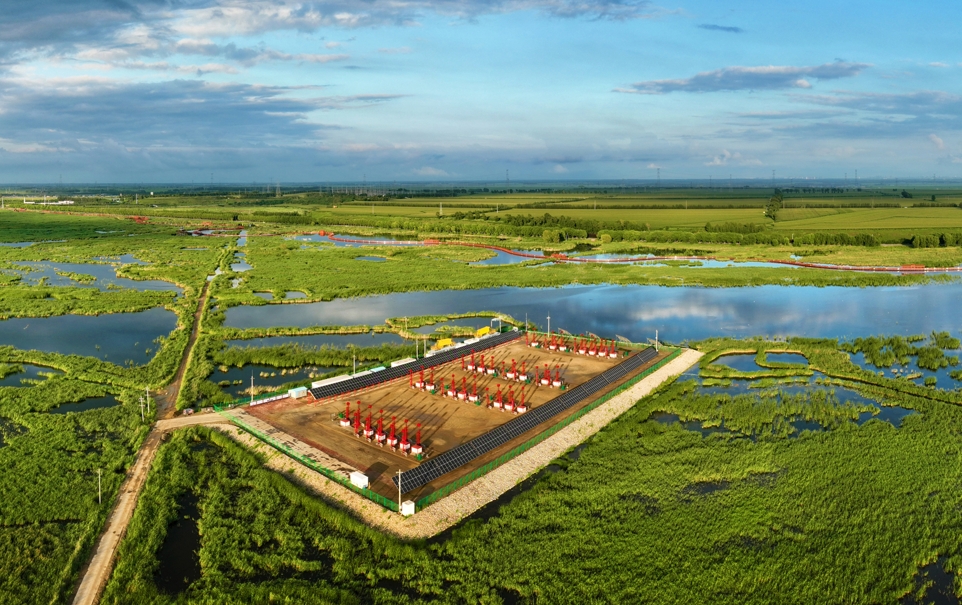
Core Insights - The article highlights SANY Group's significant advancements in the African renewable energy market, particularly through its subsidiary SANY Silicon Energy, which is implementing integrated energy solutions across the continent [1][3][4]. Group 1: Company Developments - SANY Group has established SANY Silicon Energy in 2022 and is now leading microgrid projects in Africa, focusing on solar, storage, and diesel power solutions [1][3]. - The company has achieved a rapid project turnaround, with a notable example being a project in Zambia that went from signing to production in just 120 days [3][4]. - SANY's innovative microgrid solutions have reduced operational costs significantly, with one project reportedly cutting energy costs to one-third of previous expenses [4][6]. Group 2: Market Position and Strategy - SANY Group has developed a complete photovoltaic industry chain within nine months, covering everything from monocrystalline silicon to battery production [6]. - The company has a strong presence in Africa, with cumulative sales exceeding 20 billion RMB and over 23,000 units of equipment sold, making it the leading Chinese construction machinery exporter to Africa [7][8]. - SANY is also planning to establish a manufacturing base in South Africa to enhance local production and employment, aiming for over 50% local employee representation [8][9]. Group 3: Future Prospects - The company is committed to fostering local supply chains and enhancing the renewable energy sector in Africa, with ongoing projects showing promising growth [9]. - SANY's strategy includes not only exporting products but also developing local industries, which is expected to create over 5,000 job opportunities in Africa [8][9].


杭州“六小龙”背后是“耐心政府”
Jing Ji Wang· 2025-06-16 09:19
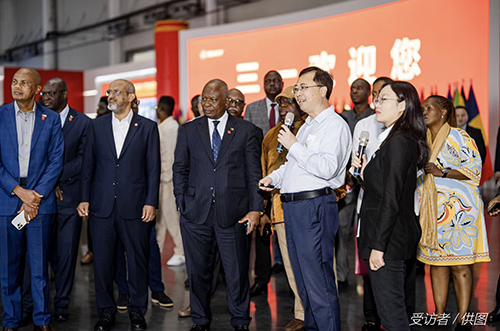
Core Insights - The rise of the "Six Little Dragons" in Hangzhou signifies a new phase in China's technological innovation, moving beyond reliance on major cities and large enterprises to a broader engagement with smaller, innovative companies [1][3] - Hangzhou's government has adopted a supportive approach towards small and medium enterprises (SMEs), fostering an environment conducive to innovation and growth [3][4] - The concept of "patience" is emphasized as crucial for both government and policy in nurturing technological innovation [4] Government Support and Investment - Hangzhou's government is willing to invest in early-stage projects that other cities may avoid, helping companies navigate the challenges of initial growth phases [6][7] - The government has established various funds that support small enterprises, demonstrating a commitment to investing in their development rather than solely focusing on larger, established companies [6][8] - Examples include the investment in gaming company Game Science, which received support from local government funds even before achieving significant market validation [7] Innovation and Market Engagement - The city has created opportunities for SMEs to participate in significant events, such as the 2023 Asian Games, allowing them to gain visibility and showcase their innovations [5][6] - Hangzhou's approach includes opening up various sectors for experimentation by smaller companies, thus providing a fertile ground for innovation to take root [5][8] Comparative Analysis of Investment Models - Hangzhou's investment strategy contrasts with other cities like Shenzhen and Hefei, focusing more on future potential and smaller enterprises rather than just established players [8] - The article suggests that local governments should innovate in their approaches to support businesses, moving away from short-term metrics like immediate tax revenue [8]
从FAITH经营理念看国企高质量发展
Jing Ji Wang· 2025-06-16 09:19
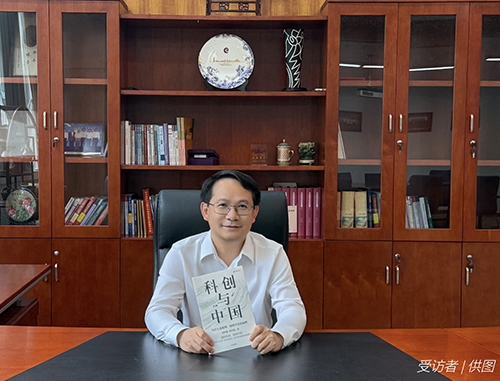
Core Viewpoint - The article emphasizes the importance of integrating party building with business operations in state-owned enterprises, highlighting the FAITH management philosophy as a framework for enhancing competitiveness and achieving high-quality development [1][9][10]. Group 1: FAITH Management Philosophy - The FAITH management philosophy includes fundamental attributes, behavioral guidelines, and methodological directives, focusing on loyalty, confidence, belief, and faith as core values [3][4]. - The five behavioral guidelines are: focusing on core business, actions over words, innovation for success, technological self-reliance, and a human-centered approach [4][5][6]. Group 2: Business Performance and Achievements - Under the FAITH philosophy, the company reported a profit of 3.83 billion yuan in 2024, marking a 27.1% increase, with cash flow from operating activities reaching a record high [10]. - The company optimized its industrial structure, with 76.1% of revenue coming from core industries and a reduction in trade contribution to 23.9% [10]. - The company reduced the number of secondary enterprises from 18 to 12 and cut middle management positions by 24%, resulting in a younger and more professional workforce [10]. Group 3: Future Outlook - The FAITH management philosophy is expected to evolve into a systematic and quantifiable management theory for state-owned enterprises, enhancing their high-quality development pathways [11].
科技创新需要政府和市场“两只手”协调
Jing Ji Wang· 2025-06-16 09:19
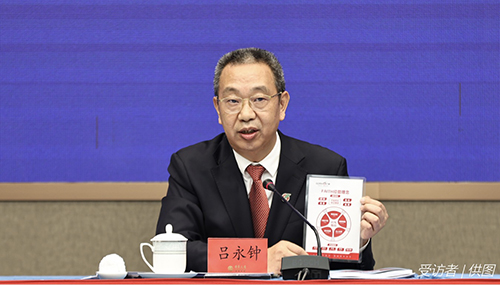
Group 1 - The book "Decoding China's Economy" features insights from 12 economists, including Huang Qifan and Liu Shijin, discussing the bright prospects of China's economy and the importance of government investment funds in supporting tech innovation [1] - Local governments in China are actively exploring the operation of government investment funds to leverage more social capital for financing support to tech innovation enterprises [1][10] - The new type of national system aims to enhance the coordination between government and market forces, promoting a deep integration of both to foster innovation [4][11] Group 2 - The 20th National Congress emphasized the need to establish a new system for developing new quality productivity, which includes encouraging angel investment, venture capital, and private equity investment [4] - The government plays a crucial role in shaping the innovation ecosystem, and the highest form of this relationship is when the government acts subtly to support innovation [4][11] - The new "three driving forces" for high-quality economic development are identified as basic research, industrial upgrading, and tech finance, which complement the traditional drivers of investment, consumption, and exports [5][6] Group 3 - China has made significant advancements in strategic emerging industries and new technologies, particularly in areas like new energy and electric vehicles, showcasing a "leapfrog" effect in global trends [6] - The number of Chinese companies in the global top 2500 R&D firms has reached 679, making China the second-largest R&D country [7] - There are over 500,000 tech SMEs and more than 460,000 high-tech enterprises in China, indicating a comprehensive enhancement in innovation capabilities [7] Group 4 - The establishment of innovation consortia led by central enterprises has been initiated to promote collaboration among various innovation entities, including universities and private enterprises [8] - The government is shifting from a subsidy-based support model to a more refined approach through government-led investment funds, enhancing operational efficiency and attracting more social capital [10][12] - The integration of government and market forces in the tech finance sector is crucial for supporting innovation and fostering the growth of tech enterprises [11][12]
中国家电凭实力“破壁”
Jing Ji Wang· 2025-06-16 07:31
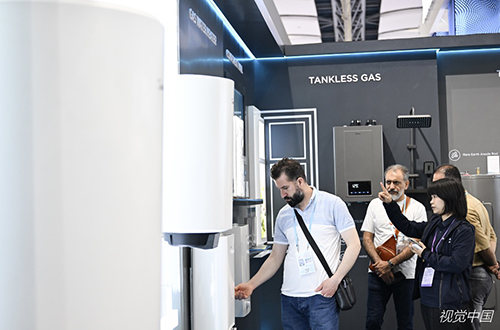
Core Viewpoint - The 137th Canton Fair highlights the resilience of the Chinese home appliance industry amidst the ongoing tariff challenges from the U.S., with large enterprises showing better preparedness and adaptability compared to smaller firms [1][3][5]. Group 1: Impact of Tariffs on Large Enterprises - Large home appliance companies have limited exposure to U.S. tariffs due to strategic planning and diversified supply chains, with many having established manufacturing bases in emerging markets [4][5]. - For instance, Midea Group reported a revenue of 409.1 billion yuan and a net profit of 38.5 billion yuan for the year ending December 31, 2024, with a low revenue share from the U.S. market [4]. - Haier Smart Home achieved an overseas revenue of 143.814 billion yuan in 2024, marking a year-on-year growth of 5.43%, with significant growth in emerging markets [4]. Group 2: Adaptation Strategies of the Industry - The home appliance industry has proactively adjusted to tariff impacts by shifting production capacities and exploring new markets, reducing reliance on the U.S. market [5][6]. - Companies like TCL and Hisense have minimized direct exports to the U.S. by utilizing production facilities in Mexico and Southeast Asia, thus mitigating tariff impacts [5][6]. - The overall export value of China's home appliance industry reached 112.42 billion USD in 2024, with exports to the U.S. accounting for 20.71 billion USD, reflecting a 4.3% year-on-year increase but a reduced share of total revenue [5]. Group 3: Challenges Faced by Small Enterprises - Smaller home appliance companies are facing significant challenges due to their heavy reliance on the U.S. market, with many experiencing customer defaults on orders [7][8]. - The Canton Fair has introduced initiatives to assist small enterprises in finding new clients, particularly in countries involved in the Belt and Road Initiative [8][9]. - Experts suggest that small enterprises should adjust their strategies by expanding overseas production and tapping into domestic markets through e-commerce platforms [9].




罕见!央行,再出手
Jing Ji Wang· 2025-06-16 03:22
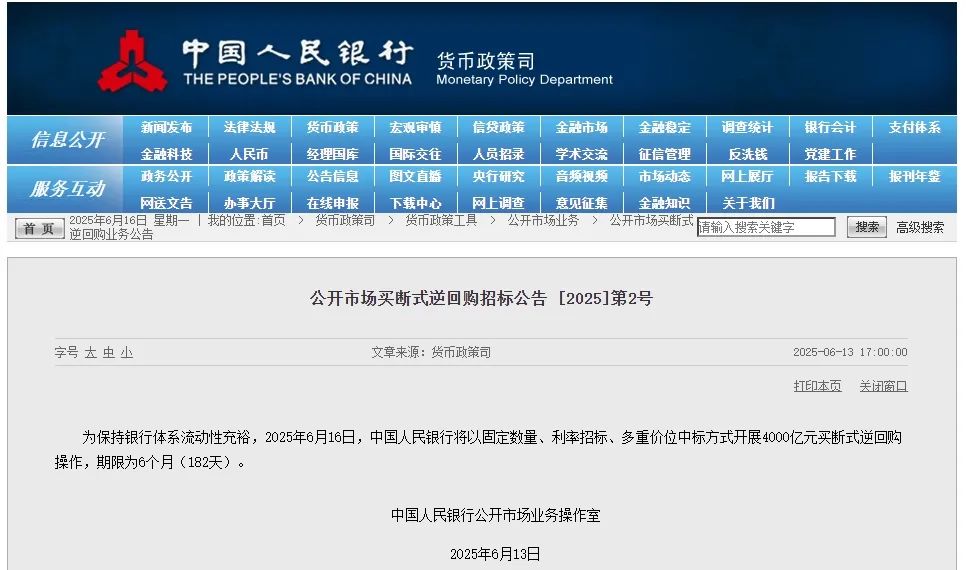
Core Viewpoint - The People's Bank of China (PBOC) is implementing a series of monetary policy measures to ensure sufficient liquidity in the banking system, particularly in June, which is a critical period for liquidity assessment due to the maturity of interbank certificates of deposit and other factors [1][6]. Group 1: Monetary Policy Actions - On June 16, 2025, the PBOC will conduct a 400 billion yuan reverse repurchase operation with a six-month term to maintain liquidity [1]. - In June, the PBOC has conducted a total of 1.4 trillion yuan in reverse repurchase operations, including a 1 trillion yuan operation on June 6 [4][7]. - The PBOC's early announcement of reverse repurchase operations in June is aimed at creating a stable liquidity environment for the month [6]. Group 2: Market Impact and Expectations - The net injection of liquidity in June is expected to be 200 billion yuan, with 500 billion yuan from three-month reverse repos and 300 billion yuan from six-month reverse repos [7]. - Analysts predict that the government's bond issuance pressure in June may be lower than in May, but the PBOC will continue to provide liquidity support through various tools [7][8]. - The PBOC's recent measures, including interest rate cuts and structural monetary policy tools, are anticipated to enhance credit availability for enterprises and households, thereby reducing financing costs in the real economy [8]. Group 3: Transparency and Policy Communication - The PBOC has increased the transparency of its monetary policy operations by releasing an operational status table for various tools, which helps stabilize market expectations [6][7]. - The shift from announcing operations at the end of the month to early announcements reflects a more proactive approach to liquidity management [6].
别让流量毁了韦东奕
Jing Ji Wang· 2025-06-16 02:17
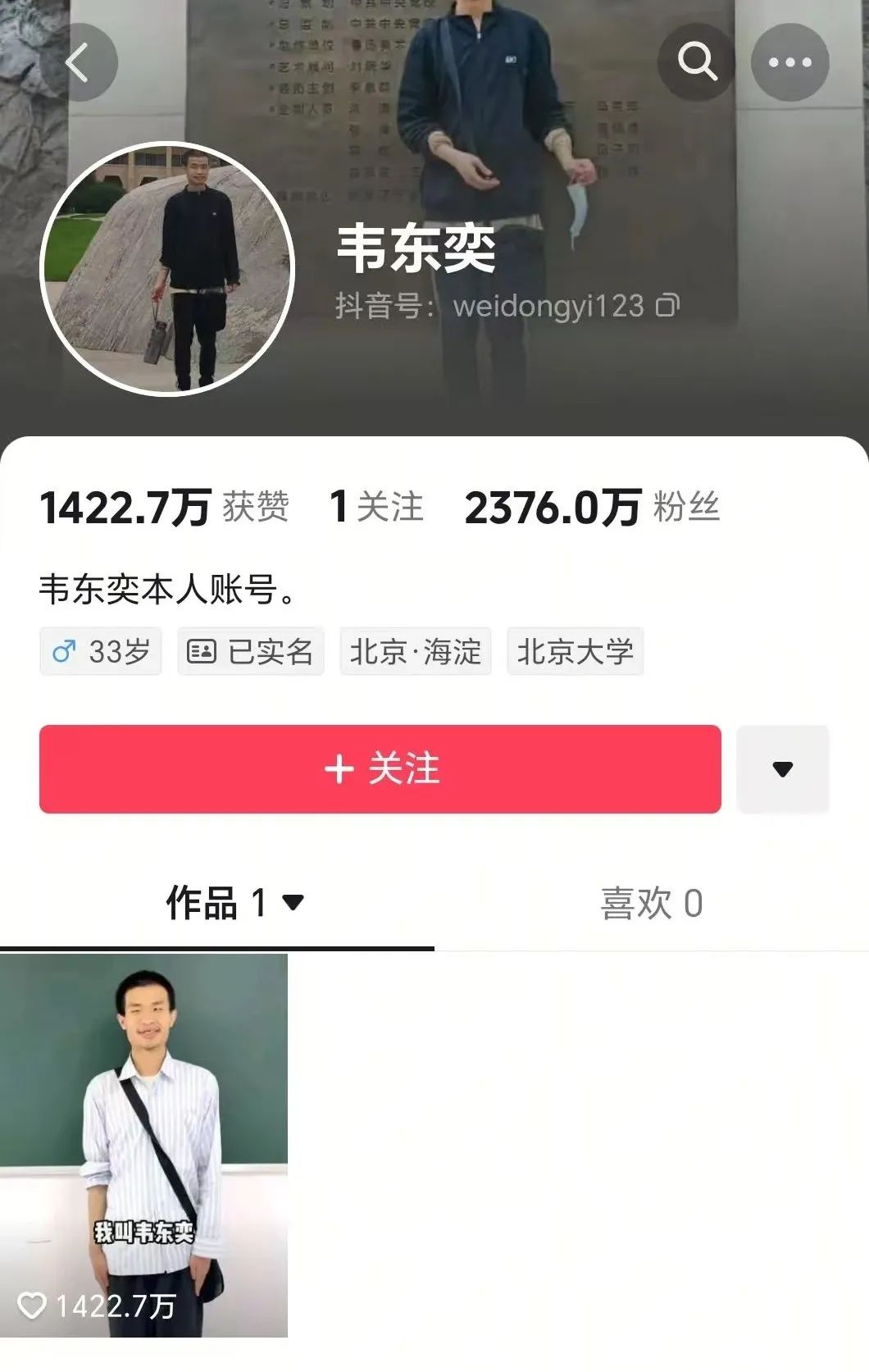
本刊记者 周琦 最近,"韦神"韦东奕又火了。 高考前夕,他在抖音平台发布了一则时长仅4秒的自我介绍视频,瞬间引发全网关注,账号粉丝量几天内便突破2300万。 | 7 D | | --- | | 33岁 | | 国 | | 已实名 | | 北京 · 海淀 | | 北京大学 | 韦东奕的"出圈"历程很偶然。2021年高考前,他因一段为学子加油的采访视频进入公众视野。当时,他头发蓬乱,怀抱大瓶矿泉水、手拎一袋馒 头——这种"大智若愚"的朴素形象,一下戳中了流量爆点。 此后,在网络聚光灯下,韦东奕的学术履历、生活细节乃至外貌特征都被一一"开盒"。有人热衷于挖掘他"15岁国际奥数金奖""8年本硕博连读"的 过往,也有人对其日常饮食、社交习惯津津乐道。 一些人嗅到了商机,开始抢注"韦东奕"相关商标,分类涉及服装鞋帽、广告销售、教育娱乐等,虽已被驳回,但资料显示,"韦神"已被多方成功 注册。 还有一些荒诞传言不胫而走,诸如"哈佛为其破校规""六代战机依赖其公式"等,这些脱离事实的"造神"叙事,将严谨的学术探索异化为娱乐化谈 资。这些真真假假、纷纷扰扰的喧嚣,对韦东奕和北大而言,都是严重的打扰甚至冒犯。 据韦东奕堂哥透露,此 ...
利用运河经济助推广西高质量发展
Jing Ji Wang· 2025-06-16 02:17
Core Viewpoint - The construction of the Pinglu Canal is a significant opportunity for Guangxi to leverage its resource endowments, geographical advantages, and historical culture to achieve high-quality development and economic transformation [1][2]. Group 1: Investment and Progress - As of May 29, 2025, the Pinglu Canal project has completed an investment of 54.38 billion yuan, accounting for 74.8% of the total project investment [1]. - Key milestones include the successful grid connection of the Youth Hub Power Station and the completion of several bridges, indicating continuous progress in this century project [1]. Group 2: Economic Development Strategy - Guangxi aims to utilize its resource advantages and industrial foundation to focus on pillar industries that reflect its unique characteristics and have significant scale and driving force [2]. - The Pinglu Canal construction is seen as a major opportunity to enhance regional economic development by creating urban clusters and corridors based on comprehensive transportation [2]. - The canal will connect the Xijiang Golden Waterway to the Beibu Gulf International Gateway Port, significantly shortening the inland shipping route by over 560 kilometers, thus alleviating navigation pressure downstream [2]. Group 3: Sustainable Development and Innovation - The historical development of the ancient Silk Road provides insights into sustainable development, emphasizing the importance of water in determining the scale of oases and industrial growth [3]. - The integration of "Artificial Intelligence +" into various industries is crucial for Guangxi's economic development, promoting traditional industry upgrades and enhancing resilience in the industrial chain [4]. - The construction of the Pinglu Canal is expected to facilitate the growth of new industries, including information technology, new energy vehicles, and high-end equipment manufacturing, contributing to a modern industrial system [4]. Group 4: Trade and Regional Cooperation - The completion of the Pinglu Canal will open a new maritime trade route between the southwestern region and ASEAN, enhancing trade efficiency and strengthening economic ties [5]. - Guangxi is positioned as a strategic hub for trade with ASEAN under frameworks like RCEP and the China-ASEAN Free Trade Area 3.0, promoting cultural and economic exchanges [5]. - The focus on creating a unified and open market system will drive high-quality development of the canal economy, leveraging the region's unique characteristics for broader economic engagement [5].
厚植生态底色 共建美丽中国 中国石油发布《2024年环境保护公报》
Jing Ji Wang· 2025-06-13 03:41
Core Viewpoint - China National Petroleum Corporation (CNPC) emphasizes its commitment to environmental protection while pursuing development, showcasing significant achievements in green initiatives and sustainable practices in its 2024 Environmental Protection Report [1][2]. Group 1: Environmental Protection Achievements - The 2024 report highlights CNPC's comprehensive efforts in pollution prevention, key area protection, and risk management across eight dimensions [1]. - In 2024, CNPC aims to increase domestic natural gas production's share in its oil and gas output structure to 54.4%, with renewable energy development capacity exceeding 12 million tons of standard oil per year [3]. - The company has achieved a reduction in chemical oxygen demand, ammonia nitrogen, nitrogen oxides, and VOC emissions from refining enterprises, with energy savings of 780,000 tons of standard coal and water savings of 8.24 million cubic meters [5]. Group 2: Green Development Strategy - CNPC is implementing a three-step strategy focused on "clean substitution, strategic replacement, and green transformation," aiming to create a low-carbon energy ecosystem that integrates fossil and renewable energy [3]. - The company has established 22,000 acres of carbon sink and carbon-neutral forests, actively engaging in biodiversity protection with ten self-contributing biodiversity conservation projects [6]. Group 3: Industry Leadership and Collaboration - As the chair of the "Methane Emission Control Alliance" for Chinese oil and gas enterprises, CNPC is leading efforts to enhance methane reduction cooperation within the industry [7]. - CNPC is the sole member of the "Oil and Gas Climate Initiative" in China, participating in the formulation of future strategic goals for climate change response and signing the "Oil and Gas Decarbonization Charter" to collaborate with over 50 global oil and gas producers in reducing carbon emissions [7].