
3 6 Ke

Search documents
智谱与Minimax交出“大招”之后,DeepSeek“平A”了一下
3 6 Ke· 2026-02-13 00:26
Group 1 - Major AI players in China, including DeepSeek, Zhiyu, and MiniMax, have launched new models in a single night, showcasing the rapid advancements in the AI sector [1][2] - Domestic large models are increasingly pursuing differentiation strategies amid a shortage of computing power and intensifying homogenization [2] Group 2 - DeepSeek has initiated gray testing for its new model, speculated to be the DeepSeek-V4-Lite version, with a parameter scale of approximately 200 billion [3][4][5] - The new model features a significant breakthrough with a context window of 1 million tokens, allowing it to process extensive texts equivalent to 500 pages of A4 documents [6][10] - Testing indicates that DeepSeek's new model maintains over 60% accuracy at the 1 million token length, outperforming contemporaneous models like Gemini [10][12] Group 3 - Zhiyu has released GLM-5, which marks a shift from "Vibe Coding" to "Agentic Engineering," indicating a focus on complex system engineering tasks [17][18] - GLM-5 has a parameter scale of 744 billion, doubling that of its predecessor, and has significantly improved reliability metrics, reducing hallucination rates from 90% to 34% [22][23] - The model has demonstrated high success rates in programming and agent capabilities, achieving a 98% success rate in frontend tasks and showing strong performance in resource management simulations [28][29] Group 4 - MiniMax has introduced the MiniMax-M2.5 model, designed as a lightweight programming model with only 10 billion active parameters, aiming to compete in the programming sector [35][36] - Despite its smaller parameter size, M2.5 reportedly supports high throughput reasoning and has shown competitive performance in community tests [36][38] - The model's lightweight architecture is a strategic move to address deployment cost pressures in a saturated programming market [38]

今年春节,中产大孝子拯救城市酒店
3 6 Ke· 2026-02-13 00:25
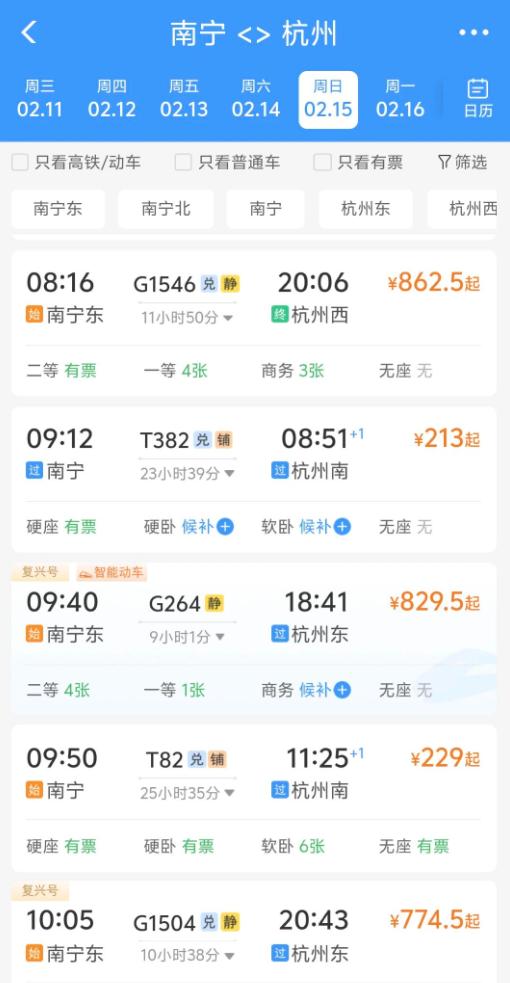
01 昨天翻朋友圈,我看到杭州工作的闺蜜小薇,晒出了一张与公婆在西湖国宾馆露台上的合影,背景是冬日里清雅的西湖,三个人笑得很舒展。 忽然想起,前阵子她还在群里纠结,今年春运票真难抢,带孩子回广西老家过年怕是又要脱层皮,便忍不住私信问她,最后是把老两口接过来了? 小薇秒回,说,对啊,她和先生算了笔账,一家三口折腾回南宁,光往返机票就一大笔开销,还不如把他们接过来。 "南宁到杭州的高铁票临时买,票都挺富裕,你敢信?省下来的钱,带他们在杭州住酒店、吃喝玩乐不香吗?" | | 南宁 <> 杭州 | | | | | --- | --- | --- | --- | --- | | 周三 周四 | 周五 周六 | 周日 | 周一 | | | 02.11 02.12 | 02.13 02.14 | 02.15 | 02.16 | 目班 | | 只看高铁/动车 只看普通车 | | 只看有票 | | ▽ 筛选 | | 南宁东 | 南宁北 | 南宁 杭州东 | | 杭州西 | | 08:16 | G1546 兑 静 | 20:06 | ¥862.5# | | | ● 南宁东 | 11小时50分▼ | 图 杭州西 | | | | 二 ...
避免组织变革开局失利,管理者必须做对这4件事
3 6 Ke· 2026-02-13 00:25
许多领导者认为变革的最大风险是推进太慢。这常常是正确的。但当情况并非如此时,最大风险是在组织尚未准备好与你同行时就贸然行动。 变革开局失利不仅会拖延进程,更会侵蚀领导信誉、消耗宝贵的变革资源。最终,领导者必须在采纳广度与推进速度之间进行风险管理。这两 者往往此消彼长——有时需要以速度换取支持,有时则需以广泛采纳保障推进节奏。但核心要义始终是:必须赢下"采纳竞赛"的第一程,坚决 避免起步即踏空。 近几周我已听到十次类似的故事:某公司推出新的AI赋能内部流程计划,将其作为迈向"AI优先运营"的关键举措。然而实施最终失败。原因何在?上线不 久后,使用数据揭示了真相:仅少数一线团队持续使用新系统,部分团队偶尔使用但在压力或问题出现时退回旧工作模式,其余人员则完全绕过变革,继 续依赖电子表格、邮件或熟悉的工作方式。 这个故事耐人寻味之处在于:没有人公开反对。你找不到一个顽固的抵制者。员工只是没有真正参与进来。为什么? 是对AI的怀疑吗?不,原因更为根本:组织从未真正投入这场变革。尽管计划具备所有成功条件,却演变成了"开局失利"。事实上,我在各类组织变革中 观察到,开局失利是最常见的早期失败形式。这正是许多变革残骸遍布的 ...

马斯克急了,直播回应一切,xAI全新阵容首曝光,华人联创仅剩一人
3 6 Ke· 2026-02-13 00:22
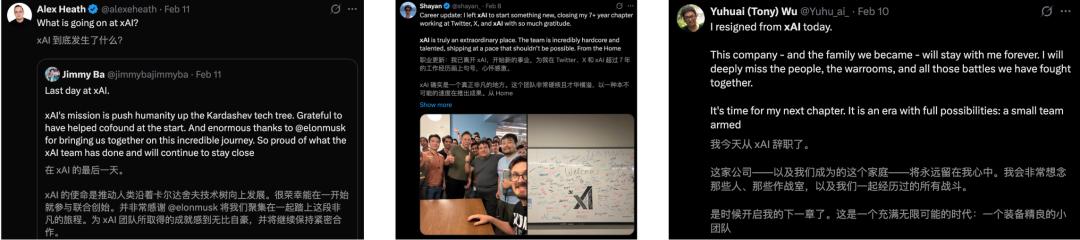
两位华人联创接连「弃船」,一大批xAI员工也纷纷官宣离职,让全网惊掉了下巴。 xAI药丸了?xAI到底发生了什么? 一时间,社交媒体上的各种负面争议甚嚣尘上。 马斯克终于绷不住了!一半联创出走,在全网吵得沸沸扬扬。今天(2月12日),他紧急召开全员大会,官宣合并后全新阵容。更梦幻的是, 他勾勒了一个终极蓝图:未来在月球建AI工厂。 短短24小时,马斯克xAI经历了一场九级大地震! 其中,有四大核心板块:Grok主模型&语音模型、编码、Imagine,以及Macrohard。 | Grok Main & Voice | Coding | Imagine | Macrohard | | --- | --- | --- | --- | | Lead: Aman | Lead: Makro | Lead: Guodong | Lead: Toby | | Tyler & Jake H. | Guodong | Haotian & Chaitu | John M. | | API & Core Product Infrastructure // Toby, Jaime | | | | | Expert Tutors & ...
荣耀前CEO赵明,加盟AI智驾公司
3 6 Ke· 2026-02-13 00:21
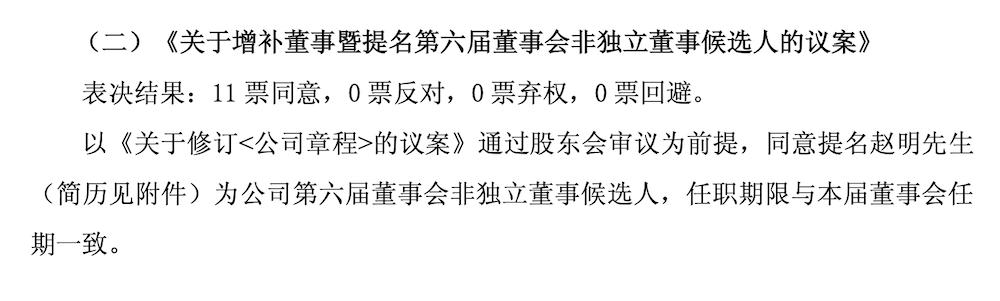
车东西2月12日消息,就在刚刚,千里科技发布公告称,赵明成为公司第六届董事会非独立董事候选人,任职期限与本届董事会任期一致。 刚刚!荣耀前CEO赵明加入千里科技,官方回应来了。 ▲赵明在微博官宣加入千里科技 ▲赵明加入千里科技董事会 据车东西确认,公告中的赵明为前荣耀终端股份有限公司CEO赵明,他本人也在个人微博上官宣,并和千里科技董事长印奇进行了一波互动。 千里科技还在同日发布的另一则公告中指出,公司董事会董事席位增加一名至十二名,其中设董事长一人,副董事长三人,并新增联席董事长一人。 | 原条款 | 修订后条款 | | --- | --- | | 第一百零九条 公司设董事会,董事会由 | 第一百零九条 公司设董事会,董事会由 | | 十一名董事组成,其中独立董事四名(至 | 十二名董事组成,其中独立董事四名(至 | | 少一名会计专业人士)、职工代表担任的 | 少一名会计专业人士)、职工代表担任的 | | 董事一名。设董事长一人,副董事长三 | 董事一名。设董事长一人,联席董事长一 | | 人。董事长和副董事长由董事会以全体董 | 人,副董事长三人。董事长、联席董事长 | | 事的过半数选举产生。 | 和 ...
OpenAI应用CEO首次深度访谈:ChatGPT广告将像Google而非Facebook,Code Red即将终结
3 6 Ke· 2026-02-13 00:20
Core Insights - OpenAI's advertising model will fundamentally differ from traditional social media, focusing on user intent rather than user profiles, allowing AI to provide neutral evaluations of ads [2][7][12] - The "Code Red" status at OpenAI is nearing its end, with plans to resume normal operations and previously delayed revenue plans following the release of a new model [15][17][19] - OpenAI is exploring a new direction with an AI Agent social network, aimed at enhancing human social relationships rather than replacing them [20][22][28] Advertising Model Transformation - Fidji Simo, CEO of OpenAI applications, emphasizes that the advertising model will resemble Google's intent-based system rather than Facebook's algorithm-driven approach [7][8] - The AI model will not recognize the existence of ads unless prompted by the user, ensuring that responses remain unbiased and focused on the conversation [10][11] - Simo states that advertising will likely remain a minor revenue source for OpenAI, indicating a lower reliance on ads compared to companies like Meta [8] Transparency in Advertising - The revolutionary aspect of OpenAI's advertising system is that the AI can critique ads when asked, providing users with transparent and neutral information [9][12] - This approach contrasts with traditional advertising models where brands control content, as OpenAI allows AI to independently assess and critique advertisements [11][12] Code Red Status - The "Code Red" was initiated in December 2025 to address competitive pressures from Google and Anthropic, impacting product teams but not long-term research efforts [16][18] - Simo confirms that the Code Red status will conclude with the upcoming release of a new model, allowing OpenAI to resume normal operations [15][17] AI Agent Social Network - OpenAI is investigating the concept of an AI Agent social network, where personal AI agents assist users in managing their social relationships [20][22] - This concept differs from existing AI-only social networks by focusing on enhancing human interactions rather than creating new AI relationships [21][22] Leadership and Structure - Simo and Sam Altman have clearly defined roles, with Altman overseeing research and Simo managing product deployment and commercialization [24][26] - This division of responsibilities ensures that long-term research remains unaffected by short-term competitive pressures [30]

2026 年你可能用得上的改变世界清单
3 6 Ke· 2026-02-13 00:19
很多人都想让世界变得更美好,但不知道该怎么做。 我们之所以陷入困境,是因为我们假定改善世界只有两条路。第一种选择是追求高价值:要么发家致富,用亿万财富解决问题;要么身居要职,禁止一切 弊端,推行一切良策。当然,只有极少数幸运儿才能做到。 第二种选择是走高牺牲路线:卖掉所有家产,全身心投入慈善事业。显然,这也并不是一个好的选择。 但人们看到世界现状后会想:「哦,应该有人做点什么!」然后他们又会想:「但我该怎么做呢?」每个问题看起来都那么庞大复杂,你甚至不知道该从 哪里开始? 首先你要明白,没有人能单枪匹马地收拾这个烂摊子,不过没关系,因为我们还有大约 160 亿只手随时待命。我们每个人只需要找到一个被忽略的角落, 然后开始擦洗就行了。 我并不了解所有让我们的善意之举得以实现的途径。所以,每当我发现有人以一条与众不同的正义之路改变世界时,我都会把它记在一个小清单上。我会 时不时地翻阅这份清单,以此拓展我的想象力。现在,我把它分享出来,希望它也能对你有所帮助。 做第二勇敢的人 科学史可以用十秒钟概括:大约 1200 年来,人们一直在亚里士多德的书页空白处涂涂画画。直到有一天,弗朗西斯·培根说:「嘿,伙计们,咱们来搞 ...

阅读7千万文章硅谷爆火:AI奇点已至,抛弃人类自我进化
3 6 Ke· 2026-02-13 00:19
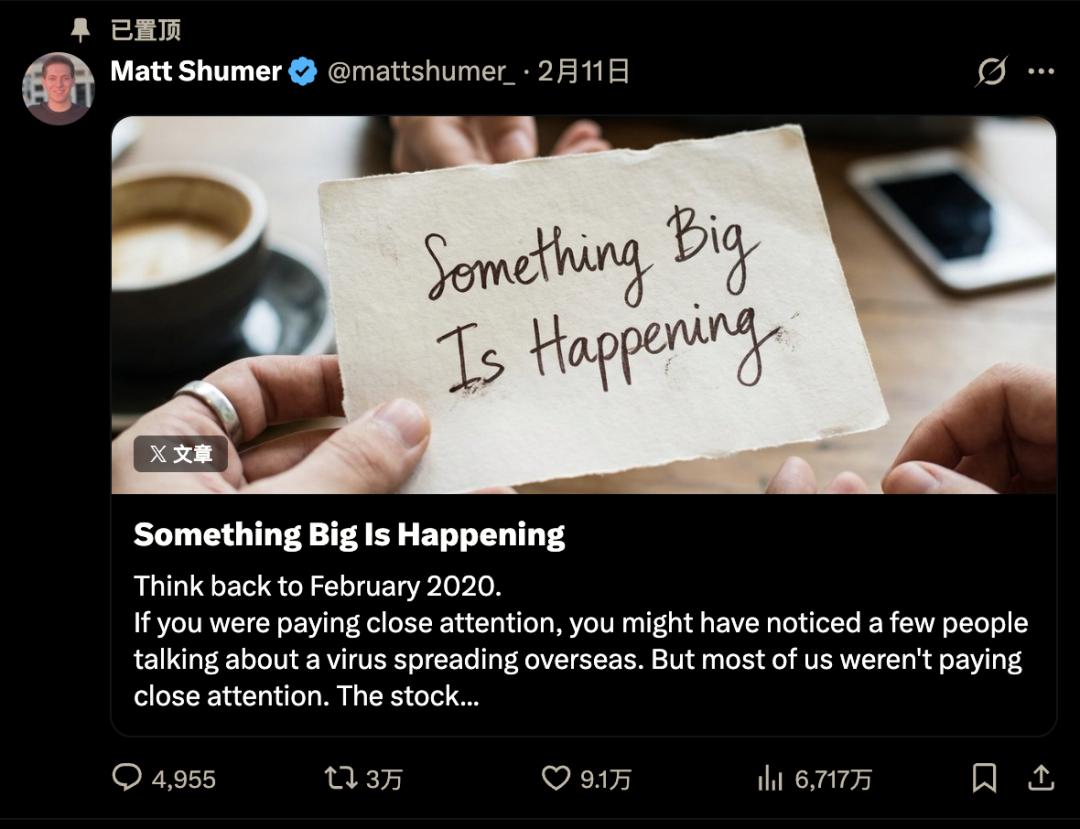
Core Insights - The article discusses a significant leap in AI capabilities, enabling it to perform complex tasks independently, which previously required human expertise for hours. This recursive self-improvement cycle has begun, potentially leading to an "intelligence explosion" within one to two years [1][12][22]. Group 1: AI Advancements - AI has reached a point where it can autonomously complete tasks that would take human experts several hours, with the potential for AI to independently work for days within a year and weeks within two years [20][22]. - The release of new AI models, such as OpenAI's GPT-5.3-Codex and Anthropic's Claude Opus 4.6, marks a pivotal moment, showcasing AI's ability to make decisions with judgment and taste, previously thought impossible [16][17][22]. - The speed of AI's progress is accelerating, with capabilities doubling approximately every four months, indicating a rapid evolution in its ability to perform cognitive tasks [20][22]. Group 2: Industry Reactions - Many professionals in the tech industry express anxiety about the impending changes, with some believing that the current advancements could lead to significant disruptions in various sectors [3][66]. - The article highlights a growing divide between those in the tech industry who are aware of AI's rapid advancements and the general public, who may still underestimate its potential [66][68]. - Prominent figures in AI, such as Dario Amodei, predict that AI could replace up to 50% of entry-level white-collar jobs within the next five years, a figure some consider conservative [49][51]. Group 3: Implications for the Workforce - The article emphasizes that AI is poised to replace cognitive labor across various fields, including finance, law, and healthcare, with many professionals already witnessing AI's capabilities surpassing their own [53][54]. - The traditional safety nets provided by previous industrial revolutions may not apply this time, as AI targets cognitive tasks that were once thought to require human judgment and creativity [44][48]. - The article warns that those who dismiss AI as a passing trend may find themselves at a significant disadvantage as the technology continues to evolve and integrate into the workforce [58][59]. Group 4: Recommendations for Adaptation - The article suggests that individuals should actively engage with AI tools, experimenting with their capabilities to stay ahead in their respective fields [55][60]. - It encourages professionals to reassess their financial situations and prepare for potential disruptions in their industries, emphasizing the importance of adaptability and continuous learning [58][59]. - The author advocates for a shift in mindset, urging individuals to embrace AI as a tool for creativity and productivity rather than viewing it as a threat to their professional identity [62][63].
30块的自嗨锅,还是输给了5块钱的方便面
3 6 Ke· 2026-02-13 00:13
曾经风靡一时的自嗨锅,嗨不动了。 近日,自嗨锅关联公司杭州金羚羊企业管理咨询有限公司新增一则破产审查案件。这个成立于2018年的品牌,曾凭借"一人食"定位及营销,在2020年创下 10分钟卖出500万桶的销售纪录。 短短几年内,这个估值一度高达75亿元的自热火锅品牌,从爆红一路走向没落。作为行业顶流玩家,申请破产的自嗨锅,就此伴随着自热火锅类产品的大 起大落,淹没在市场上。 不少人形容,吃自热火锅味同嚼蜡。(图/《天降财神》) 然而,自2022年之后,自嗨锅的年营业收入逐年下降。 定价30元的自热火锅渐渐卖不动了,货架上 5 元一包的方便面,却依旧稳稳占据着打工人的餐桌。这并非简单的口味之争,而是一场关于"年轻人到底需 要什么速食" 的投票。 明明有肉有菜、看上去更丰盛的自热火锅,怎么就打不过一包普通的方便面? 01 一人食的火锅, 不香了 自热火锅的确有过自己的鼎盛时期。 撕开包装,倒出食材,在底层倒入没过加热包的冷水,盖上盖子等待几分钟,便能在家吃上一餐海底捞火锅的平替版。 操作简单、便利、随时随地、无需加热器材即可食用,是自热火锅刚刚推出时主打的卖点。和通常多人点餐的传统火锅相比,盒装的自热火锅在食材数 ...

年会折叠:有人狂撒黄金,有人食堂吃自助餐
3 6 Ke· 2026-02-13 00:13
Core Insights - The traditional corporate annual meeting is facing a decline, with many companies opting to cancel or significantly reduce the scale of their events, reflecting a shift in workplace culture and employee preferences [2][8][10]. Group 1: Trends in Corporate Annual Meetings - The proportion of companies hosting large annual meetings for over 100 people has dropped from 68% in 2019 to 31% in 2024, with projections indicating that less than 20% will maintain this tradition by the end of 2025 [1]. - Many companies are transitioning to smaller gatherings, such as departmental dinners or online events, with a notable increase in cost-cutting measures [1][10]. - The enthusiasm for large-scale annual meetings has diminished, impacting hotel bookings and event planning, with a reported 30% reduction in annual meeting orders this year [9][10]. Group 2: Examples of Corporate Practices - Some companies, like Chasing Technology, are still hosting extravagant events, offering significant rewards such as gold and luxury items, which serve as effective promotional tools [3][4]. - In contrast, companies like Leap Motor have faced criticism for poorly organized events that lack basic amenities, highlighting the disparity in how annual meetings are executed [6]. - Many firms are now choosing to hold meetings in-house or at minimal cost venues, with some opting for self-catered events to save expenses [7][10]. Group 3: Employee Sentiment and Cultural Shift - Employees are increasingly viewing annual meetings as burdensome, with younger generations preferring clear work-life boundaries and expressing dissatisfaction with obligatory participation in such events [10][12]. - There is a growing sentiment among employees that financial rewards or bonuses may be more appreciated than traditional gatherings, reflecting a shift in expectations regarding workplace culture [11][12].