Tai Mei Ti A P P

Search documents
二三股东减持成瘾、控股股东欲一次性撤退,嘉美包装筹划易主
Tai Mei Ti A P P· 2025-12-10 11:01
Core Viewpoint - The announcement by Jiamei Packaging regarding the "control change" has confirmed market speculation about a potential ownership change, leading to significant stock price movements and investor optimism [2]. Group 1: Control Change Announcement - Jiamei Packaging's controlling shareholder, China Food Packaging Co., Ltd. (referred to as "Zhongbao Hong Kong"), is planning a control change that may lead to a shift in the actual controller of the company, with stock suspension starting from December 10 for no more than two trading days [2]. - The stock price of Jiamei Packaging experienced a notable increase, with a 7.8% rise on December 9, closing at 4.56 yuan per share, marking a total increase of over 16% in three trading days and nearly 20% in six trading days, reaching a market capitalization of 4.36 billion yuan [2]. Group 2: Shareholder Reduction Activities - Investors have shown optimism regarding the ownership change, likely influenced by the long-standing pattern of frequent share reductions by shareholders, which has created market pressure [3]. - Since its listing, Jiamei Packaging's major shareholders have engaged in a series of significant share reductions, with Zhongbao Hong Kong reducing its holdings from 466 million shares (48.44%) to 44.75%, having sold approximately 38.45 million shares for about 161 million yuan since March 2023 [3]. - Other major shareholders, Fuxin Investment Co., Ltd. and Zhongkai Investment Development Co., Ltd., have also been actively reducing their stakes, with their combined reductions totaling 19.20 million shares from September 2023 to March 2024 [4]. Group 3: Financial Performance and Challenges - Jiamei Packaging's core business, which includes the development, design, production, and sales of food and beverage packaging containers, has faced significant operational challenges, with revenue stagnating around 3 billion yuan since 2021 [5]. - The company reported a revenue of 2.039 billion yuan for the first three quarters of 2025, a year-on-year decrease of 1.94%, with the metal packaging segment experiencing an 11% decline in revenue [5]. - Profitability has also been volatile, with net profit dropping to 17.03 million yuan in 2022, rebounding to 183 million yuan in 2024, but falling again to 39.16 million yuan in the first three quarters of 2025, a 47.25% year-on-year decline [6].



低至5.5元/支,疫苗价格“跳水”背后
Tai Mei Ti A P P· 2025-12-10 10:15
Core Viewpoint - The HPV vaccine market has shifted dramatically from scarcity and high prices to aggressive price competition, leading to significant revenue declines for many companies in the vaccine industry [3][4][11]. Price Competition and Market Changes - The price of the bivalent HPV vaccine has dropped from 245 yuan to 27.5 yuan, a nearly 90% decrease, while the nine-valent HPV vaccine is being offered in "buy one, get one free" promotions [3]. - The flu vaccine market has also seen price reductions, with the trivalent vaccine dropping to 5.5 yuan and the quadrivalent vaccine decreasing from 128 yuan to 88 yuan [3]. - In the first three quarters of 2025, only 5 out of 14 domestic vaccine companies reported revenue growth, while 10 companies, including industry leader Zhifei Biological, experienced significant profit declines [2][3]. Structural Issues in the Industry - The industry's performance decline is attributed to structural problems rather than cyclical fluctuations, with price wars compressing profit margins and leading to a situation where revenue growth does not translate into profit [4][5]. - The lack of innovation and reliance on technology replication has resulted in oversupply and a lack of differentiation among products, making price competition inevitable [6][9]. Innovation as a Key to Recovery - Companies that focus on innovation, such as CanSino with its quadrivalent meningococcal vaccine, have shown resilience, achieving revenue growth and profitability despite the overall market downturn [6][7]. - The market is willing to pay a premium for differentiated products that offer better protection and safety, indicating that true innovation is essential for avoiding price competition [7]. Challenges to Original Innovation - The high costs and long timelines associated with developing new vaccines, along with regulatory uncertainties, deter companies from pursuing original innovation [9]. - The current regulatory framework is more suited to traditional technologies, creating barriers for new vaccine platforms [9]. Industry Response and Future Directions - The China Vaccine Industry Association has initiated a campaign to oppose "involutionary" competition and promote high-quality development in the vaccine sector [10]. - Companies are encouraged to focus on unmet clinical needs and explore international markets to alleviate domestic competition pressures [10]. - There is a need for improved public awareness and vaccination services to enhance demand and increase vaccination rates, particularly for flu vaccines [10]. Conclusion - The price competition in the vaccine industry is a result of homogeneous competition and represents a transitional phase for industry upgrade [11]. - Successful examples of innovative companies and emerging industry consensus indicate a potential path forward, emphasizing the importance of clinical value over price competition [11].


破局AI出海商业化,Manus们找到了解题新伙伴|出海参考
Tai Mei Ti A P P· 2025-12-10 09:41
今年8月份,Manus联合创始人兼首席科学家季逸超在新加坡举行的Stripe Tour上表示,Manus年化经常 性收入(Revenue Run Rate)达到了 9000 万美元。 从2025年3月Manus引爆海外社交平台到4个月后的近亿美元收入,Manus火箭般的蹿升再次点燃AI创业 圈,坚定了AI应用创业者们的方向。 然而,并不是每一家AI企业发展都如此成功,很多冲入Product Hunt榜单序列的AI产品,并无法有效开 展商业化,入围榜单的流量变成了企业发展的鸡肋。 Manus海外爆发式增长,关键先生Stripe无缝助攻 Manus与Stripe的合作给AI创业者提供了一种有价值的参考。 2025年3月,初创公司Butterfly Effect(蝴蝶效应)在海外社交平台X发布了全球首款通用AI Agent产品 Manus以及产品演示视频,视频展示的智能体能力瞬间惊艳公众,Manus随之引爆全球。 产品亮相1个月吸引了200多个不同国家和地区的用户,4个月则实现了9000万美元的年化营收。 惊人的成绩离不开Manus团队上一次创业踩过的"坑"。 在Manus之前,受大模型技术的启发,蝴蝶效应公司的肖 ...

中国商业航天开启“出海”模式,力箭一号承揽三国卫星订单
Tai Mei Ti A P P· 2025-12-10 09:21
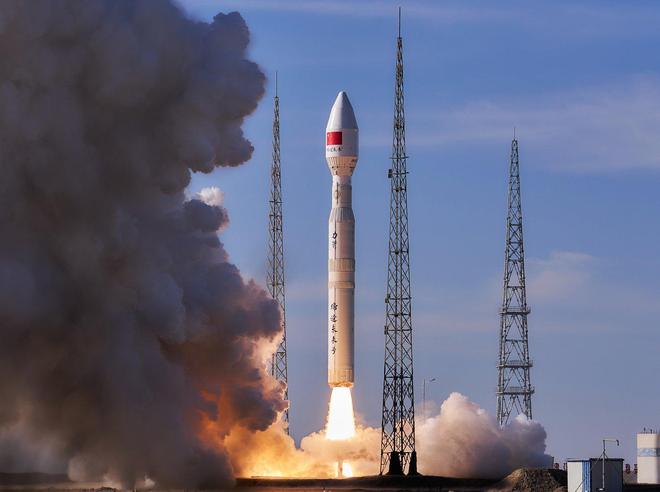
Core Viewpoint - The successful launch of the Kuaizhou-1A rocket marks a significant achievement for China Aerospace, demonstrating its capabilities in commercial space launches and expanding its international client base [2][3]. Group 1: Launch Details - On December 10, the Kuaizhou-1A rocket successfully launched nine satellites, including the "Jixing" GaoFen 07B01, C01, D01, SPNEX, Slippers2Sat, and 813 satellites, into their designated orbits [2]. - This mission represents the 11th flight of the Kuaizhou-1A rocket, which has successfully placed a total of 84 satellites into space, with a cumulative payload mass exceeding 11 tons, leading the market share in commercial rocket launch services [2]. Group 2: International Orders - The recent launch included satellites from international clients, specifically from Egypt, Nepal, and the UAE, indicating a diversification of demand compared to domestic clients [2][3]. - The SPNEX satellite, developed by the Egyptian Space Agency and the Egyptian Academy of Scientific Research and Technology, focuses on climate change monitoring and ionosphere changes [2]. - The Slippers2Sat satellite is an educational project aimed at providing science education support to marginalized groups in Nepal [3]. Group 3: Competitive Advantages - The Kuaizhou-1A rocket has a strong competitive edge in terms of launch capacity, interface versatility, and operational flexibility, which are crucial for attracting international clients [4]. - The company has served a total of 32 satellite clients, with 26 domestic and 6 international, covering regions including China, Europe, North America, South Asia, the Middle East, and North Africa [3]. Group 4: Technological Innovations - The Kuaizhou-1A employs a distributed integrated electronic system based on high-speed real-time Ethernet, which simplifies the system complexity and transitions from customized to generalized systems [5]. - Intelligent design in control algorithms allows for self-detection and dynamic adjustment of target orbits, ensuring successful satellite deployment even under significant deviations [5]. - The rocket's control system utilizes standardized components, reducing the number of devices on the rocket and ground by over 50% and 80%, respectively, enhancing versatility and portability [5]. Group 5: Future Developments - The company plans to validate rocket recovery and reuse technologies through the Lihong series vehicles, aiming to implement parachute recovery and precise control of debris landing points to further reduce launch costs [6].
失败13年后,谷歌又计划重返战场了
Tai Mei Ti A P P· 2025-12-10 08:37
Core Insights - Google Glass, initially launched in 2012, faced challenges due to high development costs and a price point of $1,500, which was significantly higher than the iPhone 5, leading to its failure in the market [2] - After 13 years, Google announced a return to the AI glasses market, with plans to release its first AI glasses in 2026, indicating a shift in market dynamics [2] Product Development - Google is developing two types of AI glasses to compete with existing models from Meta, with early hardware partnerships including Samsung and eyewear brands Warby Parker and Gentle Monster [3] - The first model, Project Aura, will not feature a display and will allow users to communicate with Gemini, take photos, and listen to music, developed in collaboration with Chinese manufacturer XREAL [5] - The second model will include both monocular and binocular versions, with augmented reality capabilities for applications like Google Maps and Google Meet, although the monocular version will have a smaller virtual display area [5] Technological Integration - Both product lines will run on the Android XR operating system, allowing integration with existing Android applications and services, which provides a mature development platform for XR applications [6] - The focus on Gemini AI and Android XR indicates a strategic shift towards leveraging existing ecosystems rather than creating standalone products [6] Market Challenges - Google Glass's return strategy involves a phased product rollout, with the non-lens version and monocular XR glasses set for 2026, while the binocular version may not be available until 2027 [6] - Key challenges remain in addressing issues of battery life, weight, and the need for compelling applications that justify the use of smart glasses beyond smartphones [6][8] Competitive Landscape - Current AI glasses, including Meta's offerings, struggle with weight issues, as seen with the Ray-Ban Meta Display, which weighs over 68 grams, more than double the weight of standard glasses [8] - The ecosystem strategy of competitors like Meta focuses on a closed system, limiting user access to broader services compared to Google's more open approach [8] - The lack of a "killer app" for AI glasses raises questions about their necessity and identity as a standalone device, making their success uncertain [9]


自如董事长、CEO熊林:巨量市场里,“窄门”怎么找?
Tai Mei Ti A P P· 2025-12-10 05:36
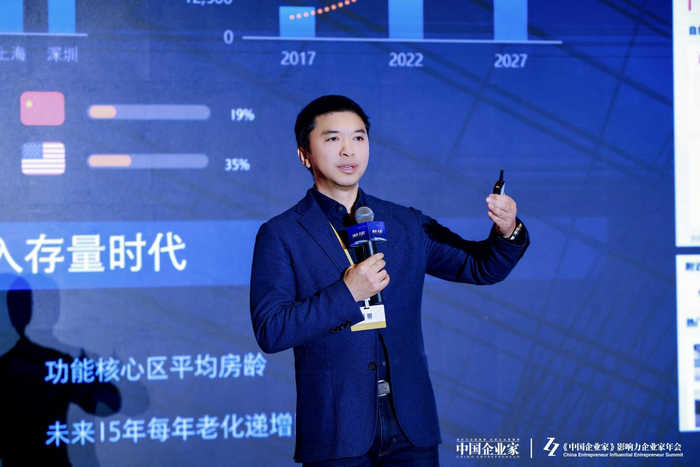
Core Insights - The core message of the speech emphasizes the importance of understanding the market and choosing the right path for business growth, illustrated through the concept of "narrow doors" leading to broader opportunities [2][12]. Group 1: Company Growth and Strategy - The company has achieved a scale of managing 1 million rental units, making it the largest in the world in this sector, reflecting a significant growth trajectory over the past decade [2][6]. - The company focuses on a "narrow door" strategy, which involves specializing in refined operations within the vast rental market, thus establishing itself as China's largest professional housing rental institution [12][14]. - The company has adapted its business model to the changing market conditions, emphasizing the need for structural innovation in response to evolving consumer demands and market dynamics [12][14]. Group 2: Market Insights - China has a total of 350 million housing units, with approximately 30% currently rented out, indicating a massive market potential for rental services [5][13]. - The rental market is expected to grow as housing needs become more fragmented and personalized, leading to increased demand for individual unit updates and rentals [6][13]. - The company has identified a shift in rental demographics, with a growing need for one-bedroom apartments as young professionals transition from shared living arrangements [10][11]. Group 3: Product Development - The company has developed various rental products, such as "Ziroom Youjia" for shared living and "Ziroom Xinshe" for whole-unit rentals, catering to different market segments and needs [8][10]. - The introduction of high-end rental products like "Manshe" targets corporate executives, showcasing the company's ability to diversify its offerings based on market demand [11]. - The company is investing in smart rental communities, aiming to create fully automated living spaces, which reflects a forward-thinking approach to property management [11][14].
波司登极寒战役:49年的极致守护,品牌“极地”无止境
Tai Mei Ti A P P· 2025-12-10 05:09
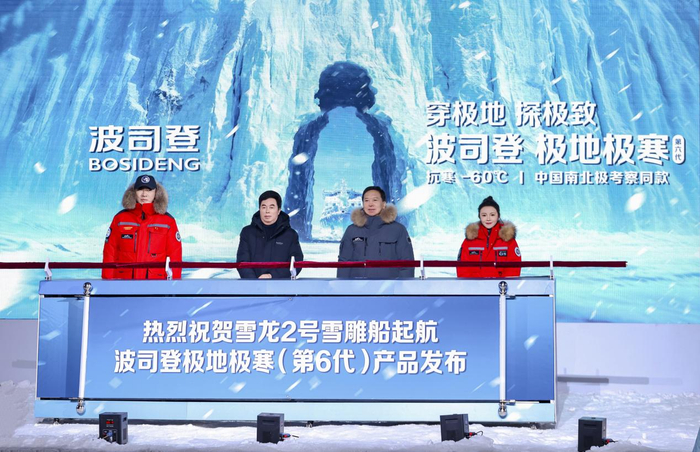
Core Viewpoint - The event held by Bosideng in Harbin emphasizes the brand's long-standing commitment to extreme cold weather gear, showcasing its latest technology and products designed for polar exploration, while celebrating its 28-year partnership with China's polar research efforts [1][16]. Group 1: Event Highlights - The launch event featured a snow sculpture of the "Xuelong 2" icebreaker, symbolizing Bosideng's dedication to extreme cold technology [3]. - The event included a forum titled "Life Meets the Polar," where experts and brand ambassadors discussed the importance of innovation and resilience in extreme conditions [8][10][14]. Group 2: Product Innovation - Bosideng's sixth-generation extreme cold series is designed for polar exploration, utilizing advanced technologies such as GORE-TEX fabric, a unique insulation structure mimicking polar bear fat, and a dynamic moisture-wicking system [5][6]. - The new products can withstand temperatures as low as -60°C, addressing the challenges of maintaining warmth and breathability in extreme environments [5][15]. Group 3: Brand Development and Market Position - Bosideng has established a strong market presence, with sales exceeding 200 million units globally and a leading position in the domestic market for 30 consecutive years [19]. - The company is focusing on diversifying its product offerings and enhancing its technological capabilities, with a goal to reach a market size of 250 billion yuan by 2025 [17]. Group 4: Commitment to Quality and Sustainability - Bosideng emphasizes quality control in its production process, sourcing down from premium regions and adhering to strict animal welfare and environmental standards [15]. - The company has accumulated 1,520 patents, reinforcing its technological barriers and commitment to innovation in the down apparel industry [17].
智谱AutoGLM与豆包手机的分歧,是AI时代的安卓苹果之战?
Tai Mei Ti A P P· 2025-12-10 05:04
Core Insights - The core focus of the news is the open-sourcing of AutoGLM, an AI Agent model developed by Zhiyuan, which aims to democratize AI capabilities and prevent monopolization in the industry [2][3]. Group 1: AutoGLM Overview - AutoGLM is a cross-platform AI Agent capable of executing complex tasks on devices like smartphones and computers through natural language commands, covering over 50 high-frequency Chinese applications [2]. - The model emphasizes "execution" rather than just conversation or information retrieval, with a public release planned for August 2025 [2]. Group 2: Reasons for Open-Sourcing - Zhiyuan's decision to open-source AutoGLM is driven by three main reasons: to avoid monopolization of AI capabilities by a few companies, to protect user privacy by ensuring data control remains with users, and to share 32 months of technological advancements to lower the development barrier for AI Agents [3]. - The open-sourcing includes a trained core model, Phone Use capability framework, and demos for over 50 applications, all under MIT and Apache-2.0 licenses [3]. Group 3: Implications of Open-Sourcing - The open-source model allows developers to integrate AutoGLM into their systems easily, fostering a diverse range of AI-native applications and solutions, thus accelerating the growth of the Agent ecosystem [4]. - The AutoGLM team emphasizes returning control to users to address trust issues, stating that they do not wish to retain control over sensitive areas like payments and social interactions [4]. Group 4: Competitive Landscape - The strategy of AutoGLM is to become a foundational infrastructure for AI, similar to Android in the mobile application ecosystem, while competitors like Doubao focus on hardware integration to capture user interaction points [5]. - AutoGLM employs a "cloud-based agent" paradigm, executing tasks on virtual devices without affecting local resources, contrasting with Doubao's "embodied intelligence" approach that operates directly on physical devices [5]. Group 5: Industry Dynamics - The divergence between AutoGLM and Doubao reflects a broader debate in the industry regarding the definition of software versus hardware roles, indicating that more players will enter this competitive landscape [6].

快造科技完成数亿元 B轮融资,高瓴创投、美团、顺为资本加速入局消费级 3D打印 | 融资速递
Tai Mei Ti A P P· 2025-12-10 04:11
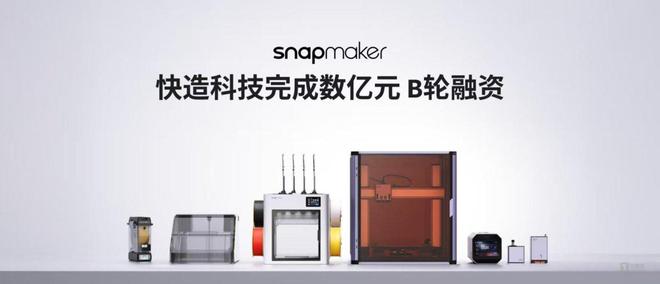
Core Insights - Snapmaker, a global consumer-grade 3D printing brand, has completed a multi-hundred million RMB Series B financing round, led by Hillhouse Capital and Meituan, with participation from several other investors [1] - The funds will be used for core technology research and development, high-end talent recruitment, and content ecosystem construction to accelerate the popularization of consumer-grade 3D printing technology [1] Group 1: Product Innovation and Market Performance - Since its establishment in 2016, Snapmaker has focused on consumer-grade 3D printing, breaking global crowdfunding records with its products [3] - The Snapmaker 2.0 raised over 54 million RMB in 2019, setting a record in the technology category and achieving the highest market share globally [3] - The flagship U1 3D printer raised over 150 million RMB (approximately 20 million USD) in crowdfunding in 2025, becoming the highest crowdfunding project in 3D printing history, supported by over 20,000 users [3] Group 2: User-Centric Approach and Technological Advancements - Snapmaker's breakthroughs stem from precise insights into user needs and deep integration of technology, addressing pain points such as low efficiency and material waste in multi-color printing [4] - The U1 printer features the innovative SnapSwap™ independent four-head system, allowing for rapid material switching and significantly enhancing printing efficiency and stability, achieving five times the speed and material savings [4] Group 3: Future Growth and Strategic Focus - The recent financing is seen as a critical milestone for Snapmaker, transitioning from product leadership to ecosystem completeness [6] - The company aims to accelerate core technology development, expand global talent recruitment, and build an open ecosystem to lower the barriers for 3D printing, making it a universal creative tool [6] - Snapmaker is actively recruiting for key positions in mechanical electronics, software control, and marketing to drive innovation [6]

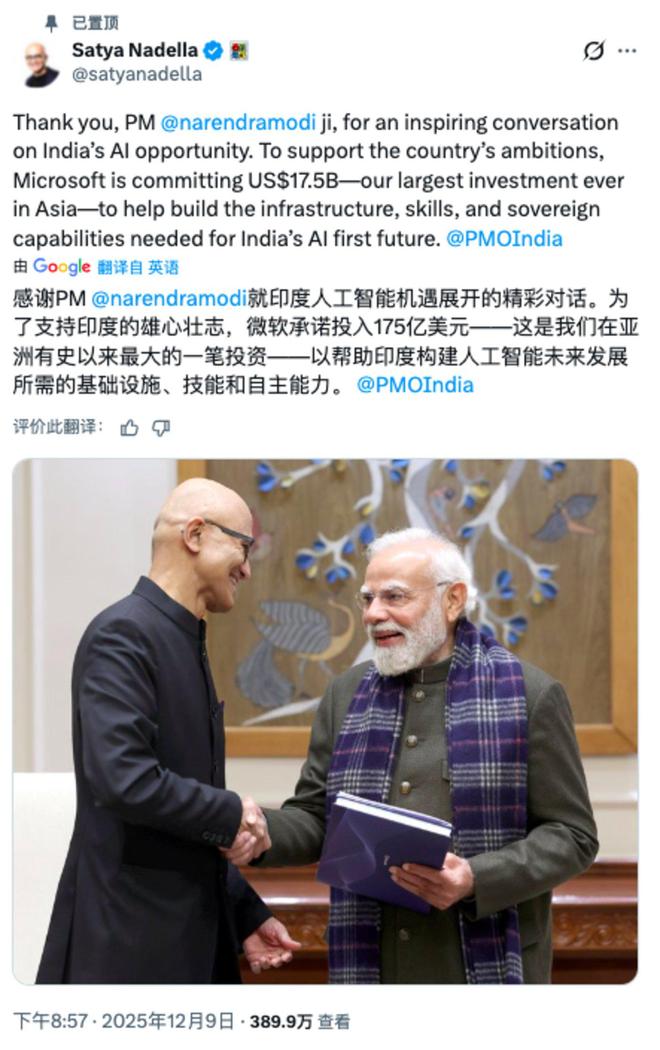
微软祭出在亚洲最大投资,175亿美元豪赌印度AI
Tai Mei Ti A P P· 2025-12-10 03:26
Group 1 - Microsoft CEO Satya Nadella announced a commitment to invest $17.5 billion in India to build AI infrastructure, skills training, and self-sufficiency [1][3] - This investment is the largest ever by Microsoft in Asia and will be implemented gradually from 2026 to 2029, focusing on AI infrastructure centered around large-scale data centers [1][3] - The investment aims to provide AI skills to 20 million Indians by 2030 and create job opportunities while supporting the development of digital governance platforms in India [3][4] Group 2 - Microsoft has been active in India for over 30 years, employing more than 22,000 people, and is leveraging India's policy advantages, labor cost benefits, and IT infrastructure [4][5] - The recent investment comes amid a strategic reevaluation by Microsoft, with Nadella hiring Rolf Harms as an AI economics advisor to rethink the company's business model in the AI era [5][6] - Microsoft’s Copilot AI platform has a high usage rate of 76%, indicating its strategic significance in the AI software service market [6] Group 3 - Other tech giants like Google and Nvidia are also interested in the Indian AI market, with Google planning to invest $15 billion in India over the next five years [7][9] - The Indian government is actively seeking foreign investment in AI and digital infrastructure, viewing AI as a critical area for future development [10] - Predictions indicate that India's data center market could triple in size within five years, with the AI market expected to reach $17 billion by 2027 [10]