投资界

Search documents
2500亿,网红薯片被卖了
投资界· 2025-12-13 07:39
Group 1 - Mars has completed the acquisition of Kellanova, the parent company of Pringles, for approximately $35.9 billion (about 253.4 billion RMB), marking the largest food industry acquisition of the year [2][5] - The acquisition signifies the merging of well-known brands, with Mars owning brands like Dove and Snickers, while Kellanova is recognized for Pringles and Kellogg's cereals [2][4] - The deal was in the works for a long time, with regulatory approval received in December, leading to Kellanova's delisting from the New York Stock Exchange [5][6] Group 2 - Pringles, launched in 1968, was the first canned potato chip brand and gained popularity through unique flavors and marketing strategies [4][6] - The brand initially struggled in sales but became a hit in the 1980s after taste adjustments and effective advertising [6] - Kellanova's history dates back to 1894, and it became the second-largest snack company globally after acquiring Pringles from Procter & Gamble for $26.95 billion (about 188 billion RMB) in 2012 [6][7] Group 3 - Mars CEO Paul Wehrrauch described the acquisition as historic, emphasizing the opportunity for innovation and reaching more consumers [7] - Mars is a well-known company with a diverse portfolio, including brands like M&M's and Skittles, and has a history of significant acquisitions [8][9] - The acquisition is expected to boost Mars' snack food business revenue to approximately $36 billion, positioning it as the third-largest player in the global snack industry [9] Group 4 - The article highlights a broader trend of mergers and acquisitions in the consumer sector, with companies like Starbucks and Burger King also engaging in strategic partnerships and sales [10][12] - The competitive landscape in the consumer market is prompting brands to adjust strategies, with many familiar brands choosing to sell parts of their businesses [13] - The food and beverage sector is viewed as resilient and attractive for investment, especially during economic fluctuations, leading to increased merger activity [13]


德国企业,正在疯狂涌入中国
投资界· 2025-12-13 07:39
Core Viewpoint - The article discusses the significant influx of German companies into China, driven by various economic pressures and strategic advantages, marking a shift in the global industrial landscape [2][10]. Group 1: German Companies Moving to China - Over 560 German companies have established operations in Taicang, Jiangsu, with more than 60 being "hidden champions" in their respective industries [2]. - The first 100 German companies took 14 years to settle in Taicang, while the next 100 (from 400 to 500) only took 2 years, indicating a rapid acceleration in this trend [2]. - German investments in Taicang exceed $6 billion, with annual industrial output surpassing 67 billion yuan [2]. Group 2: Major Investments and Developments - In 2024, notable investments include Volkswagen's €2.5 billion expansion in Hefei, Bayer's 600 million yuan supply center in Jiangsu, and Mercedes-Benz's €1 billion investment in a Beijing autonomous driving research center [3]. - Volkswagen's electric vehicle production capacity in China has reached 800,000 units, with 90% of components sourced locally [3]. - Leica has shifted 60% of its production to China, emphasizing the importance of local expertise in high-end manufacturing [3]. Group 3: Challenges Faced by German Companies - In 2024, Germany saw a record 22,000 bankruptcies, the highest in a decade, with a 12% year-on-year increase in bankruptcy applications in the first half of 2025 [5]. - Major companies like Flabeg and Recaro have declared bankruptcy, while others like Bosch and Volkswagen are implementing cost-cutting measures [6]. - The German industrial sector's self-assessed competitiveness has reached a 31-year low, with 36.6% of surveyed companies feeling disadvantaged compared to non-EU competitors [6]. Group 4: Factors Driving the Shift - The rise in energy costs, particularly a 148% increase in industrial electricity prices under the Green Party's policies, has severely impacted German manufacturing [7]. - Germany has permanently closed 17 nuclear power plants and about 60% of coal power plants, leading to a reliance on imported electricity and a tripling of energy costs [9]. - The U.S. tariffs on EU goods, including a 15% tax on many exports, have further diminished the competitiveness of German products in the American market [9]. Group 5: Strategic Advantages of Moving to China - The shift is not merely cost-driven but represents a strategic integration into a more dynamic "super ecosystem" in China [10]. - German companies are attracted to China's "innovation cost" advantages, as the rapid technological advancements in electric vehicles require faster development cycles than traditional methods [10]. - The "system cost" advantage in China allows for efficient supply chain integration, reducing overall operational costs significantly [11]. - The "future cost" advantage is highlighted by China's growing share in global manufacturing, which reached 31% in 2024, surpassing developed nations for the first time [14]. Group 6: Long-term Strategic Choices - The migration of German companies to China is seen as a long-term strategic choice rather than a temporary measure, with many planning further investments [15]. - The integration into China's industrial ecosystem is viewed as essential for maintaining competitiveness in the future global market [15].

LP圈发生了什么
投资界· 2025-12-13 07:39
「解码 LP 」系投资界旗下专注 LP 报道公众号,关注各地基金政策,捕捉 LP 最新动态,欢迎关注! 根据公开信息统计:截至周五下午,本周(12月6日-12月12日)LP动态共26起。 LP 上海国资又出资了 投资界-解码LP获悉,上海未来产业基金宣布拟参投5只子基金,分别是:上海琏瑆创业投 资合伙企业(有限合伙)、上海创新工场创业投资合伙企业(有限合伙)(暂定名)、苏州 砺思星河创业投资合伙企业(有限合伙)、上海元禾璞华未来种子创业投资合伙企业(有限 合伙)、上海思源探索创业投资合伙企业(有限合伙)。 近 日 , 香 港 投 资 管 理 有 限 公 司 ( 简 称 : 港 投 公 司 ) 近 日 公 布 了 " 新 资 本 投 资 者 入 境 计 划 " 下 " 投 资 组 合 " 的 " 2 0 2 5 资 金 组 别 " 获 委 任 的 十 家 投 资 机 构 : 盘 实 资 本 、 海 阔 天 空 创 投 、 CMC资本、晨壹基金、隐山资本、M Ca p it a l、柏骏资本、春华资本、信宸资本/中信资本 与远信资本投资管理有限公司及惠理集团。 管理着6 4 0亿港元,港投公司被誉为"港版淡马锡" ...

东南亚,掘金正当时
投资界· 2025-12-12 08:27
Core Insights - Southeast Asia is emerging as a critical battleground for global capital and enterprises, with a significant consumption upgrade expected as countries approach a per capita GDP of $5,000 [3][4] - Indonesia and Singapore are highlighted as key destinations for investment opportunities, with Indonesia being referred to as the "next China" due to its large population and rapid market growth [4][5] Group 1: Investment Opportunities - Singapore boasts a per capita GDP of $90,700 in 2024, excelling in technology innovation, education services, and business environment [4] - Indonesia, with a population of over 270 million and an average age of 29, presents a dual advantage of a large market size and high growth potential [4][5] - The investment landscape includes notable companies like Gojek, which operates a wide range of services in Indonesia and Singapore, and Innowave Tech, focusing on AI-driven smart manufacturing solutions [7][8] Group 2: Educational and Networking Initiatives - The program includes visits to leading enterprises, capital dialogues, and academic institutions, creating a comprehensive understanding of the local market dynamics [5][21] - Participants will engage with top investment firms such as ATM Capital, which manages over $1 billion across four funds, and Vertex Ventures, a prominent venture capital firm in Asia [12][14][17] - The itinerary is designed to provide insights into operational strategies, investment trends, and academic advancements, ensuring a well-rounded learning experience [5][23] Group 3: Unique Experiences - The program features exclusive events, including a closed-door dinner with prominent Chinese entrepreneurs and investors in Southeast Asia, fostering deep discussions and networking [24][27] - Participants will also experience the cultural richness of Southeast Asia, enhancing their understanding of the local business environment [29][31] - The journey aims to build a robust network of high-quality resources across industries, investment institutions, and academia, facilitating future collaborations [32]
现在讲AI泡沫太早了
投资界· 2025-12-12 08:27
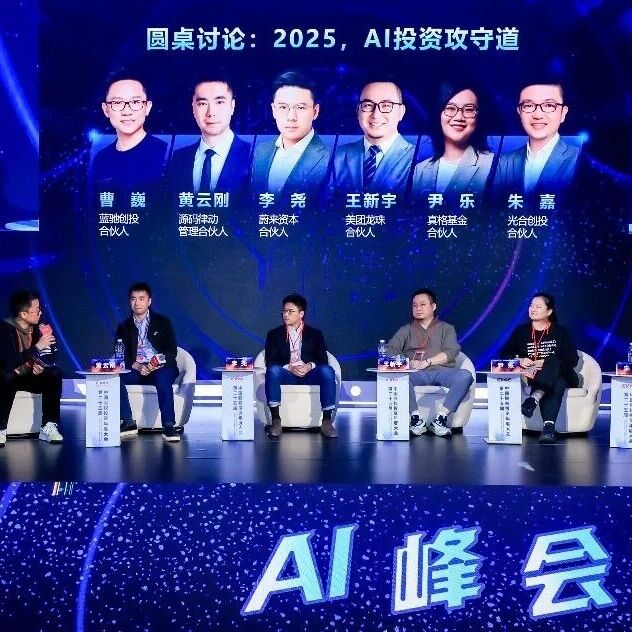
Core Viewpoint - The article discusses the evolving landscape of AI investment, highlighting the optimism and opportunities in the sector as it matures and diversifies, particularly in the context of the 2025 investment climate [2][8][31]. Group 1: Investment Trends and Market Dynamics - The 2025 investment environment shows significant improvement compared to 2024, with increased activity in the primary market driven by AI innovations [5][6]. - The Hong Kong stock market has become more vibrant, boosting confidence in Chinese tech companies and facilitating more investments in the primary market [6][8]. - AI investment is viewed as a long-term endeavor, with expectations of continued growth and opportunities over the next 5 to 10 years [6][7][31]. Group 2: AI Applications and Infrastructure - Investment in AI is categorized into two main directions: AI applications and the infrastructure supporting AI development, with a focus on hardware and software advancements [6][7]. - Companies are increasingly returning to foundational research and practical applications of AI, refining their products to better address specific market needs [9][10]. - The trend indicates that industries not directly related to AI will not be primary investment targets, as AI continues to dominate the investment landscape [6][7]. Group 3: Competitive Landscape and Global Dynamics - The competition between China and the U.S. in AI is characterized by a shift towards hardware and application development in China, while the U.S. focuses on large-scale models and computational power [12][14][21]. - Chinese companies are increasingly closing the gap in model capabilities and application effectiveness, with significant advancements in AI hardware and software [21][22][23]. - The article emphasizes the importance of understanding the boundaries between AI models and applications, as well as the potential risks of applications being subsumed by more advanced models in the future [29][30]. Group 4: Future Outlook and Expectations - The outlook for 2026 suggests a continued focus on AI applications, particularly in vertical industries and SaaS companies that integrate AI deeply into their business processes [31][33]. - There is an expectation for significant advancements in embodied intelligence and robotics, with a belief that these areas will see rapid development and commercialization [33][34]. - The overall sentiment is one of cautious optimism, with a recognition that while AI has immense potential, its evolution will be gradual and require sustained investment and innovation [27][31].
C罗也做VC了
投资界· 2025-12-12 08:27
Core Viewpoint - Cristiano Ronaldo has officially invested in the AI startup Perplexity AI, signing a global partnership agreement to enhance curiosity-driven questioning among users [2][4]. Company Overview - Perplexity AI, founded in August 2022 by three individuals in their 20s, aims to compete with Google through intelligent search technology. The company has achieved a valuation exceeding $20 billion [2][3]. - The platform attracted over one million visitors within its first month of launch, indicating strong initial interest and market potential [3]. Investment Details - Perplexity AI has successfully raised a total of $150 million over six funding rounds, with notable investors including Nvidia, Jeff Bezos, and SoftBank Vision Fund. The latest funding round in September 2023 secured a commitment of $200 million, boosting the company's valuation to $20 billion [4][5]. - Ronaldo's investment is motivated by a shared belief in the importance of curiosity and continuous questioning as a pathway to success [4]. Athlete Involvement in VC - The trend of athletes entering the venture capital space is growing, with figures like Shaquille O'Neal and Giannis Antetokounmpo also making significant investments in various sectors [7][9]. - Athletes leverage their influence and wealth to support innovative startups, expanding their business ventures beyond sports [9][10].

中东豪门,刚投一个深圳团队
投资界· 2025-12-12 08:27
Core Viewpoint - The article highlights the significant investment activity from Middle Eastern funds in Chinese technology companies, particularly in the robotics sector, exemplified by the recent multi-million dollar B round financing of Digua Robotics, which underscores the growing interest in Chinese tech assets [2][12]. Group 1: Company Overview - Digua Robotics, established in 2024 in Shenzhen, originated from Horizon Robotics and completed a $100 million A round financing in May 2023 [2][5]. - The company aims to provide a universal platform for robotics hardware and software, focusing on various applications including humanoid robots, logistics AMRs, and service robots [5][6]. - The name "Digua" symbolizes the connection to Horizon Robotics and reflects the company's aspiration to thrive in diverse conditions, similar to the growth of sweet potatoes [5]. Group 2: Investment Activity - The recent B round financing of Digua Robotics involved multiple dollar funds and strategic investors, including Prosperity 7 Ventures, a fund under Saudi Aramco, indicating a strong interest from Middle Eastern investors in scalable Chinese startups [2][6]. - Prosperity 7 Ventures' managing director emphasized the unique advantages of Digua Robotics in the evolving robotics industry, highlighting the demand for unified and reliable infrastructure [7]. - The investment landscape in Shenzhen's robotics sector is vibrant, with over 200 key enterprises and significant funding activity, showcasing a robust ecosystem for innovation [8][10]. Group 3: Industry Trends - The article notes a growing trend of Middle Eastern investment in Chinese technology, particularly in AI, robotics, and other advanced sectors, reflecting a strategic move towards economic diversification and technological advancement [12][13]. - The emergence of Shenzhen as a dual hub for AI and robotics is underscored, with numerous companies and research institutions collaborating to drive innovation and talent development [9][10]. - The competitive landscape is shifting, with Chinese companies transitioning from technology followers to equal competitors on the global stage, potentially leading to the rise of new industry giants [12][13].

赴港买楼,刘强东第六个IPO上了
投资界· 2025-12-11 02:23
京东系版图。 作者/刘博 报道/投资界PEdaily 兜兜转转,终于上了。 投 资 界 消 息 , 今 日 ( 1 2 月 11 日 ) 京 东 工 业 正 式 登 陆 港 交 所 , 此 次 I PO 发 行 价 为 1 4 . 1 港 元/股, 开盘略跌,市值超3 5 0亿港元。 这是刘强东收获的又一个I PO。至此,京东系迎来六家上市公司——京东、达达、京东 健康、京东物流、德邦物流;身后还有京东科技、京东产发在内的两大独角兽。 回望今年,京东似乎忙得飞起——从送外卖、开厨房到买超市,再到扫货具身智能,最 新一幕则是斥资3 4 . 7 3亿港元赴港买楼。显然,重回外界视野中的刘强东,依然在运筹 帷幄着京东的巨无霸版图。 一波三折 具 体 来 说 , 京 东 工 业 所 专 注 做 的 是 在 线 MRO 业 务 。 那 么 MRO 是 什 么 ? 全 称 为 Ma i n t e n a n c e ·Re p a ir·Op e r a t i o n , 可 被 译 为 " 非 生 产 原 料 性 质 的 必 要 工 业 用 品 " 。 通 俗 来讲,就是在当代工业体系中,工厂在生产产品时,其生产线 ...

2025上海智能制造行业沙龙暨VENTURE50路演日
投资界· 2025-12-11 02:23
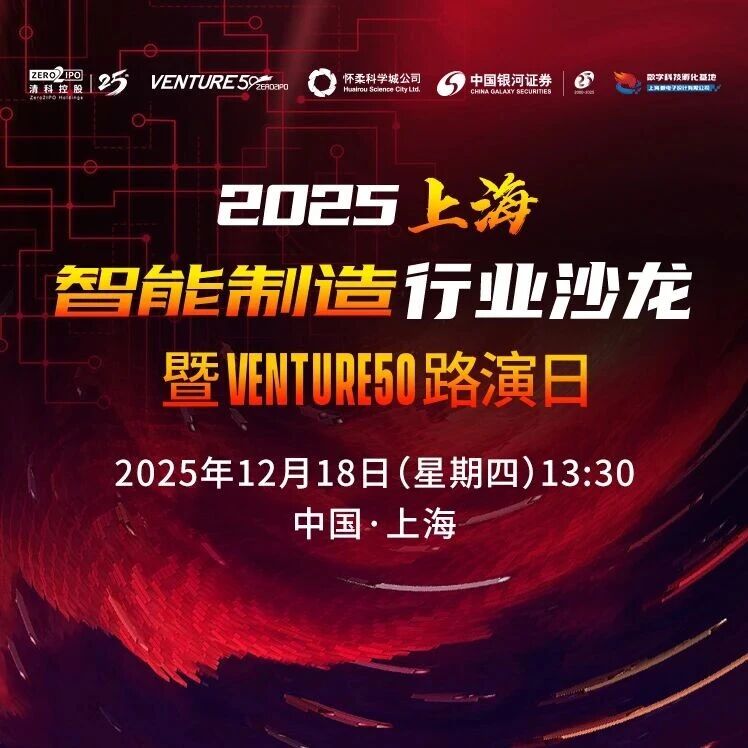
Core Viewpoint - The article discusses the upcoming "2025 Shanghai Intelligent Manufacturing Industry Salon and VENTURE50 Roadshow Day," which aims to activate the technology, venture capital, and industrial development ecosystem, promoting efficient connections between industry and capital to foster high-quality regional development [1]. Event Details - The event is scheduled for December 18, 2025, at 13:30 in Shanghai, specifically at the Technology Capital G Zone, 8th Floor, Beijing East Road 668, Huangpu District [1]. - The salon will leverage the "VENTURE50" initiative, which focuses on high-growth enterprises, to create a "4410" industrial system supported by strategic leading industries, emerging dominant industries, future industries, and the real economy [1]. Agenda Overview - The agenda includes guest sign-in, opening remarks, a presentation on Huairou Science City, the VENTURE50 enterprise roadshow, and a session for free networking [4]. Participating Companies - Notable companies participating in the roadshow include: - **格晶半导体**: GaN power module IDM enterprise - **飞巴科技**: Renowned for smart lightweight commercial vehicles - **奇异座尔**: Provider of AI network full-stack interconnection products and solutions - **臺末智造**: Provider of precision processing domestic alternatives - **同温层信息**: AI quality inspection robot developer for the textile industry - **题屹汽车**: Comprehensive automotive R&D, design, trial production, and intelligent manufacturing enterprise - **华控智能**: Focused on material testing and industrial automation, providing overall solutions for intelligent equipment systems [6][7]. Additional Companies - Other companies include: - **分子势能**: AI-driven biopharmaceutical platform - **扬帆半导体**: Specialized in semiconductor single wafer cleaning machines - **兴元灵境**: Manufacturer of consumer-grade XR omnidirectional motion-sensing devices - **远思智能**: System simulation and model library provider - **楚动科技**: One-stop solution provider for chronic disease nutritional management - **欧力特**: Focused on the entire ecosystem of new energy storage [7].
上海国资又出资了
投资界· 2025-12-11 02:23
Core Viewpoint - Shanghai Future Industry Fund is actively investing in multiple sub-funds to support innovative industries, aiming to create a comprehensive ecosystem for early-stage investments in future industries [5][9]. Investment Activities - The Shanghai Future Industry Fund plans to invest in five new sub-funds, bringing the total to 23 sub-funds this year [5][6]. - The fund's total scale has increased from 10 billion to 15 billion, with 8 billion already in place [9]. Fund Structure and Strategy - Established in 2024, the fund is a government-guided, market-oriented investment vehicle with a focus on early-stage investments in future industries [7]. - The fund employs a "direct investment + sub-fund investment" model, targeting major strategic projects in future industries [7][9]. Future Industry Focus - The fund emphasizes disruptive technologies and interdisciplinary applications in sectors such as future information, energy, health, space, manufacturing, and materials [7]. - Shanghai aims to achieve a future industry output value of 500 billion by 2030, focusing on key technologies like brain-computer interfaces and quantum computing [10][11]. Ecosystem Development - Shanghai is building a supportive ecosystem for future industries, including research institutes and innovation clusters [10][11]. - The city has launched multiple initiatives to foster high-quality incubators and innovation resources, with significant investments in emerging industries [11][12].