中金点睛

Search documents
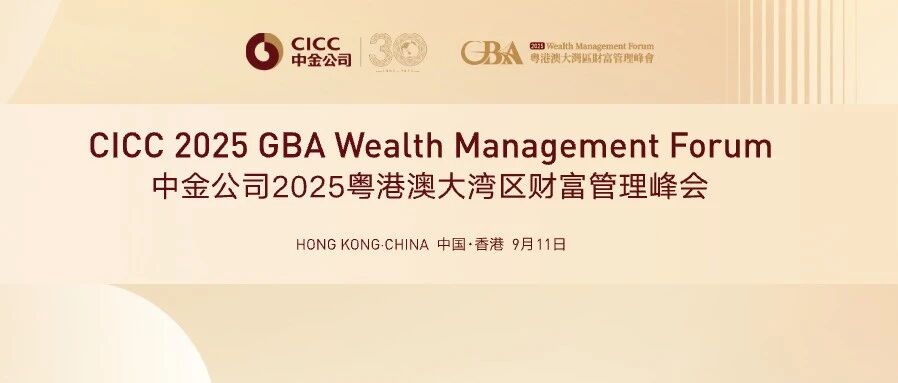
活动预告 | 中金点睛数字化投研平台将重磅亮相2025年粤港澳大湾区财富管理峰会
中金点睛· 2025-09-08 23:55
Core Insights - The article highlights the upcoming 2025 Guangdong-Hong Kong-Macao Greater Bay Area Wealth Management Summit hosted by CICC, showcasing the CICC Dots digital research platform aimed at enhancing investment research services for global clients [1][2]. Group 1: Event Overview - The summit will officially commence on September 11, 2023, in Hong Kong, featuring the CICC Dots platform for the first time to overseas clients [1]. - The event aims to gather industry leaders and experts to foster discussions on wealth and future opportunities [5]. Group 2: CICC Dots Platform - CICC Dots is a comprehensive investment research service platform integrating insights from over 30 professional teams and covering more than 1,800 stocks globally [1]. - The platform has undergone significant upgrades, including multilingual research reports, high-end conference resources, and enhanced intelligent search engine capabilities [1]. Group 3: International Research Capabilities - CICC's international research team has established deep coverage in Southeast Asia, Japan, South Korea, Latin America, and the Middle East, providing 24/7 professional support to overseas institutional clients [2]. - The company aims to leverage digital innovation to enhance the investment research experience for global institutional investors [2].

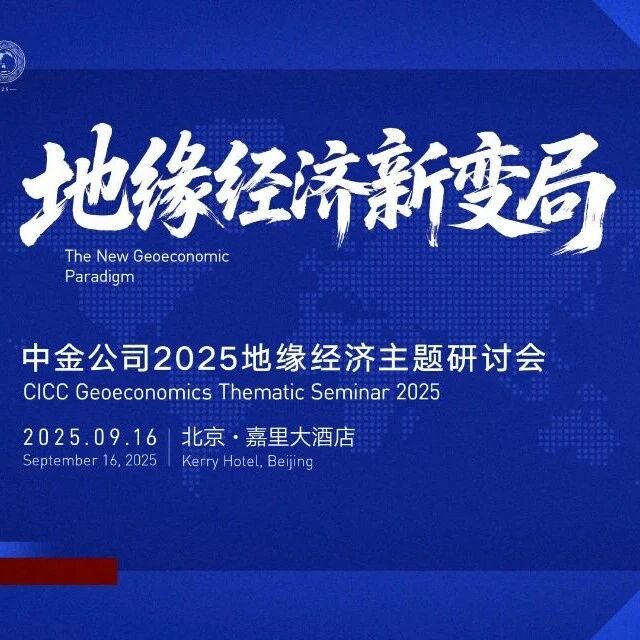
会议预告 | 中金公司2025地缘经济主题研讨会:地缘经济新变局
中金点睛· 2025-09-08 23:55
Core Insights - The article discusses the CICC Geoeconomics Thematic Seminar 2025, focusing on the new geoeconomic paradigm and its implications for various sectors [2][5]. Session Summaries - The seminar features keynote speeches from prominent figures such as Jeffrey D. Sachs and Zheng Yongnian, addressing the intersection of geoeconomics and sustainable development [5][6]. - The first thematic session focuses on digital finance and the new geopolitical landscape, with speakers from prestigious institutions like the University of Chicago and Fudan University [6][8]. - The second thematic session addresses new trends in energy transition, featuring experts from international energy organizations and universities [8][9]. - The third thematic session explores strategic industries and their implications from a geoeconomic perspective, with contributions from scholars in international relations and political science [9][10]. - The fourth thematic session emphasizes the role of finance in promoting technological development, with discussions led by leaders in academia and industry [10][11].

中金 • 全球研究 | 2025年日本自民党总裁选举#1:石破首相辞职
中金点睛· 2025-09-08 23:55
Core Viewpoint - The resignation of Japanese Prime Minister Ishiba on September 7, 2025, is expected to lead to a more aggressive fiscal policy and a more accommodative monetary policy from potential successors, which may exert upward pressure on Japanese stocks, depreciation pressure on the yen, and upward pressure on long-term Japanese government bond yields [2][10]. Group 1: Resignation Context - Ishiba announced his resignation, stating that it was an appropriate time following the conclusion of trade negotiations with the U.S. and to avoid potential internal divisions within the Liberal Democratic Party (LDP) [3]. - The backdrop of his resignation includes significant losses for the LDP in the July 20 Senate elections, which typically necessitate accountability from the party leader [4]. - A survey indicated that 103 out of 295 LDP members supported an early presidential election, suggesting a lack of confidence in Ishiba's leadership [4][6]. Group 2: Importance of the LDP Presidential Election - The LDP is the largest party in the House of Representatives, holding 196 out of 465 seats, making the upcoming presidential election crucial as the winner will likely become the next Prime Minister [5]. - The LDP has been the ruling party in Japan for most of the past 70 years, indicating a low likelihood of structural changes in Japanese politics despite the leadership transition [5]. Group 3: Future Election Arrangements - Two potential models for the LDP presidential election are identified: a "complete process" involving all party members, which takes about a month, and a "simplified process" relying on local party branches, which takes 2-3 weeks [6][7]. - The decision on which model to adopt will be made after September 8, with the new president expected to be elected by late September [7]. Group 4: Potential Candidates - In the 2024 LDP presidential election, the leading candidates were Sanna Takachi with 181 votes and Shinjiro Koizumi with 136 votes, indicating their strong support [7]. - Public opinion polls show Takachi and Koizumi as the top choices for the next Prime Minister, with 15.9% and 14.6% support, respectively [7][11]. Group 5: Impact on Financial Markets - Ishiba's economic stance focused on fiscal consolidation and monetary normalization, which has led to a "Ishiba Discount" affecting the Japanese stock market negatively [10]. - The resignation is expected to shift the market dynamics favorably, with potential successors likely to adopt more aggressive fiscal and accommodative monetary policies, although some market impacts may already be priced in [10].

Agenda | The New Geoeconomic Paradigm
中金点睛· 2025-09-08 23:55
Core Insights - The seminar focuses on the new geoeconomic paradigm and its implications for various sectors, emphasizing the importance of understanding the evolving economic landscape [2][5]. Session Summaries Morning Plenary Session - The session includes welcome remarks by Chen Liang, Chairman of CICC, followed by keynote speeches from prominent figures such as Jeffrey D. Sachs and Zheng Yongnian, discussing sustainable development and public policy [5][6]. Parallel Thematic Session I: Digital Finance and New Geoeconomic Landscape - This session features discussions on the impact of digital finance on the geoeconomic landscape, with contributions from experts like Harald Uhlig and Wang Yongqin [7][8]. Parallel Thematic Session II: New Geoeconomic Trends of Energy Transition - Keynote speeches and roundtable discussions focus on energy transition trends, featuring insights from leaders in energy studies and policy research, including Sun Xiansheng and Michael Mehling [10][11]. Parallel Thematic Session III: Strategic Industry and Industrial Strategy from a Geoeconomic Perspective - This session addresses the strategic implications of industrial policies in the context of geoeconomics, with participation from various academic and industry leaders [13][14]. Parallel Thematic Session IV: Finance for Technological Advancement - The final session explores the role of finance in fostering technological advancements, featuring discussions led by experts such as Wang Tianmiao and Liu Qiao [15][17].
中金:品类革新系列之纤毫毕现——全景相机
中金点睛· 2025-09-08 23:55
Core Viewpoint - The handheld smart imaging device market, represented by panoramic and action cameras, is experiencing rapid growth driven by social media and outdoor sports trends. The industry is expected to continue its growth momentum, with the Asian market, particularly China, becoming the main driver of demand. Domestic brands are likely to lead industry development through innovation, while leading manufacturers are expected to explore cross-industry opportunities to unlock incremental demand [2][3]. Market Overview - The global handheld smart imaging device market size grew from 16.4 billion in 2017 to 36.5 billion in 2023, with a CAGR of 14%. It is projected to reach 59.2 billion by 2027, with an estimated CAGR of 13% from 2023 to 2027. The panoramic and action camera markets are expected to reach 7.85 billion and 51.35 billion, respectively, by 2027 [3][10][28]. Product Characteristics - Handheld smart imaging devices include panoramic cameras, which use multiple fisheye lenses to capture and stitch images into 360° views, and action cameras, designed for dynamic recording in outdoor and extreme sports settings. Action cameras are characterized by their portability and durability, with high requirements for shockproof and waterproof capabilities [8][11]. Application Areas - Panoramic cameras are widely used in various fields, including daily photography, VR real estate viewing, professional film production, and smart security. The rise of short video platforms in China, with approximately 1.07 billion users in 2023, is expected to further drive the expansion of the panoramic camera market [10][11][21]. Competitive Landscape - The panoramic camera market is dominated by domestic brand Yingshi Innovation, which holds a market share of 67.2% globally and 86.5% in China. The competitive landscape is shifting towards consolidation, with leading companies leveraging technology and marketing advantages to capture market share [12][13]. Future Growth Potential - The outdoor sports market, with approximately 1.22 billion enthusiasts globally in 2023, is expected to benefit the action camera market. The global outdoor products market is projected to grow from 70.22 billion in 2023 to 129.1 billion by 2032, indicating a favorable environment for action camera sales [11][29]. Domestic Market Projections - The domestic market for handheld smart imaging devices is projected to reach approximately 23 billion by 2027, with an estimated sales volume of 771 million units. This growth is supported by the increasing number of content creators on platforms like Douyin, which is expected to reach 290 million creators by 2027 [34][36].

中金:简评深圳住房限购政策调整
中金点睛· 2025-09-07 23:51
Core Viewpoint - Shenzhen has implemented new real estate policies aimed at optimizing housing purchase restrictions and credit policies, which are expected to stimulate housing demand and improve market sentiment [2][3]. Policy Adjustments - The new policy redefines housing purchase zones into three categories: central urban areas, suburban areas, and rural areas, with significant changes in purchase restrictions for both residents and non-residents [3]. - Non-residents with at least one year of social security or tax payments can now purchase two properties in suburban areas, while those without such proof can buy two in rural areas, and there are no restrictions in rural areas [3][7]. - Single residents of Shenzhen can now purchase two properties in central urban areas, an increase from one [3][7]. Credit Policy Changes - The mortgage interest rate pricing mechanism has been adjusted, eliminating the distinction between first and second homes, allowing for more flexible loan terms [3][4]. - The minimum down payment for first homes remains at 15%, while for second homes, it is set at 20% [6]. Market Response - Following similar policy adjustments in Beijing and Shanghai, Shenzhen's new measures are expected to enhance housing sales, particularly in suburban areas [3]. - Recent data indicates that after policy changes in Beijing and Shanghai, new and second-hand housing transaction volumes have shown slight improvements, with Beijing experiencing a 9% and 10% increase respectively, and Shanghai seeing a 25% increase [3]. Investment Opportunities - The real estate and property management sectors are recommended for active investment consideration, as the A/H real estate sectors have shown some performance, although absolute valuation levels remain low [4].

中金:当前行情下的港股操作策略
中金点睛· 2025-09-07 23:51
Core Viewpoint - The article discusses the contrasting performances of A-shares and Hong Kong stocks, highlighting that A-shares have outperformed since July, while Hong Kong stocks have lagged behind due to fundamental issues, liquidity constraints, and low valuation premiums [2][6][26]. Market Performance Overview - The market performance in 2023 can be divided into three phases: 1. January to March: Hong Kong stocks outperformed, driven by AI and technology sectors 2. April to June: U.S. stocks led the market, with Chinese stocks recovering but not reaching previous highs 3. July to present: A-shares surged due to liquidity-driven tech trends, while Hong Kong and U.S. stocks remained volatile at high levels [2][6]. Reasons for Hong Kong's Underperformance - Hong Kong stocks have underperformed due to three main factors: 1. **Fundamentals**: Earnings growth expectations for Hong Kong stocks have been downgraded, contrasting with improvements in A-shares 2. **Liquidity**: The rise in Hibor rates indicates tightening liquidity in Hong Kong 3. **Valuation**: The AH premium has decreased, reducing the attractiveness of Hong Kong stocks [6][18][24]. Earnings Growth Analysis - Hong Kong's net profit growth for the first half of 2023 was 4.2%, while A-shares saw a lower growth of 2.8%. However, A-shares are expected to improve in 2024, while Hong Kong's earnings growth is projected to decline [7][11]. - The earnings per share (EPS) growth forecast for the Hang Seng Index for 2025 has been downgraded to -2.7%, indicating potential negative growth in the second half of the year [11][12]. Liquidity Conditions - Since mid-August, liquidity in Hong Kong has tightened significantly, with Hibor rates spiking to 4.6% before stabilizing around 2.5%. This contrasts with the active liquidity environment in A-shares, where trading volumes have increased significantly [18][23]. Valuation Insights - The AH premium has fallen below 125%, reducing the appeal of Hong Kong stocks for mainland investors due to tax implications. This has contributed to the recent underperformance of Hong Kong stocks [24][26]. Investment Strategy Recommendations - Investors are advised to focus on A-shares if they believe in the continuation of liquidity-driven trends, while those concerned about sustainability may find more stable opportunities in Hong Kong stocks, particularly in sectors with favorable structural dynamics [29][38]. - Key sectors to watch in Hong Kong include pharmaceuticals, technology hardware, non-bank financials, and consumer electronics, which are expected to show higher earnings growth and stability [38][40]. Conclusion on Market Dynamics - The article concludes that while A-shares are currently leading, there is potential for Hong Kong stocks to benefit from structural improvements, especially if the liquidity environment changes. However, the overall market dynamics suggest that structural opportunities will remain more significant than index performance [26][38].

中金 | “9.24”至今行情回顾:何为上涨主线?
中金点睛· 2025-09-07 23:51
Core Viewpoint - The A-share market has shown a strong performance over the past year, with the Shanghai Composite Index rising by 44.6% since the low point in September 2024, outperforming other markets and asset classes [3][4][7]. Market Performance Overview - The A-share market has experienced a significant increase in daily trading volume, rising from less than 500 billion yuan in September 2024 to around 3 trillion yuan recently, indicating a shift in investor risk appetite [3]. - The technology growth style has performed particularly well, with the STAR 50 and ChiNext Index showing cumulative gains of 95.9% and 92.9%, respectively [3][4]. Phases of Market Movement 1. **Initial Phase of Market Rally (Late September to Early October 2024)**: - The market began to rally following a series of pro-growth policies announced in late September, including interest rate cuts and support for the stock market [3]. - The Shanghai Composite Index rose by 27% in just six trading days, with the ChiNext Index and STAR 50 gaining 66.6% and 59.2%, respectively [3][4]. 2. **Consolidation Phase (October 2024 to March 2025)**: - After reaching a peak in October, the market entered a consolidation phase with the Shanghai Composite Index fluctuating within a 200-point range [4]. - The focus shifted from macroeconomic policies to industry trends, with technology and AI sectors gaining attention [5]. 3. **Adjustment Phase Due to External Risks (March to Early April 2025)**: - External uncertainties led to a market pullback, particularly in the technology sector, but intervention from state-owned funds and monetary policy support helped stabilize the market [6]. 4. **Recovery Phase (Mid-April 2025 to Present)**: - The market has entered a steady upward phase, supported by improved macroeconomic conditions and increased liquidity, with the margin trading balance exceeding 2 trillion yuan [6]. - Key sectors such as pharmaceuticals, AI, and non-bank financials have shown strong performance during this phase [6]. Driving Factors - The primary driver of the A-share market's performance has been a decline in risk premiums, with capital inflows and the resulting profit effects being secondary outcomes [7][8]. - The restructuring of the global monetary order and the strengthening of China's innovation capabilities are seen as significant underlying factors for the current bull market [8]. Future Outlook - While short-term volatility risks remain, the medium-term upward trend of the index is expected to continue, supported by ongoing structural policies and the potential for further asset revaluation in China [9]. - Key sectors to watch include technology, manufacturing, and financial services, with a focus on companies with solid industry fundamentals [10].

中金 | 基金渠道降费:不只是让利,更是与投资者相向而行
中金点睛· 2025-09-07 23:51
Core Viewpoint - The article discusses the new regulations proposed by the China Securities Regulatory Commission (CSRC) aimed at enhancing investor protection, reducing investment costs, and promoting long-term holding in the public fund industry, marking a significant step towards high-quality development in this sector [2]. Summary by Sections For Investors - The new regulations are expected to significantly enhance post-fee returns for investors, with an estimated annual benefit exceeding 50 billion yuan from the reduction of management fees (~14 billion yuan), custody fees (~6.8 billion yuan), and sales fees (~30 billion yuan) [2]. - The regulations will lower the maximum rates for explicit subscription fees and implicit sales service fees, eliminating sales service fees for funds held longer than one year, which will improve the compounding effect on returns for investors [2]. - Simplified and unified redemption fee structures will protect investor rights, with some products seeing increased redemption fees within a six-month holding period, encouraging long-term investment behavior [2]. For Distribution Channels - The regulations set differentiated caps on trailing commission payments, maintaining a 50% cap for individual investor maintenance fees and reducing the cap for institutional investors in money market and bond funds from 30% to 15% [3]. - The launch of the industry institution investor direct sales service platform (FISP) will facilitate more efficient fund allocation for institutional investors, reducing the significance of direct sales platforms solely for fund sales [3]. - The overall income for distribution channels is expected to decrease by 34% annually due to the various fee reductions, particularly impacting those relying on high turnover subscription and redemption fees [3]. For Fund Companies - While the new regulations may initially impact direct sales income from subscription and redemption fees, the attractiveness of fund products is expected to increase, supporting growth in management scale and fee income [4]. - The public fund industry in China has significant growth potential in both scale and structure, with ongoing reforms and the implementation of supportive policies expected to enhance investor trust and satisfaction [4]. - Fund companies that focus on transparency, low costs, strong research capabilities, and compliance are likely to gain a larger market share, benefiting from collaboration with distribution channels to create long-term returns for investors [4].

解码中金点睛一站式数字化投研平台(下篇) | 走近中金点睛
中金点睛· 2025-09-07 01:09
Core Viewpoint - The article discusses the evolution and user feedback of the CICC Pointing platform, emphasizing its role in transforming financial services through digital capabilities and enhancing research efficiency for institutional clients and internal teams [1]. Group 1: Serving Institutional Clients - After four years of continuous iteration, the CICC Pointing platform has evolved from a research viewpoint aggregator to a comprehensive service platform that empowers institutional clients through various means such as SaaS accounts and API interfaces [2]. - A leading public fund manager noted that the platform has transitioned from a sell-side service tool to an indispensable daily search engine for their investment research team [2]. - The platform allows clients to quickly access CICC's research reports and data services, significantly reducing the time required for in-depth research [3]. Group 2: Liberating Analysts - The CICC Pointing platform has led to profound changes in the work patterns of internal research teams, providing a core engine for analysts to conduct their business [5]. - Analysts can now manage client information and request various services through a unified platform, enhancing both efficiency and service precision [5]. - The platform automates the generation of financial report summaries, allowing analysts to focus more on logical reasoning and viewpoint extraction, thus upgrading the value of research work [6]. Group 3: Empowering Internal Business - CICC Pointing serves as a strategic practice to enhance internal business operations by providing a digital research platform that supports various business lines and promotes cross-departmental collaboration [7]. - The platform has expanded its content offerings to include public-facing original columns, improving the accessibility of professional insights [7]. - CICC Pointing leverages its research team's expertise to provide timely and detailed research support, particularly for innovative enterprises, showcasing its research strength and responsiveness [8].