创业邦

Search documents
每月3500元,1X发布家用人形机器人NEO;AG600“鲲龙”圆满完成首次野外环境汲水投水演练丨智能制造日报
创业邦· 2025-10-30 03:34
Group 1 - The core viewpoint of the article highlights advancements in technology across various sectors, including robotics, aviation, and telecommunications, showcasing new products and collaborations aimed at enhancing efficiency and user experience [2][3][4]. Group 2 - 1X Technologies has launched a home humanoid robot named NEO, priced at $20,000 or available for a monthly subscription of $499, with capabilities in household tasks and expected delivery starting in 2026 [2]. - The AG600 "Kunlong," a large amphibious aircraft, successfully completed its first water collection and discharge exercise in a wild environment, marking a significant milestone for its operational capabilities [2]. - NASA's X-59 supersonic aircraft has completed its first flight, designed to reduce noise pollution from sonic booms, potentially paving the way for a new generation of supersonic passenger and cargo transport [2]. - Nokia and Ericsson have partnered with the Fraunhofer Heinrich Hertz Institute to develop a next-generation video encoder for 6G, significantly improving compression efficiency over existing standards while enhancing energy efficiency and scalability [2].


马斯克最大对手完成变身,史上最大IPO即将来临
创业邦· 2025-10-30 03:34
Core Viewpoint - OpenAI has successfully transformed from a non-profit organization to a profit-oriented tech giant, clearing major obstacles for its upcoming IPO, which is expected to be the largest in history, potentially occurring in 2027 [5][7][12]. Group 1: Transformation and Impact - OpenAI's transformation marks a significant shift in the AI industry, positioning it as a leader in the generative AI sector and influencing global infrastructure development [5][7]. - The restructuring process involved intense negotiations with regulators, investors, and competitors, particularly Elon Musk, who has been critical of OpenAI's shift from its original mission [8][12]. Group 2: Financial Structure and Control - OpenAI has adopted a new dual-layer structure, with the non-profit foundation retaining control over the profit-oriented entity, ensuring a balance between commercial interests and public mission [10][12]. - Microsoft remains the largest external investor with a 27% stake, valued at approximately $135 billion, while the non-profit foundation holds about 26% of the equity, valued at around $130 billion [10][12]. Group 3: Strategic Partnerships and Market Reaction - OpenAI's partnerships with major tech companies like Microsoft, Oracle, and Nvidia have led to significant stock price increases for these firms, with a combined market value increase of $630 billion following announcements of related deals [8][12]. - The new agreements with Microsoft include a commitment to purchase $250 billion in cloud services and shared intellectual property rights, while also allowing both companies to independently develop AGI [14][15]. Group 4: Competitive Landscape - Elon Musk's attempts to undermine OpenAI's transformation have included multiple lawsuits and a failed bid to acquire the company, reflecting his desire to regain influence over the AI landscape [18][20]. - Musk's new venture, xAI, aims to compete directly with OpenAI, having quickly developed its own AI models, indicating a rapidly evolving competitive environment in the AI sector [23][24]. Group 5: Future Investments and Risks - OpenAI's ambitious infrastructure investments are projected to exceed $1.5 trillion by 2025, with a focus on building AI data centers and securing necessary computing resources [25][27]. - Despite projected revenues of $4.5 billion in 2025, OpenAI faces significant financial challenges, with expected losses of at least $14 billion and a funding gap of $115 billion by 2029 [31].
合肥冲出百亿IPO:复旦校友造出“黑科技屏”,打破索尼垄断
创业邦· 2025-10-30 03:34
Core Viewpoint - The article highlights the entrepreneurial journey of Gu Tie, a prominent figure in the tech industry, who is on the verge of achieving his second IPO with his company, Shiya Technology, which specializes in silicon-based OLED microdisplays and has made significant strides in breaking foreign monopolies in high-tech fields [3][16]. Company Overview - Gu Tie, a graduate of Fudan University, has founded three technology companies: Yisui Technology, Guangwei Technology, and Shiya Technology, focusing on high-tech sectors and achieving domestic replacements for imported technologies [3][9]. - Shiya Technology is recognized as the third-largest global supplier of digital X-ray detectors and the leading supplier in China, having successfully listed on the Sci-Tech Innovation Board [3][9]. - Shiya Technology's silicon-based OLED microdisplays are crucial components for AR/VR devices, with the company positioned as the second-largest player globally, following Sony [4][15]. Market Position and Performance - Shiya Technology's silicon-based OLED microdisplays have achieved a market share of 35.2%, while Sony holds 50.8%, indicating a strong competitive position in the industry [15]. - The company has established partnerships with major clients, including DJI, ByteDance, and Lenovo, and is currently in the process of an IPO application on the Sci-Tech Innovation Board [5][33]. Financial Performance - Shiya Technology has shown steady revenue growth, with projected revenues of 1.90 billion, 2.15 billion, 2.80 billion, and 1.50 billion yuan from 2022 to the first half of 2025, respectively [26]. - The company has been operating at a loss, with net losses of 2.79 billion, 3.64 billion, 3.08 billion, and 1.43 billion yuan during the same period, primarily due to high R&D expenditures and investments in production capacity [29][30]. Future Outlook - The company anticipates achieving profitability by 2026, driven by the expected increase in demand for silicon-based OLED microdisplays [30]. - Shiya Technology plans to raise approximately 2.015 billion yuan through its IPO, with funds allocated for expanding production lines and building a research center [33].
一年赚6万,小天才批量制造未成年“大佬”
创业邦· 2025-10-30 03:34
Core Viewpoint - The article discusses the rise of the "Xiaotianzi" smartwatch among children, highlighting its role in creating a social hierarchy and commercial ecosystem among young users, leading to both opportunities and risks in the digital landscape [6][9][21]. Group 1: Market Dynamics - Xiaotianzi holds a 35.3% market share in the children's smartwatch sector, with a year-on-year growth of 47.6%, significantly outpacing the industry average [21]. - The brand has established itself as a status symbol among middle-class families, with many parents opting for it to ensure their children's safety and communication needs [8][17]. - The average age of prominent users, referred to as "big shots," ranges from 11 to 17 years, indicating a young demographic heavily engaged in social media dynamics [6][7]. Group 2: Social and Commercial Ecosystem - The Xiaotianzi smartwatch has fostered a culture where children engage in "like" trading, creating a marketplace for services such as "like bots" and account management, which are often operated by minors [10][12][13]. - Users can earn money through various means, including selling "likes" and managing accounts, with some young entrepreneurs reportedly earning over 60,000 yuan in a year [10][12]. - The competitive nature of gaining likes has led to a significant increase in the threshold for being recognized as a "big shot," now requiring at least 800,000 likes [18][21]. Group 3: Risks and Challenges - The article highlights the darker side of this ecosystem, including issues of online bullying, scams, and inappropriate content, which have emerged as children navigate this digital space [8][18][28]. - Parents often face challenges in monitoring their children's activities, leading to conflicts and even legal issues when transactions occur without parental consent [15][31]. - The increasing complexity of the social dynamics and the potential for exploitation have prompted calls for stricter regulations and oversight in the children's smartwatch market [31][32].

马斯克推出AI百科全书网站;探迹科技推出针对AI数字员工打造的大模型智能体平台丨AIGC日报
创业邦· 2025-10-30 00:08
Group 1 - A new non-invasive detection model based on circulating free DNA (cfDNA) has been developed by a team led by Professor Hao Jihui from Tianjin Medical University Cancer Hospital, providing a new solution for early screening of pancreatic cancer [2] - Tanjin Technology has launched a large model intelligent agent platform aimed at AI digital employees, featuring human-like thinking and strong adaptability, facilitating the transition from "human-driven" to "intelligent-driven" operations [2] - Elon Musk's AI company xAI has introduced an AI-driven encyclopedia website to compete with Wikipedia, claiming to have over 885,000 articles, while Wikipedia has over 7 million [2] - Tencent has officially released an AI assistant named Yinqi Xingzhi, specifically designed for oracle bone script research, in collaboration with Anyang Normal University and Xiamen University AI Research Institute [2]

宗馥莉罕见公开露面!多人确认其没有继续任职于娃哈哈;英伟达市值破5万亿美元;特斯拉已准备好任命新CEO;香飘飘将开线下店丨邦早报
创业邦· 2025-10-30 00:08
Group 1 - Zong Fuli, the president of Hongsheng Group, has returned to the headquarters and is no longer serving as the chairman of Wahaha, indicating a shift in leadership roles within the beverage industry [3] - Nvidia has become the first publicly traded company to surpass a market capitalization of $5 trillion, achieving this milestone in just 113 days, significantly faster than previous milestones [5] - Tesla's board chair stated that the company is prepared to appoint a new CEO from within if Elon Musk's compensation plan is rejected by shareholders, indicating potential leadership changes [5] Group 2 - BabyBus has taken serious measures against its advertising review head following issues with inappropriate advertisements, highlighting the importance of compliance in advertising practices [5] - OpenAI's CEO Sam Altman will not hold shares in the restructured company, which may impact investor sentiment and company governance [6] - Nvidia announced plans to build seven new supercomputers for the U.S. Department of Energy, with AI chip orders reaching $500 billion, showcasing the company's growth in the AI sector [6] Group 3 - Apple is preparing to upgrade its MacBook Air and iPad mini with OLED displays, which may lead to a price increase, reflecting the trend towards higher-quality display technology [9] - Xiangpiaopiao is set to open its first physical store, marking a significant step in its retail strategy [9] - Miniso has responded to customer complaints about using candy as change, indicating a focus on improving customer service standards [11] Group 4 - Good Products reported a net loss of 28.77 million yuan in Q3, with revenue declining by 17.72% year-on-year, reflecting challenges in the retail sector [13] - Sequoia China has acquired significant assets from Bayer Group, indicating ongoing consolidation in the pharmaceutical industry [13] - Whatnot, a live shopping platform, raised $225 million in funding, doubling its valuation to $11.5 billion, highlighting the growth of e-commerce platforms [13] Group 5 - China's IPv6 active user count reached 865 million, a 294-fold increase since 2017, demonstrating rapid growth in internet infrastructure [17] - The retail market for passenger vehicles in China saw a 7% year-on-year decline in October, indicating potential challenges in the automotive sector [17]


AI产品的邀请码「黑市」,谁在制造稀缺?
创业邦· 2025-10-30 00:08
Core Insights - The article discusses the phenomenon of invitation codes in the AI industry, highlighting how they have transformed from a simple access mechanism to a marketing tool that creates scarcity and drives demand [6][14][19]. Group 1: Invitation Code Market Dynamics - Invitation codes have become a commodity, with some being sold for hundreds or even thousands of yuan, creating a black market for these codes [6][12]. - The scarcity of invitation codes generates anxiety among users, leading to a competitive environment where individuals feel pressured to obtain them to avoid falling behind [9][10]. - The practice of selling invitation codes has led to the emergence of "digital black markets," where users can profit from reselling codes they acquire [12][13]. Group 2: Marketing Strategies and User Behavior - Companies are increasingly using invitation codes as a marketing strategy to create buzz and attract early adopters, often leading to a sense of urgency among potential users [16][20]. - The article notes that the invitation code mechanism is not new and has been used historically by various platforms to build initial user bases [16][24]. - Users often experience a fleeting interest in the products they gain access to via invitation codes, with many abandoning them shortly after trying [25][26]. Group 3: Industry Implications and Future Outlook - The rapid turnover of interest in invitation codes reflects the fast-paced nature of the AI industry, where new products are frequently launched, leading to quick declines in demand for older codes [27]. - The article suggests that while invitation codes can attract attention, they do not guarantee long-term user retention or product success, as many users may not find the products compelling enough to continue using [24][25]. - The overall sentiment in the industry indicates a growing concern over the sustainability of using invitation codes as a primary marketing tool, especially as competition increases and products become more homogeneous [24][26].

Lucid与英伟达合作,将推首批L4级自动驾驶电动汽车;本田发布纯电小车Super-ONE:能模拟7速变速器和声浪丨汽车交通日报
创业邦· 2025-10-29 10:32
Group 1 - Lucid partners with NVIDIA to launch the world's first L4 autonomous electric vehicles, utilizing NVIDIA's DRIVE AV platform and plans to establish an AI factory for enterprise transformation [2] - The first national automotive chip standard verification platform in China has been launched in Shenzhen, enhancing the quality verification and evaluation capabilities for automotive-grade chips with over 80 testing devices and 30 standard verification capabilities [2] - Mercedes-Benz reports a third-quarter net profit of €1.19 billion, a 31% decrease year-on-year, with sales revenue of €32.15 billion, down 6.9% compared to the previous year [2] - Honda unveils the Super-ONE electric vehicle prototype, featuring a unique Boost mode for enhanced power output and a simulated 7-speed transmission to replicate traditional engine sounds and shifting sensations, with plans for mass production in Japan by 2026 [2]



完整全文丨黄仁勋GTC十月主旨演讲:开启AI新纪元,新工业革命的蓝图
创业邦· 2025-10-29 10:32
Core Insights - NVIDIA's CEO Jensen Huang presented a vision for a new industrial revolution driven by AI at the GTC conference, introducing the revolutionary Blackwell platform and the concept of the "AI factory" [2][3] - The AI factory is designed to produce intelligent tokens efficiently, marking a shift from traditional data centers to specialized AI production facilities [5][6] Accelerated Computing: Beyond Moore's Law - Huang highlighted the end of Moore's Law, stating that the increase in transistor count no longer leads to proportional performance and power efficiency improvements [3][14] - NVIDIA's solution is the "accelerated computing" paradigm, which leverages a robust CUDA ecosystem to maximize GPU capabilities [3][15][17] AI Factory: The Core Infrastructure of a New Industrial Revolution - The AI factory is focused solely on producing intelligent tokens, which are essential for AI understanding and generating information [5][6][38] - The demand for computational resources is experiencing exponential growth due to the increasing complexity of AI models and their applications [5][39] Blackwell Platform: A Revolutionary Product of Extreme Collaborative Design - The Blackwell platform represents a significant leap in performance, with the Grace Blackwell (GB200) achieving ten times the performance of its predecessor, the H200 [6] - This platform is designed as a complete computing unit, integrating chips, systems, and networks to ensure optimal performance and cost-effectiveness [6][39] Physical AI: Bridging Digital Intelligence with the Real World - Huang introduced the concept of "Physical AI," which requires a new computing architecture to enable AI to interact with the physical world [7] - This architecture involves three types of computers: one for training models, one for simulation, and one for operating robots [7] American Manufacturing and Future Outlook: From Blackwell to Rubin - Huang emphasized the importance of American manufacturing, detailing the production process of Blackwell in the U.S. [8][9] - The next-generation platform, Rubin, is set to be introduced with a commitment to continuous innovation and improvement [9] Expanding New Frontiers: From 6G Communication to Quantum Computing - NVIDIA announced a partnership with Nokia to develop a new product line, NVIDIA ARC, aimed at revolutionizing wireless communication through AI and accelerated computing [21][22] - The company is also focusing on quantum computing, highlighting the integration of quantum processors with NVIDIA's GPU technology for enhanced computational capabilities [25][27] The Essence of AI: New Computing Stack and AI Factory - AI is described as a transformative force that has redefined the computing stack, moving away from traditional software development to data-intensive programming [31][33] - The AI factory is essential for generating the tokens that AI systems require to function effectively, marking a departure from conventional computing paradigms [38][39]
挽救山姆“口碑”的任务,交给了一个“老阿里”
创业邦· 2025-10-29 10:32
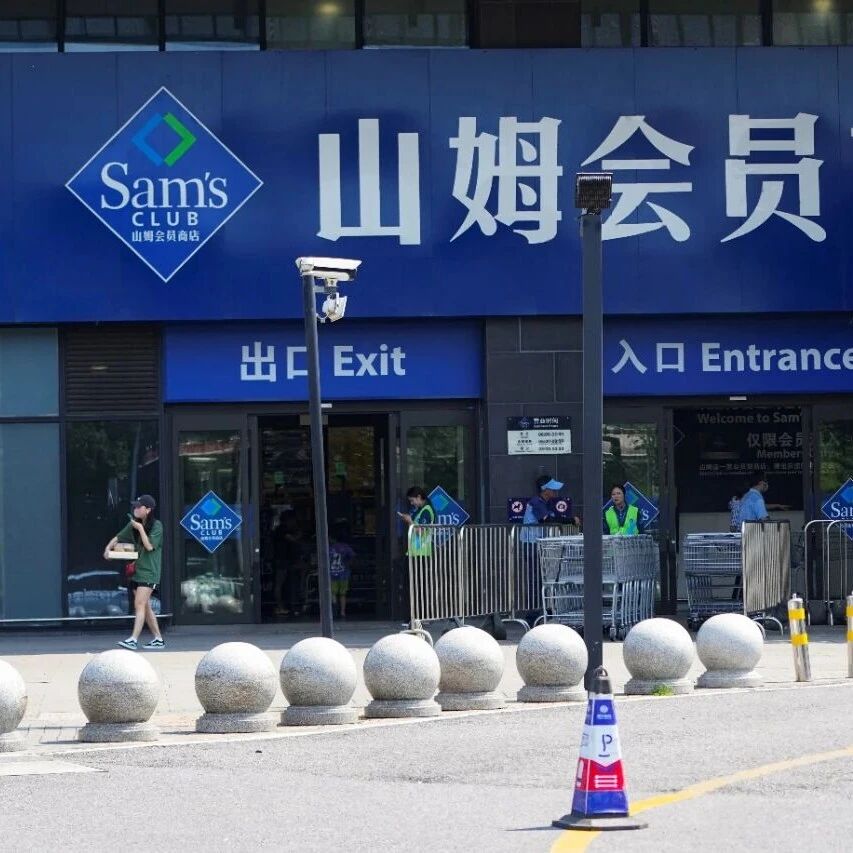
Core Viewpoint - Walmart China has appointed Liu Peng as the new president of Sam's Club China, marking a significant strategic move as the company aims to enhance its investment and business strategy in China [6][14]. Group 1: Leadership Transition - Liu Peng's appointment is seen as a well-prepared succession following the retirement of former president Andrew Miles, who led Sam's Club China for 12 years [16][18]. - During Jane Ewing's interim leadership, Sam's Club continued to expand its store network and e-commerce operations, but the long-term leadership position remained vacant [6][7]. - Liu Peng brings nearly 30 years of retail experience, particularly in cross-border e-commerce and customer operations, which is expected to be crucial for Sam's Club's future [9][14]. Group 2: Business Strategy and Challenges - Sam's Club aims to increase its store count to over 60 by October 2025, with annual revenue projected to reach "thousands of millions" [7]. - The company faces challenges in maintaining growth while addressing supply chain transformations and brand value alignment [7][14]. - Recent controversies regarding product selection and quality have raised concerns among members, highlighting the need for Liu Peng to navigate these issues effectively [21][22]. Group 3: Historical Context and Performance - Sam's Club has evolved significantly since its entry into China in 1996, with a notable increase in store numbers and membership under Andrew Miles' leadership [16][18]. - By 2024, Sam's Club China had over 8.6 million members and annual sales exceeding 100 billion yuan, with membership fees contributing 2.2 billion yuan [18][19]. - The brand's rapid growth has been attributed to its unique value proposition, including high-quality products and a strong member experience [19][25]. Group 4: Market Dynamics and Consumer Behavior - The retail landscape in China is undergoing significant changes, with consumers becoming more rational and demanding in terms of quality and value [24]. - Sam's Club's recent product changes and quality issues have led to a disconnect with consumer expectations, necessitating a reevaluation of its supply chain and product offerings [21][22]. - The company is expected to enhance its e-commerce presence, which currently accounts for 52%-53% of its sales, to better meet consumer needs [25].