半导体芯闻

Search documents
芯片关税,或于6月底生效
半导体芯闻· 2025-05-12 10:08
Core Viewpoint - The proposed semiconductor tariffs by the U.S. Department of Commerce could significantly impact the semiconductor industry, particularly affecting the cost of building and operating fabs, with potential increases in investment requirements for major companies like TSMC [1][2]. Impact of Semiconductor Tariffs - The semiconductor industry is preparing for tariffs that may take effect as early as June, with major players like SK Hynix and HP involved in the public consultation process [1]. - A 1% increase in tariffs on semiconductor manufacturing inputs could raise the total cost of building a fab by 0.64% [1]. - Under a 10% tariff scenario, TSMC would need an additional investment of $6.4 billion to meet its initial $100 billion target [1]. - The cost of building and operating fabs in the U.S. is already 30% to 50% higher than in Asia, and tariffs on equipment and materials would exacerbate this disparity [1]. - For every $1 increase in chip prices, the end products containing semiconductors would need to increase by $3 to maintain existing profit margins [1]. Characteristics of Affected Chips - Mature node chips, which account for over 80% of global production but only about 40% of revenue, are expected to be the most affected by the tariffs [2]. - These mature chips support downstream industries valued at over $10.8 trillion, making the tariffs a potentially disruptive force in the global tech ecosystem [2]. - Tariffs may vary based on the "wafer origin," meaning the actual production location of the chips, with rates potentially ranging from 25% to 100% [2].



亚马逊成功背后鲜为人知的芯片实验室
半导体芯闻· 2025-05-12 10:08
Group 1: Apple's AI Strategy - Apple is facing a critical decision on whether to continue focusing on hardware or to invest in improving its software, particularly Siri, amidst various challenges including AI capabilities and antitrust investigations [2][4] - The first potential path for Apple is a failure in AI, leading to a scenario where Siri becomes ineffective, resulting in users relying on other AI providers like ChatGPT, which could diminish Apple's hardware relevance [3][4] - The second path, termed "Siri-Topia," envisions a successful integration of AI into Apple's ecosystem, where Siri functions effectively as a foundational assistant, enhancing the performance of devices like iPhone and Apple Watch [4][5] Group 2: Annapurna Labs and Amazon's AI Strategy - Annapurna Labs, an Israeli chip design company acquired by Amazon for approximately $350 million in 2015, plays a crucial role in Amazon's AI strategy, particularly within AWS [6][8] - The chips designed by Annapurna, including the Trainium chip for AI model training and the Graviton CPU, are foundational to AWS's AI capabilities, contributing significantly to the company's overall success [9][10] - AWS generates around $100 billion in revenue, accounting for over half of Amazon's profits, highlighting the importance of Annapurna's contributions to the company's financial performance [9][10]



三星芯片,大搞AI
半导体芯闻· 2025-05-09 11:08
Core Viewpoint - Samsung Electronics' DS (Semiconductor) division is expanding its use of external AI models from Google and Microsoft, moving away from a closed internal AI system to enhance work efficiency in semiconductor design and development [1][2]. Group 1: Introduction of External AI Models - Samsung's DS department has officially introduced external open-source AI models, including Google's "Gemma3," Microsoft's "Phi-4," and Meta's "Llama4," to improve operational efficiency [1]. - The decision to adopt an open multi-model environment for internal AI aims to leverage the strengths of various AI models tailored to specific tasks, such as using Pi4 for numerical processing and Gemma3 for image analysis [2]. Group 2: Transition from Closed to Open AI Strategy - Previously, Samsung relied on a closed strategy with its internal AI, "DS Assistant," which faced limitations in utilizing external data and enhancing competitiveness in semiconductor design [2]. - The DS department had initially approved the use of ChatGPT in March 2023, but concerns over data security led to the development of a more secure internal AI solution [2]. Group 3: Internal Deployment of AI Models - The external AI models will be run internally on data servers to prevent internal information leakage, allowing for a secure environment while improving work efficiency [3]. - Samsung plans to review and support open-source AI models based on work types to further enhance productivity [3].

台积电,赚麻了
半导体芯闻· 2025-05-09 11:08
Core Viewpoint - TSMC reported a significant increase in revenue for April 2025, with a month-over-month growth of 22.2% and a year-over-year growth of 48.1% [1]. Group 1: Revenue Performance - TSMC's consolidated revenue for April 2025 was approximately NT$349.57 billion, marking a 22.2% increase from the previous month and a 48.1% increase compared to the same month last year [1]. - Cumulative revenue for the first four months of 2025 reached approximately NT$1,188.82 billion, reflecting a 43.5% increase year-over-year [1]. Group 2: Advanced Packaging Developments - TSMC is expanding its advanced packaging capabilities in Taiwan, with the WMCM (Wafer-Level Multi-Chip Module) technology entering trial production, expected to begin mass production in the fourth quarter of 2025 at the Chiayi plant [1]. - The advanced packaging expansion focus has shifted from the Zhunan and Taichung plants to the Nanke and Chiayi plants, with the Chiayi AP7 facility planned to have six phases of development [1]. - The P1 facility in Chiayi is set to prioritize WMCM expansion, while the P2 facility is progressing ahead of schedule, with machine installation expected by August [1]. Group 3: Apple Collaboration and Technology Integration - The upcoming iPhone 18 is expected to utilize TSMC's A20 chip, which will adopt 2nm technology and WMCM packaging, specifically designed for Apple's needs [2]. - WMCM is seen as an upgrade from the current InFo-PoP technology, integrating CoWoS and InFo techniques for improved thermal performance [2]. - The integration of various advanced packaging technologies under TSMC's 3DFabric platform is viewed as a strategic direction for the company, despite potential uncertainties from trade tariffs [2].
英伟达中国芯片,再度阉割!
半导体芯闻· 2025-05-09 11:08
如果您希望可以时常见面,欢迎标星收藏哦~ 截至1月26日的财年中,中国市场为英伟达贡献了170亿美元的营收,占其总销售额的13%,而 H20芯片是在美国2023年10月进一步收紧出口管制后推出的。 据路透社今年早些时候报道,随着像DeepSeek这类初创公司对高性价比AI模型的需求不断上升, 中国科技巨头,包括腾讯、阿里巴巴以及字节跳动,也加大了对H20芯片的采购力度。自今年1月 以来,英伟达已经积累了价值达180亿美元的H20订单。 参考链接 来源:内容编译自路透,谢谢 。 英伟达计划在未来两个月内为中国市场推出其H20人工智能芯片的"降级版",此前该芯片原始型号 因美国出口限制被禁止销售。 消息人士表示,这家美国芯片制造商已通知包括主要云计算服务商在内的中国主要客户,公司计划 于7月发布经过修改的H20芯片。 这款降级版H20代表了英伟达在美国不断加强对华先进半导体技术出口限制背景下,为维持其在这 一关键市场中的存在而做出的最新努力。原本被认为是英伟达在中国可销售的最强AI芯片的H20, 在美国官员上个月通知公司其需申请出口许可证后,实际上已被挡在中国市场之外。 英伟达已经制定出新的技术门槛,用以指导降级 ...


全产业链布局,华大半导体助力车规芯片自主创新之路
半导体芯闻· 2025-05-09 11:08
Core Viewpoint - The article highlights the comprehensive capabilities of Huada Semiconductor in the automotive electronics sector, emphasizing its integrated approach across the entire semiconductor value chain, from design to manufacturing and testing, which positions the company as a key player in the automotive chip market [1][2]. Group 1: Company Overview - Huada Semiconductor, a subsidiary of China Electronics Corporation (CEC), covers the entire semiconductor industry chain, including materials, design, manufacturing, and testing, focusing on automotive electronics, industrial control, and IoT applications [1]. - The company has been involved in automotive chip development since 2016, recognizing the market's potential early on [1]. Group 2: Integrated Operations - The company has established a specialized automotive electronics division to enhance collaboration across its various business lines, significantly reducing product development cycles and improving efficiency [2]. - Huada Semiconductor showcased products from multiple subsidiaries at the Shanghai International Auto Show, particularly in the power semiconductor sector, attracting interest from major automotive manufacturers [2]. Group 3: Product Development and Quality - The company emphasizes the importance of producing chips that meet international automotive standards, with a focus on systematic and standardized testing and verification processes [2]. - Huada's subsidiaries, such as Shanghai Beiling and Feizeng Semiconductor, leverage advanced manufacturing capabilities to ensure high-quality production of power devices, achieving a 95% yield rate for their 1200V silicon carbide devices [3]. Group 4: Supply Chain Strategy - In response to global semiconductor supply chain challenges, Huada Semiconductor aims to establish a reliable supply chain by focusing on domestic materials and manufacturing capabilities, ensuring project stability through proactive planning and collaboration with clients [4]. - The company is committed to transitioning from a supplier role to a collaborative development partner, engaging in joint labs and customized cooperation with automotive manufacturers [4]. Group 5: Future Goals - Huada Semiconductor plans to strengthen its competitiveness in power semiconductors and automotive MCUs, aiming to fill domestic gaps in chip supply and support national economic needs [5][6].
韩国半导体工厂,不如美国划算?
半导体芯闻· 2025-05-09 11:08
如果您希望可以时常见面,欢迎标星收藏哦~ 美国方面:为了"就业期待",说服居民并承诺州政府补贴 来源:内容 编译自 joongang ,谢谢 。 本月6日(当地时间),美国印第安纳州西拉法叶市议会通过了一项决议,同意将49万平方米的住 宅用地变更为SK海力士用于建设高带宽内存(HBM)工厂的用地。这一地块比最初规划的更大, 也更靠近住宅区,是SK海力士更为偏好的位置。市议会经过7小时的通宵会议后进行了投票,9名 市议员中有6人投下赞成票。他们对SK海力士的提案进行了详细审查。 而在上月30日,韩国京畿道安城市议会一致通过了"敦促废除与龙仁半导体集群的共生协议"的决 议案。原因在于SK海力士龙仁产业园内规划建设的液化天然气(LNG)热电联产发电站距离安城 市较近,且输电线路将穿过安城市,可能给当地带来损害。安城市市长金宝罗此前表示将组建居民 对策委员会反对该项目,并称将拨付市预算支持该行动。这项支持依据是2023年12月制定的一项 条例,允许市长为解决与其他地方政府利益冲突的市民团体提供财政支持。 一个企业分别在两个城市建设工厂——这正是为了应对蜂拥而至的订单,SK海力士计划在美国印 第安纳州和韩国龙仁市建设的 ...
苹果自研芯片帝国,更进一步
半导体芯闻· 2025-05-09 11:08
Core Viewpoint - Apple is making significant progress in developing a custom chip for smart glasses, indicating an acceleration in its product development to compete with Meta's offerings [1][2]. Group 1: Smart Glasses Development - Apple is developing smart glasses that will utilize a custom chip based on the technology used in the Apple Watch, designed for low power consumption [1]. - The company plans to start mass production of the smart glasses processor by the end of next year or in 2027, suggesting a potential market launch within the next two years [1]. - Apple is also exploring non-AR smart glasses that will use cameras and AI to assist users, similar to Meta's products [2]. Group 2: Semiconductor Advancements - Apple's silicon team has become a crucial part of its product development, especially since the transition to in-house Mac chips in 2020 [1]. - The company is developing new chips for various devices, including a camera-equipped Apple Watch and AirPods, with plans to have these ready by around 2027 [3]. - Apple is also working on advanced Mac chips, including potential M6 and M7 processors, with the M5 processor expected to be applied to iPad Pro and MacBook Pro by the end of this year [3]. Group 3: AI Server Chips - Apple is developing its first dedicated AI server chips, named "Baltra," which are expected to enhance the speed and functionality of its AI services by 2027 [4][5]. - The AI server project will utilize components co-developed with Broadcom, aiming to significantly increase processing capabilities compared to current models [5]. - The hardware technology team is also working on future components, including sensors for non-invasive blood glucose measurement for future Apple Watch versions [5].

英特尔18A,关键突破!
半导体芯闻· 2025-05-09 11:08
Core Viewpoint - Intel's 18A process technology has garnered significant interest from major tech companies, positioning it as a potential competitor to TSMC's N2 process, especially in the context of U.S. manufacturing and supply chain dynamics [1][2]. Group 1: Intel's 18A Process - The 18A process is being discussed with major clients like NVIDIA, Microsoft, and Google, indicating its potential as a viable alternative to TSMC's offerings [1]. - Intel's 18A process is touted as "the most advanced process made in America," showcasing its competitive edge over previous generations and its alignment with customer expectations [1]. - The 18A process is reported to have similar SRAM density and performance/efficiency metrics compared to TSMC's N2 process, suggesting a strong competitive position [1]. Group 2: Leadership and Strategic Shifts - The interest in the 18A process is partly attributed to the leadership changes at Intel, particularly the appointment of new CEO Pat Gelsinger, who is expected to shift focus towards semiconductor design automation, packaging, and foundry services [2]. - There is speculation that Intel may abandon its "IDM 2.0" strategy, which could lead to growth in its consumer business, particularly in CPU products [2]. - The current congestion in TSMC's production lines is driving other companies to seek alternatives, giving Intel a favorable position in the competition against TSMC's 2nm node [2].

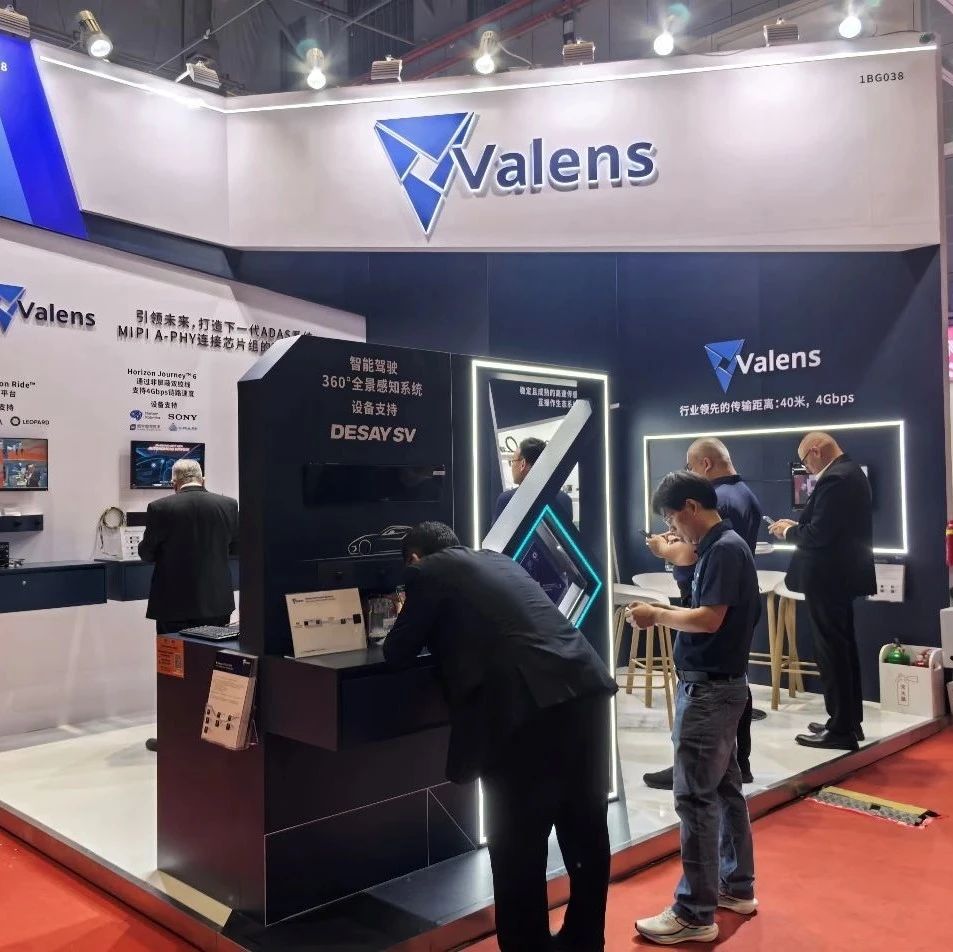
Valens:以连接之力驱动智能汽车未来
半导体芯闻· 2025-05-09 11:08
Core Viewpoint - The article emphasizes the significance of MIPI A-PHY as a transformative standard in the automotive industry, particularly for smart driving technologies, and highlights Valens as a key player in this evolution [1][5][9]. Group 1: Company Overview - Valens, established in 2006, specializes in long-distance high-speed video and data transmission solutions for the automotive and audiovisual industries [1]. - The company has gained widespread application of its technology across various sectors, including entertainment, digital signage, education, video conferencing, industrial, and medical markets, with a client roster that includes major brands like Sony, Samsung, and Panasonic [1]. Group 2: MIPI A-PHY Standard - MIPI A-PHY is designed specifically for automotive needs, supporting advanced driver-assistance systems (ADAS), automated driving systems, in-vehicle infotainment (IVI) displays, and various sensor applications [1][5]. - The standard addresses the growing bandwidth demands in the automotive sector due to the increasing number of sensors and data processing requirements, necessitating high-speed, low-latency connectivity solutions [5][9]. Group 3: Market Trends and Innovations - The automotive industry is experiencing explosive growth in bandwidth demand, with the need for real-time, uncompressed data transmission now measured in gigabits per second (Gbps) [5][9]. - Valens has introduced the VA7000 series, the first chipsets compliant with the MIPI A-PHY standard, which boasts advantages such as strong electromagnetic compatibility, high bandwidth transmission, sensor integration support, and standardized connectivity capabilities [10][12]. Group 4: Competitive Landscape - Valens aims for MIPI A-PHY to replace traditional proprietary SerDes protocols like FPD-Link and GMSL, emphasizing the standard's superior electromagnetic compatibility and reliability [9]. - The company has successfully completed interoperability tests with several Chinese chip manufacturers, marking a significant milestone in promoting the A-PHY standard in the Chinese market [10][12]. Group 5: Cost Efficiency and Future Developments - Utilizing unshielded twisted pairs (UTP) and multi-pin shared connectors, A-PHY can enhance performance while significantly reducing overall system costs, with potential savings of 15% on wiring harnesses for OEMs [12][13]. - The upcoming MIPI A-PHY 2.0 version will support increased bandwidth from 16 Gbps to 32 Gbps, with Valens planning to introduce chipsets that accommodate even higher speeds in response to market demands [13].