半导体芯闻

Search documents
1000层3D NAND,实现路径
半导体芯闻· 2025-11-10 10:56
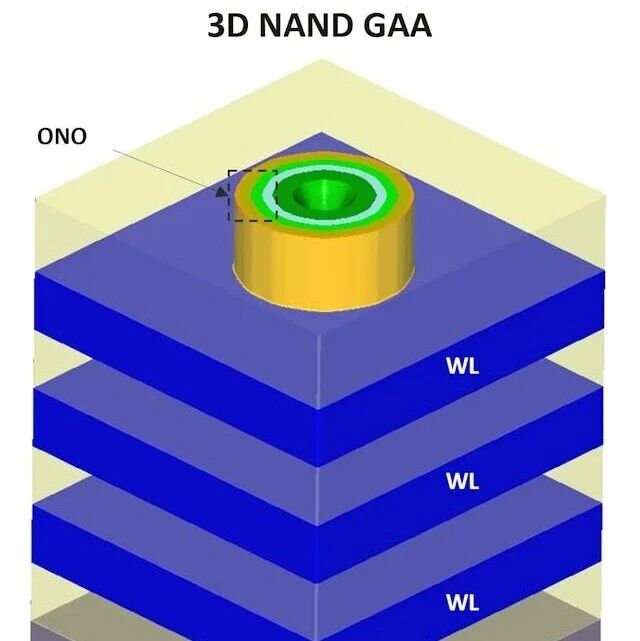
Core Viewpoint - The article discusses the evolution and advancements in NAND flash memory technology, particularly focusing on 3D NAND and its implications for data storage density and efficiency in various applications, including artificial intelligence and data centers [2][10]. Group 1: NAND Flash Memory Evolution - NAND flash memory has transformed data storage and retrieval since its introduction in the late 1980s, becoming essential in devices from smartphones to data centers [2]. - The shift from 2D to 3D NAND technology has allowed semiconductor companies to overcome limitations in traditional memory size reduction, leading to increased storage density [2][10]. - The industry is now focusing on enhancing storage unit density (measured in Gb/mm²) while reducing the cost per bit, with commercial NAND flash reaching up to four bits per cell [2][10]. Group 2: Technological Innovations - A significant advancement is the transition from floating gate transistors to charge trap cells, which improves read/write performance and allows for higher storage density due to smaller manufacturing sizes [3][10]. - The GAA (Gate-All-Around) architecture is being applied in 3D NAND, allowing for vertical stacking of storage units and efficient addressing through horizontal word lines [5][10]. - Future developments aim to achieve over 1000 layers in 3D NAND by 2030, with current chips already exceeding 300 layers, presenting challenges in maintaining uniformity and increasing manufacturing complexity [10][12]. Group 3: Addressing Challenges - The reduction of z-axis spacing between storage layers is crucial for lowering costs while increasing storage capacity, with current spacing around 40 nanometers [15][31]. - Techniques such as integrating air gaps between adjacent word lines are being explored to mitigate cell interference and improve performance [17][22]. - The introduction of charge trap layer separation is being tested to enhance the storage window and prevent charge migration, which could lead to better data retention and performance [26][29]. Group 4: Future Directions - The semiconductor industry is actively researching innovative architectures to maintain advancements in storage density beyond 2030, including horizontal arrangements of conductive channels and trench architectures [32]. - The demand for higher storage capacities is driven by applications in cloud computing and artificial intelligence, pushing the industry towards achieving 100 Gb/mm² storage density [32].

台积电明年将建12座新厂
半导体芯闻· 2025-11-10 10:56
Core Viewpoint - TSMC is experiencing a surge in demand for AI chips, leading to increased capital expenditures and expansion plans for new facilities to meet this demand [2][4][5]. Group 1: TSMC's Supply Chain Management Forum - TSMC will hold its 2025 Supply Chain Management Forum on the 13th, which is considered a significant event in the semiconductor supply chain, with attendance from major international equipment and materials companies [2][3]. - The forum will feature TSMC's leadership, including Chairman Wei Zhejia and other senior executives, and is expected to attract hundreds of suppliers and partners [3]. Group 2: Capital Expenditure and Expansion Plans - TSMC's capital expenditure for next year is projected to increase to between $45 billion and $50 billion, with plans to build 12 new facilities in Taiwan, including advanced process wafer fabs and advanced packaging plants [2][4][5]. - Approximately 70% of the capital expenditure will be allocated to advanced processes, while 10% to 20% will be for special processes and the remaining for advanced packaging and testing [4]. Group 3: AI Chip Demand and Market Dynamics - The demand for AI chips is described as extremely strong, with TSMC's 3nm process facing tight supply and the newly launched 2nm process also in high demand [4][5]. - Despite a slowdown in TSMC's revenue growth in October, industry leaders remain optimistic about AI-driven growth, with significant investments planned by major tech companies [6][7]. Group 4: Industry Sentiment and Future Outlook - Industry executives, including NVIDIA's CEO Jensen Huang, express confidence in the ongoing demand for AI chips, indicating that the market is still growing month by month [6][7]. - TSMC's stock has risen approximately 37% since the beginning of the year, reflecting positive market sentiment despite recent concerns about high valuations in the semiconductor sector [6].



软银,市值蒸发近500亿美元
半导体芯闻· 2025-11-07 10:24
如果您希望可以时常见面,欢迎标星收藏哦~ 来源 :内容来自 BBC 。 周五,日本软银集团(SoftBank Group)的股价再次开始下滑,此前人工智能(AI)相关股票普 遍暴跌,原因是投资者再次对该板块过高的估值产生警惕。 该 集 团 广 泛 投 资 于 基 础 设 施 、 半 导 体 和 应 用 公 司 等 领 域 的 人 工 智 能 公 司 , 其 股 价 收 盘 下 跌 了 6.87%,从盘中早些时候的跌幅中有所收复。 在此之前,软银股价在前一个交易日上涨了近3%,但周三曾暴跌10%,创下自四月以来的最差单 日 表 现 。 本 周 , 其 市 值 蒸 发 了 近 500 亿 美 元 , 并 录 得 自 2020 年 3 月 以 来 最 差 的 周 跌 幅 , 跌 幅 近 20%。 在人工智能相关股票面临新一轮压力后,软银集团的股价下跌。软银持有英国半导体设计公司Arm Holdings的控股权,该公司的芯片为全球移动和人工智能处理器提供动力。在纳斯达克上市的Arm 股价隔夜下跌了1.21%。 另外,彭博社最近援引知情人士的消息报道称,该集团曾在今年早些时候考虑收购美国芯片制造商 美满电子科技(Mar ...

存储缺货,30年来首次
半导体芯闻· 2025-11-07 10:24
Core Insights - The storage module industry is experiencing a significant shortage driven by AI demand, with NAND Flash prices increasing by approximately 50% this month, and DRAM prices for DDR4 and DDR5 also rising [2] - NAND Flash applications in AI have surged recently, leading to a shift in supplier capacity towards AI applications, with expectations of a substantial market opportunity due to HDD shortages [2] - The major DRAM manufacturers have no plans to increase DDR4 production, anticipating a gradual exit from the DDR4 market by 2026, which limits supply and drives prices up [2] Group 1: Company Performance - In Q3, the company reported revenues of 4.109 billion, a quarter-over-quarter increase of 27.2% and a year-over-year increase of 63.2%, with a net profit of 1.511 billion, reflecting a quarter-over-quarter increase of 259% and a year-over-year increase of 334% [3] - The company is primarily focused on industrial control, with DDR4 still dominating product shipments, while expecting an increase in DDR5 shipments as customers transition [2] Group 2: Market Trends - SanDisk predicts that the NAND Flash supply shortage will persist until at least the end of 2026, with indications that the tight supply situation may extend into 2027 [4] - The demand for NAND Flash is driven by long-term trends, capital investments, and industry transitions, with data centers expected to become the largest segment for NAND Flash by 2026 [4] - SanDisk's wafer fabs are operating at full capacity to replenish significantly reduced inventories, and the company is optimistic about the long-term growth of the data center market [4][6] Group 3: Future Outlook - SanDisk's revenue guidance for Q2 FY2026 is projected between 2.55 billion and 2.65 billion, exceeding market expectations, with adjusted earnings per share forecasted between 3.00 and 3.40 [6] - The company reported a 26% quarter-over-quarter growth in data center revenue, with ongoing collaborations with major data center clients [7] - BiCS8 technology is expected to dominate production by the end of FY2026, currently accounting for 15% of total shipments [7]
1.5万亿韩元,三星12年“未来技术开发项目”成果首度公开
半导体芯闻· 2025-11-07 10:24
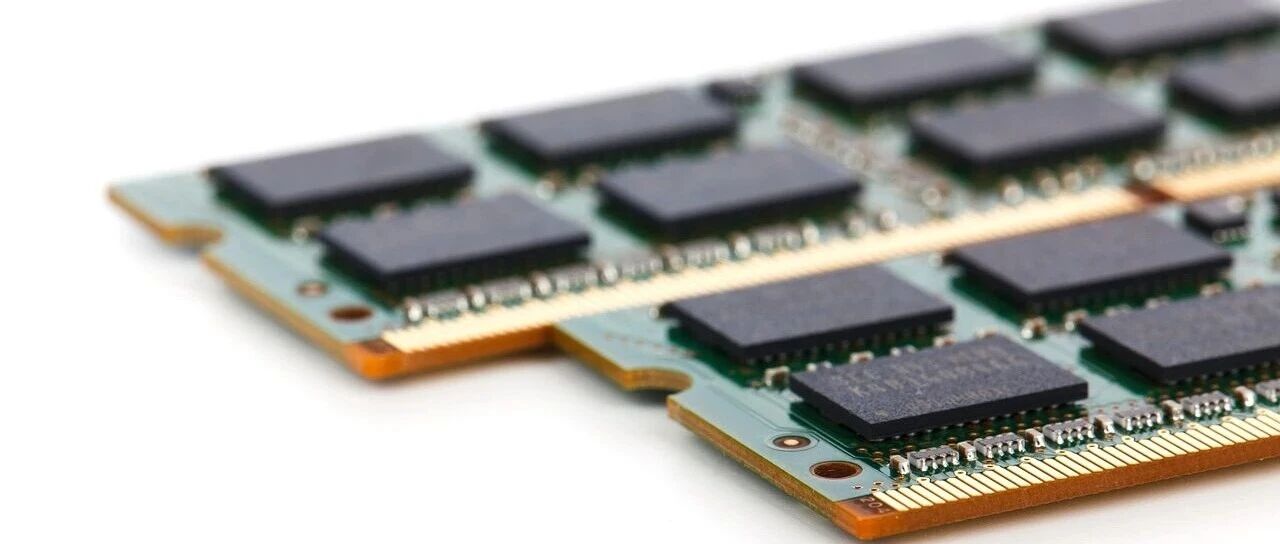
Core Insights - Samsung Group has publicly disclosed the achievements of its Future Technology Development Program, which has been ongoing for 12 years, emphasizing a technology-focused management approach [3][4] - The program aims to support the entire cycle of technology commercialization, resulting in significant outcomes, including the nurturing of companies listed on the KOSDAQ [3][4] Group 1: Program Overview - The Future Technology Development Program, initiated in 2013, is the first private sector-led basic science research support project in South Korea, focusing on foundational science, materials technology, ICT, and interdisciplinary research [4][5] - Samsung has invested 15 trillion KRW (approximately 11.4 billion USD) over 12 years, selecting 880 research projects, with a total investment of 11.419 trillion KRW (approximately 8.6 billion USD) in research funding [4][5] Group 2: Researcher Support and Outcomes - More than 16,000 researchers from 91 institutions have received support from the program, including around 1,200 professors and over 14,000 STEM graduate students [4][5] - The program provides end-to-end development solutions, offering phased expert guidance and support extending to industrial technology exchange and technology entrepreneurship [5] Group 3: Notable Achievements - 65 research projects have led to the establishment of startups, with Protina being a notable example, which received five years of research support and recently went public on KOSDAQ [5][6] - The program has facilitated the development of various technologies, including AI sleep coaching integrated into Galaxy Watch8 and semiconductor technology addressing data center bottlenecks [6] Group 4: Future Directions and Collaborations - The newly established Future Science and Technology Forum featured 64 presentations on foundational science and engineering projects, highlighting significant research advancements [6][7] - Samsung aims to enhance support for researchers to focus on their studies and contribute to sustainable development, with ongoing initiatives like the Samsung Youth SW·AI Academy and C-Lab [7]

eNVM,作用巨大
半导体芯闻· 2025-11-07 10:24
Core Insights - The article emphasizes the rapid development of embedded non-volatile memory (eNVM) as a foundational technology in the AI era, highlighting its critical role in various applications from microcontrollers (MCUs) to automotive controllers and security components [2][4]. Market Overview and Growth - Emerging embedded non-volatile memories, including MRAM, RRAM/ReRAM, and PCM, are entering a broader adoption phase, particularly in microcontrollers, connectivity, and edge AI devices, with strong momentum in automotive and industrial markets. Yole Group projects that by 2030, the embedded emerging memory market will exceed $3 billion, driven by increased availability in mainstream process nodes and strong demand for NVM in areas where eFlash is no longer suitable [4][8]. Technological Advancements - Embedded flash (eFlash) remains foundational, but limitations in size scaling at advanced nodes have pushed MRAM, ReRAM, and embedded PCM to the forefront. Foundries and integrated device manufacturers (IDMs) are expanding embedded options from 28/22 nm planar CMOS to 10–12 nm platforms, including FinFET. TSMC has established high-volume production for MRAM/ReRAM and is preparing for 12nm FinFET ReRAM/MRAM beyond 2025. Other companies like Samsung, GlobalFoundries, UMC, and SMIC are accelerating the adoption of embedded MRAM/ReRAM/PCM in general MCUs and high-performance automotive designs [6][7]. Drivers, Challenges, and Use Cases - The automotive sector remains a focal point for emerging embedded NVM, with significant increases in applications for safety ICs and industrial microcontrollers expected by 2025. ReRAM, MRAM, and PCM each play distinct roles, with ReRAM gaining attention in high-volume categories, while MRAM and PCM are attractive for speed and durability applications. Challenges include integrating eNVM at advanced logic nodes, balancing durability and data retention, achieving automotive-grade reliability certification, and maintaining cost-effective density as embedded code and AI parameters grow. However, trends are positive, with increasing availability of PDK/IP and rising capacity addressing these issues [8][9]. Future Outlook - By 2030, embedded NVM is expected to support more on-chip AI functionalities and practical in-memory/near-memory computing modules, with broader applications in edge neuromorphic-inspired accelerators. Yole's forecasts indicate that the embedded emerging memory sector is now a primary growth engine, with ReRAM leading in high-volume microcontrollers and analog ICs, while MRAM and embedded PCM solidify their positions in performance-critical niche markets. As edge data grows, the role of eNVM is evolving from mere storage to becoming an integral part of computing architectures, redefining efficiency and making embedded memory more central to device intelligence than ever before [9].
黄仁勋:没有就向中国出售Blackwell芯片进行“积极讨论”
半导体芯闻· 2025-11-07 10:24
Core Insights - Nvidia CEO Jensen Huang stated that there are currently "no active discussions" regarding the sale of the company's advanced Blackwell chips to China, which has been hindered by U.S. government restrictions due to national security concerns [2] - Huang emphasized that the return of Nvidia's products to the Chinese market depends on the Chinese government's decisions, expressing hope for a policy change [2] - He noted that while Nvidia is allowed to sell its H20 chip in China, the company has effectively zero market share in the advanced AI chip sector due to China's reluctance to allow Nvidia's entry [2] - Huang's visit to Taiwan was aimed at encouraging long-term partner TSMC and participating in company events, highlighting the strong performance of Nvidia's business [2] - Huang clarified his previous comments regarding China's AI capabilities, stating that while he did not claim China would win the AI race, he acknowledged the country's advanced technology and significant number of AI researchers [3] - He pointed out that 50% of the world's AI researchers are based in China, and the most popular open-source AI models also originate from there, stressing the need for the U.S. to maintain a competitive pace in AI development [3] Industry Context - The semiconductor industry is facing significant challenges, with major chip companies experiencing declines in market value [4] - The ongoing competition in the semiconductor sector is underscored by the emergence of RISC-V architecture, which is expected to gain prominence [5]
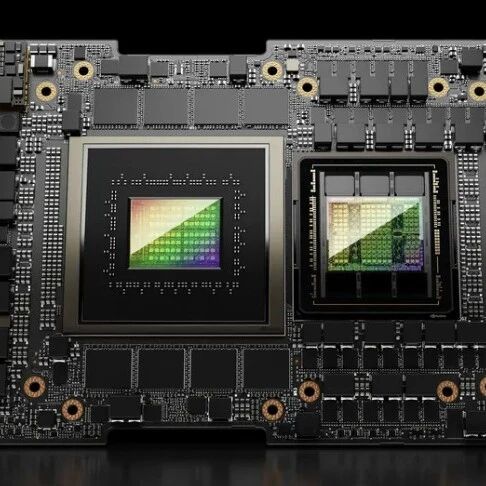
英伟达与英特尔牵手,AMD倍感压力
半导体芯闻· 2025-11-07 10:24
Core Viewpoint - NVIDIA plans to collaborate with Intel to develop chips for personal computers and data centers, raising concerns about the potential impact on AMD's business due to increased competition and pricing pressure [3]. Group 1: NVIDIA and Intel Collaboration - The partnership between NVIDIA and Intel is expected to intensify competition for AMD, as NVIDIA will provide high-end GPU IP while Intel will contribute advanced packaging technology and x86 IP [3]. - AMD has expressed concerns in a filing with the SEC that this collaboration could adversely affect its business and financial performance [3]. - The new chips from this collaboration are projected to take several years before they hit the market, with Intel aiming to launch its first Halo-level chip (Nova Lake-AX series) between 2026 and 2027 [3]. Group 2: AMD's Response and Developments - AMD's Ryzen AI MAX chips have already been launched, offering strong performance on mobile platforms, and the company is preparing to release an upgraded version of Strix Halo next year [4]. - AMD is expected to gain more market share, particularly in the handheld device sector, with the introduction of new SKU products [4]. - A key AI executive from Intel, Saurabh Kulkarni, is reportedly moving to AMD, which could bolster AMD's challenge against NVIDIA in the AI infrastructure space [4]. Group 3: AMD's Growth Prospects - AMD's data center strategy has surpassed Intel's, successfully securing significant clients like OpenAI [4]. - AMD's CEO, Lisa Su, indicated that the company anticipates achieving hundreds of billions in annual revenue from its Instinct GPU business by 2027 [4].


再造一个HBM!
半导体芯闻· 2025-11-07 10:24
Core Insights - The storage market is experiencing a rare supply-demand imbalance, driven by increased capital expenditure from cloud giants and rising AI demand, leading to memory shortages and significant price increases for both DRAM and NAND flash [2][3] - High Bandwidth Flash (HBF) is emerging as a new technology concept that could elevate NAND flash to a core asset in the AI era, similar to how High Bandwidth Memory (HBM) has transformed DRAM [2][3][4] Group 1: HBF Technology Development - HBF is a NAND version of high bandwidth memory technology, connecting 16-layer NAND stacks to logic chips and then to GPUs via multi-channel high bandwidth connections [3][4] - The architecture of HBF aims to balance performance and cost, matching HBM's bandwidth while providing 8 to 16 times the storage capacity at a similar cost [4][5] - The HBF ecosystem is beginning to take shape, with various industry players showing interest and starting to develop this technology [4][5] Group 2: Industry Players and Strategies - SK Hynix has launched the "AIN Family" product lineup, which includes HBF technology, aiming to meet the rapidly growing demand for NAND storage products in the AI inference market [5][6] - SanDisk is aggressively pushing HBF technology, planning to provide samples by mid-2026 and formal products by early 2027, showcasing strong confidence in its technological prospects [10][12] - Kioxia is taking a pragmatic approach by exploring multiple technical paths for HBF, which allows it to leverage partnerships while developing differentiated solutions [13][15] Group 3: Competitive Landscape - Samsung is cautiously entering the HBF space, focusing on early concept designs without a clear timeline for product release, reflecting a more conservative strategy compared to its competitors [16][17] - The competition among SK Hynix, SanDisk, Kioxia, and Samsung will shape the emerging HBF market, with each company adopting different strategies to establish their positions [19] - The transition of NAND from a low-cost storage solution to a high-value core component is underway, driven by AI demands and the evolution of memory architecture [19]
All in IoT,芯科科技全力以赴
半导体芯闻· 2025-11-07 10:24
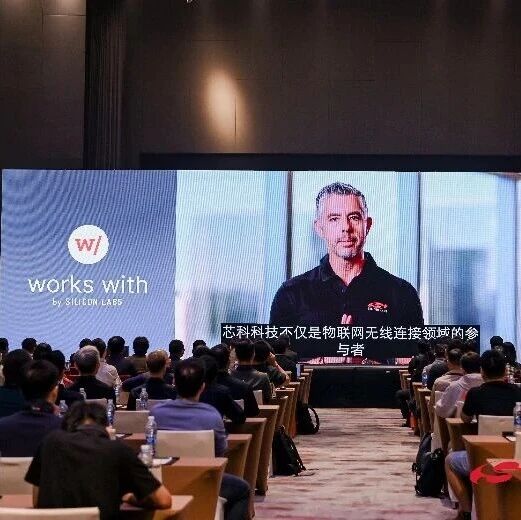
Core Viewpoint - The article emphasizes the significant growth potential of the AIoT market, driven by the introduction of the Matter standard and advancements in edge AI technology, with projections indicating that the system-on-chip (SoC) market could reach $80 billion to $100 billion by 2030 [2]. Company Overview - Silicon Labs, also known as "芯科科技," is recognized as a leading player in the wireless chip industry, with a comprehensive product portfolio that supports the AIoT market [4]. - Under the leadership of CEO Matt Johnson, the company has established itself as a wireless connectivity giant, with expertise across various wireless technologies including Bluetooth, Zigbee, Matter, Thread, Wi-Fi, Z-Wave, and Wi-SUN [4][5]. Technological Innovations - Silicon Labs has made significant advancements in SoC technology, particularly in multi-core architecture, allowing for efficient handling of IoT applications, security, and wireless connectivity [4][5]. - The company is the first to introduce dynamic multi-protocol (DMP) solutions and has integrated matrix-vector processors (MVP) into its SoCs, enhancing its competitive edge [5]. - The third-generation wireless SoC platform, featuring the SixG301 and SixG302 products, utilizes a 22nm process and offers improved processing power, integration, security, and energy efficiency [12][13]. Market Strategy - Silicon Labs is committed to identifying and developing competitive products for emerging markets, focusing on innovative applications rather than engaging in price competition [11]. - The company has targeted the interconnected health and automotive keyless entry markets as areas of growth, positioning itself ahead of competitors [11]. Security Leadership - The company has achieved PSA Level 4 certification, making it the first IoT chip manufacturer to reach this level, reinforcing its leadership in IoT security [5][12]. Collaboration and Ecosystem - Silicon Labs emphasizes collaboration with ecosystem partners to enhance its product offerings and solutions, focusing on core hardware, protocol stacks, and software development [16]. - The "Works With" developer conference aims to bridge global technology with local needs, highlighting Shenzhen's role as a hub for IoT innovation [16].