半导体芯闻

Search documents
火腿公司,跨界芯片
半导体芯闻· 2025-09-23 10:38
Core Viewpoint - The company, Jinzi Ham Co., Ltd., is making a strategic investment in Zhongsheng Microelectronics, focusing on the AI and optical communication sectors, with an investment of up to 300 million RMB for a stake of no more than 20% [1][2]. Group 1: Investment Rationale - The investment aims to address the slow growth in the company's main business due to consumer market factors, enhancing overall performance and ensuring sustainable long-term development [2]. - The investment aligns with the company's strategic development plan, allowing for better utilization of idle funds and capitalizing on the trends of the digital economy [2]. Group 2: Target Company Overview - Zhongsheng Microelectronics, established in 2019, specializes in high-speed optical module core chip design, with applications in AI, cloud computing, and 5G technologies [2]. - The company has been recognized in the "China Future Unicorn TOP 100" list for 2024 and 2025, indicating strong growth potential despite currently not being profitable [2]. Group 3: Financial Performance - In the first seven months of this year, Zhongsheng Microelectronics reported revenue of 511,100 RMB and a net loss of 20.37 million RMB, highlighting the financial risks associated with the investment [2]. Group 4: Investment Structure and Future Considerations - The investment will be conducted in two phases, with the final amount and shareholding percentage to be determined after due diligence [1]. - The investment is classified as a financial investment, meaning the financials of both companies will not be consolidated, and the company has previously faced challenges with investments [3].


联电迎来急单
半导体芯闻· 2025-09-23 10:38
Core Viewpoint - TSMC's stock price reached a record high of 1,295 TWD, with market attention focused on when foreign investment firms will adjust their target prices upward [1] Group 1: TSMC Performance - TSMC's short-term operational momentum and long-term competitiveness remain strong, unaffected by Nvidia's investment in Intel, leading to a resurgence in the Taiwanese stock market [1] - Foreign investment firms, including Citigroup, Morgan Stanley, Goldman Sachs, and others, have set TSMC's target stock price between 1,300 and 1,400 TWD, raising discussions on potential new catalysts for TSMC's profitability [1] Group 2: UMC's Market Position - UMC's stock has been stagnant, with mixed opinions from foreign investors; some maintain a positive outlook while others are more conservative [2] - UMC has recently seen an "earlier than usual" surge in urgent orders, indicating a potential recovery in stock price and boosting sentiment in the semiconductor sector [2] - Analysts note that the semiconductor industry may experience a new wave of order demand starting in the second half of 2026 as uncertainties around tariffs diminish [2]
苹果基带,不及高通?
半导体芯闻· 2025-09-23 10:38
Core Viewpoint - Apple's new C1X modem is being heavily promoted, but industry analysts believe Qualcomm's Snapdragon X75 still outperforms it in terms of speed and efficiency [1][2]. Group 1: Performance Comparison - Apple claims that the C1X modem is faster and 30% more efficient than Qualcomm's Snapdragon X75, but analysts argue that Qualcomm's chipset remains superior in overall throughput and performance [1]. - All iPhone 17 models, except for the iPhone Air, are equipped with Qualcomm's Snapdragon X80 processor, indicating Apple's lack of confidence in its own modem [1]. Group 2: Technical Limitations - The C1X modem lacks mmWave support, limiting the new iPhone's capabilities to below 6GHz, while the Snapdragon X80 can provide full functionality [1]. - Apple's claims of extended battery life due to the C1X and N1 wireless chip, stating up to 27 hours of video playback, are seen as an attempt to mask the modem's deficiencies [2]. Group 3: Future Outlook - Apple's modem plans are still immature, with reliance on Qualcomm expected to continue until at least 2027 due to licensing agreements [2]. - Rumors about a future C2 modem with mmWave support suggest that Apple is aware of the current hardware limitations in the iPhone Air [2].



倒计时1天!2025中国工博会集成电路专区全议程/展商名录速领→
半导体芯闻· 2025-09-22 10:36
Core Viewpoint - The 25th China International Industry Fair (CIIF2025) will be held from September 23 to 27 at the National Exhibition and Convention Center (Shanghai), featuring a dedicated integrated circuit section to showcase innovations and cutting-edge technologies across the entire integrated circuit industry chain [1]. Agenda Summary Main Conference Agenda - The conference will include various forums and discussions, such as the "2025 Shanghai Integrated Circuit Industry ESG Development Forum" on September 24 and the "Automotive and Industrial Chip Special Session" on September 25 [3][8]. International Summit Forum Agenda - The International Summit Forum will feature a welcome address, leadership speeches, and several keynote presentations, including topics on AI in chip design and the transformation of chip design companies [4]. Industry Sub-Forum Agenda - The Industry Sub-Forum will cover topics such as semiconductor component innovation and lifecycle service solutions, with multiple keynote speeches from industry leaders [6]. Automotive and Industrial Chip Special Session - This session will focus on innovations and applications in automotive and industrial chips, featuring presentations on semiconductor component certification and the construction of a new ecosystem for domestic chips [9]. ESG Development Forum - The ESG Development Forum will discuss sustainable development in the semiconductor industry, with presentations on energy-saving strategies and compliance challenges related to ESG [12][13]. Exhibitor Information - A comprehensive exhibitor directory and booth layout will be provided to facilitate navigation and engagement during the event [15][17].






苹果自研,要打造真正的霸权
半导体芯闻· 2025-09-22 10:36
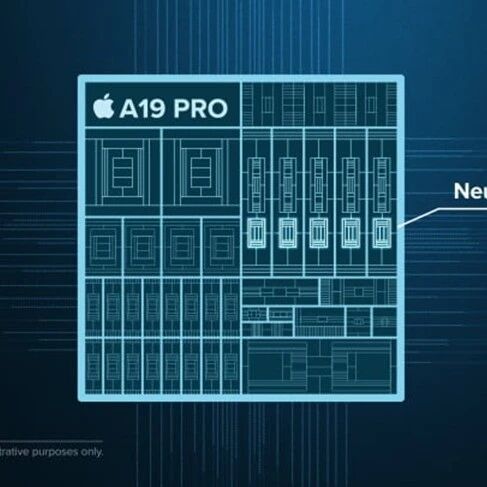
Core Insights - Apple has launched the iPhone Air, which features significant advancements in AI and chip technology, marking a renewed focus on artificial intelligence [2][6] - The introduction of the A19 Pro chip includes a new architecture with neural accelerators in each GPU core, enhancing computational capabilities [2][6] - Apple has developed its own wireless chip, N1, and the second-generation modem, C1X, allowing the company to control all core chips in its iPhone lineup [2][5] Chip Development - The A19 Pro chip is designed to prioritize AI workloads, integrating neural processing capabilities that elevate iPhone performance to levels comparable to MacBook Pro [6][7] - The C1X modem is reported to be twice as fast as the previous C1 modem and 30% more energy-efficient than Qualcomm's modem used in earlier iPhone models [5][6] - Apple aims to eliminate reliance on Qualcomm for modems in the coming years, with expectations of full control over core chips by 2024 [5][9] AI Integration - The new AI capabilities in the A19 Pro chip are intended to enhance user experience and efficiency, with a focus on device-side AI processing [6][7] - Apple's strategy is to position the iPhone as the best platform for developers to run AI applications, despite not aiming to compete directly with companies like Google or OpenAI [6][7] Manufacturing and Supply Chain - Apple plans to manufacture a portion of its custom chips in the U.S., particularly at TSMC's new facility in Arizona, as part of a broader strategy to diversify its supply chain [9][10] - The company has committed to increasing its spending in the U.S. to $600 billion over the next four years, which includes investments in building a domestic silicon supply chain [10][11] - The impact of tariffs on the semiconductor supply chain remains a concern, influencing Apple's investment decisions and partnerships [10]
大摩:韩国芯片迎来超级周期
半导体芯闻· 2025-09-22 10:36
Core Viewpoint - The memory chip industry is expected to continue its growth momentum driven by AI demand, with a potential "warm winter" scenario emerging in 2023, contrasting the previous discussions of a semiconductor "winter" [2][3]. Group 1: Market Dynamics - Morgan Stanley reports a supply-demand imbalance in the global memory chip market, with expectations of a 9% increase in average selling prices for DRAM by the fourth quarter of 2023 [2]. - The report highlights five significant changes related to the chip cycle, indicating a shift in market conditions [2]. Group 2: Company Ratings and Recommendations - Samsung Electronics is rated as a preferred stock with an "Overweight" rating and a target price of 97,000 KRW, citing attractive valuation metrics based on projected 2026 performance [3]. - SK Hynix's investment rating has been upgraded from "Equal-Weight" to "Overweight," with a target price of 410,000 KRW, driven by strong demand for enterprise SSDs and resilience against competitive pressures in the HBM market [4].

台积电3nm,大涨价!
半导体芯闻· 2025-09-22 10:36
Core Viewpoint - The article discusses the rising costs associated with TSMC's latest 3nm "N3P" process technology, highlighting that Qualcomm and MediaTek are paying significantly higher prices for their chipsets compared to previous generations, which may lead to increased prices for flagship devices [2][3]. Pricing and Cost Implications - TSMC has not offered price discounts for its 3nm "N3P" process, resulting in customers paying up to 24% more for their SoCs [2] - MediaTek reportedly pays about 24% more than before, while Qualcomm pays approximately 16% more for the same technology [2] - The wafer prices for the 3nm "N3P" process have increased by about 20% compared to the previous 3nm "N3E" process, indicating that Apple may also be affected by these cost increases [3] Market Impact - The increased costs for Qualcomm and MediaTek are expected to be passed on to their partners, potentially leading to higher prices for flagship smartphones [3] - TSMC's upcoming 2nm wafers are projected to be 50% more expensive than current technologies, with Apple securing over half of the initial production capacity, making it difficult for Qualcomm and MediaTek to obtain sufficient supply in the future [3]

AI汽车,撑起内存半边天
半导体芯闻· 2025-09-22 10:36
如果您希望可以时常见面,欢迎标星收藏哦~ 来源:内容 编译自 zdnet 。 在传统的PC和移动端内存市场依然停滞不前的同时,数据中心与汽车用内存正逐渐成为下一代增 长引擎。 据业内22日消息,全球DRAM市场预计将围绕数据中心与汽车领域实现增长。 市场调研机构TechInsights预测,全球DRAM需求将从2023年的203Eb(艾字节,1Eb=100万Tb) 增长到2030年的722Eb,扩大3.5倍以上。年均复合增长率(CAGR)达19.9%,其中汽车和数据 中心分别以27.6%与26.6%的增长率引领整体市场。 汽车内存需求同样因高级车载电子系统和自动驾驶的普及而快速增长。随着单车内存搭载量提升, 汽车与数据中心一起,有望成为未来内存市场的"双引擎"。 多家市场研究机构均预测汽车内存市场将稳步上升: Research and Markets指出,随着汽车与智能技术的深度结合,对高容量内存解决方案的需求正在 增加,这对市场增长起到积极作用。同时,电动车和混合动力车的普及也推动了对用于电池管理和 能效提升的先进内存系统的需求。 PC与移动市场增长乏力,2030年前后或成转折点 相比之下,移动与PC内存预 ...

英特尔,浴血重生?
半导体芯闻· 2025-09-22 10:36
Core Viewpoint - Nvidia's $5 billion investment in Intel revitalizes a decades-old "rescue strategy" initiated by former CEO Craig Barrett, shifting the financial burden from Intel's customers to the AI leader in Silicon Valley [2] Group 1: Strategic Changes at Intel - Lip-Bu Tan's leadership at Intel since March 2025 involves aggressive restructuring, including layoffs and breaking down departmental barriers, with a focus on AI [2] - Tan's approach contrasts with former CEO Pat Gelsinger's emphasis on manufacturing subsidies and wafer fabrication, highlighting a shift towards a clear AI strategy as essential for the future of "American manufacturing" [2] - Gelsinger's tenure saw the revival of Intel's foundry business and accelerated production of the 18A node, but it could not counter the market's shift towards GPUs [3] Group 2: Financial Challenges - Since the rise of generative AI in 2022, Intel has struggled with a "CPU-first" mindset, missing out on the GPU boom, leading to a significant financial downturn with nearly $20 billion in losses [3] - Tan's challenge is to reverse this trend, focusing on disruptive breakthroughs in AI rather than merely expanding manufacturing capabilities [3] Group 3: Leadership and Organizational Changes - Prior to Nvidia's investment announcement, Tan executed a significant leadership overhaul, bringing in key figures like Kevork Kechichian to lead the data center division and Srinivasan Iyengar to head the newly formed Central Engineering Group [4] - The appointment of Kechichian is seen as a gamble, as he is tasked with reviving Intel's data center business amidst fierce competition [4] - Tan has separated the AI accelerator business from the server division, assigning it directly to CTO Sachin Katti, signaling a strategic shift to prioritize both CPU and accelerator development [5] Group 4: Future Outlook - The restructuring and strategic focus on products rather than wafer fabrication indicate that Intel's path to recovery lies in innovation and collaboration, particularly with Nvidia [5] - The new leadership and organizational changes reflect a recognition that the future of Intel depends on its ability to adapt to the evolving semiconductor landscape, particularly in AI and custom chip design [5]


这项光技术,即将打入数据中心市场!
半导体芯闻· 2025-09-22 10:36
Core Insights - The article discusses advancements in hollow core fiber technology, which significantly enhances data transmission speed and reduces signal loss, addressing the increasing bandwidth demands of AI data centers [2][3]. Group 1: Technology Advancements - Researchers in the UK have developed a new type of hollow core fiber cable that can increase bandwidth by three times compared to standard fiber and improve transmission speed by 45%, extending the transmission distance to 33 kilometers [2]. - The new design, named Double Nested Anti-Resonant Nodeless Hollow Core Fiber (DNANF), utilizes a double layer of glass tubes to minimize signal loss and enhance speed, achieving a signal loss far below the best pure glass standards at 0.14 dB [2][3]. Group 2: Deployment Challenges - Despite the promising advancements, the existing infrastructure of over 50 billion kilometers of traditional fiber optics presents a significant challenge for the adoption of this new technology, which requires a new ecosystem including connectors and amplifiers [4]. - Microsoft is collaborating with partners to develop the necessary ecosystem and has already deployed early versions of DNANF between two Azure data centers in Europe, demonstrating the technology's commercial viability with 1,280 kilometers of hollow core fiber already in use [4]. Group 3: Competitive Landscape - Companies like YOFC and Linfiber Technology from China are also reporting similar performance achievements in hollow core fiber technology, indicating a competitive market landscape [4].