半导体芯闻

Search documents
AI芯片,终于凉快了!
半导体芯闻· 2025-09-24 10:47
为了解决这一问题,微软成功测试了一种新型冷却系统,其散热效果比目前常用的先进冷却技术 ——冷板——高出三倍。该系统采用微流体技术,将液体冷却剂直接引入硅片内部——也就是热量 的来源。硅片背面直接蚀刻出微小通道,形成凹槽,使冷却液能够直接流到芯片上,从而更高效地 散热。该团队还利用人工智能识别芯片上独特的热信号,并更精确地引导冷却剂流动。 研究人员表示,微流体技术可以提高下一代人工智能芯片的效率并增强其可持续性。目前,数据中 心运行的大多数GPU都采用冷板进行冷却,这些冷板与热源之间有多层隔离,从而限制了其散热 量。 随着新一代人工智能芯片的性能越来越强大,它们产生的热量也越来越多。微软云运营与创新高级 技术项目经理 Sashi Majety 表示:"如果五年后你仍然严重依赖传统的冷却板技术,那你就陷入困 境了。" 今天,微软宣布成功开发出一种芯片内微流体冷却系统,可以有效冷却运行模拟 Teams 会议核心 服务的服务器。 如果您希望可以时常见面,欢迎标星收藏哦~ 来源 : 内容 编译自微软 。 人工智能确实很热门。 数据中心用于运行最新人工智能突破的芯片产生的热量比前几代硅片要多得多。任何经历过手机或 笔记本 ...



韩国巨头,怒砸6万亿买光刻机!
半导体芯闻· 2025-09-24 10:47
Core Viewpoint - SK Hynix is significantly increasing its investment in extreme ultraviolet (EUV) lithography equipment, planning to introduce approximately 20 additional units by 2027, effectively doubling its current capacity. This move is aimed at enhancing the manufacturing capabilities for next-generation DRAM and high-bandwidth memory (HBM) [1][2]. Group 1: Investment and Equipment Expansion - SK Hynix plans to add over 20 EUV machines in the next two years, which will double its current total of around 20 units [1]. - The investment is expected to exceed 6 trillion Korean Won, with each EUV machine priced between 300 billion to 500 billion Korean Won [1][3]. - The new EUV equipment will be installed at the Cheongju M15X factory and the Icheon M16 factory, with M15X set to begin production by the end of this year [1]. Group 2: Strategic Implications - The expansion of EUV equipment is part of SK Hynix's strategy to strengthen its competitive edge in the production of the 5th generation DRAM (1b) and the upcoming 6th generation DRAM (1c) [2]. - The company aims to enhance chip yield per wafer and improve energy efficiency and performance through the adoption of EUV technology [2]. - SK Hynix is expected to start mass production of the 1d DRAM as early as next year, which will also utilize EUV processes [2]. Group 3: Impact on Supply Chain - The investment will significantly impact the semiconductor materials and components industry, increasing demand for EUV-specific materials such as photoresists and cleaning solutions [3]. - SK Hynix is currently sourcing EUV photoresists from companies like JSR, DuPont, and SK Materials Performance, while cleaning solutions are supplied by Merck and YCChem [3]. - Discussions with partners regarding the expansion of materials and components supply are already underway [3].
英特尔,没放弃GPU!
半导体芯闻· 2025-09-24 10:47
不 过 根 据 最 新 的 招 聘 信 息 , 英 特 尔 正 在 寻 找 一 名 SoC 性 能 工 程 师 ( SoC Performance Engineer),负责客户端桌面产品的开发,这意味着"蓝厂"仍在推进其独显产品线。 如果您希望可以时常见面,欢迎标星收藏哦~ 来源:内容 编译自 wccftech 。 看起来,英特尔的独显(dGPU)野心依然存在。据报道,该公司近日发布了一份新的招聘启事, 其中包括为下一代桌面 GPU 进行开发。 目前英特尔在桌面游戏 GPU 方面的计划还不算明确,因为公司尚未公布具体的路线图。上一次公 开的产品还是 Arc Pro "Battlemage" GPU,此后英特尔在独显市场一直相对沉寂。 参考链接 https://wccftech.com/intel-isnt-backing-down-from-high-end-desktop-gpus/ 点这里加关注,锁定更多原创内容 *免责声明:文章内容系作者个人观点,半导体芯闻转载仅为了传达一种不同的观点,不代表半导体芯闻对该 观点赞同或支持,如果有任何异议,欢迎联系我们。 推荐阅读 10万亿,投向半导体 芯片巨头,市值大 ...

三星,跌至第三
半导体芯闻· 2025-09-24 10:47
Core Insights - Samsung Electronics is expected to surpass a 30% market share in the High Bandwidth Memory (HBM) market next year, despite underperforming in the first half of this year compared to SK Hynix and Micron Technology [1][2] - Counterpoint Research reported that in Q2, SK Hynix held a 62% market share, Micron 21%, and Samsung 17%, indicating that 80% of global HBM products come from South Korean companies [1] - The anticipated growth for Samsung is attributed to the upcoming certification of its HBM3E products and the expansion of its market share through HBM4 exports [1] Group 1 - Samsung has launched HBM4 based on 10nm-class sixth-generation (1c) DRAM technology, which combines with 4nm foundry technology [2] - The HBM4 development was completed in July, with sample shipments to major clients, and mass production is expected to be established by the end of the year [2] - HBM4 offers a 40% improvement in power efficiency and a data processing speed of up to 11Gbps compared to the previous generation [2] Group 2 - The dominance of South Korean companies in the HBM market is expected to strengthen with the launch of HBM4 [2] - SK Hynix, the current market leader, has completed HBM4 development and established a mass production system, pending quality testing for application in NVIDIA's next-generation AI GPU Rubin [2] - Chinese companies are attempting to catch up in the HBM market, but face challenges due to high technical difficulties and have not yet achieved mature mass production [2]

破局芯时代!一文读懂2025湾芯展
半导体芯闻· 2025-09-24 10:47
当人工智能掀起技术革命,5G、智能汽车、物联网加速融入生活,半导体作为"科技基石"的地位愈发凸显。如今走进任意一家科技企业,各类智能设备中几乎都 有芯片在飞速运转,半导体行业已融入到全球科技生态之中,并得到了前所未有的巨大发展。 深芯盟过去一年走访了全国200余家半导体企业,在行业飞速发展的同时,也洞察到行业不少痛点: 传统半导体制造企业依赖陈旧设备和人工经验操作,难以满足先进制程的 高精度要求; 供应链端长期依赖进口,自主可控成为迫切需求; 不少企业陷入"产品结构单一、客户集中于头部企业"的困境,同质化竞争挤压创 新和利润空间; 2025湾芯展将集结ASML、AMAT、北方华创、新凯来等600余家国内外领军企业,覆盖半导体设计、制造、封测、材料四大核心环节,构建全生态闭环,精准对 接超 6万来自全球的专业观众。 | | | | | | 部分参展企业 | | | | | | | --- | --- | --- | --- | --- | --- | --- | --- | --- | --- | --- | | ASML | C APPLIED 应用材料 | A Lam | 1101 | KI AF | ПЛ ...
三星芯片,利润飙升
半导体芯闻· 2025-09-23 10:38
Core Viewpoint - Samsung Electronics is expected to achieve an operating profit exceeding 10 trillion KRW for the first time in about a year in Q3 2023, driven by improvements in its high bandwidth memory (HBM) and foundry businesses, alongside strong global sales of its Galaxy series smartphones and the upcoming mass production of its 2nm Exynos 2600 mobile application processor [1][3][4]. Group 1: Financial Performance - Samsung Electronics' Q3 2023 sales are projected to reach 82.7 trillion KRW, with an operating profit of 10.7 trillion KRW, marking a return to the 10 trillion KRW profit club [3]. - The company's operating profit has seen a significant decline from 10.44 trillion KRW in Q2 2022 to 4.7 trillion KRW in Q2 2023, reflecting challenges in the HBM market and missed opportunities in the AI sector [1]. - Analysts predict that Samsung's operating profit could rise to 12 trillion KRW in Q4 2023, with a target stock price adjustment to 10.5 trillion KRW [3]. Group 2: Business Developments - Samsung has signed a contract worth approximately 23 trillion KRW to produce the next-generation AI6 chip for Tesla, indicating a potential recovery in its foundry business [2]. - The company is also set to supply image sensors to Apple and has secured a contract for IBM's next-generation Power11 data center chip, suggesting a strengthening of its foundry capabilities [2]. - The anticipated mass production of the Exynos 2600, which has received positive evaluations from global verification agencies, could lead to its integration into all models of the upcoming Galaxy S26 smartphone [2]. Group 3: Market Position and Future Outlook - There is speculation that Qualcomm may resume semiconductor foundry production with Samsung, following contracts with Tesla, Apple, and IBM, which could further stabilize Samsung's foundry business [3]. - Financial analysts expect Samsung's sales to grow by 12% year-on-year to 358 trillion KRW in the next year, with operating profit projected to increase by 66% to 53.4 trillion KRW, marking the highest performance in eight years [4].

英伟达决定芯片巨头命运
半导体芯闻· 2025-09-23 10:38
如果您希望可以时常见面,欢迎标星收藏哦~ 来源:内容来自半导体芯闻综合。 英伟达与OpenAI于22日(当地时间)达成巨额交易,预计英伟达对韩国内存半导体行业的影响将 进一步扩大。三星电子和SK海力士围绕英伟达下一代人工智能(AI)平台Vera Rubin的HBM4供 应展开的竞争预计将加剧。 预计这项投资将增强英伟达在整个AI基础设施市场的影响力,并缩小快速增长的定制AI半导体 (ASIC)市场的规模。谷歌和亚马逊网络服务等大型科技公司在开发自己的ASIC的同时,计划减 少英伟达图形处理器(GPU)的使用,并扩大其AI半导体的使用。然而,由于OpenAI决定直接购 买英伟达GPU来构建数据中心,与英伟达GPU相比,ASIC的使用量预计将减少。 因此,全球内存公司之间对HBM4供应的竞争预计将更加激烈。与此同时,三星电子、SK海力士 和美光等能够生产HBM的内存公司越来越期望,随着ASIC市场的扩张,它们能够实现供应商多元 化,摆脱对Nvidia的依赖。然而,Nvidia构建强大护城河的重要性再次凸显。 *免责声明:文章内容系作者个人观点,半导体芯闻转载仅为了传达一种不同的观点,不代表半导体芯闻对该 观点赞同 ...

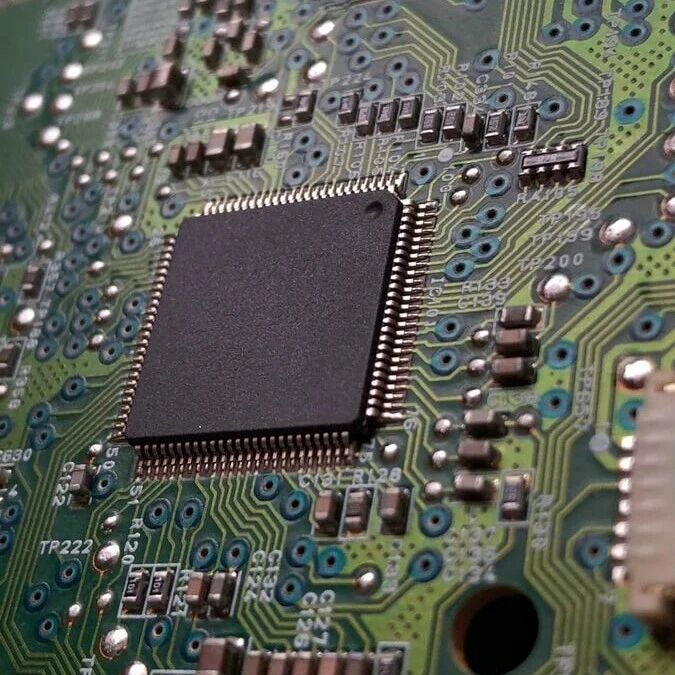
半导体设备市场的“危”与“机”
半导体芯闻· 2025-09-23 10:38
Core Viewpoint - The global semiconductor equipment market is experiencing unprecedented turbulence and adjustment, with a projected market size of $110.8 billion in 2025, reflecting a 6.2% year-on-year growth, and expected to reach $122.1 billion in 2026, growing by 10.2% [1] Demand and Policy: Dual Shift - The complexity of the current market is primarily due to the dual shift in demand rhythm and policy barriers, particularly in China, which was the largest buyer of semiconductor equipment during 2023-2024 [2] - After a period of intensive equipment procurement, the industry has entered a new cycle where yield ramp-up and capacity utilization are the main themes, leading to a natural slowdown in demand [2] - TechInsights predicts a 6% year-on-year decline in China's equipment purchases for 2025, while SEMI's estimate is as high as 24% [2] - On the policy side, stricter export approvals have slowed down shipments to China, with the U.S. further tightening export restrictions by the end of 2024 [2] Impact on Suppliers - The dual constraints of demand and policy have led to a decline in order visibility and rhythm for semiconductor equipment suppliers in China, with approval timelines becoming a critical risk factor for revenue recognition [3] International Equipment Manufacturers: The Other Side of Growth - Applied Materials (AMAT) reported a revenue of $7.32 billion for Q3 FY2025, an 8% year-on-year increase, but projected a decline to $6.7 billion in Q4 due to a drop in sales in China, which accounted for 35% of its revenue [4] - Tokyo Electron (TEL) anticipates a -5% growth rate in the front-end equipment market for FY2026, primarily due to reduced investments from emerging Chinese semiconductor manufacturers [5] - ASML continues to perform well but has expressed caution regarding 2026 due to potential tariffs and geopolitical uncertainties affecting North American clients [6] Domestic Equipment Manufacturers: Revenue Growth - In contrast to international firms, China's semiconductor equipment industry showed robust recovery in H1 2025, with major listed companies achieving revenue growth of 20% to 50% [9] - North Huachuang and Zhongwei contributed over $21 billion in revenue, dominating the market share [9] - North Huachuang's revenue reached $16.14 billion, a 29.51% increase, while Zhongwei's revenue was $4.96 billion, growing by 43.88% [9] Profitability Trends - The industry shows significant profit divergence, with companies like Shengmei Shanghai and Changchuan Technology experiencing explosive profit growth due to strong demand in AI and advanced packaging [10] - Shengmei Shanghai's revenue was $3.27 billion, up 35.83%, with net profit increasing by 56.99% [10] - Changchuan Technology's revenue reached $2.17 billion, a 41.80% increase, with net profit soaring by 98.73% [12] Emerging Growth Engines - New demand growth in emerging fields is offsetting the slowdown in the Chinese market, with companies like KLA focusing on process control and inspection equipment showing resilience [6] - Lam Research has seen strong non-China technical spending driven by AI and HBM, although market caution remains regarding the sustainability of Chinese orders [7] Conclusion - The semiconductor equipment market in 2025 presents both challenges and opportunities, with the long-term growth trend remaining solid, projected to reach approximately $1 trillion by 2030 [19]
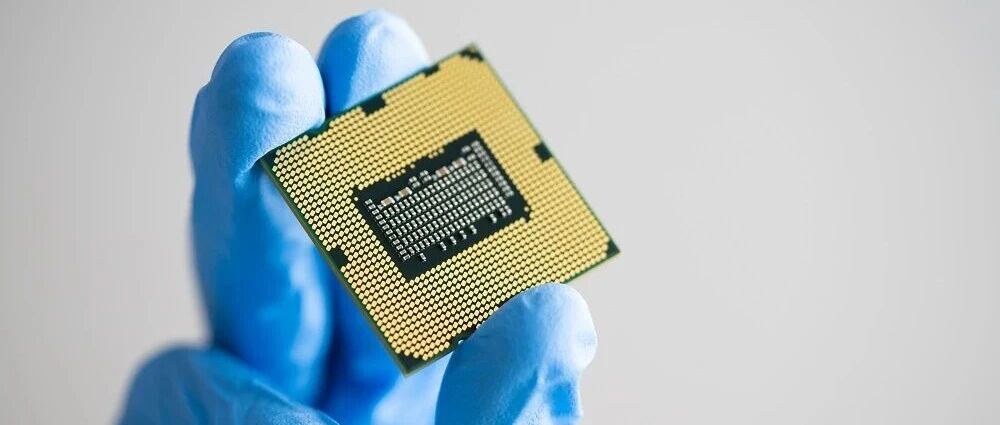
光芯片,成为关键
半导体芯闻· 2025-09-23 10:38
Core Insights - The article discusses the escalating arms race in artificial intelligence (AI) computing capabilities, highlighting a significant wave of global infrastructure investment. However, the AI industry faces a fundamental barrier in data movement between processors due to the limitations of existing copper interconnect technologies, which cannot effectively scale to meet the demands of next-generation AI requiring millions of processors. In this context, photonic chip startups Celestial AI and OpenLight are emerging to provide faster and more energy-efficient solutions to meet the needs of hyperscaler clients like Amazon, Microsoft, and Google [1]. Group 1: Celestial AI Developments - Celestial AI has secured $255 million in investments from TSMC's VentureTech Alliance and Samsung's Catalyst Fund, bringing its total funding to $520 million. The company plans to use this funding to strengthen its supply chain and deepen partnerships with foundries, including TSMC [2]. - Celestial AI expects to begin selling its first chips by mid to late 2026, focusing on server "scale-up" networks that account for 85% of data center traffic. The company anticipates that its scale-up sales will surpass copper-based Ethernet scale-out switches starting in 2025 [5]. - The core technology of Celestial AI, Photonic Fabric, offers optical interconnects from chip-to-chip and server-to-server, significantly outperforming Nvidia's NVLink in terms of power consumption. Celestial AI is positioning its Optical Memory Interface Bridge (OMIB) as an alternative to NVLink [5][7]. Group 2: OpenLight Developments - OpenLight raised $34 million in funding from investors including Juniper Networks and Lam Research. The company plans to use this capital to expand its process design kit (PDK) for active and passive photonic components, with production expected to begin for its first customers by the end of 2025 [4][11]. - OpenLight's competitive advantage lies in its use of indium phosphide technology, which allows for the integration of lasers onto chips. The company has demonstrated a 400 Gbps modulator with low power consumption of approximately 1.5 microjoules per bit [11]. - OpenLight provides a library of components (PDK) to enable customers to design their own chips, collaborating with ASE Holdings' subsidiary, Siliconware Precision Industries [14]. Group 3: Competitive Landscape - The photonic chip sector is becoming increasingly competitive, with players like Ayar Labs, Lightmatter, and Huawei entering the market. Huawei aims to challenge Nvidia's NVLink market with its new SuperPod cluster, which plans to connect up to 15,488 Ascend NPUs by 2026 [15]. - Lightmatter announced the Passage M1000 platform, which offers a total optical bandwidth of 114 Tbps, and is collaborating with GlobalFoundries and Amkor to begin production based on this platform [17][18]. - Quantum computing startup PsiQuantum is also manufacturing photonic chips using standard 45nm silicon nitride processes at GlobalFoundries [21].
张汝京,受聘加入
半导体芯闻· 2025-09-23 10:38
来源:内容来自上海电力大学官微,谢谢。 为加强校企合作、促进产教融合,进一步提升人才培养质量,日前,我校举办特聘教授张汝京博士 聘任仪式。美国达拉斯浸会大学副校长Randy Byers及代表团,我校党委副书记、校长顾春华,党 委副书记、副校长朱克勇,以及人事处、国交处、电信学院、数理学院相关负责人参会。聘任仪式 由人事处处长李永斌主持。 如果您希望可以时常见面,欢迎标星收藏哦~ 未来,学校将 持续以校企合作为抓手 紧密对接区域经济社会发展需求 推动人才培养与产业升级深度融合 为地方经济高质量发展 注入强劲的人才动能 专家介绍 顾春华对美国达拉斯浸会大学代表团的到访及张汝京教授的受聘加入表示热烈欢迎,并介绍学校发 展历程及在人才培养、能源电力特色学科布局、高层次人才培养等方面取得的显著成绩。他表示, 此次聘任将为学校在应用型人才培养及相关学科实现高质量发展提供重要助力。 顾春华为张汝京博士颁发聘书 张汝京教授感谢上海电力大学给予信任与支持。他介绍了自己在美国达拉斯浸会大学的学习经历, 表示受聘特聘教授是压力也是责任,将积极投身人才培养、师资建设、产学研平台建设,打破校企 壁垒,推动产教融合向纵深发展。 张汝京博 ...