半导体行业观察

Search documents
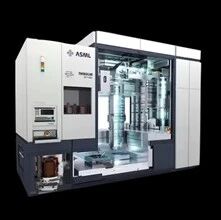
台积电正在推动光刻革命
半导体行业观察· 2025-11-13 01:35
Core Viewpoint - Inverse Lithography Technology (ILT) is emerging as a revolutionary method in chip design, potentially enhancing performance levels significantly, particularly through its application by TSMC and NVIDIA [2][8]. Group 1: Technology Overview - ILT is not a new technology but is being utilized in innovative ways by leading chip manufacturers [2][6]. - The technology addresses issues arising from the diffraction and distortion of extreme ultraviolet light as it passes through complex optical systems in advanced chip manufacturing [4]. - Traditional methods of mask design are iterative and additive, while ILT employs artificial intelligence to generate optical mask images pixel by pixel, resulting in unique and complex designs [5][11]. Group 2: Industry Implications - TSMC's upcoming N2 process (2nm process) will incorporate ILT technology, although it will initially be used for only a few mask layers [8]. - The application of ILT in future GPU products by companies like NVIDIA is expected to yield significant advancements, akin to generational upgrades in chip nodes without the complications of shorter wavelengths [8]. - The resulting lithography masks from ILT are described as visually striking and complex, paralleling the intricate workings of advanced AI models [11].


一颗2nm芯片发布,吊打英伟达
半导体行业观察· 2025-11-13 01:35
Core Insights - Tachyum has announced its new 2nm Prodigy chip, which boasts 1024 cores, a clock frequency of 6GHz, and 1GB of combined cache, positioning it as a competitor to NVIDIA's Rubin Ultra chip [2][6] - The Prodigy 2 chip is claimed to exceed 1000 PFLOPs in inference performance, significantly outperforming NVIDIA's Rubin Ultra, which has a performance of 50 PFLOPs, making it 21 times faster [6][15] - The chip's architecture supports high-performance AI and computing applications, with enhancements in integer performance by up to 5 times, AI performance by up to 16 times, and DRAM bandwidth by 8 times [9][10] Specifications Overview - The Prodigy 2nm chip features a maximum of 1024 64-bit cores, a clock frequency of up to 6GHz, and supports DDR5 memory with speeds up to 17,600 MT/s [10][13] - It can accommodate up to 48TB of DDR5 memory per slot and includes 128 PCIe 7.0 lanes, with a thermal design power (TDP) of up to 1600W [10][13] - The chip integrates 128KB instruction cache, 64KB data cache, and 1GB of L2+L3 cache, with various configurations available ranging from 32 to 1024 cores [13][14] Performance Claims - Tachyum asserts that the Prodigy chip can deliver three times the performance of the best x86 processors and six times that of the highest-performing GPGPU [15][18] - The company emphasizes that its solution will significantly reduce capital and operational expenditures for data centers while providing unprecedented performance and efficiency [15][18] - The Prodigy series is designed for a wide range of applications, including large-scale AI, supercomputing, high-performance computing (HPC), and big data analytics [18][19] Development and Market Position - Tachyum has faced multiple delays in the development of the Prodigy chip, with initial plans for a 2019 release now pushed to 2025 for mass production [45][49] - The company has secured a $220 million investment to support the development of the Prodigy chip, along with a $500 million procurement order for the chip [49] - Tachyum aims to penetrate the market quickly with its competitive pricing and performance, offering a native software ecosystem that supports existing x86 binaries [18][19]

全球FPGA市场,预计将达到193.4亿美元
半导体行业观察· 2025-11-13 01:35
Group 1 - The global FPGA market is expected to grow significantly from $11.73 billion in 2025 to $19.34 billion by 2030, driven by the widespread application of AI, IoT, and high-bandwidth communication technologies across various industries [2] - FPGA solutions are becoming a core technology in modern electronic design, providing edge AI, real-time processing, and system reconfigurability across sectors such as aerospace and automotive [2] - The application of FPGAs in aerospace and defense is accelerating, enhancing the performance of avionics, autonomous systems, and critical mission applications, where low latency and reliability are crucial [2] Group 2 - Low-end FPGAs are expected to dominate the market by 2025 due to their cost-effectiveness, low power consumption, and ease of deployment, making them popular among designers in consumer electronics, industrial automation, IoT devices, and small embedded systems [3] - The embedded FPGA (eFPGA) market is projected to grow rapidly, driven by the demand for customizable, dedicated hardware in data centers, automotive, and industrial systems [3] - FPGAs are increasingly used to accelerate AI and machine learning workloads, optimizing network and cloud performance, with aerospace and defense remaining key drivers for applications such as radar and secure communications [3] Group 3 - Companies like AMD, Altera, Lattice Semiconductor, Microchip Technology, Achronix, and several leading Chinese firms are expanding their FPGA product portfolios, introducing advanced architectures and AI acceleration features [4] - The growth trajectory of the FPGA market highlights its core role in driving the AI and IoT revolution, as demand for reconfigurable and high-performance computing hardware continues to rise across industries [4]
激光雷达,迎来颠覆者
半导体行业观察· 2025-11-13 01:35
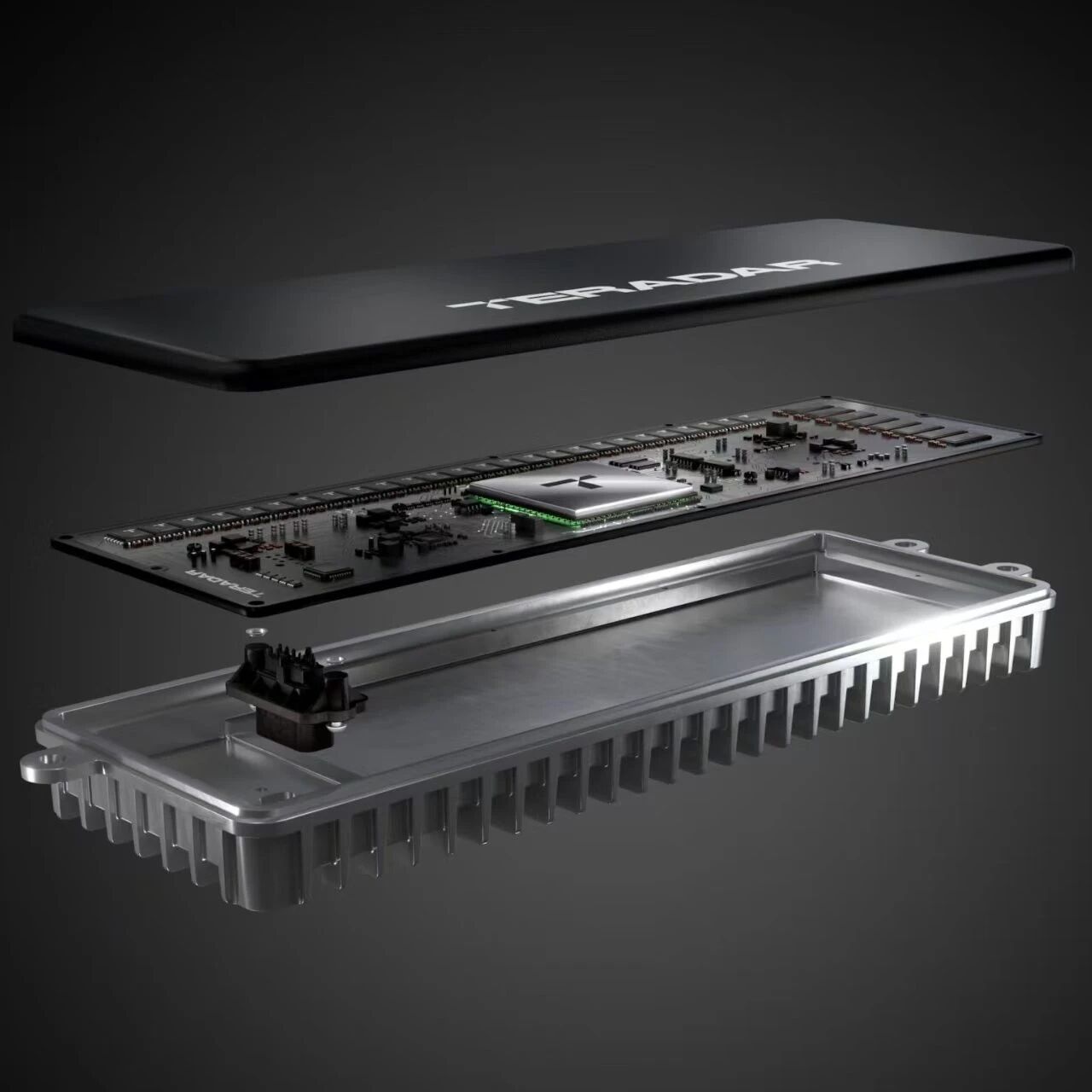
Core Viewpoint - Teradar is developing a solid-state sensor utilizing the terahertz waveband for high-resolution sensing, aiming to revolutionize automotive safety and automation by providing a cost-effective alternative to existing radar and lidar technologies [2][8]. Group 1: Technology and Innovation - Teradar's sensor combines the best features of radar and lidar, offering high resolution without moving parts and the ability to penetrate adverse weather conditions [2][5]. - The sensor, named "Modular Terahertz Engine," is designed to be customizable for various advanced driver-assistance systems (ADAS) and autonomous driving applications, with a projected cost in the hundreds of dollars range [5][9]. - The technology boasts a 20-fold improvement in resolution compared to traditional automotive radar and maintains performance in challenging weather conditions [8][9]. Group 2: Market Position and Collaborations - Teradar has secured $150 million in Series B funding from notable investors, including Capricorn Investment Group and Lockheed Martin's venture arm, and has established partnerships with five major automotive manufacturers for technology validation [2][3][8]. - The company is working with three tier-one suppliers for production, indicating a strong supply chain strategy to support its market entry [3][8]. Group 3: Future Prospects - Teradar aims to have its sensor ready for integration into 2028 vehicle models, with expectations of preventing over 150,000 fatal accidents annually through enhanced perception capabilities [9][10]. - The company is focused primarily on the automotive sector but acknowledges potential applications in defense and industrial fields, showcasing versatility in its technology [6][10].
三星晶圆厂,争取盈利
半导体行业观察· 2025-11-13 01:35
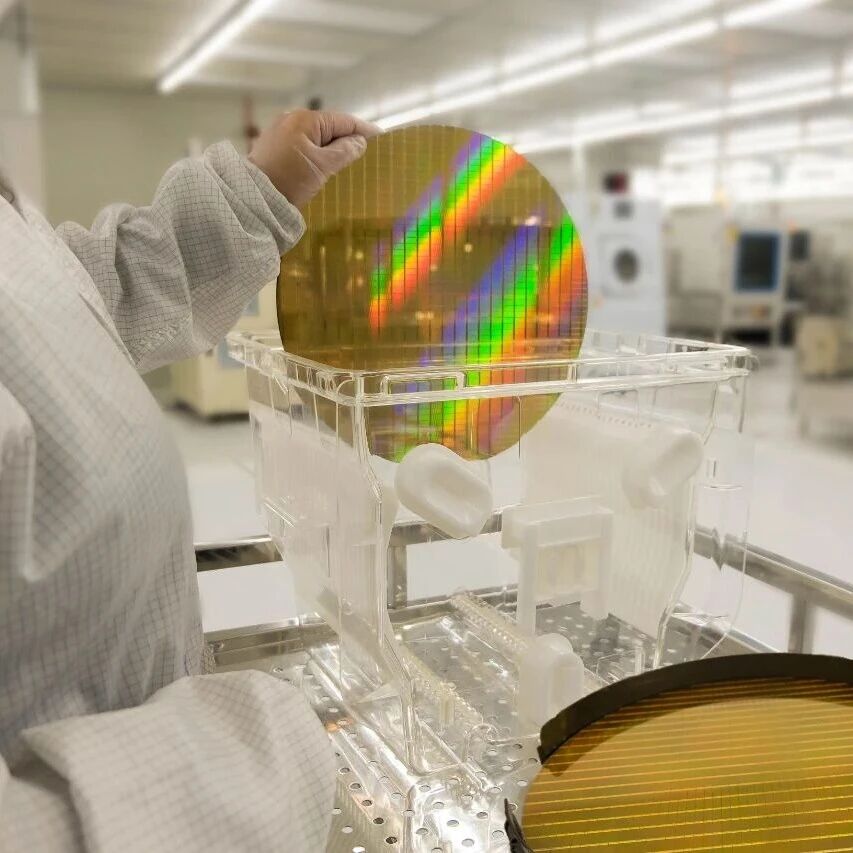
Core Viewpoint - Samsung Electronics aims to achieve profitability in its semiconductor foundry business by 2027, focusing on securing orders from major tech companies like Tesla and Apple, and leveraging its new Taylor wafer fab in the U.S. [2][3] Group 1: Business Goals and Strategies - Samsung has set a management goal to achieve breakeven by 2027 and aims for a 20% market share based on sales in the foundry sector [2][3] - The company is sharing its management goals with partners and discussing future investment plans to ensure stable operations and necessary materials [2][3] - Samsung's foundry business has been characterized as an order-based model, necessitating advance preparation of raw materials and equipment [2] Group 2: Current Performance and Market Position - Since 2022, Samsung's foundry business has been operating at a loss, estimated at 1 trillion to 2 trillion KRW per quarter [3] - Despite significant investments in advanced processes, Samsung has struggled to secure a large number of orders, leading to its foundry being referred to as a "bottomless pit" [3] - In 2023, Samsung has secured contracts from major North American tech giants, indicating a shift in its ability to attract clients due to improved yield rates [3] Group 3: Future Developments - Samsung plans to begin production at its Taylor factory in 2024, with equipment installation expected to be completed by Q2 and full production by Q3 [5] - The company is also preparing a second production line at the Taylor factory, which will be larger than the first [5] - Analysts suggest that Samsung's recovery in the foundry business will depend on its ability to secure next-generation process technologies and maintain stable yields [5]

1亿美元的芯片,如何成功?做到这10点!
半导体行业观察· 2025-11-12 01:20
公众号记得加星标⭐️,第一时间看推送不会错过。 来 源 : 内容 编译自 synopsys 。 正如俗语所说,高风险伴随着高回报。 由于硬件和软件之间存在着极其复杂的相互依赖关系,因此开发定制人工智能芯片是当今半导体行业 中资本密集度最高、风险最大的项目之一。 在先进工艺节点上,项目总成本很容易超过1亿美元。如果设计需要返厂重新制版,成本还会大幅上 升。而最糟糕的情况——错失融资机会、上市时间延误以及由此导致的市场份额损失——可能会造成 灾难性后果。 然而,越来越多的芯片制造商和初创公司无视这些风险,因为他们看到了巨大的回报。但容错空间很 小,第一次就做对已成为技术、财务和商业上的当务之急。 以下是开发人工智能芯片时实现首次芯片测试成功的十个行之有效的策略: 1. 优先进行早期架构探索 从一开始就优化人工智能芯片的架构会带来巨大的收益。早期架构探索使团队能够评估计算、内存和 互连的多种配置和权衡方案。性能和功耗可以针对特定的人工智能工作负载进行优化。由于大多数人 工智能芯片采用多芯片设计,因此可以使用专门的工具来分析和优化整个封装内各个芯片的划分和配 置。通过优先进行早期架构探索,团队可以快速识别潜在的瓶颈, ...
给芯片降降温
半导体行业观察· 2025-11-12 01:20
Core Viewpoint - TSMC's Direct-to-Silicon Liquid Cooling (IMC-Si) technology demonstrates significant potential in addressing high power and power density challenges in high-performance computing and AI applications, particularly when integrated with advanced packaging like CoWoS-R [1][4][31] Group 1: Technology Overview - The IMC-Si solution utilizes a silicon-integrated micro-cooler that requires minimal modifications to existing CoWoS processes, achieving cooling power of up to 3.4 kW at a uniform thermal flux of 2.5 W/mm² using 40°C water as the coolant [1][8] - Direct silicon liquid cooling technology is shown to outperform traditional cooling methods, with previous studies indicating cooling capabilities of up to 2 kW at 3.2 W/mm² power density [5][18] - The integration of IMC-Si into the CoWoS-R platform allows for effective heat dissipation, addressing the limitations of indirect cooling systems [7][10] Group 2: Reliability Testing - Early reliability tests, including helium leak tests, confirm that the IMC-Si integrated CoWoS-R packaging maintains helium leak rates at least an order of magnitude lower than critical thresholds, demonstrating robust sealing performance [23][28] - The integrated system successfully passed multiple reflow soldering cycles, thermal cycling tests, and high-temperature storage tests, indicating strong reliability under stress [29][28] - Accelerated liquid immersion tests at high temperature and pressure further validate the longevity and stability of the sealing agent used in the IMC-Si solution [28][29] Group 3: Future Directions - Future work will focus on optimizing micro-pillar designs and reducing warpage to enhance cooling efficiency, ensuring the scalability and reliability of the IMC-Si solution in demanding environments [31]
大联大架构调整,强调友尚、品佳未消失
半导体行业观察· 2025-11-12 01:20
Group 1 - The core point of the article is that 大联大 announced a major organizational restructuring, where its subsidiary 诠鼎 will acquire 100% of the shares of two other subsidiaries, 友尚 and 品佳, through a share conversion method to enhance operational efficiency and global presence [2][3] - The restructuring aims to consolidate resources and create two main operational units, with 诠鼎 and 世平 becoming the new dual engines of the semiconductor distribution business [2][3] - The share conversion ratio is set at 1 share of 友尚 for 2.7947 shares of 诠鼎 and 1 share of 品佳 for 1.2222 shares of 诠鼎, with a base date of January 1, 2026 [3] Group 2 - Following the restructuring, 诠鼎's revenue is projected to reach approximately $11.48 billion, with shareholder equity around $930 million and an employee count of about 1,900 [3] - 大联大 reported its Q3 financial results, with revenue of NT$244.467 billion, a net profit of NT$5.35 billion, and a net income of NT$3.178 billion, marking significant year-on-year growth [3] - The strong financial performance is attributed to the rapid development of generative AI, which has increased demand for electronic components across various product categories [3]

沙漠里,美国正在上演芯片革命
半导体行业观察· 2025-11-12 01:20
Core Insights - The article discusses the challenges and developments in the semiconductor industry, particularly focusing on the expansion of companies like UIS and TSMC in Arizona, USA, highlighting the complexities of establishing a semiconductor ecosystem in a new region [2][5][12]. Group 1: UIS and TSMC's Expansion - UIS, a major Taiwanese semiconductor manufacturer, is leading its first business in the US, responding to TSMC's plans to build an advanced chip factory in Arizona [2]. - TSMC has increased its investment in Arizona to $165 billion, planning to build at least eight factories for advanced chip manufacturing, packaging, and R&D, a significant increase from the initial plan of a $12 billion factory [5]. - The construction site in Phoenix has transformed from barren land to a bustling center with over 3,000 employees, producing advanced chips for major clients like Apple and Nvidia [5]. Group 2: Operational Challenges - UIS faced steep learning curves regarding operational costs, permit acquisition, and local design requirements, emphasizing the need to adapt to local cultures and practices rather than replicating methods from Taiwan [2][3]. - The construction of high-tech facilities requires extensive expertise, with thousands of technicians involved in precise installations that directly impact production efficiency and product quality [3][4]. - UIS had to manage complex scheduling issues and component shortages, leading to the establishment of local warehouses and a significant increase in its workforce, becoming one of the largest local teams in Arizona [4]. Group 3: Local Ecosystem Development - Arizona has attracted over 60 semiconductor projects since 2020, with investments exceeding $210 billion, expected to create around 25,000 new jobs [7]. - Local government investments in infrastructure, such as water and sewage systems, have been made to support the semiconductor industry, with significant land planning efforts to accommodate suppliers and educational partners [7][8]. - The establishment of a local supply chain is crucial, with companies like Topco Scientific facilitating connections among smaller suppliers to enhance local operations [12][13]. Group 4: Future Prospects - The demand for localized production and the AI investment boom are driving returns on investments made by companies like TSMC, with US customers contributing 76% of TSMC's total revenue in a recent quarter [9]. - Analysts predict that the US could lead global chip investments by 2027, driven by ongoing infrastructure developments and the need for a robust semiconductor ecosystem [12]. - The article highlights a shift in perspective among suppliers, recognizing the importance of collaboration and the potential for growth in overseas markets, particularly in the context of geopolitical dynamics [14].
被严重低估的EDA
半导体行业观察· 2025-11-12 01:20
Core Insights - The EDA industry has historically been undervalued, with its revenue only recently increasing from 2% to 3% of the semiconductor industry's total revenue over the past 25 years [3][4][5] - There is a significant disparity in compensation between EDA professionals and those in other tech sectors, such as software engineering at Netflix [3] - EDA practitioners are primarily focused on value creation rather than value capture, leading to a misalignment in pricing strategies [8][19] Group 1: Industry Perception and Value - EDA professionals believe their technology is undervalued and should command higher prices, with some suggesting a target of 10% of semiconductor revenue [5][6] - Smaller EDA companies blame larger firms for price suppression, indicating a lack of competitive pricing power in the industry [6][10] - The perception of EDA as a critical technology is not reflected in its market valuation, leading to potential investment opportunities [3][17] Group 2: Negotiation Dynamics - Buyers typically employ professional negotiation teams, while sellers do not, creating an imbalance in negotiation power [10][25] - Long contract durations limit suppliers' ability to switch clients, giving buyers leverage during contract renewals [10][24] - Sales pressure can lead to significant discounts, impacting overall profitability for EDA suppliers [10][21] Group 3: Market Structure and Business Model - The EDA market is highly concentrated, with three major companies holding 90% of the market share, yet a few large clients contribute to the majority of revenue [29][30] - The current business model does not allow EDA firms to capture a fair share of the value they create for clients [29][30] - Bundling practices in EDA can dilute the perceived value of individual products, further complicating pricing strategies [26][27] Group 4: Recommendations for Improvement - Implementing better incentive mechanisms for sales teams could align their goals with long-term value capture [32] - Breaking down large contracts into smaller ones could enhance negotiation power and reduce dependency on a few major clients [34] - Focusing on distinct areas of innovation and leveraging unique strengths can help EDA firms navigate competitive pressures [36]