半导体行业观察

Search documents
AMD公布最新战略,AI芯片增速惊人
半导体行业观察· 2025-11-12 01:20
Core Viewpoint - AMD forecasts strong growth in data center products driven by AI demand, with an average annual revenue growth rate exceeding 35% over the next three to five years, and an 80% growth rate for AI data center business during the same period [2][3]. Group 1: Financial Projections - AMD's adjusted earnings per share are expected to exceed $20, with an operating profit margin above 35% [2][12]. - Analysts predict AMD's sales will grow by 32% this year, with growth rates of 31% and 39% in 2026 and 2027, respectively [3][4]. - By 2027, AMD's adjusted earnings per share are estimated to be $9.88 [4]. Group 2: Market Position and Competition - AMD has successfully captured market share from Intel and is now a significant player in the AI accelerator market, generating billions in new revenue [5][6]. - AMD's CEO stated that AI business could generate "tens of billions" in revenue annually by 2027, reflecting strong interest in its MI series AI accelerators [5][6]. - AMD is the second-largest graphics chip supplier globally, competing directly with Nvidia in the AI accelerator space [5]. Group 3: Strategic Initiatives - AMD aims to lead the $1 trillion AI chip market by leveraging its technology roadmap and strategic partnerships [3][6]. - The company plans to enhance its data center business with a projected compound annual growth rate (CAGR) exceeding 60% and aims for over 80% CAGR in AI data center revenue [12][13]. - AMD's product portfolio includes the Instinct MI350 series GPUs, which are rapidly being deployed by leading cloud service providers [6][11]. Group 4: Product Development and Innovation - AMD's upcoming products, including the MI450 series GPUs and the "Helios" system, are expected to provide industry-leading performance and memory capacity [6][11]. - The company has expanded its AI PC product lineup by 2.5 times since 2024, powering over 250 laptop and desktop platforms [8][9]. - AMD's open-source ROCm software has seen a tenfold increase in downloads, indicating strong developer interest [11]. Group 5: Long-term Growth Goals - AMD anticipates achieving a company-wide revenue CAGR exceeding 35% and aims to capture over 40% of the client market share [12][13]. - The company is also targeting over 70% market share in adaptive computing and plans to expand its embedded business [13].


HBM,太难了
半导体行业观察· 2025-11-12 01:20
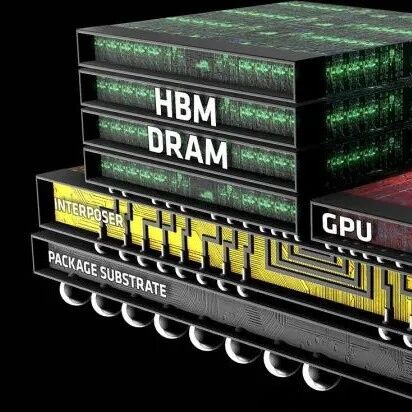
Core Insights - High Bandwidth Memory (HBM) is a critical driver for artificial intelligence and is at the forefront of multiple technological developments, but it is also one of the most challenging modules to manufacture [2] - The shrinking dimensions and spacing of Through-Silicon Vias (TSV) and microbumps present significant challenges, impacting yield rates and defect detection [2][10] - The transition to HBM4 is expected to increase the number of stacked layers from 16 to potentially 20, while maintaining a total height limit of 775 micrometers [8] Manufacturing Challenges - The need to stack 16 chips on a single wafer requires significant thinning, down to 20 micrometers, and the use of backside inspection technology to ensure wafer flatness [4] - Major HBM manufacturers are considering a shift to hybrid bonding technology to achieve shorter interconnects and lower signal latency [4][10] - Inconsistencies in bump height can negatively affect yield, reliability, and performance, leading to issues such as contact failures and reduced signal integrity [4][10] Detection and Inspection Techniques - Manufacturers focus on identifying issues after the electroplating step and before reflow soldering, with confocal laser detection being preferred over white light detection for rough metal surfaces [5] - Advanced packaging requires strict control of coplanarity and flatness, with flexibility being crucial for adapting to different development stages and achieving mass production [7] - Various detection methods, including automated optical inspection (AOI) and X-ray tools, are being optimized to identify critical defects in microbumps [9] Transition to HBM4 - The transition to HBM4 involves challenges such as reducing copper microbump sizes to 10 micrometers and determining the optimal timing and method for migrating from microbumps to hybrid bonding [13] - Defects in microbumps include pad misalignment, solder necking, and localized cracking, necessitating rapid analysis of thousands of images to ensure high yield [13][14] - A robust framework for analysis and detection of defects is essential as HBM suppliers transition to HBM4, focusing on optimizing solder paste usage and ensuring proper alignment during assembly [14]

又一巨头,进军SiC
半导体行业观察· 2025-11-12 01:20
Core Insights - SK Keyfoundry is accelerating the development of silicon carbide (SiC) based compound power semiconductor technology to strengthen its position in the global power semiconductor market [2][3] - The acquisition of SK Powertech, a key player in the SiC field, is expected to enhance SK Keyfoundry's technological competitiveness and establish a solid foundation for its technology independence in SiC power semiconductors [2][3] Group 1: Company Strategy - SK Keyfoundry aims to provide SiC MOSFET 1200V process technology by the end of 2025 and plans to launch SiC power semiconductor foundry services in the first half of 2026 [3] - The company is focusing on high-voltage, high-efficiency applications such as electric vehicle power systems, industrial power converters, and renewable energy inverters [3] Group 2: Market Trends - The global demand for compound power semiconductors, including SiC, is rapidly increasing, particularly in sectors where energy efficiency is critical, such as electric vehicles, energy storage systems (ESS), 5G infrastructure, and data centers [3] - Market research firm Omdia predicts that the global SiC market will grow at a robust annual growth rate of over 24% from 2025 to 2030 [3] Group 3: Leadership Perspective - The CEO of SK Keyfoundry, Lee Deok-myeong, stated that acquiring SK Powertech is a crucial step in establishing a unique technological advantage in the compound semiconductor field [4] - The integration of core R&D capabilities from both companies aims to launch efficient SiC power semiconductor process technologies and products, positioning SK Keyfoundry for a differentiated technological leadership in the rapidly growing high-voltage, high-efficiency compound semiconductor market [4]
加速高端硬件创新,嘉立创如何靠“盲埋孔”更进一步
半导体行业观察· 2025-11-11 01:06
Core Viewpoint - Jialichuang Group has transformed the PCB prototyping process for electronic engineers globally, evolving into a leading one-stop service provider in the electronic and mechanical industry chain, offering comprehensive services from circuit design to PCB prototyping and component assembly [1][3]. Group 1: Technological Advancements - Jialichuang announced two major technological breakthroughs: the mass production of 34 to 64-layer ultra-high-layer PCBs and the upcoming launch of 1 to 3-stage HDI (High-Density Interconnect) boards [5][8]. - The ultra-high-layer PCBs feature a maximum thickness of 5.0mm and a thickness-to-diameter ratio of up to 20:1, meeting the stringent requirements for complex circuit integration and high-density wiring [5][7]. - The minimum line width and spacing of the ultra-high-layer PCBs can reach 3.5mil, utilizing Tg170 high-temperature resistant substrates, which enhances signal integrity, heat dissipation, and structural stability [5][7]. Group 2: Manufacturing Process - The structure of the ultra-high-layer PCBs employs a core board and prepreg, alternating layers through a multi-layer pressing process, which allows for different types of circuits to be laid out across various layers [7][9]. - Jialichuang has introduced 0.1mm mechanical micro-drilling technology to enhance the precision of micro-holes, addressing the industry's challenges with low plating yield for through-holes [7][12]. - The company has achieved a production speed of ultra-high-layer PCB samples in as fast as 8 days, which is approximately twice as fast as the industry standard, while also reducing product prices by about 50% compared to similar products [8][9]. Group 3: Market Position and Future Directions - Despite being a pioneer in PCB prototyping, Jialichuang still has significant growth potential compared to global PCB giants, particularly in the ultra-high-layer PCB and HDI sectors [9][12]. - The combination of HDI and ultra-high-layer PCBs is essential for the future of modern smart hardware, enabling high-density wiring and supporting complex functionalities in 5G and AI applications [9][12]. - Jialichuang's journey into ultra-high-layer PCB and HDI has been a long-term effort, with significant milestones achieved since its establishment in 2006, including the development of various technologies and manufacturing processes [13][14]. Group 4: Industry Impact - The advancements in HDI and ultra-high-layer PCBs are crucial for the evolution of modern electronic devices, as they allow for smaller, more efficient designs that meet the demands of high-performance applications [12][17]. - Jialichuang's innovations are positioned to empower engineers by making high-end manufacturing techniques accessible, thereby enhancing the capabilities of Chinese manufacturing in the global market [17].
硬件辅助验证,格局巨变
半导体行业观察· 2025-11-11 01:06
Core Insights - The competitive landscape of hardware-assisted verification (HAV) has significantly changed over the past decade, driven by the rapid evolution of semiconductor design and increasing complexity in system-on-chip (SoC) architectures [2] - The rise of artificial intelligence has redefined the standards that HAV must meet to keep pace with next-generation semiconductor innovations [2] Group 1: Changes in Key Deployment Aspects - The focus has shifted from compile time to runtime performance, as the most challenging tasks now involve validating extensive software workloads that can run for days or weeks [4][5] - The emphasis on multi-user support has transitioned from maximizing user concurrency to ensuring single-system critical chip pre-verification runs, driven by the emergence of single-chip AI accelerators and complex multi-chip architectures [7] - Debugging methodologies have evolved from waveform visibility to system-level visibility, utilizing software debuggers and protocol analyzers for better diagnostics of complex systems [9] Group 2: Evolution of HAV Attributes - Key attributes of HAV systems have transformed from supporting hundreds of millions of gates to tens of billions of gates, with significant improvements in emulation and prototyping frequencies [12] - The time required for bring-up has decreased from weeks or months to days, and compile times have reduced from days to hours with incremental and parallel flows [12] - The role of HAV has expanded beyond late-stage verification to become an essential pillar throughout the semiconductor design process, covering the entire lifecycle from early RTL validation to complex system integration [12]

ISA之战已结束,CPU进入新时代
半导体行业观察· 2025-11-11 01:06
Core Viewpoint - The article discusses the evolution of CPU architectures, emphasizing the coexistence of multiple architectures within single systems to handle diverse workloads, particularly in the context of the transformative impact of artificial intelligence (AI) on the industry [2][3]. Group 1: Evolution of CPU Architectures - Historically, x86 architecture, developed by Intel and AMD, has been the dominant choice for PCs and general servers, but it now coexists with RISC architectures, often within the same system or SoC [5][7]. - Arm architecture has become the leading processor architecture across various fields, including mobile devices and IoT, due to its efficiency and extensive hardware and software ecosystem [5][6]. - RISC-V, an open-source ISA, is gaining traction but still lags in software support compared to Arm and x86, with an expected shipment of around 1 billion cores in 2024, primarily for deep embedded applications [8]. Group 2: Market Dynamics and Trends - The demand for performance efficiency driven by AI is prompting companies to develop diverse CPU architectures and configurations, with AMD and Intel creating different performance levels of x86 CPUs for servers [11]. - Arm is expanding its ecosystem by introducing a complete pre-validated compute subsystem and fostering innovation among industry leaders to develop custom Arm-compatible CPU designs [11]. - The semiconductor industry is transitioning towards heterogeneous computing solutions, where multiple CPU architectures will increasingly work together within the same chip design, reflecting a shift in focus from which architecture will prevail to how they can collaborate effectively [11].


这才是英伟达的真正威胁
半导体行业观察· 2025-11-11 01:06
Core Viewpoint - NVIDIA's main competitor in the AI hardware race is Google, not AMD or Intel, as highlighted by the recent launch of Google's Ironwood TPU, which significantly enhances its competitive position against NVIDIA [2][10]. Group 1: Ironwood TPU Specifications - Google's Ironwood TPU features 192GB of HBM memory with a peak floating-point performance of 4,614 TFLOPs, representing a nearly 16-fold improvement over TPU v4 [5][4]. - The Ironwood TPU Superpod can contain 9,216 chips, achieving a cumulative performance of approximately 42.5 exaFLOPS [5][4]. - The inter-chip interconnect (ICI) technology allows for a scalable network, connecting 43 modules, each with 64 chips, through a 1.8 PB network [3]. Group 2: Performance Improvements - Compared to TPU v5p, Ironwood's peak performance has increased by 10 times, and it shows a 4-fold improvement over TPU v6e in both training and inference workloads [4][6]. - The architecture of Ironwood is specifically designed for inference, focusing on low latency and high energy efficiency, which is crucial for large-scale data center operations [6][7]. Group 3: Competitive Landscape - The AI competition is shifting from maximizing TFLOPS to achieving lower latency, cost, and power consumption, positioning Google to potentially surpass NVIDIA in the inference market [10]. - Google's Ironwood TPU is expected to be exclusively available through Google Cloud, which may lead to ecosystem lock-in, posing a significant threat to NVIDIA's dominance in AI [10]. Group 4: Industry Insights - The increasing focus on inference queries over training tasks indicates a shift in the AI landscape, making Google's advancements in TPU technology particularly relevant [6][10]. - NVIDIA acknowledges the rise of inference technology and is working on its own solutions, but Google is positioning itself as a formidable competitor in this space [10].


DARPA斥巨资建晶圆厂,发力先进封装
半导体行业观察· 2025-11-11 01:06
Core Insights - The article discusses the transformation of a semiconductor manufacturing plant in Austin, Texas, into the Texas Instruments Research Institute (TIE), focusing on advanced packaging for 3D heterogeneous integration (3DHI) [2][3] - The facility aims to be the world's only advanced packaging plant dedicated to 3DHI, which involves stacking chips made from various materials, enhancing performance significantly compared to traditional silicon-on-silicon stacking [2][3] Funding and Development - The Texas state government is investing $552 million in the construction of the plant, while DARPA is contributing $840 million, with the facility expected to become self-sustaining after a five-year mission [3][4] - TIE is described as a startup with significant growth potential, and the construction is progressing rapidly, with all equipment expected to be installed by Q1 2026 [3][4] Technical Challenges and Solutions - A major challenge for TIE is ensuring that different materials can be used predictably in manufacturing processes due to their varying mechanical properties [4] - The development of process design kits and packaging design kits is crucial for achieving the necessary precision in connecting chips [4][5] Project Applications - TIE will refine its technology through three 3DHI projects: phased array radar, focal plane array infrared imager, and compact power converters, which represent the operational model of the facility [5] - The facility will operate as a "multi-variety, small-batch" plant, contrasting with traditional high-volume silicon wafer foundries [5] Research Opportunities - The NGMM initiative provides research opportunities in areas such as new thermal films, microfluidic cooling technologies, and complex packaging failure mechanisms [5][6] - The collaboration between NGMM and TIE is seen as a unique opportunity for innovation in the semiconductor industry [6]
苹果iPhone新野心:绕开运营商,转向卫星
半导体行业观察· 2025-11-11 01:06
Core Viewpoint - Apple's satellite communication project has evolved from an aggressive plan to bypass carriers to a cautious and technically complex mobile service expansion plan through orbital satellites, aiming for global coverage [2][5]. Group 1: Project Development - Apple has been working on satellite communication for nearly a decade, hiring two senior satellite engineers from Alphabet to explore extraterrestrial communication [2]. - The introduction of the satellite emergency SOS feature in the iPhone 14 series in 2022 marked a strategic move rather than a mere innovation, allowing users to contact emergency services without cellular or Wi-Fi coverage [2][5]. - The satellite connection team, led by Mike Trella, coordinates the technology, which currently relies on Globalstar's satellite constellation [2][4]. Group 2: Partnership and Challenges - Globalstar's network, although outdated and small, has been deemed stable enough for Apple's initial products, and Apple has co-invested in upgrading this network [4][8]. - There is uncertainty in the partnership due to Globalstar's interest in selling, with SpaceX being a potential buyer [4]. - Internal debates at Apple have revolved around whether the company should act as a network operator, with some executives believing that Apple's strengths lie in hardware and software integration rather than competing with carriers [4]. Group 3: Future Strategies - Apple views space connectivity as a long-term strategy, aiming to build internal expertise and shape the future of non-terrestrial networks [5]. - The company is developing new satellite features, including an API framework for third-party developers and satellite-based navigation for Apple Maps [5]. - Upcoming iPhone models are expected to support 5G NTN, allowing for satellite backhaul transmission and continuous coverage [8]. Group 4: Service Model and Market Position - Currently, Apple's satellite features are offered for free to enhance the iPhone's value proposition and foster user loyalty [8]. - Future enhancements may adopt a dual-layer model, with basic emergency services remaining free while advanced connectivity services could require a subscription [8]. - The potential acquisition of Globalstar by SpaceX could lead to richer data transmission capabilities, including limited voice or video functions, which Apple has avoided so far [8].



存储芯片,前所未有
半导体行业观察· 2025-11-11 01:06
Core Viewpoint - The storage industry is experiencing a significant transformation driven by AI demand, leading to a structural growth phase rather than a traditional cyclical recovery [2][40]. Group 1: Financial Performance of Major Companies - Samsung Electronics reported a strong rebound in its storage business, achieving an operating profit of 12.2 trillion KRW in Q3 2025, a 32.6% year-on-year increase and a 159.6% quarter-on-quarter increase, marking the highest level in nearly three years [3][6]. - SK Hynix achieved record performance in Q3 2025, with operating income reaching 11.38 trillion KRW, a 62% year-on-year increase, and a net profit of 12.6 trillion KRW, reflecting a 119% surge [11][13]. - Western Digital's Q1 FY26 revenue reached $2.818 billion, a 27% year-on-year increase, with cloud services contributing significantly to its growth [22][23]. Group 2: Market Dynamics and Demand Drivers - The demand for high-performance storage chips, particularly HBM and DDR5, is being driven by the booming AI server and high-performance computing markets, with HBM sales volume increasing by 80% quarter-on-quarter [8][29]. - The global storage market is facing a structural supply-demand imbalance, with AI applications significantly increasing the demand for HBM, leading to price hikes and a shift in production focus towards high-value products [33][34]. Group 3: Technological Advancements and Capacity Expansion - Samsung plans to invest 47.4 trillion KRW in capacity upgrades by 2025, with 86% of the budget allocated to the semiconductor sector, focusing on expanding DRAM production lines to meet HBM4 demand [8][38]. - SK Hynix is advancing its 1c nm DRAM process and plans to launch HBM4, with a significant portion of its production capacity already secured for 2026 [19][21]. - Micron Technology is focusing on high-end demand, with a projected capital expenditure of $13.1 billion in FY26 to expand HBM and high-capacity storage product capacity [30][38]. Group 4: Strategic Partnerships and Long-term Agreements - Major storage companies are forming long-term agreements with AI leaders, with SK Hynix and Samsung securing contracts for HBM supply with NVIDIA and OpenAI, indicating a trend towards long-term demand visibility [36][37]. - Western Digital has received procurement orders from its top seven customers for the first half of 2026, ensuring stable production capacity and reducing inventory volatility risks [24].