半导体行业观察

Search documents
坪山:打造“湾区芯城”新引擎,铸就中国集成电路产业“第三极”核心承载区
半导体行业观察· 2025-10-18 00:48
Core Viewpoint - Pingshan District in Shenzhen is strategically positioned as a "Silicon-based Semiconductor Cluster" and is developing a distinctive semiconductor and integrated circuit system, with over 200 quality enterprises in the industry chain, achieving double-digit growth in output value for three consecutive years, and expected to exceed 10 billion in chip manufacturing output in 2024 [1][3]. Group 1: Semiconductor Manufacturing - Pingshan is the earliest administrative district in Shenzhen to focus on chip manufacturing, consistently accounting for over 60% of the city's output value [3]. - SMIC Shenzhen, established in 2008, has expanded to two production lines, covering 8-inch and 12-inch wafer manufacturing, creating a combination of "characteristics + scale" advantages [3]. - The ongoing major project by Pengxinxu focuses on 40nm/28nm mature logic process capacity, enhancing global wafer manufacturing services [3]. - The completion of the Fuman Microelectronics packaging project in June 2024 will provide an annual packaging capacity exceeding 8 billion units, forming a complete industry chain from wafer manufacturing to chip packaging [3]. Group 2: Industry Ecosystem and Segmentation - Pingshan leverages its core advantages in chip manufacturing to attract quality enterprises like Fuman Microelectronics and Hongxin Yucun, fostering collaboration within the industry chain [5]. - The district has established five key segments: integrated circuit equipment and core components, integrated circuit design, power devices, optoelectronic devices, and memory devices [5]. Group 3: Public Service Platforms - High-level public service platforms have been established in Pingshan to support SMEs and startups, promoting a collaborative innovation environment [7]. - Shenzhen Technology University has launched the first integrated circuit college in the Greater Bay Area, focusing on cultivating high-end talent for the semiconductor industry [7]. - The establishment of a semiconductor micro-nano processing platform at Shenzhen Technology University is expected to be operational by 2025, providing services for compound optoelectronic chips and silicon-based MEMS chips [7][8]. Group 4: Future Outlook - Pingshan aims to strengthen its foundation in silicon-based manufacturing, optical information, and integrated circuit expansion processes, targeting an annual production capacity of over 5 million wafers [9]. - The district aspires to become a core area for China's integrated circuit industry, inviting global semiconductor talents to join in its development journey [9].



苹果M5芯片,击败高通新旗舰
半导体行业观察· 2025-10-18 00:48
Core Insights - Apple has launched its latest chip, the M5, which will be featured in the new iPad Pro and 14-inch MacBook Pro, showcasing significant performance capabilities [2][3] - The M5 chip demonstrates a single-core performance score of 4,138 for the iPad Pro and 4,263 for the MacBook Pro, with multi-core scores of 16,366 and 17,862 respectively, indicating a 9% performance gap [2][3] - Compared to the previous M4 chip, the M5 shows a nearly 10% improvement in single-core performance and about 15% in multi-core performance [3] Performance Comparison - The M5 chip's single-core performance is competitive, only trailing behind a few high-end PC chips, with Intel's Core i9-14900KS scoring 4,457 and the Ultra 9 285K at 4,306 [4] - The M5 outperforms Qualcomm's Snapdragon X2 Elite Extreme, which scored approximately 4,080 in single-core tests [3][4] - In multi-threaded performance, the M5 lags behind due to fewer cores compared to AMD and Intel's flagship products, but higher-spec versions like the M5 Pro and M5 Max are expected to improve this [5]


免费注册参会!全程线上!第十一届国际光互连论坛!学术大牛云集!
半导体行业观察· 2025-10-18 00:48
Core Viewpoint - The 11th International Photonic Interconnect Forum will be held online on October 29, 2025, focusing on advancements in photonic technology and its integration with microelectronics, which is seen as a key direction in the post-Moore's Law era [3]. Group 1: Event Details - The forum is organized by the IEEE EDA Committee Guangzhou Branch and co-hosted by the École Polytechnique de Montréal and HKUST (GZ) [3]. - It will feature 16 invited experts from prestigious institutions such as the National University of Singapore, the University of Texas, and the University of Cambridge, who will discuss various aspects of photonic technology [3][6]. Group 2: Technological Significance - Photonic integration combines photonics and microelectronics, enabling enhanced computing power, higher data throughput, and lower energy consumption [3]. - This technology has broad application prospects in fields such as artificial intelligence, data centers, quantum computing, cloud computing, and communication networks [3]. Group 3: Participation Information - The forum will be conducted online, providing a platform for scholars and industry professionals to exchange knowledge [3]. - Participants can register for free and will receive a link to the online meeting one week prior to the event [6].

寒武纪和海光,营收利润飙升
半导体行业观察· 2025-10-18 00:48
Group 1: Cambricon Technology - Cambricon reported Q3 revenue of 1.727 billion yuan, a year-on-year increase of 1332.52%, with net profit turning positive at 567 million yuan [2] - For the first three quarters of the year, Cambricon's revenue reached 4.607 billion yuan, up 2386.38% year-on-year, and net profit was 1.605 billion yuan [2] - Despite strong year-on-year growth, Q3 revenue decreased by 2.4% quarter-on-quarter, and net profit fell by 17% [2] - In September, Cambricon issued 3.3349 million shares to specific investors, raising a total of 3.985 billion yuan, which contributed to an increase in total assets to 12.592 billion yuan, up 87.44% from the end of the previous year [2] - Cash flow from investments for the first three quarters was 4.137 billion yuan, leading to a cash and cash equivalents balance of 5.163 billion yuan at the end of Q3, an increase of 4.2 billion yuan year-on-year [2] Group 2: Haiguang Information - Haiguang Information reported Q3 revenue of 4.03 billion yuan, a year-on-year increase of 69.60%, with total profit reaching 1.2 billion yuan, up 31% [3] - For the first three quarters, Haiguang's revenue was 9.49 billion yuan, a 54.65% increase year-on-year, and net profit attributable to shareholders was 1.961 billion yuan, up 28.56% [3] - The company attributed its revenue growth to deepening cooperation with OEMs and ecosystem partners, which accelerated client acquisition and expanded the market for high-end processors [3] - R&D investment for the reporting period was 1.22 billion yuan, a 53.83% increase, with total R&D spending for the first three quarters at 2.93 billion yuan, up 35.38% [4] - Net cash flow from operating activities increased by 465.64% year-to-date, driven by rapid business growth, increased sales collections, and higher prepayments [4]


MRAM,台积电重大突破
半导体行业观察· 2025-10-18 00:48
Core Viewpoint - The rapid development of non-volatile memory (NVM) technology is driven by emerging applications such as artificial intelligence, autonomous driving, and the Internet of Things, which pose challenges to traditional storage systems in terms of speed, energy consumption, and stability [1][2]. Summary by Sections Storage Technology Transformation Needs - Current computing systems rely on a storage hierarchy of SRAM, DRAM, and flash memory, which face significant challenges as technology nodes surpass 10nm, including limited scalability, performance enhancement difficulties, and increased read/write interference [3]. - New non-volatile storage technologies, including SOT-MRAM, STT-MRAM, PCM, RRAM, and FeRAM, are emerging to meet the higher demands for speed, non-volatility, and reduced power consumption [3]. Advantages of SOT-MRAM - SOT-MRAM is gaining attention due to its unique working principle and technical advantages, including high speed, low power consumption, and non-volatility, making it a potential replacement for SRAM in next-generation computing systems [4]. Overcoming Key Technical Challenges - A critical technical bottleneck for SOT-MRAM is the thermal stability of spin-orbit coupling materials. Tungsten, particularly in its β-phase, is an ideal candidate due to its strong spin-orbit coupling characteristics, but it is metastable and can transition to a less efficient α-phase under typical semiconductor processing conditions [5][7]. Breakthrough Solutions - The research team developed a composite structure by inserting ultra-thin cobalt layers within the tungsten layers, enhancing thermal stability and maintaining high spin-orbit torque efficiency. This design allows for rapid data switching and significantly reduces energy consumption [7][8]. Performance Validation - The team successfully fabricated a 64kb SOT-MRAM prototype array and conducted comprehensive performance testing, achieving a switching speed of 1 nanosecond, comparable to SRAM, and demonstrating excellent stability and repeatability [10][12]. Implications for the Storage Industry - The development of SOT-MRAM indicates a shift in the storage industry, with potential to replace or simplify the traditional SRAM-DRAM-flash memory hierarchy, enhancing system efficiency and reducing energy consumption in applications like AI and edge computing [14][15]. Future Directions - The research team's approach to stabilizing metastable phases may provide insights for other functional materials, and the advancements in SOT-MRAM could facilitate innovations in computing architectures, such as in-memory computing, addressing the limitations of traditional von Neumann structures [15][17].


芯片初创公司,如何融资?
半导体行业观察· 2025-10-18 00:48
Core Viewpoint - The article discusses the financing strategies for semiconductor startups in the U.S., emphasizing the importance of reputation, market demand, and the ability to demonstrate a viable business model to attract investors. Group 1: Importance of Reputation and Market Fit - Reputation is crucial for startups seeking funding, as the semiconductor industry is somewhat closed and interconnected [2] - Startups must ensure their solutions meet market needs and are not just theoretical; many fail to secure Series B funding due to misalignment with market demand [2][3] - A successful startup typically identifies a problem, proposes a feasible solution, and secures potential paying customers to attract venture capital [2][3] Group 2: Funding Process and Investor Relations - Finding the right investment partners is essential, as their networks can introduce startups to previously inaccessible markets [3] - Startups should understand the level of involvement investors wish to have, whether active or passive [3][4] - It is important to ensure no conflicts of interest arise, as many venture capitalists may invest in multiple similar companies [4] Group 3: Challenges in Fundraising - Startups should not wait until they are in dire need of funds; maintaining communication with investors is vital [6] - The time required to raise funds often exceeds expectations, and not all interested parties will be suitable [5][6] - The money received can influence future funding rounds positively or negatively, depending on the investors involved [5][6] Group 4: Prototype Development and Market Validation - Seed funding is often obtained through personal networks, while later rounds require significant venture capital due to high costs associated with team building and infrastructure [9] - Reliable proof of concept is critical, as many startups underestimate product launch costs and overestimate pricing [10] - Startups must demonstrate substantial improvements (10x benefits) to attract attention and funding [12] Group 5: Industry Challenges and Future Directions - The semiconductor industry faces increasing challenges that require innovative solutions and funding to advance future technologies [15] - There is a growing need for energy-efficient, high-performance memory systems tailored for large-scale AI applications [15] - The importance of analog design is rising due to higher frequencies and the need for more investment in advanced packaging and AI technologies [16] Group 6: Success Factors and Exit Strategies - Semiconductor startups have a higher success rate compared to typical software or tech startups due to the unique skill set required [18] - Successful exits are rare, with acquisitions being a more common outcome than IPOs [18] - Maintaining independence while meeting investor expectations can be challenging, as external investors often seek returns through exits [18]

600+报告、2.5万㎡展区!这场纳米技术盛会第15年登陆苏州!
半导体行业观察· 2025-10-17 01:12
Core Points - The CHInano 2025, the 15th International Nano Technology Industry Expo, will be held from October 22-24, 2025, at the Suzhou International Expo Center, featuring over 300 renowned companies showcasing the latest technological achievements in a 25,000 square meter exhibition area [1][57]. - The event will gather more than 600 experts and industry leaders to discuss cutting-edge topics such as micro-nano manufacturing, third-generation semiconductors, and AI technology applications, with an expected attendance of over 27,000 participants [6][9]. Group 1: Event Overview - The CHInano 2025 will focus on various advanced fields including micro-nano manufacturing, third-generation semiconductors, and flexible printed electronics [6][12]. - The event will feature a main report, 15 frontier conferences, and multiple matchmaking sessions, aiming to foster collaboration and innovation in the nano technology sector [6][9]. Group 2: Key Speakers and Sessions - Notable speakers include experts from top universities and companies, such as Yue Hao from Xidian University and Ralf Schellin from Bosch Sensortec, who will address topics related to AI and semiconductor integration [10][11]. - The main report will cover critical issues such as technological breakthroughs and industrialization bottlenecks, contributing to a virtuous cycle of research, development, and application [9][10]. Group 3: Specialized Forums and Conferences - The event will host specialized forums such as the MEMS Manufacturing Conference, focusing on the MEMS sensor industry chain and technological innovations [11][12]. - Other forums will address topics like advanced materials, flexible electronics, and nano-imprinting technology, showcasing the latest research and industrial applications [19][22][33]. Group 4: Networking and Collaboration Opportunities - The expo will include a supply-demand matchmaking event aimed at bridging information gaps in the nano technology industry, facilitating precise matching between supply and demand [57][58]. - The event is expected to enhance collaboration across various sectors, including research, production, and investment, thereby promoting the sustainable development of the nano technology industry [57][58].

这颗芯片,又双叒叕延期了
半导体行业观察· 2025-10-17 01:12
Core Insights - Tachyum announced an increase in the core count of its Prodigy processor for AI and HPC applications, now featuring 256 cores per chip, up from 192 and initially 128 cores, promising performance three times that of the highest-performing x86 processors and six times that of top HPC GPGPUs [3][4] - The company completed a Series C funding round totaling $220 million from a European investor, along with a $500 million purchase order for Prodigy processors [1][3] - Prodigy processors have not yet been taped out, and final specifications are still undetermined, indicating that mass production is still years away [1][3] Funding and Production Timeline - The funds from the Series C round will be used to complete the tape-out process for the Prodigy chip, with expectations to finalize RTL and physical design within a month after funding is received [5][6] - The first batch of silicon is expected to be obtained within 4 to 4.5 months after the GDSII files are sent to manufacturing partners, potentially leading to silicon availability by February or March 2026 [5][6] - If the production timeline proceeds smoothly, commercial shipments of the Prodigy processor could begin in mid-2027, aligning with a potential IPO for Tachyum [6][7] Development Delays - The development of the Prodigy processor has faced multiple delays, initially planned for tape-out in 2019 and market release in 2020, with subsequent postponements to 2021, 2022, 2023, and now 2024 [7][9] - The company remains optimistic despite these setbacks, emphasizing the competitive landscape of AI and the potential for a disruptive chip at a fraction of the cost of existing solutions [7][9] Technical Specifications - The Prodigy architecture integrates a new microarchitecture designed for both general computing and highly parallel AI and HPC tasks, featuring a rich set of vector and matrix instructions [9][10] - The instruction set architecture (ISA) combines elements of RISC and CISC designs, standardizing instructions to 32 or 64 bits to enhance performance [10] - Prodigy includes built-in performance counters for real-time monitoring and analysis, aiding developers in optimizing code for high-demand computing tasks [10][11]
一种冷却芯片的神奇方法
半导体行业观察· 2025-10-17 01:12
Core Viewpoint - The article discusses the innovative photon cooling technology developed by Maxwell Labs, which aims to address the thermal management challenges faced by modern high-performance chips, particularly the issue of "dark silicon" where up to 80% of transistors remain inactive to prevent overheating [1][9]. Group 1: Current Challenges in Chip Cooling - Modern high-performance chips contain billions of transistors, but up to 80% must remain inactive to avoid overheating, leading to the phenomenon known as "dark silicon" [1]. - Traditional cooling methods, such as air and liquid cooling, are inadequate as they cannot effectively target hotspots that generate significant heat during chip operation [1][9]. Group 2: Photon Cooling Technology - Maxwell Labs proposes a novel approach called photon cooling, which converts heat directly into light energy, allowing for precise targeting of hotspots rather than uniform cooling [2][5]. - The technology utilizes a process called anti-Stokes cooling, where specific materials absorb low-energy photons and emit higher-energy photons, resulting in cooling [3][4]. Group 3: Implementation and Components - The photon cooling system consists of several components, including a coupler to focus laser light, a micro-cooling area for heat extraction, and sensors to detect hotspot formation [5][6]. - The design of the cooling stack involves complex parameters that need optimization to enhance cooling power density significantly [6]. Group 4: Potential Impact on Data Centers - Photon cooling could eliminate the dark silicon problem, allowing more transistors to operate simultaneously and enabling higher clock frequencies by maintaining temperatures below 50°C [9][10]. - The technology is expected to improve energy efficiency, potentially reducing total energy consumption by over 50% when combined with air cooling systems [10]. Group 5: Future Prospects and Challenges - The commercialization of photon cooling faces challenges, including the need for more efficient materials and collaborative design processes across the semiconductor ecosystem [12][13]. - The technology is anticipated to see early applications in high-performance computing and AI training clusters by 2027, with broader deployment in mainstream data centers expected between 2028 and 2030 [13].
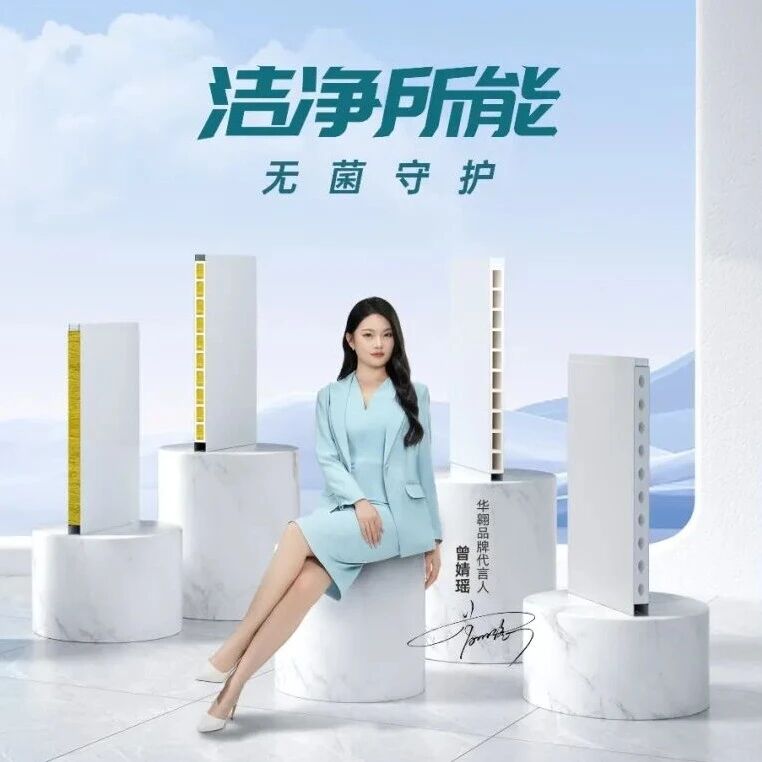
华翱控股品牌焕新,“洁净所能”助力半导体发展新高度
半导体行业观察· 2025-10-17 01:12
Core Viewpoint - The article highlights the launch of the new brand slogan "Clean Capability" by Huayao Holdings Group, emphasizing its commitment to the clean industry and redefining brand value through a combination of service and aesthetics [1][4]. Group 1: Brand Positioning - "Clean Capability" clearly defines Huayao's core business direction, focusing on the research and supply of core materials for clean engineering, supporting various advanced manufacturing sectors such as biomedicine and aerospace [5]. - The slogan encapsulates Huayao's professional identity as a "clean expert," reflecting its dedication to the clean field since its establishment in 2013 [5]. Group 2: Industry Chain Advantage - The slogan also highlights Huayao's unique full industry chain ecological advantage, having established a comprehensive ecosystem that integrates materials, equipment, and systems [8]. - Huayao's product offerings range from basic clean materials to advanced purification equipment, enabling it to meet stringent cleanliness standards across various industries [8]. Group 3: Service Commitment - The phrase "Clean Capability" cleverly implies Huayao's service commitment, indicating a dedication to customer service throughout the entire lifecycle from design to after-sales support [11]. - Huayao has served nearly 10,000 clients, reinforcing its brand identity as one that prioritizes customer service [11]. Group 4: Global Strategy - Huayao has established eight global production bases to support its service commitment, strategically located to minimize transportation costs and enhance supply chain efficiency [12]. - This approach allows Huayao to significantly reduce procurement costs for clients by producing and shipping products locally [12]. Group 5: Brand Aesthetics - The introduction of a brand ambassador and a new visual identity marks a significant upgrade in Huayao's branding, merging technology aesthetics with clean philosophy [15]. - This redefinition aims to create a unique visual memory for the brand, moving from functional representation to value resonance [15]. Group 6: Strategic Transformation - The brand upgrade is a result of over a decade of technological development and strategic transformation, supported by numerous patents and certifications [19]. - Huayao aims to transition from a traditional clean materials supplier to a high-tech materials and system solution provider, focusing on low-carbon clean technologies and intelligent purification systems [24].