半导体行业观察

Search documents
美国制造一颗真正的3D芯片
半导体行业观察· 2025-12-13 01:08
Core Insights - A collaborative team has developed the first monolithic 3D chip at a U.S. foundry, achieving unprecedented vertical wiring density and speed improvements [2][3] - This innovation is expected to usher in a new era of AI hardware and domestic semiconductor innovation, with the potential for a 1000-fold increase in hardware performance needed for future AI systems [3][7] Group 1: Performance and Design - The new 3D chip's performance is approximately an order of magnitude higher than traditional 2D chips, addressing the long-standing limitations of flat designs [2][3] - Early hardware tests indicate that the prototype chip outperforms similar 2D chips by about four times, with simulations suggesting up to a 12-fold performance increase for future versions [7] - The design allows for a significant enhancement in energy-delay product (EDP), potentially improving it by 100 to 1000 times, which balances speed and energy efficiency [7] Group 2: Technical Challenges and Solutions - Traditional 2D chips face a "memory wall" bottleneck due to the slow data transfer speeds compared to processing speeds, limiting overall system performance [4][5] - The new chip overcomes these challenges by vertically integrating memory and computation, allowing for faster data transmission and higher density connections [5][6] - Unlike previous attempts that relied on stacking separate chips, this new approach uses a continuous process to stack layers directly, enhancing connection density and manufacturability [6] Group 3: Implications for the Semiconductor Industry - The successful production of this 3D chip in a domestic foundry signifies a major step for U.S. semiconductor innovation, indicating that advanced architectures can be commercially viable [6][7] - The transition to vertical monolithic 3D integration will require a new generation of engineers skilled in these technologies, fostering a new wave of innovation in the semiconductor field [7][8] - The breakthrough not only enhances performance but also positions the U.S. to lead in the future of AI hardware development [8]


一种制造芯片的新方法
半导体行业观察· 2025-12-13 01:08
Core Insights - A research team from MIT, the University of Waterloo, and Samsung Electronics has developed a new method to increase transistor density on chips by stacking additional layers of transistors on existing circuits, which could significantly enhance chip performance and energy efficiency [2][4][5]. Group 1: New Manufacturing Method - The new method involves adding a layer of micro-switches on top of completed chips, similar to traditional chip stacking techniques, to increase the number of transistors integrated into a single chip [2]. - The research team utilized a 2-nanometer thick layer of amorphous indium oxide to construct additional transistors without damaging the sensitive front-end components during the manufacturing process [3][6]. Group 2: Energy Efficiency and Performance - This innovative approach allows for the integration of logic devices and memory components into a compact structure, reducing energy waste and improving computational speed [4][5]. - The new transistors exhibit a switching speed of just 10 nanoseconds, with significantly lower voltage requirements compared to existing devices, leading to reduced power consumption [6]. Group 3: Future Implications - The research indicates that if future processors can utilize both this new technology and traditional chip stacking methods, the limits of transistor density could be greatly surpassed, countering the notion that Moore's Law is reaching its end [3][4]. - The team aims to further integrate these backend transistors into single circuits and enhance their performance, exploring the physical properties of ferroelectric hafnium zirconium oxide for potential new applications [7].
云巨头放弃自研芯片
半导体行业观察· 2025-12-13 01:08
Core Viewpoint - Oracle's decision to sell its stake in Ampere Computing reflects a strategic shift away from designing and manufacturing its own chips for cloud data centers, aligning with a chip-neutral policy to collaborate with various CPU and GPU suppliers [2][3]. Group 1: Sale of Ampere Stake - Oracle sold its stake in Ampere Computing for a pre-tax gain of $2.7 billion, indicating a significant financial move [2]. - The sale was motivated by a belief that continuing to design and manufacture proprietary chips was no longer strategically beneficial for Oracle [2]. - SoftBank acquired Ampere for $6.5 billion in cash to enhance its AI capabilities, highlighting the growing importance of AI infrastructure investments [2]. Group 2: Competitive Landscape - Oracle's approach contrasts sharply with that of major competitors like Microsoft, Amazon Web Services, and Google, which are developing their own chips to meet high AI demand and reduce computing costs [3]. - Despite being a major buyer of Ampere CPUs, Oracle's strategy involves a shift towards a chip-neutral policy, working closely with all CPU and GPU suppliers [3][4]. - The semiconductor industry is witnessing changes, with Qualcomm planning to re-enter the server CPU market and Google exploring the deployment of its TPU technology to customer data centers [5]. Group 3: Future Developments - Oracle plans to continue purchasing GPUs from NVIDIA while also collaborating with AMD to launch an AI supercluster powered by AMD Instinct MI450 GPUs, expected to deploy 50,000 GPUs by Q3 next year [4][5]. - The company emphasizes the need to remain agile in response to rapid changes in AI technology over the coming years [4].

这个市场,华为市占率大增
半导体行业观察· 2025-12-13 01:08
Core Insights - The article highlights the growth of storage revenue in Q3 2025, primarily driven by sales of mid-range all-flash arrays, with Pure Storage showing the fastest revenue growth among the top five vendors [2]. Market Overview - The global External OEM Enterprise Storage Systems (ESS) market grew by only 2.1% year-over-year, reaching approximately $8 billion, with the top five vendors holding a combined market share of 56.5% [2]. - Dell leads the market with a 22.7% share, generating $1.812 billion in revenue, but experienced a 49% decline year-over-year [2]. - Huawei ranks second with a 12% market share and $953 million in revenue, marking a 9.5% increase, outperforming the market average [2]. - NetApp, in third place, reported a revenue of $750.16 million, growing by 2.8% due to its all-flash array sales [2]. - Pure Storage achieved a revenue of $539.22 million, reflecting a significant growth of 15.5% year-over-year [2]. - HPE saw a revenue decline of 7.5%, totaling $450.23 million [2]. Product Segment Performance - The overall storage market growth rate from Q3 2024 to Q3 2025 was 2.1% [2]. - All-flash arrays experienced a robust growth rate of 17.6%, while hybrid flash disk arrays and disk drive arrays saw declines of 9.8% and 6.3%, respectively [3][4]. Geographic Performance - The U.S. market faced a decline attributed to weak OEM performance, with a notable drop of 9.9% [7]. - Other regions showed varying growth rates, with Japan at 14.4%, Canada at 12.6%, and Europe, the Middle East, and Africa at 10.5% [7]. Future Outlook - IDC anticipates that the demand for specialized and efficient enterprise storage systems will increase due to the penetration of AI applications in enterprise data centers [5]. - The need for flash storage is expected to grow continuously to support AI-related projects, including training and inference [5].


初创公司,要大幅降低芯片功耗
半导体行业观察· 2025-12-13 01:08
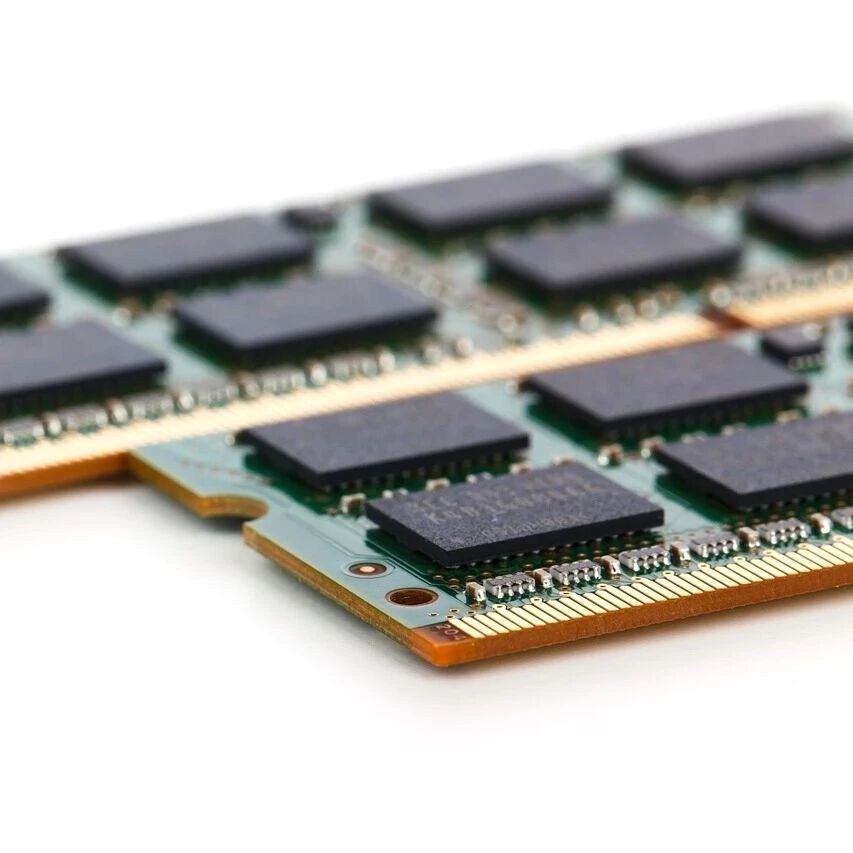
Core Viewpoint - PowerLattice has developed a new chip technology that significantly reduces power consumption in data centers by up to 50% and doubles performance per watt, addressing the growing energy demands of AI data centers [2][5][7]. Group 1: Power Consumption and Efficiency - Traditional systems convert AC power from the grid to DC power for AI chips, which then requires further conversion to low-voltage DC for GPUs, leading to energy loss due to long-distance current flow [4]. - PowerLattice's innovation involves reducing voltage within a few millimeters of the processor, minimizing power loss by shortening the distance high current must travel [5][6]. - The new micro-power chips designed by PowerLattice are significantly smaller than current voltage regulators, allowing for closer installation to processors and freeing up space for other components [6]. Group 2: Technology and Design - PowerLattice utilizes a special magnetic alloy to manufacture inductors, enabling efficient operation at high frequencies, which allows for smaller inductors that require less material [6]. - The final microchip design is less than one-twentieth the area of current voltage regulators and only 100 micrometers thick, comparable to the thickness of a human hair [6]. Group 3: Market Position and Competition - PowerLattice is currently conducting reliability and validation tests, with plans to release its first product in two years, facing competition from established companies like Intel, which is also developing integrated voltage regulators [9]. - Despite the competition, there is a trend towards heterogeneous integration, allowing customers to mix components from different companies for better system optimization, which may benefit smaller firms like PowerLattice [9][10].
小米手机射频团队论文入选 IEDM 2025
半导体行业观察· 2025-12-13 01:08
Core Viewpoint - The article highlights the significant achievement of Xiaomi Group in collaboration with Suzhou Nengxun High-Energy Semiconductor Co., Ltd. and Hong Kong University of Science and Technology, showcasing the first integration of low-voltage GaN RF power amplifiers in mobile handsets, marking a historic breakthrough in mobile communication technology [1][8]. Group 1: Conference Overview - The 71st International Electron Devices Meeting (IEDM) is a prestigious global conference in the semiconductor and electronic devices field, recognized for its rigorous review standards and forward-looking technological insights [3]. - IEDM serves as a key platform for reporting breakthroughs in semiconductor technology, design, manufacturing, and modeling, with participation from renowned institutions and companies like Intel, TSMC, Samsung, and IBM [3]. Group 2: Research Background - The transition from 5G/5G-Advanced to 6G presents multiple technical challenges for mobile RF front-end devices, including the need for ultra-high efficiency, wide bandwidth, and miniaturization [8]. - Traditional GaAs-based power amplifiers have limitations in efficiency and performance due to physical constraints, necessitating the exploration of wide-bandgap semiconductor materials like GaN [8][9]. Group 3: Research Methodology and Results - The research team focused on optimizing RF loss and ohmic contact issues, achieving significant reductions in substrate coupling loss and buffer layer leakage through innovative processing techniques [11]. - The developed GaN HEMT technology operates at a low voltage of 10V, achieving a power-added efficiency (PAE) exceeding 80% and an output power density of 2.84 W/mm, demonstrating superior performance compared to traditional GaAs amplifiers [15][16]. Group 4: Future Outlook - The successful integration of low-voltage GaN RF technology into mobile devices signifies a major step towards scalable commercial applications in next-generation mobile communication systems [19]. - Xiaomi aims to continue its commitment to technological innovation, facilitating the transition of cutting-edge technologies from the lab to large-scale implementation, enhancing future communication experiences [19].

Chiplet,还是软IP?
半导体行业观察· 2025-12-12 01:12
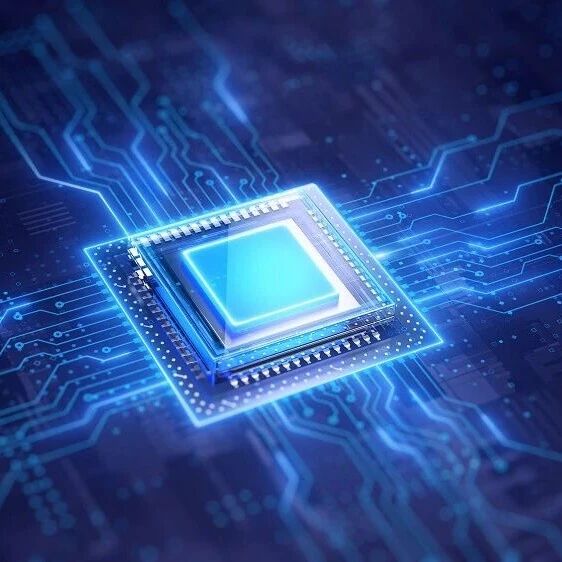
Core Viewpoint - The article discusses the differences between chiplets and soft IP, emphasizing that while both can accelerate time-to-market, they serve different needs and come with distinct challenges in design, integration, and testing [2][20]. Group 1: Chiplet vs Soft IP - Chiplets can be seen as a new type of semiconductor IP, but they differ significantly from the current IP licensing ecosystem, particularly in design integration and verification [2][20]. - Chiplets can be either custom-designed or off-the-shelf, with two camps emerging: one that designs its own chiplets and another that sources components externally [2][20]. - The market for chiplets will coexist with custom chips, with many IP modules becoming off-the-shelf chips that system vendors can mix and match [2][20]. Group 2: Customization and Functionality - The key difference between chiplets and soft IP lies in their customizability; soft IP offers high configurability, while chiplets have fixed functionalities [6][20]. - Chiplets require careful management of startup processes and debugging, which are less of a concern with soft IP [6][20]. - The physical integration of chiplets presents unique challenges, such as managing signal integrity and power distribution, which are not as critical in soft IP [24][20]. Group 3: Testing and Supply Chain - Testing chiplets is more complex than testing soft IP, as chiplets are typically tested independently by suppliers, requiring integration into the overall system testing process [20][20]. - The supply chain for chiplets is more traditional and complex, closely tied to manufacturing nodes and foundries, which increases dependency on suppliers [20][20]. - Built-in self-test (BiST) technology is expected to become more prevalent to address the transparency issues associated with chiplets [22][20]. Group 4: Security and Integration Challenges - Security considerations for chiplets are more challenging than for soft IP, as chiplets have a larger attack surface due to their interconnections and shared resources [20][20]. - Each chip in a multi-chip system must coordinate its security measures, which can lead to inefficiencies if not managed properly [20][20]. - The physical design of chiplets must account for thermal management and signal integrity, requiring advanced modeling tools that go beyond those used for soft IP [24][20].
芯片行业TOP 4:英伟达和存储三巨头
半导体行业观察· 2025-12-12 01:12
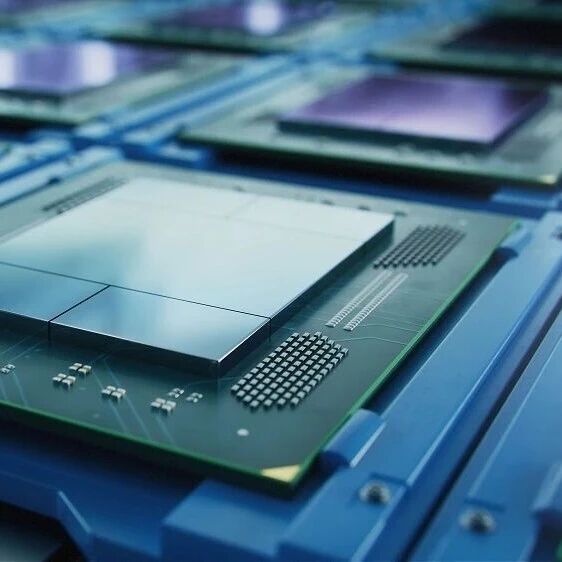
Core Viewpoint - The semiconductor market is expected to reach a record revenue of over $800 billion by 2025, driven by strong demand in artificial intelligence and memory products, with a more balanced growth across various segments compared to previous years [2][6][9]. Group 1: Market Performance - In Q3 2025, the semiconductor market revenue reached $216.3 billion, marking a historic high with a quarter-on-quarter growth of 14.5%, the first time the market surpassed $200 billion in a single quarter [2][6]. - The average growth rate for Q3 historically is slightly above 7%, while the market had previously anticipated a growth of about 5% for Q3 2025, indicating a significant outperformance [6][9]. - The overall semiconductor revenue for 2024 is projected to exceed $650 billion, with an annual growth rate of over 20%, although this growth is uneven across the industry [3][9]. Group 2: Segment Contributions - Demand for artificial intelligence and memory products continues to be robust, with both segments outpacing overall market growth [6][10]. - In Q3 2025, the revenue growth exceeded 14% across the semiconductor market, and even when excluding NVIDIA and memory chips, the revenue still grew by over 9% [3][9]. - The top four semiconductor companies by revenue in Q3 2025 were NVIDIA and the three major memory suppliers: Samsung, SK Hynix, and Micron, highlighting the dominance of AI accelerators and advanced memory technologies [3][10][11]. Group 3: Future Outlook - The semiconductor industry is expected to maintain strong momentum into Q4 2025, with predictions of record revenues continuing into the following year [4][11]. - The growth trend for 2025 indicates a shift towards broader industry expansion rather than reliance on a few high-growth segments, with an expected annual growth rate of approximately 9% even when excluding NVIDIA and memory products [3][9].


台积电看好的终极技术
半导体行业观察· 2025-12-12 01:12
公众号记得加星标⭐️,第一时间看推送不会错过。 在刚刚结束的IEDM 2025上,台积电首次证实了采用下一代晶体管技术——互补场效应晶体管 (CFET)的集成电路的运行情况。 根据IEDM 官方此前的预告,台积电在本届大会宣布两项了重要里程碑:首款全功能 101 级 3D 单 片互补场效应晶体管 (CFET) 环形振荡器 (RO)以及全球最小的 6T SRAM 位单元,该位单元同时提 供高密度和高电流设计。 据介绍,基于先前基于纳米片的单片 CFET 工艺架构,台积电研究人员引入了新的集成特性,进一 步将栅极间距缩小至 48nm 以下,并在相邻 FET 之间采用纳米片切割隔离 (NCI) 技术,以及在 6T SRAM 位单元内采用对接接触 (BCT) 互连技术实现反相器的交叉耦合。电学特性分析对比了两种环 形振荡器布局,重点展示了 6T 位单元对性能以及稳健 SRAM 器件指标的影响。 这些进展标志着 CFET 开发的关键性转变,从器件级优化迈向电路级集成。 台积电新进展 CFET 是一种通过垂直堆叠 n 沟道 FET 和 p 沟道 FET(CMOS 器件的基本组件)来提高晶体管密 度的技术,理论上与目前最先 ...

又一个车厂自研芯片,抛弃英伟达
半导体行业观察· 2025-12-12 01:12
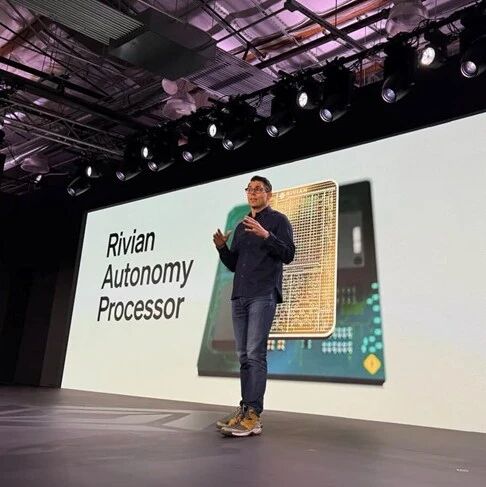
Core Viewpoint - Rivian Automotive has launched its first custom computer chip for autonomous driving, named Autonomy+, which is priced significantly lower than Tesla's offerings, marking a pivotal moment in the company's journey towards achieving Level 4 autonomous driving [2][5][6]. Group 1: Chip Development and Technology - Rivian's core technology roadmap focuses on transitioning to in-house developed chips designed for vision-centric physical AI, with the first generation being a custom 5nm processor [4]. - The new chip, capable of executing 16 trillion operations per second (TOPS) in a dual-chip configuration, integrates processing and storage into a single multi-chip module, enhancing efficiency and performance [4]. - Rivian claims its chip can process 5 billion pixels of camera data per second and utilizes RivLink technology for low-latency interconnectivity, which increases processing capabilities [4][6]. Group 2: Competitive Positioning - Rivian's move to develop its own chips aligns it with Tesla, which is also pursuing in-house chip development for autonomous vehicles, while other manufacturers increasingly rely on Nvidia [5][6]. - The company plans to integrate LiDAR into its upcoming R2 model to improve redundancy and real-time driving performance, contrasting with Tesla's approach of not using LiDAR [5][8]. Group 3: Product Offerings and Pricing - The Autonomy+ driving assistance suite is priced at $2,500 for a one-time payment or $49.99 per month, significantly lower than Tesla's $8,000 full self-driving system [7][8]. - Rivian aims to launch a "no-look" driving feature by 2026, leveraging its advancements in chip technology and AI models [8]. Group 4: Long-term Goals and Market Strategy - Rivian's long-term goal is to achieve Level 4 autonomous driving, allowing vehicles to operate without human intervention under specific conditions [6]. - The company emphasizes deep vertical integration as a key strategy to reduce costs by eliminating supplier margins and customizing components according to its needs [6].