
半导体行业观察

Search documents
DRAM,备受追捧
半导体行业观察· 2025-12-14 03:34
Core Viewpoint - The storage industry is experiencing a super cycle driven by the explosive demand for AI, leading to significant structural changes and price increases in storage products [2][3]. Group 1: Market Dynamics - The storage market is currently characterized by supply shortages and rising prices, with major players like Samsung, SK Hynix, and Micron adopting different strategies to adapt to these changes [2]. - HBM (High Bandwidth Memory) supply is tight, with SK Hynix's capacity largely locked in by AI clients until the end of 2026, leaving less than 10% of the market share for smaller manufacturers [2]. Group 2: Samsung's Strategy - Samsung plans to reduce HBM production capacity by 30%-40% to focus on general DRAM production, which is expected to yield higher profit margins, exceeding 60% for products like DDR5 and LPDDR5X [4][5]. - The company is also converting NAND flash production lines to DRAM to meet the growing demand for large-capacity products in data centers [5][6]. - Samsung aims to enhance its production capacity for 1cnm DRAM, targeting an increase to 200,000 wafers per month by the end of 2026 [6]. Group 3: SK Hynix's Approach - SK Hynix plans to double its DRAM capacity investment, focusing on HBM and data center applications, while also significantly increasing its 1c DRAM production capacity by 8 to 9 times [7][8]. - The company expects its HBM sales to generate approximately 25 trillion Korean won in operating profit, a nearly 50% increase from the previous year [7][8]. - SK Hynix is balancing its focus between HBM and general DRAM to meet the rising demand from AI applications, with a significant portion of its production dedicated to data center products [9][10]. Group 4: Micron's Shift - Micron is decisively shifting its focus away from consumer-grade products, terminating its mobile NAND development and reallocating resources to higher-margin HBM and enterprise DRAM products [11][12]. - The company has signed a three-year supply agreement with NVIDIA for HBM chips, indicating a strong commitment to the data center market [12]. - Micron's strategy includes building new factories to enhance HBM production capabilities, with plans to increase HBM capacity fourfold by 2026 [13][21]. Group 5: Underlying Factors Driving Change - The strategic shifts among storage giants are driven by profit margins, market demand, and technological adaptability, with each company responding differently based on its market position and technological capabilities [15][16]. - The demand for high-capacity, cost-effective storage solutions is surging due to AI applications, prompting companies to reassess their production strategies [16][17]. - The complexity of HBM production and the slow yield improvement are pushing companies to optimize their existing capacities and focus on more efficient production processes for general DRAM [17][21]. Group 6: Industry Impact - The transition in production strategies among storage giants is reshaping the entire industry, with rising memory prices affecting consumer electronics and leading to a re-evaluation of supply chains [22][23]. - The supply-demand imbalance is expected to persist until 2027, as new production lines come online, fundamentally altering the storage market landscape [23].


特斯拉芯片版图,再次扩张
半导体行业观察· 2025-12-14 03:34
Core Viewpoint - Tesla's CEO Elon Musk is aggressively advancing the company's chip manufacturing plans, establishing a dedicated office at Samsung's Texas wafer plant to oversee chip production processes and enhance decision-making efficiency [2][3]. Group 1: Chip Manufacturing Strategy - Tesla is actively pursuing a customized chip production strategy, integrating Samsung and TSMC into its core supply chain [2]. - The company aims to establish an independent chip supply chain to meet its projected demand of 100 billion to 200 billion chips annually, as part of Musk's vision for a "TeraFab" [2]. - Tesla has become Samsung's largest partner in the U.S. market, with a collaboration agreement worth up to $16.5 billion for comprehensive semiconductor ecosystem support [3]. Group 2: Geopolitical Considerations - Musk emphasizes the importance of "stability" in chip supply, expressing concerns about the long-term feasibility of relying on TSMC due to geopolitical factors [3]. - The company is looking to build a dedicated chip supply system from the ground up, aligning with the U.S. semiconductor industry transformation efforts [3]. Group 3: Competitive Landscape - Tesla's customized chip plans face increasing competition from other electric vehicle manufacturers, such as Rivian, who are also investing in in-house chip development [3]. - Musk has stated that Tesla's AI5 and AI6 chips will have a unique product positioning in the market [4].


便宜的HBM4,来了
半导体行业观察· 2025-12-14 03:34
Core Viewpoint - JEDEC is nearing the completion of the SPHBM4 standard, which aims to provide HBM4-level bandwidth with a narrower 512-bit interface, higher capacity, and lower integration costs through compatibility with traditional organic substrates. However, it is unlikely to replace GDDR memory [2][4]. Group 1: SPHBM4 Overview - SPHBM4 proposes to reduce the HBM4 memory interface width from 2048 bits to 512 bits while maintaining the same total bandwidth through a 4:1 serialization method [4]. - The design of SPHBM4 prioritizes performance and capacity over power consumption and cost, making it less suitable for gaming GPUs compared to GDDR7 [6]. Group 2: Cost and Integration Challenges - Although SPHBM4 is cheaper than HBM4 or HBM4E, it still requires stacked HBM DRAM chips, which are larger and more expensive than commodity DRAM ICs, leading to potential cost increases when replacing multiple GDDR7 chips with a single SPHBM4 chip [6]. - The integration of SPHBM4 on traditional organic substrates allows for 2.5D integration without expensive silicon interposers, potentially lowering costs and increasing design flexibility [8]. Group 3: Technical Considerations - SPHBM4 aims to achieve four times the memory capacity of HBM4 under the same chip conditions, but practical design often involves trade-offs between memory capacity, computational power, and chip functionality [5]. - The complexity of a 512-bit memory bus remains a challenge, but JEDEC's support for traditional organic substrates may alleviate some layout constraints in large packages [8].
韩国巨头,竞逐玻璃基板
半导体行业观察· 2025-12-14 03:34
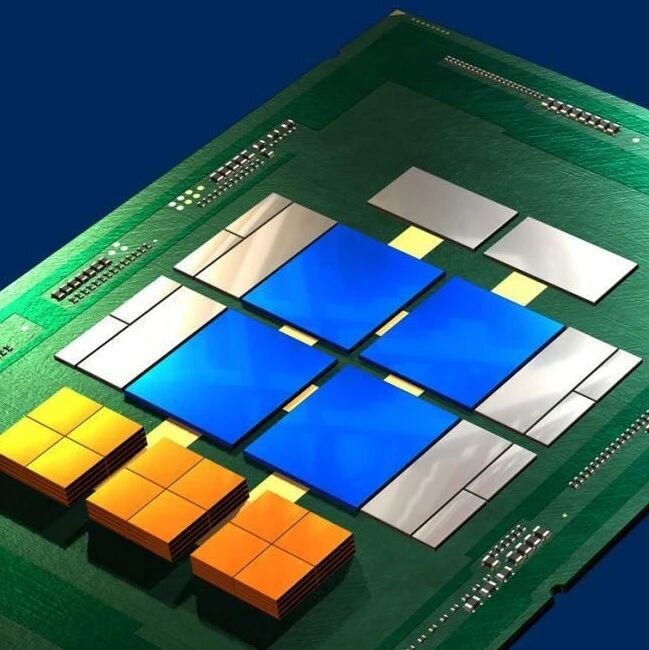
Core Viewpoint - The rise of glass semiconductor substrates is driven by the increasing demand for high-performance AI chips, with major semiconductor companies exploring their application to enhance chip integration density [2][4]. Group 1: Market Trends and Predictions - The semiconductor glass substrate market is expected to reach $8.4 billion (approximately 11.6 trillion KRW) by 2028, growing about 18% from $7.1 billion (approximately 9.8 trillion KRW) in 2023 [3]. - AI chips utilizing glass substrates are predicted to enter the commercialization phase by 2028 [2]. Group 2: Technological Advantages - Glass substrates can expand the dimensions of semiconductor packaging from the traditional 100mm to 240mm, offering higher strength and elasticity compared to organic materials [5]. - The superior surface flatness and lower thermal expansion coefficient of glass materials make them more suitable for high-performance chips, especially in environments with temperature fluctuations [5][6]. Group 3: Industry Players and Developments - SKC, Samsung Electro-Mechanics, and LG Innotek are actively advancing their glass substrate production capabilities, with SKC leading in technology and commercialization efforts [2][7]. - SKC's joint venture, Absolics, has established the world's first glass substrate production line in Georgia, USA, and plans to achieve mass production by next year [7]. - Samsung Electro-Mechanics is collaborating with Sumitomo Chemical to produce core glass materials and aims for mass production by 2027 [8]. - LG Innotek is focusing on core technology development under the leadership of its CTO, with plans to transition to mass production once customer demand is clarified [9].
地球上最重要的芯片公司
半导体行业观察· 2025-12-14 03:34
Core Viewpoint - Artificial Intelligence (AI) is one of the largest sectors for global investment, with major AI data center operators significantly increasing their computing power investments, benefiting companies like TSMC, which may see its stock price triple in the next five years if global AI infrastructure spending predictions are met [2][3]. Group 1: TSMC's Market Position - TSMC is the core supplier of high-end chips and is expected to benefit significantly from the ongoing investments in AI data center construction globally [3]. - TSMC stands out in the high-end chip sector, with only Samsung and Intel as real competitors; however, Intel struggles to attract clients due to poor management, and Samsung's competition in non-foundry areas makes it less appealing to tech giants [2][3]. - TSMC has maintained its position as the highest revenue-generating semiconductor manufacturer globally due to its strong manufacturing capabilities [2]. Group 2: Financial Projections and Growth - NVIDIA predicts that global data center capital expenditures will rise to $3 trillion to $4 trillion by 2030, a nearly fivefold increase from the estimated $600 billion in 2025 [3]. - AMD anticipates a 60% compound annual growth rate (CAGR) for its data center business by 2030, indicating a potential tenfold growth in just five years [3]. - TSMC's stock price has already increased by approximately 260% over the past three years, and with the expected surge in chip demand, it is well-positioned to achieve a threefold increase in stock price over the next five years [3][4]. Group 3: Investment and Cash Flow - TSMC has invested $165 billion in building production facilities in the U.S., which has yielded substantial returns and allowed the company to avoid import tariffs [4]. - Once TSMC's U.S. factories are operational and capital expenditures stabilize, the company’s free cash flow is expected to increase significantly, enabling stock buybacks or higher dividend payouts [4]. - If the deployment of AI progresses as predicted, TSMC's stock price could easily triple in the next three years, with further increases possible if the AI market develops to NVIDIA's forecasted levels [4].

摩尔线程回应质疑!
半导体行业观察· 2025-12-14 03:34
Core Viewpoint - The company, Moer Technology, announced plans to utilize part of its idle raised funds for cash management, with a maximum amount of 7.5 billion yuan within a 12-month period, aiming to enhance the efficiency of fund usage while ensuring the safety of the raised funds [2][4]. Fund Management Details - The purpose of the investment is to improve the efficiency of the raised funds, utilizing idle funds without affecting the implementation of investment projects or the safety of the raised funds [4]. - Investment types include but are not limited to agreement deposits, notice deposits, time deposits, structured deposits, large certificates of deposit, and other safe, liquid, principal-protected products [4]. - The total amount raised from the initial public offering (IPO) was approximately 8 billion yuan, with a net amount of 7.58 billion yuan after deducting issuance fees [4]. Project Allocation - The raised funds are allocated as follows: 2.51 billion yuan for the development of a new generation of self-controlled AI training and pushing integrated chips, 2.502 billion yuan for the development of a new generation of self-controlled graphics chips, 1.982 billion yuan for the development of a new generation of self-controlled AI SoC chips, and 1.006 billion yuan for supplementing working capital [4][5]. Cash Management Strategy - The company emphasized that the cash management of 7.5 billion yuan is a maximum limit and the actual amount will be significantly lower, adjusting as project progress continues [6]. - The company will continue to increase R&D investment to accelerate product iteration and overcome core technological barriers, ensuring that cash management does not affect the normal implementation of investment projects or the company's main business [6]. Stock Performance - Moer Technology, known as the "first domestic GPU stock," saw its stock price surge by 468.78% on its first trading day, reaching a peak of 688 yuan per share, with a closing price increase of 723.49% by December 11 [7]. - The company issued a risk warning regarding its stock price, which has risen significantly compared to related indices, indicating potential short-term volatility [8]. Financial Performance - The company has experienced continuous revenue growth, with revenue increasing from 46 million yuan in 2022 to 438 million yuan in 2024, reflecting a compound annual growth rate of 208.44% [8]. - Despite the revenue growth, the company has reported significant net losses, totaling 5.939 billion yuan over the past three years and nine months, with expectations to achieve profitability by 2027 [8].

博通,暴跌
半导体行业观察· 2025-12-14 03:34
公众号记得加星标⭐️,第一时间看推送不会错过。 甲骨文在周四发布的季度财报中披露,人工智能相关投资导致成本上升,其股价随即下跌超 14%。 即便经历了周五的大跌,博通股价在过去一个月仍累计上涨 3%;而甲骨文股价不仅较 9 月创下的高 点下跌近 50%,近一个月跌幅也达到了 20%。 博通公司股价于周五下跌超 11%,此前该公司发布的季度财报引发了投资者对其人工智能业务盈利 能力的担忧。 博通于周四盘后公布财报,数据超出华尔街预期。这家谷歌的核心芯片供应商披露,其收到人工智能 研发企业 Anthropic的订单金额已飙升至 210 亿美元。 但博通同时预计本季度毛利率将降至 76.9%,较去年同期的 79% 有所下滑,受此消息影响,该芯片 制造商市值在周五单日蒸发超 2000 亿美元。尽管这一毛利率数值仍处于极高盈利区间,但相较于上 一季度的 77.9% 和第三季度的 78.3%,已然呈现出回落态势。 与此同时,博通人工智能芯片销售额同比大涨 74%,达到 64 亿美元,超过彭博社追踪的华尔街分析 师给出的 62 亿美元预期;总营收同比增长近 30%,达到 180 亿美元,高于市场预期的 175 亿美 元;每 ...
英特尔收购AI芯片公司,价格曝光
半导体行业观察· 2025-12-14 03:34
公众号记得加星标⭐️,第一时间看推送不会错过。 英特尔与SambaNova的代表均拒绝对此置评。 SambaNova 于 2017 年由斯坦福 大学的教授团队创立,其中一名创始 人还曾荣获 " 麦克阿瑟天才 奖"。该公司专注于定制化人工智能芯片的设计研发,目标是与英伟达公司的同类产品展开竞争。 值得注意的是,英特尔首席执行官陈立武(Lip-Bu Tan)同时担任SambaNova的董事长。他旗下的 风险投资公司华登国际(Walden International)是桑巴诺瓦的创始投资方之一,并曾在 2018 年牵 头完成了该公司规模达 5600 万美元的 A 轮融资。 以 16 亿美元的价格收购SambaNova,将为英特尔带来其长期寻求的技术平台,助力完善自身人工智 能产品布局,且此次收购价格相比该公司此前估值存在明显折价。SambaNova曾在 2021 年的一轮融 资中获得软银集团愿景基金二期领投的 6.76 亿美元,彼时公司估值高达 50 亿美元。 自今年 8 月美国政府宣布将收购英特尔 10% 的股份以来,该公司股价持续走高。截至公告发布前, 其股价累计涨幅已达约 60%;而在纽约时间周五的交易中,英 ...

芯原终止收购芯来,原因曝光
半导体行业观察· 2025-12-13 01:08
Core Viewpoint - The company has decided to terminate the acquisition of a 97.0070% stake in Chip Lai Technology due to discrepancies between the core demands of the target company's management and the market environment, policy requirements, and the interests of the company and its shareholders [3][5]. Group 1: Termination of Acquisition - The company received a notification from the management of Chip Lai Technology and the transaction counterparties regarding the termination of the acquisition [2]. - The board of directors approved the termination after thorough research, emphasizing that it would not adversely affect the company's normal business operations or harm the interests of shareholders, especially minority shareholders [3]. Group 2: Future Plans and RISC-V Focus - The company will continue to strengthen its layout in the RISC-V field and maintain and deepen its cooperative relationship with Chip Lai Technology as a shareholder [3]. - The company aims to expand collaborations with multiple RISC-V IP core suppliers to promote the rapid development of the RISC-V ecosystem in China [3][9]. Group 3: RISC-V Industry Engagement - The company has been actively involved in the RISC-V industry for over seven years, focusing on building an open RISC-V hardware platform and an open-source RISC-V software ecosystem [4][7]. - The company has organized multiple RISC-V industry forums, promoting over 40 new RISC-V chip products from various domestic enterprises [4]. Group 4: Chip Lai Technology Overview - Chip Lai Technology, established in 2018, has developed over 70 IP products, including more than 20 RISC-V IPs, and has authorized over 300 global customers [6]. - The company achieved a high gross margin of over 90% for its RISC-V IP licensing services and is nearing breakeven [6]. Group 5: Strategic Importance of RISC-V - The termination of the acquisition is seen as a strategic move to enhance the company's competitive edge and expand its business development space in the RISC-V sector [9]. - The company plans to leverage its semiconductor IP and the integration of Chip Lai Technology's RISC-V IP to accelerate the large-scale implementation of RISC-V technology [9].

英伟达掘墓人:两大巨头,最新发声
半导体行业观察· 2025-12-13 01:08
Core Insights - The customized AI chip market is experiencing unprecedented growth, with Google's TPU leading the transformation by supporting the Gemini model and opening cloud services to other companies [2] - The market for customized XPU and related infrastructure is accelerating, with projections indicating that the scalable switch market could approach $6 billion by 2030, and the optical interconnect device market could exceed $10 billion [2][4] - Cloud service providers' capital expenditure expectations have surged from an 18% growth rate at the beginning of the year to over 30% [2] Company Performance - Broadcom reported a remarkable fiscal year 2025 with total revenue of $64 billion, a 24% year-over-year increase, and AI business revenue of $20 billion, up 65% [4][5] - Marvell achieved a record revenue of $2.075 billion in the third quarter of fiscal 2026, a 37% year-over-year increase, with data center business revenue of $1.52 billion, up 38% [4][6] XPU Development - Broadcom emphasizes that customers choose self-developed XPUs for hardware-level optimizations that significantly outperform software kernel tuning [8] - The company has secured substantial orders for XPUs, with a total order backlog exceeding $73 billion, nearly half of its total backlog [5][9] High-Speed Interconnect - The independent market for scalable switches is projected to approach $6 billion by 2030, with the optical interconnect device market potentially exceeding $10 billion [12] - Broadcom's AI switch order backlog has surpassed $10 billion, driven by the demand for its Tomahawk 6 switch, which supports a record 102 terabits per second [12][13] Photon Interconnect - Marvell's acquisition of Celestial AI highlights the importance of photon interconnect technology, which offers significant advantages in power efficiency and thermal stability [18][19] - Celestial AI's PF Chiplet can provide up to 16 terabits per second of bandwidth, significantly surpassing current mainstream capacities [19] CXL Technology - CXL technology is becoming crucial for overcoming memory bottlenecks, with Marvell making significant strides in this area [22][23] - Marvell's CXL solutions support both DDR4 and DDR5 memory, enhancing memory capacity and performance [23] Supply Chain Management - Both companies are addressing supply chain challenges, with Broadcom focusing on advanced packaging technology to ensure stability and security in supply chains [28][29] - Marvell is aggressively pursuing 2nm process technology to enhance power efficiency and operational cost savings for customers [30] Ecosystem Competition - The competition in the AI chip industry is evolving from single-point technology innovation to comprehensive ecosystem competition, requiring companies to offer complete solutions [31][32] - Both Broadcom and Marvell emphasize the importance of collaboration with ecosystem partners to drive innovation and market expansion [33] Future Outlook - The customized XPU market is expected to enter a rapid growth phase, with Broadcom projecting AI business revenue to exceed $30 billion in fiscal 2026 [35] - Photon interconnect technology is anticipated to reach a commercialization tipping point, with significant revenue contributions expected from Celestial AI starting in fiscal 2028 [35] - The industry is likely to see continued consolidation, with more acquisitions expected as companies seek to strengthen their technological capabilities [36]


