华尔街见闻

Search documents
一周重磅日程:美联储决议+中美数据+科技巨头财报,全球市场进入“风暴眼”
华尔街见闻· 2026-01-25 10:49
Core Viewpoint - The article highlights the upcoming "Super Earnings Week" where major tech companies like Microsoft, Meta, Tesla, and Apple will report their earnings, shifting focus from traditional financial metrics to the efficiency of AI capital expenditures and hardware cycle recovery [6][14]. Economic Data and Events - Key economic data releases include the U.S. durable goods orders expected to rise by 3% after a previous decline of 2.2% [2]. - China's industrial profits for December are anticipated to show a year-on-year decline of 13.1%, while the full year is expected to show a slight increase of 0.1% [2]. - The U.S. Federal Reserve is expected to maintain interest rates at 3.5% to 3.75%, with a focus on inflation data and potential delays in rate cuts [8][9]. Earnings Reports - Major tech companies such as Tesla, Microsoft, Meta, and Apple will report earnings, with a focus on AI spending and hardware recovery [14]. - Storage giants like SanDisk, Western Digital, and Seagate, along with Samsung and SK Hynix, will report earnings that will validate the AI-driven storage "super cycle" [15]. Geopolitical Events - The article notes significant geopolitical risks, including the potential announcement of a new U.S. Federal Reserve Chair and ongoing tensions related to Greenland and other regions [18][20]. - The EU-India summit is expected to announce a historic trade agreement, reflecting the EU's pivot towards India amid fluctuating U.S. trade policies [21]. Industry Conferences - Multiple industry conferences are scheduled, including the "Star Computing and Intelligent Connection" seminar by the China Academy of Information and Communications Technology, focusing on space computing infrastructure [28]. - OPEC+ will hold a monthly meeting to discuss oil production policies [29].

存储疯狂紧缺!三星NAND将涨价100%,此前DRAM涨70%
华尔街见闻· 2026-01-25 10:49
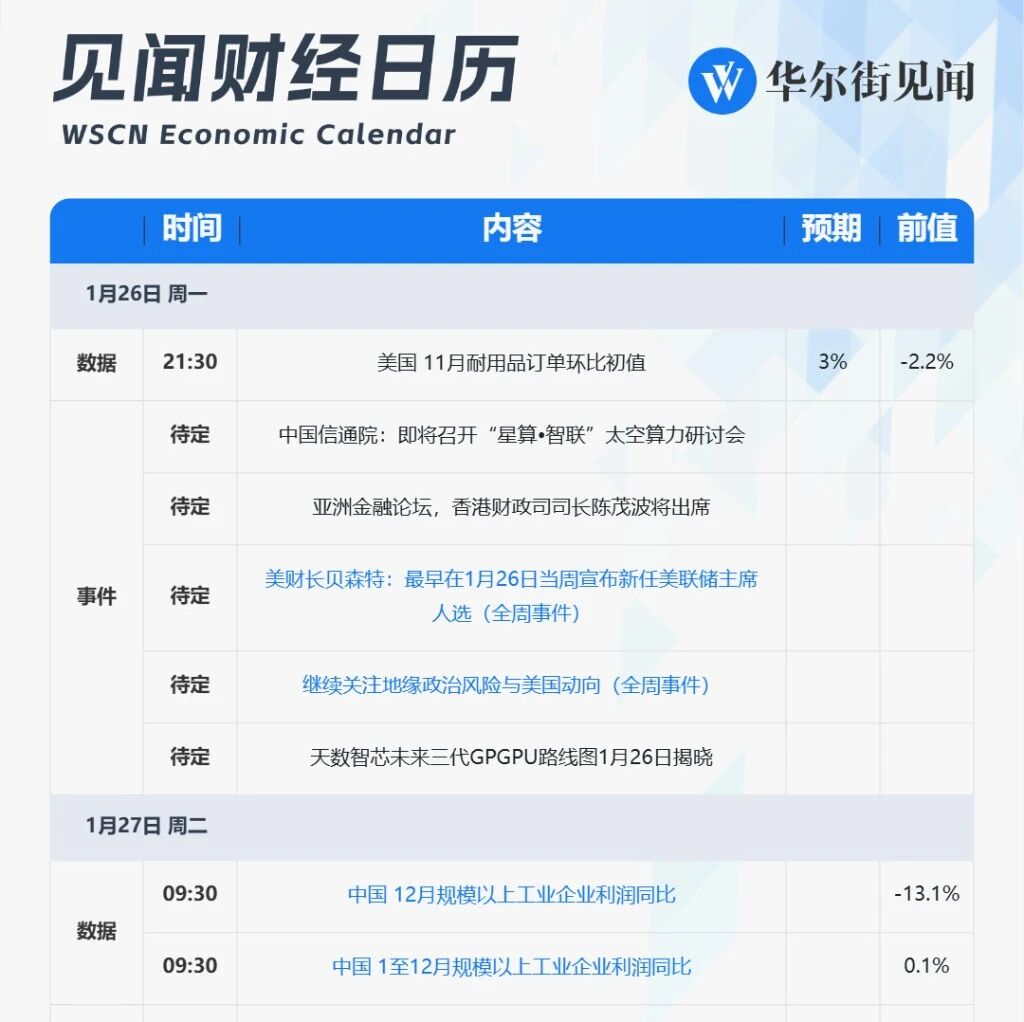
在AI需求激增导致全球存储芯片供应极度紧张的背景下,全球最大的存储芯片制造商三星电子已采取激进定价策略。 1月25日,据韩国媒体报道, 三星电子在今年第一季度将NAND闪存的供应价格上调了100%以上,这一涨幅远超市场此前预期,凸显了当前半导体市场严重的 供需失衡现状。 据上述媒体行业知情人士透露,三星电子已于去年年底完成了与主要客户的供应合同谈判,并从1月起正式实施新的价格体系。这是 继 DRAM内存价格被曝上 调近70% 之后,存储市场的又一重磅调价信号。 报道称, 三星电子目前已着手与客户就第二季度的NAND价格进行新一轮谈判,市场普遍预计价格上涨的势头将在第二季度延续。 这一激进的定价策略反映了AI基础设施建设对高性能存储设备的渴求。随着企业级固态硬盘(eSSD)需求因数据中心扩张而爆发,以及"端侧AI"(On-Device AI)推动移动设备和PC向高容量存储升级,需求端呈现指数级增长。 然而,受限于此前全行业对产能扩充的保守态度及制程转换的滞后,供给端并未能及时跟进,导致市场陷入"有价无货"的局面。 供需失衡核心:AI驱动与产能刚性 造成价格失控的根源在于极度紧张的供需剪刀差。 全行业跟进:从三星 ...
高市早苗“发出信号”,美日联合干预市场“箭在弦上”?
华尔街见闻· 2026-01-25 10:49
市场将美联储这一通常被视为干预前兆的举动,解读为美国准备协助日本支撑日元的关键信号。 尽管日本官员拒绝证实干预传闻,日本财务大臣片山皋月仅强调"时刻保持紧迫关注",但纽约联储的介入引发了华尔街关于"联合干预"的热议。 分析人士指出,美联储的动作意味着潜在干预将不再是单方面的,这一预期导致日元空头加速平仓,同时也引发了对干预可能波及美股市场的担忧。 联储"询价"引发联合干预猜测 日本首相高市早苗周日针对金融市场投机行为发出严厉警告,承诺将采取必要措施应对异常波动。 此前,日元在周五经历剧烈震荡并创下五个月来最大涨幅,市场普遍猜测纽约联储的"询价"动作暗示美日可能正准备联手干预汇市。 高市早苗在周日的党首电视辩论中明确表示, 虽然首相不应评论由市场决定的事项,但政府"将采取一切必要措施应对投机性和极度异常的波动"。 虽然她未具体指明是针对债券收益率还是汇率,但这一表态正值日本债券收益率攀升及日元持续承压之际,强化了官方干预的预期。 这种紧迫感源于上周五市场的剧烈反应。华尔街见闻此前提及,在交易员报告纽约联储致电金融机构询问汇率后,日元汇率上演大逆转,盘中两度拉升,美元 兑日元一度重挫约1.75%,刷新去年12月2 ...
5个月涨10倍!“U盘牛夫人”变身“AI小甜甜”
华尔街见闻· 2026-01-25 10:49
Core Viewpoint - SanDisk has transformed from a struggling legacy storage card company to the best-performing stock in the S&P 500, achieving nearly 1000% returns in a short period due to a surge in AI applications and the resulting demand for storage chips [2][5][6]. Group 1: Market Dynamics - The dramatic shift in SanDisk's fortunes is attributed to a bottleneck in computing power driven by the surge in AI applications, leading to a reassessment of storage chip demand [5][10]. - Since September, the prices of memory chips have skyrocketed due to the urgent need for "context" storage, with NAND flash prices increasing over 300% and DRAM costs rising approximately 280% [12][13]. - This supply-demand imbalance has granted storage manufacturers like SanDisk significant pricing power, allowing them to escape previous market stagnation [8][9]. Group 2: Financial Performance - SanDisk's stock price has surged, reaching an all-time high with a 976% increase since last August, adding over $50 billion to its market capitalization [6][22]. - Analysts predict that SanDisk's adjusted earnings per share will grow over 170% year-on-year, with sales expected to increase by about 40% [30]. - Bernstein Research has identified SanDisk as a "top pick" for 2026, citing unprecedented NAND shortages and price increases, with strong demand anticipated to last for at least six quarters [30]. Group 3: Competitive Position - SanDisk's success is attributed to its enterprise SSD business aligning with the needs of large-scale AI cloud computing firms and a long-standing joint venture with Kioxia that provides cost advantages [22]. - The company has outperformed competitors like Micron and South Korea's SK Hynix, which also saw significant stock price increases of 40% and 56%, respectively [18][21]. Group 4: Market Sentiment and Investor Behavior - Elliott Management, a prominent hedge fund that pushed for SanDisk's spin-off, missed out on most of the stock's gains, having sold its shares before the recent price surge [24][27]. - Despite capturing some of the rebound in September, Elliott's shares would have appreciated significantly had they held onto them, highlighting the unpredictable nature of the AI-driven market [28][29].

“木头姐”年度重磅:ARK 2026 Big Idea
华尔街见闻· 2026-01-24 12:15
Core Insights - The article discusses Cathie Wood and ARK Invest's focus on long-term technological transformations, emphasizing the report "ARK Big Ideas 2026" which highlights the concept of "The Great Acceleration" driven by AI and other technologies [2][3][6]. Group 1: Major Innovations and Economic Impact - The report identifies 13 significant innovation areas, asserting that five key platforms centered around AI are accelerating and will lead to a substantial increase in global economic growth, with a projected GDP growth rate of 7.3% by 2030, significantly higher than the IMF's forecast of 3.1% [8][12]. - ARK predicts that the market share of innovative assets will rise from approximately 20% in 2025 to about 50% by 2030, with a market value expansion from around $5 trillion to approximately $28 trillion [13]. - Investment in data center systems is expected to grow from about $500 billion in 2025 to approximately $1.4 trillion by 2030, reflecting a compound annual growth rate of 30% [14][26]. Group 2: AI and Technological Convergence - The report emphasizes that AI acts as a "Central Dynamo," driving multiple technological curves simultaneously, leading to a convergence of technologies that enhances their interdependencies [8][10]. - The "Convergence Network Strength" metric is projected to increase by 35% by 2025, indicating a significant acceleration in the mutual catalysis of different technologies [10]. - AI's demand is driving a surge in investment, with the annualized growth rate of data center investments increasing from 5% to 29% since the launch of ChatGPT [24][29]. Group 3: Market Opportunities and Consumer Behavior - AI agents are expected to transform online consumer spending, with ARK forecasting that their contribution to global online sales will grow from about 2% in 2025 to approximately 25% by 2030, potentially exceeding $8 trillion [35]. - The share of AI-related search traffic is anticipated to rise from 10% in 2025 to 65% by 2030, with search advertising spending growing at an annual rate of about 50% [38]. - By 2030, AI agents could generate around $900 billion in business and advertising revenue, primarily driven by lead generation and advertising [40]. Group 4: Robotics and Automation - Robotics is highlighted as a critical GDP engine, with the global robotics market opportunity estimated at $26 trillion, split between manufacturing and household services [42][44]. - The report suggests that the adoption of humanoid robots could significantly convert non-market activities into market activities, potentially increasing GDP growth rates from 2-3% to 5-6% if 80% of U.S. households adopt such technology [49]. - Autonomous driving is projected to create approximately $34 trillion in enterprise value by 2030, with significant implications for the ride-hailing market [53]. Group 5: Biotechnology and Healthcare - The integration of multiomics and AI is expected to revolutionize biology, with the cost of whole genome sequencing projected to drop to $10 by 2030, driving demand for molecular diagnostics [59][61]. - AI-driven drug development could reduce the time to market by 40% and lower total drug costs from $2.4 billion to $700 million, indicating a substantial shift in the pharmaceutical landscape [64]. - The potential market opportunity for extending healthy lifespan is estimated at $1.2 quadrillion, highlighting the vast economic implications of advancements in biotechnology [65]. Group 6: Space Economy and Energy Efficiency - SpaceX's reusable rocket technology is set to propel the economy into the space age, with launch costs decreasing significantly, potentially below $100 per kilogram [68][70]. - The report indicates that energy efficiency is improving, with a projected doubling of capital expenditure in the global power sector to meet rising electricity demands by 2030 [75]. - The anticipated growth in energy storage and distributed energy systems is crucial for the next generation of cloud infrastructure [12].
加拿大卡尼“反霸凌”演讲“捅了马蜂窝”,特朗普团队“勃然大怒”
华尔街见闻· 2026-01-24 10:34
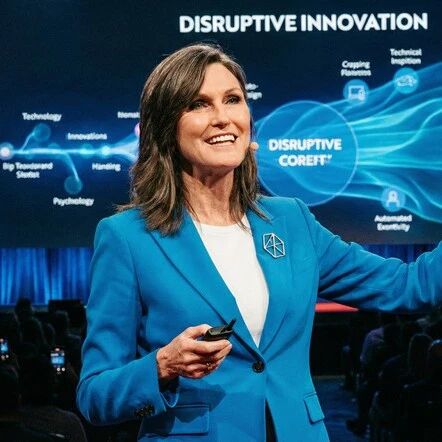
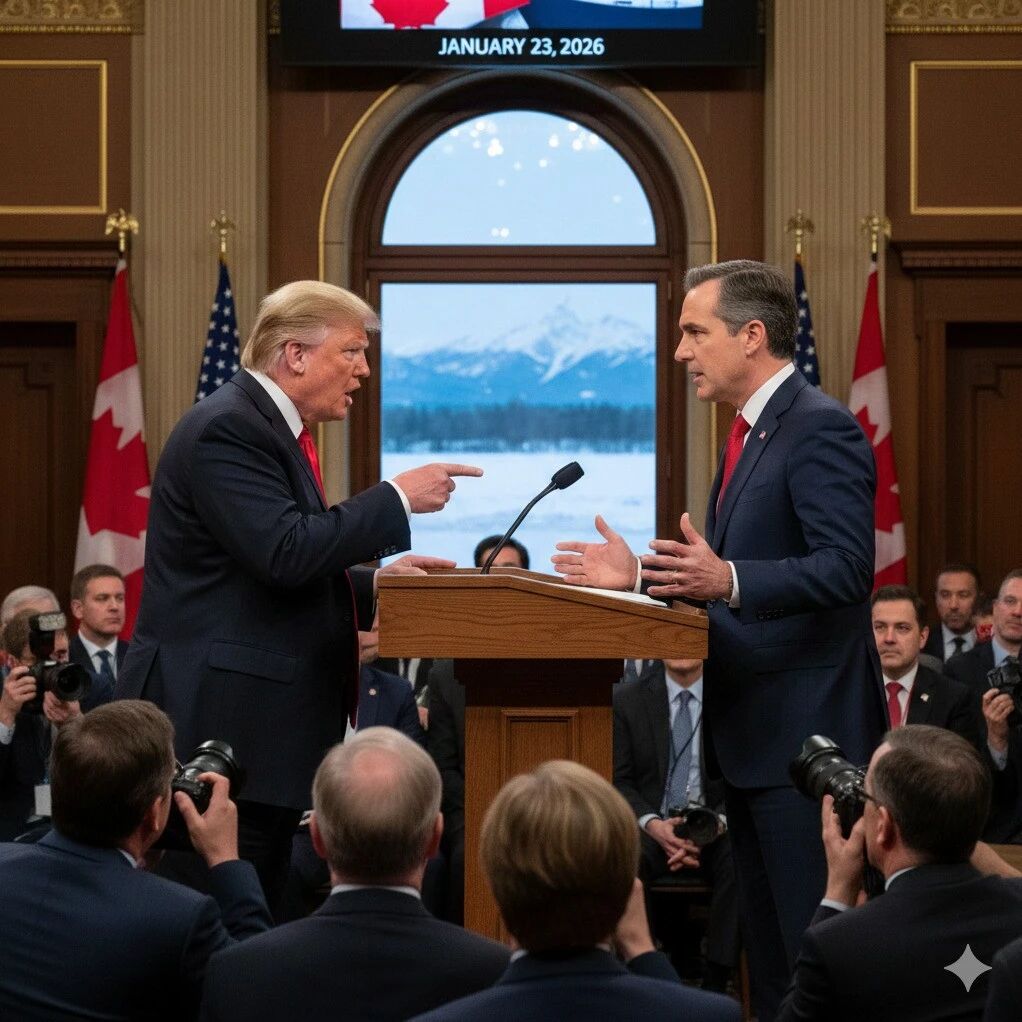
加拿大总理卡尼在达沃斯世界经济论坛上的强硬演讲引发美加外交风波。 据新华社此前报道,加拿大总理卡尼(Mark Carney)20日在瑞士达沃斯举办的世界经济论坛年会上说,近来,一些大国把关税当作施压杠杆,把金融基础设 施作为胁迫工具。 据 华尔街见闻此前文章提及 ,这位新任总理呼吁中等强国联合抵制大国经济胁迫,并警告"如果我们不在谈判桌上,我们就会成为别人的盘中餐",此番表态被 广泛解读为对特朗普政府施压的直接回击。 1月23日,据媒体报道,美国商务部长 卢特尼克指责卡尼的演讲"傲慢自大" ,财政部长 贝森特则要求卡尼应该"说声谢谢"而非发表"价值观表演式演讲" 。 据 央视新闻 报道,特朗普在达沃斯点名批评卡尼"对美国不够感激",并宣称"加拿大靠美国生存"。特朗普还在社交媒体上撤销了加拿大加入其"和平委员会"的 邀请。 央视新闻 称 , 卡尼返回加拿大后迅速反击,在国内演讲中强调"加拿大并非靠美国生存,加拿大繁荣昌盛是因为我们是加拿大人" 。 分析认为,这场外交口水战凸显美加关系正经历数十年来最严重的裂痕,也标志着加拿大正在重新评估其对美依赖战略。 达沃斯演讲直指"霸权胁迫" 据报道,卡尼在达沃斯的演讲措辞 ...
“头条主宰市场”的一周——格陵兰岛开启,随后是日债崩盘、特朗普TACO,日元干预收尾
华尔街见闻· 2026-01-24 10:34
Group 1 - The global capital markets experienced significant volatility driven by geopolitical tensions and sudden shifts in monetary policy, leading to a week characterized by extreme market fluctuations [2][3][4] - Key catalysts included Trump's comments on Greenland and subsequent tariff threats, which triggered one of the most synchronized market sell-offs since the pandemic, alongside a collapse in the Japanese bond market referred to as the "Truss moment" [4][9] - The week ended with a highly divided market: stock indices saw slight declines, volatility surged, the dollar faced significant losses, while precious metals reached new highs [5][13][19][21] Group 2 - The correlation between stocks and bonds broke down again, prompting investors to reassess the effectiveness of traditional hedging strategies [7][29] - The market saw a notable divergence in asset performance, with the Nasdaq managing to hold slight gains while other major indices declined, marking the first consecutive two-week drop for the S&P 500 since June 2025 [13][15] - Gold prices rose for five consecutive days, nearing $5,000, while silver surged to a peak of $103, reflecting strong demand amid geopolitical tensions [21][23][24] Group 3 - The market faced a significant challenge as traditional 60/40 investment strategies (60% stocks, 40% bonds) experienced their largest single-day loss since October of the previous year, raising debates about hedging strategies [28][29] - Concerns about synchronized market reactions have intensified, driven by structural changes where bonds no longer serve as reliable hedges against stocks, leading to increased volatility [31] - As earnings season approaches, the market is set for new tests, with major tech companies like META, Microsoft, Tesla, and Apple preparing to release their results, which could influence risk asset pricing [37]


10亿美元、1269万盎司白银,这个男人提前一年押注贵金属赚翻了!
华尔街见闻· 2026-01-24 10:34
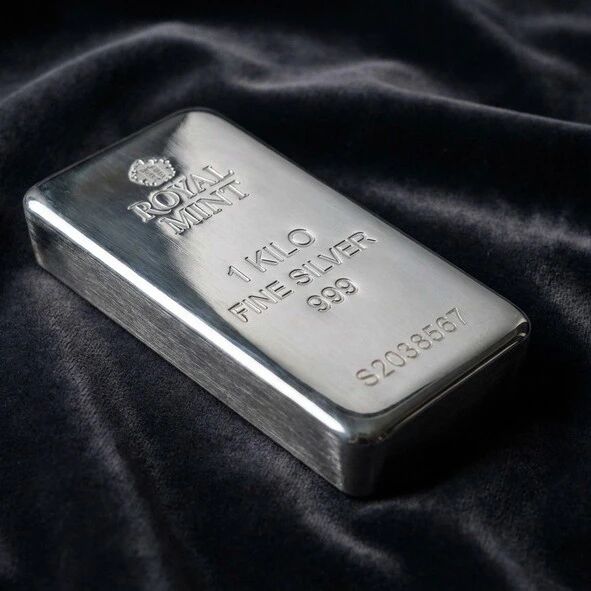
Core Viewpoint - The article discusses a significant investment in physical precious metals by David Bateman, amounting to nearly $1 billion, which is based on the belief that the global monetary system is on the verge of collapse [1][8]. Group 1: Investment Details - David Bateman revealed that he purchased close to $1 billion in precious metals over the past six months, including 12.69 million ounces of silver, which represents 1.5% of the global annual silver supply [2][6]. - The investment is compared to Warren Buffett's silver investment in the late 1990s, highlighting its scale and significance in the current market context [20][21]. Group 2: Rationale Behind the Investment - Bateman's investment is supported by nine reasons, forming a complete doomsday hedge logic, including the imminent collapse of the global monetary system, referred to as a "Great Reset" or "Basel Endgame" [8]. - He argues that the largest credit bubble in history, amounting to $300 trillion, is about to burst, and the U.S. will struggle to refinance $28 trillion in maturing debt without massive money printing [9][10]. - The article notes that Trump's tariff policies are accelerating this collapse process, which Bateman believes is intentional [11]. - Bateman emphasizes that gold and silver are the only meaningful lifeboats, making physical ownership crucial [12]. - He describes the current global situation as a "musical chairs" game, where precious metals are the chairs [13]. - Bateman views cryptocurrencies as a psychological battle, suggesting that buyers will be left without options when the music stops [14]. - He predicts that real estate, cryptocurrencies, stocks, and bonds will significantly depreciate compared to precious metals [15]. - The banking system is designed to confiscate assets to support a collapsing banking industry, while precious metals carry no counterparty risk [16].
银行们投身“太空基建”?
华尔街见闻· 2026-01-24 10:34
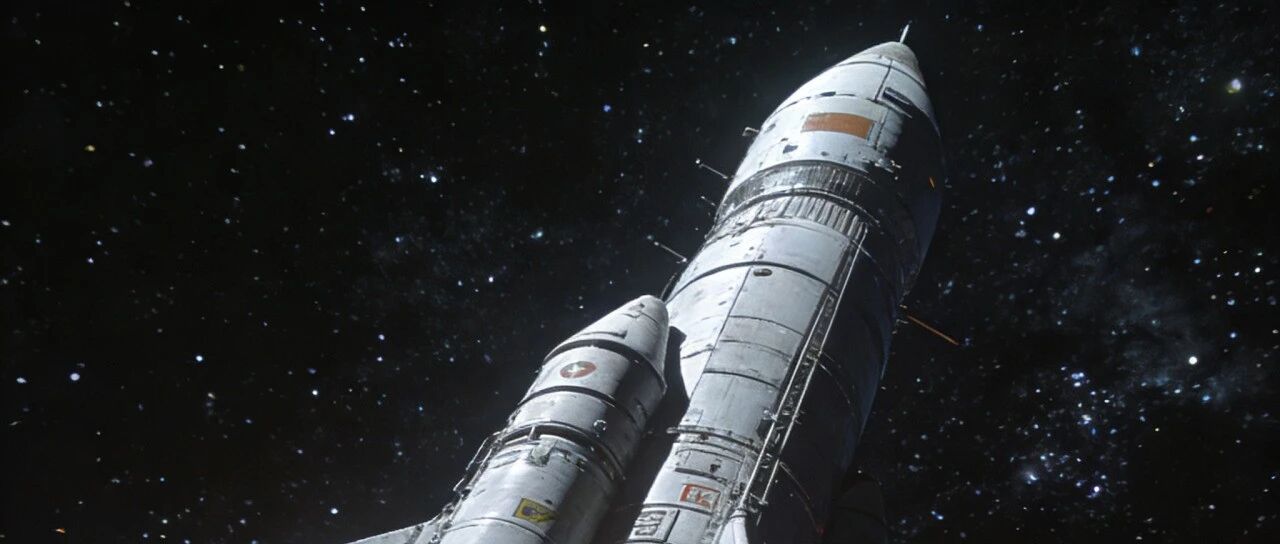
Core Viewpoint - The article discusses the evolving landscape of financial institutions utilizing satellite technology for credit risk management and operational continuity, highlighting a shift from traditional data procurement to direct satellite deployment for enhanced data sovereignty and efficiency [1][5]. Group 1: Satellite Deployment by Banks - In January, China Merchants Bank's "Zhaoyin Jinkui" and SPD Bank's "Puyin Shuzhi" satellites were launched, marking a significant step in the banks' integration into the "Tianqi Constellation" low Earth orbit network [2][3]. - The satellites will enable direct data transmission to banks without third-party intermediaries, enhancing data sovereignty and operational efficiency [3][4]. - The deployment of these satellites represents a strategic shift in the banking sector's approach to utilizing aerospace technology for financial services [4][5]. Group 2: Differentiation in Banking Strategies - Banks are diverging into two main strategies: the "launching faction," which invests in hardware assets, and the "buying faction," which relies on data service procurement [7]. - Major banks like China Merchants Bank, SPD Bank, and Ping An Bank are leading the satellite launch initiatives, with Ping An having previously launched its own satellites [10][14]. Group 3: Cost and Technological Advancements - The cost of custom satellites has decreased significantly, making them more accessible for banks, with estimates ranging from millions to tens of millions of RMB [26][30]. - The ability to customize satellite payloads allows banks to meet specific operational needs, such as monitoring construction projects or environmental conditions [34]. Group 4: Risk Management and Operational Continuity - The integration of satellite technology into banks' risk management systems allows for real-time monitoring of collateral assets, enhancing the banks' ability to respond to potential risks [24][39]. - The concept of "financial disaster recovery" is emerging, with banks testing satellite communication systems to ensure operational continuity during extreme events [40][42]. Group 5: Empowering the Commercial Space Industry - Banks are increasingly interested in financing commercial space ventures, which have traditionally been viewed as high-risk due to their unique asset structures [48]. - China Merchants Bank's subsidiary has initiated a satellite leasing business, demonstrating a new financing model that aligns with the needs of the commercial space sector [49].


历史性时刻!白银首次突破100美元
华尔街见闻· 2026-01-24 00:00
Core Viewpoint - The global metal market is experiencing a significant surge, with gold and silver reaching their highest weekly gains since 2020, driven by various geopolitical and economic factors [2][7]. Group 1: Precious Metals Performance - Gold has reached a historical high, nearing $5000 per ounce, while silver has surpassed $100 for the first time in history [3][7]. - Silver futures have seen a cumulative increase of over 14% this week, marking the largest weekly gain since July 2020, and have risen over 40% year-to-date [9]. - Analysts predict that gold prices could reach $5000 by Q4 2026, with some forecasts even suggesting a long-term target of $6000 [18]. Group 2: Market Drivers - The surge in metal prices is attributed to a weaker dollar, significant capital outflows from currencies and sovereign bonds, and heightened geopolitical tensions, particularly related to U.S.-Iran relations [7][21]. - Trump's comments about U.S. military movements towards Iran have intensified safe-haven demand for metals like gold and silver [7][11]. Group 3: Emerging Market Trends - There is a notable acceleration in the de-dollarization trend globally, with emerging market assets attracting record inflows, particularly into funds like the iShares Core MSCI Emerging Markets ETF [8]. - The demand for silver is bolstered by strong industrial needs, especially from the solar energy sector, and increased retail buying in China [11][13]. Group 4: Future Outlook - Analysts from major financial institutions like Citigroup and UBS have raised their short-term price targets for silver to $100 and $70 respectively, reflecting a bullish sentiment despite potential volatility [12][13]. - UBS anticipates that silver prices could still have about 25% upside potential from current levels, although a correction may occur later in the year [13]. Group 5: Base Metals Performance - Copper prices have rebounded, driven by a weaker dollar and supply disruptions, with LME copper trading above $13,000 per ton [19][21]. - Nickel and tin have also seen significant price increases, with nickel reaching a new high since June 2024 [19]. Group 6: Supply and Demand Dynamics - The supply chain for copper is under pressure due to labor strikes in Chile, which have halted operations at key mines [21]. - The influx of copper into Asian warehouses is partly driven by Chinese smelters capitalizing on favorable arbitrage opportunities, although domestic demand may be affected by a slowing real estate sector [22].