日经中文网

Search documents
高市支持率连超70%,与小泉安倍开局相似
日经中文网· 2025-12-23 02:57
Group 1 - The core viewpoint of the article highlights the high approval ratings of Prime Minister Sanna Takashi's cabinet, which have consistently exceeded 70% from October to December, similar to the early stages of previous long-term administrations like those of Junichiro Koizumi and Shinzo Abe [2][4] - The approval rating of Takashi's cabinet reached 75% in a survey conducted from December 19 to 21, maintaining a high level since her administration began [4] - Factors contributing to the rise in approval ratings include public expectations regarding the Prime Minister's character and leadership abilities, with 41% citing trustworthiness and 38% citing leadership skills as primary reasons [6] Group 2 - Despite the high approval ratings for the cabinet, the support rate for the ruling Liberal Democratic Party (LDP) has declined, dropping 4 percentage points to 37% in December compared to November [7] - There is a prevailing view within the LDP that a general election will not occur until at least spring 2026, allowing time for the implementation of policies outlined in the supplementary budget [7] - The main risk factor for the administration is the cooling of Japan-China relations, particularly in light of Takashi's statements regarding Taiwan, which have drawn criticism from China [8]



日经BP精选:访日游客钟爱“拉面”,最青睐这家店
日经中文网· 2025-12-23 02:57
Group 1 - The core focus of the article is on the analysis of visitor satisfaction regarding Japanese cuisine, particularly highlighting ramen as the most favored dish among foreign tourists visiting Japan [5][6]. - The analysis is based on approximately 100,000 personal responses collected from the Japan Tourism Agency's "Inbound Visitor Consumption Trends Survey," which provides insights into the food preferences of foreign visitors [6][8]. - Ramen, specifically "ramen and dipping noodles," accounts for 19.3% of the responses, making it the most popular choice, followed by sushi at 13.9% and grilled meat at 11.9% [6][8]. Group 2 - The article categorizes the food preferences of foreign tourists, indicating that meat dishes are particularly well-received, with various types of grilled meat and other meat dishes collectively exceeding 20% in popularity [6][8]. - The survey results suggest that traditional Japanese dishes like sushi and tempura are commonly associated with Japanese cuisine, but ramen has emerged as the top choice among visitors [5][6].

日本拟2027年之前在南鸟岛建稀土泥处理设施
日经中文网· 2025-12-23 02:57
Core Viewpoint - Japan is focusing on developing domestic rare earth resources to ensure economic security, particularly in light of the fact that China dominates approximately 70% of global production. The South Bird Island area is rich in rare earth mud, which is crucial for high-tech industries like electric vehicles (EVs) [4]. Group 1 - The Japanese government plans to construct a facility for processing rare earth-containing marine mud on South Bird Island by 2027 as part of the "Strategic Innovation Creation Program (SIP)" [2]. - The rare earth mud in the South Bird Island area has been found to contain minimal harmful radioactive substances, making it easier to process [4]. - A trial for recovering rare earths from the seabed at a depth of about 6000 meters is set to begin in 2026, with the aim of confirming the ability to collect 350 tons of rare earth mud daily during the official trial in February 2027 [5]. Group 2 - The processing facility on South Bird Island will utilize a dehydration device similar to a washing machine to remove seawater from the mud, reducing its volume to one-fifth of the original, thus facilitating efficient transportation [5]. - After the dehydration process, the rare earth mud will be transported to Japan's mainland for further separation and verification of the extraction process [5].

日本货币政策仍未实现正常化
日经中文网· 2025-12-22 08:00
Core Viewpoint - The Bank of Japan (BOJ) maintains a dovish stance on interest rate hikes, which is interpreted by the market as less aggressive than expected, contributing to the continued depreciation of the yen [2][6]. Group 1: Interest Rate Policy - The BOJ plans to continue raising interest rates, but the actual rates remain significantly negative due to price fluctuations, indicating that monetary easing is still substantial [2][4]. - BOJ President Ueda expressed that if wages and prices continue to rise, interest rates will be adjusted at an appropriate time [4]. - The market's expectation for aggressive rate hikes has diminished following the BOJ's statements, with the interest rate differential between Japan and the U.S. narrowing by 0.5 percentage points [6]. Group 2: Economic and Price Outlook - Ueda indicated that the neutral interest rate is difficult to estimate and will be assessed at each meeting based on economic and financial conditions [8]. - Concerns about the yen's depreciation impacting domestic prices are prevalent within the BOJ, as rising import costs could lead to higher core inflation rates [9]. - The government, while allowing the BOJ to decide on monetary policy, has mixed opinions on the timing of rate hikes, with some officials suggesting that the December hike may have been premature [9]. Group 3: Future Rate Hike Expectations - Market predictions suggest that the pace of rate hikes may be limited to once or twice a year, with some economists forecasting a gradual increase to 1.5% by mid-2027 [9]. - The risk of delayed rate hikes is increasing, and there is a belief that the BOJ may need to consider the government's preference for maintaining low rates [9].

日经指数重返5万点,AI相关股势头强劲
日经中文网· 2025-12-22 08:00
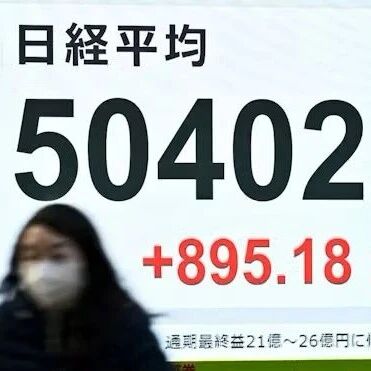
Group 1 - The market participants interpreted the Bank of Japan Governor Ueda's comments during the interest rate hike press conference as "dovish," leading to a general sense of reassurance in the market [4] - On December 22, the Nikkei average stock index rose significantly, closing at 50,402.39 points, an increase of 895.18 points or 1.8% from the previous weekend [2] - Despite the Bank of Japan announcing an additional interest rate hike on the 19th, major stocks in the AI sector, such as SoftBank Group, Advantest, and Tokyo Electron, showed strong performance, indicating resilience against the rate hike [4] Group 2 - The Nikkei index opened with a nearly 600-point increase, with the rise at one point exceeding 1,000 points [4] - The trend of yen depreciation and a stronger US dollar also provided support in the foreign exchange market, allowing stock prices to remain stable above the critical 50,000-point level [4]
股市走高带动日本高额消费,珠宝、豪车走俏
日经中文网· 2025-12-22 08:00
Group 1 - The core viewpoint of the articles highlights the significant increase in high-end consumer goods sales in Japan, driven by the rising Nikkei average index, which has surpassed 50,000 points this year [2][5][6] - Matsuya's jewelry sales in November saw a year-on-year increase of approximately 2.5 times, with luxury watches also experiencing a growth of about 65% [4][5] - The estimated consumption boost from the stock market rise is projected to be around 1.5 trillion yen, which could increase annual consumption by 0.4 percentage points [5][6] Group 2 - Takashimaya reported a 4% year-on-year increase in sales from its "foreign customer" department in November, marking five consecutive months of growth [5] - The sales of high-end watches priced between 5 million to 10 million yen and jewelry over 10 million yen have been particularly strong [5] - The luxury car market is also thriving, with Ferrari's new car sales in November increasing by 5% to 140 units, setting a record for the month [6] Group 3 - Despite the growth in high-end consumption, there remains a significant divide in consumer behavior, with many still exhibiting frugality due to rising prices and stagnant real wage growth [6][7] - A survey indicated that 75% of respondents planned not to travel during the year-end and New Year period, citing high travel costs and economic constraints [7] - The asset effect from the stock market is primarily benefiting older individuals, while the impact on the middle class is weaker, leading to further polarization in consumer spending [7]


近半数日本人不担忧中日关系恶化影响经济
日经中文网· 2025-12-22 03:23
Core Viewpoint - The public opinion survey indicates a divided sentiment regarding concerns over the deterioration of China-Japan relations and its potential impact on the Japanese economy, with 46% expressing concern and 48% not concerned [4]. Group 1: Survey Results - In a recent survey conducted by Nikkei and TV Tokyo, 46% of respondents expressed concern about the negative impact of worsening China-Japan relations on the Japanese economy, while 48% indicated they were not concerned, showing a nearly even split [4]. - Among political party supporters, 50% of supporters from the Liberal Democratic Party and the Japan Innovation Party, and 60% from the Democratic Party for the People reported being unconcerned, while 80% of supporters from the Constitutional Democratic Party expressed concern [6]. - Age-wise, 50% of respondents aged 60 and above and those aged 18-39 expressed concern, whereas 60% of the 40-59 age group reported being unconcerned [6]. Group 2: Political Context - Japanese Prime Minister Sanae Takaichi's remarks in November regarding potential crises related to Taiwan have drawn criticism from the Chinese government, which has urged its citizens to exercise caution when traveling to Japan [6].
鲁比奥就高市早苗“台湾有事”国会答辩发声
日经中文网· 2025-12-22 03:23
Core Viewpoint - The U.S. Secretary of State Rubio emphasizes the importance of maintaining a strong partnership with Japan while also seeking constructive ways to cooperate with the Chinese government, highlighting a balanced approach in U.S. foreign policy [2][4]. Group 1: U.S.-China Relations - Rubio acknowledges the existing tensions in U.S.-China relations and stresses the need for the U.S. to maintain balance in the Indo-Pacific region, recognizing China's status as a wealthy and powerful nation that plays a key role in geopolitical dynamics [5]. - He advocates for identifying areas of cooperation with China, suggesting that collaboration on global issues could lead to solutions, while ensuring that U.S. commitments to allies like Japan and South Korea remain intact [5]. Group 2: U.S.-Japan Relations - The statement comes in the context of Japan's Prime Minister's remarks regarding Taiwan, indicating the interconnectedness of U.S. relations with both Japan and China [4]. - Rubio's comments reflect a nuanced stance, aiming to reassure allies while also opening channels for dialogue with China, which contrasts with his historically hardline views [4]. Group 3: Current Diplomatic Climate - The current U.S.-China relationship is described as being in a phase of easing tensions, with recent agreements on tariff reductions and postponed export controls following a meeting between the leaders of both countries [5]. - Future visits are planned, with Trump expected to visit China in April 2026, followed by a visit from Chinese leaders to the U.S., indicating a potential thaw in relations [5].

加息难挡贬值压力,日元将跌至160?
日经中文网· 2025-12-22 03:23
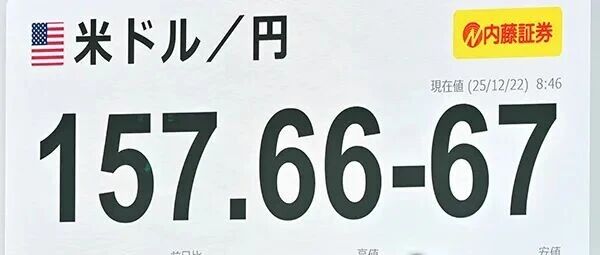
Core Viewpoint - The Bank of Japan raised interest rates to 0.75% on December 19, but the lack of a clear hawkish stance from the governor led to unexpected depreciation of the yen, with potential for further decline towards 160 yen per dollar [2][4][6]. Group 1: Interest Rate and Currency Impact - The long-term interest rates in Japan rose to 2% for the first time in 19 years following the interest rate hike, but the yen's exchange rate remained relatively stable around 155.80 yen before the announcement [4]. - After the press conference, the yen quickly depreciated, reaching a low of 157.70 yen per dollar, marking a one-month low due to the unexpected lack of aggressive monetary tightening signals from the Bank of Japan [6][8]. - Market participants expect the yen to depreciate further, with many anticipating a rate of around 160 yen by the end of March 2026 [6][8]. Group 2: Market Reactions and Predictions - Analysts predict that the next interest rate hike by the Bank of Japan may not occur until October 2026, leading to a potential depreciation of the yen to 162 yen in the first quarter of 2024 [8]. - Concerns about currency intervention have arisen, especially as the yen approaches the 160 yen mark, with officials indicating readiness to respond to excessive movements [8]. - Some analysts believe that the yen's depreciation may be limited, with expectations of a potential appreciation back to 155 yen by March 2024, influenced by anticipated actions from the U.S. Federal Reserve [9]. Group 3: Stock Market Implications - The depreciation of the yen is expected to benefit export-oriented companies, potentially driving up stock prices, with forecasts suggesting the Nikkei average could rise to between 50,000 and 55,000 points [10]. - Concerns about fiscal expansion and political developments, such as potential early elections, could pose risks to stock prices, with some analysts suggesting a possible adjustment to around 45,000 points [10].