日经中文网

Search documents
本田将推出纯电版N-BOX,迎战比亚迪
日经中文网· 2025-12-24 03:26
Core Viewpoint - The N-BOX has maintained its position as the best-selling new car in Japan for three consecutive years, with projected sales of approximately 200,000 units in 2024. The introduction of electric versions by both Honda and BYD is expected to enhance the competitiveness of lightweight EVs in the Japanese market [1][3]. Group 1: N-BOX Sales and Market Position - The N-BOX is projected to achieve sales of around 200,000 units in Japan in 2024, surpassing the Toyota Corolla, and has been the top-selling model for three consecutive years [1][3]. - The N-BOX has accumulated total sales of approximately 3 million units since its first generation was launched in 2011, supported by its spacious interior and affordable price starting from 1.7 million yen [3]. Group 2: Electric Vehicle (EV) Market Dynamics - Honda plans to launch a pure electric version of the N-BOX by the fiscal year 2027, while BYD aims to introduce its lightweight EV in Japan by the summer of 2026, ahead of Honda [1][6]. - The current market share of EVs in Japan is around 2%, which is the lowest among developed countries, indicating significant room for growth [4]. - The lightweight EVs, such as Nissan's "Sakura" and Mitsubishi's "eK Cross EV," are expected to account for over 40% of EV sales in 2024, highlighting the compatibility of lightweight vehicles with urban mobility needs [4]. Group 3: Incentives and Regulations - In Japan, purchasing lightweight EVs comes with subsidies and tax reductions in the second year of ownership, which could accelerate their adoption if prices can be brought down to levels comparable to gasoline vehicles [4].





高市早苗接受日经专访,谈及中日关系
日经中文网· 2025-12-24 03:26
Core Viewpoint - The Japanese government under Prime Minister Sanna Takashi emphasizes "responsible active fiscal policy" aimed at balancing current and future responsibilities, ensuring fiscal sustainability while addressing immediate economic challenges [2][4][5]. Fiscal and Economic Policy - The government aims to balance strong economic growth with sustainable fiscal practices, controlling government debt growth within the limits of economic growth rates to reduce the debt-to-GDP ratio [4]. - The economic measures and supplementary budget for 2025 are designed to address rising living costs while ensuring a secure and robust economy through "crisis management investment" and growth investments [5][6]. - The government plans to keep the issuance of new government bonds lower than the previous year, reflecting a commitment to fiscal sustainability [5]. Budget and Debt Management - The Prime Minister indicated a willingness to adjust the primary balance surplus target based on the need for fiscal sustainability and market confidence, suggesting a shift towards multi-year assessments rather than annual targets [6]. - The upcoming budget for 2026 is being prepared with a focus on prioritizing essential expenditures and minimizing reliance on supplementary budgets [7][8]. Tax and Social Security Reform - The government is considering options for consumption tax reductions, particularly for food services, but recognizes the challenges in implementing such measures quickly [9]. - A "National Conference" is proposed to address social security reforms, aiming for a sustainable system that balances benefits and burdens across different demographics [10][12]. Economic Growth Strategy - "Crisis management investment" is identified as a core component of the growth strategy, focusing on enhancing food and energy self-sufficiency, healthcare stability, and advancing AI technology [16][17]. - The government aims to leverage Japan's manufacturing strengths to develop competitive AI technologies, particularly in robotics and autonomous systems [17].

日经Gaming精选——深度:日本「手机新法」今日施行,游戏行业将如何动荡
日经中文网· 2025-12-24 03:26
编者荐语: 《智能手机新法》 ,将于2025年12月18日在日本正式施行。 日经Gaming是2025年7月创刊的"以商业视点出发的游戏媒体"。日经BP利用在经营、技术、消费、营销 各领域培养的采访力、信息发布力,从商业角度出发,发布游戏及其周边产业的最新动向、商业模式。 以下文章来源于日经Gaming ,作者佐野正弘 日经Gaming . 商业视角的日本游戏媒体。日经BP旗下。 对提供智能手机操作系统等基础软件的平台运营商进行规制的所谓 该法律将对日本国内智能手机游戏的未来产生深远影响。本期日经Gaming将聚焦于影响最大的应用商 店相关制度,分析手机新法给游戏App发行商带来的变化。 引自日本公正交易委员会《手机软件竞争促进法》概要 出处:日本公正交易委员会 2025年12月18日,一部将对日本IT行业整体产生重大影响的法律正式生效。 这部法律名为《关于促进 智能手机特定软件相关竞争的法律》,俗称"智能手机新法"。 该法律主要针对提供智能手机所必需的"特定软件"(如操作系统、网络浏览器、搜索引擎、应用商店 等)并达到一定规模的企业,规定了禁止行为和应采取的措施。欧盟已先行实施了治理此类平台运营商 的《数字 ...

高市出席经济学家恳亲会,强调积极财政
日经中文网· 2025-12-24 03:26
Core Viewpoint - The article discusses the economic outlook for Japan in 2026, emphasizing the need for responsible fiscal policies to enhance national strength and the potential impact of international relations on the economy [4][5]. Group 1: Economic Outlook - Prime Minister Kishi Nobuo stated that Japan needs responsible and proactive fiscal measures to strengthen national power, highlighting that improving corporate profits will lead to wage increases and increased consumption, creating a virtuous cycle [4]. - Tsutsui Yoshinobu, president of Keidanren, noted that 2025 would be a pivotal year for Japan amid significant changes in the political and economic landscape due to international turmoil [4]. - Nomura Real Estate Holdings' president predicted that with wage increases and government policies, the economy would remain robust, and real estate prices would continue to rise due to asset effects from a strong stock market [5]. Group 2: Concerns and Risks - Concerns regarding U.S. tariff policies were raised, with Mitsubishi Electric's president expressing the need for the Japanese government to support small and medium-sized enterprises and reduce tax burdens [5]. - The 2026 government budget is expected to exceed 120 trillion yen, marking a historical high, while the Bank of Japan has raised policy interest rates to 0.75%, the highest in 30 years [6]. - Morgan Stanley's chief economist expressed concerns about the effectiveness of fiscal measures in addressing inflation, warning that a combination of fiscal expansion and delayed monetary policy adjustments could increase market volatility [6].

中国大陆企业加速在香港上市
日经中文网· 2025-12-23 07:28
Core Viewpoint - The Hong Kong stock market is expected to see a surge in IPOs from mainland Chinese companies, particularly in the AI sector, with projected fundraising reaching 350 billion HKD in 2026, a nearly 30% increase from 2025 [2][7]. Group 1: Market Activity and Projections - In 2026, several AI-related companies from mainland China, including Shanghai Biren Technology, are preparing for IPOs in Hong Kong, with expected fundraising of 350 billion HKD, marking a significant increase from 2025 [2][7]. - The Hong Kong IPO market is projected to be very active, with KPMG estimating that the total fundraising from new listings (including secondary listings) in 2025 could exceed 272 billion HKD, more than three times the previous year [7]. - The optimistic forecast for 2026 indicates that the fundraising could reach 350 billion HKD, which would be the highest level since 2021 [7]. Group 2: Key Companies and Valuations - Biren Technology plans to list in Hong Kong on January 2, 2026, with a projected market capitalization of up to 46.2 billion HKD, aiming to accelerate R&D with the raised funds [4]. - Other notable companies preparing for IPOs include SHEIN (valued at approximately 30 billion USD), Xiyun Information Technology (17 billion USD), and emerging AI firms like Qiyu Technology (3.7 billion USD) and Beijing Zhiyu Huazhang Technology (3 billion USD) [8]. Group 3: International Investment Dynamics - There is an increasing interest from European and American investors in mainland Chinese tech stocks, with UBS upgrading the investment rating for these stocks to "most attractive" [9]. - The Chinese government is actively promoting leading enterprises to list in Hong Kong, which is seen as a move to enhance Hong Kong's role as a gateway for overseas capital [9]. - The active Hong Kong market has raised concerns among U.S. lawmakers, who fear that American investments flowing into Chinese tech companies could pose a national security threat [9][10].

日本敲定首个AI基本计划
日经中文网· 2025-12-23 07:28
Group 1 - The Japanese government plans to invest over 1 trillion yen in AI-related measures, aiming to leverage high-quality data and communication environments to drive innovation in AI [5][2] - The "AI Basic Plan" emphasizes the importance of developing AI that capitalizes on Japan's strengths, particularly in sectors facing labor shortages such as healthcare, nursing, and finance [2][6] - The plan advocates for public-private collaboration, encouraging private sector investment alongside government funding, and includes the establishment of new tax incentives [5][6] Group 2 - The plan highlights the necessity of AI safety and rational use, aiming to create a "trustworthy AI" that is reliable and secure [6][7] - The government will reform the "Artificial Intelligence Safety Research Institute (AISI)" to enhance the evaluation of AI reliability and safety, doubling the number of specialized personnel involved [6] - AI will be integrated into government operations, with initiatives to support local governments in addressing labor shortages and maintaining service levels [6][7] Group 3 - The plan addresses issues related to copyright infringement and improper use of AI, emphasizing the need for public understanding and appropriate corporate practices [7] - Administrative departments are required to provide adequate explanations regarding the reliability and practical use of AI technologies [7]

日本财相:近期汇率走势是投机性的
日经中文网· 2025-12-23 07:28
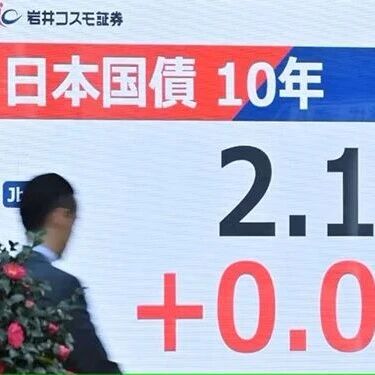
Group 1 - The Japanese Finance Minister, Katsunobu Kato, stated the need to take measures against excessive volatility in the currency market, emphasizing that there is ample operational space to do so [2] - Kato expressed skepticism about the current exchange rate movements, suggesting they do not reflect the economic fundamentals, with the USD/JPY trading around the mid-156 yen range [4] - Following the recent monetary policy meeting of the Bank of Japan, there has been a notable depreciation of the yen and appreciation of the dollar, leading to increased market vigilance regarding potential currency interventions by the Japanese government and central bank [4] Group 2 - The yield on newly issued 10-year government bonds reached 2.1% on December 22, marking a nearly 27-year high, raising concerns about deteriorating fiscal conditions [5] - Kato clarified that not every fluctuation in interest rates is directly linked to changes in fiscal conditions, reiterating the commitment to advancing sustainable fiscal policies [5]

日本央行加息后日债日元仍被持续卖出
日经中文网· 2025-12-23 02:57
Core Viewpoint - The depreciation of the yen and the rise in long-term interest rates in Japan are causing concerns about inflation and the government's fiscal policies, leading to increased selling of Japanese government bonds and the yen [2][9]. Group 1: Interest Rates and Currency - Japan's long-term interest rate has risen to 2.100%, with the 10-year government bond yield reaching a new high since July 23, increasing by 0.085% [4]. - The 5-year government bond yield has also risen to 1.535%, marking a 17.5-year high [4]. - The depreciation of the yen is attributed to the belief that the Bank of Japan will not accelerate interest rate hikes, with the yen falling to around 157 yen per dollar [5][7]. Group 2: Market Reactions and Predictions - Market participants expect the yen to depreciate further, potentially reaching 160 yen per dollar, with predictions of a rate hike by the Bank of Japan not expected until October 2026 [8]. - Concerns are growing that the depreciation of the yen will lead to increased import prices and domestic inflation, with the government’s 2026 budget expected to exceed 120 trillion yen, the highest ever [9]. - The Tokyo stock market has seen a rise, with the Nikkei index surpassing 50,000 points, driven by expectations of improved corporate profits due to yen depreciation [10]. Group 3: Economic Implications - Rising long-term interest rates may suppress personal consumption and corporate investment, potentially impacting economic growth [10]. - The market is reacting to the Bank of Japan's slow response to inflation concerns, with fears that both monetary and fiscal policies are not adequately addressing rising prices [9].
美印接近,终结的开始
日经中文网· 2025-12-23 02:57
Core Viewpoint - The relationship between India and the United States, which has been strengthening since the 2000s, is now facing significant challenges, particularly due to Prime Minister Modi's deepening distrust of President Trump, which may hinder future cooperation [2][4][7]. Group 1: Historical Context - During the Cold War, India aligned itself with the Soviet Union while maintaining a non-aligned stance, receiving military support from the USSR after the 1962 Sino-Indian conflict [2]. - The geopolitical landscape shifted in the 2000s, leading to a rapprochement between India and the U.S., highlighted by the 2008 nuclear agreement, driven by mutual concerns over China [4]. Group 2: Current Tensions - Modi's distrust of Trump has intensified, particularly after Trump's claims regarding the India-Pakistan ceasefire, which Modi believes undermines India's military strength [7][10]. - Trade tensions have escalated, with Trump raising tariffs on Indian goods, further straining relations [10]. Group 3: Strategic Implications - India's dissatisfaction with the U.S. is growing, as there are doubts about America's reliability as a partner in countering China, especially given Trump's preference for bilateral negotiations with China [10][11]. - The U.S. has shown a tendency to prioritize its interests in the Americas, which raises concerns in India about its strategic alignment with the U.S. [10][11]. Group 4: Future Directions - To mitigate security risks, India is likely to seek alternatives outside of the U.S., potentially strengthening ties with Russia and easing tensions with China [11]. - Despite current challenges, there remains a belief in India that the relationship with the U.S. will not significantly regress, depending largely on Trump's future actions [11].