高工锂电

Search documents
全固态锂金属电池迎圆柱破局?
高工锂电· 2025-09-26 10:43
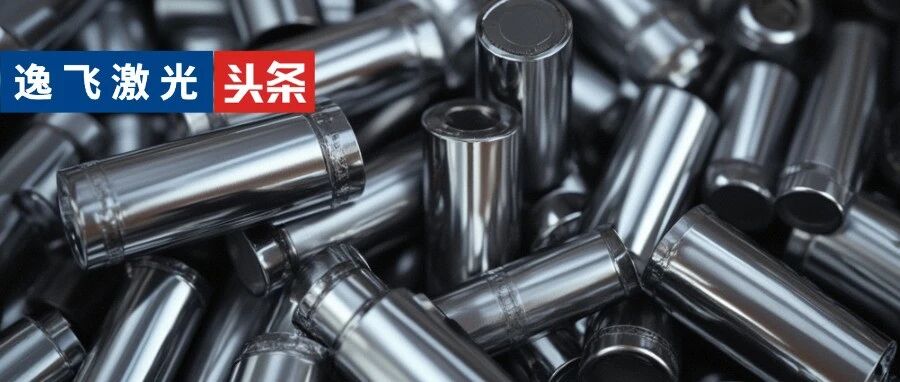
Core Viewpoint - The article discusses the advancements in solid-state battery technology, particularly focusing on the collaboration between Jinyu New Energy and Yifei Laser in developing the "Wuji" solid-state lithium metal cylindrical battery, which has successfully been delivered to international clients, marking a significant step in the industrialization of solid-state batteries [2][3]. Group 1: Product Development and Features - The "Wuji" series includes multiple capacity models ranging from 8Ah to 52Ah, with cumulative delivery exceeding 10 million yuan by mid-September 2025 [3]. - The battery utilizes an oxide and polymer solid electrolyte combined with lithium metal, featuring a cylindrical structure with full-tab design, which enhances energy density, safety, temperature adaptability, and high-pressure resistance [3][4]. - This battery design is particularly beneficial for high-end industrial applications such as drones and electric aircraft, significantly expanding operational windows and reducing overall costs [3][5]. Group 2: Manufacturing Challenges and Innovations - The solid-state battery industry is entering a critical phase of overcoming challenges related to large-scale manufacturing, shifting focus from material competition to a comprehensive evaluation of manufacturing processes, cost control, and ultimate performance [5][6]. - The collaboration has introduced a cylindrical and winding process for solid-state lithium metal batteries, presenting a potential alternative to the mainstream soft-pack/square and stacking technology [5][6]. - The cylindrical design and high-speed winding process could offer significant advantages in production efficiency, yield control, and equipment costs, potentially leading to lower manufacturing costs for solid-state batteries [6][7]. Group 3: Technical Breakthroughs - Key breakthroughs include the development of a continuous production process for solid-state electrolytes, achieving high strength and reliability in manufacturing [12][13]. - Gradient composite interface technology has been implemented to address solid-solid interface contact issues, significantly reducing interface resistance and enhancing ionic transport efficiency [14]. - The introduction of self-limiting pressure control technology allows for stable contact between solid-state electrolytes and electrodes without external high pressure, contributing to the reliability and lightweight integration of the battery [16]. Group 4: Future Outlook - The successful delivery of the "Wuji" battery validates the feasibility of the cylindrical solid-state route, indicating that the challenges in this area are surmountable [8][9]. - The industry may see multiple technological paths developing concurrently, fostering competition and collaboration across different application scenarios, which could accelerate the arrival of the solid-state battery era [23][24].


第四大提锂路线出现:铝矿提锂
高工锂电· 2025-09-26 10:43
倒计时53天 2025(第十五届)高工锂电年会 暨十五周年庆典&高工金球奖颁奖典礼 主办单位: 高工锂电、高工产研(GGII) 协办单位: 卡洛维德 总冠名: 海目星激光 年会特别赞助: 大族锂电 专场冠名: 英联复合集流体、逸飞激光、华视集团、欧科工业空调 金球奖全程特约赞助: 思客琦 时间&地点: 2025年11月18-20日 深圳前海华侨城JW万豪酒店 另一方面,中国作为全球最大的铝生产国,其庞大的产业也正被锂元素所困扰。 会议合作: 陈女士 13560731836(微信同号) 在中国,一条新的锂资源获取路径正从一个意想不到的领域——铝工业——中浮现。 这被称为"第四大提锂路线",不仅有望缓解中国对进口锂资源的严重依赖,也为铝业自身面临的 技术难题提供了解决方案。 该趋势的核心,是将氧化铝生产过程中原本被视为杂质的锂元素,转化为高价值的电池级碳酸锂。 趋势与变化:双重困境催生跨界协同 这一变革的背后,是中国在新能源和传统工业领域面临的双重压力。 一方面,随着电动汽车和储能产业的扩张,中国已成为全球最大的锂消费国,消耗量占全球总量的 约45%。 然而,本土锂资源储备仅占全球的6%,导致其锂原料对外依存度在 ...

固态电池量产,捷径来自半导体?
高工锂电· 2025-09-26 10:43
倒计时53天 2025(第十五届)高工锂电年会 暨十五周年庆典&高工金球奖颁奖典礼 主办单位: 高工锂电、高工产研(GGII) 协办单位: 卡洛维德 总冠名: 海目星激光 年会特别赞助: 大族锂电 半导体产业数十年来积累的精密制造工艺、材料科学和品质控制体系,正悄然成为下一代固态电池 技术突破的关键推动力。 这并非简单的跨界,而是一场基于底层技术逻辑的必然趋同。 从晶圆厂的真空薄膜沉积到电池产线的微米级涂层,从芯片封装的超薄铜箔到固态电解质的集流 体,两个看似遥远的领域,正在设备和材料两端找到共同的语言。 这背后的核心逻辑,正如海目星激光董事长赵盛宇博士所指出的,是固态电池的"半导体化、薄膜 化与微纳结构化"。 他认为,这条路径是解决固态电池核心挑战——即固-固界面稳定性——的终极有效路径。 具体来看,传统锂电池的"涂布-辊压"湿法工艺,在追求更高能量密度与绝对安全的固态电池面 前,其精度与一致性已显得力不从心。 专场冠名: 英联复合集流体、逸飞激光、华视集团、欧科工业空调 金球奖全程特约赞助: 思客琦 时间&地点: 2025年11月18-20日 深圳前海华侨城JW万豪酒店 会议合作: 陈女士 1356073 ...
每日速递|楚能新能源发布588Ah储能专用电池
高工锂电· 2025-09-26 10:43
Battery - Chuangneng New Energy launched a new generation 588Ah energy storage battery with an energy density of 190Wh/kg and a volume energy density of 419Wh/L, achieving an energy efficiency of 96.5%. The company plans to have over 200GWh of production capacity, with small-scale production expected in Q2 2026 and full-scale production in Q3 2026 [1] - EVE Energy's first large-capacity sodium-ion battery energy storage system has successfully entered commercial operation, featuring a cycle life of over 30,000 times and operational capabilities in a temperature range of -40℃ to +60℃, significantly reducing lifecycle carbon emissions by over 42% compared to lithium-ion batteries [2][3] Materials - Greenme's Qingmeibang park has opened a nickel electroplating production line with an annual capacity of 30,000 tons, achieving a nickel plate product purity of over 99.97%, contributing to a total global production capacity of 60,000 tons for Greenme [5][6] - Tianqi Lithium's battery-grade lithium hydroxide project, with a total investment of approximately 1.8 billion yuan, has been completed and put into production in Jiangsu Zhangjiagang Free Trade Zone [7] - Tibet Mining's battery-grade lithium carbonate project has officially commenced production, utilizing a complex membrane separation and MVR lithium extraction process, marking a significant achievement in challenging high-altitude conditions [8] Equipment - Mannesmann has completed the dual-line product layout for solid-state batteries, with multiple devices shipped and customer validation achieved [10] Battery Recycling - A project for processing waste lithium batteries has been publicly announced, aiming to handle approximately 11,000 tons of waste batteries annually using a low-temperature physical crushing technology developed by Southern University of Science and Technology, which avoids the pollution and high energy consumption associated with traditional methods [11]




第四代高压实LFP供不应求,二三线企业窗口期何在?
高工锂电· 2025-09-25 10:20
Core Viewpoint - The demand for high-pressure lithium iron phosphate (LFP) is increasing due to the performance improvements in energy storage and power batteries, while the supply is constrained by the complexity of production processes and the limited number of companies capable of mass production [1][2][4]. Group 1: Market Demand and Supply Dynamics - High-pressure LFP is in high demand due to the scaling of large-capacity, high-energy, and fast-charging batteries [1]. - The production of high-pressure LFP requires strict raw material purity and particle size distribution, with only a few companies mastering mass production technology [1][2]. - The pricing mechanism for LFP has shifted to a model based on "raw material market price + processing fee," with high-pressure LFP commanding an additional processing fee of 2000-5000 yuan per ton compared to standard products [1]. Group 2: Competitive Landscape - The production capacity for fourth-generation high-pressure LFP (≥2.6g/cm³) is concentrated among leading companies such as Fulin Precision, Hunan Youneng, Longpan Technology, and Defang Nano, which limits the survival space for smaller firms [2]. - Despite the capacity of leading firms, actual production and future capacity ramp-up will take time, leading to a significant demand gap in the short term [2][4]. - The market for fourth-generation LFP is expected to see concentrated supply once leading companies complete their capacity expansions, potentially altering the competitive landscape [2]. Group 3: Industry Trends and Innovations - The performance of energy storage batteries is improving, with average capacity utilization rates for leading battery companies reaching 70%-80%, and some even exceeding 80% [5][6]. - The domestic energy storage market saw a cumulative installed capacity of 23.03 GW/56.12 GWh in the first half of 2025, a year-on-year increase of 68% [6]. - The mainstream density for LFP materials is currently between 2.5-2.55 g/cm³, with ongoing technological iterations pushing for larger capacities and longer cycle lives [6]. Group 4: Strategic Moves by Companies - Leading LFP companies are accelerating their fourth-generation product layouts, with Fulin Precision's subsidiary signing a prepayment agreement with CATL to enhance high-pressure LFP supply [10][11]. - Hunan Youneng has introduced its fourth-generation LFP products, achieving batch supply after important customer certifications [11]. - Smaller firms are also making moves, with companies like Pengbo New Materials and Wanhua Chemical planning to invest in high-pressure LFP production projects [13].


每日速递|宁德时代与力高新能签署战略投资协议
高工锂电· 2025-09-25 10:20
Group 1: Battery Technology Developments - Funeng Technology has achieved GWh-level shipments of its semi-solid-state batteries, with the second generation offering an energy density of 330-350 Wh/kg and a cycle life exceeding 4000 cycles, positioning it as an industry leader [1] - CE-LINK has launched a new series of mobile power supplies based on polymer semi-solid-state battery technology, featuring an energy density of 629 Wh/L and maintaining over 80% capacity after 300 cycles, with a thickness expansion of less than 10% [4] - Zhongqi New Energy's 100Ah all-solid-state "Jin Yang" battery is set for demonstration applications in 2026, boasting an energy density of 450 Wh/kg [5] Group 2: Strategic Partnerships and Market Expansion - CATL has signed a strategic investment agreement with Likao New Energy to jointly develop the energy storage industry in Yantai, marking CATL's first foray into this region [2] - CATL has established a significant presence in Shandong, with 21 holding companies in the region, including two wholly-owned subsidiaries and three joint ventures [2] Group 3: Material Innovations - Dangsheng Technology has successfully developed solid-state lithium battery cathode materials, achieving 10-ton level batch shipments and demonstrating stable preparation capabilities for high ionic conductivity solid electrolytes [5]
电池厂绑定新势力再+1,理想与欣旺达合资落定
高工锂电· 2025-09-25 10:20
Core Viewpoint - The establishment of a joint venture between Li Auto and Sunwoda Power Technology marks a deepening of their partnership, reflecting a strategic move to enhance supply chain stability in the electric vehicle industry [1][2]. Group 1: Joint Venture Formation - Li Auto and Sunwoda Power Technology have formed a joint venture named Shandong Li Auto Battery Co., Ltd., with a 50:50 investment ratio, focusing on the production and sales of lithium-ion batteries for electric vehicles [1]. - This joint venture is a continuation of their collaboration that began in 2017, indicating a shift towards a more integrated partnership [2]. Group 2: Historical Context and Strategic Importance - In 2022, Li Auto invested 400 million yuan in Sunwoda, acquiring a 3.22% stake, which established a dual role as both a customer and shareholder, laying a solid foundation for future cooperation [3]. - As of March 2025, Li Auto has become one of Sunwoda's top five customers, contributing 5.8% to its revenue, with key models like L6, L7 Air, and L8 Air utilizing Sunwoda batteries [3]. Group 3: Industry Dynamics and Supply Chain Strategy - The joint venture is seen as a necessary response to industry changes, with Li Auto aiming to stabilize its supply chain where battery costs account for 30%-40% of vehicle production costs [3][4]. - Sunwoda's strategy involves deepening ties with leading automakers to secure stable sales and transition from a supplier to a profit-sharing partner [4]. Group 4: Operational Goals and Market Positioning - The joint venture will be led by Li Auto in product, process, and material design, with a target to achieve mass production of self-developed batteries by 2026 [4]. - The collaboration reflects a broader trend in the electric vehicle sector where automakers and battery manufacturers are forming joint ventures to ensure supply chain security and enhance production efficiency [5]. Group 5: Competitive Landscape and Risks - The partnership model has been validated by other industry examples, such as BYD and FAW, indicating a mature paradigm for supply chain collaboration [5]. - However, risks associated with deep integration exist, such as potential impacts on short-term orders if vehicle models change, highlighting the need for a balanced supply chain strategy [5][6]. - Li Auto's simultaneous agreement with CATL for a five-year strategic partnership underscores the importance of supply chain diversification while maintaining competitive pressure on Sunwoda [6].


高溢价收购锂矿“再现”,全球优质锂资源争夺“重启”
高工锂电· 2025-09-25 10:20
Core Viewpoint - The lithium battery industry is entering a new upward cycle, leading to a resurgence in mergers and acquisitions in the upstream lithium resource sector, with notable premium acquisitions signaling market confidence and future demand expectations [2][4]. Group 1: Mergers and Acquisitions - Shengxin Lithium Energy plans to acquire a 21% stake in Qicheng Mining for 1.456 billion RMB, which will increase its ownership to 70%. The core asset is the Huirong lithium mine, which has confirmed lithium oxide (Li2O) resources of 989,600 tons with an average grade of 1.62%, one of the highest in Sichuan [2][4]. - The acquisition reflects a valuation increase of approximately 388%, indicating a strategic move to secure high-quality domestic lithium resources [3][7]. - This acquisition aligns with Shengxin Lithium Energy's strategy to increase lithium resource self-sufficiency and expand production capacity, particularly following the successful development of the Aoyinuo mine in high-altitude regions of Sichuan [4][6]. Group 2: Market Dynamics - The current wave of mergers differs significantly from the previous cycle (2021-2023), which was characterized by Chinese companies acquiring overseas lithium resources and extreme bidding wars in domestic markets, leading to unsustainable price levels [6][8]. - The current acquisition by Shengxin Lithium Energy is seen as more rational and strategic, with a premium level closer to the common range of 20%-90% in international markets, contrasting sharply with the extreme multiples seen in domestic auctions [7][8]. - The acquisition is based on careful assessment of confirmed reserves and mining rights, rather than speculative exploration rights, indicating a more prudent approach to resource acquisition [8]. Group 3: Strategic Implications - The Huirong mine is located in a key mineralization belt in Asia, reducing geopolitical and regulatory risks associated with overseas projects, and aligning with national policies promoting resource self-sufficiency [9][10]. - The U.S. government is also reassessing the strategic value of lithium resources, negotiating to acquire up to 10% of Lithium Americas as part of a broader strategy to secure critical mineral supplies [11][14]. - Companies in the midstream sector, such as Zhongwei Co. and Fangyuan Co., are also shifting focus upstream to secure high-quality raw materials, indicating a collective movement towards a more strategic and rational competition for lithium resources [16][18].

每日速递|赣锋锂业:储能电芯产能也已满产
高工锂电· 2025-09-24 09:06
Battery Industry - Ganfeng Lithium has achieved large-scale production of energy storage cells and has established long-term stable supply partnerships with several leading companies, with its energy storage cell production capacity now fully utilized [2] - Tianneng Co., Ltd. has launched a special battery in collaboration with JD Auto, offering free installation and a one-year warranty for quality issues, marking JD's first inclusion of two/three-wheeled electric vehicle batteries in its service network [3] - Yongtai Technology has reported a production capacity of 150,000 tons/year for its electrolyte, with production and sales scale increasing year-on-year, primarily serving leading lithium battery companies [9] Materials Industry - Enjie Co., Ltd. has completed the construction of its pilot production line for lithium sulfide and is currently ramping up production, focusing on self-supply while also sending samples to downstream customers for small batch shipments [6] - Ansun Resources has signed a final purchase agreement with LG Energy Solution to supply battery-grade lithium carbonate, with plans to deliver up to 4,000 dry metric tons annually starting in 2028, representing 40% of the project's initial annual production capacity of approximately 10,000 tons [8] Overseas Developments - The Trump administration is reportedly seeking to acquire a stake in Lithium Americas, with negotiations ongoing regarding a $2.3 billion loan from the U.S. Department of Energy, which was initially approved during the Biden administration [9]

聚焦通勤电摩锂电化,星恒电源加大布局
高工锂电· 2025-09-24 09:06
Core Viewpoint - The article highlights the rapid electrification of motorcycles, particularly focusing on electric scooters in the commuting segment, which is becoming a dominant market trend as lithium battery technology matures [2][3][4]. Industry Trends - The global trend towards lithium battery electrification in motorcycles is evident, with electric scooters gaining traction in markets traditionally dominated by fuel-powered motorcycles [3][6]. - In China, the transition to electric two-wheelers is nearly complete, with electric bicycles and scooters becoming mainstream, while fuel motorcycles are shifting towards recreational use [3][4]. Market Dynamics - Commuting electric scooters account for 90% of the electric scooter market, directly competing with the popular 125CC fuel motorcycles, which are favored for their performance and economic viability [6][4]. - The demand for electric scooters is driven by their high energy density and cost-effectiveness, making them suitable for daily commuting needs [4][6]. Company Focus - Star恒电源 is positioned as a leading player in the electric scooter lithium battery market, focusing on providing safe, reliable, and cost-effective battery solutions tailored for commuting users [9][10]. - The company has achieved a significant market share in domestic, South Asian, and Southeast Asian markets, with plans to expand into Africa and South America [11]. Safety and Standards - The industry faces potential risks due to a focus on extreme performance parameters, which may compromise safety. The upcoming national standards for electric scooter lithium batteries are expected to enforce strict safety requirements [12][14]. - Star恒电源's strategy aligns with these regulatory developments, emphasizing safety and reliability in their product offerings [13][14]. Future Outlook - As national standards are implemented and market demands become clearer, companies like Star恒电源, with solid technical foundations and manufacturing capabilities, are likely to lead the industry consolidation and promote sustainable growth in motorcycle electrification [14].