高工锂电

Search documents
每日速递|楚能新能源70GWh产能签约襄阳
高工锂电· 2025-09-30 09:18
Group 1: Battery Industry Developments - Yiwei Lithium Energy has secured overseas energy storage orders, including a strategic cooperation with TSL Assembly for a total scale of 1GWh in Central and Eastern Europe from 2026 to 2030, and a 500MWh agreement with CommVOLT to promote energy transition in Europe [2][2] - Chuangneng New Energy signed an investment agreement with the Xiangyang Municipal Government for a lithium battery industrial park with an annual production capacity of 70GWh, focusing on energy storage batteries and power batteries [2] - Zhaoke Energy announced the completion of angel round financing, which will help expand production capacity and enhance technological advantages in large cylindrical lithium batteries [5][6] Group 2: Material Supply Chain and Strategic Partnerships - Xiamen Tungsten New Energy signed a strategic cooperation framework agreement with Zhongwei Co., focusing on the supply chain for lithium battery materials and joint development of high-quality mineral resources [7] - Huayou Cobalt signed long-term supply agreements with LGES for a total of approximately 16.4 million tons of ternary precursor and cathode materials from 2026 to 2030, which is expected to positively impact the company's performance during this period [11][12] Group 3: Corporate Control and Financial Performance - Fengyuan Co. announced a 30 million yuan acquisition of a 3.32% minority stake in its subsidiary Anhui Fengyuan, consolidating control over the company [8][10] - Yinglian Co. expects a significant increase in net profit for the first three quarters of 2025, projecting revenue between 1.63 billion to 1.65 billion yuan, a year-on-year growth of 9.49% to 10.83%, and a net profit increase of 1531.13% to 1672.97% [12]






摩托“油改电”加速,星恒、新能安、亿纬等亮相摩博会
高工锂电· 2025-09-30 09:18
Core Viewpoint - The article discusses the accelerating trend of electric motorcycles (e-motorcycles) in the context of the overall electrification of transportation, highlighting the recovery potential in domestic sales and the growing demand in international markets [3][4]. Domestic Market - The domestic market for electric motorcycles is expected to recover due to the gradual relaxation of "ban on motorcycles" policies and the Ministry of Commerce's intention to cancel or extend the 13-year scrapping rule for motorcycles [3]. - In 2024, electric motorcycle sales are projected to be approximately 3.46 million units, representing a year-on-year decline of 28%. From January to August 2025, domestic sales reached about 2.14 million units, with leading brands like Yadea, Green Source, and Zongshen accounting for over half of the total sales [3]. International Market - Demand for electric motorcycles is rising in regions like Vietnam and Mexico, with high-end e-motorcycle demand in Europe and the U.S. contributing to new growth. At a recent motorcycle expo, over 100 international buyers expressed purchasing intentions totaling $1.3 billion, covering complete vehicles, batteries, engine parts, and tires [4]. - Chinese electric motorcycle brands are focusing on regional deepening and high-end breakthroughs in international markets, competing with traditional motorcycle brands like Honda and Yamaha. The strategy includes targeting daily commuting needs in Asia, Africa, and Latin America, while promoting green and high-end concepts in Europe and the U.S. [4]. - Vietnam is projected to sell approximately 210,000 electric motorcycles in the first half of 2025, marking a 99% year-on-year increase, making it the third-largest electric motorcycle market globally [4]. Battery Solutions - The article highlights the presence of various battery companies at the motorcycle expo, showcasing electric motorcycle-specific lithium battery products [5]. - Star Power introduced the FAR series of commuting lithium batteries, featuring high safety, long life, strong power, and excellent endurance, with models like 74V30Ah and 76V30Ah [7]. - New Energy announced the industry's first 72V90Ah large single-cell lithium battery, offering a range of up to 195 kilometers and supporting high instantaneous pulse discharge for enhanced performance [9]. - EVE Energy presented a comprehensive battery solution for high-end electric motorcycles, including high-power cylindrical batteries and the "Linju" series [11]. - Xindong Energy showcased the Yifeng battery, capable of charging to 80% in just 20 minutes [13]. - BAK Battery introduced the PRO-MAX battery, designed to meet new national standards and provide an economical solution for electric mobility [15]. - Bolivian presented off-road electric motorcycle battery solutions, emphasizing performance and reliability for challenging terrains [17].
2025锂电周期背影:超1000亿元项目“急刹”
高工锂电· 2025-09-30 09:18
Core Viewpoint - The lithium battery industry is experiencing a structural transformation characterized by the simultaneous expansion of high-end production and the contraction of low-end capacity, leading to a competitive elimination phase within the industry [3][4][6]. Group 1: Industry Dynamics - As of September, over 20 projects in the lithium battery supply chain have been terminated, suspended, or delayed, with a total investment exceeding 110 billion yuan [2]. - In the first eight months of 2025, 183 new projects were signed or commenced in China's lithium battery industry, with a total investment of approximately 400 billion yuan, focusing on high-end technologies such as high-voltage lithium iron phosphate and high-nickel ternary materials [3]. - The industry is witnessing an accelerated elimination of low-end capacity, particularly in areas with high homogeneity like precursor materials and lithium iron phosphate, due to intensified competition and rising barriers in cost control and environmental regulations [4]. Group 2: Demand and Growth - Demand for energy storage and power batteries remains strong, with energy storage systems accounting for 27% of global battery shipments and over 40% in the lithium iron phosphate segment [6]. - The average battery capacity of pure electric vehicles has increased by 16.4% year-on-year, indicating a release of demand elasticity [6]. - Companies with scale delivery and cost advantages are securing full orders, while those lacking competitiveness may face idle capacity despite being in a high-demand sector [6]. Group 3: Technological Advancements - The focus of capital and capacity expansion is shifting towards high-end technologies such as high-voltage lithium iron phosphate, high-nickel ternary, and solid-state batteries, while investment in low-end routes is declining [7]. - The industry is moving away from merely pursuing scale towards establishing technological barriers and product upgrades to avoid price wars [7]. - However, the termination of solid-state battery projects indicates the high barriers and long cycles associated with these technologies, emphasizing the need to address substantial industrialization challenges [8]. Group 4: International Expansion Risks - There is an increasing risk associated with overseas expansion, with projects in Indonesia, the United States, and South Korea frequently being halted, often involving investments of tens of billions to hundreds of billions of dollars [10]. - Uncertainties related to tariffs, subsidy policies, and localization requirements are significantly narrowing the investment return rates for overseas factories [10]. - The year 2025 is seen as a turning point for international expansion, with geopolitical risks becoming a core consideration in investment decisions [10].
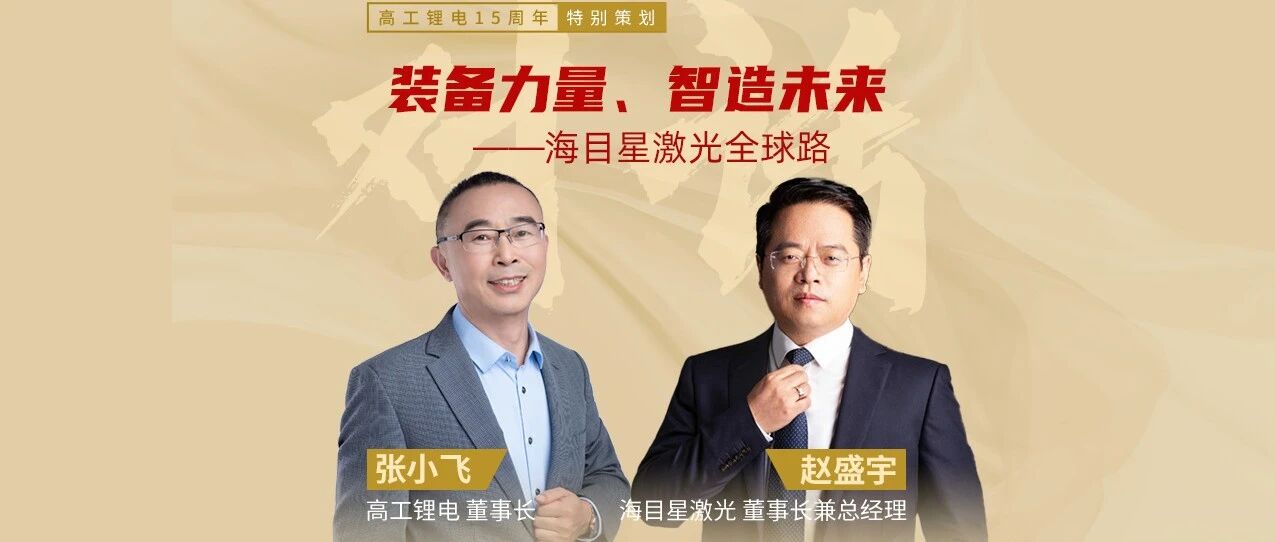
高工锂电15周年策划|飞哥对话赵盛宇:固态电池、AI与出海,海目星激光再启远征
高工锂电· 2025-09-30 09:18
Core Viewpoint - The article highlights the evolution of China's lithium battery industry, focusing on the advancements made by HaiMuxing Laser in laser technology and its role in the domestic equipment sector, emphasizing the importance of technological breakthroughs and system capabilities for global competitiveness [1][5]. Group 1: Development and Breakthroughs - HaiMuxing Laser has significantly improved laser cutting speeds from 28 meters per minute to 200 meters per minute, achieving nearly a tenfold increase in efficiency [1][21]. - The company began its journey in 2015 by collaborating with CATL, addressing critical process pain points and rapidly developing key technologies [7][10]. - The transition from relying on foreign equipment to achieving domestic breakthroughs is exemplified by HaiMuxing's success in exporting equipment to the U.S. by 2020 [9][11]. Group 2: Industry Trends and Future Directions - The next generation of solid-state batteries will require advancements in micro-nano technology and semiconductor applications to address interface stability [1][29]. - The industry is witnessing a shift towards larger cylindrical batteries, with HaiMuxing contributing to the development of the "no ear" technology, which enhances battery structure [28][30]. - The solid-state battery market is evolving, with ongoing research into semi-solid and quasi-solid batteries, indicating a gradual transition towards more advanced battery technologies [32][36]. Group 3: AI and Smart Manufacturing - HaiMuxing is actively integrating AI into its operations, with plans for large-scale implementation to enhance production efficiency and quality control [52][53]. - The application of AI is expected to evolve through three stages: initial process optimization, automated analysis and operation, and real-time problem-solving capabilities [53][54]. Group 4: Global Expansion Strategy - HaiMuxing's strategy for international expansion emphasizes building internal capabilities before pursuing large-scale orders abroad, ensuring a robust service system is in place [2][58]. - The company has established eight subsidiaries overseas, focusing on local talent development and compliance management to support its global operations [62][63]. Group 5: Core Competencies - The core competencies of HaiMuxing include technological innovation in key processes, a comprehensive service capability, and the ability to navigate complex international markets [66][68]. - The company aims to maintain a balance between technological expertise and operational quality, ensuring sustainable growth and customer trust [67][68].

星恒电源拿下小牛3GWh电摩锂电池订单
高工锂电· 2025-09-29 10:43
Core Insights - The article highlights the growth potential of the electric motorcycle (e-motorcycle) market driven by the increasing demand for lithium batteries, particularly with the introduction of the "Micro Knife" battery technology by Xingheng Power in collaboration with Niu Electric [2][5][9] Industry Overview - The e-motorcycle market is experiencing growth due to the relaxation of restrictions on electric motorcycles in various regions, leading to increased lithium battery demand. In the first half of this year, domestic e-motorcycle sales reached approximately 1.57 million units, with exports continuing to rise [2][8] - The new national standards for electric two-wheelers impose strict requirements on voltage and speed, which helps eliminate the chaos of battery modifications and ensures safety [8] Technological Developments - Xingheng Power's "Micro Knife" battery technology focuses on innovative structural design, integrating various high-energy materials to enhance safety, endurance, and performance. The battery offers multiple capacity options, including 30-60Ah and 90-100Ah configurations [5][6][7] - The "Micro Knife" battery has achieved breakthroughs in the production of single crystal manganese lithium materials, significantly improving material stability [6][7] Market Dynamics - The commuting segment dominates the e-motorcycle market, accounting for 90% of the total share. Lithium batteries are positioned as effective alternatives to traditional fuel vehicles [8] - The overseas e-motorcycle market is also expanding, with significant growth observed in regions like Vietnam, where new e-motorcycle sales surged by 99.2% year-on-year in the first half of this year [9]

换电市场打响两轮车“去铅酸”第一枪
高工锂电· 2025-09-29 10:43
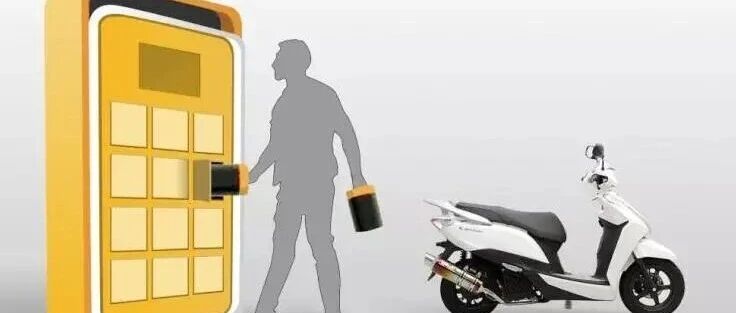
Core Viewpoint - The article discusses the rapid transition from lead-acid batteries to lithium batteries in the two-wheeler battery swapping market, driven by new regulations and consumer demand for better performance and efficiency [1][2]. Group 1: Market Dynamics - The implementation of the new national standard for electric bicycles has accelerated the shift towards lithium batteries, as they provide superior power experience and endurance compared to lead-acid batteries [1]. - The economic advantages of lithium batteries are highlighted, as they allow for a higher number of batteries to be stored in the same space compared to lead-acid batteries, which are heavier and require reinforced cabinets [2]. - The battery swapping market is characterized by strict regulations that mitigate risks associated with battery modifications, promoting the adoption of lithium batteries [2]. Group 2: Operational Efficiency - Lithium batteries support faster charging times (2-4 hours) compared to lead-acid batteries (6-8 hours), enhancing the turnover rate of battery swapping stations [2]. - The lifespan of lead-acid batteries (300-500 cycles) is significantly shorter, increasing operational costs for battery swapping operators [2]. - Battery swapping stations currently offer services for various voltage specifications (48V, 60V), catering to different user needs, particularly for delivery riders who require higher performance [2]. Group 3: Business Models - Two-wheeler battery swapping operators generate revenue through battery rental fees, swapping fees, and partnerships with vehicle manufacturers [4]. - The business model for consumer-facing services typically involves a deposit and monthly rental fee structure, while B2B services often charge franchise fees [4]. - Innovative pricing models, such as "pay for what you use," are being introduced to attract more users [5]. Group 4: Market Growth and Future Trends - The electric bicycle battery swapping market is projected to exceed 32.85 billion yuan by 2025, with a penetration rate expected to surpass 50% by 2026 [5]. - The transition to lithium batteries is anticipated to create a market worth hundreds of billions in the future [6]. - Sodium-ion batteries are emerging as an alternative, particularly in specific scenarios and regions, due to their fast charging and safety features [7][10].
2025千吨级放量,富锂锰基的“上探”与“下沉”
高工锂电· 2025-09-28 10:07
Core Viewpoint - The article discusses the significant advancements in the industrialization of lithium manganese-rich (LMR) materials, particularly focusing on their applications in high-voltage and low-cost battery technologies, highlighting the parallel development paths and the potential for solid-state battery systems. Group 1: Industrialization Progress - The industrialization of lithium manganese-rich materials has accelerated since 2025, with companies like Ningxia Hanyao achieving an annual shipment of nearly 3,000 tons, primarily for applications below 4.5V [3][13][14] - Ningxia Hanyao has established a production line capable of producing tens of thousands of tons of LMR materials, while other companies like Ningbo Fuli and Rongbai Technology are also ramping up production capabilities [14][15][16] Group 2: High Voltage Applications - The global power battery industry is targeting energy densities of 500Wh/kg and above, with solid-state battery systems seen as a key pathway to achieve this goal [6] - Companies like Funeng Technology are making strides in solid-state battery industrialization, with plans to deliver high nickel ternary and high silicon anode systems [6][20] - High-voltage LMR materials are considered ideal for high energy density applications, although challenges such as irreversible anion oxidation reactions and interface stability remain [6][17] Group 3: Low-Cost Pathways - LMR materials are being explored for cost-effective applications, particularly in entry-level electric vehicles, with General Motors and LG Energy Solution planning to mass-produce LMR batteries by 2028 [2][10] - The cost advantages of LMR materials are expected to make them competitive with lithium iron phosphate (LFP) batteries, especially in the entry-level market [11][12] Group 4: Collaborative Development - Collaborative development models are emerging as crucial for the industrialization of LMR materials, with companies like Ningxia Hanyao working closely with battery manufacturers and research institutions to address engineering challenges [18][20] - The next five years are seen as a critical period for the industrialization of LMR materials, with expectations for multiple engineering samples to be launched by late 2026 or early 2027 [19][20]



多地购车补贴戛然而止
高工锂电· 2025-09-28 10:07
Core Viewpoint - The recent adjustments to local automotive consumption subsidy policies in China are expected to impact the automotive sales in the fourth quarter, raising concerns about the demand for upstream supply chains, particularly lithium batteries [3][6]. Group 1: Policy Adjustments - Multiple provinces, including Jiangsu, Guangdong, Hunan, Anhui, and Henan, have announced the suspension or adjustment of local "trade-in" subsidy policies due to rapid consumption of budget funds [4][5]. - Jiangsu province has specifically suspended the "automobile trade-in" subsidy and shifted the "scrap update" subsidy to a quota management model starting from September 28, 2025 [3][5]. Group 2: Market Impact - The adjustments to local subsidies are likely to create short-term fluctuations in automotive sales, similar to the significant drop in sales observed after a major subsidy reduction in 2019 [6]. - The concentration of subsidy adjustments may pressure automotive sales in the fourth quarter, as consumers might rush to purchase vehicles before the subsidy expiration, potentially inflating sales data temporarily [6][7]. Group 3: Supply Chain Effects - The uncertainty in sales expectations may lead automotive manufacturers to adjust their production plans, which will directly affect their procurement orders for power batteries [7]. - A reduction in demand for power batteries will subsequently decrease the procurement of key upstream materials, particularly lithium carbonate, which has already seen a price decline since August [8]. Group 4: Market Transition - The widespread adjustment of local subsidies signifies a shift in the Chinese electric vehicle market from being driven by policies and market incentives to a focus on market competition and product strength [8].
硫化物掺碘、氧化物掺锂,固态电解质“升级”进行时
高工锂电· 2025-09-27 10:51
Core Viewpoint - The article highlights the advancements in solid-state battery technology, particularly focusing on the doping modification of existing solid electrolytes to enhance overall performance, which is crucial for the commercialization of solid-state batteries [1][2]. Group 1: Sulfide Route - The introduction of iodine in sulfide solid electrolytes is becoming a significant direction, improving compatibility with lithium metal anodes and suppressing lithium dendrite growth [3][6]. - The ionic conductivity of iodine-doped sulfide electrolytes has reached 10 mS/cm, operating under pressures below 5 MPa, meeting key application demands [5]. - The supply chain risk is highlighted, as each GWh of solid-state battery requires approximately 90 tons of iodine, contrasting with the 10 tons needed for 1 GW of perovskite solar panels [6][7]. Group 2: Oxide Route - The technology iteration in oxide solid electrolytes is shifting from LATP (Lithium Aluminum Titanium Phosphate) to LLZO (Lithium Lanthanum Zirconium Oxide), with LLZO showing superior performance metrics [8][9]. - LATP is favored for its lower cost, while LLZO offers higher ionic conductivity, a larger electrochemical window, and better chemical stability [9][10]. - The supply chain considerations for LLZO are complex, as it relies heavily on rare earth materials, with China dominating the supply of lanthanum but being highly dependent on imports for zirconium [10][11]. Group 3: Mass Production Challenges - The mass production of LLZO faces significant challenges, particularly in achieving "sintering densification" due to lithium volatility during high-temperature processing [15][16]. - Innovative approaches like ultra-fast sintering (UFS) and pressure-assisted methods are being explored to enhance densification while minimizing lithium loss [17][18]. - Companies are also investigating cost-effective methods, such as direct wet coating of electrolyte slurries on electrodes, to streamline production processes [20]. Group 4: Industry Progress - Companies like Dingsheng Technology have established pilot production lines for sulfide solid electrolytes, indicating progress in scalable supply capabilities [4]. - Domestic firms are actively pursuing innovations to address the challenges of solid-state battery commercialization, paving the way for more robust industrial applications [21].
GGII:1-8月国内锂电池产业链总投资4000亿元
高工锂电· 2025-09-27 10:51
Core Viewpoint - The Chinese lithium battery industry is accelerating towards high-quality development, with significant investments and project expansions in various segments, particularly in lithium batteries and solid-state batteries, indicating a strategic shift towards advanced production capabilities and market positioning [4][7][10]. Investment and Project Expansion - From January to August 2025, the Chinese lithium battery industry chain signed and initiated 183 new projects with a total planned investment of 400 billion yuan, showcasing a trend of "accelerated high-end expansion and clearance of low-end capacity" [4][7]. - The expansion projects include 54 for lithium batteries and 23 for solid-state batteries, representing 30% and 13% of the total planned expansion projects, respectively [4]. - Major investments are led by top companies like CATL, BYD, and Enjie, focusing on traditional segments, while emerging sectors like solid-state and sodium batteries attract new capital and startups [7][10]. Regional Distribution - The expansion projects are primarily concentrated in East and Central China, with significant activities in the Yangtze River Delta and Hubei-Hunan regions, leveraging local resources and manufacturing capabilities [10]. - Internationally, projects in Malaysia, Indonesia, and Hungary are gaining traction, driven by favorable geopolitical conditions and local demand for electric vehicle components [10][11]. Specific Investment Highlights - The planned investment in the lithium battery segment exceeds 40% of the total, with solid-state batteries emerging as a new growth area with a planned investment of 35 billion yuan [7][8]. - Notable projects include a 331 billion yuan investment in Guizhou for phosphate iron and lithium production, and a 243 billion yuan investment by Qingshan Group in another Guizhou project [8][10]. - The negative electrode materials sector is also seeing significant investment, with 28.6 billion yuan planned, focusing on technology upgrades and overseas expansion [8]. Emerging Technologies and Trends - Solid-state batteries are becoming the most popular investment track, driven by technological advancements and accelerated mass production [7][8]. - The industry is witnessing a shift towards more sophisticated materials and production techniques, with companies like Dongchi New Energy planning a 5.2 billion yuan sodium battery project [7][10].