高工锂电

Search documents
第398批公告:中创新航配套小鹏首款混动MVP
高工锂电· 2025-08-22 08:43
Core Viewpoint - The article discusses the recent announcements of new electric vehicle (EV) models by various automakers in anticipation of the peak sales season in September and October, highlighting the competitive landscape and advancements in battery technology [2][3][4]. Group 1: New Vehicle Announcements - In August, the Ministry of Industry and Information Technology released the 398th batch of vehicle production announcements, featuring 128 new models, including popular ones like the AITO M7, Xpeng X9, and Geely's Zeekr 9 [2]. - Among the new models, 67 are Battery Electric Vehicles (BEV) and 61 are Plug-in Hybrid Electric Vehicles (PHEV) or Hybrid Electric Vehicles (HEV), indicating a narrowing gap between pure electric and hybrid models [2]. - The majority of new models (104) are equipped with Lithium Iron Phosphate (LFP) batteries, while 24 models use ternary batteries, showing LFP's dominance in the market [2]. Group 2: Battery Suppliers and Technologies - CATL leads the announcement with 50 new models, providing 33 LFP and 17 ternary battery models, including support for mid-to-high-end electric SUVs like the Zeekr 7X/9X and AITO M7 [2]. - BYD follows with 17 new models, including the high-end electric supercar, the Yangwang U9, which showcases LFP battery performance breakthroughs [2]. - China Innovation Aviation ranks third with 11 new models, including the Xpeng X9, which is the company's first hybrid model with a pure electric range of 450 km and a total range of 1500 km [3][4]. Group 3: Emerging Battery Technologies - The MG4 from SAIC is equipped with a new manganese-based semi-solid-state battery, which has reduced electrolyte content from 5%-15% to 5%, potentially accelerating the commercialization of this technology [4]. - The MG4 has already become the best-selling Chinese model in Europe, and its domestic price is expected to be half of its European counterpart, enhancing its market competitiveness [4].



江特电机复产,锂价再现剧烈震荡
高工锂电· 2025-08-21 10:27
Core Viewpoint - The lithium carbonate futures prices in China experienced significant volatility this week, driven by expectations of increased lithium supply following the resumption of production by Jiangxi Special Electric Motor Co., Ltd.'s subsidiary Yichun Silver Lithium [2][4]. Group 1: Market Reactions - On August 20, lithium carbonate futures contracts fell sharply, with the main contract price dropping to 80,980 RMB per ton, a decrease of 8% [2]. - Just two days prior, on August 18, the contract price had reached a one-year high of 90,100 RMB per ton [3]. Group 2: Supply Expectations - The market's rapid response was influenced by a shift in supply expectations, particularly after the announcement of Jiangxi Special Electric Motor's resumption of production and the confirmation of Qinghai Salt Lake Industry Co., Ltd.'s lithium extraction project expected to begin trial production in September [5]. - Yichun Silver Lithium is a key part of Jiangxi Special Electric Motor's integrated supply chain, primarily engaged in lithium ore processing, with an expected initial monthly output of approximately 300 tons, gradually increasing to a maximum of 1,000 tons [5]. Group 3: Domestic and International Supply - The resumption of production by individual companies, while limited in its overall impact on supply-demand dynamics, has been interpreted by the market as a stabilization of domestic lithium resource supply [5]. - Data from Chinese customs indicated that lithium spodumene imports reached 750,000 tons in July 2025, a month-on-month increase of over 30%, marking a historical high for monthly imports [6]. Group 4: International Mining Activity - Significant increases in imports from Australia, Nigeria, and South Africa suggest ample overseas mineral supply [7]. - Major overseas mining companies have also issued production guidance indicating increases, with Australia's Greenbushes project expected to see a 3% to 11% increase in production for the 2026 fiscal year, and Pilbara's project expected to increase by 8% to 15% [7]. Group 5: Market Outlook - Overall, the lithium carbonate market is expected to remain in a capacity release cycle, with both ore and salt lake supplies anticipated to stay high [8]. - Demand remains robust, with an increase in orders for lithium iron phosphate batteries and a rise in production schedules for ternary batteries due to growing downstream demand [8]. - However, the pressure from lithium carbonate inventory will influence the supply-demand dynamics alongside the sustainability of actual demand recovery [9].

每日速递 | 奇瑞新建百亿电池项目
高工锂电· 2025-08-21 10:27
Battery - Anhui Suzhou City and Chery Group signed a cooperation agreement to build a lithium-ion battery production base with an annual output of 20GWh and a total investment exceeding 10 billion yuan, covering the entire production chain from cell to PACK [2] - Eight lithium battery companies, including CATL and BYD, were selected for the 2025 Fortune China Technology 50 list, highlighting their multidimensional leadership in the industry [3] - BYD's chief scientist and CATL's chief scientist were both nominated as candidates for the Chinese Academy of Engineering, indicating their significant contributions to the field [4] - A tripartite strategic cooperation agreement was signed among three companies to develop a green low-carbon industrial ecosystem covering the entire lifecycle of batteries, from R&D to recycling [6] - A new battery recycling project in Meizhou, Guangdong, aims to recycle 40,000 tons of lithium battery waste annually, marking a significant step towards sustainable practices in the industry [7] Materials - Longpan Technology plans to raise up to 2 billion yuan through a private placement to fund high-performance phosphate-based cathode material projects and supplement working capital [9] Overseas - Chile's mining ministry is ready to sign a contract for the Altoandinos lithium project, which will be developed in collaboration with global mining giant Rio Tinto [11] - The South Korean government announced a support plan totaling 45.8 trillion won (approximately 234.95 billion yuan) to enhance supply chain resilience, focusing on key industries such as batteries and semiconductors [12] - SQM, a leading global lithium producer, raised its annual sales target despite a 28% drop in core profits in Q2, anticipating a rebound in prices and a 17% annual increase in global lithium demand [15] - Ford and SK On's joint venture BlueOval SK has commenced production at its first battery plant in Kentucky, which will supply batteries for the electric Ford F-150 Lightning [17] - Sileck signed a memorandum of understanding with South Korea's Dongwon Systems to establish a joint venture for battery shell business collaboration in the U.S. and Europe [18]


超100万吨退役电池“压境”,锂电回收拐点要来了?
高工锂电· 2025-08-21 10:27
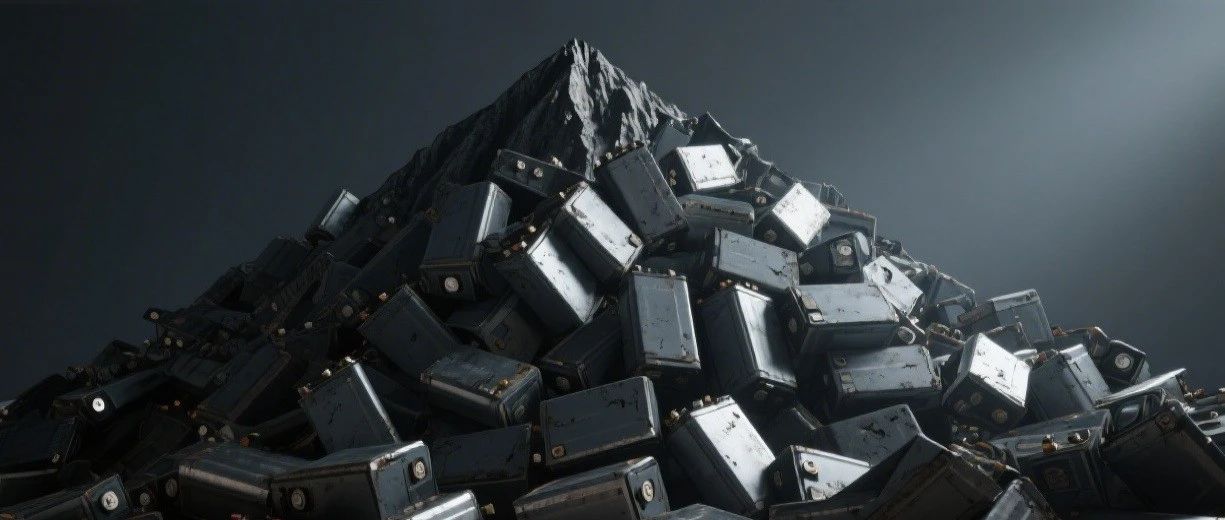
Core Viewpoint - The retirement of electric vehicle batteries is approaching a critical point, with annual retirement volumes expected to exceed one million tons by 2025, and potentially reach 3.5 million tons by 2030-2032, creating a market worth over 100 billion yuan [3][20]. Group 1: Industry Trends - The battery recycling industry is transitioning from small workshops to large-scale enterprises, with leading companies like Tesla, BYD, and CATL establishing extensive recycling networks that are beginning to show results [4][6]. - The number of battery recycling companies in China is around 190,000, but only 156 are recognized as compliant with industry standards, indicating a significant disparity in operational quality [5]. - The competitive landscape is shifting as large companies leverage their scale and technology to outperform smaller players, which traditionally relied on cost-cutting measures [7][11]. Group 2: Economic and Technical Developments - Leading companies have achieved cost parity with small workshops, allowing them to compete effectively while maintaining higher environmental standards [8]. - Advanced recycling technologies are being adopted, combining various methods to enhance efficiency and reduce costs, which diminishes the competitive edge of smaller operations [9]. - The establishment of regional processing centers and the integration of production and recycling processes are optimizing resource allocation and reducing operational costs [10][19]. Group 3: Regulatory and Market Changes - New regulations are tightening the operational framework for battery recycling, requiring companies to have environmental assessments and digital traceability, which further marginalizes non-compliant small workshops [11][12]. - The acceptance of recycled materials is increasing, driven by regulatory changes in the EU and China, which are pushing for higher standards in battery recycling [16]. - The formation of industry clusters is accelerating, with major players investing in local recycling facilities to create efficient, localized supply chains [17][18]. Group 4: Future Outlook - The impending wave of battery retirements is expected to catalyze a significant shift in the industry, favoring large-scale, compliant operations over smaller, less regulated ones [20]. - The collaboration between large companies and smaller workshops may evolve, allowing the latter to integrate into a more standardized ecosystem while retaining some operational flexibility [15].

高压实铁锂、硅碳负极龙头“扩产”提速
高工锂电· 2025-08-21 10:27
Core Viewpoint - The recent expansion plans by leading companies in China's lithium battery materials sector indicate a strategic shift towards high-end materials production, particularly high-pressure solid lithium iron phosphate cathodes and silicon-carbon anodes, rather than merely increasing output [3][4][11]. Group 1: Expansion Plans - Major companies are intensifying their capacity expansion efforts, focusing on high-performance lithium iron phosphate projects, with Longpan Technology planning to raise up to 2 billion yuan for projects in Shandong and Hubei, adding a total annual capacity of 195,000 tons [4][5]. - Hunan Youneng initiated a fundraising plan of 4.8 billion yuan to enhance its supply capabilities for new products like ultra-high energy density lithium iron phosphate [6]. - Pengbo New Materials is set to begin trial production of its 100,000-ton high-pressure solid lithium iron phosphate project in September, aiming to meet the demand for fast-charging batteries [6]. Group 2: Market Dynamics - The lithium iron phosphate industry is entering a new expansion cycle driven by growing demand in the energy storage market, with a projected shipment volume of 3.5 million tons for the year, reflecting a 68% year-on-year increase [7]. - High capacity utilization rates are concentrated among leading firms, with Hunan Youneng, Fulim Precision, and Defang Nano exceeding 90%, necessitating further expansion to increase shipments [7]. Group 3: Technological Advancements - The competition in the anode materials sector is intensifying, with Shengquan Group planning to issue convertible bonds to fund a project aimed at producing 10,000 tons of silicon-carbon anodes and 15,000 tons of porous carbon annually [8]. - Other companies, such as Yichang Yinsilicon Technology and Hubei Jiangxin, are also accelerating their silicon-carbon anode production capabilities, with projects set to begin trial production soon [9]. Group 4: Future Outlook - The market anticipates that 2026 to 2027 will mark a turning point for the large-scale application of silicon-carbon anodes in high-end electric vehicles, with demand potentially exceeding 100,000 tons by 2030 [10].




每日速递 | 蔚蓝锂芯:上半年锂电池出货量约3.1亿颗
高工锂电· 2025-08-20 10:46
Group 1 - The core viewpoint of the article highlights the significant developments in the lithium battery industry, including production increases and strategic partnerships among key players [2][3][4][5][6][7][9][11][13]. Group 2 - Blue Lithium's battery shipment volume reached approximately 310 million units in the first half of the year, with a target of over 50% growth for the full year [2]. - CATL established a new subsidiary in Xiamen with a registered capital of 2 billion yuan, focusing on battery manufacturing and sales [3]. - Tailan New Energy signed a contract for a solid-state battery production base in Hubei, marking a significant expansion of its manufacturing network [4]. - BYD launched a range of lithium batteries for electric two and three-wheelers, with prices ranging from 1,298 yuan to 6,998 yuan [6]. - A new project in Kashgar aims to produce 60 million cylindrical power batteries annually, with a total investment of 15 million yuan [7]. - Gree's partnership with China Huadian Group focuses on building low-carbon and zero-carbon industrial parks, promoting a "green + circular" cooperation model [9]. - A project in Hunan for producing 10,000 tons of porous carbon for silicon-carbon anode materials is under environmental assessment, with a total investment of 10 million yuan [11]. - Tianyuan Co. announced that its 900,000 tons/year phosphate mining project has entered trial production, which is expected to enhance future operational performance [13].


官宣:2025高工锂电年会暨15周年庆典议程发布
高工锂电· 2025-08-20 10:46
Core Viewpoints - The article highlights the significant growth and transformation of China's power battery industry over the past 15 years, marking its evolution from a nascent stage to a global leader in manufacturing [2][3][4] - It emphasizes the upcoming challenges and opportunities as the industry enters a new 15-year phase starting in 2025, focusing on electric transportation, energy system transformation, and the emergence of new applications and business models [2][3] Event Overview - The 2025 High-Performance Lithium Battery Annual Conference will celebrate the 15th anniversary of the industry and will take place from November 18-20, 2025, at the JW Marriott Hotel in Shenzhen [2][5] - The event will feature a comprehensive agenda with 12 specialized sessions covering various aspects of the lithium battery industry, including innovation, supply chain strategies, and new market opportunities [10][11] Key Highlights - The conference will gather over 1,000 companies from the lithium battery supply chain and more than 1,500 industry leaders, showcasing the significance of the event [10] - The event will include the prestigious High-Performance Golden Ball Awards, recognized for its credibility and authority in the industry [10] Specialized Sessions - The agenda includes sessions on topics such as comprehensive electrification, battery innovation, AI empowerment in battery technology, and zero-carbon factories [9][12][15][18] - Specific discussions will focus on the competitive landscape of battery technologies, including advancements in LFP systems, solid-state batteries, and the integration of AI in battery design and manufacturing [17][19] Future Outlook - The article anticipates that the next 15 years will be marked by the need for Chinese lithium battery companies to integrate into the global market and develop multinational operations [3][4] - It calls for a collective effort to address the challenges and seize the opportunities presented by the evolving energy landscape and technological advancements [3][4]
挑战100万销量,吉利、零跑如何化解“电池焦虑”?
高工锂电· 2025-08-20 10:46
Core Viewpoint - The Chinese electric vehicle (EV) market has seen significant growth in the first half of 2025, with Geely Automotive becoming the second-largest in new energy sales and Leap Motor achieving the highest sales among new forces. Both companies have surpassed one million units in cumulative sales, indicating a demand increase of approximately 100 GWh for battery supply [2][3]. Group 1: Market Dynamics - The growth in the EV market is largely driven by government policies promoting vehicle trade-ins, alongside a trend of "consumption downgrade," where lower-priced models are becoming the main sales drivers [2]. - Geely's new energy brand "Galaxy" has achieved over one million cumulative sales within 24 months, with a remarkable 232% year-on-year growth in the first half of 2025, selling 548,000 units [2]. - Leap Motor delivered over 220,000 units in the first half of 2025, surpassing competitors like Ideal and Xiaopeng, and has raised its delivery guidance for 2025 to between 580,000 and 650,000 units [2]. Group 2: Battery Supply Challenges - Geely is facing a battery supply shortage due to its rapid expansion, prompting the company to seek additional capacity from external suppliers [3]. - The establishment of the independent "Jiyao Tongxing" battery group aims to consolidate Geely's battery operations and enhance efficiency, with a target of achieving 70 GWh capacity by 2027 [3]. - Geely plans to adopt a "self-supply + external procurement" strategy, with an expected increase in self-supplied battery cells to 30% over the next two years [3]. Group 3: Leap Motor's Strategy - Leap Motor achieved a record gross margin of 14.1% in the first half of 2025, attributed to economies of scale and cost control [4]. - The company's strategy focuses on "full self-research" and decentralized procurement, allowing it to save costs and enhance bargaining power by sourcing battery cells from multiple suppliers [5]. - Leap Motor has begun supplying self-developed battery packs to over five new energy commercial vehicle clients, indicating a shift towards monetizing its battery technology [5]. Group 4: Opportunities for Battery Suppliers - The anticipated demand for 100 GWh of batteries presents both opportunities and challenges for battery suppliers, with CATL remaining a preferred choice but not the only option [5]. - Suppliers need to demonstrate stable performance, compatibility with vehicle models, and sufficient capacity to meet delivery timelines to secure orders [6].


轻型车电池卡位电商渠道
高工锂电· 2025-08-20 10:46
Core Viewpoint - The article discusses the transformation in the distribution channels of lightweight power lithium batteries for two and three-wheeled vehicles in China, driven by the trend of replacing lead batteries with lithium batteries. It highlights the collaboration between BYD's Fudi Battery and JD Auto, marking a significant shift towards direct-to-consumer sales through e-commerce platforms [4][5][6]. Group 1: E-commerce Strategy - BYD's partnership with JD Auto allows consumers to purchase original lithium batteries for two and three-wheeled electric vehicles directly through the JD app, with free installation services [4]. - The initial product lineup includes eight models ranging from 48V24Ah to 76V96Ah, priced between 1,298 yuan and 6,998 yuan [4]. - Other leading battery companies like Xineng An, Yiwei Lithium Energy, and Xingheng Power have also established official stores on e-commerce platforms, indicating a collective shift away from traditional vehicle manufacturers and offline distributors [4][6]. Group 2: Market Dynamics - The traditional sales model for lightweight power batteries relied heavily on vehicle manufacturers and offline repair networks. BYD faces challenges in establishing retail market touchpoints and the high costs of building sales channels from scratch [6]. - E-commerce provides an efficient solution to bypass heavy asset offline layouts and directly reach consumers, especially with the increasing market demand driven by the "lead-to-lithium" transition and new national standards [6][7]. - The collaboration with JD leverages its digital supply chain and nationwide logistics capabilities, aiming for an integrated service model of "online ordering and offline fulfillment" [6]. Group 3: After-sales and Data Utilization - BYD promises a five-year warranty and offers a smart app for users to monitor battery status, linking sales with installation, warranty, and recycling services, which is crucial for establishing stable cash flow and exploring the "Battery as a Service" (BaaS) model [7]. - Direct sales through e-commerce not only enhance after-sales service and recycling rates but also allow manufacturers to collect valuable data on battery purchases, installations, and warranties, which is essential for product iteration and service expansion [7]. Group 4: Technological Advancements - The batteries launched by BYD are based on the "full-tab large cylindrical" cell technology, which was previously showcased at the CIBF exhibition [8][10]. - These cells can achieve high charge and discharge rates and improve space utilization, thermal efficiency, and scalability, potentially disrupting the current market dynamics for lightweight power and cylindrical batteries [11]. - The entry of BYD into the cylindrical battery market intensifies competition, particularly against established players like Yiwei Lithium Energy, which has a competitive edge in the large cylindrical battery sector [12]. Group 5: Brand and Market Penetration - Presenting industrial products like batteries directly to consumers is an effective branding strategy, supported by precise traffic targeting on e-commerce platforms [13]. - E-commerce platforms provide genuine product guarantees and after-sales commitments, countering the long-standing advantages of lead-acid batteries in terms of low price and recycling networks [14]. - The high penetration rate of two-wheeled vehicles in daily life makes them an important scene for building brand recognition, with the collaboration between battery manufacturers and e-commerce platforms addressing the "last mile" installation challenge [15][16].
单壁碳纳米管“扩产潮”
高工锂电· 2025-08-19 11:33
Core Viewpoint - Daoshi Technology is shifting its fundraising focus from a planned project for ternary precursor production to a new project for single-walled carbon nanotubes, indicating a strategic move to capture market share in this high-demand sector [3][5]. Fundraising and Project Details - The company has approved a change in the use of 300 million yuan of unallocated funds from the original plan for a 100,000-ton ternary precursor project to a new project for producing 120 tons of single-walled carbon nanotubes [3][4]. - The new project, managed by Jiangmen Haoxin New Energy Co., has a total investment of 600 million yuan and an estimated construction period of three years [4]. Market Dynamics and Demand - Single-walled carbon nanotubes (SWCNTs) are characterized by superior performance and higher technical barriers compared to multi-walled carbon nanotubes, with current supply unable to meet demand [5][6]. - The global market for SWCNTs is dominated by OCSiAl, which holds over 90% market share, while domestic players like Tianai Technology are also expanding production capabilities [5][9]. - The demand for SWCNTs is expected to rise significantly, particularly in the lithium battery sector, where their use as conductive agents is projected to grow from 18.4% in 2024 to over 20% in 2025 [5]. Production Capacity and Future Outlook - Daoshi Technology aims to achieve an annual production capacity of 50 tons by Q1 2026, with plans to reach 120 tons within the following year [5]. - Tianai Technology is also ramping up production, with a 450-ton project expected to begin operations in Q4 of this year [8][9]. - The overall market for SWCNTs is projected to grow from $1.37 billion in 2024 to $1.55 billion in 2025, reaching $3.63 billion by 2032, with a compound annual growth rate of 13.0% [18]. Technological Advancements - Daoshi Technology has reportedly overcome challenges in the low-cost, large-scale production of SWCNTs, positioning itself to meet the high-end market demands [5]. - Tianai Technology has developed continuous production techniques for SWCNTs, enabling it to supply high-quality products for various applications, including lithium-silicon batteries [9][12]. Applications and Industry Trends - The increasing demand for high-capacity and fast-charging lithium batteries is driving the need for SWCNTs, with projections indicating significant market growth in the cylindrical battery sector [12][13]. - The potential for SWCNTs extends beyond lithium batteries, with ongoing research into applications in lithium-sulfur and sodium-ion batteries, indicating a broadening market scope [15][18].