高工锂电

Search documents
天猫入局共享充电桩,瞄准校园两轮车及乘用车需求
高工锂电· 2025-08-25 10:34
Core Viewpoint - Tmall is expanding into the shared charging pile market, starting with a pilot program called "Meow Charging" at select universities, focusing on charging needs for two-wheeled vehicles and electric cars [2][3]. Group 1: Market Entry and Strategy - Tmall's entry into the shared charging pile market is a strategic move following its involvement in the food delivery industry, aiming to meet the increasing charging demands of delivery riders and students on campus [2]. - The pilot program targets two-wheeled vehicle charging, with plans to potentially expand to other scenarios in the future [2]. - The initiative addresses the urgent need for charging infrastructure in campuses, where current charging facilities are limited and often unsafe [2][3]. Group 2: Market Demand and Statistics - There are approximately 3,891.26 million students across 3,167 higher education institutions in China, with over 20 million two-wheeled vehicles but a charging pile coverage rate of less than 35%, resulting in a daily charging gap exceeding 5 million times [3]. - The demand for standardized and safe charging solutions in campuses is expected to facilitate the orderly installation of charging piles [3]. Group 3: Future Development and Considerations - The deployment of charging piles for passenger vehicles in campuses should be gradual, focusing on high-traffic areas first, such as classrooms and office buildings, to meet emergency charging needs [4]. - There is potential for charging piles to be utilized during off-peak times, such as nights and weekends, to optimize resource use [4].

每日速递|保时捷取消Cellforce子公司电池生产计划
高工锂电· 2025-08-25 10:34
Battery - Ganfeng Lithium has established a new company, Hubei Fengneng New Energy Technology Co., Ltd., which is fully owned by Ganfeng Lithium and focuses on online energy monitoring technology, energy recovery systems, and wind power technology services [2] - EVE Energy has successfully achieved mass production of small cylindrical batteries at its Malaysian facility, with plans for a second phase of energy storage production expected to be completed by the end of this year and to start mass production in early next year [4] - A 3GWh solid-state battery project has been signed in Guizhou Province, indicating ongoing investment in solid-state battery technology [5] Materials - Yongxing Materials is actively expanding its production capacity, with a current lithium battery production capacity of 30,000 tons per year. A 10,000-ton lithium extraction project is underway and is expected to be completed on schedule [8] Equipment - Huazi Technology has reported a more than 50% year-on-year increase in new orders, focusing on core business and expanding into international markets while capturing market share in the new round of lithium battery equipment upgrades [9] - Porsche AG has canceled the production plans for its high-performance battery subsidiary, Cellforce, due to a slowdown in electric vehicle demand and changing market conditions in China and the U.S. Cellforce will transition to an independent R&D subsidiary, with some positions potentially moving to another battery subsidiary, PowerCo [10]

15亿电解液项目“停摆”背后
高工锂电· 2025-08-25 10:34
Core Viewpoint - Jiangsu Guotai has officially halted its lithium-ion battery electrolyte project, which was planned for four years with an investment of 1.538 billion yuan and an expected annual production of 400,000 tons, reflecting the challenges and transformation within the lithium battery electrolyte industry [2] Group 1: Project Background and Expectations - In 2021, during the lithium battery industry's "golden growth period," Jiangsu Guotai announced the project, expecting an annual sales revenue of 15.08 billion yuan and a net profit of approximately 790 million yuan, with a payback period of only 5.17 years [2] - The project was planned with a clear capacity release schedule, aiming for a 45% utilization rate in the first year, 75% in the second year, 90% in the third year, and full capacity from the fourth year [2] Group 2: Challenges Faced - The project faced significant delays, remaining at the land coordination stage without formal commencement, primarily due to issues with land acquisition [3] - The industry environment has drastically changed, with an oversupply in the lithium battery electrolyte sector due to rapid capacity expansion outpacing demand from the downstream electric vehicle and energy storage markets [4] - Price declines have been severe, with electrolyte prices dropping over 80% compared to 2021 highs, and key raw material prices falling to about 10% of their previous levels [4] Group 3: Financial Reassessment and Decision to Halt - Due to falling prices and fluctuating costs, the profitability of the project was significantly compromised, leading Jiangsu Guotai to reassess and find that the expected net profit of 790 million yuan was nearly unattainable [5] - The decision to terminate the project was made to optimize resource allocation and enhance capital efficiency, reflecting a broader trend in the industry where companies are halting projects to protect shareholder interests [6] Group 4: Industry Trends and Future Outlook - The electrolyte industry is experiencing a "Matthew effect," where smaller firms are being squeezed out, leading to increased concentration among leading companies [6] - By mid-2025, the top five companies in the electrolyte market are expected to hold over 70% market share, with one leading company exceeding 36% [6] - Despite predictions of a slight price recovery for certain materials, the overall industry is likely to continue operating at low margins, with "micro-profit operations" becoming the norm [6] Group 5: New Growth Opportunities - Leading companies are exploring new growth avenues, including international market expansion and the development of solid-state batteries, particularly focusing on sulfide solid electrolytes [7] - Companies like Tianqi Materials and New Zobang are advancing in the production of solid-state electrolytes, with plans for large-scale production by 2025 [7]


超充电池加速装车,超充车桩供需错配缩短
高工锂电· 2025-08-24 11:06
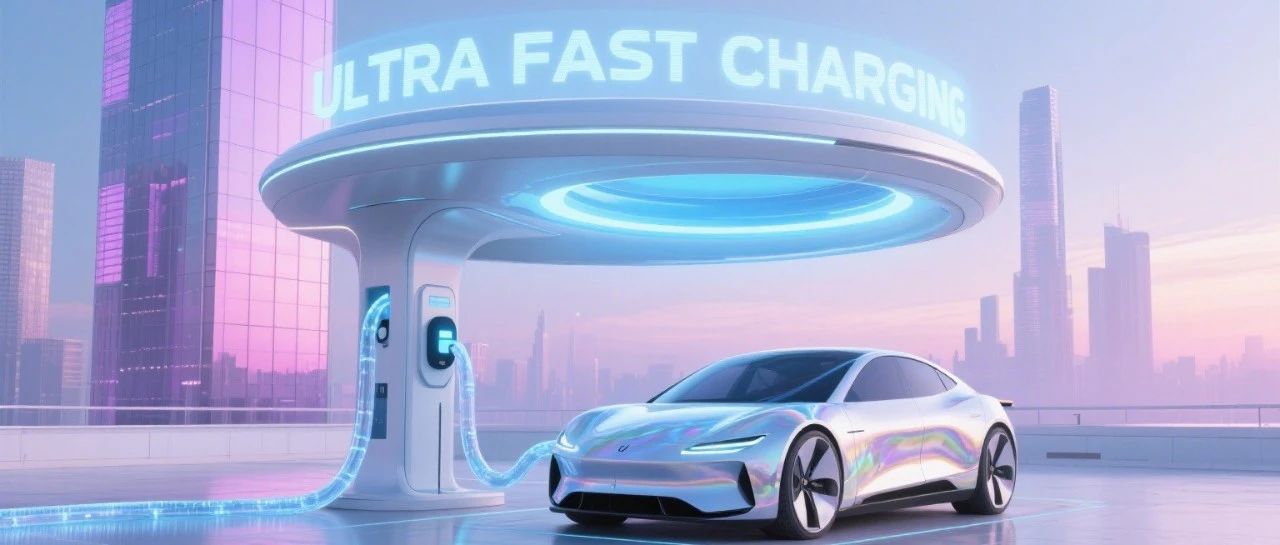
Core Viewpoint - The construction of ultra-fast charging stations is accelerating in major cities across China, with a significant increase in the number of charging piles, but there remains a supply-demand gap for 800V high-voltage platform vehicles [2][3]. Group 1: Current Construction Status - In the first half of the year, the construction progress of ultra-fast charging stations in key cities like Beijing, Shenzhen, and Chongqing has surpassed 50%, with a national increase in charging piles exceeding 25% [2]. - As of June, Shenzhen has built 1,057 ultra-fast charging stations, Chongqing has connected 1,468 ultra-fast charging stations and 2,270 charging piles, and Beijing has completed 517 ultra-fast charging stations [5]. Group 2: Market Dynamics - There is a supply-demand gap between the rapidly growing number of ultra-fast charging stations and the limited availability of 800V high-voltage platform vehicles, which are primarily targeted at mid-to-high-end models priced above 200,000 yuan [3]. - The penetration rate of vehicles supporting 800V high-voltage fast charging is approximately 16%, indicating a low adoption rate [2]. Group 3: Cost and Investment Challenges - The high construction costs of ultra-fast charging stations, ranging from 1.5 million to 5 million yuan per station, and a payback period of 6-8 years, limit their promotion [5]. - Local governments are encouraging the construction of ultra-fast charging stations through policy guidance, subsidies, and long-term land leasing [5]. Group 4: Industry Collaboration - Automakers are collaborating to build ultra-fast charging stations, which alleviates financial pressure and technical adaptation challenges for individual entities [9]. - Companies like BYD, Geely, and Changan are pushing for 800V models to penetrate the 150,000 to 200,000 yuan price range [8]. Group 5: Battery Technology Advancements - Battery companies are crucial in promoting ultra-fast charging technology, with major players like CATL and others developing customized ultra-fast charging battery packs [3][12]. - The core goal of ultra-fast charging technology is to achieve a refueling experience comparable to gasoline vehicles, with a target of charging for 10 minutes to gain a range of 400 kilometers [10][11]. Group 6: Future Outlook - In the long term, the speed of ultra-fast charging battery deployment is expected to catch up with the construction speed of charging stations, reducing the technological gap between vehicles and charging infrastructure [4]. - The combination of mature technology, decreasing costs, and automakers' commitment to scale will drive further growth in ultra-fast charging battery adoption [13].
大容量电芯正推动湿法隔膜占比提升
高工锂电· 2025-08-24 11:06
Core Viewpoint - The article discusses the growth and trends in the Chinese lithium battery separator market, highlighting significant increases in shipment volumes and the evolving applications of wet and dry separators. Group 1: Market Overview and Trends - In the first half of 2025, China's separator material shipment volume is projected to reach 13.6 billion square meters, representing a year-on-year growth of 49% [4] - Wet separators are expected to account for 11.2 billion square meters of this volume, with a year-on-year increase of 58%, capturing 82% of the market share [4] - Dry separators are anticipated to ship 2.4 billion square meters, showing an 18% year-on-year growth [4] - The total shipment volume for lithium battery separators in China is expected to exceed 29 billion square meters in 2025, with a growth rate of over 30% [4] Group 2: Product Applications and Innovations - The increase in shipments of large-capacity energy storage cells, such as 314Ah, is driving the application of wet separators [7] - New generation large-capacity energy storage battery products (500+/600+Ah) are accelerating the thickness reduction of wet separators from 9μm to 7μm [7] - High puncture strength 5μm products are now being widely used, with monthly shipments exceeding 100 million square meters [7] - The second generation of high puncture strength 5μm separators has been sent to battery customers for testing, achieving a puncture strength close to 500gf [7] Group 3: Pricing and Cost Trends - The price of dry separator base films has remained at cost levels for nearly two years, leading to significant losses for many dry separator companies, with potential price increases expected in the second half of the year [7] - In Q2, the price of wet separator base films saw a decline of over 10% compared to the previous quarter, with expectations for prices to stabilize at current levels for the remainder of the year [7] - Overall, separator prices are projected to show a downward trend throughout the year [7] Group 4: Capacity and Industry Dynamics - The industry's enthusiasm for capacity expansion is decreasing, with expectations for new capacity additions to remain between 4-6 billion square meters per year over the next 2-3 years [7] - The slowdown in capacity expansion, combined with the rapid growth in downstream lithium battery demand, is expected to increase the industry's capacity utilization rate by 3-6 percentage points annually [7]
当电池厂开始输出“管理”:亿纬锂能CLS模式是内卷解药吗?
高工锂电· 2025-08-23 08:23
Core Viewpoint - The financial report for the first half of 2025 from EVE Energy shows strong performance in both shipment volume and profitability, driven by the core businesses of power batteries and energy storage batteries [3][4]. Group 1: Financial Performance - EVE Energy achieved revenue of approximately 28.17 billion RMB in the first half of 2025, representing a year-on-year growth of 30.06% [3]. - In Q2 2025, revenue reached 15.35 billion RMB, marking a record high for a single quarter [3]. - Power battery shipments totaled 21.48 GWh, up 58.58% year-on-year, while energy storage battery shipments reached 28.71 GWh, increasing by 37.02% [3]. - Revenue from the power battery segment was 12.75 billion RMB, a year-on-year increase of 41.75%, and revenue from the energy storage battery segment was 10.30 billion RMB, up 32.47% [3]. Group 2: Business Growth Factors - The growth in business is attributed to two main factors: increased delivery volumes from international automakers and the completion of production line upgrades that enhanced efficiency and profitability [4]. - EVE Energy ranked fifth in domestic power battery installation volume and achieved a 13.59% market share in the new energy commercial vehicle sector, positioning it as the second in the market [4]. Group 3: International Expansion and Revenue Sources - Overseas revenue amounted to 6.97 billion RMB, reflecting a year-on-year growth of 28.05%, accounting for 24.74% of total revenue [5]. - The newly established cylindrical battery factory in Malaysia significantly boosts EVE Energy's delivery capabilities in Southeast Asia, Europe, and North America [5]. - EVE Energy plans to conduct an IPO in Hong Kong to raise funds for its 30 GWh power battery factory in Hungary and a 38 GWh energy storage battery project in Malaysia [5]. Group 4: CLS Business Model - EVE Energy is promoting its CLS business model, which focuses on cooperation, licensing, and service to enhance industry efficiency rather than merely increasing production capacity [5]. - The CLS model has already been implemented in a joint energy storage cell factory with Jinko Energy, which began mass production in June 2025 [6]. - EVE Energy has also partnered with Weita Power to advance battery production for humanoid robots, showcasing the model's adaptability to emerging market needs [6]. Group 5: Future Outlook - The company expressed confidence in meeting its annual targets, with stable delivery expected in the second half of the year [7]. - Several external factories have commenced production under the CLS model, contributing to stable delivery capabilities [8]. - EVE Energy has developed a prototype of an Ah-level sulfide-based solid-state battery, with plans for a pilot line to be operational by 2025 [8].

SK On美国工厂投产即过剩:电动化理想敌不过现实“寒流”
高工锂电· 2025-08-23 08:23
Core Viewpoint - The article discusses the challenges faced by American electric vehicle (EV) battery manufacturers, particularly focusing on Ford's BlueOval SK joint venture with SK On, which is struggling to find buyers for surplus batteries produced at its Kentucky plant shortly after starting mass production. The article highlights the impact of policy uncertainty and cost sensitivity on the EV market in the U.S. [2][3][4] Group 1: Production and Sales Challenges - BlueOval SK's Kentucky plant began mass production of high-density power batteries for Ford's F-150 Lightning, but sales pressures have led to underutilization of production capacity, with only 7,913 units sold in Q1 2025, a slight decline from the previous year [4] - Similar challenges are observed with Tesla and its battery supplier Panasonic, which has delayed the full production of its DeSoto battery plant to March 2027 due to sales setbacks [5] - The U.S. EV market is showing weaker growth compared to Europe and China, with a seasonally adjusted annual rate (SAAR) of 15.68 million vehicles in June, down from over 17 million in March and April [6] Group 2: Policy and Market Dynamics - The cancellation of tax credits under the Trump administration has led to decreased consumer expectations, prompting companies to adjust their EV and battery investment projects in the U.S. [6] - The American Clean Energy Association reported that about 21 GWh of planned battery capacity for 2028 has been canceled due to tariff and market uncertainties [7] Group 3: Technological Shifts - American battery manufacturers have traditionally focused on nickel-cobalt-manganese (NCM) technology, which offers high energy density but comes with high material costs [8][9] - The article notes a shift towards lithium iron phosphate (LFP) batteries, which are becoming more popular due to their cost-effectiveness, with companies like GM and Ford planning to transition some production lines to LFP [11][12] Group 4: Energy Storage Market - The demand for energy storage in the U.S. is expected to rise, with a projected 40 GWh of storage capacity needed in 2024, representing 20% of global demand [14] - Despite challenges, local production of storage batteries is increasing, with LG Energy and Tesla entering into a $4.3 billion agreement for LFP battery production in Michigan [15] Group 5: Future Outlook - The article emphasizes the need for American battery companies to quickly clarify effective technology investments and market strategies amid fluctuating policies and market conditions [18] - The potential for residential and commercial energy storage markets is highlighted, with record installations expected in 2024 [18]


450Wh/kg!融捷集团发布第二代硫化物全固态电池
高工锂电· 2025-08-22 08:43
Core Viewpoint - The solid-state battery industry is transitioning from a long-term technological marathon towards practical commercialization, with companies like Rongjie Energy focusing on specific application scenarios rather than solely on electric vehicles [2][4]. Group 1: Industry Trends - By 2025, the global solid-state battery industry is expected to enter a critical phase of "refinement," moving towards rationality after several rounds of capital and industrial fluctuations [4]. - There is a consensus that while solid-state batteries hold potential for the electric vehicle market, challenges such as cost, scalable manufacturing processes, and supply chain maturity must be addressed first [4]. - The first wave of commercialization for solid-state batteries is anticipated in specific fields that can maximize their core advantages, such as consumer electronics and low-altitude economy applications [4]. Group 2: Rongjie Energy's Developments - Rongjie Energy has launched its second-generation all-solid-state sulfide battery with an energy density of 450 Wh/kg, a significant improvement from the first generation's 350 Wh/kg [3][5]. - The advancements in performance, reliability, and safety redundancy are notable, with the new battery designed specifically for high-end consumer electronics, low-altitude economy, and humanoid robot applications [5][6]. - The company's approach emphasizes systematic engineering thinking rather than relying on a single disruptive material, focusing on optimizing materials, electrodes, interfaces, and processes [8]. Group 3: Technical Innovations - Achieving 450 Wh/kg energy density involves overcoming common industry challenges, particularly at the solid-solid interface [9]. - Rongjie Energy has developed a "super ionic conductive network" technology that increases the active material ratio in electrodes to over 90%, enhancing energy density [12][13]. - The company has implemented a dual-binder system to balance mechanical strength and electrochemical performance, resulting in a 15% increase in capacity utilization [27][28]. Group 4: Industrialization and Process Innovations - Rongjie Energy is working on a new low-pressure operation scheme to reduce the normal working pressure of the battery cells to below 2 MPa, facilitating integration into various devices [32]. - The company plans to transition from high-purity solid-phase methods to more cost-effective liquid-phase methods for mass production of electrolyte materials [35]. - The integration of a complete industrial chain, from lithium resource extraction to battery recycling, provides Rongjie Energy with a competitive edge in supply chain stability and cost control [36]. Group 5: Future Outlook - Rongjie Energy aims to establish a 0.2 GWh pilot line for all-solid-state batteries by 2026, with initial batch production capabilities for the new 450 Wh/kg product [39]. - The dual strategy of solid-state and semi-solid-state battery development allows the company to address current market needs while pursuing long-term technological advancements [38].

7家锂电企业入选2025年《财富》中国科技50强
高工锂电· 2025-08-22 08:43
Core Insights - The article highlights the recognition of seven companies in the lithium battery supply chain as part of the 2025 Fortune China Technology 50, showcasing China's strong position in global technology innovation and market influence [2] Upstream Materials - Wanhu Chemical's inclusion emphasizes breakthroughs in core chemical materials, being the only Chinese company with independent MDI production capabilities [4] - The company has achieved mass production of its fourth-generation lithium iron phosphate and has plans to expand its production capacity from 50,000 tons/year to 120,000 tons/year [5] - Wanhu Chemical is also establishing a localized supply chain for battery materials in Europe through a memorandum with ElevenEs [5] Midstream Equipment - Dazhu Laser's selection represents technological advancements in midstream equipment for lithium batteries [6] - The company has developed China's first fully automated four-station laser cutting equipment, addressing high-precision processing needs for ceramic substrates [6] Downstream Battery Manufacturing and Applications - CATL, BYD, Aoxin, New Energy Security, and Envision are key players in the downstream sector, covering areas such as power batteries and energy storage [7] - CATL leads globally in power battery production, with a planned investment of 18.6 billion yuan in R&D for 2024, and has established a significant presence in the global supply chain [7] - BYD has achieved vertical integration of batteries and vehicles, with global sales of new energy vehicles reaching 4.27 million in 2024 [7] - Aoxin focuses on fast-charging technology, achieving significant advancements in charging speed and efficiency [8] - New Energy Security's "Kunlun" series lithium iron phosphate batteries are recognized for their safety and long cycle life, serving major markets globally [8] - Envision Technology integrates lithium battery technology with hydrogen energy and renewable power generation [8] Overall Industry Strength - The inclusion of these seven companies reflects the comprehensive strength of China's lithium battery supply chain, with self-sufficiency in upstream materials, technological breakthroughs in midstream equipment, and global leadership in downstream applications [9]





每日速递 | 亿纬锂能上半年营收约282亿元
高工锂电· 2025-08-22 08:43
Group 1 - Tesla's Berlin Giga battery assembly plant experienced a small fire due to multiple battery units falling from a conveyor belt, involving 512 battery units, which is equivalent to two-thirds of a passenger vehicle battery pack. Production of Model Y was temporarily halted, but there were no injuries or environmental damage reported [2][12] Group 2 - China National Petroleum Corporation (CNPC) and CATL established a joint venture named Jichai Times (Shandong) New Energy Technology Co., with a registered capital of 77 million RMB. The company will focus on energy storage technology services and battery manufacturing and sales, with CNPC holding 60% and CATL holding 40% [4] Group 3 - EVE Energy reported a revenue of approximately 28.2 billion RMB for the first half of 2025, a year-on-year increase of 30.06%. However, the net profit attributable to shareholders decreased by 24.9% to 1.605 billion RMB. The company plans to distribute a dividend of 2.45 RMB per share, totaling around 500 million RMB [5] Group 4 - Chuangneng New Energy signed a cooperation agreement with Dongfeng Liuzhou Motor to provide over 30 GWh of battery products for passenger cars and commercial heavy trucks over the next five years, focusing on high energy density and green battery technologies [6] Group 5 - A new battery production project with an annual capacity of 12 GWh has commenced in Jiangxi, with an expected annual output value of 11.8 billion RMB and tax contributions of 350 million RMB upon completion by the end of 2025 [8] Group 6 - Grinm and Blue Lithium signed a strategic cooperation agreement to jointly develop ultra-high specific energy cathode materials and battery technologies, aiming to achieve breakthroughs within a year and promote the industrialization of solid-state batteries with over 400 Wh/kg within three years [9] Group 7 - Xianlead Intelligent announced that it has successfully integrated the entire production process for solid-state batteries, achieving multiple technological breakthroughs and holding complete independent intellectual property rights [10] Group 8 - Ruipu Lanjun announced a strategic cooperation agreement with Japan's Sanwa Kogyo and specific Japanese partners to enter the Japanese energy storage market, with plans to deliver over 1 GWh of energy storage systems within two years [14]