是说芯语

Search documents
国产5nm芯片怎来的?
是说芯语· 2025-05-25 23:48
Core Viewpoint - The article discusses the current state and future prospects of semiconductor manufacturing, particularly focusing on the challenges and methodologies involved in producing advanced nodes like 5nm and 3nm without EUV lithography. It emphasizes the importance of transistor density as a key metric for evaluating semiconductor technology advancements. Group 1: Semiconductor Manufacturing Techniques - DUV lithography combined with multiple exposure techniques can theoretically produce 5nm chips, and even 3nm under extreme conditions, although this approach is costly and not commonly adopted by mainstream foundries [5][23][48]. - The concept of "5nm" has evolved from a direct measurement of line width to a symbolic representation of a process node, with actual transistor gate lengths often exceeding the nominal node size [6][12][23]. Group 2: Transistor Density and Performance - Transistor density (MTr/mm²) is a more relevant metric than line width for comparing semiconductor technologies, as it reflects the number of transistors that can fit in a given area [13][21]. - The article provides a comparative analysis of transistor densities across various nodes, highlighting that the upcoming domestic 5nm technology may only achieve densities comparable to optimized 7nm processes [14][49]. Group 3: Industry Competition and Challenges - The competition among major players like TSMC, Intel, and Samsung is intense, with each company defining process nodes differently, leading to discrepancies in reported capabilities [21][22]. - The article points out that while Samsung claims to have achieved 5nm production, its actual transistor density and yield rates are significantly lower than those of TSMC, raising questions about the validity of such claims [15][21]. Group 4: Future Prospects and Technological Innovations - The semiconductor industry is expected to continue advancing, with predictions of achieving one trillion transistors on a single GPU chip within the next decade, driven by innovations beyond traditional lithography [19][48]. - The article stresses the need for domestic semiconductor manufacturers to focus on improving deposition and etching equipment, as these are critical for achieving high yields and performance in advanced nodes [48][50].


对HYGON + Sugon的几点思考
是说芯语· 2025-05-25 23:37
Core Viewpoint - The merger between Haiguang Information and Zhongke Shuguang marks a significant step in the vertical integration of China's semiconductor industry, aiming to enhance domestic capabilities and reduce reliance on foreign technology [2][5]. Group 1: Merger Details - Haiguang Information will absorb Zhongke Shuguang with a market value of 20 billion, initiating a new chapter in China's semiconductor industry [2]. - The merger allows for a direct connection from chip design to computing systems, significantly reducing the adaptation time for hardware architecture from three months to two weeks, and cutting R&D costs by 40% [3]. Group 2: Market Impact - The integration is expected to lower the prices of similar products by 15%-20%, challenging the market positions of Huawei's Kunpeng and Ascend ecosystems [4]. - The combined entity aims to increase the penetration rate of self-developed CPU/DCU in servers from 35% to 70%, enhancing the domestic supply chain's resilience [3]. Group 3: Industry Significance - This merger represents a shift from isolated advancements to a systematic approach in the semiconductor industry, creating a competitive landscape among different architectures: Loongson (MIPS), Kunpeng (ARM), and Haiguang (x86) [5]. - The merger is seen as a pivotal moment for establishing a complete domestic ecosystem in semiconductor design, manufacturing, and software adaptation [9]. Group 4: Challenges Ahead - Haiguang's reliance on TSMC for 7nm chips presents a technological gap that needs to be addressed through joint development of advanced packaging technologies [7]. - The transition from Windows to a Linux ecosystem for 40% of Shuguang's servers poses a significant technical challenge, requiring a complete migration within two years [8]. - The merger is subject to international regulatory scrutiny, particularly from the U.S. CFIUS, which may impact the approval process due to concerns over technology independence [8]. Group 5: Future Outlook - The merger is anticipated to create a Chinese computing ecosystem capable of competing with Intel's IDM model and NVIDIA's design ecosystem, with a long-term vision that extends beyond immediate market valuation [9].


海光信息吸收合并中科曙光!
是说芯语· 2025-05-25 11:53
申请入围"中国IC独角兽" 成立日期:2014年 10月 24 日 注册资本:232,433.8091 万元人民币 半导体高质量发展创新成果征集 5月25日消息,海光信息与中科曙光双双公告,海光信息拟向中科曙光全体A股换股股东发行A股股票,换股吸收合并中科曙光,同时发行A 股股票募集配套资金 。 双方已签署《吸收合并意向协议》。因事项存在不确定性,为防股价异常波动,两家公司A股股票于5月26日开市起停牌,预计不超10个交 易日,重组实施尚需经双方内部决策及监管机构批准。 相关公告并申请公司股票复牌。敬请广大投资者关注后续公告,并注意投资风险。 二、本次重组的基本情况 (一)吸并方的基本情况 公司名称:海光信息技术股份有限公司 统一社会信用代码:911201163004788158 法定代表人:沙超群 住所:天津华苑产业区海泰西路 18 号北 2-204 工业孵化-3-8 公司类型:股份有限公司(上市) 经营范围:集成电路、电子信息、软件技术开发、咨询、服务、转让;批发 和零售业:计算机系统集成:物业管理;货物及技术进出口业务。(依法须经批准 的项目,经相关部门批准后方可开展经营活动) (二)被吸并方的基本情况 ...
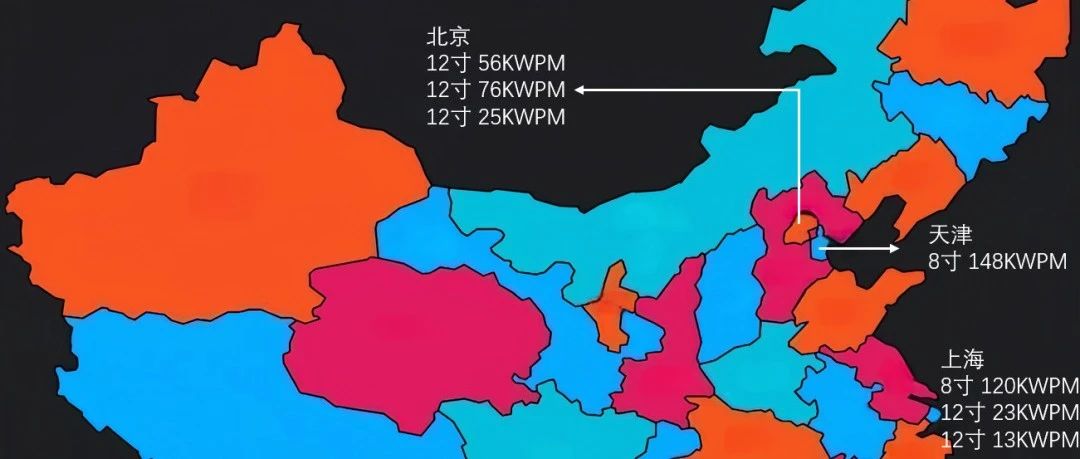
中芯国际各foundry的产能
是说芯语· 2025-05-25 11:19
Summary of Key Points Core Viewpoint - The article provides an analysis of the foundry capacity of SMIC (Semiconductor Manufacturing International Corporation) across its facilities in Beijing, Tianjin, Shanghai, and Shenzhen, highlighting the production capacity for both 8-inch and 12-inch wafers in the first quarter of the year and projections for the upcoming quarters. Group 1: Beijing Foundry Capacity - Beijing has three 12-inch wafer fabs with capacities of 56, 76, and 25 KWPM in Q1. The production capacity is expected to remain stable in the next two quarters, with a slight decline anticipated [3][4]. Group 2: Tianjin Foundry Capacity - Tianjin has one 8-inch wafer fab with a capacity of 148 KWPM in Q1. A slight decrease in production capacity is expected in the following two quarters [5][6]. Group 3: Shanghai Foundry Capacity - Shanghai, being SMIC's main base, has one 8-inch fab and two 12-inch fabs. The capacities in Q1 are 120 KWPM for the 8-inch fab and 23 and 13 KWPM for the 12-inch fabs. The 8-inch fab's capacity is expected to decline, while the 12-inch fabs are projected to increase their production [7][8]. Group 4: Shenzhen Foundry Capacity - Shenzhen has one 8-inch fab with a capacity of 67 KWPM and one 12-inch fab with a capacity of 33 KWPM in Q1. Future projections indicate a slight increase in both fabs' capacities [9][10].

英伟达6000D或B40要来了!
是说芯语· 2025-05-25 08:42
申请入围"中国IC独角兽" 半导体高质量发展创新成果征集 加入"中国IC独角兽联盟",请点击进入 投稿 、 商务合作 请微信 dolphinjetta 中国券商广发证券本周在一份报告中称,这款新 GPU 可能会被命名为 6000D 或 B40 ,其采用 GDDR7 内存技术,可实现大约每秒 1.7 太字节的带宽,刚好在出口管控范围内。 在 NVLink 单向速度约 550GB/s 及 CUDA 的支持下,广发预计到 2025 年底出货量将达约 100 万片。 英伟达此前已多次为中国市场设计符合美国出口规则的芯片,如 L20 PCIe 、 L2 PCIe 以及 HGX H20 芯 片等。 2022 年,美国禁止向中国出售和运输先进 AI 芯片。尽管英伟达一直表示遵守规则,但美国商 务部长吉娜 ・ 雷蒙多对该公司不断重新设计 AI 芯片以向中国出售修改版本表示不满。 不过,中国市场对于 AI 芯片的需求庞大,即便面临出口限制,仍有诸多途径获取相关硬件。部分中国 公司通过微软和谷歌云服务器租赁硬件来实现虚拟使用;还有公司通过出口规则宽松的第三国将受限制 的硬件引入中国;甚至一些包含先进芯片的服务器产品也能流入中国市 ...

江丰电子董事长姚力军辞职!
是说芯语· 2025-05-25 05:06
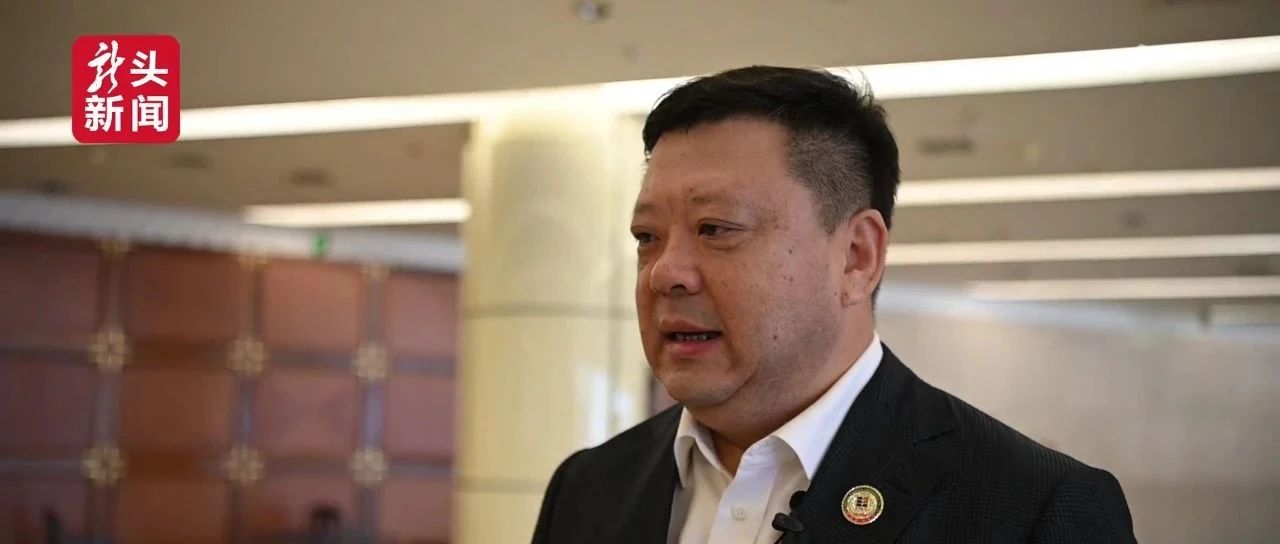
Core Viewpoint - The strategic transition of Jiangfeng Electronics' leadership, with the founder Yao Lijun stepping down as chairman to focus on technology, is aimed at enhancing the company's innovation capabilities in the semiconductor materials sector [2][3]. Group 1: Leadership Changes - Yao Lijun, the actual controller of Jiangfeng Electronics, announced his resignation as chairman to become the Chief Technology Officer, while the original general manager Bian Yijun took over the chairman position [2]. - Yao Lijun's decision to step down is seen as a deliberate strategic shift rather than a mere retirement, allowing him to return to his technical roots [2]. - The nomination of Yao Lijun's son, Yao Shun, as a non-independent director candidate indicates a plan for family succession within the company [3]. Group 2: Implications for Company Strategy - The transition in leadership is expected to facilitate a smoother operational period for the company, leveraging Yao Lijun's extensive management experience and strategic vision [3]. - The governance structure adjustment is a response to current management needs and lays the groundwork for future generational succession, similar to models seen in companies like Midea Group [3]. - The market reacted to the leadership changes with stock price fluctuations, reflecting short-term investor concerns, but long-term prospects depend on the new management's ability to achieve technological breakthroughs and management upgrades [3].

又一家国产CPU初创公司爆雷
是说芯语· 2025-05-24 00:56
Core Viewpoint - The article discusses the challenges faced by Shenzhen Borui Jinxin Technology Co., Ltd., a semiconductor startup, highlighting its recent capital reduction and relocation, which indicate significant operational difficulties in the current competitive chip industry [2][4][6]. Company Overview - Shenzhen Borui Jinxin was established in 2021 and gained attention due to its strong team, including former Arm China executives, and substantial initial capital of 8 billion RMB [2][3]. - The company has not publicly disclosed its business direction but is rumored to have obtained Arm's V9 instruction set authorization, focusing on server and automotive chips, and has developed various subsystems including NPU [3]. Recent Developments - The company has faced severe challenges since 2024, including delayed salary payments leading to employee turnover, with the workforce shrinking from nearly 400 to just a few dozen [4][5]. - A strategic partnership with Tencent Cloud was established on November 7, 2023, aimed at developing a hybrid cloud platform, which initially seemed to support Borui Jinxin's growth [3]. Industry Context - The semiconductor industry is experiencing heightened competition and rapid technological advancements, creating pressure on companies regarding R&D investment and market expansion [4][5]. - The high costs associated with chip development, particularly for Arm-based server SoC products, require significant financial resources, with estimates of 700-1,000 million RMB for a single product generation [5]. Implications for the Industry - Borui Jinxin's struggles serve as a cautionary tale for other semiconductor startups, emphasizing the need for careful evaluation of market demands, technological pathways, and financial reserves [5]. - The situation reflects broader industry challenges, including increased financing difficulties, intense talent competition, and innovation bottlenecks, prompting a need for collaborative efforts to enhance the semiconductor ecosystem [5][6].
特朗普“关税大棒”为何此时挥向苹果?
是说芯语· 2025-05-23 12:12
申请入围"中国IC独角兽" 从经济角度分析,特朗普政府一直对美国庞大的贸易逆差耿耿于怀。苹果产品的大量进口,无疑在贸易 逆差的天平上增加了砝码。征收关税看似是减少贸易逆差的"捷径",既能提升进口成本,促使消费者转 向本土产品,又能增加政府财政收入。 苹果若真面临25%的关税,首当其冲的便是成本剧增。长期以来,苹果构建了全球化的供应链体系,从 芯片制造到组装环节,广泛分布于世界各地,印度、中国等国家承担了重要角色。以iPhone为例,在中 国、印度等地的低成本组装,有力地控制了整体生产成本。一旦关税落地,进口至美国的每一部iPhone 成本都将大幅攀升。 为应对成本压力,苹果可能采取提价策略,但这无疑将削弱产品在美国市场的价格竞争力。美国消费者 对电子产品价格敏感度颇高,竞争对手三星等或许正虎视眈眈,准备趁苹果提价抢占市场份额。此前特 朗普针对汽车等行业的关税举措,已引发相关产品价格上涨,消费者叫苦不迭。若iPhone价格飙升,极 有可能引发消费者抵制情绪,冲击苹果的销量与营收。 苹果也可考虑将生产全面回迁美国,但这一过程绝非易事。美国劳动力成本远高于亚洲国家,且相关产 业配套并不完善,短期内组建起成熟高效的供 ...

美又一禁令出台,或涉及华为、中兴、海康威视!
是说芯语· 2025-05-23 07:39
Core Viewpoint - The article discusses the recent decision by the FCC to prohibit Chinese laboratories deemed a national security risk from testing electronic products intended for the U.S. market, highlighting the escalating tech competition between the U.S. and China [2][6]. Group 1: FCC Decision and Implications - The FCC unanimously passed a rule banning Chinese laboratories identified as national security risks from testing electronic products for the U.S. market, affecting devices like smartphones and cameras [2][4]. - Approximately 75% of electronic products sold in the U.S. are tested in Chinese laboratories, many of which have deep ties to state-owned enterprises or the military [3][4]. - The FCC has created a blacklist that includes entities associated with the U.S. Department of Defense and the Commerce Department, which will lead to the immediate revocation of certification for implicated laboratories [4][5]. Group 2: Impact on Chinese Companies - The ban will significantly impact Chinese companies, particularly those in telecommunications like Huawei and ZTE, as their product development and testing heavily rely on domestic laboratories [5][6]. - Electronic manufacturing service providers may face order losses and production disruptions due to the inability of domestic labs to participate in pre-export testing [5][6]. - Companies in the security and surveillance sector, such as Hikvision and Dahua, will encounter challenges in gaining U.S. market access if their testing is affected by the ban [5][6]. Group 3: Broader Industry Effects - The U.S. action appears to be motivated by a desire to curb the rapid growth of China's tech industry, which poses a competitive threat to U.S. firms [6][7]. - The ban may lead to a shift in the global tech supply chain, prompting China to invest more in independent technology ecosystems and reduce reliance on U.S. markets [7][8]. - The FCC is also considering additional proposals that could further restrict foreign laboratory testing, potentially leading to increased barriers in global tech cooperation [8].

小米芯片!
是说芯语· 2025-05-22 12:58
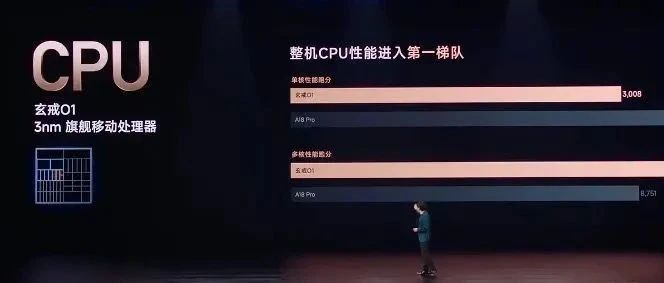
Core Viewpoint - Xiaomi has officially launched its self-developed Xuanjie O1 chip, marking a significant milestone in the semiconductor industry and positioning Xiaomi as the fourth global company to release a self-developed 3nm mobile chip, which is expected to reshape the competitive landscape of mobile chips and enhance domestic semiconductor capabilities [3][22]. Group 1: Chip Core Parameters and Performance - The Xuanjie O1 chip utilizes TSMC's second-generation 3nm process, integrating 19 billion transistors, and features a unique "2+4+2+2" ten-core architecture with a maximum CPU frequency of 3.9GHz, achieving significant breakthroughs in performance and energy efficiency [6][7]. - Benchmark scores for the Xuanjie O1 chip include a single-core score of 3119 and a multi-core score of 9673 on Geekbench 6, with an AnTuTu score exceeding 3 million, placing it among the industry's top tier [12][8]. Group 2: Chip Development History and Investment - Xiaomi has invested over 13.5 billion RMB in chip research and development over the past decade, with a team of more than 2500 people. The company plans to invest over 6 billion RMB in R&D by 2025, ranking among the top three in the domestic semiconductor design sector [14][13]. Group 3: Chip Applications and Product Launch - The Xuanjie O1 chip was officially unveiled on May 22, 2025, during Xiaomi's 15th anniversary product launch, and is first used in the Xiaomi 15S Pro and the high-end OLED tablet Xiaomi Pad 7 Ultra [16][20]. - The Xiaomi 15S Pro features a design that includes a 50MP Leica camera module, a 2K low-power M9 display, a 6100mAh battery, and supports 90W wired and 50W wireless fast charging, with a starting price of 5499 RMB [17][18]. Group 4: Industry Significance - The release of the Xuanjie O1 chip is a critical step for Xiaomi, demonstrating the capability of domestic companies to compete globally and driving supply chain upgrades within the domestic semiconductor industry. However, challenges remain, including reliance on TSMC for manufacturing and competition with Qualcomm's communication patents [22].