是说芯语

Search documents
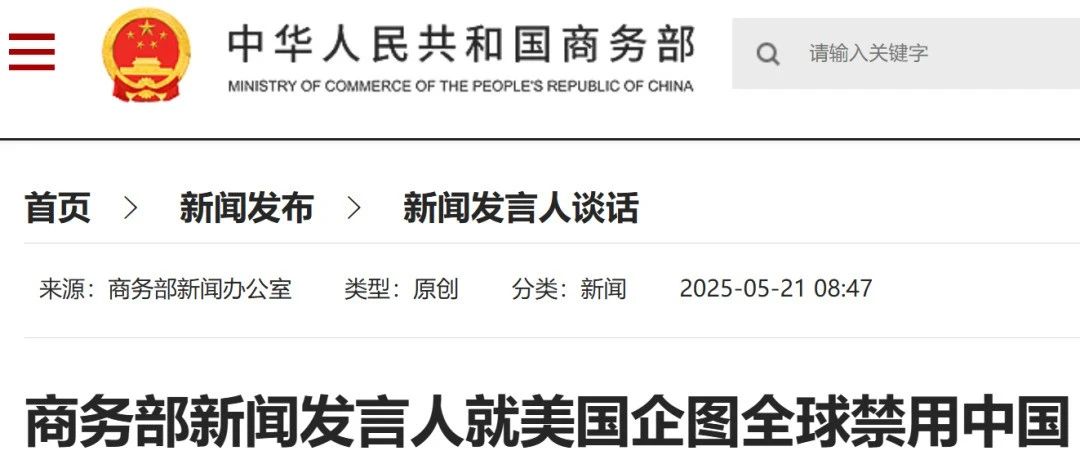
反外国制裁法在“芯片战争”中的首次出手
是说芯语· 2025-05-22 01:21
以下文章来源于东不压桥研究院 ,作者南极土著 东不压桥研究院 . 关注地缘政治竞争中的科技政策与数字治理,仅代表个人观点,与作者所在的组织无关。 申请入围"中国IC独角兽" 半导体高质量发展创新成果征集 近日,对美国意图封杀华为昇腾等中国先进计算芯片的guidance,中国政府进行了严正回应。 5月20日,中共中央政治局委员、外交部长王毅在京会见美国亚洲协会会长康京和时指出: 美方继续遏制打压中国的正当发展权利,近日竟然试图对中国芯片进行全面封杀,这是赤裸裸的 单边霸凌,中方坚决反对。 5月21日,商务部新闻发言人发表谈话: 中方强调,美方措施涉嫌构成对中国企业采取的歧视性限制措施。任何组织和个人执行或协助执 行美方措施,将涉嫌违反《中华人民共和国反外国制裁法》等法律法规,须承担相应法律责任。 美方通过guidance明确使用华为昇腾芯片可能违反美国出口管制规定。中国商务部发言人的上述表态则相当于 明确:如因慑于美国出口管制法规而" 执行或协助执行" 上述guidance,将涉嫌违反中国的《反外国制裁 法》。 根据《反外国制裁法》第12条: 任何组织和个人均不得执行或者协助执行外国国家对我国公民、组织采取的 ...


特供中国的阉割版Blackwell-B40的几点信息
是说芯语· 2025-05-21 14:28
Core Insights - Nvidia is planning to release a new GPU based on the Blackwell architecture as a response to the ban on the H20, which is based on the Hopper architecture [2][4] - Jefferies' analysis suggests that the US may impose a memory bandwidth limit of 1.7-1.8TB/s on GPUs, which could lead Nvidia to switch from HBM to GDDR6 for the downgraded H20 [3] - A report from Guangfa Overseas predicts that the new GPU, potentially named 6000D or B40, will be launched in early July and will feature GDDR7 with a bandwidth of approximately 1.7TB/s, significantly lower than H20's 4TB/s [3][4] Market Analysis - The expected shipment volume for the new GPU is projected to reach around 1 million units by the end of 2025, supported by NVLink and CUDA technologies [3] - Previous estimates for Huawei's Ascend series shipments in 2025 ranged from 700,000 to 850,000 units, with IDC reporting 640,000 units for 2024, indicating a strong growth trajectory [3] Product Development - The rapid development and anticipated release of the Blackwell-based GPU within a few months of the H20 ban highlight Nvidia's agile design capabilities and collaboration with TSMC [4]


中国警告:任何组织和个人执行美国对华芯片限制措施,将承担法律责任!
是说芯语· 2025-05-21 08:34
申请入围"中国IC独角兽" 半导体高质量发展创新成果征集 图片来源:中国商务部 2025年5月21日,中国商务部发布一份声明警告,针对 任何组织和个人 执行或协助执行美国对中国先进 计算芯片(包括科技巨头华为的产品)的限制措施,中国将会对其采取法律行动。 中方注意到, " 美国商务部近日发布指南,以所谓 推定违反 美国出口管制为由,企图在全球禁用中国 先进计算芯片,包括特定的华为昇腾芯片。" 中方认为, 美方措施是典型的 单边霸凌和保护主义 做法,严重损害全球半导体产业链供应链稳定,剥 夺其他国家发展先进计算芯片和人工智能等高科技产业的权利。这违反国际法和国际关系基本准则 , 严重损害中国企业正当权益,危害中国发展利益。 中方强调, 美方措施涉嫌构成对中国企业采取的 歧视性限制措施 。任何组织和个人 执行或协助执行 美方措施,将涉嫌违反 《中华人民共和国反外国制裁法》 等法律法规,须承担相应法律责任。 今天的这一声明呼应了中国商务部在5月15日发出的 另一则警告 :中国将针对美国的芯片管制采取"坚 决措施"。 中国商务部发言人在5月19日还表示,美国针对华为高端芯片的措施严重破坏 中美日内瓦会谈共识 。5 月 ...
马斯克,狂买百万颗芯片
是说芯语· 2025-05-21 08:07
半导体高质量发展创新成果征集 申请入围"中国IC独角兽" 马斯克的人工智能公司xAI正在美国田纳西州孟菲斯郊外建造一个拥有100万颗GPU的巨型工厂 Colossus,并将该地区打造成为"高科技制造中心"。 2025.05. 21 本文字数:1167,阅读时长大约2分钟 作者 | 第一财经 钱童心 当地时间5月20日,特斯拉CEO埃隆·马斯克在多哈参加卡塔尔经济论坛时表示,他希望在未来五年 内继续领导特斯拉。 他最近还表示,特斯拉和xAI正在向英伟达、AMD等公司采购更多芯片。xAI计划建一个拥有100万 颗GPU的大型工厂。 马斯克发表这些言论之际,特斯拉正在面临投资者的质疑。尽管近一个月特斯拉股价上涨超过 40%,但市值仍未收复1万亿美元。截至5月20日收盘,特斯拉今年股价累计下跌近15%。 今年4月,特斯拉公布财报显示,该公司今年第一季度汽车业务收入下降20%,净利润下降71%。 此前,马斯克领导了美国总统特朗普设立的"政府效率部门",但大刀阔斧地精简美国公职部门人员 的举动也引发巨大争议。对此,马斯克表示,未来计划大幅削减政治竞选的支出。 马斯克 暗示 他将把精力更多地聚焦在自己公司的治理。在担任特斯 ...



客观说下小米玄戒 O1 ~~~
是说芯语· 2025-05-21 08:05
Core Viewpoint - The article highlights the impressive performance of Xiaomi's new SoC, the "玄戒" (Xuanjie), which has managed to compete with MediaTek's long-standing expertise in SoC performance and power management within a short span of four years [2][3]. Group 1: SoC Performance Comparison - Xiaomi's Xuanjie SoC outperforms MediaTek's Dimensity 9400 in single-core performance, scoring 3100 compared to 2900, indicating a significant advancement in technology [2]. - The architecture of the Xuanjie includes a 10-core setup with high clock speeds, which contributes to its superior performance metrics [2]. - The Xuanjie SoC's design choices, such as the use of external 5G baseband chips, may lead to lower power density and better thermal management compared to integrated solutions [2]. Group 2: Development and Investment - Xiaomi has invested a total of 135 billion RMB in the development of the Xuanjie SoC over four years, with a projected future investment of 500 billion RMB over the next decade [3]. - The development team for the Xuanjie consists of approximately 2500 members, showcasing a significant commitment to building a robust in-house capability [3]. - The rapid development of the Xuanjie SoC is compared to other industry players, such as Zeku and Huawei's HiSilicon, which took much longer to achieve similar levels of performance [3]. Group 3: Market Position and Future Outlook - The introduction of the Xuanjie SoC positions Xiaomi among the top tier of the semiconductor industry, potentially achieving what Zeku could not complete [3]. - The article suggests that Xiaomi's investment strategy appears more genuine compared to other companies, indicating a strong commitment to semiconductor development [3]. - The future performance of the Xuanjie in real-world applications remains to be seen, but initial results are promising [3].

DSP难道淘汰了?国产 DSP 芯片设计企业破产清算
是说芯语· 2025-05-20 12:47
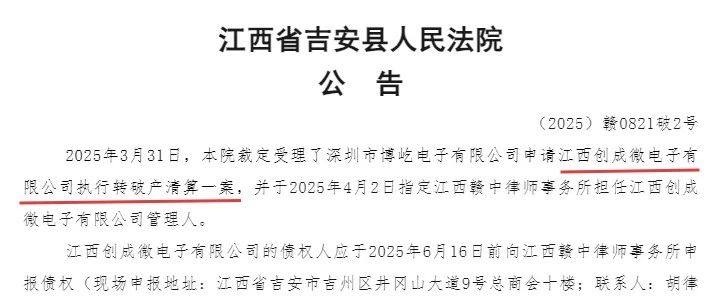
Core Viewpoint - The bankruptcy of Jiangxi Chuangcheng Microelectronics highlights the challenges faced by small and medium-sized enterprises in the semiconductor industry during a period of deep adjustment and market contraction [2][5][7] Company Overview - Jiangxi Chuangcheng Microelectronics, established in October 2015, was a national high-tech enterprise focused on digital signal processing (DSP) chip design, with a registered capital of 10 million yuan [3] - The company developed over 10 proprietary chips and held more than 150 authorized patents, serving clients like Philips, Tencent, and Lenovo [3][4] - Despite its technological achievements, the company faced severe operational difficulties, with unpaid debts exceeding 12.82 million yuan and a significant reduction in workforce [3][4] Industry Challenges - The decline of Jiangxi Chuangcheng reflects broader issues in the semiconductor sector, including a downturn in consumer electronics and increased cost pressures in the automotive electronics market [5][6] - High research and development investment (5.85% from 2016 to 2018) did not translate into commercial success, leading to cash flow issues [5] - The inability to sustain operations amid a tightening capital environment has exposed the vulnerability of smaller firms in the industry [5][6] Industry Warnings - Jiangxi Chuangcheng is not an isolated case; several chip companies have exited the market since 2019, indicating a persistent and harsh industry winter [7] - Companies must not only overcome technological barriers but also establish sustainable business models, diversify customer bases, and balance R&D investment with commercialization [7] - The semiconductor industry faces a critical challenge in creating a complete ecosystem from technology development to market collaboration in the context of rationalized capital and shrinking market demand [7]
2025供应链风险白皮书发布!半导体人必须掌握的6大趋势(附下载)
是说芯语· 2025-05-20 12:31
Core Viewpoint - The semiconductor industry faces increasing supply chain disruptions, necessitating improved risk management mechanisms and digital tools for real-time monitoring and prevention of supply chain risks [1][3]. Group 1: Supply Chain Challenges - Geopolitical conflicts have triggered a "neon gas crisis," leading to increased production costs [5] - Fluctuating tariff policies force adjustments in global supply chain layouts [5] - Natural disasters have caused factory shutdowns, resulting in soaring raw material prices [5] - Market demand volatility hampers timely development of quality supplier resources [5] Group 2: Risk Management Trends - Transitioning from localized monitoring to global scanning for comprehensive risk awareness [6] - Moving from manual selection to tiered management for precise risk alerts [6] - Evolving from unilateral management to collaborative risk mitigation [11] - Shifting from fragmented analysis to panoramic decision-making for closed-loop risk management [11] - Upgrading from repetitive processes to agile system integration [11] Group 3: Technological Solutions - The launch of a supply chain risk management SaaS platform aims to assist semiconductor companies in transitioning from experience-based approaches to data-driven reasoning [3] - The platform integrates artificial intelligence and various business scenarios to enhance digital risk management across multiple industries [10]

黄仁勋谈AI扩散规则和芯片出口管制(最新)
是说芯语· 2025-05-20 06:15
申请入围"中国IC独角兽" 半导体高质量发展创新成果征集 今天,黄仁勋在中国台湾地区Computex 2025的主题演讲结束后,接受了 Stratechery的主理人 Ben Thompson的 一次面对面访谈。 在这次访谈中,黄仁勋比较罕见地对AI扩散规则、芯片出口管制、美国对华AI竞争的战略 等问题发表了观点。 黄仁勋认为,AI扩散规则限制其他国家使用美国技术,这个目标从一开始就错了。美国应该加速向全球推广 美国技术,否则一切都为时已晚。如果目标是让美国处于领先位置,那么AI扩散规则完全是反作用。美国公 司不能放弃中国, 如果不去中国竞争,就会允许中国生态系统在美国公司缺席的情况下发展壮大。这将导致 新平台出现,但这些平台将不是美国的。尤其在AI技术迅速向全球扩散的时候,中国的领先地位及其技术将 扩散到世界各地。 在黄仁勋看来, 美国要想赢得和中国的竞争,不能靠 打压竞争对手,而是要靠快速发展和创新。因为美国商 务部 禁止H20对华出口,英伟达 不仅损失了55亿美元(库存注销),还放弃了中国市场150亿美元的销售收 入,美国政府也损失了大约30亿美元的税收,且还威胁到CUDA平台。 任何认为仅仅通过禁止向 ...

H20退场!英伟达定制Blackwell架构芯片特供中国
是说芯语· 2025-05-19 10:40
Core Viewpoint - Nvidia's strategic shift to the Blackwell architecture in response to U.S. export restrictions aims to maintain its market position in China while adapting to regulatory challenges [2][4][6] Group 1: Nvidia's Blackwell Architecture - The Blackwell architecture, particularly the B300 chip, utilizes TSMC's 4NPT SMC process and features a 10TB/s interconnect technology, achieving a 1.8TB/s bidirectional NVLink bandwidth [2] - The B300 chip's FP4 performance is 1.5 times better than its predecessor, with a focus on doubling computational power and model scale at 4-bit floating-point precision [2][3] - To comply with U.S. regulations, the Blackwell special chip will replace HBM high-bandwidth memory with GDDR7, resulting in an estimated 30% performance reduction compared to the original Blackwell [2][3] Group 2: Market Dynamics and Competition - Despite the limitations of the Blackwell special chip, its FP4 computing power exceeds that of the H20 chip by over 2.5 times, particularly in vertical model inference scenarios [3] - Nvidia's revenue from the Chinese market is projected to reach $17 billion in 2024, accounting for 13% of its total sales, highlighting the importance of this market [3][4] - Domestic AI chip companies like Huawei Ascend are rapidly emerging, with the Ascend 910B achieving 320 TFlops FP16 computing power and a 75% reduction in training costs [4] Group 3: Strategic Responses and Future Outlook - Nvidia's dual-track strategy includes launching a downgraded version of the H20 to fill supply gaps while accelerating the development of the Blackwell special chip, expected to be delivered by the end of 2025 [3][4] - The U.S. ban on Ascend chips is accelerating the domestic replacement process in China, with predictions that domestic AI chip market share will rise from 12% in 2023 to 25% by 2025 [4] - Nvidia's CEO Jensen Huang emphasizes the importance of the Chinese market and is expanding R&D efforts in Shanghai, indicating a commitment to adapting to local market needs [4][5] Group 4: Technological Innovations and Market Trends - The introduction of the Blackwell architecture is expected to drive AI chip technology into a high-density computing era, necessitating innovations in cooling technology due to the B300's 1400W power consumption [5] - The global liquid cooling market is projected to exceed $15 billion by 2025, driven by the need for advanced data center infrastructure [5] - The ongoing U.S. negotiations regarding chip exports may provide alternative procurement pathways for China, but long-term restrictions on computing power output are likely to strengthen domestic chip development [5][6]
ARM漏洞引爆芯片危机,你的设备可能不安全了!
是说芯语· 2025-05-19 10:40
Core Viewpoint - The article emphasizes the urgent need for technological autonomy in the semiconductor industry, particularly in light of the PACMAN vulnerability that exposes significant risks in data security and reliance on ARM architecture [2][3][5]. Group 1: PACMAN Vulnerability - The PACMAN vulnerability undermines the core protective mechanisms of ARM architecture, allowing attackers to bypass security measures and gain control over systems without triggering alarms [3][6]. - The vulnerability affects widely used chips in smartphones, data centers, and industrial control systems, posing threats to personal privacy and national infrastructure [3][5]. - ARM's unique business model complicates the situation, as the majority of domestic market chips are based on ARM architecture, which is vulnerable to exploitation [5][6]. Group 2: Challenges of ARM Architecture - ARM's "black box" architecture means that hardware-level design flaws cannot be patched and require hardware replacement, increasing the risk of exploitation [6]. - The lengthy response time to vulnerabilities allows hackers to exploit weaknesses, while undisclosed debugging interfaces may serve as hidden backdoors for data theft [6]. Group 3: Solutions for Technological Autonomy - The industry must focus on three dimensions to overcome the challenges posed by ARM: 1. **Technological Autonomy**: Promote the large-scale application of domestic instruction set chips to reduce dependency on a single architecture [8]. 2. **Security Systematization**: Establish comprehensive security standards covering the entire lifecycle of chip design, manufacturing, and application [9]. 3. **Ecosystem Collaboration**: Encourage deep collaboration among instruction sets, operating systems, and application software to create an open-source ecosystem [10]. Group 4: Implications of Vulnerabilities - The PACMAN vulnerability highlights the fragility of traditional technology systems and underscores the importance of independent innovation to safeguard digital sovereignty [10].