是说芯语

Search documents
10年,中微覆盖60%半导体高端设备!
是说芯语· 2025-05-28 23:36
Core Viewpoint - The company aims to become a leading platform group in the semiconductor equipment industry, focusing on high-end equipment and expanding into emerging fields while enhancing its R&D capabilities and market presence [5][9]. Group 1: Strategic Development - The company is committed to a three-dimensional development strategy, focusing on integrated circuit key equipment, expanding applications in the semiconductor field, and exploring new opportunities [5]. - The company has successfully penetrated the domestic and international markets with its plasma etching equipment, which is widely used in advanced processes from 65nm to 5nm [5]. - The company has invested over 2 billion yuan in approximately 40 upstream and downstream enterprises since its listing, achieving over 5 billion yuan in floating profits and significant results in industrial collaboration [5]. Group 2: R&D Efficiency - The company has established a research team of over 1,000 people, significantly improving R&D efficiency, now completing new product development in about 18 months, compared to 3-5 years previously [6]. - In 2024, the total R&D investment is expected to reach 2.452 billion yuan, a year-on-year increase of 94.31%, accounting for approximately 27% of revenue [6]. - The company is currently developing over 20 new devices covering core semiconductor equipment areas [6]. Group 3: Business Performance - The company's etching equipment remains its core competitive advantage, with projected revenue of approximately 7.277 billion yuan in 2024, reflecting a year-on-year growth of about 54.72% [7]. - Although the revenue from thin film equipment is currently small, it is expected to grow rapidly in the next three to five years, with the first LPCVD sales in 2024 projected at approximately 156 million yuan [7]. Group 4: Industry Insights - The company recognizes the competitive landscape and aims to develop differentiated, proprietary high-end equipment, particularly in electron beam detection devices [8]. - The domestic semiconductor equipment market is primarily dominated by foreign companies, but the increasing technological capabilities of domestic firms are enhancing the competitiveness of local products [9]. - The company aspires to be among the top-tier global semiconductor equipment companies by 2035, focusing on scale, product quality, competitiveness, and customer satisfaction [9].



突发!传西门子EDA(原Mentor)暂停对中国大陆支持
是说芯语· 2025-05-28 07:06
Core Viewpoint - Siemens' EDA division may suspend support and services for mainland China due to a notification from the U.S. Department of Commerce's Bureau of Industry and Security (BIS), which requires Siemens to "decouple" from its customers in China [1] Group 1: Impact on the Semiconductor Industry - The potential suspension of EDA tools from Siemens, along with Synopsys and Cadence's cautious stance, poses a significant challenge for Chinese companies reliant on imported EDA tools for chip design [1] - Lack of necessary technical support could hinder R&D progress, impacting the entire semiconductor supply chain [1] - The situation is being closely monitored by both Chinese and international industries for its potential ripple effects on the global semiconductor supply chain [1] Group 2: Response and Adaptation - In response to this uncertainty, the Chinese government and domestic companies are accelerating efforts towards independent innovation and technological self-sufficiency to reduce sensitivity and dependence on external changes [1][2]


2025中国大陆晶圆厂(Fab)大全
是说芯语· 2025-05-28 05:41
Domestic Leading Wafer Manufacturers - SMIC is a leading wafer foundry in China with facilities in Shanghai, Beijing, Shenzhen, and Tianjin, covering technology nodes from mature to advanced processes (14nm) and offering services for logic chips, CIS, and power management chips [1] - Hua Hong Group operates an 8-inch fab in Shanghai and a 12-inch fab in Wuxi, with process technology covering 65/55-40nm, providing customizable options in non-volatile memory, power management, and power devices [1] - Yangtze Memory Technologies focuses on NAND flash memory chip R&D and manufacturing, playing a significant role in enhancing China's self-sufficiency in the storage chip sector [1] - Changxin Memory primarily develops and manufactures DRAM memory using 19nm/17nm processes, aiming to provide high-performance and reliable DRAM products for the global market [1] Foreign/Joint Venture Wafer Factories - TSMC has an 8-inch wafer fab in Shanghai and a production base in Nanjing, being the largest semiconductor manufacturer globally, with advanced technology and processes, mainly serving domestic clients with 16nm/12nm logic chip foundry [2] - Samsung Semiconductor's Xi'an plant focuses on flash memory chip production, contributing to Samsung's global flash memory market strategy and providing advanced technology and management experience to China's semiconductor industry [2] - SK Hynix's Wuxi factory is a key production base, primarily manufacturing DRAM memory, accounting for about 50% of SK Hynix's global capacity [2] - Intel's Dalian factory, now under SK Hynix, transitioned from NAND flash production to DRAM manufacturing, enhancing SK Hynix's market share in the global DRAM sector [2] Emerging Local Wafer Factories - Yuexin Semiconductor, located in Guangzhou, is a national high-tech enterprise focusing on analog chips and has entered mass production as a 12-inch chip manufacturer in the Guangdong-Hong Kong-Macao Greater Bay Area [3] - Jita Semiconductor has an 8-inch equivalent wafer annual production capacity and is a significant player in the semiconductor manufacturing sector, offering various integrated circuit types [3] - Yandong Microelectronics plans to build a 12-inch integrated circuit production line in Beijing, targeting specialty process products in the 28nm-55nm range for display drivers and embedded MCUs [3] - Xin'en Semiconductor aims to create a collaborative innovation platform covering the entire integrated circuit industry chain from design to packaging and testing [3] - Geke Semiconductor operates a 12-inch wafer fab in Shanghai, focusing on the R&D and industrialization of CIS integrated circuits, holding a strong market position [3] - Ding Tai Jiangxin is China's first 12-inch automotive-grade semiconductor wafer factory, enhancing China's capabilities in high-end semiconductor manufacturing [3] Additional Notable Wafer Factories - Xinwei Semiconductor has qualifications in RF, power, and optoelectronic applications, expanding its production capacity in Shanghai [4] - Shanghai Advanced Semiconductor Manufacturing Co., established in 1988, has extensive experience in semiconductor manufacturing [4] - Zengxin is developing China's first 12-inch smart sensor wafer manufacturing line with an investment of 7 billion yuan, aiming for a monthly processing capacity of 20,000 wafers [4] - Xinyuan Semiconductor is focused on silicon carbide chip projects, planning to produce 240,000 6-inch and 240,000 8-inch silicon carbide chips annually [4] - Huazhong Microelectronics is building a 12-inch specialty process integrated circuit production line in Shenzhen with a total investment of 22 billion yuan [5] Other Noteworthy Companies - Innoscience is a global leader in power semiconductors and the largest GaN chip manufacturer [6] - Rongxin Semiconductor focuses on mature process specialty integrated circuit manufacturing [6] - Huaxin Jiechuan is investing 20 billion yuan in a project in Huai'an, showcasing strong growth momentum [6] - Jinhuaji is establishing a 12-inch memory wafer factory in Fujian, promoting domestic memory industry development [7] - Global Semiconductor is the first company to integrate 12-inch chip manufacturing and packaging testing, providing one-stop services [8]



纳芯微股东,持续减持!
是说芯语· 2025-05-28 03:09
Core Viewpoint - The recent shareholding activities of Suzhou Naxin Microelectronics Co., Ltd. indicate a strategic response to financial needs and market conditions, with significant shareholder reductions and transfers occurring in a short timeframe [2][3][7][9]. Group 1: Shareholder Actions - On May 20, 2023, Naxin Micro announced the completion of a shareholder reduction plan, involving multiple shareholders including Guorun Ruqi and Shenzhen Huiyue Growth Investment Fund, with total shares reduced amounting to 1,424,462 shares at prices ranging from 136.26 to 185.50 CNY per share, totaling approximately 227.84 million CNY [2][3]. - Following this, on May 21, 2023, the company initiated a share transfer plan involving 4.85 million shares, representing 3.40% of the total share capital, primarily due to funding needs of the actual controlling entities [7][8]. - The inquiry transfer on May 27, 2023, resulted in a successful subscription of the shares at a price of 163.15 CNY per share, with a total of 4,851,800 shares transferred to six institutional investors, reducing the controlling entities' shareholding from 34.76% to 31.11% [7][8]. Group 2: Company Performance - Naxin Micro's financial performance has shown volatility, with a 93.76% increase in revenue in 2022, but a subsequent 21.52% decline in 2023, resulting in a net loss of 305 million CNY [9]. - Despite a projected revenue increase of 49.53% in 2024, the company is still facing losses, with a net loss of 403 million CNY anticipated [9]. - The first quarter of 2025 showed a revenue increase of 97.82%, yet the company continued to report a net loss of approximately 51.34 million CNY [9].

华为完整产品体系
是说芯语· 2025-05-27 12:26
Core Viewpoint - Huawei has evolved from being primarily a telecommunications equipment provider to a global leader in ICT infrastructure and smart terminal solutions, with a diverse range of products across multiple sectors [3][4][69]. Group 1: Business Overview - Huawei's business is categorized into six main areas: Chip and Device Business, ICT Infrastructure, Cloud Computing, Digital Energy, Terminal Business, and Smart Automotive Solutions [6][7]. - The ICT Infrastructure segment, which includes communication and IT, is projected to account for 42.9% of Huawei's total revenue in 2024 [8]. Group 2: ICT Infrastructure - The ICT Infrastructure business is divided into communication and IT components, with communication being the foundation of Huawei's operations, serving primarily telecom operators and enterprise users [8][31]. - Communication products include wireless networks (5G base stations) and fixed networks (optical communication equipment) [10][19]. - Huawei's core network products have transitioned to cloud-based solutions, enhancing their capabilities in 5G and data transmission [15][31]. Group 3: Cloud Computing - Huawei's cloud computing services encompass a wide range of offerings, including computing, storage, networking, databases, AI, and big data, leveraging its ICT infrastructure [46][48]. Group 4: Digital Energy - The Digital Energy business has gained traction due to the growth of solar energy, electric vehicles, and data centers, with Huawei providing energy solutions for these sectors [51][52]. Group 5: Terminal Business - Huawei's terminal products include smartphones, tablets, laptops, and smart wearables, with a focus on integrating its devices with the Harmony operating system [57][59]. Group 6: Smart Automotive Solutions - Huawei collaborates with automotive companies to provide smart vehicle solutions, focusing on intelligent systems and components without manufacturing vehicles itself [62][64]. Group 7: Chip and Device Business - The Chip and Device Business, primarily through its subsidiary HiSilicon, produces a variety of chips for different applications, including mobile devices and AI [67].

台积电不再跪!
是说芯语· 2025-05-27 03:44
近日,据中国台湾《中国时报》5月24日报道,台积电美国亚利桑那州子公司提交给美国商务部的意见 信内容曝光,在半导体产业引发强烈震动。这封意见信不仅透露出台积电在美国的庞大投资规划,更 以强硬姿态对美国的贸易政策划出红线 ,而与之形成鲜明对比的是台当局在面对美国半导体进口"232 调查"时的态度,两者有着截然不同的表现。 中国台湾《中国时报》深入分析了台积电赴美投资后遭遇的种种问题,如位于亚利桑那的新厂2023年亏 损新台币142.98亿(约32亿人民币),四年累计亏损超新台币394亿元(约12亿美元),而中国大陆南 京厂同年却实现新台币260亿元盈利,鲜明的对比凸显出赴美投资的风险。财经专家阮慕骅指出,台积 电大举赴美带来资金排挤效应、技术外流以及供应链控制权让渡等"三大危机",媒体对这些观点的传 播,也让民众更加清晰地认识到美国关税威胁以及台当局错误决策对台湾地区产业的巨大伤害。 加入"中国IC独角兽联盟",请点击进入 投稿 、 商务合作 请微信 dolphinjetta 是说芯语,欢迎关注分享 台积电的历史及在美生产现况 :信中提到台积电早在1998年便在美国设厂,2020年在亚利桑那州 启动大规模晶圆厂 ...

CNBC:特朗普或禁止台积电与小米合作!
是说芯语· 2025-05-27 01:58
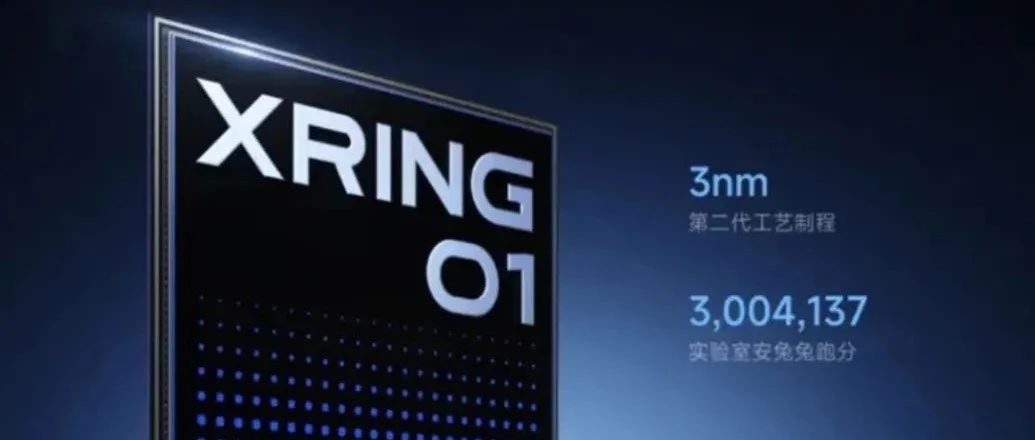
Core Viewpoint - Xiaomi's ambitious plan to develop its own 3nm SoC chips may face challenges due to potential restrictions on collaboration with TSMC amid ongoing US-China trade tensions [1][2][3] Group 1: Xiaomi's Chip Development - Xiaomi has announced plans to invest at least 50 billion RMB (approximately 6.9 billion USD) over the next decade to develop its own chips, starting from 2025 [1] - The first self-developed SoC chip, "XRING 01," was launched using TSMC's second-generation 3nm process, aimed at competing with advanced chips like Apple's A18 Pro [2][5] - The company has not disclosed how many SoC chips it plans to produce, indicating uncertainty in its production scale [1][5] Group 2: Potential Collaboration Issues - The US government may impose restrictions on TSMC's collaboration with Xiaomi to prevent the rapid advancement of Chinese AI chip technology [2] - Concerns exist that Xiaomi's technology could be shared with other Chinese companies, giving them a competitive edge [2] Group 3: Market Position and Competition - Despite launching its own chip, Xiaomi is expected to continue relying on Qualcomm and MediaTek for approximately 40% of its smartphone components [2][3] - Qualcomm's CEO stated that Xiaomi's announcement of its first smartphone chip would not impact Qualcomm's business, highlighting the ongoing reliance on established suppliers [3] Group 4: Performance of Xiaomi's SoC - Initial performance tests of the "XRING 01" chip showed disappointing results, underperforming by 13% compared to Xiaomi's claims and falling short against Qualcomm's Snapdragon 8 Elite and MediaTek's Dimensity 9400 [4][5] - The integration of hardware and software in Xiaomi's SoC aims to provide a unique user experience, although the initial performance raises concerns about its competitiveness [5]

玄戒O1由小米自主研发!小米、Arm回应争议
是说芯语· 2025-05-27 00:29
小米回应了沸沸扬扬的"玄戒O1是定制芯片"的争议。 Arm CSS全称是计算子系统(Compute Subsystem),最早是在2023年针对Arm Neoverse 基础设施产 品推出的计算子系统 (CSS) ,采用CSS平台研发比普通IP许可研发方式可以节约大量研发时间。 对于定制芯片的相关质疑,小米集团副总裁、玄戒负责人朱丹此前回应称,小米是买的Arm IP软核授 权,"CPU/GPU多核及访存的系统级设计完全由小米自主研发,后端设计也是完全由小米自主研发, 并非是基于Arm CSS软核或硬核方案。" Arm在官网发布公告称,小米的定制芯片玄戒O1由Arm计算平台提供支持,其中部分用词引发网友质 疑,玄戒O1并不是购买Arm的IP来自己研发设计的,而是由Arm基于其CSS 平台为小米定制的,这也 意味着小米称其芯片"自研"是大打折扣。 5月26日,澎湃新闻记者发现,Arm官网重新发布公告,修改此前描述, 确认玄戒O1由小米自主研 发。 Arm表示,小米全新自研芯片采用Arm架构,标志着双方15年合作的里程碑。玄戒O1芯片由小 米旗下玄戒芯片团队打造,采用最新的Armv9.2Cortex CPU集群IP ...
消息称砺算科技首款高性能GPU芯片成功点亮,国产GPU再添新锐力量
是说芯语· 2025-05-26 10:36
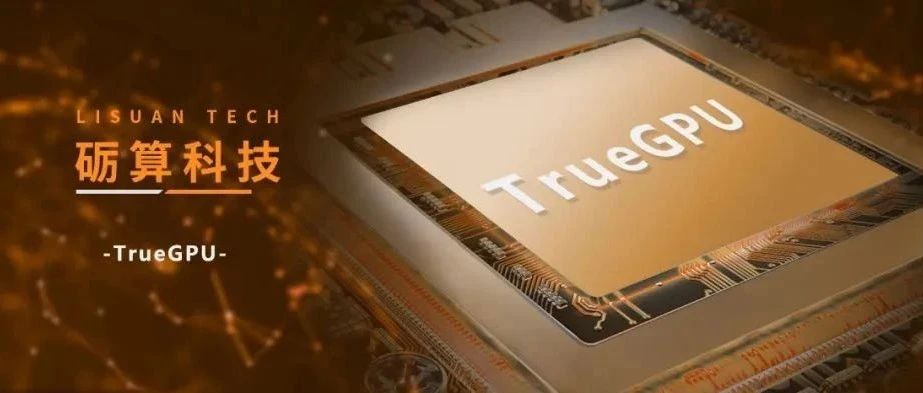
Core Viewpoint - The successful development of the 6nm high-performance GPU chip by Lishuan Technology, a subsidiary of Dongxin Co., marks a significant breakthrough in the domestic GPU market, particularly in graphics rendering and AI computing, providing new hope for the high-end GPU sector in China [2][3]. Group 1: Product Development - Lishuan Technology's GPU chip is based on the TrueGPU architecture, which is the first in the industry to integrate high-performance graphics rendering and AI inference capabilities, possessing complete independent intellectual property rights [2]. - The chip supports mainstream graphics APIs and features high computing power, large memory, and low power consumption, making it suitable for applications in gaming, professional design, and smart vehicles [2]. Group 2: Market Impact - The chip has already garnered over 100 million yuan in pre-orders, indicating strong market interest and demand [2]. - Performance-wise, the product is comparable to NVIDIA's RTX 4060 series, suggesting that domestic GPUs can compete with top international products in the high-end consumer market, potentially breaking the long-standing overseas monopoly [2]. Group 3: Company Background and Support - Lishuan Technology was founded by a senior GPU R&D team, including core executives from S3, and has achieved performance levels on par with international mainstream standards [3]. - Dongxin Co., as a leading domestic storage chip enterprise, continues to strengthen its semiconductor industry chain layout, with Lishuan Technology's breakthrough further validating Dongxin's foresight and depth in self-research and project reserves [3]. - Future collaborations between Lishuan Technology and Dongxin Co. will focus on chip R&D and ecosystem development, aiming to promote the upgrade of the domestic semiconductor industry [3].

国产5nm芯片怎来的?
是说芯语· 2025-05-25 23:48
Core Viewpoint - The article discusses the current state and future prospects of semiconductor manufacturing, particularly focusing on the challenges and methodologies involved in producing advanced nodes like 5nm and 3nm without EUV lithography. It emphasizes the importance of transistor density as a key metric for evaluating semiconductor technology advancements. Group 1: Semiconductor Manufacturing Techniques - DUV lithography combined with multiple exposure techniques can theoretically produce 5nm chips, and even 3nm under extreme conditions, although this approach is costly and not commonly adopted by mainstream foundries [5][23][48]. - The concept of "5nm" has evolved from a direct measurement of line width to a symbolic representation of a process node, with actual transistor gate lengths often exceeding the nominal node size [6][12][23]. Group 2: Transistor Density and Performance - Transistor density (MTr/mm²) is a more relevant metric than line width for comparing semiconductor technologies, as it reflects the number of transistors that can fit in a given area [13][21]. - The article provides a comparative analysis of transistor densities across various nodes, highlighting that the upcoming domestic 5nm technology may only achieve densities comparable to optimized 7nm processes [14][49]. Group 3: Industry Competition and Challenges - The competition among major players like TSMC, Intel, and Samsung is intense, with each company defining process nodes differently, leading to discrepancies in reported capabilities [21][22]. - The article points out that while Samsung claims to have achieved 5nm production, its actual transistor density and yield rates are significantly lower than those of TSMC, raising questions about the validity of such claims [15][21]. Group 4: Future Prospects and Technological Innovations - The semiconductor industry is expected to continue advancing, with predictions of achieving one trillion transistors on a single GPU chip within the next decade, driven by innovations beyond traditional lithography [19][48]. - The article stresses the need for domestic semiconductor manufacturers to focus on improving deposition and etching equipment, as these are critical for achieving high yields and performance in advanced nodes [48][50].