是说芯语

Search documents
上海GPU独角兽,拟赴港IPO!
是说芯语· 2025-08-16 11:21
Core Viewpoint - The domestic GPU manufacturer Tian Shu Zhi Xin Semiconductor Co., Ltd. is considering an initial public offering (IPO) in Hong Kong, potentially raising between $300 million to $400 million [1][2]. Company Overview - Tian Shu Zhi Xin, established in 2015, is a provider of general-purpose GPU chips and computing systems in China, focusing on developing autonomous and internationally leading general-purpose GPU products [5]. - The company's GPU products include the Tian Yai and Zhi Kai series, which are designed for high efficiency, easy migration, and broad compatibility with major AI ecosystems and deep learning frameworks [6]. Product Development - In December 2020, Tian Shu Zhi Xin successfully launched the "Tian Yai 100 chip," marking the first domestically developed cloud training chip based on a fully self-researched GPU architecture [6]. - In May 2022, the company introduced the Zhi Kai 100 inference chip, becoming the only domestic company to offer a complete solution for both cloud training and inference under GPU architecture [6]. - In November 2023, the Tian Yai 150 training chip supported the Zhiyuan Research Institute in completing heterogeneous mixed training of a large model, establishing the company as the first in China with heterogeneous computing power mixed training capabilities [6]. Market Position and Achievements - Tian Shu Zhi Xin's GPU products have assisted over 100 clients in training more than 500 models across over 20 industries [6]. - The company holds over 270 authorized intellectual property rights and has applied for more than 170 invention patents, receiving numerous accolades such as Shanghai's specialized and innovative enterprises and high-tech enterprises [6]. Financing History - The company has completed multiple rounds of financing, including a multi-hundred million yuan B round in 2019 led by Centurium Capital and Princeville Capital, and a 1.2 billion yuan C round in 2021 led by Yuanbo Capital and Centurium Capital [7]. - In the C+ and C++ rounds in 2022, investors included Financial Street Capital and HOPU Investment, raising over 1 billion yuan [9]. - Hainan Centurium Investment Partnership is the largest shareholder, holding 9.43% of the company, followed by Nanjing Youxun Equity Investment Partnership and Shanghai Xishi Enterprise Management Consulting Partnership with 8.52% and 7.13% respectively [9].

重大利空!半导体巨头,突然暴跌!
是说芯语· 2025-08-16 07:52
美东时间 8 月 15 日,全球半导体设备龙头应用材料(Applied Materials)在美股市场遭遇 "黑色星期一",股价 暴跌 14.07%,单日市值蒸发 212 亿美元(约合人民币 1523 亿元),总市值缩水至 1259.42 亿美元(约合人民 币 9045 亿元),创 2020 年 3 月以来最大单日跌幅。受此拖累,泛林集团(Lam Research)、科磊(KLA Corp)分别下跌 7.3% 和 8.4%,纳斯达克半导体指数收跌 2.1%,凸显市场对行业前景的深度担忧。 此次暴跌的直接导火索是公司最新发布的 2025 财年第四财季业绩预告。应用材料预计该季度营收约 67 亿美 元,显著低于分析师预期的 73.2 亿美元;调整后每股收益指引为 2.11 美元,亦低于市场预期的 2.38 美元。财 报发布后,花旗将其移出焦点名单并下调目标价至 205 美元,Stifel 分析师更将目标价从 195 美元大幅下调至 180 美元,Summit Insights 则将评级从 "买入" 降至 "持有",指出英特尔 18A/14A 节点的不确定性及个人电脑需 求疲软正在抵消 AI 相关增长优势。 尽管第 ...
突发!芯片巨头员工大规模集会抗议!
是说芯语· 2025-08-15 23:51
Core Viewpoint - SK Hynix is facing an unprecedented labor dispute despite achieving record operating profits of 16 trillion KRW in the first half of the year, with the conflict centered around the distribution of performance pay (SRP) and profit-sharing (PS) [1][2]. Group 1: Labor Dispute Details - The labor union held strike resolution meetings on August 6 and 12, and initiated protests in Seoul and Icheon [1]. - The core of the dispute lies in the union's demand for 10% of operating profits to be paid as performance bonuses, while the company proposed a performance bonus of 1700% of basic salary plus Alpha, with remaining profits allocated for future growth [2][3]. - Ten rounds of wage negotiations occurred from May to July without reaching a consensus, leading to an imminent strike [2]. Group 2: Financial Performance and Proposals - Last year, SK Hynix achieved a record operating profit of 23.4673 trillion KRW, and this year, the company is projected to reach an annual operating profit of 37 trillion KRW, increasing the performance bonus budget to approximately 3.7 trillion KRW [2][3]. - The company offered a performance bonus equivalent to 1500% of basic salary and 30 shares of stock as rewards at the beginning of the year, but the union insists on full payment of 10% of operating profits as performance bonuses [2][3]. Group 3: Future Negotiations and Uncertainties - The management reiterated its proposal on August 12, with plans for additional negotiations regarding the portion exceeding 1700% [2]. - The outcome of the labor dispute remains uncertain, with potential for escalation into a strike, which would require mediation from local labor committees and a union vote [3].
特朗普:芯片关税,200%、300%
是说芯语· 2025-08-15 23:46
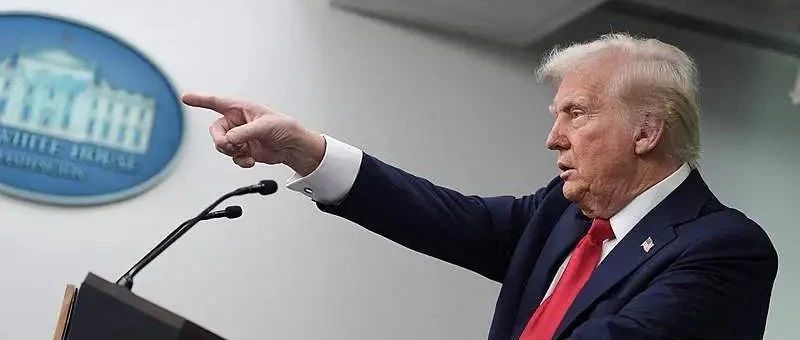
白宫尚未就该豁免如何实施做出后续解释,但特朗普暗示,已承诺投资 6000 亿美元进行国内制造计划 的苹果公司可以获得豁免。 美国总统唐纳德·特朗普表示,他将在未来两周内对半导体征收税款,这是他准备大幅扩大关税制度的 最新迹象。 特朗普周五在前往阿拉斯加与俄罗斯总统普京举行峰会的空军一号上对记者说:"我将在下周和下下周 制定钢铁和芯片的关税——芯片和半导体,我们将在下下下周的某个时候制定。" 刚刚!美国总统特朗 普:下周将对钢铁、芯片加征关税 目前尚不清楚特朗普在钢铁关税问题上是否言过其实。他已于6月份将钢铁和铝进口关税上调至50%。 总统曾多次承诺将在几周内对芯片和药品征收税款,但尚未发布任何正式公告。 自4月以来,这两个行业一直受到美国商务部的调查,这是特朗普以国家安全为由征收关税的先决条 件。调查过程可能很复杂,可能需要数月甚至更长时间才能结束。 由于芯片广泛应用于各种现代消费产品中,制造商和人工智能公司一直渴望更清楚地了解他的半导体价 格计划。 上周,特朗普在与苹果公司首席执行官蒂姆·库克的一次活动中表示,他计划对半导体征收 100% 的关 税,同时豁免那些将制造业转移到美国的公司的产品。 周五,特朗普 ...


刚刚!美国总统特朗普:下周将对钢铁、芯片加征关税
是说芯语· 2025-08-15 12:44
Group 1 - The article reports that U.S. President Trump announced plans to impose tariffs on steel and chips next week, starting with a lower tax rate [1] - The focus on tariffs indicates a potential shift in trade policy that could impact the steel and semiconductor industries significantly [1] Group 2 - The article references the "China IC Unicorn Alliance," suggesting a growing interest in the semiconductor sector within China [3] - The mention of the article being a reprint indicates a broader discussion on the implications of U.S. tariffs on global supply chains and market dynamics [4]
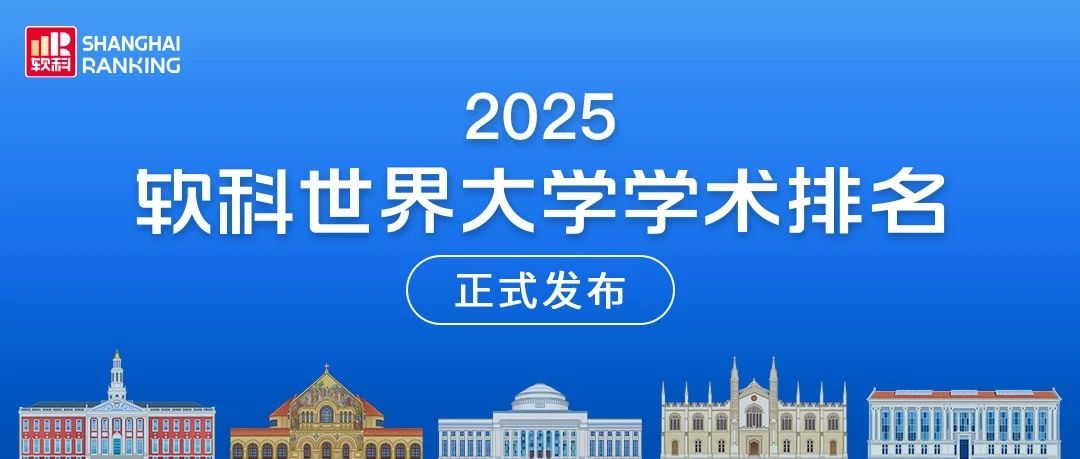
重磅发布:2025软科世界大学学术排名
是说芯语· 2025-08-15 09:44
Core Viewpoint - The 2025 ShanghaiRanking's Academic Ranking of World Universities (ARWU) has been released, showcasing the academic performance of 1,000 leading research universities globally, with a notable increase in the number of Chinese universities on the list, reflecting their growing academic strength and international influence [4][14]. Summary by Sections Global Rankings - Harvard University retains the top position for the 23rd consecutive year, followed by Stanford University and Massachusetts Institute of Technology [8][9]. - In the Asia-Pacific region, Tsinghua University ranks 18th globally, maintaining its status as the top university in Asia [8][10]. Chinese Universities Performance - A total of 222 universities from mainland China made the list, an increase of 19 from the previous year, surpassing the United States, which has 183 universities [14][15]. - Thirteen Chinese universities are in the global top 100, with Tsinghua University rising to 18th, Peking University to 23rd, and Zhejiang University to 24th [14][19]. Notable Rankings of Chinese Universities - Tsinghua University: 18th (up 4 places) - Peking University: 23rd (up 1 place) - Zhejiang University: 24th (up 3 places) - Shanghai Jiao Tong University: 30th (up 8 places) - University of Science and Technology of China: 40th (up 2 places) - Fudan University: 41st (up 9 places) [14][19]. Growth of New Entrants - 22 universities from mainland China made their debut in the rankings, including Guangxi Normal University and Tianjin University of Technology, indicating a rise in academic standards [4][14]. Comparison with Other Regions - China has 13 universities in the top 100, second only to the United States, which has 37 [14][15]. - The number of Chinese universities in the top 500 is 113, while the total number in the top 1,000 is 244 [15][16]. Development of "Double First Class" Universities - Among the 101 universities in the global top 500 from mainland China, 83 are classified as "Double First Class," with significant advancements noted for Tongji University and Xiamen University, which entered the top 150 for the first time [18].


突发!特朗普政府要入股英特尔
是说芯语· 2025-08-15 02:53
Core Viewpoint - The potential investment from the Trump administration in Intel is aimed at strengthening the U.S. semiconductor manufacturing capabilities, particularly through financial support for Intel's new factory in Ohio, which is a key project under the CHIPS Act [1][3][4]. Group 1: Investment and Market Reaction - Intel's stock price surged by 8.9% on August 15, marking its largest single-day increase recently, following news of potential government investment [1]. - The stock closed at $23.86, up 7.38%, and continued to rise over 3.6% in after-hours trading, reflecting positive market sentiment regarding government support [4]. - Year-to-date, Intel's stock has increased by 18%, indicating investor optimism that government funding could alleviate financial pressures and expedite production at the Ohio facility [4][5]. Group 2: Strategic Importance and Challenges - Intel is currently the only U.S. company capable of producing advanced chips domestically, which is critical for national defense and strategic sectors like artificial intelligence [3]. - The company's market value has plummeted from $288 billion in 2020 to approximately $104 billion, highlighting the challenges faced by the U.S. semiconductor industry [7]. - Intel is under pressure from competitors like NVIDIA and AMD in the AI chip market, and its ongoing struggles reflect broader issues within the U.S. semiconductor sector [7]. Group 3: Government Intervention and Controversy - The potential government investment is seen as a "vote of confidence" in Intel, aligning with the goals of the CHIPS Act, which previously provided $8.5 billion in subsidies to the company [4][9]. - There are concerns regarding government intervention in corporate operations, especially given Trump's previous criticism of Intel's CEO [6][9]. - If the investment proceeds, it would mark the first instance of the U.S. government directly investing in a private tech company, potentially setting a precedent for future federal funding in strategic industries [7].

恭喜!奕斯伟材料 IPO过会!
是说芯语· 2025-08-14 23:33
Core Viewpoint - Xi'an Yiswei Materials Technology Co., Ltd. has received approval for its IPO on the Sci-Tech Innovation Board, marking it as the first unprofitable company accepted by the Shanghai Stock Exchange after the implementation of new policies. The company is the largest 12-inch silicon wafer manufacturer in mainland China, with significant growth potential in the semiconductor industry [2]. Group 1 - Xi'an Yiswei was established in 2016 and focuses on the research and production of 12-inch silicon wafers, holding a market share of 6-7% globally, ranking sixth in the world [2]. - The company has developed five core process systems, with products serving international clients such as Samsung and SK Hynix, covering storage and logic chip sectors [2]. - The projected compound annual growth rate (CAGR) for revenue from 2022 to 2024 is 41.83%, despite a cumulative loss of 1.728 billion yuan due to high depreciation from heavy asset investments [2]. Group 2 - The company plans to raise 4.9 billion yuan for capacity expansion, aiming to reach a production capacity of 1.2 million wafers per month by 2026, which would meet 40% of mainland China's demand [2]. - Regulatory authorities are concerned about the stability of the company's control and its profitability outlook. The listing highlights the capital market's acceptance of "hard technology" and the need for the company to overcome profitability challenges in an oligopolistic market [2].
恭喜!奕斯伟材料 IPO过会!
是说芯语· 2025-08-14 11:24
Core Viewpoint - Xi'an Yichai's IPO approval marks a significant milestone as it becomes the first unprofitable company accepted by the Shanghai Stock Exchange after the implementation of new policies, highlighting the market's openness to "hard technology" investments [2]. Group 1: Company Overview - Xi'an Yichai, established in 2016, specializes in the research and production of 12-inch silicon wafers, making it the largest manufacturer of such wafers in mainland China [2]. - The company is projected to achieve a monthly shipment volume of 521,200 wafers by the end of 2024, ranking sixth globally with a market share of 6-7% [2]. - Xi'an Yichai has developed five core process systems, with products serving sectors such as memory and logic chips, supplying major international clients like Samsung and SK Hynix [2]. Group 2: Financial Performance - The company anticipates a compound annual growth rate (CAGR) of 41.83% in revenue from 2022 to 2024, despite accumulating losses of 1.728 billion yuan, primarily due to high depreciation costs from heavy asset investments [2]. - The planned fundraising of 4.9 billion yuan aims to expand production capacity, with expectations to reach a monthly output of 1.2 million wafers by 2026, which would meet 40% of mainland China's demand [2]. Group 3: Market and Regulatory Environment - Regulatory authorities are focused on the stability of Xi'an Yichai's control and its profitability outlook [2]. - As a critical component in the semiconductor self-sufficiency landscape, the company's listing reflects the capital market's support for "hard technology," while it faces challenges in overcoming profitability barriers in an oligopolistic market [2].
DeepSeek R2 因芯片问题推迟发布
是说芯语· 2025-08-14 06:28
Core Viewpoint - DeepSeek's launch of its new AI model R2 has been delayed due to issues with Huawei's Ascend chips, highlighting the challenges China faces in achieving technological independence from U.S. technology [3][4][6]. Group 1: Model Development Challenges - DeepSeek has encountered ongoing technical issues while training the R2 model using Huawei's Ascend chips, leading to the decision to use Nvidia chips for training and Huawei chips for inference [4][7]. - The founder of DeepSeek, Liang Wenfeng, has expressed dissatisfaction with the progress of the R2 model and is pushing for increased investment in research and development [8]. - Data annotation for the R2 model has taken longer than expected, contributing to the delay in its release, which is now anticipated within a few weeks [8]. Group 2: Industry Context and Competition - The Chinese government has encouraged tech companies to adopt domestic alternatives to Nvidia products, such as those from Huawei and Cambricon, amid ongoing geopolitical tensions [7]. - Industry experts note that Chinese chips face stability issues, slower inter-chip communication, and inferior software performance compared to Nvidia's offerings [7]. - AI researcher Ritvik Gupta from UC Berkeley commented that models are easily replaceable, with many developers opting for Alibaba's Qwen3 due to its efficiency and flexibility [9]. Group 3: Future Outlook - Despite current challenges, there is optimism that Huawei will eventually adapt to the demands of training AI models with its Ascend chips [10]. - The geopolitical landscape surrounding chip manufacturers like Nvidia remains complex, with Nvidia agreeing to share a portion of its revenue with the U.S. government to resume sales of its H20 chips to China [11].