是说芯语

Search documents
美对京东方开出近 15 年进口禁令!
是说芯语· 2025-08-14 02:27
Core Viewpoint - The U.S. International Trade Commission (ITC) has made a preliminary ruling against BOE, stating that the company has infringed on Samsung Display's OLED trade secrets, leading to a proposed import ban lasting 14 years and 8 months [1][3]. Summary by Sections ITC Ruling and Implications - BOE's OLED panels, modules, and related components will be banned from entering the U.S. market, with the ban expected to take effect after a final ruling in November 2024 [3]. - The ITC's preliminary ruling indicates that BOE illegally obtained Samsung's OLED manufacturing technology, violating Section 337 of the U.S. Tariff Act [3]. - The ruling not only affects OLED panels but also includes end-device components that use these panels, potentially impacting Apple's iPhone 17 series models [3]. BOE's Response and Legal Actions - In response to the ITC ruling, BOE has initiated legal proceedings, seeking a review from the ITC and filing a patent lawsuit against Samsung in the U.S. [4]. - BOE claims that the initial ruling contains significant legal flaws and emphasizes that previous investigations found no violations of Section 337 [4]. Technological Developments and Market Impact - BOE is accelerating its development of next-generation display technologies, such as Micro LED, with plans for mass production by March 2025 [6]. - The company is also investing 2.02 billion yuan in a smart terminal base in Vietnam, aimed at reducing reliance on the U.S. market [6]. - The potential ban could significantly alter the global display industry landscape, with Korean companies like LG Display seeing stock price increases in anticipation of capturing BOE's U.S. market share [6]. Supply Chain and Cost Implications - BOE's dependence on the U.S. market is relatively low, with only 15% of its panel business exported to the U.S. [6]. - However, if the ban is enforced, Apple may face a 10%-15% increase in OLED procurement costs and heightened supply chain concentration risks [6]. Legal and Regulatory Context - The ruling marks a critical point in the ongoing legal battle between Samsung and BOE, which has spanned three years [8]. - The U.S. government has been tightening technology restrictions on China, with the display panel sector becoming a focal point [8]. Timeline of Events - October 2023: Samsung files a lawsuit against BOE for OLED trade secret infringement. - December 2024: ITC recommends an import ban on BOE. - July 2025: ITC makes a preliminary ruling confirming infringement. - November 2025: Final ruling expected, followed by a 60-day presidential review period. - January 2026: If not vetoed by the president, the ban will take effect until September 2040 [9]. Future Outlook - Analysts suggest that while BOE is pursuing legal avenues to mitigate the impact, the likelihood of overturning the ITC's preliminary ruling is low [10]. - The next six months will be crucial for both parties, as the ruling will influence BOE's global market strategy and set new boundaries in U.S.-China technology competition [10].



美国暗植追踪器监控AI芯片出货,或涉戴尔、超微服务器
是说芯语· 2025-08-14 01:59
Core Viewpoint - The article highlights the U.S. government's secretive use of tracking devices in shipments of advanced chips believed to be at high risk of illegal transfer to China, indicating a rigorous enforcement of export restrictions on semiconductor technology [1][3]. Group 1: Tracking Devices and Enforcement - U.S. authorities have installed tracking devices in specific batches of advanced chip shipments to monitor potential illegal transfers to China, reflecting a strong commitment to enforcing export controls [1][3]. - These tracking devices, used for decades by U.S. law enforcement, are now being applied to combat illegal semiconductor transfers, particularly in shipments from manufacturers like Dell and Super Micro [3][4]. - The tracking devices can vary in size, with some being as large as smartphones, and are often hidden within the packaging of the products [4]. Group 2: Industry Reactions and Implications - Companies like Super Micro and Dell have refrained from commenting on the tracking actions, while NVIDIA and AMD have also not provided responses regarding the matter [5]. - The U.S. government has been pushing for chip companies to incorporate location verification technologies in their products to prevent illegal transfers to restricted countries [6]. - China has criticized these export restrictions as measures to hinder its rise and has expressed concerns over potential "backdoor" risks in AI chips [6]. Group 3: Historical Context and Legal Framework - The use of tracking devices by U.S. export enforcement can be traced back several decades, with legal frameworks allowing for their installation under certain conditions [7]. - There are indications that some individuals involved in the transfer of controlled chips to China are aware of the existence of these tracking devices and take precautions to check for them [7]. - Recent legal actions by the U.S. Justice Department have highlighted the scrutiny surrounding shipments containing NVIDIA chips, emphasizing the ongoing investigations into potential export violations [7].





突发!索赔9999万! 屹唐起诉美国应用材料!
是说芯语· 2025-08-13 23:43
Core Viewpoint - The lawsuit filed by Yitang Co., Ltd. against Applied Materials Inc. (AMAT) is aimed at protecting intellectual property rights and addressing the alleged illegal acquisition and use of core technology secrets related to plasma sources and wafer surface treatment [2][5][7]. Group 1: Lawsuit Details - Yitang Co., Ltd. has initiated legal proceedings against AMAT for allegedly obtaining and using its core technology secrets without authorization, which were subsequently disclosed through a patent application in China [2][5]. - The company is seeking a court order to stop AMAT from using its technology secrets and is claiming economic damages totaling 99.99 million yuan [2][5]. Group 2: Technology and Innovation - The technology in question involves high-concentration, stable, and uniform plasma used for wafer surface treatment, which is critical for various semiconductor processing equipment [5]. - Yitang Co., Ltd. claims to possess leading original technology capabilities in this field and has relevant trade secrets [5]. Group 3: Employee Recruitment and Confidentiality - AMAT allegedly recruited two employees from Yitang's subsidiary, Mattson Technology, Inc. (MTI), who had access to the core technology secrets and had signed confidentiality agreements [5][7]. - Evidence suggests that after their recruitment, these employees contributed to a patent application that disclosed the technology secrets shared between Yitang and MTI [5][7]. Group 4: Impact on Business - The lawsuit is positioned as a measure to protect the company's intellectual property and is not expected to have a significant adverse impact on its operations, with the final outcome dependent on the court's ruling [5]. - The alleged actions of AMAT are said to have caused serious damage to Yitang's intellectual property and economic interests, including promoting and selling products using the disputed technology in China [7]. Group 5: Industry Context - Applied Materials Inc. is a major player in the semiconductor equipment industry, with 2024 revenues projected to exceed $25 billion, making it the second-largest supplier globally, following ASML [7].


突发!台积电关厂!
是说芯语· 2025-08-13 23:43
Core Viewpoint - TSMC plans to phase out 6-inch wafer production within two years and adjust 8-inch wafer production to enhance efficiency [1][3] Group 1: Production Changes - TSMC has notified customers that the 6-inch wafer production at Fab 2 and 8-inch wafer production at Fab 5 will cease by the end of 2027 [3] - The company is providing a timeline to assist customers in transitioning to 12-inch wafer production [3] - TSMC aims to redeploy some employees from the 8-inch wafer plants to strengthen advanced packaging capabilities and accelerate the shift to 12-inch wafers [3] Group 2: Capacity and Technology - TSMC operates four 12-inch "GigaFab" clusters with a monthly capacity of over 100,000 wafers, four 8-inch wafer plants, and one 6-inch wafer plant, with a total capacity of approximately 17 million 12-inch wafers in 2024 [3] - TSMC is a pioneer in GaN wafer foundry services, having introduced this technology in 6-inch wafer production in 2014 and expanded it to 8-inch wafers in 2021 [3] Group 3: Strategic Decisions - During the recent board meeting, TSMC announced five major resolutions but did not include speculated topics such as increased investment in the U.S. or collaboration with Intel [3] - TSMC intends to maintain its current level of investment in the U.S. and uphold its capital expenditure target of $38 billion to $42 billion for the year [3]


国产 HBM3 芯片突破!华为获供后,存储三巨头格局生变
是说芯语· 2025-08-13 09:43
Core Viewpoint - The article highlights the significant advancements in China's semiconductor industry, particularly the development and potential market impact of domestically produced HBM3 memory chips, which could disrupt the current dominance of major global players like Samsung, SK Hynix, and Micron [2][5]. Group 1: HBM3 Development and Market Impact - Domestic DRAM leader has begun supplying HBM3 samples to Huawei, manufactured using a self-developed 16nm G4 process, awaiting mass production approval [2]. - The G4 process allows for a 20% reduction in chip size and significant energy efficiency improvements compared to the previous 18nm G3 process, positioning China as the third country capable of mass-producing HBM3 after South Korea and the USA [2]. - The integration of HBM3 chips into Huawei's Ascend 910C AI chip is expected to enhance AI computing capabilities significantly, with a 40% increase in inference speed and a 30% improvement in energy efficiency [3][4]. Group 2: Competitive Landscape - The global HBM market is currently dominated by SK Hynix, which holds over 50% market share, followed closely by Samsung and Micron [4]. - In response to the emergence of domestic HBM3, international competitors are accelerating their technology iterations, with SK Hynix planning to start mass production of the world's first 12-layer HBM3E by September 2024 [4]. - Micron aims to achieve parity in HBM market share with its overall DRAM share (approximately 25%) by the second half of 2025 [4]. Group 3: Future Outlook and Strategic Positioning - Analysts predict that the large-scale application of domestic HBM3 will compel international manufacturers to accelerate technology transfer, potentially leading to a 20%-30% decrease in HBM3e prices over the next two years [5]. - The Chinese semiconductor industry is leveraging "cost-performance + localization" strategies to capture a share of the mid-to-high-end market [5]. - By 2025, domestic HBM market demand is expected to exceed 120 million GB, accounting for 30% of the global total, driven by policies such as the "East Data West Computing" project [6].

Momenta 自研辅助驾驶芯片点亮!开启装车测试!
是说芯语· 2025-08-13 05:29
Core Viewpoint - Momenta has developed its own driver assistance chip, marking a significant step in the competitive landscape of global driver assistance chips, showcasing its vertical integration capability of "algorithm + chip" [1][11] Group 1: Project Initiation - In 2020, Momenta identified a critical bottleneck with existing Nvidia Xavier chips, which had a system cost exceeding $8,000 and could only support L2+ functions [3] - The company established its chip division in Q3 2021, launching the "Zhixing Chip Plan" aimed at creating a dedicated chip that aligns with its self-developed algorithms and keeps costs under $3,000 [3] Group 2: Research and Development - The main challenge was converting 6 million kilometers of real-world testing data into design parameters for the chip architecture [4] - The team opted for a heterogeneous computing architecture of "CPU + NPU + GPU" after discovering inefficiencies in traditional GPU architectures during simulations [4] Group 3: Chip Production and Testing - The first round of chip production was completed in February 2024, yielding 500 engineering samples, with the first sample successfully lit up in March [5] - Initial road tests showed that the chip managed to process data from 12 cameras, 5 millimeter-wave radars, and 1 LiDAR with an average power consumption of under 35W, approximately 20% lower than Nvidia's Orin chip [5] Group 4: Technology and Performance - The chip is manufactured using TSMC's 7nm FinFET process, with an area of about 180mm² and over 15 billion transistors [6] - It features an NPU performance of 256 TOPS (INT8) and a memory bandwidth of 200GB/s, supporting LPDDR5X memory specifications [6] Group 5: Team Composition - The team is led by Dr. Cao Xudong, who has a PhD in Computer Science from Tsinghua University and has extensive experience in computer vision and machine learning [7] - The core team includes members from Nvidia and Qualcomm, with a unique "algorithm-defined chip" development model [8] Group 6: Market Position - The global automotive-grade driver assistance chip market is currently dominated by Nvidia (45% market share) and Qualcomm (25% market share) [9] - If Momenta's chip is priced around $1,500, it could significantly undercut Nvidia's Orin chip priced at approximately $2,500, with potential annual shipments exceeding 500,000 units post-2026 [9] Group 7: Industry Implications - Momenta's approach validates the feasibility of "algorithm companies developing their own chips," potentially shortening the optimization cycle between algorithms and hardware by about 50% [11]

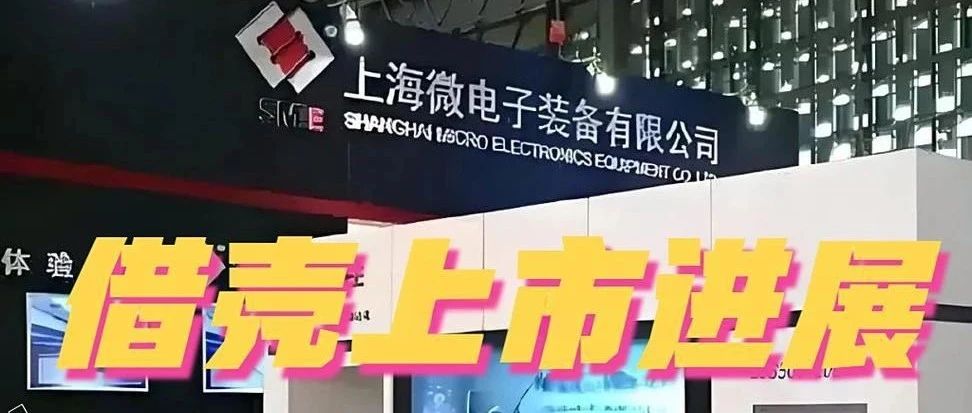
国产光刻机大厂“借壳上市”,最新回应!
是说芯语· 2025-08-13 02:58
Core Viewpoint - The article discusses the recent developments regarding Zhongying Electronics, including its response to market rumors about potential mergers and its significant shareholder changes, indicating a shift in control structure towards state-owned enterprises [1][3]. Group 1: Company Developments - Zhongying Electronics responded to rumors about being a shell resource for Shanghai Micro Electronics, stating that it is not aware of the source of these rumors and will only consider IC design companies [1]. - In June, Zhongying Electronics announced that its original controlling shareholder, Weilang International Group, along with its concerted party WIN CHANNEL Ltd, plans to transfer a total of 14.20% of its shares to Shanghai Zhinen Industrial Electronics, which will result in Zhinen controlling 23.40% of the voting rights and becoming the largest shareholder [3]. - This transaction marks the first substantial change in the control structure of Zhongying Electronics since its establishment, indicating a new phase with local state-owned assets involved [3]. Group 2: Market Implications - Following the share transfer, the new state-owned major shareholder may facilitate Zhongying Electronics' product entry into state-controlled companies in Shanghai, as indicated by the company's response to investor inquiries [3].

上海芯片上市公司,终止收购!
是说芯语· 2025-08-13 02:58
Core Viewpoint - The article discusses the recent termination of a significant acquisition deal between Xinxiangwei and Aixiasheng, highlighting the challenges in the semiconductor industry regarding mergers and acquisitions, particularly in the context of rapid technological changes and competitive pressures [4][9][16]. Group 1: Company Overview - Xinxiangwei, established in 2005, specializes in the research, design, and sales of display chips, providing comprehensive solutions in the display chip sector [6]. - Aixiasheng, founded in 2011, focuses on chip design and solutions in the human-computer interaction field, and has received recognition as a national high-tech enterprise [12]. Group 2: Acquisition Attempt - Xinxiangwei planned to acquire 100% of Aixiasheng's shares through a combination of stock issuance, convertible bonds, and cash payments, but the deal was terminated due to a lack of consensus among the parties involved [4][9]. - The acquisition was viewed as a "snake swallowing an elephant" scenario, given Aixiasheng's projected revenues of 782 million yuan and 1.267 billion yuan for 2023 and 2024, respectively, compared to Xinxiangwei's revenues of 480 million yuan and 507 million yuan during the same period [8][9]. Group 3: Financial Performance - Xinxiangwei's revenue for 2024 was 507 million yuan, reflecting a year-on-year growth of 5.61%, but its net profit dropped significantly by 69.41% to 8.4231 million yuan, indicating a pressing need to enhance profitability amid fierce market competition [9]. - In the first quarter of 2025, Xinxiangwei reported a revenue of 150 million yuan, a substantial increase of 49.95% year-on-year, and achieved a net profit of 218.51 thousand yuan, marking a return to profitability [9]. Group 4: Industry Context - The semiconductor industry has seen a surge in merger and acquisition activities, particularly following the release of new regulatory policies aimed at supporting strategic acquisitions in emerging industries [15]. - Despite favorable policies, the semiconductor sector faces significant challenges in executing mergers due to rapid technological advancements and complex negotiations regarding valuations and terms [16].

美光回应中国区裁员:终止移动NAND开发!
是说芯语· 2025-08-12 06:34
Core Viewpoint - Micron has initiated layoffs in its China division due to the ongoing weak financial performance of mobile NAND products, leading to a halt in the development of future mobile NAND products, including UFS5 [1][3]. Group 1: Layoffs and Product Development - Micron's layoffs primarily affect the embedded team, testing, and support departments in various locations including Shanghai and Shenzhen [1]. - The decision to stop mobile NAND product development is a response to the sluggish market performance and slower growth compared to other NAND opportunities [1][3]. - Despite the layoffs, Micron will continue to develop and support other NAND solutions such as SSDs and NAND solutions for automotive and other end markets [3]. Group 2: Market Position and Future Outlook - Micron emphasizes the importance of China in its global business strategy, recognizing it as a key market for innovation and technology development [3]. - The company has raised its revenue and adjusted profit expectations for the fourth quarter, anticipating a surge in demand for memory chips used in AI infrastructure, which has positively impacted its stock price [3]. - The increasing investment by major tech companies in AI data centers is driving a significant rise in orders for Micron's high bandwidth memory (HBM) chips due to their superior data processing capabilities [3].


突发!美光中国区启动裁员
是说芯语· 2025-08-12 04:22
Core Viewpoint - Micron is significantly downsizing its operations in China, driven by regulatory challenges and declining revenue from the region, reflecting a broader strategic shift towards AI and data center markets [1][2][3]. Group 1: Revenue Decline in China - Micron's revenue share from the Chinese market has plummeted from 58% in 2018 (approximately $17.36 billion) to 10.8% in 2022 (around $3.23 billion), with further deterioration expected post-2023 regulatory actions [2]. - The company's revenue from China is projected to fall below $1 billion, constituting less than 5% of total revenue, despite a global revenue increase of 61.59% to $25.11 billion in fiscal 2024 [2]. Group 2: Strategic Shift Towards AI and Data Centers - Micron is undergoing a major business transformation, with data center revenue surging by 400% in Q1 of fiscal 2025, now accounting for over 50% of total revenue, while the Chinese market is becoming increasingly peripheral [3]. - The company plans to allocate 30% of its capital expenditures in fiscal 2025 to HBM production, with no new capacity planned for the Chinese region [3]. Group 3: Operational Challenges in China - The operational costs in China are significantly outweighing revenues, exacerbated by increased compliance costs following regulatory scrutiny, which exceeded $120 million in Q4 2023 alone [4]. - The recent layoffs are expected to save approximately $25 million annually, which is about 30% of the operational losses in China for 2023 [4]. Group 4: Competitive Pressures from Domestic Players - Micron's long-standing technology restrictions on Chinese storage companies have inadvertently accelerated the domestic industry's growth, with Yangtze Memory Technologies achieving mass production of 232-layer 3D NAND chips and improving DRAM yields [6]. - The company's market share in the consumer segment has dropped from 35% in 2021 to 18% in 2024, with NAND business gross margins at 19%, significantly lower than competitors [6].