经济观察报

Search documents
中信银行科技金融“特色打法”:产品破局、生态赋能、协同增效
经济观察报· 2025-09-30 09:42
Core Viewpoint - The banking industry, as a key player in the modern financial system and a vital supporter of the real economy, is increasingly engaging in the technology finance sector, with CITIC Bank leading the way by integrating technology finance into its strategic development [2] Group 1: Financial Innovation - CITIC Bank has introduced innovative financial products that focus on "future potential" rather than historical financial performance, exemplified by its first option loan transaction in August, which supports early-stage technology enterprises [5][6] - The "option loan" model allows CITIC Bank to support technology companies that lack traditional collateral, thus broadening their financing channels and demonstrating the bank's commitment to nurturing early-stage tech firms [6] - The "mid-term research insurance + technology achievement transformation loan + option loan" project creates a comprehensive support system that benefits banks, enterprises, and insurance companies [7] Group 2: Ecosystem Empowerment - CITIC Bank recognizes that technology enterprises require more than just financial products; they need comprehensive services including technical support and policy consultation to address key pain points in technology finance [10] - The establishment of a Technology Finance Center at CITIC Bank aims to integrate resources and expertise from various departments to better serve technology enterprises [11] - By collaborating with government agencies, investment institutions, and industry leaders, CITIC Bank has created five ecological circles to provide diverse financial services throughout the entire lifecycle of technology enterprises [11] Group 3: Collaborative Efficiency - CITIC Bank leverages the comprehensive advantages of CITIC Group to develop a unique financial service model, launching the CITIC Equity Investment Alliance to provide a one-stop comprehensive financial service model [14] - The CITIC Equity Investment Alliance has managed funds exceeding 320 billion and has invested in over 1,100 technology enterprises, showcasing the bank's commitment to supporting early-stage tech firms [14] - As of June 2025, CITIC Bank's technology enterprise loan balance reached 660.637 billion, reflecting an 8.14% increase year-on-year, indicating the bank's effective engagement in the technology finance sector [15]


寻找品牌营销的价值锚点——2024-2025年度杰出品牌营销年会案例征集启动
经济观察报· 2025-09-30 09:42
Core Insights - The essence of brand marketing is not about finding traffic hacks but establishing value connections [1] - In 2025, brands are undergoing a profound process of demystification and reconstruction, shifting from a traffic-driven economy to a value-driven economy [2] - The transition from capturing traffic to fostering value co-creation is crucial for brands to thrive in the current market landscape [3] Brand Marketing Trends - The marketing landscape is increasingly defined by two distinct paths: traffic economy and brand economy [3] - The traffic economy relies on short-term spikes in user attention, exemplified by the case of Dongfang Zhenxuan, which saw a single-day GMV of over 300 million but failed to retain users [3] - In contrast, the brand economy focuses on sustainable user connections and deeper consumer experiences, as demonstrated by the successful marketing strategies of brands like Ryukakusan [3] Risks and Opportunities - The shift from traffic to value is challenging, with many brands falling into misconceptions about value marketing [5] - Some brands misuse cultural elements as mere marketing gimmicks, leading to disconnects between product quality and brand messaging [5] - However, there are significant opportunities for growth through cultural integration and user co-creation, as seen in collaborations like Heytea's partnership with Yayoi Kusama [5] Value Methodology - The upcoming case collection for the 2024-2025 Outstanding Brand Marketing Conference will focus on three core areas: effectiveness and innovation, content and sustainability, and cross-industry collaboration [7] - The goal is to uncover replicable value growth models that resonate with the evolving marketing landscape [7] Call to Action - The conference invites brands that prioritize value and innovation to share their successful case studies, emphasizing the importance of meaningful brand narratives in shaping the industry's future [8]

抢走了人类的工作,机器人也得交税!
经济观察报· 2025-09-30 09:42
Core Viewpoint - The discussion around the "robot tax" is not solely about taxation itself but also about fostering a more inclusive and equitable approach to the ongoing technological revolution [1]. Group 1: Current Status of Robot Tax - No country has officially legislated a "robot tax," but the concept has entered the agenda of some economic managers [3][11]. - Various forms of implementing a "robot tax" exist, such as reducing tax incentives for the robotics industry or directly increasing tax rates for this sector [3][14]. - The rapid development of artificial intelligence (AI) suggests that robots will increasingly permeate various sectors of the economy, complicating tax-related issues [3][20]. Group 2: Economic Implications and Employment Concerns - The application of AI technology is expected to create new jobs and alter work content in the long term, but short-term impacts on the job market are likely to be negative [6]. - The high capital return rates in the robotics industry may lead to further concentration of capital among capital owners [7]. - The introduction of a "robot tax" could provide financial support for maintaining the minimum living standards of workers and aiding the re-employment of the unemployed [6][11]. Group 3: Perspectives on Taxation - Some experts argue that imposing a "robot tax" on companies using robots could balance the economic development impacts on social stability [10]. - The current tax system is primarily designed for human laborers, raising concerns about the shrinking tax base as robots replace human jobs [19]. - The idea of taxing robots is seen as a potential solution to counteract the negative effects of job loss and increasing economic inequality caused by automation [20]. Group 4: Implementation and Structure of Robot Tax - Various proposals for a "robot tax" exist, including taxing companies that replace human workers with robots, assessing "virtual wages" for robot labor, and including robot activities in VAT [16][15]. - The taxation could target either the producers or users of robots, with different tax types such as profit tax or transaction tax being considered [15][14]. - The revenue from such taxes could be allocated to support unemployment insurance and retraining programs for displaced workers [15]. Group 5: Legal and Theoretical Considerations - The concept of a "robot tax" challenges existing tax theories, which are primarily based on human labor [19]. - There is a debate about whether robots should be granted legal personhood for taxation purposes, as current laws view robots as extensions of human agents [21]. - The potential for a "technology sin tax" to mitigate the negative externalities of automation is discussed, although it raises concerns about fear-based legislation [20].

韩国教授金英顺谈“机器人税”:技术进步也要确保社会稳定
经济观察报· 2025-09-30 09:42
Core Viewpoint - The concept of a "robot tax" is not intended to penalize corporate innovation but to ensure that technological advancement progresses alongside social stability and inclusivity [3][5]. Group 1: Current Status and Proposals - No country or region has yet implemented a "robot tax" in any form, although some local proposals have been made, such as discussions in the European Parliament in 2017 and a proposal in San Francisco [2][6]. - Various academic proposals for a "robot tax" exist, aiming for social fairness and welfare, but they differ significantly in implementation methods, ranging from direct taxation to reducing related incentives [2][6]. Group 2: Purpose and Justification - The "robot tax" serves as a modern tool for renegotiating the social contract, allowing for a fairer distribution of automation benefits to fund retraining programs and maintain social safety nets [3][4]. - The tax aims to address three main objectives: compensating for lost tax revenue due to automation, moderating rapid automation development to prevent social unrest, and providing funding for retraining initiatives and potential universal basic income projects [7][8]. Group 3: Implementation Challenges - If only one country unilaterally imposes a "robot tax," it risks losing corporate competitiveness, leading to capital and technology outflow to countries with lower tax rates [8][9]. - Effective implementation of a "robot tax" may require international coordination to avoid harmful competition among nations, similar to the concept of a "global minimum corporate tax" [8][9]. Group 4: Alternative Approaches - Alternatives to a direct "robot tax" include eliminating excessive capital depreciation benefits, providing wage subsidies or tax credits to encourage hiring, and establishing employer-funded training funds [10]. - A differentiated global framework may be necessary, allowing developing countries to delay taxation to attract investment while developed countries could pilot such taxes due to their more robust social safety nets [10][11]. Group 5: Tax Base and Compliance - To prevent the "robot tax" from becoming a tool for base erosion and profit shifting (BEPS), it should be linked to the actual use of automation rather than just the location of corporate profits [11]. - Strong transparency rules and compliance measures aligned with BEPS principles are essential for ensuring fairness and preventing tax avoidance [11].

首单外资消费REITs华夏凯德商业REIT成功上市
经济观察报· 2025-09-29 10:14
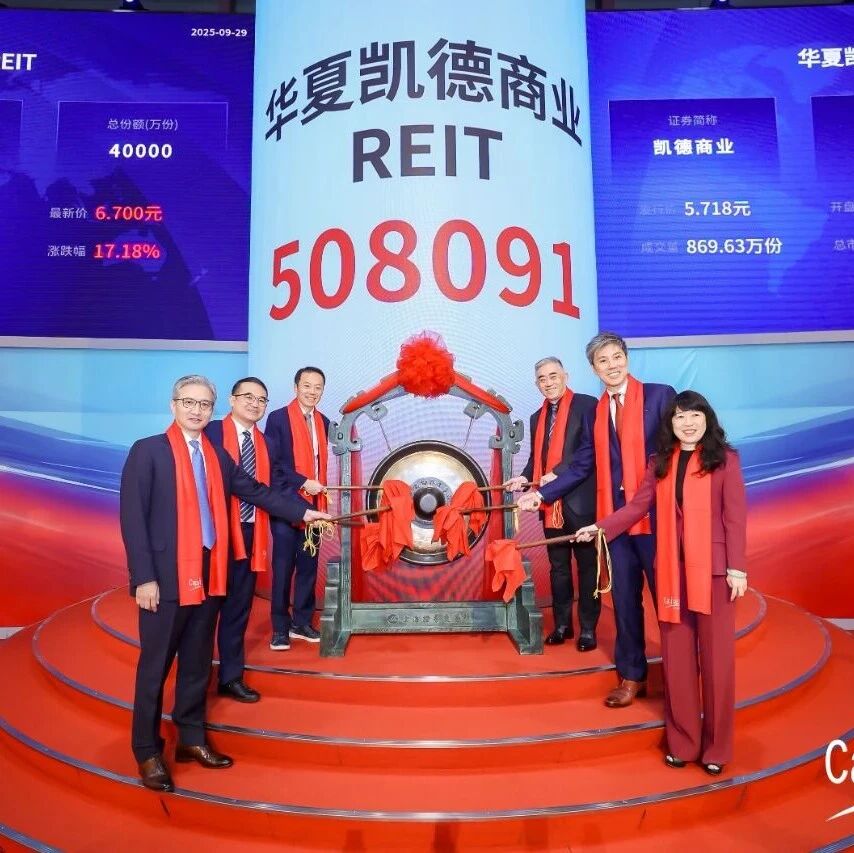
Core Viewpoint - The successful listing of the Huaxia CapitaLand Commercial REIT on the Shanghai Stock Exchange marks a significant milestone in the internationalization and diversification of China's public REITs market, coinciding with the 35th anniversary of diplomatic relations between China and Singapore [1][2]. Group 1: Fund Overview - The Huaxia CapitaLand Commercial REIT is initiated by CapitaLand, a leading global real estate asset management company, and is managed by a professional team, ensuring high asset quality and operational efficiency [2]. - The fund aims to raise 2.2872 billion yuan, with total subscriptions exceeding 309.17 billion yuan, resulting in an oversubscription rate of 535.2 times for public investors and 252.6 times for institutional investors [2]. Group 2: Leadership Insights - CapitaLand's CEO emphasized the integration of international REITs management experience with the Chinese market, providing domestic investors with new avenues for quality asset allocation in a low-interest-rate environment [3]. - The CEO of CITIC Securities highlighted the collaborative efforts in managing the REIT, marking a milestone in the long-term partnership with CapitaLand and contributing to the opening of China's capital market [3]. Group 3: Future Outlook - The Huaxia CapitaLand Commercial REIT is expected to become a benchmark product with stable returns and growth potential, aiming to deliver sustainable and competitive returns to investors through long-term and steady operations [3].
挚达科技通过港交所聆讯:凭“产品+服务+平台”领跑家用充电赛道
经济观察报· 2025-09-29 10:14
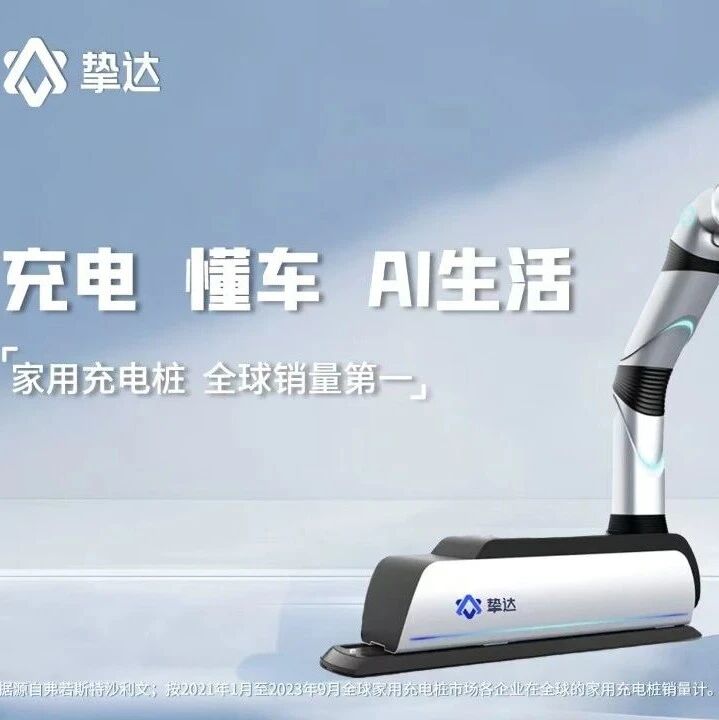
Core Insights - The article highlights the successful listing process of Zhida Technology on the Hong Kong Stock Exchange, marking a significant milestone for the company [1][2]. Industry Growth - The electric vehicle (EV) home charging solutions industry is experiencing explosive growth driven by dual factors: the push for carbon neutrality and the increasing penetration of electric vehicles [2][4]. - Global EV sales reached 7.7 million units in the five months ending May 31, 2025, representing a year-on-year growth of 32.1% [4]. - The global market for EV home charging solutions is projected to reach RMB 34.2 billion by 2029, with a compound annual growth rate (CAGR) of 19.2% from 2024 to 2029 [4]. Market Position - Zhida Technology is recognized as one of the largest suppliers of EV home charging solutions globally, holding a 9.0% market share in the home EV charging pile sales [5][6]. - In the Chinese market, Zhida Technology ranks first with a market share of approximately 13.6% [5]. - The company has shipped a total of 1.3 million home EV charging piles globally, with 1.2 million units in China, covering over 360 cities and completing more than 1.3 million installation and after-sales service tasks [5]. Strategic Partnerships - Zhida Technology has established deep collaborations with seven of the top ten EV manufacturers in China, enhancing its market advantage and facilitating global expansion through these partnerships [6]. Unique Business Model - The company employs a "product + service + digital platform" model, which addresses industry pain points and creates a competitive edge [8]. - The product range includes smart home EV charging piles and high-margin products like charging robots and energy management systems (EMS) [8][9]. - The service network is the largest in China, providing comprehensive support from installation to long-term maintenance, which increases customer loyalty and satisfaction [9]. Digital Platform - The digital platform serves as the core of Zhida Technology's business model, enabling efficient management of installation and after-sales services, as well as supporting shared charging services [10]. - The platform allows users to control charging remotely and optimize service efficiency through data accumulation, transforming charging piles into essential components of home energy management [10]. Innovation and Future Outlook - The "SmartLink" automatic charging robot, launched in May 2025, addresses user pain points related to charging convenience and is positioned to lead in high-tech barriers [10]. - As a leader in the home charging pile market, Zhida Technology is well-positioned to leverage capital for increased R&D, market expansion, and service network enhancement, capitalizing on the growth of the EV home charging industry [11].
从联芸科技看行业趋势:GMIF 2025上的存储“芯”生态
经济观察报· 2025-09-29 10:14
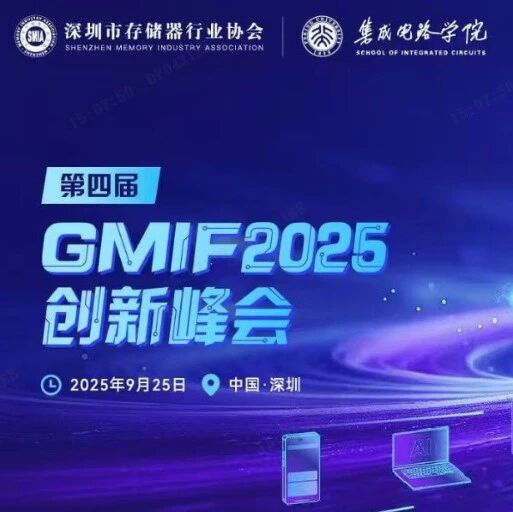
Core Viewpoint - The article emphasizes the significant evolution of storage controller chips in the context of the AI wave, highlighting the shift from standardized products to intelligent and scenario-based solutions, as showcased at the GMIF 2025 Innovation Summit in Shenzhen [1][2]. Industry Trends - The GMIF 2025 Innovation Summit focused on technological innovations in the storage controller chip sector, with a clear trend towards AI applications driving the transition from standardized products to intelligent, scenario-specific solutions [2]. - The exhibition featured various industry players showcasing recent technological achievements, with a notable presence from companies like 联芸科技, which demonstrated a comprehensive range of data storage controller chips and solutions across multiple application scenarios [4]. Technological Advancements - A new generation PCIe 5.0 controller chip was highlighted, integrating smart power management and health inspection features aimed at enhancing SSD lifespan and reliability, particularly for AI inference scenarios [7]. - The presentation by 联芸科技's general manager outlined the challenges and opportunities for storage technology in the AI era, indicating a future direction towards "intelligent, green, high-reliability, and customized" solutions [8]. Product Development - 联芸科技 introduced its product evolution path, showcasing the MAP1606 controller chip in the PCIe 4.0 domain with a 50% improvement in NAND interface speed and random read/write performance, and over 26% power optimization, targeting lightweight AI inference scenarios [10]. - In the PCIe 5.0 domain, the MAP1802 controller chip achieved 14.8GB/s sequential read performance and 3.2M IOPS random read performance, with power increase controlled within 50%, supporting mid-level AI applications [10]. Market Position - 联芸科技 has established a complete product system covering consumer, industrial, and enterprise levels, with its controller chips sold in over 80 countries, holding approximately 12% market share in the global SSD controller chip market [12]. - The company emphasizes the importance of deep collaboration across the entire industry chain, including NAND manufacturers and module manufacturers, to drive continuous innovation in the storage industry [12]. Industry Recognition - At the summit, 联芸科技 was awarded the "Outstanding Storage Industry Contribution Award," recognizing its technological breakthroughs in storage controller chip architecture design and energy efficiency optimization [13][15]. - The award reflects the industry's reassessment of the technological value of data storage controller chips as a critical component of AI infrastructure, with expectations for ongoing innovation in this area [15]. Future Outlook - The article concludes that storage controller chips have evolved from mere components to critical elements influencing overall infrastructure efficiency, with future market dynamics likely shaped by companies that possess full-stack design capabilities and collaborative ecosystems [20].
张亚中向前一步,其他人原地踏步
经济观察报· 2025-09-29 10:14
Core Viewpoint - The article discusses the urgency of Taiwan's political situation, emphasizing the need for the Kuomintang (KMT) to adopt a clear stance on the "1992 Consensus" and pursue cross-strait unification to avoid potential crises [2][11]. Group 1: Perspectives on the "1992 Consensus" - Zhang Yachung argues that the KMT should clearly recognize the "1992 Consensus" as acknowledging one China and pursuing unification, which would align with mainland China's policies [2][11]. - Luo Zhixiang describes the "1992 Consensus" as a creative ambiguity that allows for mutual non-recognition of sovereignty while facilitating dialogue and agreements during the KMT's governance [3]. - Gao Longbin emphasizes the importance of maintaining the status quo and using dialogue instead of confrontation, suggesting that the ambiguity of the "1992 Consensus" is crucial for future interactions [3]. Group 2: Responses and Critiques - Zhang Yachung critiques other KMT candidates for avoiding the question of unification and misinterpreting the "1992 Consensus," suggesting that their positions are inadequate for addressing current challenges [4][10]. - The article notes that the responses from Luo, Gao, and Zheng were coordinated, indicating a consensus among them to maintain a vague stance on cross-strait relations [8][9]. - Zhang Yachung expresses frustration over the KMT's inaction and the lack of urgency in addressing the risks facing Taiwan [12]. Group 3: Future Implications - The article suggests that if Lu Xiuyan, the current mayor of Taichung, runs for the 2028 election, the KMT's unified stance on the "1992 Consensus" will serve as a foundation for future cross-strait discussions [9]. - The KMT's leadership appears to be aligning their policies with Lu Xiuyan, potentially sidelining Zhang Yachung's more assertive approach [6][7].

绿色金融的中信样本:产品创新与生态协同 引领实体企业低碳转型新路径
经济观察报· 2025-09-28 11:47
Core Viewpoint - Green finance is becoming a crucial engine for supporting China's sustainable and high-quality economic development in response to global climate change and the "dual carbon" goals [2][4]. Group 1: Green Finance Strategy - Since the introduction of the "dual carbon" goals in 2020, carbon reduction and emission control have become core tasks for national deployment [4]. - The 2023 Central Financial Work Conference emphasized the importance of green finance as a key element in achieving carbon peak and carbon neutrality goals, with continuous government policies being introduced to support sustainable development [4][5]. - CITIC Bank aims to support the green transition of the real economy through green finance innovation, leveraging resources from CITIC Group [5]. Group 2: Innovative Financial Products - CITIC Bank has developed a "1+N+N" model for its green finance product system, providing a variety of financial tools such as green loans, green bonds, and green insurance [7]. - The bank's innovative "sustainable-linked loan management" mechanism links corporate ESG performance to loan interest rates, allowing companies to receive interest rate discounts for achieving preset ESG goals [11]. Group 3: Successful Case Studies - CITIC Bank's Guangzhou branch successfully issued a REITs project based on distributed photovoltaic assets, achieving a scale of 694 million yuan and becoming the first local state-owned enterprise REITs product integrating "green + carbon neutrality + rural revitalization" themes [9][10]. - The Nanjing branch introduced a "rate floating-carbon effect betting" mechanism, linking carbon emissions to loan interest rates, which successfully reduced financing costs for a high-energy-consuming fossil enterprise [12]. Group 4: Carbon Management Services - CITIC Bank has established a carbon management service system that includes carbon consulting, carbon accounting, and carbon trading, providing comprehensive carbon management services to corporate clients [13]. - The bank's "green low-carbon platform" serves as a marketing touchpoint and data hub, supporting enterprises in quantifying carbon emissions and providing targeted financing solutions [13]. Group 5: Future Outlook - CITIC Bank's green finance strategy reflects its commitment to responsibility under the "dual carbon" goals and its proactive positioning in the global green finance wave [17]. - The bank aims to deepen its green finance strategy by collaborating with group subsidiaries and external partners, focusing on product innovation and market expansion to support more green finance products [17].

携带地贫基因被解聘,体检“国标”该修了
经济观察报· 2025-09-28 11:47
Core Viewpoint - The article emphasizes the importance of equal employment opportunities for all individuals, including those with genetic conditions like thalassemia, and critiques the outdated health standards that contribute to employment discrimination [2][3][4]. Summary by Sections Employment Discrimination Case - A kindergarten teacher in Xiamen was dismissed for allegedly concealing her thalassemia carrier status, despite being asymptomatic. This case highlights the discrimination faced by job seekers with genetic conditions [2][3]. - The current health standards in Fujian do not explicitly classify thalassemia carriers as unfit for employment, yet the local implementation is overly strict compared to neighboring provinces [2][3]. Health Standards and Employment Rights - The article discusses the legal framework surrounding employment rights in China, noting that discrimination based on unchangeable personal characteristics is prohibited [3]. - The existing national civil servant health standards, which classify blood system diseases as unfit, are outdated and have not been revised in nearly a decade, failing to reflect advancements in medical understanding and treatment [3][4]. Medical Insights on Thalassemia - Thalassemia is one of the most common single-gene hereditary diseases in humans, with a carrier rate of approximately 8% in China, and higher rates in southern provinces [4]. - Most asymptomatic carriers or mild patients do not have their work capabilities affected and should not be classified as unfit for employment [4]. Call for Change - The article advocates for the revision of outdated health standards to prevent employment discrimination against asymptomatic individuals, drawing parallels to past successful legal challenges regarding hepatitis B discrimination [4]. - It stresses the need for societal recognition of the dignity and value that work provides to individuals, regardless of their health status [4].