老徐抓AI趋势

Search documents
A股风向与牛市解读,八月操作难度加大(内含下一步提醒
老徐抓AI趋势· 2025-08-10 04:03
Group 1: A-shares Performance and Economic Data - A-shares have shown decent performance with significant gains, but manufacturing PMI has remained low, at 49.3 in July, indicating contraction in the manufacturing sector [4] - The non-manufacturing PMI is just above 50, suggesting a lack of clear recovery signals in the overall economy [4] - Real estate sales continue to decline sharply, reflecting ongoing weakness in the real estate market [4] Group 2: Opportunities and Risks in the Innovative Drug Sector - The pricing policy for innovative drugs under medical insurance is becoming more flexible, benefiting innovative drug companies, but stock prices have already risen significantly in anticipation of this news [5] - Current valuations in the innovative drug sector are high, leading to potential risks of chasing prices [5] Group 3: Policy Signals and the Photovoltaic Industry - Recent government signals regarding "anti-involution" can be seen as a new round of supply-side reform, particularly affecting competitive sectors like new energy vehicles and photovoltaics [6] - If policies are implemented, leading companies in the photovoltaic sector may benefit, and the sector is currently in a phase of early positioning [7] Group 4: Value Positioning in the Liquor Industry - Investment in the liquor sector is driven by low valuations, with a percentile of only 3%, indicating suppressed expectations [8] - Despite being considered a "sunset industry," low-valuation defensive stocks like liquor can provide a buffer during corrections in high-valuation growth sectors [8] Group 5: Market Reactions to Hong Kong Stablecoin Regulations - The implementation of stablecoin regulations in Hong Kong has led to significant declines for non-compliant companies, reflecting a market correction following the announcement [9] - High-yield stocks in the Hang Seng Index have performed well but are now at historical high valuations, suggesting reliance on momentum rather than fundamental support [9] Group 6: Adjustments in the CSI 300 and Bull Market Assessment - The recent significant adjustments in the CSI 300 are typical in a bull market, with a preference for viewing this as a bull market correction rather than the start of a bear market [10] - The banking index has reached a new high since October last year, indicating support from the financial sector, which may lead to further gains in other industries [10] Group 7: Dividend Portfolio Valuation and Strategy - The dividend sector has shown stable performance but is at a high valuation, with a percentile of 98% and a price-to-book ratio of 81% [11] - Investors are advised to maintain reasonable positions, with suggestions to hold or reduce exposure based on individual circumstances [11] Group 8: Hang Seng Index Performance and Positioning Advice - The Hang Seng Index has shown strong performance, with a valuation percentile of 79%, slightly lower than the dividend sector [12] - Investors should be cautious of high valuation risks and adjust their positions flexibly based on technical trends and valuation levels [12] Group 9: Conclusion on Current Market Environment - The current macroeconomic environment is complex, with a divergence between A-share performance and economic fundamentals, necessitating a more cautious and flexible investment approach [13] - Sectors like photovoltaics and liquor have unique characteristics worth monitoring, while the CSI 300 and dividend portfolios, despite high valuations, still have potential for growth [13]


大佬集体唱衰?人形机器人商业化真相曝光:中国工厂已悄然变天!
老徐抓AI趋势· 2025-08-09 04:05
Group 1 - The core viewpoint of the article is that humanoid robots are closer to commercialization than commonly perceived, with potential for small-scale deployment in industrial settings this year and next [6][22]. - The definition of "commercialization" varies; while some expect widespread household adoption in five to ten years, the focus should be on solving specific industrial problems and generating ROI [6][12]. - The article emphasizes that the growth of the robotics industry is gradual, involving incremental solutions before broader applications are realized [6]. Group 2 - Specific examples of current applications of industrial robots include box handling in factories and high-risk tasks in metallurgy, showcasing their ability to replace labor-intensive and dangerous jobs [8][12]. - The criteria for evaluating robots include efficiency, accuracy, safety, and ROI, with data indicating that robots can achieve payback periods of 1-2 years in China and even faster in the U.S. [10][26]. - The article distinguishes between performance-oriented robots and industrial robots, highlighting that the latter are designed for durability and load capacity, making them more suitable for practical applications [14][16]. Group 3 - The article discusses the rationale behind humanoid robots, which is to maximize adaptability to existing human-centric environments and tasks, thus enabling broader applicability and scalability [19][21]. - China's strengths in the robotics sector include robust supply chain capabilities and cost control, positioning it favorably against competitors, particularly in the realm of manufacturing and engineering [21][22]. - The future of humanoid robots is expected to focus on replacing manual labor in logistics and operations, with advancements in tactile sensing and dexterity enhancing their capabilities [22][24]. Group 4 - The price point for humanoid robots is currently around $30,000, with expectations for further reductions as production scales up, driven by China's manufacturing ecosystem [17][26]. - The article concludes that the transition to widespread use of humanoid robots will be marked by gradual advancements in technology and cost, rather than sudden breakthroughs [26].

盈米小帮投顾组合本周复盘+第5期信号发车
老徐抓AI趋势· 2025-08-08 04:59
Core Viewpoint - The article highlights a structural market trend in July, characterized by strong stock performance and weak bond performance, leading to overall positive returns across various investment portfolios [2][3]. Group 1: Market Performance Overview - In July, the A-share market rose by 3.54%, while the Hong Kong market increased by 2.91%. The U.S. market saw a moderate gain of 2.38%, and the German DAX and Japanese Nikkei 225 had lower increases of 0.65% and 1.44%, respectively. India was the weakest performer with a decline of 2.90% [4]. - The Vietnamese market experienced a significant rise of 9.19%, with timely profit-taking executed to avoid potential downturns [4]. - The bond market overall declined by 0.26%, with U.S. Treasuries dropping by 1.05%, while gold saw a slight increase of 0.49% [4]. Group 2: Portfolio Performance - The "省心债组合" (Comfortable Bond Portfolio) achieved a positive return of 0.02% amidst a generally declining bond market, indicating effective volatility control and timing strategies [7][8]. - The "睿定投全球版" (Smart Global Investment Portfolio) rose by 2.46% in July, showcasing strong performance in a competitive market environment [11][12]. - The "懒人均衡组合" (Lazy Balanced Portfolio) recorded a total increase of 8.05% in the first seven months of 2025, surpassing the previous year's total return of 7.87% [13][17]. - The "红利组合" (Dividend Portfolio) focused on high-dividend assets in A-shares and Hong Kong stocks, achieving a monthly increase of 4.09% and a cumulative return of 7.23% for 2025 [21]. Group 3: Strategy and Future Outlook - The article emphasizes the importance of not chasing monthly profits but rather focusing on minimizing losses and achieving steady gains through diversified asset allocation [30]. - Investment strategies are tailored for different risk appetites, with specific portfolios designed for conservative and aggressive investors [44].
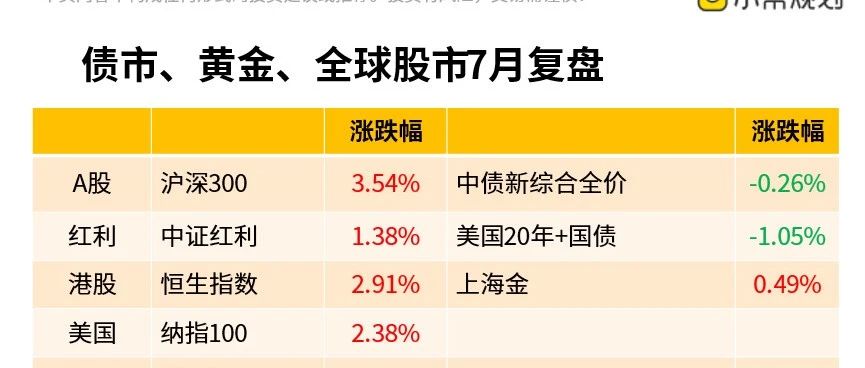
【对谈"硅谷精神之父"凯文凯利】问了凯文·凯利17个问题,我终于悟了!
老徐抓AI趋势· 2025-08-07 01:05
Group 1: Education - In the AI era, it is crucial to focus on experiential learning rather than traditional academic pressure for children, as many future job roles may not yet exist [6][7] - Parents are advised to cultivate foundational skills in children, such as curiosity, critical thinking, self-motivation, and learning ability, rather than merely accumulating knowledge [6][7] Group 2: Young Adults' Career Choices - Young adults should aim to be "unique" rather than just "better" than their peers, as the future will favor those who can solve problems in innovative ways [7] - The job market will increasingly reward specialization and differentiation over standardization, making niche expertise more valuable [7] Group 3: Artificial General Intelligence (AGI) - The realization of AGI is deemed very difficult and unlikely to occur in the near future, with AI expected to remain specialized rather than universal [8][9] - Concerns about AI replacing human jobs are mitigated by the understanding that AI will not achieve comprehensive superiority across all fields [8][9] Group 4: Medical Advancements - The primary bottleneck in drug development is clinical trials, not the discovery of new drugs, indicating that AI's role in speeding up medical breakthroughs may be limited [11][12] - The future of gene editing and brain-machine interfaces is expected to initially benefit the wealthy, but technology will eventually become more accessible to the general population [12][13] Group 5: Autonomous Driving and Robotics - Progress in autonomous driving and robotics is anticipated to be slower than public expectations, with significant uncertainty regarding timelines for widespread adoption [14][15] - Continuous observation of technological advancements is recommended rather than making premature investments [14][15] Group 6: China's AI Opportunities - China is positioned favorably in the AI landscape due to its vast data resources, high talent density, and robust infrastructure in fields like healthcare and genetic sequencing [18] - The only significant shortcoming identified is in chip technology, but this is viewed as a temporary issue that can be resolved over time [18] Group 7: Future Methodology - The emphasis is on adapting to future changes rather than attempting to predict them, with a focus on continuous observation and timely decision-making [19][25] - The ability to respond to rapid changes and maintain curiosity and learning agility is highlighted as essential for success in the evolving landscape [25]

上市就暴涨250%!Figma背后的故事,普通人都该看看
老徐抓AI趋势· 2025-08-05 01:06
Core Viewpoint - Figma's IPO on July 31, 2025, saw its stock price surge by 250%, reaching a market valuation of $67.6 billion, significantly surpassing its previous valuation of $20 billion during the failed acquisition by Adobe in 2023 [18][21][28]. Founders and Company Background - Figma was founded by Dylan Field and Evan Wallace in 2012, aiming to address the shortcomings of traditional design software through a cloud-based collaborative platform [6][14]. - Dylan Field's entrepreneurial journey began with a $100,000 scholarship from Peter Thiel, leading to the creation of Figma after recognizing the need for improved design tools [11][9]. - Evan Wallace contributed significantly to Figma's technical architecture, focusing on browser-based graphic rendering, which was crucial for the platform's functionality [12][17]. Development Milestones - Key milestones in Figma's development include its founding in 2012, the release of its first public beta in December 2015, and the official launch in 2016, which led to rapid user growth [14][15]. - By 2025, Figma had over 13 million monthly active users, with two-thirds being non-professional designers, indicating its broad market appeal [22][34]. Business Model and Financial Performance - Figma operates on a subscription-based model, with a significant portion of its revenue coming from enterprise clients, including major companies like Google and Microsoft [22][37]. - The company reported revenues of approximately $749 million in 2024, with a year-over-year growth of 48%, and a strong profit margin of 17.5% [34][40]. Product Innovation and Market Position - Figma has integrated AI technologies into its product offerings, enhancing user experience and maintaining a competitive edge in the design software market [23][42]. - The platform's collaborative features have redefined design workflows, making it a preferred choice over traditional tools like Adobe [17][39]. Market Environment and Investor Sentiment - Figma's IPO coincided with a rebound in the tech sector, driven by strong earnings from major companies and a growing interest in AI technologies [25][21]. - The innovative auction-like pricing mechanism for its IPO helped capture true market demand, contributing to its successful debut [25][33]. Future Outlook - Figma's leadership emphasizes the importance of continuous innovation and maintaining user value post-IPO, with plans to further explore AI integration in design tools [23][18]. - The company faces challenges such as increasing competition and the need to balance growth with profitability, but its strong market position and innovative capabilities provide a solid foundation for future success [33][42].
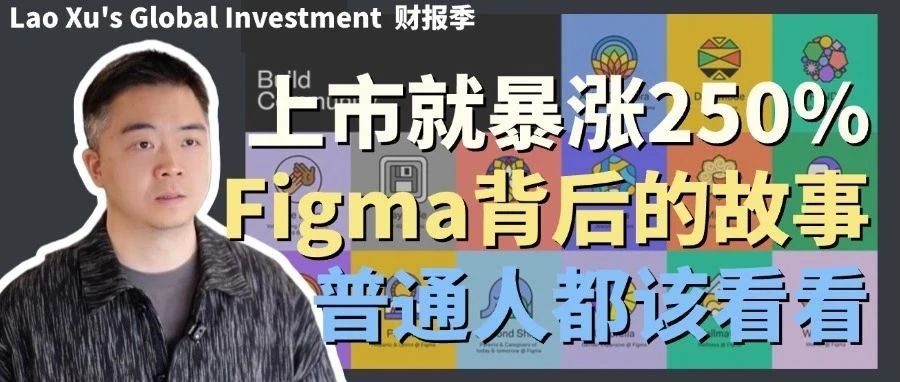
硅谷精神之父凯文·凯利重磅预言:中国AI发展和不可错过的时代红利(内含超级好消息!)
老徐抓AI趋势· 2025-08-03 01:05
Core Viewpoint - The article emphasizes the importance of understanding future trends, particularly in AI, to seize opportunities and prepare for changes in various sectors [4][24]. Author Introduction - Kevin Kelly is a renowned futurist and co-founder of Wired magazine, known for his insights into technology and culture [5][6]. Key Themes in "2049" - The book "2049" explores significant technological advancements expected in the next 25 years, including AI, brain-computer interfaces, and the emergence of a "mirror world" or metaverse [27][33]. - It discusses how AI will transform industries such as healthcare and education, making them more personalized and efficient [29][30]. Predictions for AI and Technology - AI will not only become smarter but will also fundamentally reshape learning, work, healthcare, and entertainment [27]. - Brain-computer interfaces will enable direct control of devices through thought, enhancing human-AI collaboration [30]. - The concept of a "mirror world" will integrate digital and physical realities, allowing for new forms of interaction and collaboration [33]. Implications for China - The book highlights China's unique advantages in the AI and technology landscape, suggesting that Chinese enterprises are well-positioned to lead in various applications [29][36]. - It encourages young people, entrepreneurs, and investors in China to engage with the insights presented in the book to better understand opportunities and challenges [36]. Conclusion - "2049" serves as a guide for individuals and organizations looking to navigate the future landscape shaped by technological advancements, urging proactive engagement with emerging trends [39].
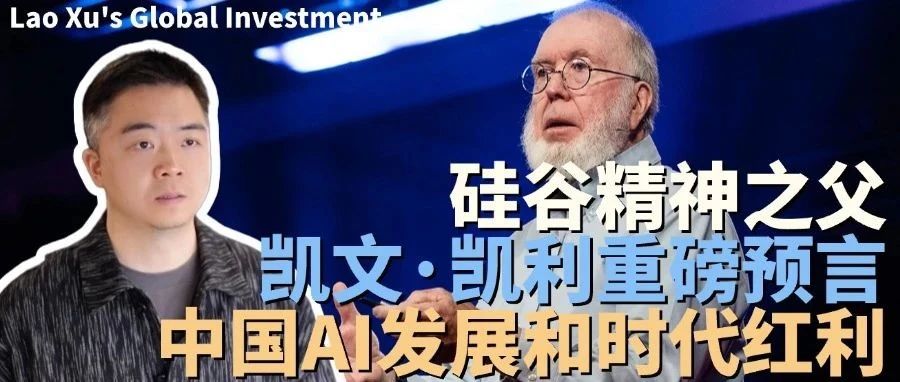
【财报季】Meta一夜暴涨千亿,盘后狂拉10%!下一波红利风暴要来了?
老徐抓AI趋势· 2025-08-03 01:00
Core Viewpoint - Meta's latest quarterly earnings report exceeded expectations, leading to a significant increase in stock price and positive market sentiment [2][3]. Financial Performance - Q2 revenue reached $47.52 billion, surpassing analyst expectations of $44.83 billion, with a year-over-year growth of 22% [5]. - Earnings per share for Q2 were $7.14, exceeding the forecast of $5.89, marking a 38% year-over-year increase [5]. - For Q3, Meta projects revenue between $47 billion and $50.5 billion, above analyst estimates of $46.2 billion, indicating a year-over-year growth of 17%-24% [5]. - Total operating expenses for Q2 were $27.1 billion, a 12% increase from the previous year, reflecting effective cost control alongside revenue growth [14]. AI Impact on Efficiency - AI has significantly improved the efficiency and revenue of Meta's advertising system, with ad conversion rates increasing by approximately 5% on Instagram and 3% on Facebook [5]. - The introduction of AI-driven advertising models has led to a 5% increase in time spent on Facebook and a 6% increase on Instagram [5]. AI Development and Investment Outlook - Meta is building a team focused on developing superintelligent AI, with expectations of significant advancements in the coming years [7]. - The company anticipates a substantial increase in capital expenditures for AI infrastructure, projecting 2025 expenditures between $66 billion and $72 billion [9]. - Meta's AI systems are expected to drive long-term growth, with a focus on optimizing advertising and enhancing user engagement [11]. Regional Performance - Revenue from the U.S. and Canada was $20.37 billion, accounting for 42.9% of total revenue, with a 15% year-over-year growth [15][17]. - The Asia-Pacific region showed the strongest growth, with revenue of $11.53 billion, reflecting a 29% year-over-year increase [15][17]. - European revenue reached $9.37 billion, growing 18% year-over-year, indicating a recovery in the digital advertising market [22]. User Engagement and Product Innovation - Meta's monthly active users for its AI features exceeded 1 billion, indicating strong engagement with AI-driven tools [11]. - The introduction of ads in Threads and WhatsApp is expected to gradually contribute to revenue growth, although initial supply levels are anticipated to be low [11]. Strategic Focus and Future Directions - Meta's strategic priorities include optimizing advertising systems, expanding into international markets, and maintaining high levels of investment in technology innovation [28]. - The company aims to leverage its AI capabilities to enhance user experience and operational efficiency, with a focus on long-term growth and sustainability [29].

【财报季】台积电25年Q2财报全解读:股价上涨3%,芯片行业全面受益!
老徐抓AI趋势· 2025-08-02 05:56
Core Viewpoint - TSMC's Q2 2025 financial results demonstrate strong growth, with record revenue and net profit, reflecting the semiconductor industry's robust demand, particularly in advanced processes and AI applications [6][25][38]. Financial Performance Highlights - TSMC achieved consolidated revenue of NT$933.79 billion (approximately US$300.7 billion), a year-on-year increase of 38.6% and a quarter-on-quarter increase of 11.3% [6][8]. - Net profit reached NT$398.27 billion (approximately US$128.3 billion), marking a significant year-on-year growth of 60.7% [6][8]. - Gross margin stood at 58.6%, with operating and net profit margins at 49.6% and 42.7%, respectively, exceeding market expectations [7][8]. Business Structure and Technology Analysis - Advanced processes (7nm and below) contributed 74% of total wafer revenue, indicating TSMC's dominance in high-end manufacturing [10][26]. - The revenue distribution by application shows that High-Performance Computing (HPC) accounted for 60% of revenue, while smartphone revenue decreased to 27% [12][37]. Capacity and Supply Dynamics - TSMC's wafer shipments reached 3.718 million (equivalent to 12-inch wafers), reflecting a year-on-year increase of 19.0% [15][28]. - The company anticipates continued tight capacity for 3nm and 5nm processes over the next few years, driven by strong market demand [18][28]. Future Outlook and Industry Impact - TSMC is progressing well with its 2nm process, expected to enter mass production in 2025, with analysts predicting wafer prices could soar to US$30,000 each [19][29]. - The company maintains a long-term gross margin target of over 53%, indicating confidence in sustaining profitability amid evolving market conditions [22][40]. Emerging Opportunities - TSMC views the semiconductor market for humanoid robots as having significant long-term potential, particularly in the medical sector, despite current limitations in short-term demand [30][33]. - The company emphasizes its readiness to meet future semiconductor needs for robotics, particularly in sensor integration and energy efficiency [34][38].

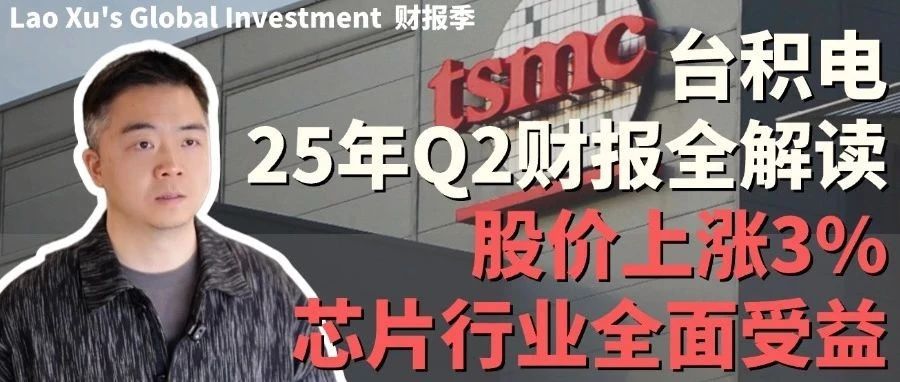
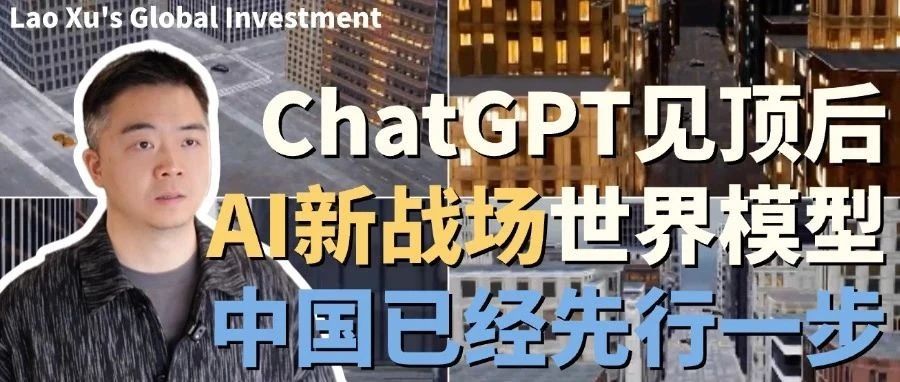
ChatGPT见顶后,AI新战场世界模型:中国已经先行一步!
老徐抓AI趋势· 2025-07-31 01:03
Core Viewpoint - The article discusses the transition from large language models (LLMs) to "world models" as the next competitive focus in AI, highlighting the limitations of LLMs and the potential of world models to reshape AI's future and drive economic growth [2][5][28]. Summary by Sections AI's Evolution - AI development is categorized into three stages: perceptual AI, generative AI, and embodied AI, with each stage representing significant technological advancements [5][18]. Stage One: Perceptual AI - The breakthrough in perceptual AI occurred in 2012 when Geoffrey Hinton's team surpassed human image recognition accuracy, but its capabilities were limited to recognition without reasoning or cross-domain learning [7][9]. Stage Two: Generative AI - The introduction of the Transformer architecture in 2017 marked a qualitative leap, enabling AI to train on vast amounts of text data, significantly increasing its knowledge base [12][13]. However, this growth is nearing a limit, with predictions that usable internet data for training will peak around 2028 [15]. Stage Three: Embodied AI - The next phase involves embodied AI, where AI learns through interaction with the real world rather than just textual data, necessitating the development of world models [16][18]. What is a World Model? - A world model is a high-precision simulator that adheres to physical laws, allowing AI to learn through trial and error in a virtual environment, significantly reducing the data collection costs associated with real-world training [19][20]. Challenges of World Models - Unlike simple video generation, world models must ensure consistency with physical laws to be effective for training AI, addressing issues like physical inconsistencies in generated scenarios [20][22]. Breakthroughs by SenseTime - SenseTime's "KAIWU" world model allows users to describe scenarios in natural language, generating videos that comply with physical laws, thus revolutionizing training for autonomous driving and robotics [22][24]. Implications of World Models - The shift to world models will change data production methods, enhance training efficiency, and transform industries such as autonomous driving, robotics, manufacturing, healthcare, and education [28]. Future Outlook - The emergence of world models is anticipated to accelerate economic growth, with the potential for a "ChatGPT moment" in the next 1-2 years, driven by unprecedented investment and innovation in the AI sector [28][29].
和未来学教父KK对谈前,我想先听听你的
老徐抓AI趋势· 2025-07-28 11:44
Group 1 - Kevin Kelly (KK) is recognized as a prominent futurist and author, known for works like "Out of Control," "The Inevitable," and "What Technology Wants" [1] - A deep conversation with KK will focus on future topics such as AI, mirror worlds, brain-computer interfaces, and education [1] - The audience is encouraged to submit questions for KK, which may include inquiries about consciousness uploading, the role of teachers in an AI-driven future, and the implications of genetic enhancement [1]