老徐抓AI趋势

Search documents
盈米小帮投顾团队-第13次信号发车
老徐抓AI趋势· 2025-10-11 07:04
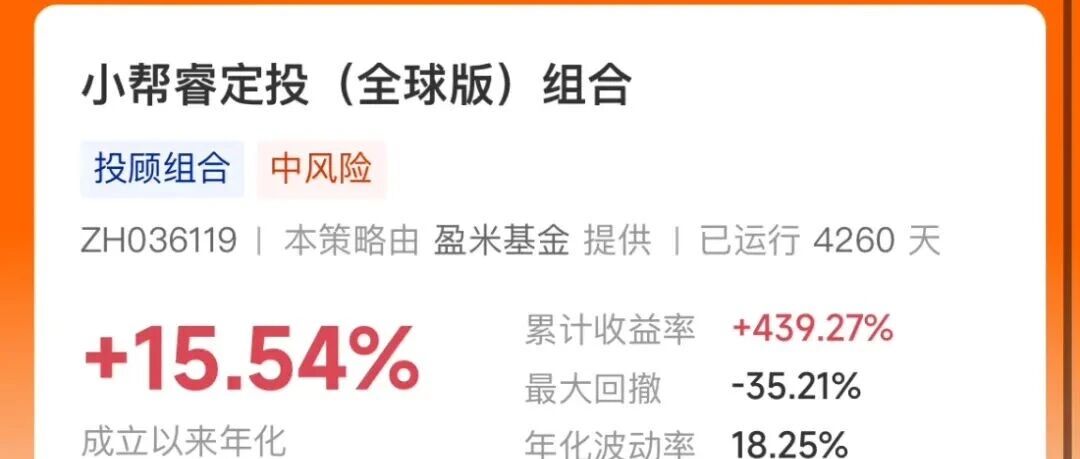
Market Overview - The last trading week of September showed a continuation of the "strong stocks, weak bonds" structure, with stocks performing well while bonds remained under pressure [1][3] - Gold emerged as a standout asset during the holiday period, indicating a risk-on sentiment in the market [1][3] Weekly Performance Review - A-shares, represented by the CSI 300, increased by 2.15%, while the Hang Seng Index rose by 1.06%. The NASDAQ 100, however, experienced a decline of 0.60% [2] - The overall bond market continued to decline, but U.S. Treasuries saw a slight rebound after a period of decline [3] Investment Strategies - The "Rui Ding Tou Global Version" has achieved positive returns for three consecutive years, with the potential to exceed 15% this year. Investors who started regular investments last year have seen cumulative returns of over 10% [4][7] - The strategy focuses on global multi-asset allocation, emphasizing high-quality sectors such as AI, technology, and renewable energy [7] Risk-Adjusted Investment Options - The "Lazy Balanced" strategy, suitable for risk-averse investors, has shown a modest increase of 0.05% in the past week, with a year-to-date return of nearly 11% [9][12] - This strategy incorporates more bond assets, resulting in lower volatility and a more stable performance compared to the Rui Ding Tou Global Version [12] Future Outlook - The market is expected to continue its slow bull trend post-holiday, supported by positive economic indicators and policy expectations [16] - The current investment strategies are designed to maintain a balanced risk profile, allowing for adjustments based on market conditions [18]

黄金破4000后仍被看好!现在上车还来得及吗?
老徐抓AI趋势· 2025-10-10 04:53
Core Viewpoint - The article highlights the recent surge in international gold prices, which have surpassed $4000 per ounce, creating both investment opportunities and risks in the market [3][4]. Group 1: Gold Price Trends - As of October 8, the London spot gold price reached $4040 per ounce, marking a more than 55% increase since the end of 2024 [3]. - Major investment banks have collectively raised their gold price forecasts, indicating a bullish consensus in the market [4]. - Goldman Sachs has revised its target price for gold to $4900 per ounce by the end of 2026, up from a previous forecast of $4300, citing structural diversification in central bank reserves [5]. Group 2: Factors Supporting Gold Price Increase - The anticipated shift in the Federal Reserve's monetary policy, with expectations of rate cuts by the end of 2025, is expected to support commodity prices, including gold [9]. - A weaker U.S. economy has put pressure on the dollar, making gold cheaper for buyers using other currencies, further driving up global gold prices [10]. - Central banks are significantly increasing their gold purchases, with the current buying behavior being approximately double the average scale from 2011 to 2021 [11]. - Geopolitical risks and the trend of "de-dollarization" are enhancing gold's strategic value, as the dollar's share in global foreign exchange reserves has decreased from over 70% in 2000 to 57.7% [12]. Group 3: Investment Strategies - For long-term investors, it is advisable to consider gold as part of an asset allocation strategy, with a recommended holding of 5-15% of total investments [13]. - Short-term traders should be cautious due to the high volatility of gold prices and should implement strict risk management strategies [14]. - Various investment methods are available, including physical gold, gold ETFs, gold mining stocks, and paper gold, each catering to different risk appetites and investment goals [15][16]. Group 4: Conclusion - Despite gold prices being at historical highs, the long-term support factors such as risk aversion, inflation hedging, de-dollarization, and central bank purchases remain intact [17]. - Investors are encouraged to consider gradual investment strategies like dollar-cost averaging to mitigate risks in the current market environment [18].

红利资产跌出机会?
老徐抓AI趋势· 2025-10-09 06:11
Core Viewpoint - The recent market rotation has raised concerns about the effectiveness of dividend strategies, but it may also present a new opportunity for investment in high-dividend assets [1]. Group 1: Institutional Preference for Dividend Assets - Dividend assets are being re-evaluated for their strategic value due to global liquidity easing and structural transformation [1]. - Insurance funds are increasingly investing in high-dividend assets to counteract the pressure of declining market interest rates and to address maturity mismatch risks [1]. - The maximum guaranteed interest rate for ordinary insurance products has dropped to 2%, making a 4% dividend return from long-term equity investments essential for meeting expected returns [1]. Group 2: Evolution of Public Fund Dividend Strategies - Public funds are evolving from simple high-dividend selection to a multi-factor comprehensive strategy, emphasizing both willingness and capability while considering corporate governance and operational quality [2]. Group 3: Hong Kong Dividend Assets as Institutional Favorites - Hong Kong dividend assets have become a priority for institutions, with the Hang Seng High Dividend Yield Index rising 21% year-to-date, outperforming the CSI Dividend Total Return Index by 18% [3]. - The Hang Seng High Dividend Index offers a dividend yield of 6.27%, significantly higher than the 4.66% yield of the CSI Dividend Index, even after accounting for a 20% dividend tax [4]. - There is a notable valuation gap, with leading companies in Hong Kong's financial and energy sectors trading at 20%-30% lower valuations compared to their A-share counterparts, providing a safety margin [7]. - Hong Kong's offshore characteristics and high foreign capital ratio make it a key beneficiary of foreign capital inflows during the Federal Reserve's rate-cutting cycle [9]. Group 4: Recent Decline in Dividend Assets - The recent decline in dividend assets can be attributed to market style rotation, with funds shifting towards growth sectors like semiconductors and AI since July [10]. - Fundamental disruptions, such as coal price fluctuations and concerns over bank net interest margins, have also impacted short-term performance [10]. - Changes in the overseas macro environment, including rising U.S. Treasury yields, have reduced the relative attractiveness of dividend yields [10]. - Structural changes in the funding landscape have increased volatility, with some funds choosing to take profits during the concentrated dividend payout period [10]. - Emotional and currency factors have amplified the volatility of dividend assets, with uncertainties around the National Day holiday prompting cautious behavior among investors [11]. Group 5: Long-term Value of Dividend Assets - Despite short-term pressures, the core logic supporting the long-term value of dividend assets remains intact, with stable cash flow assets offering 4%-6% returns being scarce [12]. - The current adjustment period presents a more favorable entry point for high-quality dividend assets [12]. Group 6: Investment Strategies - Investors are encouraged to focus on the high cost-performance advantage of Hong Kong dividend assets compared to A-shares, with several public funds offering yields above 6% and lower volatility [13]. - The "barbell strategy" is recommended to balance portfolios, combining dividend assets for stable income with high-growth sectors for potential higher returns [14]. - Specific public funds, such as the Wan Jia CSI Dividend ETF and Tianhong CSI Low Volatility 100 Fund, are highlighted for their focus on dividend strategies [14]. Group 7: Conclusion - The recent decline in dividend assets is primarily a result of market sentiment and fund rotation, rather than a fundamental breakdown of their defensive value [15]. - The current market environment offers a rare opportunity for long-term investors to accumulate dividend assets at lower prices, emphasizing the importance of maintaining a balanced investment approach [15].

能量密度提升50%,安全性能革命!固态电池投资全景图来了
老徐抓AI趋势· 2025-10-09 05:15
Core Viewpoint - A transformative change is accelerating in the new energy sector, particularly with the advancement of solid-state batteries, which are expected to significantly enhance electric vehicle range and safety [1][2]. Group 1: Technological Iteration - The evolution from liquid to solid-state batteries marks a critical turning point, with solid-state batteries offering multiple performance advantages over traditional lithium-ion batteries [3][4]. - Solid-state batteries utilize solid electrolytes instead of liquid ones, eliminating flammability risks and enhancing energy density, with potential energy densities reaching 400-500 Wh/kg compared to the current maximum of about 300 Wh/kg for liquid batteries [5]. Group 2: Industry Progress - The industrialization path for solid-state batteries is clear, transitioning from semi-solid to fully solid-state solutions, with semi-solid batteries currently in production [6][7]. - By 2025, semi-solid batteries are expected to be mass-produced, with a projected demand of 45 GWh and a market size of 5.4 billion yuan [7]. - Full-scale production of solid-state batteries is anticipated around 2030, with significant advancements expected in technology by 2025 [8][10]. Group 3: Market Space - The solid-state battery market is projected to grow significantly, with an estimated market size of approximately 8.6 billion yuan by 2025 and over 100 billion yuan by 2030, reflecting a compound annual growth rate exceeding 70% [14]. - Key application areas include high-end electric vehicles, energy storage, consumer electronics, and humanoid robots, which require improved safety and energy efficiency [14]. Group 4: Investment Strategy - Investors are advised to align with the industrialization timeline and strategically invest in leading companies within the solid-state battery supply chain, particularly those focusing on core materials and innovative manufacturing processes [18]. - Equipment manufacturers that adapt to new production techniques for solid-state batteries are also expected to gain a competitive edge [18]. Group 5: Investment Tools - For retail investors, mutual funds focusing on the solid-state battery sector are recommended as a viable investment approach, with several funds specifically targeting companies involved in this emerging technology [19][20].

万亿赛道开启“去伪存真”淘汰赛
老徐抓AI趋势· 2025-10-09 05:15
Group 1 - The core viewpoint of the article is that humanoid robots are transitioning from concept to commercialization, with 2024 being a pivotal year for the robotics industry, as demonstrated by products from companies like Tesla, Figure AI, and Boston Dynamics [2][6]. - The capital market is entering a "survival of the fittest" phase, where only companies with genuine technological strength and commercialization capabilities will stand out [6][8]. - The humanoid robot market is projected to exceed 1 trillion RMB by 2030, becoming a significant terminal market following smartphones and electric vehicles [8]. Group 2 - The robotics industry chain consists of three main segments: upstream core components, midstream manufacturing, and downstream application scenarios, with core components accounting for approximately 70% of total costs [12]. - Domestic supply chains have made breakthroughs in certain areas, such as reducers and servo systems, which will enhance the penetration rate of domestic core components as China's manufacturing upgrades [12][13]. - Investment strategies should focus on core component manufacturers, companies with comprehensive solution capabilities, and supply chain firms closely collaborating with industry giants [13]. Group 3 - The article emphasizes the importance of technological advancements, particularly the development of AI models, which provide robots with the ability to understand and execute complex instructions [5]. - The article highlights the need for investors to avoid speculative investments and instead focus on companies with real technological barriers and commercialization progress [13].

桥水拆解:A股上涨37%,还能继续吗?
老徐抓AI趋势· 2025-09-29 01:08
Group 1 - The core viewpoint of the article is that the recent rally in A-shares is primarily driven by market sentiment and valuation expansion rather than significant improvements in corporate earnings [6][9]. - The communication between the U.S. and China has created a positive atmosphere, suggesting a stable competitive relationship that may benefit the market in the long term [5][6]. - A-shares have seen a 37.1% return in 2024, with 32.6% attributed to price increases and only 1.7% from profit growth, indicating a reliance on valuation rather than earnings [6][8]. Group 2 - A-shares are compared unfavorably to U.S. stocks, which benefit from higher profit growth and shareholder returns through buybacks and dividends [7][9]. - The article highlights that A-shares face challenges such as frequent financing and dilution of earnings per share (EPS), which limits shareholder returns [7][9]. - The analysis from Bridgewater indicates that while A-shares are not in a bubble, there are signs of overheating in specific indices like the Sci-Tech 50 [8][9]. Group 3 - The article discusses the potential of the domestic chip industry, noting advancements in technology that could alleviate supply chain risks [9]. - The performance of the Hang Seng Index is characterized as more stable compared to A-shares, with a higher earnings growth rate among its constituents [10]. - The article emphasizes the importance of monitoring corporate earnings reports to confirm any recovery in profit growth, which is essential for sustaining the current market rally [10][11].
特斯拉助攻“放开讲”上海场热力爆棚:复盘、预测、方法论一次打包
老徐抓AI趋势· 2025-09-26 11:52
Group 1 - The atmosphere of the offline meeting in Shanghai was notably positive, largely attributed to Tesla's strong performance, with one-third of attendees owning a Tesla and the rest expressing admiration [2] - The meeting included a review of key decisions made in the first half of the year, such as the strategic buying of the Nasdaq and Philadelphia Semiconductor in April, the shift in outlook for the A-share market, and the belief in an improving economic cycle in China [2] - Future predictions and judgments were shared, along with an internal research methodology aimed at identifying the next major companies like Amazon, Tesla, Apple, and Nvidia, referred to as "Lao Xu's Business Cycle Model" [2] Group 2 - Investment and asset allocation are crucial for long-term wealth growth, with insights from two financial planners discussing three major asset transfer trends and the current real estate market [3] - Specific asset planning cases were presented, providing practical advice that resonated with attendees [3] - Successfully managing investment and asset allocation can position families to achieve stable asset growth, with the potential to outperform over 90% of the population [5] Group 3 - The company will take a break from offline meetings in October, with plans to announce the November meeting location once confirmed [8]

未来十年,算力、能源、智能体互联网全面爆发:读完华为《智能世界2035》的8个启示
老徐抓AI趋势· 2025-09-26 11:05
Core Viewpoint - The report "Intelligent World 2035" by Huawei outlines a systemic technological revolution driven by five foundational technologies: energy, storage and computing, perception and interaction, communication and networking, and intelligent technology, which will create significant opportunities in the next decade [8][13]. Group 1: Ten Technological Leapfrogs Towards Intelligent World 2035 - The report emphasizes that the upcoming technological revolution is not a result of single-point breakthroughs but a resonance effect from the accumulation of foundational technologies over decades [13]. - The future will see a shift from linear technological progress to simultaneous breakthroughs across multiple domains, creating a feedback loop that accelerates change [13][14]. - The concept of "superintelligent agents" is still maturing, requiring innovations beyond current models like Transformer to achieve true reasoning capabilities [16][17]. Group 2: Computing Power - Huawei predicts that global computing power demand will increase by 100,000 times by 2035 compared to 2025, highlighting computing power as a critical resource [19][22]. - The report introduces the concept of a "computing power cost singularity," where AI applications create value exceeding ten times the cost of computing power, leading to explosive demand [22]. Group 3: Storage - By 2035, storage demand is expected to grow by 500 times compared to 2025, with AI data comprising over 70% of this demand, indicating a significant growth opportunity in the storage industry [24]. Group 4: Intelligent Agent Internet - The report forecasts a future where 9 billion humans are interconnected with 900 billion intelligent agents, suggesting that the opportunities in the intelligent agent internet era will surpass those of the PC and mobile internet combined [28]. Group 5: Communication and Satellite Internet - Future communication networks will evolve into a "ground + satellite" collaborative network, making satellite internet and low-orbit satellite communication key infrastructure opportunities [30]. Group 6: Energy - The report anticipates that by 2035, wind and solar energy will surpass fossil fuels in generation capacity, with breakthroughs in hydrogen, controlled nuclear fusion, and space-based solar energy expected [30]. Group 7: Robotics, Batteries, and Perception Technology - The report identifies the need for advancements in robotics, including lighter, more cost-effective designs, and enhanced perception capabilities to enable AI to interact with the physical world [33][35]. - Innovations in energy density and efficiency of batteries are crucial for the practical application of AI in real-world scenarios [35][36]. Group 8: Opportunities Ahead - The report concludes that the next decade will present a multitude of interconnected opportunities across various industries, driven by advancements in AI and intelligent agents [39][40].
盈米小帮投顾团队-第12次信号发车
老徐抓AI趋势· 2025-09-26 04:33
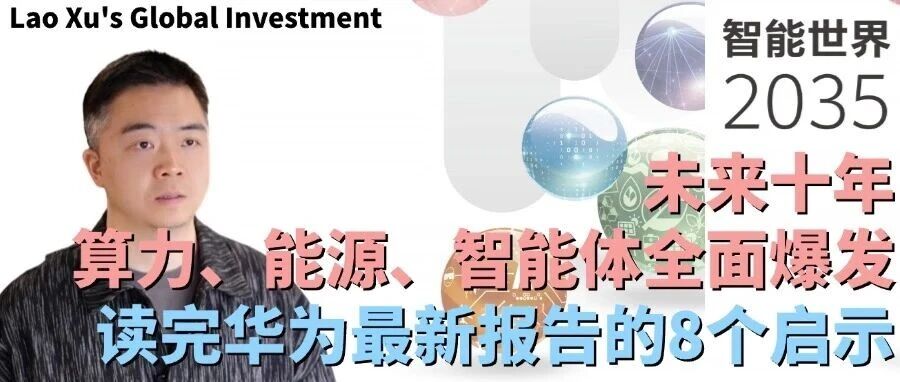
Core Viewpoint - The article highlights the performance of global investment strategies, particularly the "Rui Ding Tou Global Version" and "Lazy Balanced Portfolio," which have outperformed the A-share market and demonstrated consistent gains over several weeks, showcasing the advantages of global asset allocation [1][9]. Market Performance Summary - A-shares (CSI 300) decreased by 0.23%, while the dividend index fell by 1.40%. Hong Kong stocks (Hang Seng Index) also dropped by 0.39%. In contrast, U.S. stocks (Nasdaq 100) rose by 1.92%, and Japanese stocks (Nikkei 225) increased by 1.62% [2][6]. - Overall, the Asia-Pacific market showed weak performance, while the strong rise in U.S. stocks provided support. The bond market continued to be sluggish, with both Chinese and U.S. bonds declining, while gold prices increased, becoming a highlight [4]. Rui Ding Tou Global Version Performance - The "Rui Ding Tou Global Version" achieved positive returns despite the decline in A-shares and has recorded four consecutive weeks of gains. Over the past three years, it has maintained positive returns, ranking among the top performers in risk-adjusted returns compared to 3,570 stock and mixed funds [9]. Lazy Balanced Portfolio Performance - The "Lazy Balanced Portfolio" has adopted a global allocation strategy, achieving a cumulative return of 16.13% in 2023, with a high probability of exceeding 10% for the year. It ranks in the top 18%-20% for returns, with a maximum drawdown controlled at 8% and a risk-return ratio in the top 9% [10]. - This portfolio has also recorded a return of 10.7% year-to-date, despite a challenging bond market where both Chinese and U.S. bonds have declined. The balanced distribution of stocks, bonds, and gold has helped reduce overall volatility and find support for returns [13].
马斯克最新访谈:机器人、星链、星舰、AGI,AI时代的终极野心
老徐抓AI趋势· 2025-09-21 13:08
Group 1 - The core viewpoint of the article emphasizes that Elon Musk's recent interview reveals a clear technological roadmap and business strategy for his companies, particularly in the AI era, which investors and entrepreneurs should pay attention to [4][26]. Group 2: Tesla Robotics - Musk identifies three critical components for successful robotics: achieving human-like dexterity, enabling robots to understand the physical world, and achieving mass production [5]. - The human hand has 27 degrees of freedom, and replicating this complexity in robotic hands is essential for their functionality [7]. - Tesla's solution involves using actuators in the forearm and tendon-like cables to control the fingers, which has shown significant advancements in recent demonstrations [9]. - Understanding the physical world is crucial for robots, requiring them to make decisions in complex environments, which Tesla aims to achieve through advanced AI chips that significantly enhance performance [11]. - Mass production is key to reducing costs, with a target of producing 1 million robots at a cost of $20,000 to $25,000 each, including $6,000 for AI chips [13]. Group 3: Autonomous Driving - Musk reiterates the commitment to a pure vision approach for autonomous driving, rejecting the integration of lidar, emphasizing the importance of a clear technical path [14]. - The decision-making process in technology investment should focus on following proven leaders rather than emotional reactions [14]. Group 4: Starlink - Starlink aims to disrupt the traditional telecommunications industry, with SpaceX acquiring EchoStar for $17 billion to secure critical frequency bands for satellite-to-mobile connectivity [16]. - The plan includes collaborating with major smartphone manufacturers to adapt chips for these frequencies, with a two-year timeline to become a global operator [16]. - The cost comparison shows that Starlink's satellite internet could potentially replace 5G, with a significantly lower investment required for global coverage [18]. Group 5: Starship - Musk describes the Starship project as one of humanity's most challenging engineering feats, focusing on creating fully reusable rockets [20]. - The development of new heat shield materials is crucial for rapid reusability, with ambitious timelines set for testing and achieving full reusability by 2028 [21][24]. Group 6: Future of AI - Musk predicts the arrival of superintelligent AI within three years, indicating that the AI sector will continue to experience significant growth and opportunities [26]. - The overarching strategy of Musk's ventures involves setting grand goals, disrupting industries, and reinvesting profits into larger objectives, which is a model for potential investors to consider [26].