XIABUXIABU(00520)

Search documents
呷哺呷哺在上海成立企管新公司
Zheng Quan Shi Bao Wang· 2025-09-10 03:37
转自:证券时报 人民财讯9月10日电,企查查APP显示,近日,呷哺呷哺(上海)企业管理有限公司成立,法定代表人 为安伟,注册资本4000万元,经营范围包括企业管理、企业管理咨询、信息咨询服务。企查查股权穿透 显示,该公司由呷哺呷哺投资集团有限公司全资持股。 ...
呷哺呷哺在上海成立企业管理公司,注册资本4000万
Xin Lang Cai Jing· 2025-09-10 01:56
天眼查工商信息显示,9月8日,呷哺呷哺(上海)企业管理有限公司成立,法定代表人为安伟,注册资 本4000万人民币,经营范围包括企业管理、企业管理咨询、信息咨询服务。股东信息显示,该公司由呷 哺呷哺投资集团有限公司全资持股。 ...
资本又看上了小火锅赛道?
创业邦· 2025-09-08 00:07
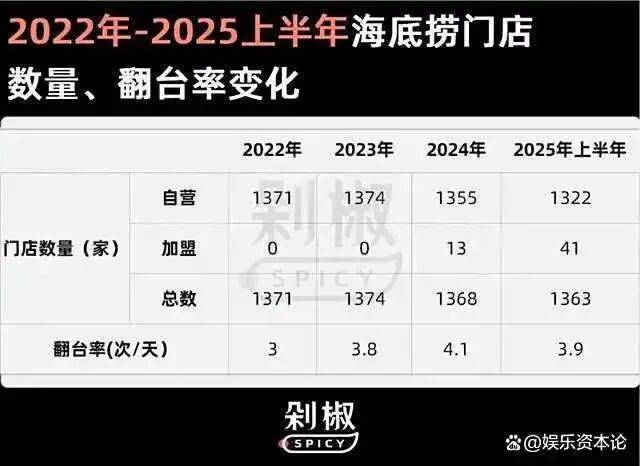
Core Viewpoint - The article discusses the challenges and opportunities in the hot pot industry, particularly focusing on the rising popularity of small hot pot restaurants amidst a backdrop of financial struggles for major players like Xiaobai and Haidilao [6][10]. Group 1: Industry Trends - The small hot pot segment has seen a resurgence, with many restaurant brands entering the market, including Haidilao and cross-industry players like Yang Guofu [8][10]. - As of July 2024, there are over 50,000 small hot pot outlets in China, accounting for approximately 10% of the total hot pot restaurants, with a year-on-year growth in consumption scale of 28.9% [11][17]. - The competition in the small hot pot market is intense, with both national brands and regional players expanding rapidly [10][11]. Group 2: Company Performance - Haidilao reported a 3.7% decrease in revenue and a 13.7% drop in net profit for the first half of 2025, with a decline in table turnover rate from 4.2 to 3.8 times per day [11][12]. - Xiaobai continues to face losses, with an 18.88% decline in revenue and a net loss of 84.08 million, reflecting a nearly 70% drop in net profit [12]. - Yang Guofu has struggled with previous attempts to list on the Hong Kong Stock Exchange and is now exploring new avenues for growth [12]. Group 3: Market Dynamics - The current market entry strategy for many companies is cautious, focusing on leveraging existing capabilities and minimizing risks rather than aggressive expansion [12][15]. - The competition has shifted from price wars to a focus on quality, with new entrants pricing their offerings around 59.9 yuan, targeting the mid-to-high-end market [12][15]. - A significant challenge for both high-end and budget brands is balancing cost control with consumer willingness to pay, as the core consumer group remains price-sensitive [15][16]. Group 4: Challenges in the Small Hot Pot Sector - The small hot pot business is recognized as difficult, with a high percentage (81.6%) of brands having five or fewer outlets, indicating a lack of scale [17]. - Brands focusing on low prices risk compromising quality, leading to a cycle of reduced customer traffic and profitability [16][17]. - Even successful brands like Weila Hot Pot face challenges in differentiating themselves in a crowded market, struggling with the "scale without sound" dilemma [17].


呷哺呷哺(00520) - 截至二零二五年八月三十一日止月份之股份发行人的证券变动月报表
2025-09-03 11:16
公司名稱: 呷哺呷哺餐飲管理(中國)控股有限公司 股份發行人及根據《上市規則》第十九B章上市的香港預託證券發行人的證券變動月報表 截至月份: 2025年8月31日 狀態: 新提交 致:香港交易及結算所有限公司 呈交日期: 2025年9月3日 I. 法定/註冊股本變動 | 1. 股份分類 | 普通股 | 股份類別 | 不適用 | | 於香港聯交所上市 (註1) | | 是 | | | --- | --- | --- | --- | --- | --- | --- | --- | --- | | 證券代號 (如上市) | 00520 | 說明 | | | | | | | | | | 法定/註冊股份數目 | | | 面值 | | 法定/註冊股本 | | | 上月底結存 | | | 2,000,000,000 | USD | 0.000025 | USD | | 50,000 | | 增加 / 減少 (-) | | | | | | USD | | | | 本月底結存 | | | 2,000,000,000 | USD | 0.000025 | USD | | 50,000 | 本月底法定/註冊股本總額: USD 50 ...
线下业态为何热衷搞“擦边”经济?
Hu Xiu· 2025-09-01 13:30
Core Viewpoint - The rise of "borderline" marketing strategies, particularly through male models and entertainment, is becoming a common approach in offline consumption sectors as businesses seek to boost traffic and sales during a challenging economic period [2][12][20]. Group 1: Offline Marketing Trends - The offline consumption market is expected to embrace a "male marketing" trend by 2025, with various sectors like theme parks and restaurants adopting this strategy to cope with declining sales [3][12]. - The introduction of "handsome NPCs" in theme parks has proven effective, with some locations reporting significant increases in visitor numbers, particularly among young women [4][5]. - The Fuzhou Dongbai Center's "male model bag-carrying" experience led to a notable increase in daily foot traffic and sales, showcasing the effectiveness of this marketing approach [7][8]. Group 2: Financial Performance and Challenges - Despite the initial success of "borderline" marketing, many offline businesses continue to struggle financially, with a significant portion of theme parks and restaurants reporting losses [13][17]. - For instance, the theme park industry has seen about 22% of its establishments operating at a loss, while major restaurant chains like Xiaobuxiang have reported substantial net losses [13][17]. - The financial reports from major players indicate a concerning trend, with companies like Huazhou City experiencing a decline in revenue and profit margins [17][18]. Group 3: Consumer Behavior and Market Dynamics - The consumer market is shifting towards a preference for deeper cultural experiences rather than superficial entertainment, as evidenced by the growing popularity of family-oriented travel and cultural tourism [20][21][22]. - Data shows that the emotional consumption market in China is projected to exceed 2 trillion yuan by 2025, indicating a strong demand for enriching experiences [19]. - The trend towards "de-entertainment" suggests that businesses need to integrate cultural elements into their offerings to remain competitive and relevant in the evolving market landscape [23][24].


呷哺呷哺上半年亏损收窄七成,下半年聚焦会员经济与外卖新布局
Sou Hu Cai Jing· 2025-08-31 13:24
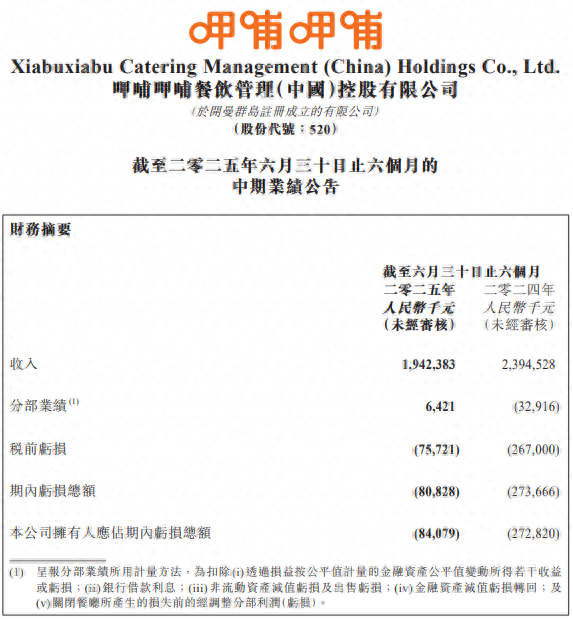
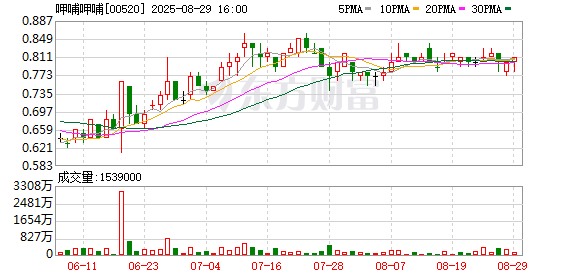
Financial Performance - The company reported a revenue of 1.942 billion yuan for the first half of 2025, representing an 18.9% decline compared to the same period last year [1] - The net loss for the company has significantly reduced from 273 million yuan in the previous year to 84.079 million yuan, achieving a reduction of approximately 70% year-on-year [1] Operational Adjustments - The total number of stores for the company and its sub-brand Coucou has decreased to 937, with a net reduction of 134 stores compared to the same period last year, indicating a more cautious and refined operational strategy in response to market changes [3] - The company has implemented measures in supply chain management and logistics efficiency, including centralized procurement and optimized delivery routes to lower operational costs [1] Future Development Plans - The company plans to innovate membership services by introducing gift cards and differentiated member products to enhance customer experience and loyalty [3] - There is a strategy to rapidly expand online delivery services and launch new delivery products to meet consumer demand for convenient dining options [3] - The company aims to attract younger consumers and enhance brand influence through a strategic partnership with the well-known anime IP Doraemon [3] Market Position - As of August 29, the company's stock price was 0.81 HKD per share, with a total market capitalization of 880 million HKD, indicating ongoing challenges but a commitment to transformation and upgrading for more stable future development [3]
呷哺呷哺集团上半年收入19.4亿元,外卖订单增长超55%
Zhong Guo Xin Wen Wang· 2025-08-29 15:20
Core Insights - The company, Xiaobai Xiaobai, reported a significant reduction in losses, narrowing by 71% year-on-year, with a net loss of 0.8 billion yuan in the first half of 2025 compared to 2.73 billion yuan in the same period last year [2] - Revenue for the first half of 2025 was 19.42 billion yuan, reflecting an 18.9% decline year-on-year [2] Financial Performance - The main brand, Xiaobai Xiaobai, experienced a 13.5% decrease in sales, but profits increased from 4.06 million yuan in the first half of 2024 to 29.73 million yuan in the first half of 2025 [3] - The takeaway business showed strong performance, with average monthly sales per store rising from 35,300 yuan in the first half of 2024 to 42,700 yuan in the first half of 2025, marking a 20.9% increase [3] - Overall order volume for the takeaway business grew by over 55%, leading to a 22.4% increase in gross revenue [3] Strategic Initiatives - The company implemented cost reduction and efficiency improvement strategies, including establishing deep strategic partnerships with key suppliers and utilizing a digital procurement platform [2] - The company closed inefficient stores and opened 32 new stores in the first half of 2025, with 14 of these located in first-tier cities [2] - The "Feng Huan Chao" plan was launched, introducing a partner mechanism that ties store performance to employee interests, with five partner stores established by August 2025 [4] Membership and Market Expansion - The membership program has become a new growth engine, with gift card sales contributing 252 million yuan in revenue from April to July 2025 [3] - The overseas market also showed positive growth, with a 5% increase in revenue in the first half of 2025 compared to the previous year [3]
亏损同比收窄七成,呷哺呷哺缓过一口气
Hua Er Jie Jian Wen· 2025-08-29 09:21
Core Insights - Company has shown signs of recovery with a significant reduction in net loss, down to 80 million yuan from 273 million yuan year-on-year, despite a revenue decline of 18.9% to 1.942 billion yuan in the first half of 2025 [1] Cost Management - The reduction in losses is primarily attributed to cost-cutting measures in the supply chain and logistics, including strategic partnerships with key suppliers, price-locking strategies for bulk ingredients, and the use of a digital procurement platform to enhance efficiency and transparency [2] Operational Efficiency - The optimization of restaurant structure has significantly contributed to profit recovery, with a 13% reduction in total stores to 937, focusing on eliminating inefficient locations and strategically opening new stores in high-potential areas [3] - Core costs have decreased notably, with raw material costs down by 186 million yuan (22.5%) and labor costs reduced by 148 million yuan (18.1%) [3] Asset Impairment - Asset impairment losses from closed and underperforming stores have decreased significantly by 130 million yuan, a reduction of 64.1% year-on-year [4] Brand Strategy - The company has differentiated its brands, with the "Coucou" brand maintaining a high-end strategy and achieving a 6 yuan increase in average spending, while the "Xiabuxiabu" brand has attracted more customers by lowering per capita consumption, increasing table turnover from 2.3 to 2.6 [5][6] Store Expansion - The "Xiabuxiabu" brand has reversed the trend of net store closures, opening 32 new locations and achieving a net increase of 3 stores, with over 40% of new stores located in first-tier cities [7] Partnership Program - The company is implementing a "Feng Huan Chao" partner program aimed at refined operations and efficient expansion, recruiting new store partners from both internal staff and external talent, with a profit-sharing mechanism to motivate management [8] - As of August, 5 partner stores have been established, primarily in the Beijing-Tianjin-Hebei region, with strong performance indicators such as profit margins above 30% and monthly revenues exceeding 350,000 yuan [8]
关闭低效门店,呷哺呷哺调布局换效率能否业绩翻盘?
Xin Jing Bao· 2025-08-29 07:56
Core Insights - The core viewpoint of the articles highlights the financial performance and strategic initiatives of Xiabuxiabu Group, indicating a significant reduction in net losses despite a decline in revenue, alongside efforts to optimize operations and expand its restaurant network [1][2][3] Financial Performance - Xiabuxiabu Group reported total revenue of 1.94 billion yuan for the first half of 2025, with a net loss reduced to 80 million yuan from 274 million yuan in the same period last year, marking a 71% decrease in losses [1] - Revenue decreased by 18.9% year-on-year, indicating challenges in maintaining sales levels [1] - Profit for the Xiabuxiabu brand increased from 4.06 million yuan in the first half of 2024 to 29.73 million yuan in the first half of 2025 [2] Operational Strategies - The company implemented a digital supply chain transformation, which improved supplier collaboration and logistics efficiency, leading to a 64.1% reduction in asset impairment losses [1] - In 2024, the company closed 138 Xiabuxiabu restaurants and 73 Coucou restaurants to optimize its restaurant layout and eliminate underperforming locations [1] - The company opened 32 new restaurants in the first half of 2025, with 43.7% of these located in first-tier cities [1] New Initiatives - The "Feng Huan Chao" plan was launched in July 2025, resulting in five partner stores primarily in the Beijing-Tianjin-Hebei region, achieving profit margins above 30% and monthly sales exceeding 350,000 yuan [3] - The plan aims to balance standardized taste across all stores while allowing partners some autonomy, posing a significant management challenge [3] Growth Areas - The takeaway business saw an increase in average monthly sales per store from 35,300 yuan in the first half of 2024 to 42,700 yuan in the first half of 2025, a growth of 20.9% [2] - Overall order volume for the takeaway segment grew by over 55%, contributing to a 22.4% increase in gross revenue from this channel [2]
呷哺呷哺上半年收入19.4亿元,外卖成新增长极
Huan Qiu Wang· 2025-08-29 07:19
Core Viewpoint - The company has achieved significant improvement in operational quality through strategic transformation, despite facing challenges in the dining market, with a revenue of 1.942 billion RMB and a net loss reduced by 71% to 80.8 million RMB in the first half of 2025 [1][2]. Financial Summary - Revenue for the first half of 2025 was 1.942 billion RMB, down from 2.394 billion RMB in the same period of 2024 [2]. - The pre-tax loss decreased from 267 million RMB in 2024 to 75.7 million RMB in 2025 [2]. - Total loss for the period was 80.8 million RMB, compared to 273.7 million RMB in the previous year [2]. Cost Optimization - The improvement in performance is attributed to enhanced cost control and operational efficiency, with core brand profits rising from 4.06 million RMB to 29.73 million RMB [2]. - Depreciation and amortization expenses decreased by 20.5%, and leasing costs were reduced by 24.7% [2]. - Average procurement costs dropped by approximately 4% to 6% from 2023 to the first half of 2025, effectively improving gross margins [2]. Partnership and Expansion - The company launched the "Phoenix Returns" partner program in July 2025, with five partner stores established by August, primarily in the Beijing-Tianjin-Hebei region [3]. - These partner stores have shown strong performance, with profit margins exceeding 30% and monthly sales over 350,000 RMB, with the shortest investment recovery period being four months [3]. Operational Efficiency and Growth - In the first half of 2025, the company opened 32 new stores, including 14 in first-tier cities, highlighting a strategic focus on urban expansion [4]. - The takeaway business has become a new growth engine, with overall order volume increasing by over 55% and monthly sales per store rising by 20.9% [4]. Membership Economy - The rise of the membership economy has significantly enhanced customer loyalty, with gift card sales contributing 25,200 RMB from April to July 2025 [5]. - Paid members demonstrated strong purchasing power, with an average repurchase amount of 449 RMB and a purchase frequency 4.4 times higher than regular members [5]. Future Outlook - The company plans to continue its "quality over quantity" strategy, focusing on supply chain optimization, business model innovation, brand collaborations, and leveraging the membership economy for sustainable growth [5]. - The international market is progressing steadily, with overseas revenue increasing by approximately 5% year-on-year, supporting the company's robust financial position for future development [5].