TENCENT(00700)

Search documents
北水动向|北水成交净买入9.52亿 科网及芯片股明显分化 内资抛售盈富基金(02800)超37亿港元
智通财经网· 2026-02-03 09:57
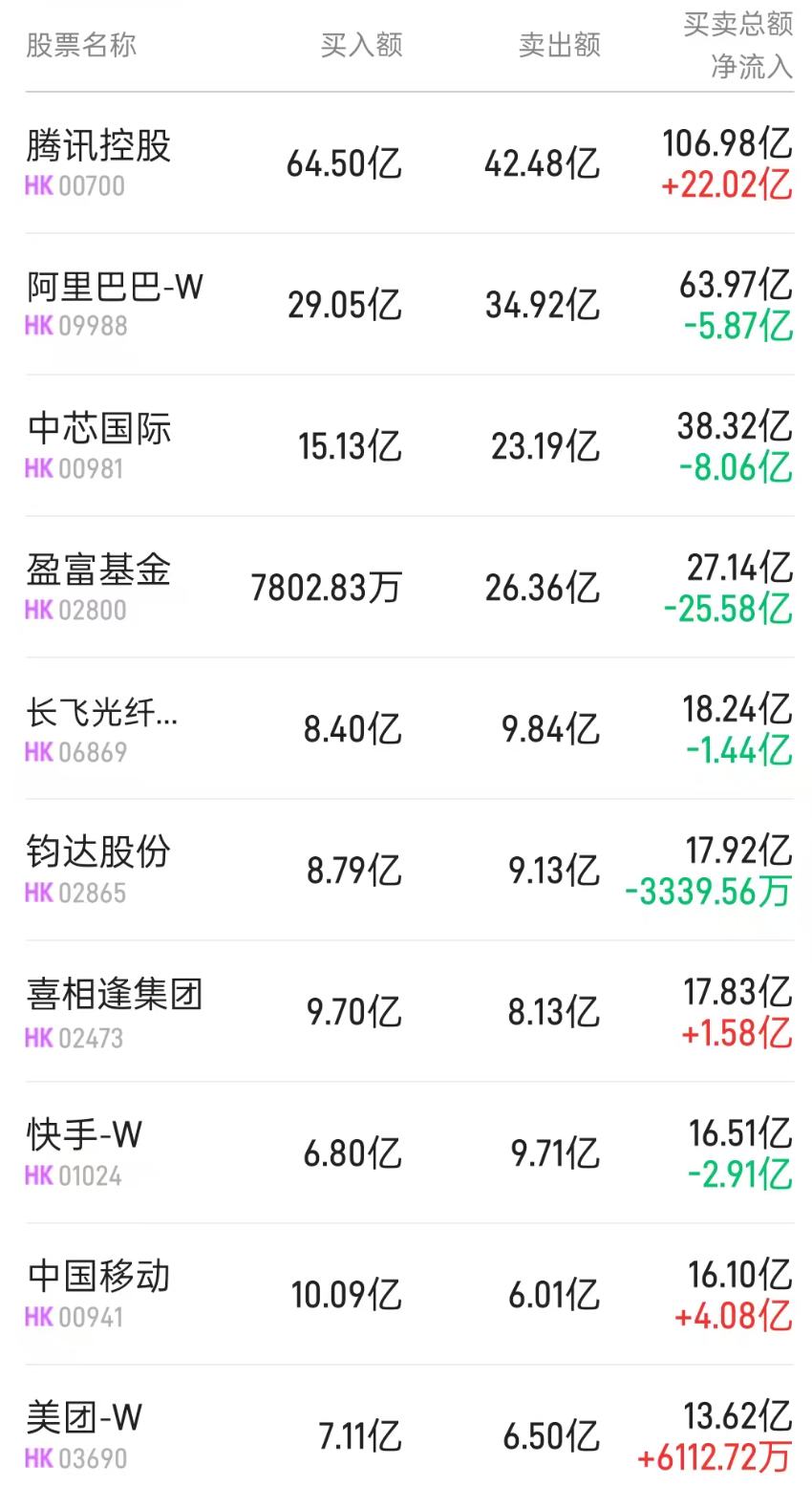
Summary of Key Points Core Viewpoint - The Hong Kong stock market experienced significant net buying and selling activity on February 3, with a total net buy of 9.52 billion HKD from Northbound trading, primarily driven by Tencent and Southern Hang Seng Technology stocks, while notable sell-offs occurred in the Yingfu Fund and Alibaba [1][4]. Group 1: Northbound Trading Activity - Northbound trading saw a net buy of 17.33 billion HKD through the Shanghai Stock Connect and a net sell of 7.81 billion HKD through the Shenzhen Stock Connect [1]. - The most bought stocks included Tencent (00700), Southern Hang Seng Technology (03033), and China Mobile (00941) [1]. - The most sold stocks were Yingfu Fund (02800), SMIC (00981), and Alibaba-W (09988) [1]. Group 2: Stock Performance Details - Tencent Holdings had a net inflow of 22.02 billion HKD, with total trading volume of 106.98 billion HKD [2]. - Alibaba-W experienced a net outflow of 5.87 billion HKD, with total trading volume of 63.97 billion HKD [2]. - SMIC saw a net outflow of 8.06 billion HKD, with total trading volume of 38.32 billion HKD [2]. - Yingfu Fund faced a significant net outflow of 25.58 billion HKD, with total trading volume of 27.14 billion HKD [2]. Group 3: Market Sentiment and Influences - Market rumors suggested potential tax rate adjustments for the financial and internet value-added services sectors, which negatively impacted stock prices, particularly for Tencent and other internet companies [4]. - However, tax experts clarified that the current VAT rate remains unchanged at 6%, dismissing the rumors as unfounded [4]. - China Mobile received a net buy of 4.07 billion HKD, with analysts noting its resilience against potential profit margin pressures due to its higher profitability [5]. - Xiaomi Group-W had a net buy of 3.29 billion HKD, attributed to strong electric vehicle deliveries and ongoing investments in AI and robotics [5]. Group 4: Chip Sector Dynamics - The semiconductor sector showed mixed results, with Hua Hong Semiconductor receiving a net buy of 2.56 billion HKD, while SMIC faced a net sell of 15.77 billion HKD [5]. - The chip industry is experiencing a price increase trend, with some domestic chip manufacturers announcing price hikes of up to 80% [6]. - Yingfu Fund's significant net sell was influenced by global risk-off sentiment and liquidity pressures, although a mid-term positive outlook for Chinese assets remains [6].






南向资金丨盈富基金逆势遭净卖出37.63亿港元
Xin Lang Cai Jing· 2026-02-03 09:50
Group 1 - Southbound funds recorded a net purchase of 9.52 billion HKD [1] - Tencent Holdings, Southern Hang Seng Technology, and China Mobile were the top three net purchases, with net buys of 19.55 billion HKD, 6.69 billion HKD, and 4.08 billion HKD respectively [1] - On the sell side, the Yingfu Fund, SMIC, and Alibaba-W experienced net sales of 37.63 billion HKD, 15.77 billion HKD, and 11.98 billion HKD respectively [1]
腾讯取得标准文本确定方法专利
Jin Rong Jie· 2026-02-03 09:37
作者:情报员 国家知识产权局信息显示,腾讯科技(深圳)有限公司取得一项名为"标准文本的确定方法、装置、电 子设备及存储介质"的专利,授权公告号CN115146612B,申请日期为2022年5月。 声明:市场有风险,投资需谨慎。本文为AI基于第三方数据生成,仅供参考,不构成个人投资建议。 本文源自:市场资讯 天眼查资料显示,腾讯科技(深圳)有限公司,成立于2000年,位于深圳市,是一家以从事软件和信息 技术服务业为主的企业。企业注册资本200万美元。通过天眼查大数据分析,腾讯科技(深圳)有限公 司共对外投资了15家企业,参与招投标项目280次,财产线索方面有商标信息5000条,专利信息5000 条,此外企业还拥有行政许可574个。 ...
加税“小作文”风波影响下,A股游戏板块走出V形反转
Nan Fang Du Shi Bao· 2026-02-03 09:33
Group 1 - On February 3, the A-share gaming sector experienced a dramatic V-shaped reversal, with companies like Century Huatong (002602 SZ) initially seeing stock declines due to rumors of increased taxes on internet value-added services, but later rebounding after the rumors were debunked [1] - During the morning session on February 3, several A-share gaming stocks fell, with Century Huatong dropping over 8%, while other companies like 37 Interactive Entertainment (002555 SZ) and Giant Network (002558 SZ) also saw declines. However, by the end of the day, the gaming sector index rose over 3% [1] - The initial drop in stock prices was attributed to rumors suggesting that the financial and internet value-added services, including in-game purchases and advertising, might be targeted for tax rate adjustments, similar to the liquor tax rates [1] Group 2 - On January 31, the Ministry of Finance and the State Taxation Administration announced adjustments to the VAT tax rates, increasing the rate for telecom services from 6% to 9%, which could impact the revenue and profits of telecom operators [2] - Various debunking messages emerged on February 3, clarifying that the definition of value-added telecom services excludes mobile data and broadband access services, and that the rumors about gaming tax rates aligning with liquor taxes were based on a misunderstanding of different tax types [3] - Game companies reported that they had not received any official documents regarding tax rate adjustments, and there were no recent meetings or discussions on the topic, indicating skepticism about the validity of the tax increase rumors [3]






腾讯控股一度跌超6%,“加税”小作文再起?港股通科技ETF汇添富(520980)、恒生科技ETF汇添富(513260)探底回升!
Xin Lang Cai Jing· 2026-02-03 09:25
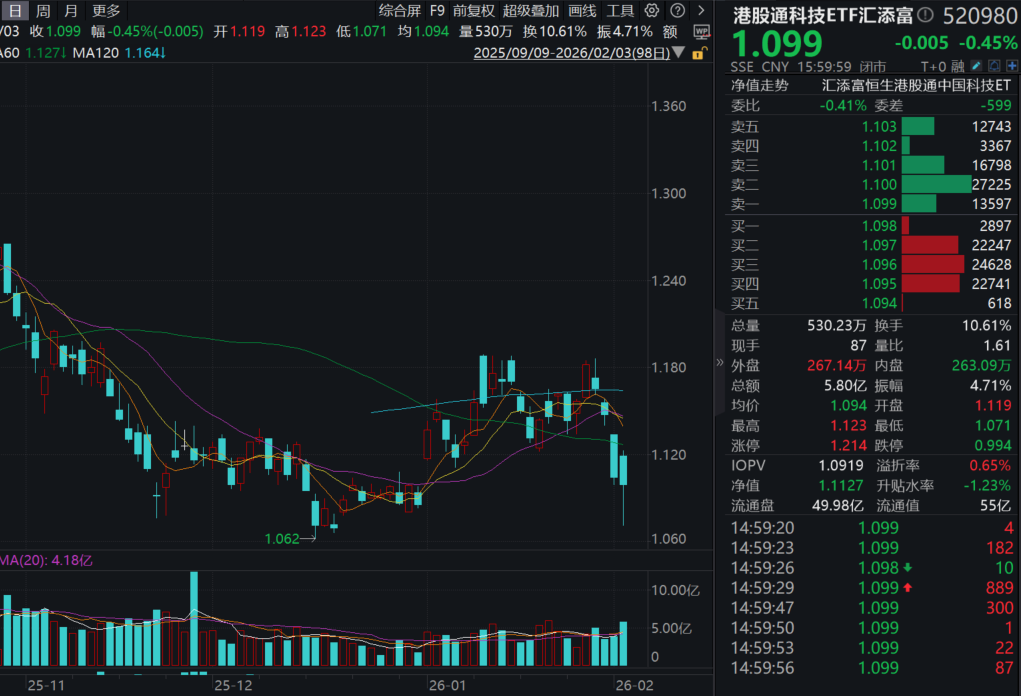
Group 1 - The Hong Kong stock market's technology sector is experiencing a downturn, with the Hang Seng Technology ETF (520980) declining by 0.45% for the fourth consecutive day, despite a significant increase in trading volume to nearly 600 million HKD [1] - The Hang Seng Technology ETF (513260) saw a drop of 0.43%, reaching a year-to-date low, but managed to attract over 51 million HKD in inflows over the past two days, with its latest financing balance exceeding 140 million HKD and total fund size surpassing 7.2 billion HKD [3] - There are rumors regarding potential increases in VAT rates for the gaming and financial sectors, which have been deemed unsubstantiated by experts, indicating that the current VAT rates for these industries are stable and will not change significantly [5] Group 2 - Major technology stocks in Hong Kong mostly closed lower, with Kuaishou down over 4%, Tencent and SMIC down over 2%, while Huahong Semiconductor rose over 4% [6] - The Hang Seng Technology Index includes major companies like JD.com, Baidu, and NetEase, providing a comprehensive representation of top-tier technology assets in China [14] - Analysts suggest that the recent nomination of the Federal Reserve Chair may lead to increased volatility in the Hong Kong stock market, particularly affecting sectors that previously performed well [8][9]
游戏行业点评:Genie3是否会对游戏及引擎公司造成商业冲击?
Orient Securities· 2026-02-03 09:16
Investment Rating - The report maintains a "Positive" investment rating for the media industry in China, indicating an expectation of returns exceeding the market benchmark by over 5% [3][12]. Core Insights - The application of AI in the gaming industry is transitioning from B2B to B2C, with many high DAU games leveraging natural language AI game engines to drive user co-creation, resulting in significant growth in both game content and DAU [6]. - The report highlights key companies with advantages in gaming channels and high DAU, recommending Tencent Holdings (00700, Buy), NetEase-S (09999, Buy), and others for investment [6]. - The report emphasizes the importance of companies with significant project reserves for the year, suggesting a focus on 37 Interactive Entertainment (002555, Accumulate) and Perfect World (002624, Accumulate) [6]. Summary by Sections Industry Overview - The report discusses the impact of AI game editors, noting that Tencent's "Peacekeeper Elite" has surpassed 33 million DAU, indicating a shift from B2B to C-end empowerment in the gaming AI engine sector [7]. Investment Recommendations - Companies recommended for investment include Tencent Holdings, NetEase-S, and others with strong positions in gaming channels and DAU [6]. - Companies with key project reserves for the year, such as 37 Interactive Entertainment and Perfect World, are also highlighted for potential investment [6]. Market Dynamics - The report notes that the domestic AI game editor technology is ready for commercial application, with companies like Tencent and NetEase leading the way in integrating AI tools into high DAU games [7]. - The report assesses the limitations of overseas models like Genie3, indicating that they currently lack the necessary support for B-end game production and have uncertain playability for C-end users [7].


游戏加税至32%,腾讯大跌?别传谣了
Xin Lang Cai Jing· 2026-02-03 09:11
Core Viewpoint - The gaming industry may face potential tax increases, with rumors suggesting a rise from 6% to 32%, similar to the liquor industry, which has caused fluctuations in tech stocks and concerns among investors [2][12]. Group 1: Tax Rumors and Industry Reactions - The rumor about tax increases in the gaming industry is not new, with previous speculations arising from regulatory changes in advertising costs and telecommunications [4][14]. - Analysts express skepticism about the rumors, suggesting they may be attempts to manipulate stock prices for personal gain [2][13]. - A financial analyst noted that such rumors resurface every couple of years, indicating a pattern of speculation rather than concrete policy changes [4][14]. Group 2: Current Industry Landscape - The gaming industry is currently benefiting from supportive local policies in major cities like Beijing, Shanghai, and Guangzhou, recognizing its role in cultural output [5][15]. - Profit margins in the gaming sector are often overestimated; only a few blockbuster games generate significant profits, while many products struggle to break even or incur losses [6][16]. - The perception of high profitability is skewed by the visibility of successful titles, overshadowing the financial struggles of less successful games [7][16]. Group 3: Future Outlook - The Chinese gaming industry is at a critical growth phase, with a shift from traditional AAA game models to GaaS (Games as a Service) becoming more prevalent [9][18]. - Global competition in the gaming sector is intensifying, with European countries implementing policies to support their gaming industries, such as Germany's commitment to provide €125 million annually starting in 2026 [9][18]. - The future of the gaming industry will depend on comprehensive strength and the ability of Chinese companies to fulfill their social responsibilities amidst evolving market dynamics [9][18].
字节、阿里、腾讯AI大战全记录:一场影响命运的战争
创业邦· 2026-02-03 09:09
Core Insights - The article discusses the competitive landscape among major Chinese tech companies, particularly focusing on their advancements in AI and large language models, highlighting Tencent, Alibaba, and ByteDance's strategies and developments in this space [5][7][10]. Group 1: Tencent's Strategy - Tencent has been cautious in its AI investments over the past two years but began to change its approach in 2025 by hiring top talent and restructuring its AI teams, with the recruitment of Yao Shunyu marking a significant turning point [5][6][10]. - Yao Shunyu identified issues with Tencent's existing large language model, "Hunyuan," noting that its performance was compromised by data contamination from leaderboard-focused training [4][5]. - Tencent's "Yuanbao" AI product, initially lagging behind competitors, saw a significant increase in daily active users after integrating the DeepSeek model, achieving a tenfold growth in just one week [27][44]. Group 2: Alibaba's Approach - Alibaba introduced the concept of "Tongyun," integrating AI, cloud computing, and chip development, positioning itself as a full-stack AI company [7][10]. - Despite lower profitability compared to its competitors, Alibaba plans to increase its investment in AI infrastructure from 380 billion to 480 billion yuan over the next three years [7][10]. - The "Qianwen" app, previously known as "Tongyi," has become a central player in Alibaba's AI strategy, rapidly iterating and developing capabilities to compete with ByteDance's "Doubao" [54][62]. Group 3: ByteDance's Competitive Edge - ByteDance's "Doubao" became the first AI product in China to surpass 100 million daily active users by the end of 2025, showcasing its rapid growth and user engagement [9][33]. - The company has focused on aggressive investment in AI talent and infrastructure, aiming to become a global leader in large models, with a target to rank at least third worldwide [10][66]. - ByteDance's strategy includes leveraging its existing platforms like TikTok to enhance user acquisition for its AI products, demonstrating a strong synergy between its core business and new AI initiatives [9][59]. Group 4: Industry Dynamics - The competition among these tech giants is likened to a "Midway battle," where losing could mean losing the future, emphasizing the high stakes involved in AI development [16][17]. - The article highlights the importance of internal collaboration and resource sharing among different business units within these companies to enhance their AI capabilities [56][58]. - The talent war in AI is intensifying, with companies like Tencent actively recruiting from competitors to bolster their AI teams, reflecting the critical role of human resources in this technological race [66][70].

MMORPG Gaming Trends, Statistics, and Growth Forecasts 2026-2031: Monetization Innovation, Government Support, and Regulatory Oversight Shape The Future $50+ Billion Industry
Globenewswire· 2026-02-03 09:02
Market Overview - The MMORPG gaming market is projected to grow from USD 28.06 billion in 2025 to USD 31.02 billion in 2026, reaching USD 51.3 billion by 2031, with a CAGR of 10.58% from 2026 to 2031 [1] - Mobile platforms accounted for 43.28% of the MMORPG gaming market share in 2025 and are expected to expand at an 11.12% CAGR to 2031, solidifying their role as the growth engine of the market [8] - Free-to-play titles captured 57.10% of the MMORPG gaming market size in 2025, indicating that accessibility is a key acquisition strategy [10] Industry Trends - Cross-platform integration and advancements in mobile hardware are making MMORPGs more mainstream, with mobile titles benefiting from 5G connectivity and AI-driven content [2] - Cloud-native architectures and real-time analytics are becoming essential for competitive differentiation, allowing for personalized experiences and legitimizing esports through government support [3] - The MMORPG market is leveraging demographic shifts with simplified onboarding processes and regional payment systems, enhancing accessibility for first-time gamers in emerging markets [4][5] Technological Advancements - Technological innovations in cloud gaming and 5G are enabling real-time combat experiences previously limited to desktop setups, with companies like NVIDIA providing infrastructure for seamless gameplay [6] - The use of adaptive bitrate streaming and haptic feedback in mobile gaming is narrowing the experiential gap with consoles, enhancing user engagement [8] Development and Monetization - The development costs for AAA MMORPGs have surged, often exceeding USD 120 million, driven by the demand for high-quality assets and continuous content updates [7] - Hybrid monetization models are gaining traction, with players willing to pay for tiered value as long as competitive balance is maintained [10][12] - Subscription models remain popular in lore-rich franchises, while buy-to-play models persist in Europe due to regulatory constraints on microtransactions [12] Geographic Insights - North America generated 39.10% of global MMORPG revenue in 2025, supported by high disposable income and a strong PC-console base [13] - The Asia Pacific region is expected to grow at a 10.71% CAGR, driven by smartphone penetration and government-backed esports initiatives [14] - Europe faces challenges with strict regulations on loot boxes, impacting monetization strategies, while Latin America and MEA are constrained by currency instability but are seeing improvements with rising 5G coverage [15]

一则传闻引发港股剧震 机构最新观点:可信度极低!
Mei Ri Jing Ji Xin Wen· 2026-02-03 08:55
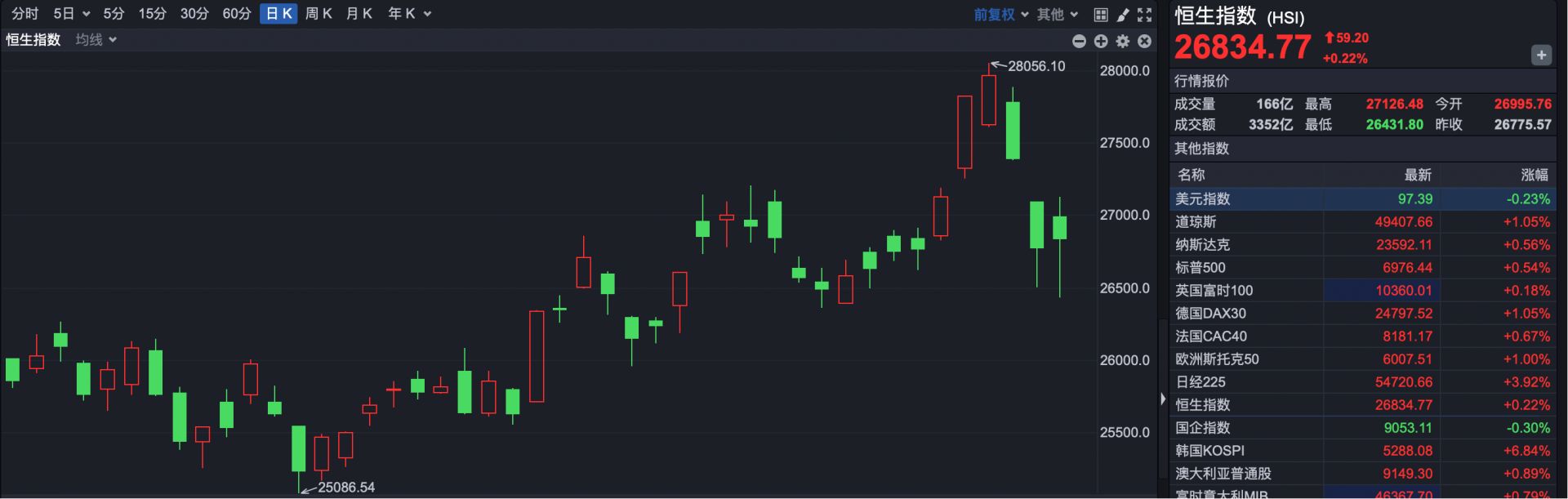
Market Overview - The Hong Kong stock market experienced significant volatility, with the Hang Seng Index dropping over 1% at one point before closing with a slight rebound, ending at 26,834.77 points, up 59.20 points, or 0.22% [12][2] - The Hang Seng Tech Index fell over 3% during the day but narrowed its losses by the end, closing at 5,467.26 points, down 59.05 points, or 1.07% [15][4] Tax Rumor Impact - A rumor regarding a potential increase in value-added tax rates for the financial and internet value-added services (such as in-game purchases and advertising) led to market turbulence, particularly affecting Tencent Holdings, which saw its stock drop over 6% intraday and close down 2.92% [14][3] - A brokerage firm clarified that the claim of aligning game tax rates with the 32% rate for liquor is misleading, as the two tax types differ significantly in nature and application [18][6] Market Sentiment and Reactions - The brokerage noted that the rumor is typical market noise, likely stemming from an over-interpretation of a single policy document, and suggested that the actual future tax regulations would focus on reviewing tax incentives for certain companies rather than increasing statutory rates [18][6] - The firm emphasized that the core drivers for internet leading companies remain their business growth, AI commercialization, and profitability, indicating that short-term emotional disturbances do not alter long-term fundamentals [18][6] Precious Metals Market - Following a sharp decline, the precious metals market showed signs of stabilization, with spot gold recovering above $4,900 and silver returning above $86 [20][8] - The long-term outlook for precious metals remains positive, with expectations that the de-dollarization process will continue, and the recent price adjustments do not signify the end of the bull market [20][8] Fund Flows - Southbound funds continued to show small-scale net buying of Hong Kong stocks, with a net purchase exceeding 900 million HKD by the end of the trading day [21][9] Future Outlook - Analysts from Guoyuan International expressed concerns that the nomination of a hawkish Federal Reserve chair could lead to market apprehension regarding potential adjustments in monetary policy, impacting risk appetite in the Hong Kong market [23][11] - CITIC Securities indicated that earnings expectations for Hong Kong stocks have already undergone significant adjustments, and the spring market trend observed since late December 2025 is likely to continue, with large-cap stocks expected to yield relative returns [23][11]