TENCENT(00700)

Search documents
智通港股通资金流向统计(T+2)|1月23日
智通财经网· 2026-01-22 23:36
| 股票名称 | 净流入(元)↓ | 净流入比 | 收盘价 | | --- | --- | --- | --- | | 腾讯控股(00700) | 6.60 亿 | 4.51% | 601.000(-1.48%) | | 美团-W(03690) | 5.74 亿 | 12.93% | 97.350(-1.17%) | | 小米集团-W(01810) | 3.95 亿 | 4.91% | 35.480(-2.74%) | | 泡泡玛特(09992) | 3.50 亿 | 5.95% | 197.200(+9.07%) | | 华润啤酒(00291) | 2.97 亿 | 35.53% | 25.920(+3.27%) | | 华虹半导体(01347) | 2.43 亿 | 8.20% | 100.600(-1.95%) | | 中国人寿(02628) | 2.32 亿 | 7.71% | 33.400(+4.31%) | | 南方恒生科技(03033) | 2.29 亿 | 1.91% | 5.565(-1.15%) | | 贝壳-W(02423) | 2.00 亿 | 34.43% | 47.120(+1.9 ...




天立集团与腾讯战略合作 共探“学科大脑”新路径
Xin Hua Cai Jing· 2026-01-22 23:23
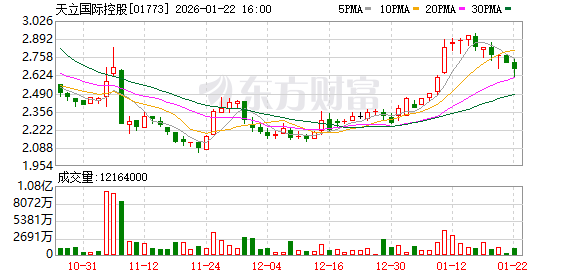
Core Insights - The strategic partnership between Tianli Group and Tencent aims to create AI education solutions that transcend mere technological empowerment, focusing on building an ecosystem centered around a "subject brain" [1][3] Group 1: Strategic Collaboration - Tianli International's AI education subsidiary, Tianli Qiming, will engage in deep co-creation with Tencent, marking a shift from product competition to ecosystem construction [3] - The collaboration is defined as a "benchmark strategic partnership," with Tianli Qiming focusing on demand definition and scenario validation, while Tencent provides technological support [4] Group 2: Technological Development - The partnership will prioritize joint research and development, leveraging Tencent's advanced AI capabilities to support Tianli's "subject brain" initiative, ensuring both educational depth and industrial stability [5] - The goal is to evolve from "tool assistance" to "cognitive empowerment," addressing the fundamental challenge of personalized education at scale [4][5] Group 3: Global Expansion and Social Responsibility - The collaboration will extend beyond domestic markets to explore international opportunities, combining Tianli's AI education model with Tencent's global technology and distribution networks [5] - Both companies intend to collaborate on Tencent's Sustainable Social Value (SSV) projects, focusing on rural education and educational equity, reinforcing the belief that technology can promote educational fairness [5][6] Group 4: Future Education Paradigm - The partnership aims to shape a prosperous new ecosystem for smart education, enhancing the dissemination of technological achievements and aligning with Tianli's long-term vision of promoting educational equity and high-quality development [7] - The integration of Tianli's educational insights with Tencent's cutting-edge AI is expected to create significant advancements beyond isolated technological innovations [7]

育碧宣布取消6款游戏开发;腾讯《星痕共鸣》被曝存在恶性BUG|游戏早参
Mei Ri Jing Ji Xin Wen· 2026-01-22 22:33
Group 1 - Tencent's game "Star Echo Resonance" has been reported to have a severe bug that allows players to obtain the highest rarity (SSR) characters or weapons, with issues noted as early as the first month of its launch [1] - The company is currently tracking the issue and plans to announce detailed handling results, a list of penalties, and compensation plans within the week [1] - This incident tests Tencent's technical stability and crisis management capabilities in complex game operations, and mishandling could impact player trust and long-term revenue [1] Group 2 - Ubisoft announced the cancellation of six game developments after a two-month project review, including the highly anticipated "Prince of Persia: Sands of Time Remake" [2] - The decision reflects a strategic shift under new management towards a "quality over quantity" approach, which may affect the product pipeline in the short term but is expected to optimize resource allocation and financial health in the long run [2] - This move indicates that leading companies in the industry are transitioning from expansion to focusing on high-quality products, potentially prompting a market reassessment of game companies' value based on product success rates and IP health [2] Group 3 - Eagle Horn Network's 3D real-time strategy RPG "Arknights: End of the World" has officially launched its global public beta, available on PC, PS5, and mobile platforms, achieving the top spot on the App Store free game chart on launch day [3] - The game supports advanced technical features such as 120 FPS and DLSS on PC, with some iOS devices offering ray tracing capabilities, and mobile versions supporting controller operation [3] - The successful launch reinforces the strong user appeal of Eagle Horn Network's core IP and its cross-platform capabilities, marking a trend towards high-end experiences in domestic two-dimensional games [3]
智通ADR统计 | 1月23日
智通财经网· 2026-01-22 22:19
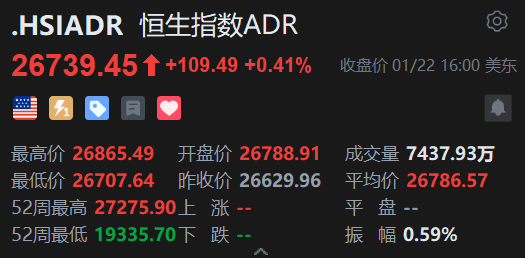
Market Overview - The Hang Seng Index (HSI) closed at 26,739.45, up by 109.49 points or 0.41% as of January 22, 16:00 Eastern Time [1] - The index reached a high of 26,865.49 and a low of 26,707.64 during the trading session, with a trading volume of 74.379 million shares [1] Stock Performance - HSBC Holdings closed at HKD 130.600, an increase of 0.69% compared to the previous close [2] - Tencent Holdings closed at HKD 594.990, a decrease of 0.42% compared to the previous close [2] - Alibaba Group (ADR) saw a price increase of 4.78%, closing at HKD 164.800, while its ADR price was USD 172.684 [3] - Other notable stock movements include: - China Ping An: down 2.34% to HKD 66.900 [3] - Baidu Group: up 4.10% to HKD 160.000 [3] - BYD Company: up 0.71% to HKD 99.750 [3] - New World Development: up 3.63% to HKD 114.200 [3]



2025年四季度末公募基金前十大重仓股





Zhong Guo Zheng Quan Bao· 2026-01-22 20:56
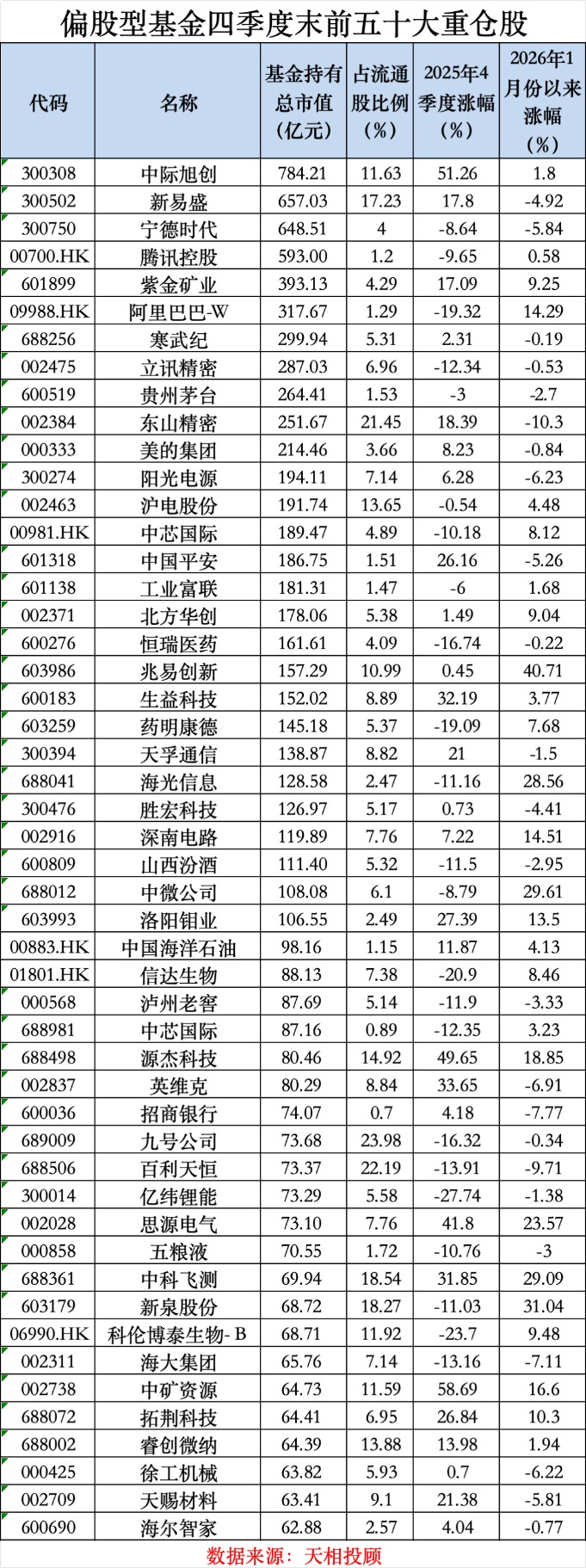
Core Viewpoint - The article presents a list of companies with their total market value held by funds, highlighting significant players in the market and their respective valuations in billions of yuan. Group 1: Company Market Values - Zhongji Xuchuang (300308) has a total market value of 78.42 billion yuan [1] - Xinyi Technology (300502) holds a market value of 65.70 billion yuan [1] - CATL (300750) is valued at 64.85 billion yuan [1] - Tencent Holdings (00700.HK) has a market value of 59.30 billion yuan [1] - Zijin Mining (601899) is valued at 39.31 billion yuan [1] - Alibaba Group (09988.HK) holds a market value of 31.77 billion yuan [1] - Cambricon Technologies (688256) has a market value of 29.99 billion yuan [1] - Luxshare Precision (002475) is valued at 28.70 billion yuan [1] - Kweichow Moutai (600519) holds a market value of 26.44 billion yuan [1] - Dongshan Precision (002384) is valued at 25.17 billion yuan [1]
“旭易”东升 基金重仓股变迁 折射中国资本市场深刻变化
Shang Hai Zheng Quan Bao· 2026-01-22 18:42
Group 1 - The A-share market experienced fluctuations at relatively high levels in Q4 2025, with a slight decrease in overall equity positions of public funds compared to Q3 2025 [1][2] - The average equity positions for stock and mixed funds were 89.06% and 81.05%, respectively, showing a minor decline from the previous quarter [2] - Major holdings in public funds included leading light module companies, with Zhongji Xuchuang and Xinyi Sheng surpassing Ningde Times and Tencent Holdings to become the top two heavyweights [1][4] Group 2 - Several actively managed equity funds significantly increased their positions, with notable examples including Bosera Huixing and GF Chengxiang, which raised their equity positions by 12.31 and 10.3 percentage points, respectively [2] - Fund managers expressed optimism about the A-share market for 2026, citing potential dual benefits from domestic and international liquidity [3][9] - The focus on technology sectors continued, with managers identifying investment opportunities in storage chips, solid-state batteries, and humanoid robots [7][10] Group 3 - The top 50 heavyweights in public funds were primarily concentrated in information technology, consumer goods, and investment sectors, with 18 stocks in the information technology sector [4][6] - AI-related stocks gained prominence, with Zhongji Xuchuang, Xinyi Sheng, and Hanwujing entering the top seven heavyweights due to the AI boom [4][6] - The number of innovative drug companies in the top 50 heavyweights decreased from eight to five by the end of Q4 2025, indicating a shift in investment focus [5] Group 4 - Fund managers anticipate that the AI investment theme will continue to be a primary focus, with expectations for rapid growth in AI applications in the coming years [9][10] - The investment strategy is shifting towards AI applications, including smart driving, edge AI, and humanoid robots, as the industry matures [9][10] - The overall sentiment among fund managers is that the AI-driven technology market will remain a significant area of investment for the next several years [9][10]


“旭易”东升 基金重仓股变迁,折射中国资本市场深刻变化
Shang Hai Zheng Quan Bao· 2026-01-22 18:37
Group 1 - The A-share market is experiencing fluctuations at relatively high levels, with public fund equity positions slightly decreasing compared to the previous quarter [1] - As of the end of 2025, the leading heavyweights in public funds are Zhongji Xuchuang and Xinyi Sheng, surpassing Ningde Times and Tencent Holdings [1][4] - The mining giant Zijin Mining has entered the top five heavyweights for the first time, indicating a shift in investment focus [1][4] Group 2 - Several actively managed equity funds have significantly increased their equity positions, with notable increases in funds like Bosera Huixing and GF Chengxiang [2] - Fund managers express optimism about the A-share market for 2026, anticipating dual liquidity benefits in the first quarter [2][3] - The focus on sectors with high performance certainty and relatively low valuations, such as AI hardware and non-ferrous metals, is emphasized by fund managers [2][3] Group 3 - The top 50 heavyweights in public funds are primarily concentrated in information technology, consumer goods and services, and investment products [4] - AI-related stocks have emerged as new favorites in public fund portfolios, with Zhongji Xuchuang, Xinyi Sheng, and Hanwujing among the top seven heavyweights [4][5] - The consumer goods sector remains weak, with only a few representatives in the top 50, including major liquor brands [4] Group 4 - Fund managers are focusing on technology sectors, particularly storage chips, solid-state batteries, and humanoid robots, to capitalize on emerging trends [6] - The AI industry is expected to accelerate in 2026, with a shift towards AI application development rather than just infrastructure [8][9] - The investment strategy includes maintaining core holdings while exploring opportunities in AI applications, such as smart driving and AI-enabled robots [8][9]

燧原科技科创板IPO获受理,背靠腾讯亦喜亦忧
Nan Fang Du Shi Bao· 2026-01-22 15:19
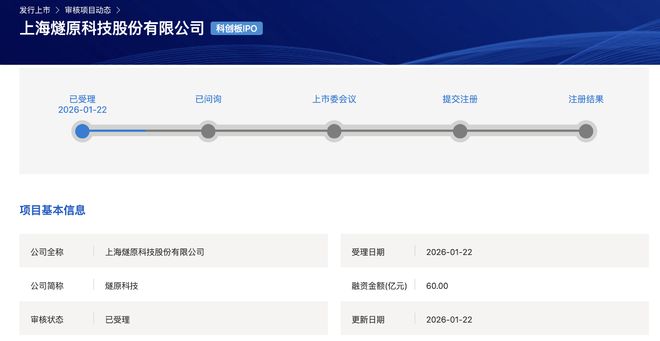
1月22日,国产AI芯片"独角兽"燧原科技的IPO申请获上交所受理,拟募集60亿元,由中信证券担任保 荐机构。 自2019年起和腾讯开展业务合作以来,燧原科技称目前双方"已经形成了稳定的合作关系"。燧原科技创 始人、总经理张亚林此前介绍,公司的芯片已支持腾讯诸多的互联网应用场景,并通过智算集群支撑腾 讯产业生态客户的业务拓展。 招股书显示,2022年、2023年、2024年与2025年前三季度,燧原科技对前五大客户的销售金额占当期营 业收入的比例分别为94.97%、96.50%、92.60%和96.41%。其中,对腾讯科技(深圳)有限公司的销售 金额占比分别为8.53%、33.34%、37.77%和71.84%,这些销售构成关联交易。以至于有半导体行业分析 师受访时,将燧原科技视为腾讯的"干儿子"。燧原科技预计,未来一定时期内对腾讯销售占比较高的情 形仍将持续。 作为AI芯片的重要需求方,互联网大厂本身就是国产芯片公司竞相争夺的客户对象。燧原科技援引市 场机构Bernstein的预测指出,到2028年,字节跳动、阿里巴巴和腾讯的AI资本支出将占据中国AI资本支 出的近50%,凸显了进入头部互联网厂商供应链对A ...
中际旭创,登顶公募第一重仓股!AI硬件成焦点!
券商中国· 2026-01-22 15:05
数据显示,公募基金2025年四季度仓位聚焦电子、电力设备等核心赛道,光模块龙头中际旭创和新易盛,超越 宁德时代和腾讯控股,成为主动权益基金前两大重仓股。 中际旭创登顶主动权益基金头号重仓股 天相投顾数据显示,截至2025年四季度末,中际旭创登顶主动权益基金头号重仓股,位列第二到第十大重仓股 的分别是新易盛、宁德时代、腾讯控股、紫金矿业、阿里巴巴-W、寒武纪-U、立讯精密、贵州茅台、东山精 密,覆盖AI、新能源、互联网、消费、电子等方向。 与2025年三季度末相比,光模块龙头中际旭创和新易盛,超越宁德时代和腾讯控股,成为主动权益基金前两大 重仓股。寒武纪-U、东山精密新进前十大重仓股,工业富联、中芯国际退出前十大重仓股。 从公募基金的全市场统计口径来看,个股层面,据Wind数据,公募基金2025年四季度末新进个股超600只,利 通科技、星图测控、超捷股份、大丰实业、力星股份、达意隆等个股,基金持股总量占流通A股比例均超 4%,其中星图测控、超捷股份1月以来股价涨幅均超两成,成为新进标的中的亮点。 增持与减持阵营均呈现规模化特征,四季度基金增持个股超1300只,恒勃股份、迈为股份、天华新能、普蕊 斯、斯菱智驱等个 ...

见证历史!第一重仓股变了 中际旭创登顶偏股型基金第一大重仓股
Zhong Guo Ji Jin Bao· 2026-01-22 14:17
Group 1 - The core focus of the news is the shift in the top holdings of public funds, with Zhongji Xuchuang and Xinyi Sheng replacing CATL and Tencent as the top two holdings [1][5] - In the fourth quarter of last year, the information technology sector saw significant increases in fund holdings, with four out of the top five increased stocks belonging to this sector [1][6] - Zhongji Xuchuang's market value held by public funds increased from 55.81 billion to 78.42 billion, despite a reduction in shares held [5][9] Group 2 - The top ten holdings of public funds at the end of the fourth quarter included Zhongji Xuchuang, Xinyi Sheng, CATL, Tencent, Zijin Mining, Alibaba-W, Cambricon, Luxshare Precision, Kweichow Moutai, and Dongshan Precision [2] - The increase in holdings for Zhongji Xuchuang was the highest at 22.6 billion, followed by China Ping An and Dongshan Precision, both exceeding 10 billion [9] - Several stocks that saw significant price increases in the fourth quarter, such as Tianhua New Energy and Maiwei Co., also experienced substantial increases in fund holdings [9] Group 3 - The fourth quarter saw a reduction in holdings for major tech stocks, including Alibaba-W, Tencent, and SMIC, indicating a trend of public funds reducing exposure to these stocks [10][11] - The top ten stocks with reduced holdings included Alibaba-W, Industrial Fulian, CATL, and Tencent, with significant decreases in their market values held by funds [11] - The overall trend indicates a shift in investment focus towards sectors like information technology, non-ferrous metals, and chemicals, reflecting fund managers' latest strategies [6][9]