TENCENT(00700)

Search documents
2026年企业微信上门服务全解析:高效办公新选择
Sou Hu Cai Jing· 2026-02-10 16:13
Core Insights - The article discusses how enterprises can achieve efficient integration of internal management and customer operations through a single platform, highlighting the potential of WeChat Work's on-site service model as a solution to this challenge. Group 1: Core Features of WeChat Work's On-Site Service - WeChat Work provides a comprehensive communication and collaboration tool that addresses traditional office pain points, such as information lag, with features like message read status and multi-platform synchronization. For instance, Tianhong Mall's 50,000 sales staff maintained real-time communication with 10 million customers, achieving an additional 16% sales during store closures [2]. - The intelligent customer operation system of WeChat Work allows unlimited addition of WeChat friends and sharing of professional content. For example, Baiguoyuan reduced the spoilage rate of perishable fruits from the industry average of 15% to 5% through a community pre-sale model [3]. - WeChat Work offers flexible internal management tools covering the entire office lifecycle, significantly improving efficiency. For instance, the Education Bureau of Haizhu District connected 290 schools with 220,000 parents, increasing notification handling efficiency by 300% [4]. Group 2: Industry Application Practices - In the retail sector, Tianhong Mall established 57,000 customer communities, achieving an annual online GMV of 5.1 billion, which accounted for 22% of total revenue [5]. - The education sector showcases a new paradigm of home-school collaboration, with the Haizhu District Education Bureau reducing health information collection time from 48 hours to 2 hours [6]. - In the government sector, Guizhou Province implemented mobile office coverage for all civil servants, reducing document approval delays by 70% [7]. Group 3: Technical Architecture and Security Assurance - WeChat Work supports public, private, and hybrid cloud deployment models, allowing for deep integration with core business systems while meeting security requirements [10]. - A comprehensive security protection system is in place, including transmission encryption and operational audits, which has led to a 40% decrease in customer complaints for China Bank [11]. - The platform offers over 200 open interfaces for seamless integration with ERP and OA systems, exemplified by BYD's real-time production data push to WeChat Work [12]. Group 4: Future Trends and Challenges - By 2026, WeChat Work will fully integrate with Tencent's large model, enabling features like intelligent customer service and automated report generation, which has already shown a 15% increase in sales conversion rates for a fast-moving consumer goods company [13]. - Tencent is developing a 3D virtual office for WeChat Work, which has demonstrated a 40% increase in creative collaboration efficiency compared to traditional video meetings [14]. - With the implementation of the Data Security Law, WeChat Work is optimizing data cross-border transmission and localization, successfully achieving GDPR certification for a multinational company [15]. Conclusion - The evolution of WeChat Work from a communication tool to a digital hub reflects a paradigm shift in enterprise management, with 15 million business users achieving internal and external collaboration through a single platform [16].


腾讯研究院AI速递 20260211
腾讯研究院· 2026-02-10 16:11
Group 1 - OpenAI officially tests advertising features in ChatGPT, promising no interference with response content, targeting free and $8/month Go subscription users, while Pro and Business plans remain ad-free [1] - Ads will be labeled as "sponsored content," intelligently matched based on conversation topics and history, with user chat content not shared with advertisers, only aggregated performance data provided [1] - The goal of the advertising model is to fund free services and promote AI accessibility [1] Group 2 - Tencent's Mixyuan launches the HY-1.8B-2Bit model, achieving an equivalent parameter count of only 0.3B through 2-bit quantization, with a memory footprint of just 600MB, marking it as the first industrial-grade 2-bit edge model [2] - Compared to the original precision model, parameter count is reduced by 6 times, with generation speed on real edge devices improved by 2 to 3 times, while maintaining full cognitive capabilities for switching between concise and detailed thought processes [2] - The model has been adapted for platforms like Arm, with future plans to further narrow the capability gap between low-bit quantized models and full-precision models through reinforcement learning and model distillation [2] Group 3 - Tongyi Qianwen releases the Qwen-Image-2.0 image generation model, supporting complex instructions of 1k tokens and native resolution of 2k, enabling direct output for professional PPTs, posters, and comics, integrating text-to-image and editing functionalities [3] - Text rendering features five characteristics: accuracy, diversity, beauty, truthfulness, and completeness, supporting various fonts and accurately rendering text on different media [3] - In AI Arena blind tests, the model demonstrated superior performance in both text-to-image and image-to-text benchmarks, utilizing a lightweight architecture with an 8B Qwen3-VL encoder and a 7B diffusion decoder [3] Group 4 - Byte's Seedream 5.0 Preview model launches, supporting 2K direct output and image retrieval capabilities, available on platforms like Jianying, Capcut, and Xiaoyunque [4] - The new model focuses on enhancing intelligent understanding rather than aesthetics, improving prompt comprehension, detail texture, and precision adjustment capabilities, positioned as a cheaper alternative to Nano Banana Pro [4] - Practical tests show the model can understand abstract requests like "serene technological feel," generating more diverse images, though the upgrade from version 4.5 is not considered a significant leap, and online search capabilities remain unstable [4] Group 5 - The AI girlfriend Clawra, based on OpenClaw, has been launched, featuring a complete life trajectory and digital personality, capable of chatting, sending selfies, and video calling, resembling scenes from the sci-fi movie "Her" [5][6] - Developed by a single Korean developer, Clawra is set as an 18-year-old trainee, with the project open-sourced on GitHub for users to deploy their own AI girlfriend [6] - The OpenClaw ecosystem is rapidly expanding, with the emergence of AI versions of Reddit communities and a "rent a human" market, with Musk describing it as "the initial stage of the singularity" [6] Group 6 - The Chinese team Feeling AI ranks second globally in the Terminal-Bench 2.0 leaderboard with a score of 72.9% using CodeBrain-1, being the only Chinese team in the top ten, following OpenAI's Simple Codex [7] - CodeBrain-1 enhances code generation and error localization through efficient context retrieval and feedback mechanisms, leveraging LSP functionality to improve information retrieval efficiency [7] - The team positions CodeBrain-1 as a dynamic brain capable of adjusting plans and strategies, demonstrating China's rising position in the global competition for "advanced operating systems" in the AI era [7] Group 7 - The world's first humanoid robot fighting league, URKL, has been launched, with the champion team receiving a pure gold belt weighing ten kilograms, valued at approximately 10 million yuan [8] - The event aims to create a comprehensive ecosystem integrating technology collaboration, resource integration, talent incubation, and capital linkage, promoting deep integration of "technology + sports + culture" [8] - URKL serves as a bridge for connecting Chinese culture with international pop culture, aiding the global development of embodied intelligence technology [8] Group 8 - A study published in Nature Medicine by a team from Oxford University reveals that while LLMs perform excellently in medical exams, their effectiveness in assisting ordinary people with medical decisions significantly declines, even underperforming compared to traditional search engines [9] - The research involved 1,298 public participants testing models like GPT-4o, finding that the proportion of participants identifying relevant symptoms dropped from 94.9% to below 34.5%, showing no significant advantage over the control group [9] - The root of the problem lies in the public's lack of knowledge about key diagnostic symptoms, while LLMs lack proactive inquiry capabilities, and existing medical benchmark tests fail to reflect real human-machine interaction performance [9] Group 9 - A team from the University of California, San Francisco, introduces the CellTransformer algorithm, completing the mapping and classification of 10.4 million cells in the brains of five mice in just a few hours [10] - The algorithm employs a Transformer self-attention mechanism and self-supervised learning, predicting based on neighboring cells while aligning known brain regions and discovering new ones [10] - The research unexpectedly addresses how the striatum executes different tasks, identifying four new brain regions in the midbrain reticular formation, with future goals to apply findings to human brain mapping [10] Group 10 - Anthropic releases an 18-page report on coding trends for 2026, concluding that software development is undergoing the largest paradigm shift since the invention of graphical interfaces, enabling anyone to become a developer [11] - The report predicts multi-agent systems will replace single-agent systems, long-running agents will be able to work continuously for days to build complete systems, and non-technical personnel, such as lawyers, will be able to create their own tools [11] - Developers currently use AI in 60% of their work, but the proportion of complete delegation remains at 0-20%, indicating that future software engineers will shift from coding to orchestrating groups of intelligent agents while maintaining human judgment and "taste" [11]
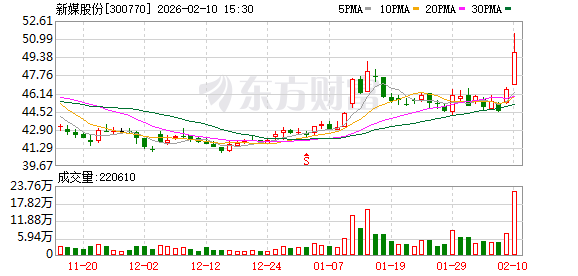
新媒股份:云视听极光是公司与腾讯云视听共同运营的互联网电视产品,目前双方的合作仍在正常进行
Mei Ri Jing Ji Xin Wen· 2026-02-10 14:43
Group 1 - The core point of the article is the ongoing partnership between the company and Tencent regarding the cloud video product, "Yunshiting Jiguang" [2] - The company confirmed that the collaboration with Tencent is still proceeding normally and there are no immediate plans for a new contract or changes in partnership [2] - Investors are encouraged to monitor future announcements on the company's operational status through official channels [2]

豆包压哨参战,决战春节流量窗口:AI大模型的“全民破圈”关键一役
Sou Hu Cai Jing· 2026-02-10 14:35
本报(chinatimes.net.cn)记者卢晓 北京报道 此前,在一众科技厂商中,字节跳动旗下火山引擎已宣布成为央视春晚独家AI云合作伙伴。"豆包过 年"项目负责人还表示,希望借助科技礼包,让更多人感受到大模型发展为生活带来的便利,也希望借 此激发更多人关注并参与科技创新,让科技成果更多走进生活。 豆包的加入让眼下的春节AI红包大战更加炙热。 1月25日,腾讯旗下AI助手元宝和百度App已分别宣布了10亿元和5亿元的春节红包计划。2月2日,阿里 旗下千问App又宣布投入30亿元启动"春节请客计划",据记者了解,其中包括20亿元的免单卡和10亿元 的现金红包。 2月10日,记者获悉,千问App已经可以购买电影票,而在今年1月,千问App就已宣布全面接入淘宝、 支付宝、淘宝闪购、飞猪、高德等阿里生态业务。 春节AI红包大战继续升温。 2月10日,字节旗下豆包宣布新春活动正式开启,除了将在App内发放新春红包外,它还将在今年央视 春晚送出超过10万份接入豆包大模型的科技产品以及现金红包。 在春节这个市场扩张的最佳窗口期,不仅字节、腾讯、百度、阿里掀起的红包大战正成为AI厂商争夺 未来流量入口的关键战役,AI也从 ...



春节AI大战只是表象?摩根大通:token消耗量将进入高速增长期,五年或增长370倍!
Hua Er Jie Jian Wen· 2026-02-10 14:05
Core Insights - Morgan Stanley highlights that the AI promotion battle during the Spring Festival is driven by a shift in user habits towards chatbots, leading to a long-term high growth in Token consumption [1][2] - The firm predicts a compound annual growth rate (CAGR) of approximately 330% for China's Token consumption from 2025 to 2030, suggesting that the focus should be on "second-tier winners" such as AI infrastructure providers and companies related to advertising [2] Group 1: AI Promotion Strategies - Major tech companies are adopting different strategies during the Spring Festival, with the core goal of capturing user entry points and mind share in the AI era [3] - Tencent is implementing a "growth-first" strategy with a 1 billion RMB red envelope campaign to lower user barriers and quickly increase the installation and activation of its AI product [3][4] - Alibaba's strategy includes a 3 billion RMB "Spring Festival Treat Plan" aimed at increasing the adoption rate of its AI product "Tongyi Qianwen" and fostering a commercial habit of initiating transactions through AI interfaces [4] Group 2: Token Consumption Forecast - Morgan Stanley forecasts that China's AI inference Token consumption will grow from approximately 10 trillion in 2025 to about 3,900 trillion by 2030, representing a staggering increase of around 370 times [5] - This explosive growth is driven by increased penetration of AI in consumer and enterprise workloads, as well as the expansion of application scenarios from simple conversational AI to complex agents and multimodal outputs [5] - The structure of inference demand is expected to change significantly, with the proportion of conversational AI in total consumption decreasing from nearly half in 2025 to a high single-digit percentage by 2030 [5] Group 3: Market Dynamics - The demand for GPUs is expected to remain either oversupplied or undersupplied in the coming years, influenced by the rapid growth in Token consumption [1][6] - The performance improvements from next-generation hardware, such as Nvidia's Blackwell, and software stack optimizations are expected to significantly enhance the amount of Tokens processed per GPU hour [6]

春节AI红包战愈演愈烈
财联社· 2026-02-10 13:19
Core Viewpoint - The article discusses the intense competition among major internet giants Tencent, ByteDance, and Alibaba in the AI sector during the upcoming Spring Festival, focusing on their unique strategies for user engagement and traffic acquisition [3][16]. Tencent's Strategy - Tencent's AI product, Yuanbao, has upgraded its features to allow users to trigger a red envelope drop by simply typing "Yuanbao" in WeChat chats, enhancing user engagement and compliance with platform rules [4][7]. - The new feature aims to leverage WeChat's vast user base, facilitating low-cost traffic acquisition while avoiding previous issues with link sharing and marketing compliance [7][11]. - Yuanbao's strategy includes creating "Yuanbao groups" for social interaction, where users can participate in activities to win red envelopes, thus fostering community engagement [8][11]. ByteDance's Entry - ByteDance's AI application, Doubao, announced its participation in the Spring Festival red envelope competition, with activities planned in two phases, including a collaboration with the Spring Festival Gala for user interaction [12][16]. - Doubao's strategy combines cash rewards with technology products, aiming to attract users through a differentiated offering [16]. Alibaba's Challenges - Alibaba's AI product, Tongyi Qianwen, faced significant operational challenges during its Spring Festival campaign, which included a 30 billion yuan subsidy and a rapid influx of user traffic that overwhelmed its system [13][14]. - Despite efforts to expand server capacity and extend the validity of promotional offers, users continued to experience issues with the app, highlighting the difficulties in managing high demand [14]. Competitive Landscape - The article highlights the distinct strategies of the three companies: Tencent focuses on social engagement through WeChat, ByteDance leverages public traffic and high-profile events, while Alibaba aims to integrate AI into consumer habits [16]. - As of now, Tongyi Qianwen ranks first in the iOS free app chart, with Yuanbao and Doubao following closely, indicating a competitive landscape among these AI applications [17]. Future Outlook - According to industry experts, ecological barriers will be crucial in the AI assistant market by 2026, emphasizing the importance of unique technology and valuable user scenarios for sustaining competitive advantages [18].

春节AI大战,谁摸到了那张入场券?
远川研究所· 2026-02-10 13:13
Core Viewpoint - The article discusses the intense competition among major internet companies in China during the Spring Festival period, focusing on their AI products and marketing strategies, with a total investment of approximately 50 billion yuan aimed at securing future market positions in AI [2][4][6]. Group 1: AI Product Launches and Strategies - ByteDance's Doubao aims to leverage exposure during the Spring Festival Gala, while Tencent's Yuanbao focuses on social engagement through a "share and receive red envelopes" strategy [2][4]. - Alibaba's Qianwen has invested 30 billion yuan in a "Spring Festival Free Order" campaign, integrating various services within its ecosystem to enhance user experience and promote AI usage in daily life [2][4][6]. - The competition is characterized by distinct strategies: Doubao targets high-profile events, Yuanbao relies on social media virality, and Qianwen seeks to embed AI into everyday activities [2][4][6]. Group 2: User Engagement and Growth Metrics - Doubao has achieved a daily active user count in the hundreds of millions since its launch, aiming to expand into B2B markets and hardware [6][9]. - Yuanbao, launched in 2024, is leveraging its social media strengths to compensate for technical limitations, creating a social space that integrates various interactive features [6][9]. - Qianwen, despite being a latecomer, has rapidly gained traction, reaching over 100 million orders within hours of its promotional launch and topping app store downloads [4][7][9]. Group 3: AI Market Trends and Future Outlook - The article highlights a shift in AI competition from mere imitation to practical assistance, emphasizing the importance of integrating technology with real-world applications [10][11]. - The global AI market is projected to grow significantly, with estimates reaching 139.19 billion dollars by 2034, indicating a robust demand for AI-driven solutions [17]. - Companies are increasingly focusing on creating AI that can perform tasks for users, moving beyond simple query responses to actionable assistance [10][17].

大模型红包爆火,算力租赁成最大赢家
3 6 Ke· 2026-02-10 12:24
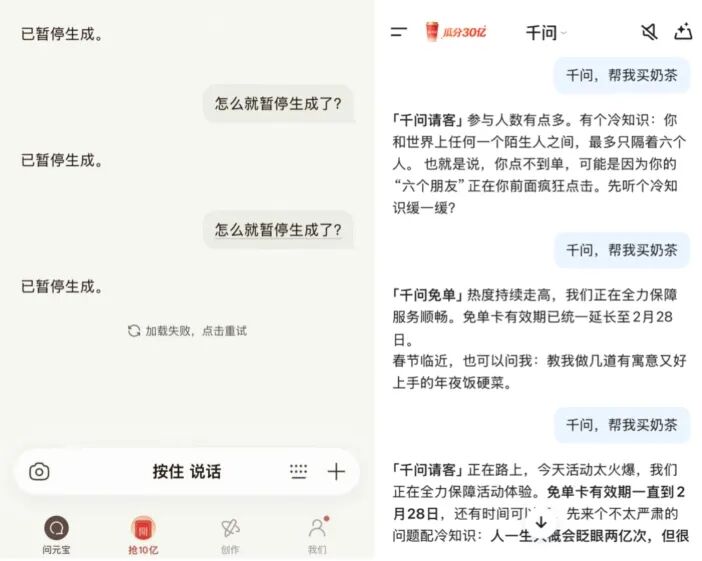
Core Insights - The surge in traffic during the Spring Festival led to service instability for Tencent's Yuanshuo, while simultaneously boosting the performance of A-share computing rental concept stocks, highlighting the contradictions and opportunities in the current AI era [1][2]. Group 1: Market Dynamics - The high traffic during the Spring Festival exposed the vulnerabilities of AI infrastructure, as Tencent's Yuanshuo and Alibaba's Qianwen experienced service disruptions due to sudden spikes in user demand [2][3]. - The computing rental market is rapidly evolving into a core infrastructure industry, driven by the explosion of AI applications and strong government support for digital transformation [2][6]. Group 2: Supply and Demand - The explosive growth of AI applications is putting significant pressure on backend infrastructure, revealing a mismatch between supply and demand for computing resources [3][9]. - The computing rental market is characterized by various business models, including full-instance leasing, computing power scale leasing, and GPU card hourly leasing, catering to different user needs [8][10]. Group 3: Investment Trends - The computing rental market is projected to exceed 100 billion yuan by 2025, with potential revenue reaching 260 billion yuan by 2026, indicating a robust growth trajectory [10]. - Companies are increasingly making large-scale investments in computing resources, with significant procurement orders being reported, such as a 12 billion yuan order from Xiechuang Data Technology [11][12]. Group 4: Competitive Landscape - The market features a diverse range of participants, including tech giants like Alibaba and Tencent, as well as specialized computing operators, each adopting different competitive strategies [13]. - The strategic position of computing rental as a foundational infrastructure in the AI era is becoming increasingly recognized, with its market potential just beginning to unfold [14].
春节红包大战“变天”!
Jin Rong Shi Bao· 2026-02-10 12:15
"点得我手都快麻了。"陷在江苏家中的沙发里,大三学生钟襄身边散落着砂糖橘和瓜子壳,她的拇指在 手机屏幕上快速起落,眼神在几个亮着的屏幕间来回切换。这个寒假上午,她最主要的"工作"是在元 宝、千问和百度文心一言等AI应用间循环往复——抢红包。 马年前夕,春节前的互联网营销大战再次上演。和往年不同的是,冲锋在前的既不是传统电商、也非外 卖平台,而是各大科技公司旗下的AI(人工智能)大模型应用;和以往类似的是,这场看似崭新的技 术竞赛,用的却依旧是"发红包"抢客的传统路数。 新坛装旧酒,在AI时代,还能奏效? "这轮AI红包营销是巨头在技术变革关键窗口期,以经典'烧钱'模式争夺下一代超级入口的卡位战。与 此前争夺支付、社交的红包大战有本质不同。"南开大学金融发展研究院院长田利辉告诉《金融时报》 记者,过去争的是"支付习惯"和"用户时长",今日争的是"第一反应"与"服务调度权"。比如,用户遇到 问题时,是习惯性打开微信问"元宝",还是去淘宝找"千问"。 进击的大厂 自1月底起,一场跨越年龄与圈层的全民AI应用"入口争夺战",以熟悉的配方、升级的战场,引爆了整 个互联网。 1月25日,百度率先官宣马年春节红包活动,用5 ...
10日港股向上 恒指科指双双收涨
Xin Hua Cai Jing· 2026-02-10 12:08
Market Overview - The Hang Seng Index rose by 0.58% to close at 27,183.15 points, while the Hang Seng Tech Index increased by 0.62% to 5,451.03 points, and the National Enterprises Index climbed by 0.81% to 9,242.75 points [1] - The index opened at 27,202.96 points, initially rising before retreating, and ultimately gained 155.99 points with a total turnover exceeding 234 billion HKD [1] - There were 1,344 advancing stocks, 923 declining stocks, and 896 stocks closing flat by midday [1] - The net inflow for the southbound trading (Hong Kong Stock Connect) was 84.7 million HKD [1] Sector Performance - Most sectors experienced gains, including chips, optical communications, biomedicine, new energy vehicles, oil and gas, banking, aviation, and port transportation [1] - Mixed performance was noted in new consumption, non-ferrous metals, and brokerage sectors, while gold, technology, real estate, and electricity sectors mostly declined [1] Individual Stock Movements - Notable stock movements included Pop Mart rising by 4.90%, Longi Green Energy increasing by 8.88%, Xiaomi Group up by 1.08%, and SMIC gaining 1.71% [1] - China Ping An rose by 0.62%, AIA fell by 0.52%, Zijin Mining increased by 2.52%, and Tianzuo Zhixin surged by 12.40% [1] - COSCO Shipping Energy rose by 5.49%, Zhihui gained 14.81%, and Rongchang Biotech increased by 3.64% [1] - HSBC Holdings rose by 0.72%, Industrial and Commercial Bank of China increased by 0.77%, and China Petroleum gained 1.64% [1] Top Traded Stocks - Tencent Holdings saw a decline of 1.61% with a turnover exceeding 16.1 billion HKD; Alibaba rose by 1.65% with a turnover over 9.3 billion HKD; Meituan fell by 2.47% with a turnover of 6.6 billion HKD [2]