CSPC PHARMA(01093)

Search documents
恒指跌1%,恒生科技指数跌0.9%,创新药股走低,石药集团(01093.HK)跌3.6%。
news flash· 2025-06-19 02:23
恒指跌1%,恒生科技指数跌0.9%,创新药股走低,石药集团(01093.HK)跌3.6%。 ...
石药集团(01093):海外授权助力抵御业绩波动,创新研发持续推进
Huajing Securities· 2025-06-17 13:45
Investment Rating - The report maintains a "Buy" rating for the company with a target price of HK$10.59, representing a potential upside of 20% from the current price of HK$8.84 [1][8][18]. Core Insights - The company has faced revenue declines in its core pharmaceutical business but has offset some of this through strong licensing income, demonstrating its ability to commercialize its pipeline effectively [6][15]. - The report highlights a strategic partnership with AstraZeneca, which includes an upfront payment of US$110 million, indicating strong collaboration in innovative drug development [6][15]. - Adjustments to earnings per share (EPS) forecasts reflect a cautious outlook on the growth of the company's core generic drug business, with 2025 and 2026 EPS estimates reduced by 14% [2][11]. Financial Performance - The company reported a revenue of RMB 70.15 billion in Q1 2025, a year-on-year decline of 21.9%, while net profit was RMB 14.95 billion, down 8.3% [6][10]. - The revenue forecast for 2025 has been adjusted down to RMB 28.306 billion, a decrease of 12% from previous estimates, with a further decline expected in 2026 [12][15]. - The report anticipates a gross margin of 70% for 2025, slightly lower than previous forecasts, reflecting ongoing challenges in the market [11][12]. Research and Development - The company continues to invest in R&D, with expenditures reaching RMB 13 billion in Q1 2025, representing an 11.4% increase year-on-year [7][11]. - The R&D intensity remains high at 23.7% of revenue, indicating a strong commitment to innovation [7][11]. - The company has nearly 90 products in various stages of clinical development, with several already submitted for registration, enhancing future approval efficiency [7][11]. Valuation - The report employs a two-stage DCF model for valuation, adjusting the WACC to 8.5% and increasing the perpetual growth rate to 4% [8][17]. - The target price of HK$10.59 is based on the DCF analysis, suggesting that the current valuation does not fully reflect the company's growth potential in innovative drugs and licensing income [8][17]. - The company's projected P/E ratio for 2025 is 21, slightly above the industry average of 20, indicating a potential undervaluation relative to its peers [8][17].
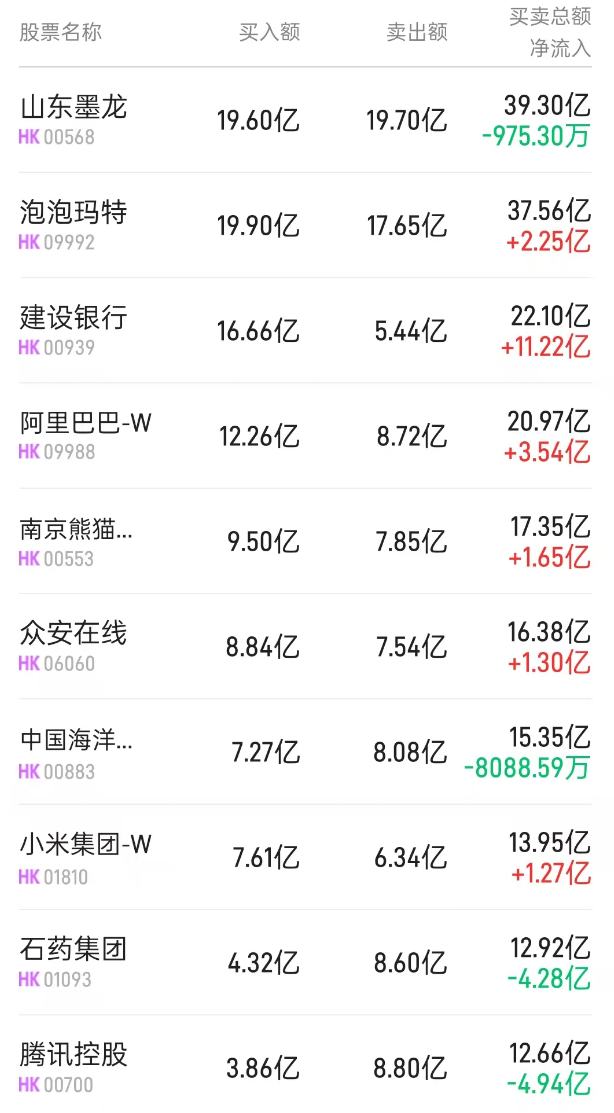
北水成交净买入63.02亿 科网股、创新药概念继续分化 建设银行再获北水加仓
Zhi Tong Cai Jing· 2025-06-17 10:02
Summary of Key Points Core Viewpoint - The Hong Kong stock market experienced significant net inflows from northbound trading, with a total net purchase of HKD 63.02 billion on June 17, 2023, indicating strong investor interest in certain stocks while others faced net sell-offs [1]. Group 1: Northbound Trading Activity - Northbound trading through Stock Connect saw a net purchase of HKD 35.8 billion from Shanghai and HKD 27.22 billion from Shenzhen [1]. - The most purchased stocks included China Construction Bank (00939), Alibaba-W (09988), and Pop Mart (09992) [1]. - The most sold stocks were Tencent (00700), CSPC Pharmaceutical Group (01093), and CNOOC (00883) [1]. Group 2: Individual Stock Performance - China Construction Bank (00939) received a net inflow of HKD 11.21 billion, supported by a report from Changjiang Securities highlighting the bank's dividend value and low valuation compared to H-shares [5]. - Alibaba-W (09988) and Meituan-W (03690) saw net purchases of HKD 5.99 billion and HKD 2.22 billion, respectively, while Tencent (00700) faced a net sell-off of HKD 7.13 billion [5]. - Pop Mart (09992) gained a net inflow of HKD 2.71 billion, with Citigroup noting the company's strong IP recognition and product development capabilities [6]. - Nanjing Panda Electronics (00553) received a net inflow of HKD 1.65 billion, linked to its involvement in brain-computer interface technology [6]. - ZhongAn Online (06060) saw a net inflow of HKD 1.3 billion, with developments in the digital asset space and its partnership with ZA Bank [7]. - Xiaomi Group-W (01810) had a net inflow of HKD 2.2 billion, while SMIC (00981) and CNOOC (00883) faced net sell-offs of HKD 59.9 million and HKD 80.88 million, respectively [8].





港股创新药板块午后持续下挫,先声药业跌近12%,石药集团跌超6%。
news flash· 2025-06-17 05:59
Group 1 - The Hong Kong innovative drug sector experienced a significant decline in the afternoon, with Sihuan Pharmaceutical falling nearly 12% and CSPC Pharmaceutical Group dropping over 6% [1]
港股创新药板块午后持续下挫,先声药业(02096.HK)跌近12%,盘初一度涨超6%,绿叶制药(02186.HK)跌近11%,再鼎医药(09688.HK)跌超7%,石药集团(01093.HK)跌超6%。
news flash· 2025-06-17 05:58
港股创新药板块午后持续下挫,先声药业(02096.HK)跌近12%,盘初一度涨超6%,绿叶制药(02186.HK) 跌近11%,再鼎医药(09688.HK)跌超7%,石药集团(01093.HK)跌超6%。 ...
中国创新药产业迎来黄金发展期 将获系统性价值重估?
Zheng Quan Ri Bao Zhi Sheng· 2025-06-16 16:39
Core Insights - The innovative drug sector in China has experienced a significant surge since June, with both A-share and Hong Kong markets showing strong performance in related stocks. This "medication boom" is driven by Chinese innovative pharmaceutical companies achieving strategic breakthroughs in global expansion through licensing deals [1][2]. Group 1: BD Transactions - The BD (Business Development) transactions have exploded since May, with notable deals such as the $60.5 billion licensing agreement between 3SBio and Pfizer, which set a record for the highest upfront payment for a Chinese innovative drug license-out [2]. - Other companies like CSPC Pharmaceutical Group and Innovent Biologics have also announced high-value BD transactions, with upfront payments ranging from $15 million to $180 million [2]. - The trend indicates that licensing income is becoming a core driver of profit growth for innovative drug companies, with significant upfront payments translating into immediate profits [5][6]. Group 2: Global Competitive Advantage - Multinational pharmaceutical companies are increasingly favoring Chinese innovative drugs due to technological breakthroughs, clinical advantages, cost efficiency, and external demand [3]. - China demonstrates global competitiveness in cutting-edge fields such as dual antibodies and ADCs, with recognized quality and shorter R&D cycles, making it attractive for foreign firms seeking high returns [3]. - The significant gap in the market due to expiring patents for blockbuster drugs is driving strong demand for Chinese innovative assets [3]. Group 3: Market Performance - The A-share pharmaceutical index has risen by 11.02% year-to-date, with individual stocks like Hebei Changshan Biochemical and Nanjing Haisco Pharmaceutical seeing price increases of over 200% in the past two months [5]. - Several actively managed pharmaceutical funds have reported growth rates exceeding 60% this year, indicating strong market interest and investment in the sector [5]. Group 4: Policy Support - The Chinese government continues to implement supportive policies for innovative drug development, including expedited review processes for clinical trial applications [7]. - The State Council has emphasized the need to enhance the innovation capabilities of pharmaceutical companies to better meet diverse healthcare needs [8]. - Systematic policy support covering the entire lifecycle of drug development is expected to create a sustainable innovation ecosystem, providing long-term institutional guarantees for industry growth [8].
盈利曙光乍现 创新药高阶竞争伊始
Bei Jing Shang Bao· 2025-06-16 16:34
Core Viewpoint - The Chinese innovative pharmaceutical industry is experiencing a significant transformation, marked by increased research breakthroughs, active business development (BD) transactions, and a shift in market perception, moving away from the "me too" label associated with Chinese drugs [1][5][10] Market Performance - The innovative pharmaceutical sector has seen a strong resurgence in the secondary market, with A-share and Hong Kong stock indices rising significantly; A-share innovative drug stocks increased by 34.27% and Hong Kong's innovative drug index surged over 70% from April 8 to June 16 [3] - The sector had previously undergone a four-year adjustment period, with the Hang Seng Innovative Drug Index hitting a historical low in July 2023, down over 70% from July 2021 [3] - The recovery is driven by active BD transactions and the commercialization of innovative drugs, with a notable shift in market sentiment towards the sector [3][4] Business Development Trends - Numerous Chinese innovative drug companies have announced significant BD projects in cutting-edge fields, with notable transactions including a $12.5 billion upfront payment from Pfizer to 3SBio for a PD-1/VEGF dual antibody [5] - The License-out model has become a primary funding source for unprofitable innovative drug companies, with Q1 2025 seeing a record 41 transactions totaling $369.29 billion, surpassing the total for the first half of 2024 [6] - The ability of Chinese companies to leverage their research platforms and enhance capital efficiency is reshaping the traditional high-risk, high-investment model of the industry [6] Commercialization and Profitability - The commercialization of innovative drugs is gaining momentum, with 20 new class 1 innovative drugs approved in the first five months of 2023, marking a five-year high [7] - Companies like BeiGene are expected to achieve positive operating profits by 2025, indicating a shift from the traditional "burning cash" phase to profitability [7][8] - The improved financial health of innovative drug companies enhances their negotiating power in BD transactions, allowing them to demand better terms [8] Competitive Landscape - The competition in the innovative drug sector is intensifying, with a focus on efficiency across the entire drug development chain, from target discovery to commercialization [9] - The majority of BD transactions are concentrated in the oncology sector, particularly in ADC and dual antibody technologies, leading to increased competition and market saturation [9] - Companies are encouraged to innovate and differentiate their products to avoid the pitfalls of homogeneity and to enhance their global competitiveness [9] Challenges Ahead - Despite the progress, the high failure rate in new drug development remains a significant challenge, particularly for early-stage research [10] - There is a growing expectation among investors for innovative drug companies to not only achieve profitability but also to provide stable dividends in the future [10]


跨国药企押注中国AI研发:阿斯利康53亿美元绑定石药集团
Guan Cha Zhe Wang· 2025-06-16 13:36
Core Insights - AstraZeneca and China-based Shijiazhuang Pharmaceutical Group have entered a strategic R&D collaboration focused on AI-driven development of new oral small molecule drugs targeting immune diseases and chronic conditions [1][2] - The agreement includes an upfront payment of $110 million, with potential milestone payments totaling over $5.3 billion, highlighting the shift of traditional pharmaceutical companies towards AI-driven drug development [1][5] Group 1: Collaboration Details - The collaboration aims to develop new oral small molecule drugs for chronic diseases, with the first phase targeting a clinical-stage oral therapy for immune diseases [2] - Shijiazhuang will utilize its proprietary "AI Engine Dual-Drive" drug discovery platform, which has already been validated in AstraZeneca's cardiovascular drug development [2][9] - The partnership follows a previous $2.02 billion licensing agreement signed in October 2024, indicating a deepening relationship between the two companies [2] Group 2: Market Context and Financials - AstraZeneca's collaboration is part of its strategy to deepen its presence in the Chinese market, following a $2.5 billion investment in a Beijing R&D center [5] - The global chronic disease market has over 2 billion patients, presenting a significant opportunity for new drug development [5] - Shijiazhuang's Q1 2025 financial report showed a revenue decline of 21.9% year-on-year, emphasizing the urgency of this collaboration amid pressures on its traditional drug business [5][8] Group 3: Strategic Shift and Future Outlook - Shijiazhuang is transitioning towards an "AI R&D + rapid licensing" model, with potential transaction values exceeding $5 billion in its AI pipeline [8] - The collaboration structure allows AstraZeneca to maintain global exclusive rights while Shijiazhuang retains control during the R&D phase, providing a sustainable revenue model for the Chinese company [8][9] - The partnership reflects a broader trend of Chinese innovative drugs entering the global market, with a significant increase in licensing deals and transaction values in recent years [10][11]

突发利好!380亿大消息
天天基金网· 2025-06-16 11:06
Core Viewpoint - The article highlights the significant growth in the innovative drug sector, driven by strong business development (BD) transactions and positive market sentiment, with notable stock performance in both A-shares and Hong Kong stocks [2][5][9]. Group 1: Stock Performance - As of June 13, the A-share innovative drug index increased by 29.07%, while the Hong Kong innovative drug index surged by 87.99% [2]. - A total of 16 innovative drug concept stocks in A-shares and Hong Kong have doubled in price this year, with Shuyou Shen leading at a 398.38% increase, followed by Jiasu at 307.09% [2][3]. Group 2: Business Development Transactions - The surge in innovative drug stocks is largely attributed to robust BD transactions, exemplified by a strategic R&D collaboration between Shiyao Group and AstraZeneca, with a total project value of up to $53.3 billion (approximately 383 billion yuan) [5]. - Other significant BD transactions include a $13 billion deal between Qide Pharmaceutical and Biohaven, and a deal exceeding $6 billion between Sanofi and Pfizer [7]. Group 3: Market Sentiment and Future Outlook - The recent American Society of Clinical Oncology (ASCO) conference showcased 73 oral presentations from Chinese companies, boosting market confidence [9]. - Regulatory changes aimed at improving access to innovative drugs are expected to further enhance demand, as indicated by recent government policies [9]. - Analysts suggest that despite the recent price increases, innovative drugs still hold investment value, with a shift from "catching up" to "leading" in the global market [10].


刚刚!重磅利好,来袭!最牛赛道再添一把火?
券商中国· 2025-06-16 08:32
Core Viewpoint - The recent announcement from the National Medical Products Administration (NMPA) optimizes the clinical trial review and approval process for innovative drugs, aiming to enhance the efficiency and quality of clinical research [1][3]. Group 1: Regulatory Changes - The NMPA's new proposal allows for the review and approval of clinical trial applications for qualifying innovative drugs to be completed within 30 working days [3]. - This initiative supports the development of innovative drugs that are clinically valuable and encourages global early-stage research and international multi-center clinical trials [3]. Group 2: Market Developments - Recent favorable news for the pharmaceutical sector includes a strategic research collaboration between Shijiazhuang Pharmaceutical Group and AstraZeneca, which involves an upfront payment of $110 million and potential milestone payments of up to $5.22 billion [1]. - The State Council's recent meeting focused on optimizing drug and medical supplies procurement policies, emphasizing the need for better evaluation and regulation of these processes [3][4]. Group 3: Industry Trends - The innovative drug sector has seen significant interest, with a notable increase in stock prices for companies involved in innovative drug development, particularly in the context of recent clinical data and business development activities [7]. - The upcoming ADA conference, scheduled for June 20-23, is expected to showcase key clinical advancements in metabolic diseases, further driving interest in innovative drugs [1][5]. Group 4: Investment Outlook - Analysts suggest that despite short-term fluctuations, the innovative drug sector is expected to maintain a positive outlook over the next 2-3 years, driven by overseas business development opportunities and increased capital allocation from public funds [7][8]. - The focus on PD1 plus logic and the potential for new breakthroughs in drug development are highlighted as key areas for investment consideration [8].