
CHINA RES LAND(01109)

Search documents
两江新区迈入崭新阶段 高端住宅迎来历史性发展
Sou Hu Cai Jing· 2025-11-17 19:47
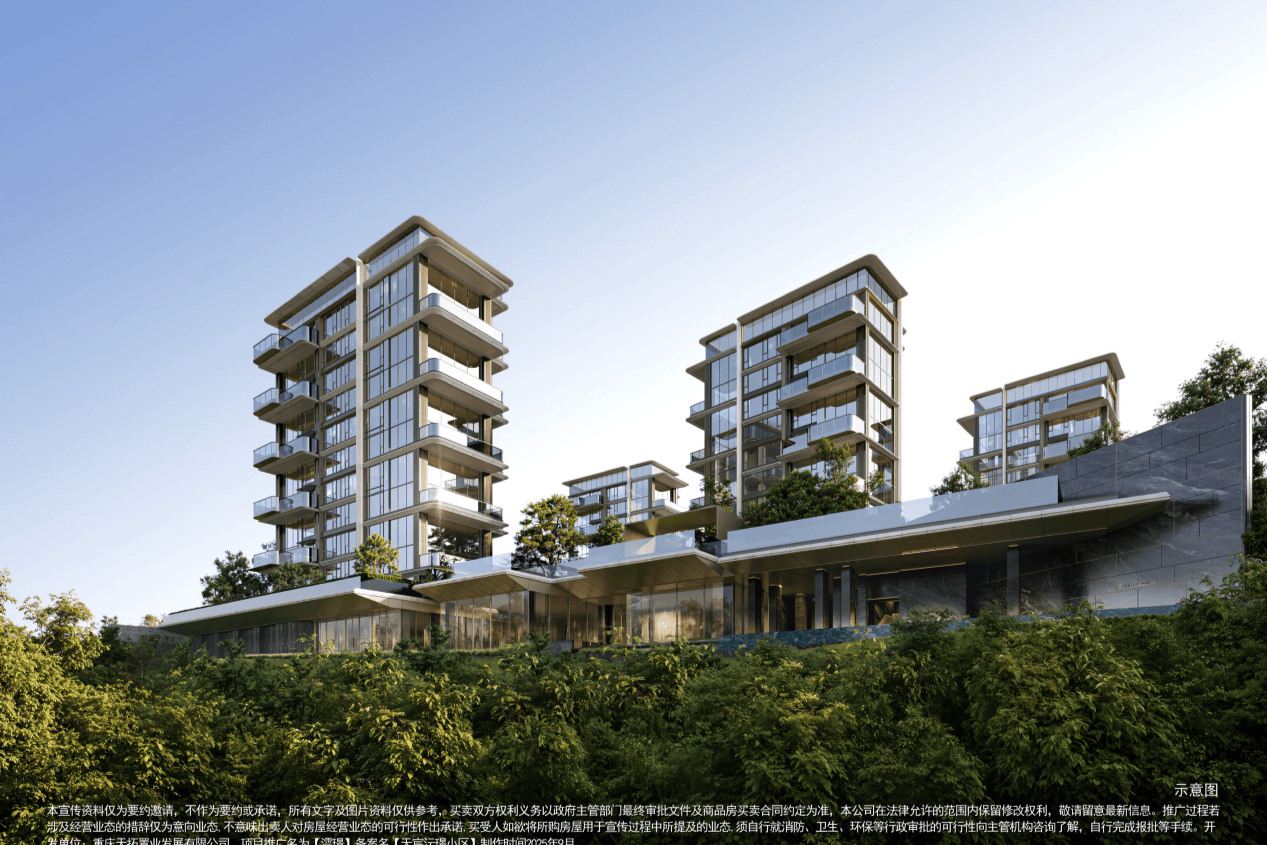
Core Insights - The article emphasizes the strategic development of the Liangjiang New Area, aiming to become a core growth engine for Chongqing and the western region of China, focusing on "integration" and "high quality" [3][16] - The new Liangjiang New Area aims to create a "modern international urban model area," moving beyond traditional development models to set higher standards for urban planning, architectural quality, public services, and cultural depth [3][16] Group 1: Development Strategy - The Liangjiang New Area is targeting three major high grounds: high-quality development industrial base, technology innovation source, and modern international urban model area [3] - The focus on "internationalization" includes not only modern infrastructure but also a service system aligned with international standards, a diverse cultural atmosphere, and a high-quality living environment to attract international talent [3][4] Group 2: Market Participation - The "2025 China Luxury Housing New Cycle: Chongqing New Regulations Super Summit" was held to discuss the development paths and innovative directions for high-quality residential projects under new regulations [4][5] - Experts highlighted the importance of market forces in the deep participation of urban development, with companies like China Resources Land actively responding to urban development challenges [4][8] Group 3: Project Highlights - The "Lianjing" project, as part of China Resources Land's highest product line, is seen as a landmark product for the luxury housing new cycle, responding deeply to the new development pattern of Liangjiang New Area [10][14] - The project features large-scale luxury spaces, innovative architectural designs, and a focus on integrating natural light and space, setting a new standard for high-end living [13][14] Group 4: Long-term Commitment - China Resources Land has been deeply involved in the development of Liangjiang New Area for 18 years, aligning its projects with the unique natural endowments and urban spirit of the area [6][16] - The company's "Good House System 2.0" strategy incorporates the themes of "mountain, city, river, and lake," translating policy concepts into tangible living experiences [6][16]

什么信号?招商局置地、五矿地产、万科、华润置地等头部房企高层密集调整,专家:市场变了,企业也要跟着变
Mei Ri Jing Ji Xin Wen· 2025-11-17 17:05
Core Insights - The real estate industry is experiencing a wave of executive changes, particularly among state-owned enterprises and major players [1][5][6] - Recent adjustments in leadership are seen as a response to changes in the real estate sales market and the need for companies to adapt their operational strategies [1][5][6] Group 1: Executive Changes - On November 14, China Merchants Shekou announced the resignation of Jiang Tiefeng from his roles as non-executive director and chairman, with Zhu Wenkai appointed as his successor [1] - On November 13, Dalong Real Estate reported that Chairman Li Wenjiang resigned due to work adjustments, with Zhao Changsong appointed as acting chairman [3] - Five Mining Real Estate also announced leadership changes on the same day, with He Jianbo resigning and Dai Pengyu appointed as acting chairman [3] Group 2: Market Adaptation - The frequency of executive changes has increased as the year-end approaches, indicating a shift in corporate strategies in response to market conditions [1][5] - According to Yan Yujin from Shanghai Yiju Real Estate Research Institute, these personnel adjustments reflect the need for companies to align with market changes and internal operational adjustments [1][5] Group 3: Central State-Owned Enterprises - Central state-owned enterprises are at the forefront of these leadership changes, with key positions such as chairman and general manager being affected [5][6] - The adjustments are often due to work reallocations and personal reasons, highlighting the higher scrutiny and requirements for performance in these enterprises [6] Group 4: Cross-Group Movements - Recent trends show an increase in cross-group movements among executives, such as Xu Rong's appointment as chairman of China Resources Land after previously serving in various roles within the group [8] - The movement of executives like Wu Bingqi from China State Construction to China Overseas Land and Investment is aimed at leveraging cross-sector management experience to enhance business integration [8][9] Group 5: Industry Transformation - The real estate sector is transitioning from rapid expansion to a focus on refined operations, resource integration, and risk management, with state-owned enterprises leading this transformation [9] - The new generation of executives is expected to drive change and adapt to the evolving market landscape, reflecting a strategic shift in organizational and talent structures [9]


华润置地完成配售华润万象生活股份 净筹约20.61亿港元
Zhi Tong Cai Jing· 2025-11-17 11:52
华润置地(01109)发布公告,有关配售华润万象生活(01209)股份,完成已于2025年11月17日落实。配售 代理已成功以配售价每股配售股份41.70港元向不少于六名承配人配售合共4950万股配售股份,占本公 司截至配售协议日期持有华润万象生活已发行股份总数约2.17%。 所得款项净额约为20.61亿港元。出售事项所得款项净额拟用作本集团收购储备土地、开发成本及一般 营运资金。 紧接完成前,本公司直接持有华润万象生活16.5亿股股份,占本公司的附属公司华润万象生活已发行股 份总数约72.29%。紧接完成后,本公司持有华润万象生活的股权减少至华润万象生活已发行股份总数 约70.12%,而中国华润作为华润万象生活的最终控股股东,透过本公司、华润集团(置地)有限公司及合 贸有限公司间接持有华润万象生活的股权则减少至华润万象生活已发行股份总数约71.55%。华润万象 生活会继续为本公司的附属公司,其财务业绩会继续并入本集团的财务报表。 ...
华润置地(01109)完成配售华润万象生活(01209)股份 净筹约20.61亿港元
智通财经网· 2025-11-17 11:47
Core Viewpoint - China Resources Land (01109) announced the completion of a placement of shares in China Resources Mixc Lifestyle Services (01209), raising approximately HKD 2.061 billion for land acquisition, development costs, and general working capital [1] Group 1: Share Placement Details - The placement involved the sale of 49.5 million shares at a price of HKD 41.70 per share, representing about 2.17% of the total issued shares of China Resources Mixc Lifestyle Services as of the placement agreement date [1] - The net proceeds from the sale are intended for the group's acquisition of reserve land, development costs, and general operational funding [1] Group 2: Ownership Changes - Prior to the completion of the placement, the company held 1.65 billion shares in China Resources Mixc Lifestyle Services, accounting for approximately 72.29% of the total issued shares [1] - Following the placement, the company's ownership in China Resources Mixc Lifestyle Services will decrease to about 70.12%, while China Resources will continue to be the ultimate controlling shareholder with a reduced indirect ownership of approximately 71.55% [1] - China Resources Mixc Lifestyle Services will remain a subsidiary of the company, and its financial performance will continue to be consolidated into the group's financial statements [1]
华润置地(01109.HK)完成4950万股配售 净筹20.61亿港元
Ge Long Hui· 2025-11-17 11:20
Core Viewpoint - China Resources Land Limited announced the completion of a share placement on November 17, 2025, raising approximately HKD 2.061 billion for land acquisition, development costs, and general working capital [1] Group 1: Share Placement Details - The company successfully placed a total of 49.5 million shares at a price of HKD 41.70 per share, representing about 2.17% of the total issued shares of China Resources Vientiane Life as of the placement agreement date [1] - The net proceeds from the placement are approximately HKD 2.061 billion [1] Group 2: Ownership Changes - Following the completion of the placement, the company's direct ownership in China Resources Vientiane Life will decrease from 1,650,000,000 shares (approximately 72.29% of total issued shares) to about 70.12% [1] - China Resources, as the ultimate controlling shareholder of China Resources Vientiane Life, will see its indirect ownership decrease to approximately 71.55% of the total issued shares [1] Group 3: Financial Reporting - China Resources Vientiane Life will continue to be a subsidiary of the company, and its financial performance will remain consolidated in the group's financial statements [1]
华润置地(01109) - 自愿公告 - 完成出售附属公司股份
2025-11-17 11:07
香 港 交 易 及 結 算 所 有 限 公 司 及 香 港 聯 合 交 易 所 有 限 公 司 對 本 公 告 的 內 容 概 不 負 責,對其準確性或完整性亦不發表任何聲明,並明確表示,概不對因本公告全部 或任何部份內容而產生或因倚賴該等內容而引致的任何損失承擔任何責任。 (股份代號:1109) 自願公告 完成出售附屬公司股份 茲提述華潤置地有限公司(「本公司」)日期為二零二五年十一月十三日有關以配售 形式出售配售股份之公告(「該公告」)。除另有指明者外,本公告所用詞彙與該公 告所界定者具有相同涵義。本公告乃本公司自願刊發,旨在提供有關配售進展之 最新資料。 完成配售 (於開曼群島註冊成立的有限公司) 承董事會命 華潤置地有限公司 主席 李欣 中國,二零二五年十一月十七日 於本公告日期,本公司執行董事為李欣先生、張大為先生、徐榮先生、郝忠明先 生、趙偉先生及陳偉先生;本公司非執行董事為黃挺先生、魏成林先生及王宇航 先生;以及本公司獨立非執行董事為鐘偉先生、孫哲先生、陳帆先生、梁國權先 生及秦虹女士。 董事會欣然宣佈,完成已於二零二五年十一月十七日落實。配售代理已成功以配 售 價 每 股 配 售 股 份 41 ...
观楼|邦泰·观云加推成交均价19555元/㎡,大商汇旁约50亩优质宅地上架
Xin Lang Cai Jing· 2025-11-17 09:36
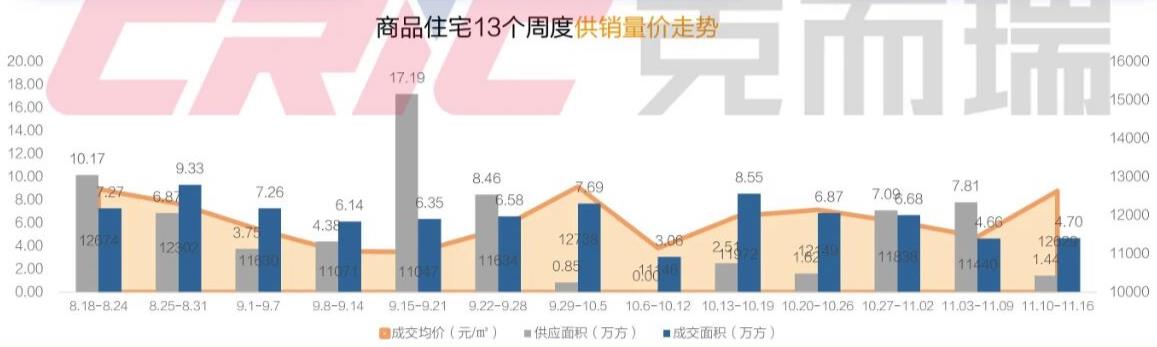
Market Overview - In the week of November 10-16, 2025, Kunming's real estate market saw stable transaction volumes and rising prices, with high-end properties gaining a larger market share. The highest transaction average price reached approximately 21,795 CNY per square meter [1][3] - The total number of tourists in Kunming for the first three quarters reached 1.14 million, marking a year-on-year increase of 41.5% [1] Sales Performance - Three projects in Kunming supplied about 14,400 square meters to the market, a decrease of 82% week-on-week, while transactions totaled approximately 47,000 square meters, a slight increase of 1%. The average transaction price was around 12,629 CNY per square meter, reflecting a 10% increase [1] - The top-selling project, Bangtai·Guanyun, achieved a sales amount of approximately 0.46 billion CNY with 14 units sold at an average price of 19,555 CNY per square meter [3] - The luxury project Yicheng·Chunqing Jiuhua recorded a sales amount of about 0.22 billion CNY with 12 units sold, achieving the highest average price of 21,795 CNY per square meter [3][5] Land Supply and Development - Three urban residential land plots were made available in Kunming's main urban area, all located in Xishan District, with no land transactions recorded [5] - The KCXS2025-3 plot, covering approximately 50 acres, has a starting auction price of 601 million CNY, with a starting floor price of 6,434 CNY per square meter. This plot previously failed to sell in 2021 at a much higher price [6][8] - The Kunming International Hospital East Campus Phase III is set to be constructed in the Liangting area, with an investment of approximately 250 million CNY and an expected completion date by the end of 2027 [10] Infrastructure Projects - The Kunming Municipal Government announced plans for the cultural and ecological new town in Guandu District, involving the renovation of 3,083 units and an investment of around 5.7 billion CNY [12] - The Dali Hilton Hotel is being auctioned starting at 787 million CNY, which is about 28% lower than its assessed value [13]



华润置地润伙伴营销共创计划全国首发
Ge Long Hui· 2025-11-17 08:22
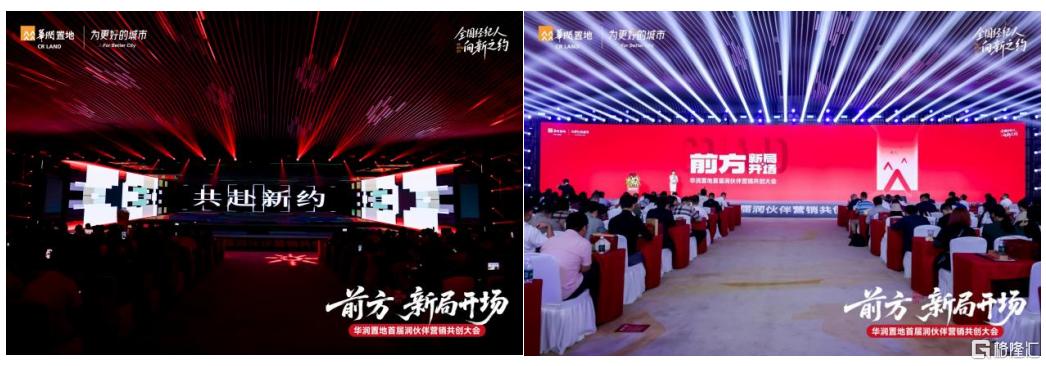
Core Insights - The conference marks the launch of China Resources Land's innovative marketing co-creation model, aiming to break traditional boundaries and explore new paths for collaborative development [1][15] - The event emphasizes "co-building and co-winning," gathering over 250 key partners from various sectors to enhance resource sharing and long-term communication mechanisms [3][9] Group 1: Event Overview - The first "Run Partner Marketing Co-Creation Conference" was held in Hainan, focusing on collaboration among core partners [1][15] - Participants included owners, property partners, media partners, and brokers, all contributing significantly to the marketing business development [3] Group 2: Experience and Engagement - Partners engaged in a two-day deep dive into Hainan projects, experiencing the cultural and tourism service system [5] - The event featured local cultural performances, enhancing the sense of community and appreciation among partners [5] Group 3: Confidence and Recognition - The conference aimed to instill confidence and a sense of belonging among partners through multi-dimensional content presentations [9] - Awards were presented to various partner categories, recognizing their contributions and establishing a model for collaboration [11] Group 4: Marketing Strategy - The conference introduced a comprehensive marketing co-creation plan, integrating internal and external resources to enhance customer engagement and collaboration [12][13] - Key pillars of the plan include secure cooperation guarantees, efficient transaction tools, and shared value rights, addressing partners' needs with tailored solutions [13] Group 5: Future Outlook - The conference is positioned as the starting point for an annual industry event, with plans to expand the marketing co-creation initiative across different regions [15]
房地产行业2026年投资策略:潮平待风起,扬帆更远航
Shenwan Hongyuan Securities· 2025-11-17 04:13
Group 1 - The core viewpoint of the report indicates that the stabilization of the residential balance sheet suggests a potential bottoming out in the real estate market, but the speed of improvement will determine the duration of this bottoming process [3][4] - The report highlights that since 2021, China's housing prices have cumulatively declined by 37%, which is longer than the average decline of 34% over 6.1 years in 42 countries, indicating that while the price drop is significant, the adjustment period in China is still relatively short [22][7] - The report identifies five major opportunities in the industry, including the stabilization of the residential asset-liability ratio, a decrease in the housing price-to-income ratio, improving rental yields, a bullish stock market potentially boosting wealth effects, and a deep clearing of supply-side issues [3][4] Group 2 - The industry outlook predicts a structural bottoming out, with opportunities arising for quality housing and commercial real estate, driven by policies focusing on demand recovery and high-quality development [3][4] - The report anticipates that the core cities will stabilize sooner due to healthier supply-demand relationships, with a forecast for sales volume and price declines to narrow in 2025-2026 [3][4] - The report maintains a "positive" rating for the real estate sector, recommending specific companies in the quality housing and commercial real estate segments, as well as undervalued firms and property management companies [3][4]






环球房产周报:北京全年保障房任务提前完成,70城房价出炉,房企发布前10月销售业绩……
Huan Qiu Wang· 2025-11-17 02:03
Group 1: Housing and Real Estate Developments - Beijing has completed its annual affordable housing task ahead of schedule, with 50,000 rental housing units planned and 80,000 units constructed [1] - Hangzhou has introduced 16 measures to optimize land resource allocation, aimed at reducing enterprise costs and activating existing space [2] - In October, new residential sales prices in first-tier cities decreased by 0.3% month-on-month, with Shanghai seeing a 0.3% increase while Beijing, Guangzhou, and Shenzhen experienced declines [3] - From January to October, the sales volume of new residential properties reached 69,017 billion yuan, reflecting a year-on-year decrease of 9.6% [4] Group 2: Land Auctions and Transactions - In Wuhan, eight land parcels were sold for a total of 1.12 billion yuan, with two residential plots acquired by private enterprises at zero premium [5] - Chengdu saw two residential plots sold at a total of 1.286 billion yuan, both at the base price [5] Group 3: Company Performance and Financials - Beike Holdings reported a total transaction volume of 736.7 billion yuan in Q3, with a net profit of 747 million yuan, a year-on-year decline of 36.1% [6] - China Resources Land plans to place 49.5 million shares of its subsidiary, raising approximately 2.061 billion HKD for land acquisition and operational costs [6] - China Fortune Land Development has completed a financial debt restructuring totaling approximately 192.7 billion yuan [7] - CIFI Group has initiated a major organizational restructuring, dissolving four regional groups and multiple business units [8] Group 4: Sales Performance of Real Estate Companies - China State Construction reported total sales revenue of approximately 287.1 billion yuan and sales area of 10.7 million square meters from January to October [9] - China Resources Land's sales revenue for the same period was about 169.6 billion yuan with a sales area of 6.41 million square meters [9] - China Jinmao reported sales revenue of approximately 92.7 billion yuan and a sales area of 4 million square meters [9] - Other companies such as Yango Group, New城控股, and others also reported their sales figures, indicating a challenging market environment [9]
