BYD(01211)

Search documents
港股汽车集体冲高,吉利大涨5%,A股跳水翻绿,算力股重挫
21世纪经济报道· 2026-03-17 04:41
Market Overview - The A-share market experienced a morning surge followed by a decline, with all three major indices turning negative. As of midday, the Shanghai Composite Index fell by 0.04%, the Shenzhen Component Index decreased by 0.4%, the ChiNext Index dropped by 0.58%, and the Sci-Tech Innovation Board Index declined by 0.72% [1][2]. Sector Performance - The green energy sector showed repeated activity, with Huadian Liaoning Energy achieving two consecutive trading limits, and Jiangsu New Energy and Zhejiang New Energy hitting the daily limit [5]. - The real estate sector saw gains, with Zhongzhou Holdings and Jingneng Real Estate reaching the daily limit [5]. - The space photovoltaic concept surged, with GCL-Poly Energy and Yabo Co. hitting the daily limit [5]. - The steel sector was active, with Anyang Steel and Jiugang Hongxing both reaching the daily limit [5]. - Financial stocks strengthened, with Aijian Group hitting the daily limit and several securities firms, including Guosen Securities and Dongfang Caifu, following suit. Hangzhou Bank reached a historical high during the session [6]. Declining Sectors - The computing power sector, including optical modules, optical communications, and optical chips, led the market decline, with Tianfu Communication dropping over 9% [6]. - Other sectors that saw significant declines included agriculture, mineral products, communication equipment, coal, and petrochemicals [6]. Hong Kong Market - In the Hong Kong market, automotive stocks performed well, with Geely Auto and Chery Auto rising over 5%, and Li Auto and NIO increasing by over 3% [7]. Nvidia GTC Conference - Nvidia announced collaborations with several automotive companies, including BYD and Geely, to develop L4 autonomous vehicles on the NVIDIA DRIVE Hyperion platform during the GTC conference [9]. Cryptocurrency Market - Bitcoin surpassed $75,000, with the entire cryptocurrency market experiencing an upward trend, leading to over 120,000 liquidations [12].




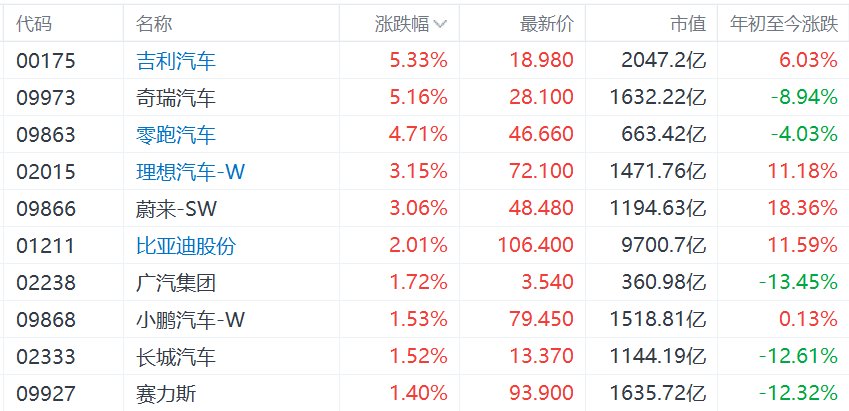
港股异动丨汽车股走强,吉利汽车涨超5%,英伟达与比亚迪吉利等车企合作打造L4级自动驾驶汽车
Ge Long Hui A P P· 2026-03-17 04:07
Group 1 - The Hong Kong stock market saw a strong performance in the automotive sector, with companies like Geely Auto and Chery Auto rising over 5%, and Li Auto and NIO increasing by over 3% [1] - NVIDIA announced collaborations with several automakers, including BYD, Geely, Hyundai, and Nissan, to develop L4 autonomous vehicles using the NVIDIA DRIVE Hyperion platform [1] - BYD, Geely, and Nissan are working on next-generation L4 passenger vehicle projects that will feature advanced autonomous capabilities for complex urban road scenarios [1] Group 2 - The stock performance of key automotive companies includes: - Geely Auto: up 5.33% to HKD 18.980, market cap of HKD 204.72 billion, year-to-date increase of 6.03% [2] - Chery Auto: up 5.16% to HKD 28.100, market cap of HKD 163.22 billion, year-to-date decrease of 8.94% [2] - Li Auto: up 3.15% to HKD 72.100, market cap of HKD 147.18 billion, year-to-date increase of 11.18% [2] - NIO: up 3.06% to HKD 48.480, market cap of HKD 119.46 billion, year-to-date increase of 18.36% [2] - BYD: up 2.01% to HKD 106.400, market cap of HKD 970.07 billion, year-to-date increase of 11.59% [2]


大行评级丨招银国际:预期比亚迪电子去年下半年业绩受压,目标价降至39.69港元
Ge Long Hui· 2026-03-17 03:19
Core Viewpoint - The report from CMB International estimates BYD Electronics' revenue and net profit for the second half of 2025 to be 96.3 billion and 2.53 billion respectively, indicating a year-on-year decrease of 3% and 7% in Q4 revenue and profit due to adverse factors in the smartphone and automotive industries, despite an improvement in gross margin [1] Group 1 - The forecast for 2026 anticipates stronger revenue growth driven by the iPhone Fold, penetration of new energy vehicle products, and orders for AI servers, although this growth may be partially offset by rising memory costs leading to weak Android demand [1] - The company has revised down its earnings per share forecast for 2025 to 2027 by 1% to 13% to account for adverse factors in the smartphone and automotive sectors in 2026 [1] - The outlook for BYD Electronics' new energy vehicle product mass production and AI server products for 2026 to 2027 remains positive [1] Group 2 - The target price for BYD Electronics has been lowered from HKD 43.54 to HKD 39.69, while maintaining a "Buy" rating [1]
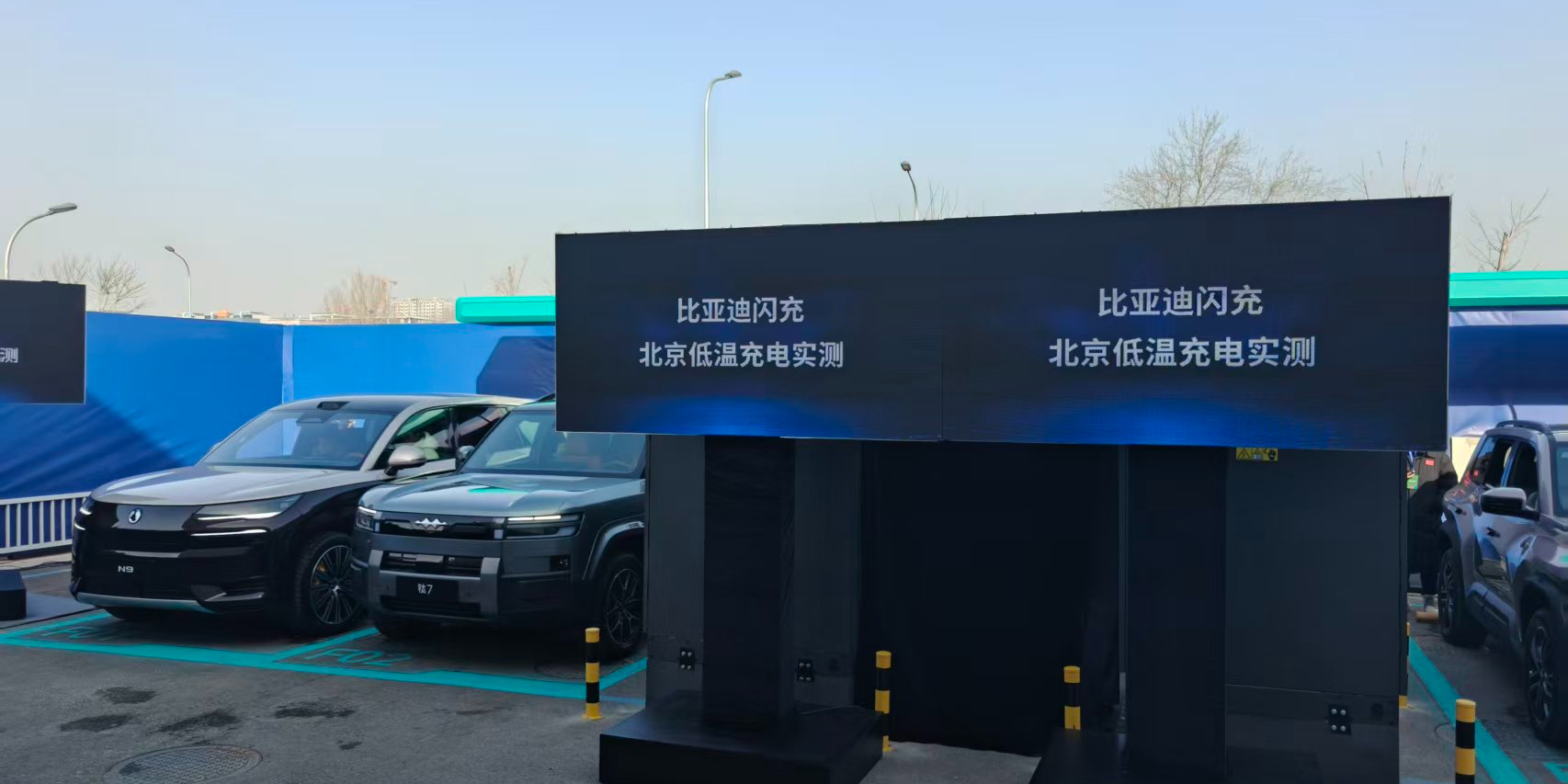
比亚迪第二代闪充北京实测:无“虚标”,充满最快9分42秒
Jing Ji Guan Cha Wang· 2026-03-17 02:52
Core Viewpoint - BYD's second-generation fast charging technology claims to charge an electric vehicle in 5 minutes for a partial charge and 9 minutes for a full charge, even in low temperatures, marking a significant advancement in charging efficiency [2] Group 1: Technology Performance - The second-generation fast charging technology was tested in Beijing on February 10, showcasing its performance in winter conditions with temperatures around zero degrees [2] - Eight BYD models participated in the test, with starting battery levels around 20%, charging to 97% capacity [2] - The fastest charging time recorded was 9 minutes and 42 seconds for the Song Ultra model, while the longest was 10 minutes and 22 seconds for the Tengshi N9 model [2][6] Group 2: Industry Impact - The second-generation fast charging technology addresses the common issue of long charging times for electric vehicles, especially in winter when charging efficiency typically decreases [2] - This technology significantly reduces charging anxiety for electric vehicle owners, bringing charging times closer to traditional fuel refueling times [7] - The advancement is expected to promote the growth of the electric vehicle industry, particularly increasing market penetration in northern regions [7]
2月终端销量榜 | 新能源汽车高端化趋势明显
数说新能源· 2026-03-17 02:31
Overall Situation - In February 2026, China's passenger car terminal sales reached 1.123 million units, a month-on-month decrease of 35.3% [2] - Total sales of new energy passenger vehicles were 431,000 units, down 31.3% month-on-month [2] - Breakdown of new energy vehicle sales: pure electric vehicles (EVs) sold 262,000 units (down 32.1%), plug-in hybrid vehicles (PHEVs) sold 112,100 units (down 25.6%), and range-extended vehicles sold 47,300 units (down 43.6%) [2] - The penetration rate of new energy vehicles in the passenger car market was 38.4%, slightly up from 36.3% the previous month [2] Market Overview - The passenger car market showed differentiated growth due to the impact of the Spring Festival, with overall performance of new energy vehicles being average [4] - Factors such as the reduction of purchase tax incentives and the phasing out of trade-in policies have led to lower consumer purchasing intentions [4] - The high-end new energy vehicle segment saw an increase, with C-class passenger vehicles accounting for 59% of the market, indicating a trend towards higher quality development in the car market [4] - Predictions for March 2026 suggest a recovery in market demand, driven by new vehicle launches from companies like Xiaomi and Li Auto, alongside the upcoming Beijing Auto Show [4] Brand Rankings - The top-selling pure electric models in February 2026 included Xiaomi YU7 (20,000 units), Tesla Model Y (18,000 units), and Li Auto i6 (16,000 units) [8] - The leading plug-in hybrid models were the Ti7 (111,000 units), BYD Song Pro (93,000 units), and BYD Zhao PLUS (53,000 units) [9]

英伟达GTC重磅:Hyperion 10绑定比亚迪等四车企,物理AI驱动优步自动驾驶“加速跑”
Zhi Tong Cai Jing· 2026-03-17 01:58
Group 1 - Nvidia's CEO Jensen Huang announced a strategic alliance with Uber to build the world's largest autonomous driving network, set to begin commercial operations in Los Angeles and the San Francisco Bay Area in the first half of 2027 [1] - The network aims to deploy over 100,000 L4 autonomous vehicles equipped with Nvidia's advanced AI technology by 2028 across 28 major cities on four continents [1] - Nvidia's DRIVE Hyperion platform has been integrated with major automotive manufacturers, including BYD, Geely, Nissan, Hyundai, Kia, and Isuzu, to develop next-generation L4 vehicles [1] Group 2 - Nvidia is deepening its collaboration with Hyundai and Kia to enhance their competitive edge in autonomous driving technology, aiming to transition from L2+ to L4 level autonomous taxi services [2] - The company is also expanding its partnerships with global robotics manufacturers to advance breakthroughs in physical AI, collaborating with over ten leading firms in the industry [2] - Nvidia launched the new generation of the Cosmos world model, integrating the Isaac simulation framework and Isaac GR00T N technology module to accelerate the transition to intelligent robotics [2] Group 3 - Companies such as AGIBOT, Humanoid, LG Electronics, NEURA Robotics, and Noble Machines are adopting Nvidia's Isaac GR00T N model to move humanoid robots from the lab to large-scale production, accelerating their commercialization [3]

英伟达GTC重磅:Hyperion 10绑定比亚迪等四车企,物理AI驱动优步(UBER.US)自动驾驶“加速跑”
Zhi Tong Cai Jing· 2026-03-17 01:57
Group 1: Autonomous Driving Partnership - NVIDIA and Uber have formed a strategic alliance to create the world's largest autonomous driving network, with commercial operations set to begin in mid-2027 in Los Angeles and the San Francisco Bay Area [1] - The network aims to deploy over 100,000 L4 autonomous vehicles on the Uber platform by 2028, expanding to 28 major cities across four continents [1] - NVIDIA's CEO emphasized that the autonomous vehicle revolution is underway, marking it as the first trillion-dollar robotics industry [1] Group 2: Technology Integration and Collaborations - NVIDIA's DRIVE Hyperion10 platform has been integrated with major automotive manufacturers, including BYD, Geely, Nissan, Hyundai, Kia, and Isuzu, to develop next-generation L4 vehicles [1] - Hyundai's executive highlighted that expanding collaboration with NVIDIA is crucial for achieving safe and reliable autonomous driving, enhancing their competitive edge from L2+ to L4 autonomous taxi services [2] - NVIDIA is also deepening partnerships with global robotics manufacturers to advance physical AI technology, collaborating with over ten leading companies in the robotics sector [2] Group 3: Industry Applications - Companies such as AGIBOT, Humanoid, LG Electronics, NEURA Robotics, and Noble Machines are adopting NVIDIA's Isaac GR00T N model to transition humanoid robots from the lab to mass production, accelerating commercialization [3]
比亚迪(002594):兆瓦闪充技术赋能新品 底部向上周期开启
Xin Lang Cai Jing· 2026-03-17 00:40
Core Insights - BYD's sub-brand Fangchengbao will hold a product launch on March 13, 2026, introducing the Fangchengbao Titanium 3 Flash Charge version with a maximum range of 620 km and the Titanium 7 EV Flash Charge version available for pre-sale priced between 220,000 to 250,000 yuan [1] - The new Fangchengbao models feature significant upgrades in battery and charging technology, enhancing competitiveness in the market [1][2] - The new generation of blade batteries and megawatt flash charging technology significantly reduces charging times, addressing user concerns about charging anxiety [2] Product Launch and Features - The Fangchengbao Titanium 3 Flash Charge version comes in two configurations: a rear-wheel drive version with a range of 620 km priced at 153,800 yuan and a four-wheel drive version with a range of 565 km priced at 169,800 yuan [1] - Key upgrades include a second-generation blade battery, a reduction in charging time from 10-70% to just 5 minutes, and the option for advanced driving features with the Tian Shen Eye B version [1] - The Titanium 7 EV Flash Charge version is positioned as a higher-end SUV, expected to impact the mainstream market segment priced between 200,000 to 300,000 yuan [1] Technological Advancements - The new megawatt flash charging technology allows for charging from 10% to 70% in just 5 minutes and from 20% to 97% in 12 minutes even in extreme cold conditions [2] - The energy density of the new battery has improved by 5%, and the overall capacity retention has increased by 2.5% compared to the first generation [2] - BYD plans to establish 20,000 charging stations by the end of 2026, with 4,239 already built as of March 5 [2] Market Outlook - In February, BYD's export sales reached 101,000 units, accounting for over 50% of total sales, indicating a sustained demand in the export market [2] - The launch of 11 new models on March 5 marks the beginning of a new product cycle for BYD, which is expected to drive industry recovery [2] - Revenue projections for 2025-2027 are estimated at 892.43 billion, 995.31 billion, and 1,106.50 billion yuan, with year-on-year growth rates of 14.8%, 11.5%, and 11.2% respectively [3]
英伟达:比亚迪、吉利、五十铃、日产正基于DRIVE Hyperion平台开发L4级自动驾驶汽车
Xin Lang Cai Jing· 2026-03-17 00:08
Core Insights - NVIDIA DRIVE Hyperion™ platform has been widely adopted by various automotive manufacturers and mobility service providers [1] Group 1: Partnerships and Collaborations - Partners include major automotive manufacturers such as BYD, Geely, Isuzu, Nissan, and mobility service providers like Bolt and Grab [1] - BYD, Geely, and Nissan are developing next-generation Level 4 autonomous driving projects based on NVIDIA DRIVE Hyperion with Wayve software [1] - Isuzu is collaborating with TIER IV to develop Level 4 autonomous driving buses using NVIDIA DRIVE Hyperion's AGX Thor system-on-chip [1]
英伟达:将与比亚迪、吉利等展开自动驾驶业务合作
第一财经· 2026-03-16 23:33
Core Viewpoint - Nvidia expands its autonomous driving business partnerships to include Hyundai, Nissan, Isuzu, and Chinese companies BYD and Geely, focusing on the "Drive Hyperion" platform for L4 level autonomous driving capabilities [1] Group 1 - Nvidia's "Drive Hyperion" platform supports the development and deployment of L4 level assisted driving and autonomous driving functions [1] - The system enables fully autonomous driving in predefined areas or conditions without human intervention [1]