
XIAOMI(01810)

Search documents
高盛:维持小米集团-W“买入”评级 目标价47.5港元
Zhi Tong Cai Jing· 2026-01-26 09:16
Core Viewpoint - Goldman Sachs maintains a "Buy" rating on Xiaomi Group-W (01810) with a target price of HKD 47.5, indicating that despite potential short-term stock price resistance, the risk-reward profile remains attractive over a 12-month investment horizon [1] Group 1: Stock Rating and Price Target - Goldman Sachs updates the optimistic valuation range for Xiaomi, suggesting a potential price of HKD 55, which corresponds to an upside potential of approximately 56% [1] Group 2: Smartphone Pricing and Strategy - The firm forecasts that the average selling price of Xiaomi smartphones will increase by 6% and 4% year-on-year in 2026 and 2027, respectively [1] - In the context of rising memory costs, enhancing the average selling price of smartphones has become a primary operational focus for Xiaomi in 2026 [1] Group 3: Electric Vehicle Business Outlook - Goldman Sachs predicts that Xiaomi's electric vehicle deliveries will reach approximately 670,000 units in 2026, exceeding the company's previous guidance of 550,000 units, driven by the revamped SU7 model, enhanced marketing for the YU7, and the upcoming third SUV model [1] - Despite a moderate overall industry backdrop, Xiaomi's strategy to improve average selling prices through higher-end models is expected to support an improvement in profit structure [1]

高盛:维持小米集团-W(01810)“买入”评级 目标价47.5港元
智通财经网· 2026-01-26 09:15
Core Viewpoint - Goldman Sachs maintains a "Buy" rating on Xiaomi Group-W (01810) with a target price of HKD 47.5, indicating attractive risk-reward potential over a 12-month investment horizon despite short-term stock price resistance [1] Group 1: Financial Projections - Goldman Sachs updates the optimistic valuation range for Xiaomi, suggesting a potential price of HKD 55, which corresponds to approximately a 56% upside potential [1] - The average selling price of Xiaomi smartphones is projected to increase by 6% in 2026 and 4% in 2027 [1] Group 2: Operational Focus - In the context of rising memory costs, increasing the average selling price of smartphones has become a primary operational focus for Xiaomi in 2026 [1] Group 3: Electric Vehicle Business - Goldman Sachs forecasts that Xiaomi's electric vehicle deliveries will reach approximately 670,000 units in 2026, exceeding the company's original guidance of 550,000 units [1] - The increase in delivery volume is expected to be driven by the revamped SU7 model, enhanced marketing for the YU7, and the upcoming launch of a third SUV model [1]
腾讯反舞弊,90余人被解聘
2 1 Shi Ji Jing Ji Bao Dao· 2026-01-26 08:10
Group 1 - Tencent reported that over 90 individuals were dismissed for violating the company's "high-pressure line" policy, with more than 20 referred to law enforcement for criminal activities [1] - The report highlighted over 70 cases of serious violations including commercial bribery and embezzlement, leading to dismissals and legal actions against involved employees and external parties [1] - Tencent emphasized the importance of compliance with laws and regulations, particularly in light of the upcoming ESG disclosure requirements in 2026 [1] Group 2 - The ESG reporting season for A-share listed companies is approaching, with 471 companies required to disclose their 2025 ESG reports by April 30, 2026 [2] - A survey has been initiated to gather insights from multinational corporations, leading enterprises, listed companies, and financial institutions regarding their practices and challenges in ESG information disclosure [2] - The survey will last for three months starting from January 22, 2026, and aims to identify exemplary cases for inclusion in a research report [2] Group 3 - The third International Clean Energy Day is set for January 26, 2026, focusing on promoting clean energy transition in a fair and inclusive manner [4] - This global event aims to showcase innovations and developments in clean energy to accelerate the achievement of sustainable development goals [4] Group 4 - New regulations for the recycling and comprehensive utilization of used power batteries from electric vehicles will take effect on April 1, 2026, emphasizing a full lifecycle management approach [5][6] - The regulations include establishing a national information platform for battery traceability and implementing strict penalties for non-compliance [6] Group 5 - Xiaomi faced two fire incidents involving its vehicles on January 19, 2026, which raised significant public concern, although no injuries were reported [7] - The company stated that the battery status was normal prior to the incidents, and the fires were extinguished promptly by fire services [7] Group 6 - ST Dongshi's actual controller, Xu Xiong, was sentenced to six years and six months in prison for manipulating the securities market, with a fine of 170 million yuan imposed [7] - The ruling was confirmed by the Shanghai High People's Court, marking the case as a significant legal outcome in the securities sector [7] Group 7 - Zhejiang Securities faced regulatory scrutiny for inadequate compliance checks on investor transactions, resulting in a warning letter from the Zhejiang Securities Regulatory Bureau [7] - The firm was found to have issues with account management and compliance, leading to administrative measures against its management [7]



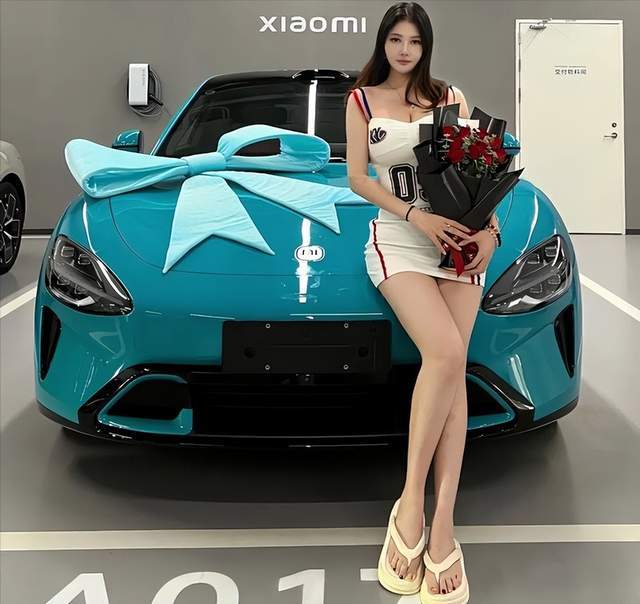
雷军胆小了?小米新SU7预订喜人,却不公布数据,免得被攻击
Sou Hu Cai Jing· 2026-01-26 08:01
Core Viewpoint - Xiaomi's new car models have consistently achieved remarkable pre-order numbers, creating a significant impact in the automotive market [1][3]. Group 1: Sales Performance - Previous models like SU7 and YU7 achieved extraordinary pre-order milestones, with SU7 reaching over 50,000 orders in just 27 minutes and YU7 surpassing 200,000 in three minutes [1]. - Despite the impressive sales figures, Xiaomi has chosen not to disclose the pre-order data for the new generation SU7, leading to speculation about the reasons behind this decision [5][6]. Group 2: Competitive Landscape - The competitive environment is intense, with rival companies attempting to undermine Xiaomi's success by offering incentives and promoting faster delivery times [3]. - There are rumors suggesting that competitors may resort to negative campaigns against Xiaomi due to its strong sales performance, although the veracity of these claims remains uncertain [3]. Group 3: Strategic Decisions - Xiaomi's decision to withhold pre-order data for the new SU7 is interpreted as a strategy to avoid provoking competitors and to minimize potential backlash [6][8]. - The company has established itself in the market, indicating that it no longer needs to rely on high pre-order numbers to validate its success, as all its models have proven to be popular [8].

卢伟冰:“内存涨价”逼迫各品牌或涨价或降配 动摇终端机“性价比”根基
Feng Huang Wang· 2026-01-26 07:31
Group 1 - The core message of the article highlights the upcoming launch of Xiaomi's new product, Turbo 5 Max, scheduled for January 29 at 19:00 [1] - Xiaomi's President, Lu Weibing, indicates that the K series will be upgraded in 2025, with the Turbo series taking over the 2000-3000 price range [1] - The industry is facing challenges, particularly due to rising memory prices, which may force brands to either increase prices or reduce specifications, threatening the value proposition of mid-range devices [1] Group 2 - Despite industry challenges, the Turbo series aims to maintain a strong presence in the mid-range market, ensuring competitive offerings in the 2.5K price segment [1] - The Turbo 5 Max will feature the Dimensity 9500s processor with a benchmark score of 3.61 million, a 9000mAh battery, and high-end features such as dual speakers and full waterproofing [1]

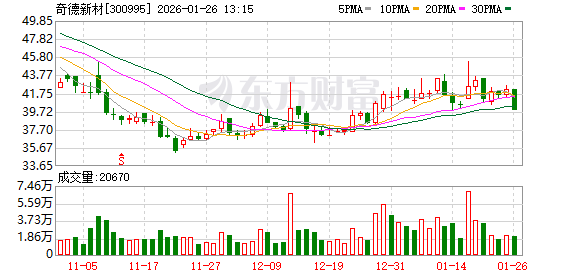
奇德新材:公司是小米汽车供应商
Mei Ri Jing Ji Xin Wen· 2026-01-26 05:14
Group 1 - The company, Qide New Materials, confirmed its role as a supplier for Xiaomi's automotive division, specifically for the YU7 model [2] - The company's products are utilized across various components and models, but specific applications cannot be disclosed due to commercial confidentiality [2] - Investors are encouraged to refer to publicly disclosed information for further details on the company's performance [2]
港股午评:恒指涨0.09%,科指大跌1.31%,金银价格持续爆发,黄金带领有色金属股齐涨
Ge Long Hui· 2026-01-26 04:05
Core Viewpoint - The Hong Kong stock market showed mixed performance with the Hang Seng Index slightly up by 0.09% while the Hang Seng Tech Index fell by 1.31%, indicating a divergence in sector performance influenced by geopolitical factors and currency fluctuations [1] Group 1: Market Performance - The Hang Seng Index closed up by 0.09% while the Hang Seng Tech Index experienced a decline of 1.31% [1] - The Hang Seng China Enterprises Index (国指) fell by 0.09%, reflecting weakness in the broader market [1] Group 2: Sector Performance - Major technology stocks faced downward pressure, with Baidu dropping by 4%, Xiaomi declining over 2%, and Alibaba falling by over 1% [1] - Gold and silver prices surged to new highs, positively impacting the performance of precious metals stocks such as Lingbao Gold, Shandong Gold, and Zijin Mining, which reached new peak prices [1] - The copper sector saw a significant increase, with China Nonferrous Mining rising by 11.5% [1] - Defense, semiconductor, and Apple-related stocks experienced notable declines [1]


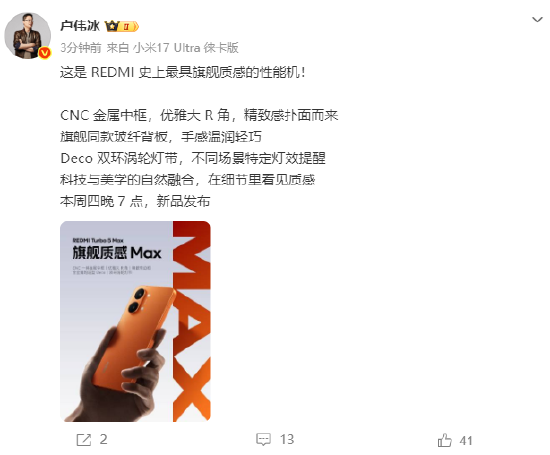
卢伟冰:Turbo 5 Max是REDMI史上最具旗舰质感的性能机
Xin Lang Cai Jing· 2026-01-26 03:19
Core Viewpoint - The REDMI Turbo 5 Max is positioned as the most flagship-quality performance device in REDMI's history, emphasizing its premium features and specifications [1][2]. Group 1: Product Features - The Turbo 5 Max will be launched this Thursday, featuring a 9000mAh Xiaomi Jinsha River battery for extended battery life [3][5]. - The device boasts high-quality materials and thoughtful design, aiming for aesthetic standards comparable to the iPhone standard version [3][5]. - It includes flagship-level dual speakers and full waterproof capabilities, providing a comprehensive premium experience [3][5]. Group 2: Market Positioning - The Turbo 5 Max is priced in the 2.5K range, which is considered unprecedented for such a complete flagship experience [3][5].
小米集团:行业环境疲软下,下调智能手机、电动车销量预期;更新估值情景,维持 “买入” 评级
2026-01-26 02:49
24 January 2026 | 6:48AM HKT Equity Research Xiaomi Corp. (1810.HK) Lower smartphone/EV volume estimates against softer industry backdrop; Refresh valuation scenarios and stay Buy | | | In this note, we lower our estimates on Xiaomi's 2026-27E revenue and profitability by 8%/17% on average primarily on account of: 1) Lower smartphone shipments (esp. in the mass segment) on ASP hike; we model smartphone ASP +6%/+4% yoy in 2026/27E (vs. 0% yoy in 2025E) and shipments -5%/+2% yoy to 158mn/162mn in 2026/27E (vs ...

全球智能手机:因内存供应紧张,下调潜在市场总规模增速至 - 6%-Global Smartphones_ Cutting TAM growth to -6 on memory tightness
2026-01-26 02:49
Summary of Key Points from the Conference Call Industry Overview: Global Smartphones Market Size and Growth Projections - The global smartphone Total Addressable Market (TAM) is projected to decline by 6% in 2026 and grow by 2% in 2027, with volume estimates reduced to 1.19 billion units in 2026 and 1.21 billion units in 2027, reflecting a saturated market and rising memory costs [1][9][13] - The market value is expected to grow by 2% in 2026 to US$581 billion and by 6% in 2027 to US$615 billion, driven by a shift towards premium smartphones priced above US$600 [2][11] Segment Analysis - **Premium Segment**: Expected to grow at a 2% CAGR from 2025 to 2027, reaching 379 million units by 2027, accounting for 31% of total volume. This segment is projected to contribute 70% of total revenues by 2027 [18] - **Mid-End Segment**: Anticipated to decline at a -3% CAGR, with volume dropping to 347 million units by 2027, contributing 20% of total revenues [20] - **Entry-Level Segment**: Expected to decline at a -4% CAGR to 485 million units by 2027, accounting for 40% of the total market, with a revenue contribution of 10% [21] Foldable Phones - Foldable phones are projected to see increased penetration, with estimates revised to 3.8% in 2026 and 6.1% in 2027, translating to 45 million and 74 million units respectively [1][16] - The innovative designs and new model launches, such as Huawei Mate X7 and Moto Razr Fold, are expected to drive consumer interest and adoption [16] Company-Specific Insights: Transsion - Transsion maintains a strong position in the budget and AI smartphone markets, but the target price has been reduced from Rmb91 to Rmb55 due to rising memory costs impacting global demand, particularly in emerging markets where consumers are more price-sensitive [3] Additional Insights - The smartphone market is categorized into three segments based on pricing: Premium (>US$600), Mid-End (US$200-600), and Entry Level (<US$200) [17] - The premium smartphone market is expected to outpace the overall market growth, supported by strong purchasing power and continuous technology upgrades [18] - The mid-end segment is shrinking due to a lack of significant technological advancements and changing consumer behavior [20] - The entry-level segment is facing challenges from rising memory prices, which disproportionately affect price-sensitive consumers [21] Conclusion - The global smartphone market is experiencing a shift towards premium models, while mid and entry-level segments face challenges. Foldable phones are emerging as a significant growth area, and companies like Transsion must navigate rising costs and changing consumer preferences to maintain market share.


