
LI AUTO-W(02015)

Search documents
11月新能源车销量跟踪:“翘尾”行情遇冷,全年格局基本落定
Haitong Securities International· 2025-12-02 01:40
Investment Rating - The report does not explicitly provide an investment rating for the automotive industry or specific companies within it [26]. Core Insights - The year-end sales data for major automakers indicates a significant divergence in performance, with the typical "year-end tailwind" being weaker than in previous years. The phase-out of the "two-new" subsidy policies is contributing to a trend of slowing or declining sales growth [8][9]. - BYD's November sales were 480,000 units, down 5% year-on-year but up 9% month-on-month, primarily due to weaker domestic demand. Domestic sales were 348,000 units, down 27% year-on-year. Cumulative sales from January to November reached 4.18 million units, an 11% increase year-on-year [9][10]. - Geely's November sales reached 310,000 units, a 24% year-on-year increase, with cumulative sales of 2.79 million units, up 42% year-on-year, putting its annual target of 3 million units within reach. NEV sales for Geely in November were 188,000 units, a 53% year-on-year increase [9][10]. - Leapmotor exceeded 70,000 units in November, marking a 75% year-on-year increase, with cumulative deliveries reaching 536,000 units, surpassing its annual target ahead of schedule [10][11]. - Xiaomi Auto delivered over 40,000 units in November, maintaining this level for three consecutive months, and raised its full-year delivery outlook to over 400,000 units [12]. - Li Auto's November deliveries were 33,000 units, down 32% year-on-year, with cumulative deliveries of 362,000 units, an 18% decrease year-on-year [13]. - NIO's November sales were 36,000 units, a 76% year-on-year increase, but cumulative deliveries totaled 278,000 units, indicating challenges in achieving profitability in Q4 [14][15]. Summary by Sections Sales Performance - BYD's November sales were 480,000 units, with domestic sales at 348,000 units, reflecting a significant year-on-year decline [9][10]. - Geely's sales performance showed strong growth, particularly in NEVs, with a notable increase in overseas exports [9][10]. - Leapmotor and Xiaomi Auto demonstrated robust sales growth, exceeding their targets [10][12]. Market Dynamics - The automotive market is experiencing a reshuffling of sales rankings, with leading new energy vehicle (NEV) players facing slowing growth [10][11]. - The competitive landscape is intensifying, with companies needing to balance volume and profitability as subsidies phase out [15].





2025年第204期:晨会纪要-20251202
Guohai Securities· 2025-12-02 00:48
Group 1 - The core viewpoint of the report indicates that Meituan's food delivery losses have peaked, and there is a focus on value recovery amid dynamic competition [3][4] - In Q3 2025, Meituan reported revenue of 95.5 billion yuan, a year-on-year increase of 2% and a quarter-on-quarter increase of 4%, but incurred an operating loss of 19.8 billion yuan, a year-on-year decline of 244% [3][4] - The core local business revenue decreased by 3% to 67.4 billion yuan, with significant losses attributed to intensified market competition and increased promotional expenses [4][5] Group 2 - The report highlights that Meituan's food delivery business saw record high daily active users and monthly transaction users, indicating a robust growth in core user base [5] - Meituan's flash purchase business revenue grew by 33% year-on-year in Q3 2025, with significant increases in user transaction frequency and average order value [5][6] - The hotel and travel business revenue increased by 13% year-on-year, with over 200 service categories covered, and the platform has accumulated over 25 billion real consumption reviews [6] Group 3 - The report projects that Meituan's revenue for 2025-2027 will be 365.4 billion, 412.0 billion, and 467.9 billion yuan respectively, with Non-GAAP net profit estimates of -18.4 billion, +14.5 billion, and +37.8 billion yuan [7] - The report maintains a "buy" rating for Meituan, with a target market value of 737 billion yuan for 2026, corresponding to a target price of 121 yuan per share [7] Group 4 - The report on Li Auto indicates that Q3 2025 revenue was 27.36 billion yuan, a year-on-year decline of 36.2%, with a net loss of 6.24 billion yuan [18][19] - Li Auto's gross margin for Q3 2025 was 16.3%, down 5.2 percentage points year-on-year, with vehicle gross margin at 15.5% [19][20] - The company expects Q4 2025 deliveries to be between 100,000 and 110,000 units, a year-on-year decrease of 30.7% to 37% [20][21]

对标先进促提升 深化合作谋新篇
Zheng Zhou Ri Bao· 2025-12-02 00:47
近日,市委常委、统战部部长黄卿带领我市汽车产业企业考察团赴京冀考察学习。 全市新能源汽车产业链18名骨干企业负责人参加考察。 黄卿表示,组织民营企业家走出去对标学习,是服务"两个健康"、优化营商环境的具体行动。通过 实地考察,搭建学习交流平台,能够帮助我市企业家看到自身与行业标杆的差距与努力方向,有效提升 战略眼光和创新意识,同时也为推动郑州与京冀地区产业对接、深化区域合作奠定良好基础。希望各位 企业家将学到的新理念、新思路转化为企业创新发展的实际行动,把握发展趋势、拓展合作空间,争做 郑州新能源汽车产业生态的建设者和贡献者,为郑州国家中心城市现代化建设汇聚更多智慧和力量。 考察团先后走进小米汽车、理想汽车、北汽新能源、长城汽车、三河世原等企业,观摩学习智能制 造、技术创新、品牌建设与市场拓展方面的先进理念与实践成果,深入探讨大数据、人工智能如何赋能 研发、营销和用户体验创新,详细了解新材料、新工艺的应用与产业链协同创新模式。 ...


12月2日早餐 | Deepseek发布新模型;大摩大幅上调谷歌TPU产量预测
Xuan Gu Bao· 2025-12-02 00:00
Market Overview - US stock markets experienced a decline, with the Dow Jones down 0.9%, Nasdaq down 0.38%, and S&P 500 down 0.53% [1] - Notable stock movements included Google A down 1.65%, Meta down 1.09%, and Microsoft down 1.07%, while Tesla rose 0.01% and Apple increased by 1.52% [1] - The Nasdaq Golden Dragon China Index rose by 0.96%, with significant gains from NetEase (up 4.9%) and Alibaba (up 4.4%) [1] Company Developments - Nvidia announced a $2 billion investment in EDA giant Synopsys [1] - Apple is accelerating the development of its first foldable iPhone, expected to launch in Fall 2026, following the departure of its AI chief [2] - Google introduced the Gemini 3 AI model into its search engine, covering nearly 120 countries and regions [2] Industry Insights - The cobalt market saw prices surpass $50,000 per ton, with ongoing export bans affecting supply from the Democratic Republic of Congo [3] - A report from Morgan Stanley indicated a significant increase in Google's TPU chip production forecast, with expectations to reach 5 million units by 2027, potentially generating an additional $13 billion in revenue for every 500,000 units sold [7][10] - The NAND Flash market is experiencing strong demand driven by AI applications, with prices expected to rise by 20% to 60% across various products [6][7] - Rare earth prices, including praseodymium and neodymium, have increased by 3-6%, driven by tight supply and stable demand from domestic and overseas markets [8] Strategic Moves - DeepSeek announced the launch of its DeepSeek V3.2 model, achieving top performance in AI assessments, which may enhance its competitive position in the AI market [6] - Barclays predicts that AI inference computing demand will reach 4.5 times that of training demand by 2026, indicating a shift in the AI market focus [10]



造车新势力Q3财报
2 1 Shi Ji Jing Ji Bao Dao· 2025-12-01 23:13
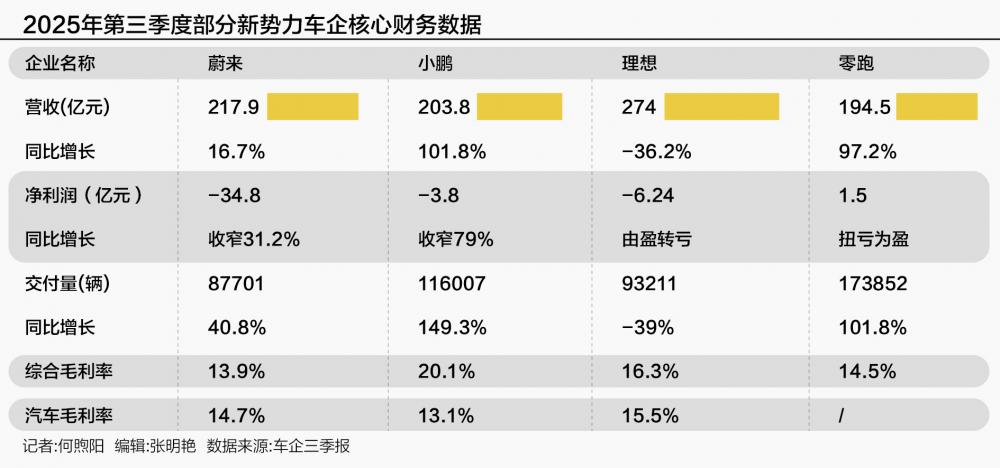
Core Insights - The competitive landscape of new energy vehicle manufacturers in China is undergoing significant changes as Q3 2025 financial reports are released, with Xpeng Motors showing remarkable growth while NIO and Li Auto face challenges [1][2][3] Company Performance - **Xpeng Motors**: Achieved a revenue of 203.8 billion yuan, with a year-on-year growth of 101.8%. Despite a net loss of 3.8 billion yuan, this represents a 79% reduction in losses compared to the previous year. The company delivered 116,007 vehicles, marking a 149.3% increase year-on-year [4][6][8] - **NIO**: Reported a revenue of 217.9 billion yuan, with a year-on-year growth of 16.7%. The net loss was 34.8 billion yuan, a 31.2% reduction from the previous year. NIO delivered 87,701 vehicles, a 40.8% increase year-on-year [4][12][14] - **Li Auto**: Generated a revenue of 274 billion yuan, but experienced a 36.2% year-on-year decline. The company reported a net loss of 6.24 billion yuan, ending an 11-quarter streak of profitability. Vehicle deliveries fell by 39% to over 93,000 units [4][9][11] - **Leap Motor**: Achieved a revenue of 194.5 billion yuan, with a year-on-year growth of 97.2%. The company reported a net profit of 1.5 billion yuan, marking its second consecutive profitable quarter. Leap Motor delivered nearly 174,000 vehicles, a 101.8% increase year-on-year [4][15][16] Strategic Adjustments - The new energy vehicle market is shifting from growth to competition based on product, technology, and brand strength, as companies adapt their strategies to survive in a more competitive environment [3][16] - **Xpeng Motors**: Focused on improving operational efficiency and profitability, launching new models like the X9 Super Range Extender, which aims to address consumer pain points regarding range and charging speed [7][8] - **Li Auto**: Shifted focus towards AI integration in vehicles, moving away from traditional family-oriented branding to emphasize technological advancements [10][11] - **NIO**: Reduced operational costs and refocused on core automotive sales, moving away from previous explorations in other business areas [12][13] - **Leap Motor**: Adjusted its strategy to enter the range extender market and target the high-end SUV segment, while also attempting to elevate its brand image [15][16]

热门中概股收盘多数上涨


Xin Lang Cai Jing· 2025-12-01 22:34
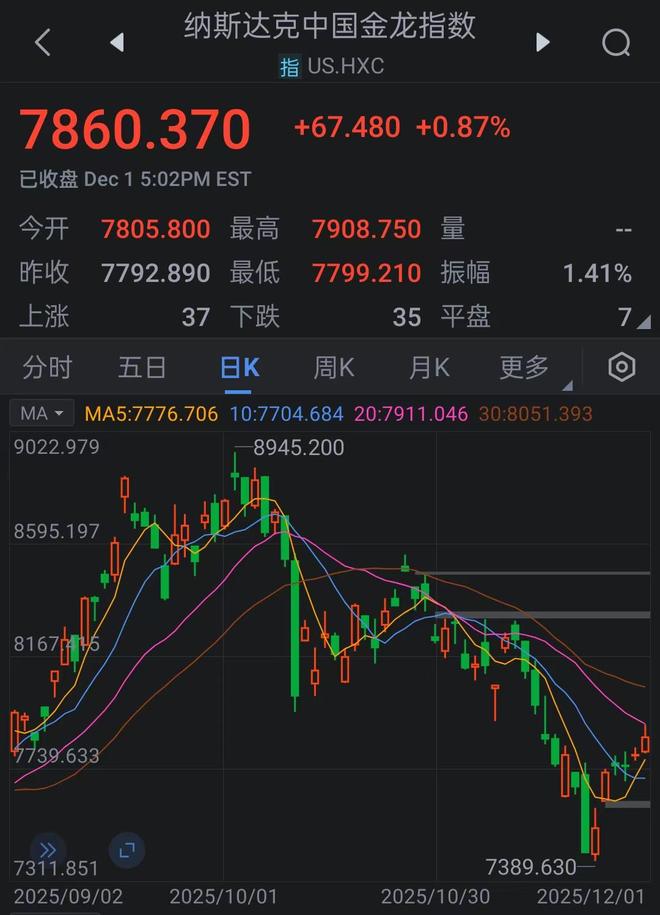
Core Viewpoint - The majority of popular Chinese concept stocks experienced an increase in their closing prices on Monday, with the Nasdaq Golden Dragon China Index rising by 0.87% [1] Group 1: Stock Performance - Alibaba saw a significant increase, rising over 4% [1] - Pinduoduo increased by more than 1% [1] - NetEase rose by over 5% [1] - Baidu experienced a rise of over 2% [1] - Xpeng declined by more than 2% [1] - Beike fell by over 3% [1] - Li Auto dropped by more than 2% [1] - NIO saw a decrease of over 5% [1]
理想汽车,连续6个月同比下降
Shen Zhen Shang Bao· 2025-12-01 15:33
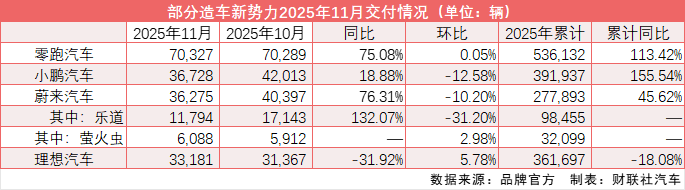
Group 1 - The core viewpoint of the article highlights the declining delivery numbers and financial performance of Li Auto in November, indicating a significant downturn in the company's operations [1] Group 2 - In November, Li Auto delivered 33,181 vehicles, marking a 31.92% year-over-year decline from 48,740 vehicles delivered in November of the previous year [1] - Li Auto's Q3 2025 financial report shows revenue of 27.4 billion yuan, a drastic decrease of 36.2% year-over-year, and a net loss of 624 million yuan compared to a net profit of 2.8 billion yuan in the same period last year [1] - For Q4, Li Auto has provided a delivery guidance of 100,000 to 110,000 vehicles, representing a year-over-year decrease of 37.0% to 30.7%, with a requirement to deliver over 35,000 vehicles in December to meet this target [1] - As of November 30, 2025, Li Auto has established 544 retail centers across 157 cities and has 556 after-sales service and authorized body repair centers covering 227 cities [1] - The company has also deployed 3,614 Li Auto supercharging stations and has 20,027 charging piles in operation nationwide [1]
11月压力大!车企销量看环比就露馅
Jing Ji Guan Cha Bao· 2025-12-01 15:03
Group 1 - The Chinese automotive market remains strong in November, but the impact of subsidy reductions is spreading beyond price-sensitive consumers, leading to a general delay in purchasing decisions [2] - NIO's CEO Li Bin noted a significant drop in new orders across the industry in November, with consumers adopting a wait-and-see approach [2] - BYD's sales in November reached 480,000 units, a year-on-year decline of 5.25%, indicating a shift from rapid growth to a need for structural adjustment [2] Group 2 - Geely's sales in November were 310,000 units, a year-on-year increase of 24%, supported by multiple product lines [3] - SAIC's overall sales reached 316,000 units, with a growth rate of 9.5%, indicating a stable performance across its brands [3] - Great Wall and Chery maintained steady sales, with Great Wall selling 133,200 units (up 4.57%) and Chery selling 255,800 units (down 2%) [3] Group 3 - The new energy vehicle segment is gaining traction among state-owned enterprises, with Dongfeng's Lantu surpassing 20,000 units in November [4][5] - Traditional brands like FAW showed stable performance, with total sales of 306,000 units in November, including a significant increase in new energy vehicle sales [5] Group 4 - Huawei's automotive strategy is evolving, with its smart vehicle delivery reaching 81,864 units in November, reflecting its growing influence in the industry [6] - The competition is shifting from vehicle-to-vehicle to ecosystem-to-ecosystem, highlighting the importance of integrated capabilities [6] Group 5 - New entrants like Leap Motor delivered 70,327 units in November, marking a year-on-year growth of over 75%, positioning themselves as significant competitors [6] - Xiaomi maintained stable delivery levels above 40,000 units, while XPeng and NIO also reported strong growth in November [7] Group 6 - The automotive market is entering a phase that tests companies' capabilities, with consumers becoming more discerning and extending their decision-making processes [8] - The focus of competition is shifting from subsidies to long-term brand value, supply chain stability, and technological advancement [9]

造车新势力11月齐遇“寒流”:“蔚小理”集体环比下滑
Feng Huang Wang· 2025-12-01 15:00
Core Viewpoint - The new energy vehicle market is experiencing varied delivery performances among different manufacturers in November, with some companies showing growth while others face declines. The overall market sentiment is cautious due to tightening policies and consumer hesitation. Group 1: Delivery Performance - Leap Motor led the delivery numbers with 70,327 units in November, marking a 75.08% year-on-year increase and a slight 0.05% month-on-month growth, achieving its annual sales target of 500,000 units 45 days ahead of schedule [2][3] - Xiaopeng Motors delivered 36,728 units, reflecting an 18.88% year-on-year increase but a 12.58% month-on-month decline, marking its first monthly drop in six months [3][4] - NIO delivered 36,275 units, a 76.31% year-on-year increase, with its sub-brands showing significant growth, particularly the LeDao brand with a 132.07% increase [2][3] - Li Auto's deliveries were at 33,181 units, showing a 31.92% year-on-year decline, continuing a six-month trend of year-on-year decreases [4][5] Group 2: Future Projections and Strategies - Leap Motor aims to reach a sales target of 1 million units by 2026, supported by the launch of new models like the A10 and Lafa5, which cater to different market segments [3][4] - Xiaopeng Motors is expanding its overseas market presence, with a 95% year-on-year increase in overseas deliveries, and is optimistic about new models contributing to future growth [3][4] - NIO has set a quarterly delivery guidance of 120,000 to 125,000 units, needing to deliver over 43,000 units in December to meet this target [4] - Li Auto is focusing on enhancing its long-term competitiveness through organizational, product, and technological improvements, with a cautious delivery guidance of 100,000 to 110,000 units for the fourth quarter [5]
纳斯达克中国金龙指数盘初涨约0.5% 网易涨超4%
Mei Ri Jing Ji Xin Wen· 2025-12-01 14:55
Group 1 - The Nasdaq China Golden Dragon Index increased by approximately 0.5% [1] - NetEase saw a rise of over 4% [1] - Alibaba experienced a gain of over 2% [1] - Baidu rose by over 1% [1] - Li Auto and NIO both declined by over 2% [1] - Xpeng Motors fell by over 1% [1]