
PING AN OF CHINA(02318)

Search documents
险资青睐高股息股票 背后藏着什么秘密?
经济观察报· 2025-09-27 05:07
Core Viewpoint - The implementation of the new accounting standards in the insurance industry by 2026 will drive insurance funds to increase their allocation of stocks under the FVOCI category, enhancing the stability of profit reports for insurance companies [2][6]. Group 1: FVOCI Accounting Category - FVOCI (Fair Value Through Other Comprehensive Income) allows insurance companies to measure financial assets at fair value without affecting their profit and loss statements, thus stabilizing profit reports [2][6]. - As of June 2023, several listed insurance companies have seen significant increases in their FVOCI equity asset holdings, with Xinhua Insurance's FVOCI equity assets rising from 30.64 billion to 37.47 billion yuan, and China Life's FVOCI stock holdings reaching 140.26 billion yuan, accounting for 22.6% of its total stock investments [2][6]. Group 2: Investment Strategies - Insurance companies are focusing on high-dividend stocks, particularly in sectors benefiting from policies aimed at reducing competition and improving cash flow amid inflation [4][8]. - The shift towards FVOCI is also a strategy to address the mismatch in asset-liability durations, as many insurance companies face a duration gap of 4-7 years, significantly higher than the 1-2 years seen in markets like Japan and Germany [8][9]. Group 3: Long-term Investment Logic - The increasing allocation of equities to FVOCI is prompting insurance companies to adjust their investment logic from short-term capital gains to a focus on stable stock price fluctuations and sustainable dividend income [14]. - The dual effect of this strategy is that while it stabilizes profit reports, it also requires insurance companies to maintain a long-term perspective on their investments, which aligns with the regulatory environment favoring long-term assessments [12][14].





谁是对深圳“贡献”最大的企业?腾讯第一、华润第二、招商第三
3 6 Ke· 2025-09-27 04:24
Group 1 - The top ten taxpayers in Shenzhen for 2024 include Tencent (59.2 billion), China Resources (44.4 billion), China Merchants Bank (32 billion), Ping An Group (27.3 billion), BYD (22.8 billion), Vanke (19.9 billion), Huawei (15 billion), Shenzhen Investment Control (5.8 billion), SF Express (4.1 billion), and Industrial Fulian (3.4 billion) [1] - Among the top ten taxpayers, private enterprises account for 70%, while state-owned enterprises only represent three [3][4] - The ranking may only reflect the tax contributions of these companies within Shenzhen, not their nationwide contributions, as companies like Huawei and BYD have multiple research and production bases across the country [4] Group 2 - Shenzhen's private economy contributes over 50% of the city's tax revenue, nearly 60% of its added value, and over 90% of employment [6] - In 2024, the number of private enterprises in Shenzhen reached 2.623 million, ranking first in the country [6] - Shenzhen has 886 private "little giant" enterprises and 23,700 private high-tech enterprises, ranking first and second nationally, respectively [6] - The city is home to 37 private unicorn companies, ranking third in the country [6] - In the 2025 Fortune Global 500 list, Shenzhen has ten companies listed, with seven being private enterprises, the highest among all cities in China [6] - Private enterprises are also the main force in Shenzhen's foreign trade, with imports and exports reaching 2.06 trillion in the first eight months of the year, accounting for 69.6% [6]




加快推进保险法修订;百万圆桌计划推出“MDRT中国特别奖项”;港险新规:储蓄险须标明“保险”|13精周报
13个精算师· 2025-09-27 03:04
Regulatory Dynamics - Nine departments encourage Chinese export credit insurance companies and other insurance institutions to increase support for service exports [8][9] - The central bank maintains the 1-year and 5-year LPR unchanged at 3.0% and 3.5% respectively [10] - The Ministry of Human Resources and Social Security reports that the basic pension insurance fund has achieved positive returns for eight consecutive years, with an average investment return rate of 5.15% [11] - The number of people covered by basic pension insurance in China reaches 1.072 billion, increasing by over 7.3 million since the end of the 13th Five-Year Plan [12] - Over 20 million new employment form workers are covered by occupational injury insurance [13] - The National Medical Insurance Bureau has included 42 rare diseases in the national medical insurance catalog [14] - The National Medical Insurance Bureau releases a long-term care insurance service catalog consisting of 20 life care and 16 medical care items [15] - The Financial Regulatory Administration holds a seminar with ASEAN and China-Japan-Korea financial regulatory agencies [16] - Financial Regulatory Administration head Li Yunzhe meets with Ray Dalio, founder of Bridgewater Associates [17] - The total assets of the banking and insurance industries exceed 500 trillion, with an average growth of nearly 9% over the past five years [18] Company Dynamics - China Ping An increases its stake in Agricultural Bank of China by 115 million HKD [29] - Sunshine Life increases its stake in China Ruyi by 113 million HKD [30] - Great Wall Life raises its stake in New Tian Green Energy to 5.00%, triggering a disclosure requirement [31] - Great Wall Life increases its stake in Qin Port shares by 1 million shares [32] - Ping An Life acquires a stake in Jingchang Logistics [33] - Ping An Overseas issues a 300 million USD 10-year senior unsecured bond with a coupon rate of 5% [34] - Fosun United receives approval for capital increase, with the International Finance Corporation and Asian Development Bank as new shareholders [35] - Ruizhong Life reduces its stake in Qinsong shares by over 9.55 million shares [36] - China Reinsurance receives approval for issuing capital supplement bonds [37] - Bank of China Samsung is approved to issue perpetual capital bonds [38] - China Life establishes a health management company in Nanjing [39] - Sunshine Insurance unveils Sunshine Hengyi Private Fund Management Co., Ltd. [41] - Bank of China Samsung establishes an equity investment partnership in Tianjin with a contribution of 1.1 billion [42] - Tianmao Group's cash option for delisting is executed, involving over 2.3 billion [43] - Huanghe Property Insurance's 125 million shares are up for auction with a starting price of 115 million [44] Industry Dynamics - Social insurance capital's A-share holdings exceed 2 trillion, reaching a historical high [55] - JPMorgan Chase invests approximately 135 billion HKD in China Pacific Insurance H-shares [56] - Mainland insurance companies attract record inflows in Hong Kong stocks [57] - Insurance capital's real estate investment scale significantly increases in the first half of 2025 [58] - The second batch of Sci-Tech Bond ETFs sees substantial institutional investment [59] - Goldman Sachs reports a surge of hedge funds into banking, insurance, and consumer finance sectors [60] - The first commercial insurance innovation drug catalog completes expert review, with five high-cost CAR-T drugs approved [61] - AI applications in the insurance industry are accelerating, with significant productivity potential [62][63] - The health insurance structure is changing, with medical insurance growth surpassing critical illness insurance [65]


“青少年科技素养提升计划”惠及超 31 万名学生 全面升级“科技型企业开放日”活动
Zhong Guo Jin Rong Xin Xi Wang· 2025-09-27 01:49
Group 1 - The "Youth Science Literacy Improvement Program" has been implemented for 6 years, covering 1,058 rural primary schools across 27 provinces, benefiting over 310,000 students and more than 20,000 rural teachers [1][2] - The program aims to enhance scientific core literacy and explore new models of public welfare science education through collaboration with research institutions and technology enterprises [1][2] - China Ping An emphasizes the transformation of its "finance + technology" advantages into practical services for the nation and society, encouraging more tech companies and research institutions to join the initiative [1][2] Group 2 - Technology enterprises are seen as key players in technological innovation and industrial development, capable of significantly contributing to science popularization and education [2] - The program will respond to national strategies by developing cutting-edge science content, integrating diverse public welfare resources, promoting collaboration among schools, research institutions, and enterprises, and using digital means to ensure educational equity [2]
智通ADR统计|9月27日





智通财经网· 2025-09-27 00:06
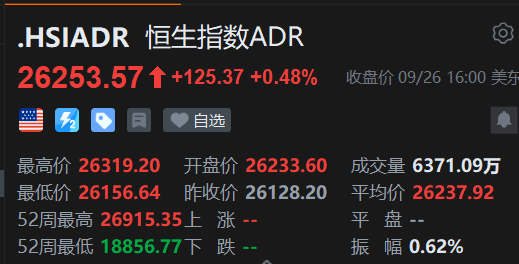
Market Overview - The Hang Seng Index (HSI) closed at 26,253.57, up by 125.37 points or 0.48% as of September 26, 16:00 [1] - The index reached a high of 26,319.20 and a low of 26,156.64 during the trading session, with a trading volume of 63.71 million [1] Major Blue-Chip Stocks Performance - HSBC Holdings closed at HKD 108.633, an increase of 1.081% from the previous close [2] - Tencent Holdings closed at HKD 648.733, up by 0.73% compared to the last trading session [2] ADR Performance Summary - Tencent Holdings (ADR: TCEHY) increased by HKD 4.733, or 0.73% [3] - Alibaba Group (ADR: BABA) rose by HKD 0.672, or 0.40% [3] - HSBC Holdings (ADR: HSBC) saw an increase of HKD 1.933, or 1.81% [3] - Xiaomi Group (ADR: XIACY) gained HKD 0.584, or 1.07% [3] - AIA Group (ADR: AAGIY) increased by HKD 0.222, or 0.31% [3] - Meituan (ADR: MPNGY) rose by HKD 0.534, or 0.53% [3] - Ctrip Group (ADR: TCOM) increased by HKD 8.120, or 1.39% [3] - JD.com (ADR: ID) rose by HKD 1.696, or 1.28% [3]
险资青睐高股息股票 背后藏着什么秘密?
Jing Ji Guan Cha Wang· 2025-09-26 14:37
Core Viewpoint - The insurance industry is increasingly adopting FVOCI accounting for high dividend stocks to stabilize profit reports and enhance long-term dividend income [2][5][10] Group 1: FVOCI Accounting Adoption - FVOCI accounting allows insurance companies to measure financial assets at fair value without impacting annual profit reports, thus stabilizing profit volatility [2][5] - As of June 2023, major insurance companies have significantly increased their FVOCI equity asset holdings, with Xinhua Insurance's FVOCI equity assets rising from 30.64 billion to 37.47 billion yuan and China Life's FVOCI stock holdings reaching 140.26 billion yuan, accounting for 22.6% of its total stock investments [2][3] - The implementation of new accounting standards in 2026 is expected to further drive the allocation of insurance capital into FVOCI stocks [2][4] Group 2: Investment Strategies - Insurance companies are focusing on high dividend stocks, particularly in sectors benefiting from policies aimed at reducing competition and improving cash flow amid inflation [3][6] - The strategy includes identifying stocks with improved cash flow and dividend potential through bottom-up research methods [3][6] - The shift towards FVOCI is also aimed at addressing the mismatch between asset and liability durations, with many companies experiencing a duration gap of 4-7 years [6][10] Group 3: Market Dynamics and Challenges - The rise of FVOCI has led to a "double-edged sword" effect, where significant unrealized gains from FVOCI assets do not appear on profit statements, potentially obscuring the true performance of insurance companies [9][10] - This shift in accounting practices allows for a more stable assessment of insurance companies' core business performance, enhancing investor confidence [10] - The focus on long-term dividend income is changing the investment logic of insurance companies, moving away from short-term capital gains to a more stable income approach [10]

中国平安“青少年科技素养提升计划”惠及超31万名学生 全面升级“科技型企业开放日”活动
Zhong Guo Jing Ji Wang· 2025-09-26 13:03
Core Viewpoint - The "Youth Science Literacy Improvement Program" has achieved significant results over six years, with plans to continue and expand its initiatives for the 2025-2026 period, focusing on enhancing scientific education and collaboration with various stakeholders [1][2][3]. Group 1: Program Overview - The program has covered 1,058 rural primary schools across 27 provinces, benefiting over 310,000 students and more than 20,000 rural teachers [3]. - The initiative includes activities such as "Technology Dream Fueling" where over 3,000 youths visited tech companies to experience cutting-edge technology [3]. - The program has trained over 30,000 educators through a combination of online and offline methods, significantly improving the teaching capabilities of rural science teachers [3]. Group 2: Organizational Commitment - China Ping An has been committed to social responsibility since establishing its first Hope Primary School in 1994, maintaining 119 schools and implementing five major educational initiatives [2]. - The organization emphasizes the integration of "finance + technology" to support national development and social welfare, encouraging more tech companies and research institutions to join the program [2]. Group 3: Future Directions - The program aims to explore new models of scientific education that are comprehensive and collaborative, focusing on developing core scientific competencies among students [1]. - An expert team has been established to provide professional guidance on curriculum development and activity design, ensuring targeted and effective science literacy cultivation [3].
平安人寿北分:今年前8月累计理赔超12亿元
Bei Jing Shang Bao· 2025-09-26 12:46
Group 1 - The core viewpoint of the news is that Ping An Life Insurance Beijing Branch has significantly enhanced its insurance offerings and claims processing capabilities through technology and rapid response mechanisms [1][2] Group 2 - As of August 2025, Ping An Life Insurance Beijing Branch has underwritten a total of 116,000 new contracts, providing life insurance coverage of 13.49 billion yuan and critical illness insurance coverage of 5.46 billion yuan [1] - The maximum coverage for individual life insurance is 100 million yuan, while the highest critical illness insurance coverage for adults is 2.446 million yuan and for children is 2.261 million yuan [1] - The company has processed 138,000 claims, with medical claims accounting for the highest proportion at 93%, totaling 1.22 billion yuan in claims payments [1] - The company has utilized AI technology to enhance its business processes, achieving an average claims processing time of just 10 minutes, with 93% of automated claims being accurately assessed within 60 seconds [1] Group 3 - In response to the extreme rainfall disaster in July, Ping An Life Insurance Beijing Branch activated its emergency claims response plan, completing the first claim payment of 30,548.18 yuan within 7 hours [2] - This rapid response highlights the role of insurance as a stabilizing force in society during major events [2]
从灾后赔付到鹰眼预警、无人机巡视:风王“桦加沙”中的保险变革
Di Yi Cai Jing· 2025-09-26 12:01
Core Viewpoint - The article highlights the proactive measures taken by property insurance companies, particularly Ping An Property & Casualty, in response to Typhoon "Haikui," showcasing a shift from traditional compensation roles to risk management and prevention strategies [1][3][12]. Group 1: Proactive Measures and Risk Management - Ping An Property & Casualty established disaster response teams and utilized advanced technology to minimize losses for clients before the typhoon's arrival, sending out 39.6 million warning messages and conducting over 5,000 inspections [1][4][6]. - The company implemented a comprehensive approach to disaster management, focusing on prevention, rescue, and compensation, with a belief that "the best insurance is defense" [4][12]. - Ping An's "Eagle Eye" system played a crucial role in risk assessment, allowing for targeted communication with high-risk clients and facilitating timely interventions [6][13]. Group 2: Timely Compensation and Support - Following the typhoon's impact, Ping An quickly initiated a prepayment compensation plan, disbursing 18 million yuan (approximately 2.5 million USD) for emergency relief efforts [10][11]. - The company set up disaster claim service points in severely affected areas, ensuring rapid response and support for clients, with the first claim payment processed within hours of the disaster [11][12]. - Ping An's commitment to timely compensation reflects a broader industry trend towards enhancing service quality and client support during crises [12][16]. Group 3: Technological Integration and Future Directions - The integration of technology, such as AI and big data, has transformed the insurance model from reactive to proactive, emphasizing risk reduction and management [12][15]. - Ping An's "Eagle Eye" system has evolved significantly, issuing 259,000 disaster warnings and providing extensive on-site services, demonstrating the effectiveness of technology in risk management [15][16]. - The shift towards being a "full-cycle risk management partner" indicates a strategic evolution in the insurance industry, focusing on comprehensive risk management rather than just compensation [12][16].
中国平安“青少年科技素养提升计划”惠及超 31 万名学生 全面升级“科技型企业开放日”活动
Jing Ji Guan Cha Wang· 2025-09-26 11:44
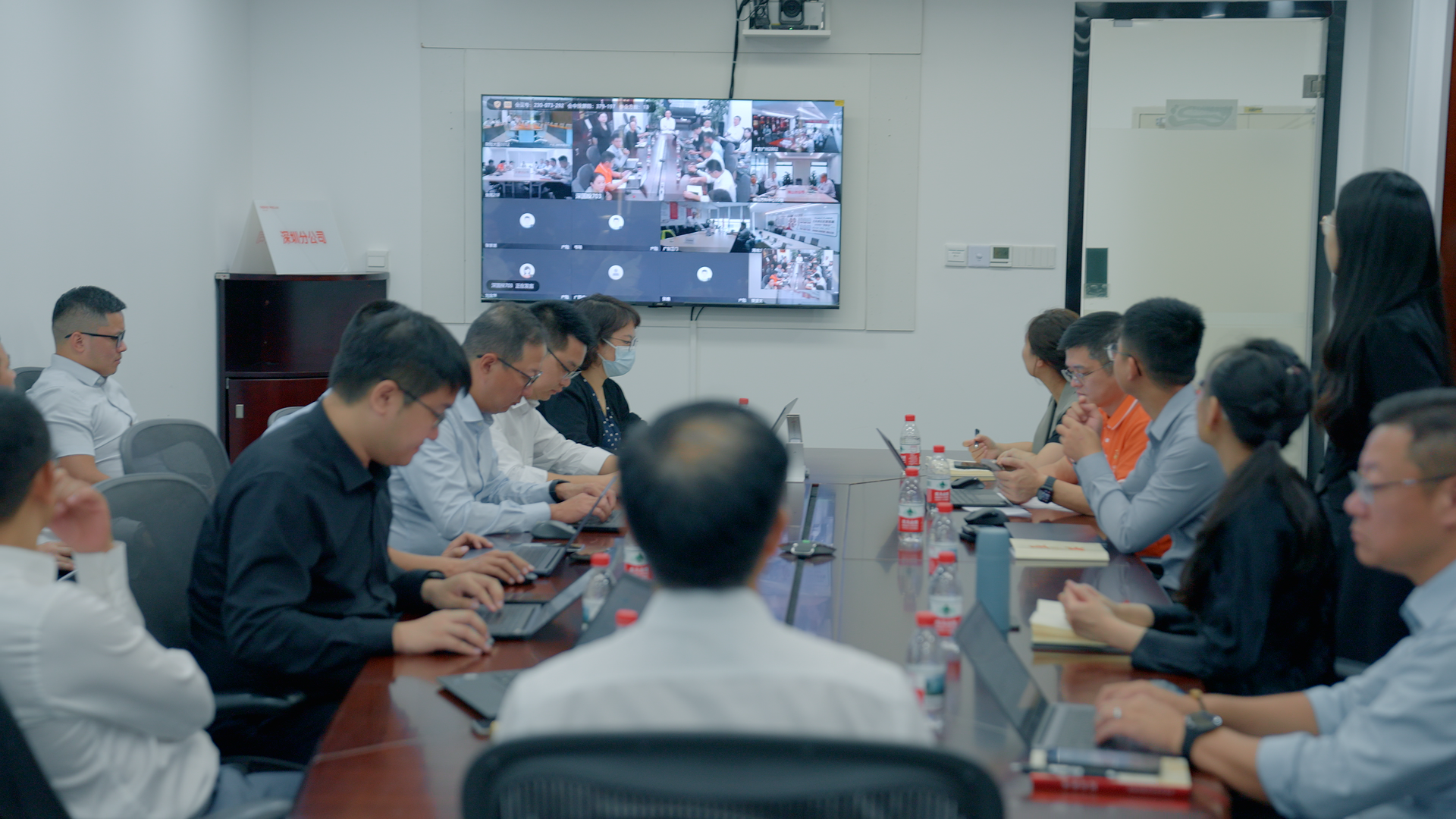
Core Points - The "Youth Science Literacy Improvement Program" has been successfully implemented for six years, benefiting over 310,000 students and 20,000 rural teachers across 1,058 rural primary schools in 27 provinces [5][6] - The program aims to enhance scientific education resources in underdeveloped and minority regions, focusing on developing scientific core competencies among students [2][10] - The 2025-2026 project will introduce new initiatives, including a science lecturer team and various public science activities, to further engage youth in scientific education [7][10] Group 1 - The meeting was attended by prominent figures, including Gu Xiulian, Vice Chairwoman of the Standing Committee of the National People's Congress, and representatives from various scientific and educational organizations [1][2] - The program has received significant support from China Ping An, which has been involved in educational philanthropy since 1994, establishing and maintaining 119 Hope Primary Schools [4][5] - The program has organized over 3,000 youth experiences in technology companies, allowing students to engage with cutting-edge technology [5][9] Group 2 - The program emphasizes collaboration with scientific institutions and technology companies to create a sustainable ecosystem for science education [3][9] - The meeting highlighted the importance of integrating technology and education to foster scientific innovation and improve overall scientific literacy [4][10] - Future efforts will focus on digital methods to promote educational equity and reduce resource disparities [10]