
BANK OF CHINA(03988)

Search documents
绩优基金经理王登元掌舵 富国智汇稳健FOF于1月19日起售
Zhong Zheng Wang· 2026-01-19 06:33
Core Insights - The A-share market has entered a high volatility phase, making diversified asset allocation crucial for managing market changes [1] - The newly launched FOF product, 富国智汇稳健3个月持有期混合FOF, aims to balance opportunity and risk through a multi-asset allocation strategy [1][4] Group 1: FOF Product Overview - The FOF product is designed to leverage the advantages of diversified allocation by combining various asset classes such as bonds, equities, and gold to mitigate risks and reduce volatility [1][2] - It is managed by experienced FOF manager Wang Dengyuan, who has 14 years of experience in the securities industry and 6 years in FOF management [3] Group 2: Investment Strategy - The product adheres to a "fixed income foundation" logic, selecting high-performing and risk-controlled bond funds as a safety net for the portfolio [2] - It employs a "multi-asset + multi-strategy" approach, focusing on sectors influenced by policies against "involution," PPI recovery in the manufacturing midstream, and technological changes driven by overseas AI [2] Group 3: Risk Management - The FOF product utilizes a robust risk management framework, including risk budget management and dynamic position adjustments to control portfolio volatility [2] - The investment research system of 富国基金 supports the product, ensuring comprehensive backing across fixed income, active equity, and quantitative investments [3] Group 4: Performance Metrics - Recent performance data shows that 富国鑫汇养老目标日期2035三年持有A and 富国鑫汇养老目标日期2045五年持有A achieved returns of 13.02% and 24.26% respectively over the past year, outperforming their benchmarks [3]

银行资负跟踪20260119:降准降息还有空间
GF SECURITIES· 2026-01-19 04:26
Investment Rating - The industry investment rating is "Buy" [3] Core Viewpoints - The report indicates that there is still room for further cuts in reserve requirement ratios and interest rates, with a focus on structural monetary policy support for high-quality economic development [15][19] - The central bank has implemented a reduction of 0.25 percentage points in various structural monetary policy tool rates, signaling a supportive monetary policy stance [15][19] - The report emphasizes the importance of timing for future policy implementations, particularly in relation to government bond issuance peaks and the maturity schedule of high-interest bank deposits [15] Summary by Sections 1. Monetary Policy Adjustments - The report notes a reduction of 0.25 percentage points in structural monetary policy tool rates, with a focus on supporting key areas through increased re-lending [15] - Future attention is directed towards December economic data and January LPR [22] 2. Central Bank Dynamics and Market Rates - The central bank conducted a total of 9,515 billion yuan in 7-day reverse repos at an interest rate of 1.40%, with a net injection of 9,741 billion yuan [16] - The report highlights that the funding rates remained stable, with expectations of slight increases due to tax payments and government bond net repayments [16] 3. Bank Financing Tracking - The report indicates that the total outstanding amount of interbank certificates of deposit (CDs) is 19.09 trillion yuan, with an average issuance rate of 1.65% [20] - The report also notes that there were no commercial bank bond issuances during the period, with a total outstanding commercial bank bond size of 3.38 trillion yuan [20]




跨境流动性跟踪20260118:12月跨境净回流、净结汇规模均创历史新高
GF SECURITIES· 2026-01-19 02:46
Investment Rating - The industry investment rating is "Buy" [2] Core Views - December saw a record high in both cross-border net inflow and net settlement scale, with the bank's foreign-related payment surplus reaching 801.1 billion CNY, a year-on-year increase of 400.2 billion CNY [14][17] - The arbitrage trading return rate declined significantly, influenced by the depreciation of the US dollar against the offshore RMB, which fell by 1.32% to 6.98 [14][17] - The cross-border funds' net inflow in December was the highest on record, driven by a substantial increase in merchandise trade surplus [17][31] Summary by Sections Section 1: December Cross-Border Net Inflow and Settlement - The bank's foreign-related payment surplus in December was 801.1 billion CNY, with a year-on-year increase of 400.2 billion CNY, primarily due to a significant expansion in merchandise trade surplus [17] - The net settlement in December reached a historical high of 705.5 billion CNY, with a month-on-month increase of 589.1 billion CNY and a year-on-year increase of 780.6 billion CNY [31] Section 2: Arbitrage Trading Returns - The arbitrage trading return rate for 10Y US Treasury bonds in RMB terms fell by 1.43 percentage points to -1.77% due to the marginal appreciation of the RMB [14][17] - The 10Y China-US interest rate spread widened by 15 basis points, with the 10Y US Treasury yield rising by 16 basis points [14] Section 3: Cross-Border Funds and M2 Liquidity - Cross-border funds contributed significantly to M2 liquidity, with a total of 774.4 billion CNY added, reflecting an increase of 863.2 billion CNY month-on-month [55] - The cross-border funds' inflow had a pull rate of 0.10% on M2, indicating a continued upward trend [55]

中国银行 -我们对近期货币刺激的看法:财政刺激在路上,是时候重估了-China Banks Our take on recent monetary stimulus Fiscal stimulus on the way Time to revisit
2026-01-19 02:29
Summary of Conference Call on China Banks Industry Overview - The conference call focused on the Chinese banking sector, particularly the implications of recent monetary and fiscal stimulus measures announced by the People's Bank of China (PBoC) [1][2]. Key Points and Arguments Monetary Policy Changes - PBoC announced new supportive monetary policies on January 15, including: - Expansion of relending facilities with an additional quota of approximately RMB 1.1 trillion, targeting private enterprises and key industries such as agriculture, small businesses, technological innovation, carbon reduction, service consumption, and elderly care [1]. - A 25 basis points (bps) interest rate cut for relending facilities, reducing the rate from 1.5% to 1.25% [7]. - Potential for further cuts in the Reserve Requirement Ratio (RRR) and Loan Prime Rate (LPR) [1][2]. Impact on Banks' Net Interest Margin (NIM) - The relending facilities rate cut is expected to benefit banks' NIM by approximately 0.3 bps, as banks can borrow cheaper funds from PBoC [1]. - The balance of relending facilities reached around RMB 5 trillion by Q3 2025, representing about 1% of banks' total assets [1]. - The anticipated fiscal stimulus, including interest subsidies on consumer and micro loans, is expected to have a limited negative impact on banks' NIM [1]. Credit Growth and Loan Demand - The stimulus measures are designed to incentivize banks to direct credit towards policy-favored sectors, supporting loan growth at the beginning of 2026, coinciding with the start of the 15th five-year plan [1]. - There is an expectation of stronger-than-expected loan growth in early 2026 due to these targeted lending initiatives [1]. Treasury Bond Market Dynamics - Lower treasury bond yields are projected to widen the spread between banks' dividend yields and the 10-year China treasury bond yield, attracting yield-seeking investors [2][5]. - The PBoC may actively participate in treasury bond trading to rebalance supply and demand dynamics, potentially lowering treasury bond yields further [2]. Investment Outlook for China Banks - China banks' H-shares have underperformed the Hang Seng Index by 7 percentage points year-to-date in 2026, but there is optimism for recovery due to: - Expected growth in insurers' premiums, leading to increased inflows into high-yield bank stocks [6]. - The attractiveness of banks' dividend yields due to lower treasury bond yields [6]. - The positive impact of monetary and fiscal stimulus on loan growth with limited negative effects on NIM [6]. - Specific banks highlighted for potential investment include ICBC-H and BOC-H, which offer above-peer dividend yields and favorable valuations [6]. Insurer Investments in Banks - Notable changes in equity stakes by insurers in various banks were discussed, indicating a trend towards increased financial investments in the banking sector [12]. Additional Important Information - The conference call emphasized the importance of monitoring the evolving regulatory environment and market conditions that could impact the banking sector's performance [1][2][6]. - Analysts expressed caution regarding the potential for NIM compression in FY26, estimating a 6 bps decrease, but noted that RRR cuts and potential deposit rate cuts could provide some offset [2]. This summary encapsulates the key insights and projections regarding the Chinese banking sector as discussed in the conference call, highlighting the implications of recent monetary policies and the outlook for investment opportunities.
银行投资观察20260118:贝塔弹性主导近期板块表现
GF SECURITIES· 2026-01-19 01:47
Core Insights - The banking sector has shown weak relative and absolute returns recently, primarily due to market funds shifting towards high-beta and small-cap stocks, leading to a diversion of funds from low-beta banking stocks [18] - The report suggests that the banking sector is likely to experience further internal differentiation in 2026, with larger banks and wealth management banks expected to outperform [18] - Core stock recommendations include Ningbo Bank, China Merchants Bank, Qingdao Bank, and large state-owned banks [18] Section Summaries 1. Current Observation: A-shares in Banking Decline, H-shares Outperform - During the observation period from January 12 to January 16, 2026, the banking sector (CITIC first-level industry) declined by 2.6%, ranking 25th among all industries and underperforming the Wind All A index [16] - The performance of state-owned banks, joint-stock banks, city commercial banks, and rural commercial banks varied, with declines of -2.16%, -3.33%, -1.92%, and -2.24% respectively [16] - H-shares of banks increased by 2.4%, underperforming the Hang Seng Composite Index, while A-share banks showed mixed results [16] 2. Investment Recommendations: Beta Elasticity Dominates Recent Sector Performance - The report indicates that the recent downturn in the banking sector has solidified valuations, with limited further downside expected [18] - The anticipated trends include a shift towards non-bank financial services, wealth management, and disintermediation, with large banks expected to gain an advantage [18] 3. Sector Performance: Banking Sector Decline, Weekly Turnover Rate Increases - The banking sector's weekly turnover rate increased to 1.61%, ranking last among 30 CITIC first-level industries [42] - As of January 16, 2026, the banking sector's latest price-to-earnings (P/E) ratio was 6.89x, and the price-to-book (P/B) ratio was 0.67x, indicating valuations at historical average levels [42] 4. Individual Stock Performance: A-share Banks Overall Decline, City Commercial Banks Relatively Stable - Among A-share banks, Ningbo Bank saw a rise of 4.09%, while Beijing Bank, Huaxia Bank, and Shanghai Pudong Development Bank experienced declines of 4.90%, 4.73%, and 4.33% respectively [16] - In H-shares, Industrial and Commercial Bank of China and China Construction Bank increased by 3.59% and 3.16%, while China Everbright Bank and Chongqing Bank saw declines of 6.14% and 3.10% [16] 5. Convertible Bond Performance: Average Price Increase - The average price of banking convertible bonds rose by 0.06%, underperforming the Zhongzheng convertible bond index by 1.02 percentage points [17] - The top-performing convertible bonds included Chongqing Bank's convertible bond (+0.58%) and Industrial Bank's convertible bond (+0.18%) [17] 6. Profit Forecast Tracking: 2025 Profit Growth Expectations Remain Stable - For the current period, three banks (China Merchants Bank, Minsheng Bank, and Hangzhou Bank) showed changes in the consensus profit growth expectations for 2025 [17] - The net profit growth and revenue growth expectations for A-share banks in 2025 adjusted slightly downwards by -0.08 percentage points and -0.03 percentage points respectively [17]
智通ADR统计 | 1月17日
智通财经网· 2026-01-16 23:57
Group 1 - Major blue-chip stocks mostly declined, with HSBC Holdings closing at HKD 128.695, up 0.15% from the previous close in Hong Kong; Tencent Holdings closed at HKD 612.833, down 0.76% [2] - Tencent Holdings reported a latest price of HKD 617.500, with a decrease of HKD 4.500 or 0.72%; its ADR price is HKD 612.833, reflecting a decline of HKD 4.667 [3] - HSBC Holdings had a latest price of HKD 128.500, increasing by HKD 0.300 or 0.23%; its ADR price is HKD 128.695, showing a slight increase of HKD 0.195 [3] Group 2 - Other notable stocks include China Construction Bank at HKD 7.830, down 0.25%, and Xiaomi Group at HKD 37.100, down 2.01% [3] - AIA Group saw a decline of HKD 1.300 or 1.53%, closing at HKD 83.550; its ADR price is HKD 83.075, down HKD 0.475 [3] - Meituan-W closed at HKD 100.000, down 0.79%, while JD.com saw a decrease of HKD 1.500 or 1.30%, closing at HKD 113.600 [3]






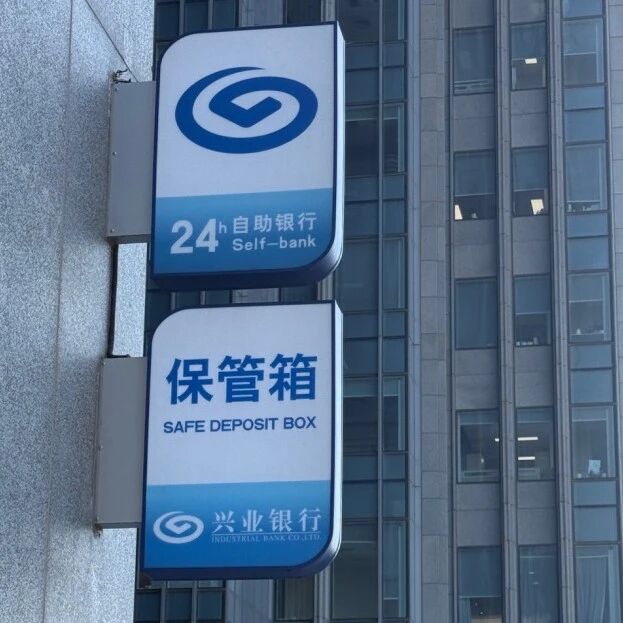
一箱难求!银行“古早”业务突然火了,保管箱为何“爆单”?
券商中国· 2026-01-16 23:38
所谓保管箱服务,其全称为保管箱租赁服务,是银行以出租保管箱形式,代租用人保管贵重物品、有价证券及文件等财物的一项服务业务。券商中国记者从已使用 多年银行保管箱服务的人士处了解到,通常会将重要合同等文件放在保管箱中,"以前也放过金条,在银行买的金条不开封直接就放进去了。" 记者走访多家银行网点发现,目前北京地区保管箱"一箱难求"的情况较为普遍。 "我们这儿现在已经有40多位客户在排队了,但去年只有1位退箱,所以目前也就不再接受新的排队。"工商银行某支行营业部工作人员对记者表示。 近期,银行保管箱"一箱难求"引发关注。券商中国记者近日走访或致电工商银行、农业银行、中国银行、招商银行、民生银行、兴业银行在北京地区的多家分支机 构,仅中国银行一家支行仍有空箱,其余网点均需排队等待或因排队人数过多而不再新增预约。 从排队等待人数来看, 少则三四人,多则三四十人 ;至于等待时长,多数网点工作人员表示无法给出准确时点,因为这一业务已存续很长时间,客户大多为存量 客户,只能等待每年自然退租、腾出空箱;而腾退本身又具有比较强的主观性,因此无法给出明确判断。 "一箱难求"情况普遍 "一般其他网点没有(空箱)了,才会再到我们这儿来 ...
银行业“10万亿俱乐部”扩容至10家,陈国汪详解大中小银行划分标准
Jin Rong Jie· 2026-01-16 09:09
Group 1 - The core viewpoint of the articles highlights that both Pudong Development Bank and CITIC Bank have successfully surpassed the 10 trillion yuan asset threshold, expanding the "10 trillion asset club" in China's banking industry to 10 members, which includes six major state-owned banks and four national joint-stock banks [1] - The total asset scale of the 10 banks now accounts for 60% of the entire banking industry, indicating a growing concentration of resources among leading institutions [1] - Chen Guowang, director of the Financial Industry Research Institute, noted that the significant changes in asset scale among banks have created a clear disparity with the classification standards established in 2015, which need to be updated to better reflect the current industry landscape [2] Group 2 - The classification standards for banks, established in 2015, categorize institutions based on asset size, but the threshold for large banks is no longer applicable as multiple institutions have surpassed the 10 trillion yuan mark [2] - The current classification includes various types of banks, such as policy banks, state-owned commercial banks, joint-stock banks, urban commercial banks, rural small banks, and private banks, indicating a diverse banking landscape [2] - Chen Guowang suggests that the asset scale classification standards should be revised to adapt to the new developments in the banking industry [2]


美国中国总商会举行2026年农历马年颁奖晚宴
Zhong Guo Xin Wen Wang· 2026-01-16 07:38
Group 1 - The event held by the China General Chamber of Commerce (CGCC) in New York on January 15, 2026, gathered around 300 attendees from the political and business sectors of both China and the United States [1][3] - The theme of the evening was "Riding Together, Moving Forward," emphasizing the importance of cooperation and trust in a complex and uncertain world [1][3] - CGCC awarded the "Outstanding Partner Award" to Vornado Realty Trust and "Brand Awards" to SANY Group, Saint-O Group Limited, and Pop Mart for their contributions to strengthening Sino-U.S. economic relations and promoting local community and global economic development [3] Group 2 - Michael Franco, President and CFO of Vornado Realty Trust, highlighted the importance of CGCC as a model for U.S.-China cooperation, emphasizing the foundation of mutual respect and long-term commitment in their partnerships [3] - The event featured a performance by Zhiyuan Robotics from China, showcasing a blend of technology and art, which added a dynamic atmosphere to the evening [3]




中国银行业:企业贷款强劲支撑贷款平稳增长,零售需求持续疲软-China Banks_ Strong corporate lending supports stable loan growth amid persistently weak retail demand
2026-01-16 02:56
Summary of Key Points from the Conference Call Industry Overview - **Industry**: Chinese Banking Sector - **Key Metrics**: Total Social Financing (TSF), Loans, Deposits Core Insights 1. **Total Social Financing (TSF) and Loan Growth**: - New TSF in December 2025 reached Rmb 2.2 trillion, a year-over-year decrease of Rmb 0.6 trillion, primarily due to a decrease in government bond issuance by Rmb 1.1 trillion [1] - Government bond issuance for the full year 2025 increased by Rmb 14 trillion (+23% year-over-year), contributing 39% of new TSF, up from 35% in 2024 [1] - Rmb loans to the real economy decreased by Rmb 16 trillion (-7% year-over-year), contributing 45% of new TSF, down from 53% in 2024, indicating weak demand from the real economy [1] 2. **Loan Composition**: - New loans totaled Rmb 0.9 trillion in December 2025, a year-over-year decrease of Rmb 0.1 trillion [1] - Retail credit saw a net decrease of Rmb 0.1 trillion, with short-term retail loans continuing a downward trend since October [1] - Corporate loans increased by Rmb 1.1 trillion (up Rmb 0.6 trillion year-over-year), attributed to a low base from December 2024 due to local government debt swaps [1] 3. **Credit Growth Dynamics**: - For the full year 2025, corporate loans contributed 95% of new credits, compared to 79% in 2024, with corporate loan growth at 9.1% versus 0.5% for retail loans [1] - Discussions with banks suggest that retail credit demand may improve in 2026 as retail risks are digested and consumption stimulus policies take effect [1] 4. **Deposit Trends**: - Deposits increased by Rmb 1.7 trillion, up Rmb 3.1 trillion year-over-year, primarily due to a smaller decline in non-bank financial institution deposits [5] - Household deposit growth remained robust, with a net increase of Rmb 2.6 trillion (up Rmb 0.4 trillion year-over-year) [5] - M2 growth rate was 8.5% year-over-year, rebounding from 8.0% in November, supported by fiscal spending [5] 5. **Market Conditions**: - M1 growth rate declined to 3.8% year-over-year from 4.9% in November, possibly due to a high base from large-scale corporate debt repayments in December 2024 [5] Additional Important Insights - The banking sector is experiencing a shift with corporate lending becoming the primary driver of credit growth, while retail lending remains subdued due to weak consumption and regulatory impacts [1][5] - The overall economic environment is characterized by a cautious outlook on retail credit demand, with expectations for gradual improvement in the coming year [1]