
BeiGene(06160)

Search documents
智通ADR统计 | 10月1日
智通财经网· 2025-09-30 22:59
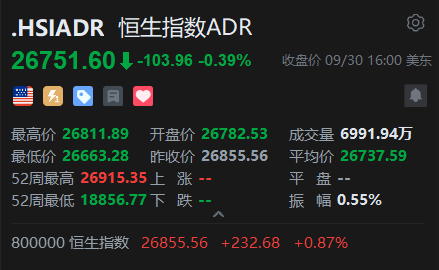
Market Overview - The Hang Seng Index (HSI) closed at 26,751.60, down by 103.96 points or 0.39% as of September 30, 16:00 Eastern Time [1] - The index reached a high of 26,811.89 and a low of 26,663.28 during the trading session, with an average price of 26,737.59 [1] - The 52-week high for the index is 26,915.35, while the 52-week low is 18,856.77, indicating a trading range of 0.55% for the day [1] Blue-Chip Stocks Performance - Major blue-chip stocks mostly declined, with HSBC Holdings closing at HKD 110.477, up by 0.98% compared to the Hong Kong close [2] - Tencent Holdings closed at HKD 662.66, down by 0.05% compared to the Hong Kong close [2] Individual Stock Movements - Tencent Holdings (00700) saw a price increase of HKD 3.00, or 0.45%, with an ADR price of HKD 662.660, which is a decrease of HKD 0.340 compared to its Hong Kong price [3] - Alibaba Group (09988) increased by HKD 3.60, or 2.08%, with an ADR price of HKD 173.866, down HKD 3.134 from its Hong Kong price [3] - HSBC Holdings (00005) rose by HKD 0.60, or 0.55%, with an ADR price of HKD 110.477, up HKD 1.077 from its Hong Kong price [3] - Other notable movements include Kuaishou (01024) increasing by HKD 5.70, or 7.22%, and BYD Company (01211) rising by HKD 1.60, or 1.47% [3]

港股收评:恒科指大涨2.24%,半导体、苹果概念强势,三桶油全天低迷
Ge Long Hui· 2025-09-30 08:29
Market Performance - The Hong Kong stock market indices experienced significant gains, with the Hang Seng Tech Index rising by 2.24%, reaching a new high for the period [1] - In September, the Hang Seng Tech Index accumulated a nearly 14% increase, while the Hang Seng Index and the National Enterprises Index rose by 7.09% and 6.79%, respectively [1][2] Sector Highlights - Major technology stocks saw collective gains, with Kuaishou leading with a rise of over 7%, followed by Alibaba and NetEase with increases of 2% [2][4] - Semiconductor stocks remained strong, with Huahong Semiconductor surging nearly 11% to set a new high [2][8] - Apple-related stocks also saw gains as Apple reportedly notified its supply chain to increase production capacity [2][9] Gold and Copper Stocks - Gold stocks rallied, with Zijin Mining International soaring over 68%, and other gold-related companies also showing strong performance [6] - Copper stocks followed suit, with China Molybdenum rising by 11.84% and Jiangxi Copper gaining over 8% [7] Biopharmaceutical Sector - The biopharmaceutical sector showed positive movement, with WuXi AppTec increasing by over 8% and other companies like Zai Lab and BeiGene also experiencing gains [12][13] Airline Industry - Airline stocks generally rose, with China Eastern Airlines up by 6.73% and both China Southern Airlines and Air China increasing by over 4% [11] - Citic Securities noted strong demand for air travel during the upcoming holidays, suggesting potential for positive performance in the sector [11] Oil and Gas Sector - Oil stocks collectively declined, with China Petroleum falling by 2.75% and other major oil companies also experiencing losses [14] - Reports indicated that OPEC+ plans to increase oil production in November, contributing to the downward pressure on oil prices [14] Gaming and Telecom Stocks - Casino and gaming stocks mostly fell, with Sands China down by 2.25% and other major gaming companies following suit [15] - Telecom stocks also saw declines, with China Telecom and China Mobile both experiencing slight drops [17] Capital Inflows - Southbound capital saw a net inflow of HKD 15.48 billion, indicating strong investor interest in the Hong Kong market [19] Future Outlook - Everbright Securities highlighted the strong overall profitability of Hong Kong stocks, particularly in sectors like internet, new consumption, and innovative pharmaceuticals, suggesting that despite recent gains, valuations remain low and long-term investment potential is high [19]



中邮证券:首予百济神州“买入”评级,在研管线即将进入收获期
Xin Lang Cai Jing· 2025-09-30 06:19
Core Insights - The report from Zhongyou Securities highlights that BeiGene achieved a net profit attributable to shareholders of 450 million yuan in the first half of the year, a significant improvement from a net loss of 2.88 billion yuan in the same period last year [1] - In Q2 2025, the company reported a net profit of 540 million yuan, compared to a net loss of 970 million yuan in the same quarter of the previous year [1] - BeiGene has raised its full-year revenue guidance from the previous range of 4.9-5.3 billion USD to a new range of 5.0-5.3 billion USD, while maintaining its guidance for positive GAAP operating profit for the year [1] Financial Performance - The company reported a substantial turnaround in net profit, moving from a loss of 2.88 billion yuan to a profit of 450 million yuan year-on-year [1] - The Q2 2025 results show a net profit of 540 million yuan, indicating a strong recovery compared to the previous year's loss of 970 million yuan [1] Product Performance - The sales of the drug Zebrutinib showed stable growth quarter-on-quarter, while the drug Dazalutamide experienced rapid market expansion [1] - BeiGene is positioned as a leading company in the innovative drug export sector, showcasing strong global commercialization capabilities [1] Future Outlook - The company is approaching a harvest period for its research pipeline, indicating potential for future growth and profitability [1] - The initial coverage of the company has been rated as "Buy," reflecting positive sentiment towards its future performance [1]
百济神州(688235):泽布替尼环比稳定增长,Q2维持GAAP转正势头
China Post Securities· 2025-09-30 05:33
Investment Rating - The report assigns a "Buy" rating for the company, marking its first coverage [2][9]. Core Insights - The company reported a significant increase in revenue and net profit for the first half of 2025, with total revenue reaching 17.52 billion yuan, a 46% increase year-on-year, and a net profit of 450 million yuan compared to a loss of 2.88 billion yuan in the same period last year [5][6]. - The company has raised its full-year revenue guidance from 4.9-5.3 billion USD to 5-5.3 billion USD, while maintaining its guidance for positive GAAP operating profit for the year [5][6]. Financial Performance - In Q2 2025, the company achieved a revenue of 9.47 billion yuan, a 42.7% increase year-on-year, and a net profit of 540 million yuan, compared to a loss of 970 million yuan in the same quarter last year [5][6]. - The global revenue for the drug Zebutinib reached 1.74 billion USD in the first half of 2025, with a year-on-year growth of 54.7%, driven by strong performance in the US and Europe [6][7]. Product Development - The company is advancing its product pipeline, with several key trials underway, including a Phase III trial for a combination therapy involving Zebutinib [7][8]. - The company anticipates significant data releases in the second half of 2025 for various products, including a KRAS inhibitor and ADCs [8]. Earnings Forecast - The company is projected to achieve revenues of 37.1 billion yuan, 47.15 billion yuan, and 58.18 billion yuan for the years 2025, 2026, and 2027, respectively, with corresponding net profits of 820 million yuan, 4.07 billion yuan, and 8.07 billion yuan [9][11].
百济神州涨2.02%,成交额5.59亿元,主力资金净流出1907.92万元
Xin Lang Zheng Quan· 2025-09-30 02:58
Core Viewpoint - BeiGene's stock price has shown significant volatility and growth in 2023, with a notable increase in revenue and net profit for the first half of the year [2][3]. Stock Performance - As of September 30, BeiGene's stock rose by 2.02% to 307.09 CNY per share, with a trading volume of 5.59 billion CNY and a market capitalization of 473.13 billion CNY [1]. - Year-to-date, BeiGene's stock price has increased by 90.72%, with a 1.17% rise in the last five trading days, a 5.47% decline over the past 20 days, and a 37.62% increase over the last 60 days [2]. Financial Performance - For the period from January to June 2025, BeiGene reported a revenue of 17.518 billion CNY, representing a year-on-year growth of 46.03%, and a net profit attributable to shareholders of 450 million CNY, up 115.63% year-on-year [2]. Shareholder Information - As of June 30, 2025, the number of shareholders for BeiGene was 23,300, a decrease of 3.90% from the previous period, with an average of 4,976 circulating shares per shareholder, an increase of 4.11% [2]. - Among the top ten circulating shareholders, notable changes include an increase in holdings by China Europe Medical Health Mixed A and a decrease in holdings by Wan Jia You Xuan [3].
「一页纸」吃透产业链之:创新药,License-out BD进军全球市场
3 6 Ke· 2025-09-30 00:58
Core Conclusion - The investment logic for innovative drugs indicates that 2025 will mark a new recovery starting point for China's innovative drug industry after a deep adjustment, driven by a "triple resonance" of policy, industry, and capital [3][5][7]. Policy Insights - The Chinese government has explicitly supported innovative drugs in the 2025 Government Work Report, with subsequent policies aimed at high-quality development and commercial insurance for innovative drugs, clearing development obstacles across the entire chain [3][5]. Industry Dynamics - The internationalization process is accelerating, with the License-out model becoming a key path for value realization. In the first three quarters of 2025, upfront payments for licensing transactions reached $5.7 billion, surpassing the total for 2024 and accounting for 23.4% of the global total, indicating a significant enhancement in the global value chain position of Chinese innovative drug assets [5][7]. Capital Market Trends - After a deep adjustment from 2022 to 2024, industry valuations are returning to rational levels, with continuous improvement in the fundamentals of companies. In the first half of 2025, sales revenue from 17 commercialized innovative drug companies grew by 30% year-on-year, with leading companies like Innovent Biologics achieving profitability, marking a phase of value reassessment in the industry [7]. Market Size and Growth - The global innovative drug market is expected to reach $782.6 billion in 2024, accounting for 51.3% of the global pharmaceutical market, and is projected to grow to $1,119 billion by 2029, with a compound annual growth rate (CAGR) of 7.4%, outpacing the overall pharmaceutical market growth of 6.4% [14]. Industry Structure - The innovative drug industry chain is divided into three main segments: upstream (raw materials and support), midstream (R&D and production), and downstream (distribution and payment), forming a complete value chain from scientific discovery to market application [19][21][24]. Business Model Transformation - Chinese innovative drug companies are transitioning from a single reliance on domestic market sales to a dual-driven international strategy of "domestic sales + License-out," marking a new phase where product strength and business model innovation are equally emphasized [28][29]. Revenue Sources - The revenue sources for innovative drug companies are diversifying, including domestic insurance sales, License-out income, and overseas market sales. In 2023, insurance spending on innovative drugs reached 90 billion yuan, maintaining rapid growth since 2019 [28][29][34]. BD Model Growth - The BD (Business Development) model has become a core engine for commercialization, with the total amount of BD transactions involving Chinese innovative drug companies skyrocketing from $5.06 billion in 2020 to $41.76 billion by August 2025, indicating a fundamental shift in the industry's business model [37][38]. Key Segments to Watch - The innovative drug industry includes six key segments: small molecule drugs, large molecule drugs, cell therapy, gene therapy, mRNA vaccines, and precision medicine, each deserving in-depth research [43].




智通ADR统计 | 9月30日





智通财经网· 2025-09-29 22:56
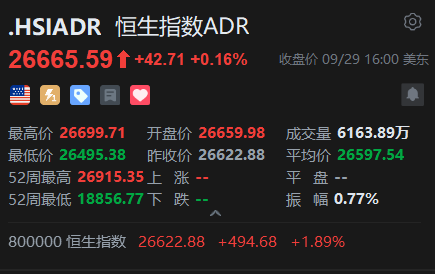
Market Overview - The Hang Seng Index (HSI) closed at 26,665.59, up by 42.71 points or 0.16% on September 29 [1] - The index reached a high of 26,699.71 and a low of 26,495.38 during the trading session, with a trading volume of 61.6389 million [1] - The 52-week high for the index is 26,915.35, while the 52-week low is 18,856.77, indicating a trading range of 0.77% [1] Major Blue-Chip Stocks Performance - HSBC Holdings closed at HKD 109.701, up 0.83% from the previous close [2] - Tencent Holdings closed at HKD 661.446, reflecting a 0.22% increase from the previous close [2] ADR and Stock Price Movements - Tencent Holdings (ADR) increased by 2.48% to HKD 660.000, with an ADR conversion price of HKD 661.446, showing a rise of HKD 1.446 compared to its Hong Kong stock price [3] - Alibaba Group (ADR) rose by 4.14% to HKD 173.400, with an ADR conversion price of HKD 175.032, indicating an increase of HKD 1.632 [3] - HSBC Holdings (ADR) saw a 1.97% increase to HKD 108.800, with an ADR conversion price of HKD 109.701, up by HKD 0.901 [3] - Other notable movements include a 2.66% increase for Trip.com Group and a 3.09% increase for JD.com [3]
特朗普100%药品关税又是“狼来了”?多家上市药企高管回应
经济观察报· 2025-09-26 10:22
Core Viewpoint - The potential imposition of a 100% tariff on imported brand and patented drugs by the Trump administration starting October 1, 2025, has raised concerns among pharmaceutical companies, particularly those in China, leading to a decline in their stock prices [2][3]. Group 1: Impact on Pharmaceutical Companies - The announcement of the tariff has caused significant declines in the stock prices of Chinese pharmaceutical companies, with Heng Rui Pharmaceutical dropping 3.03% in A-shares and 2.23% in Hong Kong shares, and BeiGene falling 4.38% in A-shares and 1.55% in Hong Kong shares [2]. - The Hang Seng Innovative Drug Index (HSIDI) fell by 2.37%, with notable declines in stocks such as Fosun Pharma, which dropped 5.82%, and 3SBio, which fell by 5.34% [3]. - Industry experts suggest that the impact of the tariff on Chinese pharmaceutical companies may be limited, as many are focused on generic drugs and active pharmaceutical ingredients (APIs) [4]. Group 2: Industry Perspectives - Some industry leaders believe that the tariff policy may not be implemented as proposed, citing the high cost of drugs in the U.S. and the potential for political changes in future administrations [4][5]. - Companies like Heng Rui Pharmaceutical indicated that their current exports primarily consist of generics and APIs, suggesting minimal impact from the proposed tariffs [4]. - Other companies, such as Lepu Biopharma, noted that their licensing partnerships would shield them from significant effects [5]. Group 3: U.S. Policy Context - The Trump administration has previously threatened to impose tariffs on imported drugs, with discussions around a 200% tariff and subsequent smaller tariffs leading to a potential increase over time [6][7]. - Major multinational pharmaceutical companies have responded to the tariff threats by committing to significant investments in U.S. manufacturing, with companies like Novartis and Roche pledging $23 billion and $50 billion respectively over the next five years [8].
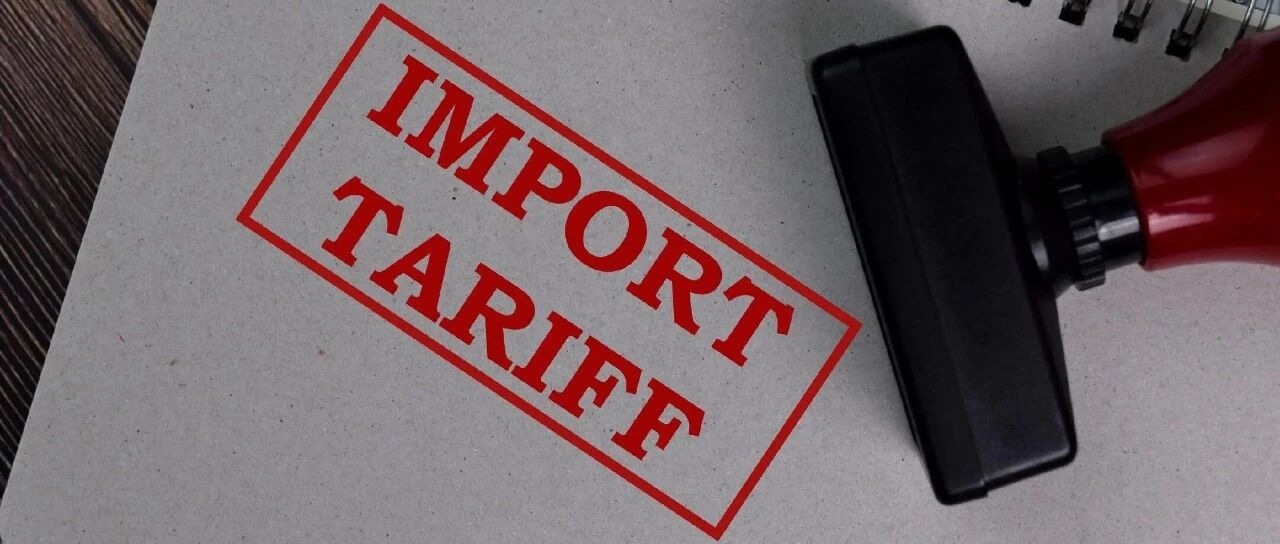
特朗普100%药品关税又是“狼来了”?多家上市药企高管回应
Sou Hu Cai Jing· 2025-09-26 10:21
Core Viewpoint - The potential implementation of a 100% tariff on all brand-name and patented drugs by the U.S. government starting October 1, 2025, unless companies are building drug manufacturing plants in the U.S. [2] Group 1: Market Reaction - Pharmaceutical stocks in multiple markets, including China, Japan, and South Korea, experienced a collective decline following the announcement [3] - Specific declines included a 3.03% drop in Hengrui Medicine (600276.SH/01276.HK) A-shares and a 2.23% drop in Hong Kong shares, while BeiGene (ONC.NASDAQ/06160.HK/688235.SH) saw a 4.38% drop in A-shares and a 1.55% drop in Hong Kong shares [3] - The Hang Seng Innovative Drug Index (HSIDI) fell by 2.37%, with notable declines in stocks such as Fosun Pharma (600196.SH/02196.HK) down 5.82% and 3SBio (01530.HK) down 5.34% [4] Group 2: Industry Perspectives - Industry experts suggest that Chinese pharmaceutical companies aiming to expand internationally need to consider the potential implementation of this policy and explore possible solutions [5] - Some executives believe that the high cost of drugs in the U.S. may hinder the realization of this policy [5] - Hengrui Medicine's executive noted that the impact of the potential policy would be limited as their exports mainly consist of generic drugs and APIs [5] - Other companies, such as Lepu Biopharma, indicated that their licensing partnerships would not be significantly affected [5] - Investors pointed out that this is a political issue that could change with future administrations, suggesting that while there may be short-term negative impacts, the long-term effects may not be significant [5] Group 3: Historical Context - Historically, pharmaceuticals have been excluded from tariff lists, but President Trump has repeatedly threatened to impose tariffs on imported drugs this year [5] - The Trump administration initiated a "232 investigation" under the Trade Expansion Act of 1962, which allows for tariffs if imports threaten national security [6] - Previous statements from Trump indicated plans for escalating tariffs on imported drugs, with initial small tariffs leading to potential increases up to 250% [7] Group 4: Investment Commitments - In response to the tariff threats, several multinational pharmaceutical companies have committed to investing in U.S. manufacturing facilities, with significant investments announced by companies like Novartis, Roche, Sanofi, and AstraZeneca [8] - Notably, Novartis and Roche pledged $23 billion and $50 billion respectively over five years, while AstraZeneca committed to a $50 billion investment by 2030 [8]
百济神州(688235) - 港股公告:2025中期报告
2025-09-26 10:15
2025 中期報告 BeOne Medicines Ltd. (根據瑞士法律註冊成立的公司) Cancer has no borders. Neither do we. 目錄 | 公司資料 | 2 | | --- | --- | | 前瞻性陳述 | 4 | | 管理層討論及分析 | 7 | | 其他資料 | 28 | | 未經審核中期簡明綜合經營表 | 82 | | 未經審核中期簡明綜合全面虧損表 | 83 | | 未經審核中期簡明綜合資產負債表 | 84 | | 未經審核中期簡明綜合股東權益報表 | 86 | | 未經審核中期簡明綜合現金流量表 | 87 | | 未經審核中期簡明綜合財務報表附註 | 89 | | 釋義 | 124 | | 技術詞彙 | 128 | 1 百濟神州有限公司 • 2025 中期報告 公司資料 董事會 執行董事 歐雷強先生 (主席兼首席執行官) 非執行董事 王曉東博士 獨立非執行董事 Olivier Brandicourt博士 Margaret Han Dugan博士 Michael Goller先生 Anthony C. Hooper先生 Ranjeev Krishana先生 A ...