NIO(09866)

Search documents
砸三四十亿造芯!蔚来芯片公司获超22亿融资,估值近百亿
Guo Ji Jin Rong Bao· 2026-02-27 12:39
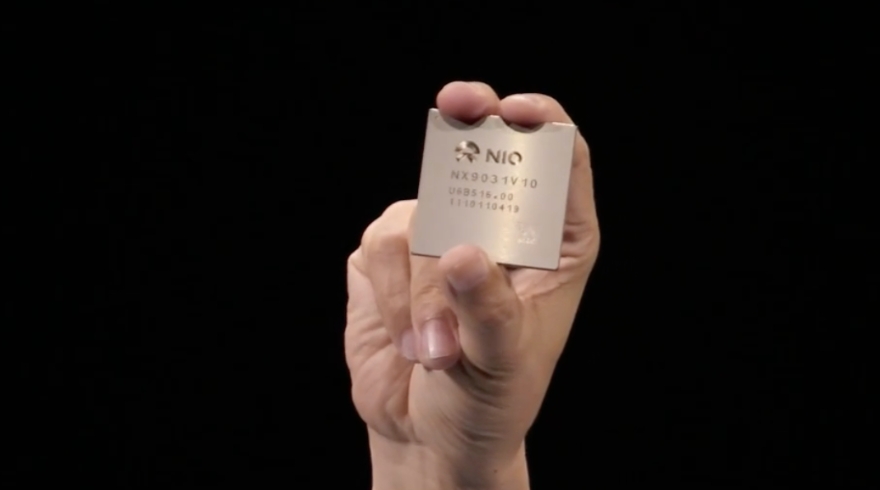
Core Insights - NIO's chip subsidiary, Anhui Shenji Technology Co., Ltd., has completed its first round of equity financing, raising over 2.2 billion yuan, with a post-investment valuation nearing 10 billion yuan [1] - The funds raised will primarily be used for the research and promotion of high-end automotive-grade chips, supporting NIO's long-term strategies in autonomous driving and embodied intelligence [1] - Shenji Company aims to break the monopoly of foreign chip manufacturers in the automotive core chip sector, addressing issues such as supply chain instability and high procurement costs [3] Financing and Ownership Structure - After the financing round, NIO will retain a 62.7% controlling stake in Shenji Company, while investors will hold a combined 27.3% stake, and the remaining 10% will be held by management incentive plans [3] - The development cost of the Shenji NX9031 chip is estimated to be between 3 billion to 4.5 billion yuan, equivalent to the cost of building 1,500 battery swap stations [1] Product Development and Market Strategy - The Shenji NX9031 chip has been shipped in over 150,000 units since its production began in 2024 and is currently installed in all NIO brand models [2] - Shenji Company plans to expand its product offerings beyond automotive applications to include chips for embodied robotics and general artificial intelligence solutions [3] Industry Context and Competition - The competition in the domestic automotive chip self-research sector is intensifying, with other major players like BYD, Xpeng Motors, and Li Auto also developing their own chips [4] - The trend of automotive companies spinning off their chip businesses and attracting external capital is seen as a necessary evolution for independent development and commercialization of chip technologies [3]

华为小米同日胜诉商誉案,蔚来李斌卷入乌龙风波
Sou Hu Cai Jing· 2026-02-27 10:43
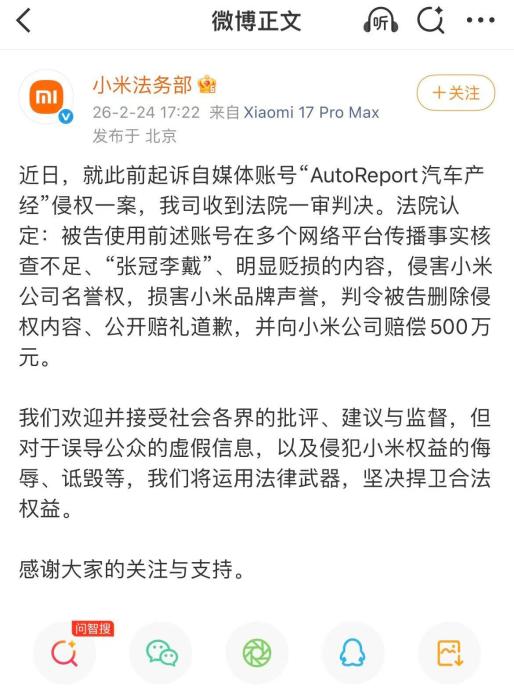
Group 1 - Huawei and Xiaomi both achieved significant legal victories in their respective defamation cases against self-media accounts, showcasing their commitment to protecting brand reputation [3][5] - Huawei's case against "Racing Star Ice Cream" resulted in a court ruling that required the account to publicly apologize and pay 300,000 yuan for defamation [3] - Xiaomi's case against "AutoReport Automotive Economics" led to a compensation of 5 million yuan, marking a new high in corporate reputation protection [5][7] Group 2 - The case involving Xiaomi has stirred considerable public interest, particularly due to the background of the self-media account "AutoReport Automotive Economics," which is linked to Beijing Yiche Interactive Advertising Co., Ltd [10][12] - Li Bin, the founder of NIO, is implicated in the controversy as he holds a 99% stake in the parent company of the self-media account, leading to public speculation about his involvement [12][18] - Despite the connections, Li Bin's actual control over the account is outdated information, as he divested from Yiche in 2020, highlighting issues with the timeliness of corporate governance information [16][18]


李斌的易车往事
Zhong Guo Xin Wen Wang· 2026-02-27 09:54
Core Viewpoint - The recent legal case involving Xiaomi and the self-media account "AutoReport Automotive Economics" has sparked significant discussion in the automotive industry, particularly regarding the connections to Li Bin, the founder of NIO and former CEO of Yiche [1][8]. Group 1: Legal Case and Implications - Xiaomi's legal department announced that the self-media account "AutoReport Automotive Economics" was ordered to pay 5 million yuan for infringing on Xiaomi's reputation [1]. - The parent company of the involved account, Beijing Yiche Information Technology Co., Ltd., has Li Bin listed as a shareholder, leading to speculation about his involvement [1]. - NIO representatives clarified that Li Bin had transferred all related shares in 2020 and has no connection to the account in question [1]. Group 2: Li Bin's Entrepreneurial Journey - Li Bin is recognized for his significant contributions to the automotive internet sector, having founded Yiche in 2000, which initially aimed to provide management software and marketing services for car dealers [4]. - Despite facing challenges during the internet bubble burst in 2001-2002, Li Bin's perseverance led Yiche to become a pioneer in the automotive internet field, expanding into various business areas [4][5]. - Yiche went public on the New York Stock Exchange in November 2010, becoming the largest automotive media company in China at that time [5]. Group 3: Transition to Electric Vehicles - Following Yiche's listing, Li Bin founded NIO in 2014, aiming to enter the electric vehicle manufacturing sector amid industry changes [6]. - NIO faced initial skepticism and challenges in financing, but it has since been recognized for its rapid growth and innovation in the electric vehicle market [8]. - As of February 2025, NIO announced a forecasted adjusted operating profit of 700 million to 1.2 billion yuan for the fourth quarter, marking its first quarterly profit since inception [10]. Group 4: Industry Challenges and Responses - The automotive industry is currently facing intense competition and scrutiny, with NIO being a victim of misinformation and malicious attacks, as highlighted by the recent legal case [11]. - NIO's legal department has actively sought to combat black public relations and misinformation campaigns, offering rewards for credible leads [11][12]. - Li Bin has emphasized the significant investment required for automotive research and development, contrasting it with the relatively low cost of black public relations efforts, which pose a substantial threat to the industry [12].
蔚来全新ES8第7万辆新车交付
Bei Jing Shang Bao· 2026-02-27 07:49
Core Insights - NIO's new ES8 has achieved a significant milestone with the delivery of its 70,000th vehicle in Wenzhou on February 27 [1] - In January 2026, the retail sales of the new ES8 reached 17,645 units, marking it as the best-selling large SUV and the top-selling model in the price range above 400,000 yuan for two consecutive months [1] Company Performance - The delivery of the 70,000th ES8 indicates strong demand and successful market penetration for NIO [1] - The sales figures for January 2026 highlight NIO's competitive position in the large SUV segment and among premium vehicles [1]
蔚来全新ES8完成第70,000台交付 1月零售销量超17000台
Feng Huang Wang· 2026-02-27 06:48
Core Viewpoint - NIO announced the delivery of its 70,000th all-new ES8 in Wenzhou, indicating a strong market presence and demand for electric SUVs, particularly in the large SUV segment priced above 400,000 yuan [1] Group 1: Sales Performance - The all-new ES8 achieved retail sales of 17,645 units in January 2026, securing the title of best-selling large SUV and best-selling model above 400,000 yuan for two consecutive months [1] - The delivery of the 60,000th all-new ES8 was completed in 134 days, showcasing rapid sales growth since its launch [1] Group 2: Product Specifications - The all-new ES8, launched on September 20 last year, is priced between 406,800 yuan and 446,800 yuan, with a rental option ranging from 298,800 yuan to 338,800 yuan [1] - The vehicle measures 5280mm in length and has a wheelbase of 3130mm, making it one of the largest electric SUVs in the Chinese market [1] - It features a Skyline screen, a floating central control screen, and the latest upgraded NOMI system [1] Group 3: Technical Features - The new ES8 is built on a 900V high-voltage architecture, equipped with dual motors that provide a peak power of 520kW and a peak torque of 700N m [1] - The vehicle can accelerate from 0 to 100 km/h in 3.97 seconds and has a braking distance from 100 km/h to 0 of 34.9 meters [1] - It comes standard with a 102kWh 4C battery pack, offering a CLTC range of 635 km and an energy consumption of 16.6 kWh per 100 km [1]

国都港股操作导航:每日投资策略:港股高开低收,恒指收跌 384 点-20260227
Guodu Securities Hongkong· 2026-02-27 05:52
Group 1: Market Overview - The Hang Seng Index opened high but closed down 384 points, or 1.44%, at 26,381 points, with significant selling pressure observed throughout the day [3][4] - The market saw a total turnover of 25.93 billion HKD, with net outflow from northbound trading amounting to 736.6 million HKD [3] Group 2: Company Performance - NIO's subsidiary GeniTech secured over 2.257 billion RMB in investment from Chinese investors, maintaining a 62.7% controlling stake post-transaction [12] - New World Department Store China reported a 3.93 times increase in interim profit to 15.327 million HKD, despite a 12.44% decrease in revenue to 536 million HKD [13] - Chow Tai Fook Jewelry Group announced a 15.26% increase in interim profit to 1.334 billion HKD, with revenue rising 5.9% to 12.827 billion HKD [14] - Baidu reported a 65.68% decrease in net profit to 1.782 billion RMB for the fourth quarter, with total revenue declining 4.06% to 32.74 billion RMB [15] Group 3: Industry Developments - Hong Kong Exchanges and Clearing is exploring the development of a multi-asset tokenization platform, contingent on technological capabilities and market demand [7] - The People's Bank of China issued a notice to enhance the management of RMB cross-border interbank financing, aiming to improve transparency and stability in offshore RMB liquidity [10] - The Hong Kong government plans to inject 10 billion HKD into the Hong Kong-Shenzhen Innovation and Technology Park and the New Territories Science Park to bolster public-private partnerships [9]




蔚来芯片子公司获超22亿元融资,成立8个月估值超百亿
Huan Qiu Lao Hu Cai Jing· 2026-02-27 03:41
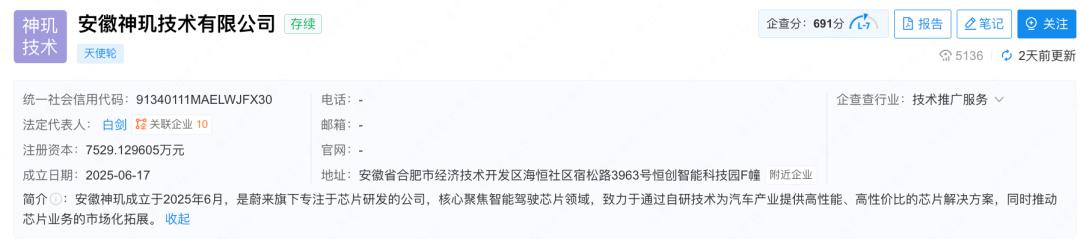
Core Insights - NIO's subsidiary, Anhui Shenqi Technology Co., Ltd., has completed its first round of equity financing, raising over 2.2 billion yuan, with a post-financing valuation nearing 10 billion yuan [1] - The financing attracted several industry capital and leading institutions, including Hefei Guotou, Hefei Haiheng, IDG Capital, and others [1] - The funds will support the continuous research and promotion of high-end, competitive chip products, aiding NIO's long-term strategies in autonomous driving and embodied intelligence [1] Financing Details - After the financing, NIO retains a 62.7% stake in Anhui Shenqi, maintaining absolute control, while external investors hold a combined 27.3% [1] - The remaining 10% is held by entities involved in a management equity incentive plan [1] Company Operations - Anhui Shenqi is the first company in China to develop 5nm automotive-grade chips and achieve large-scale commercialization, with core products covering smart driving, vehicle computing, and vehicle networking [2] - Since its production began in 2024, the company has shipped over 150,000 units, successfully deploying them across NIO's entire vehicle lineup [2] Leadership and Expertise - The legal representative of Anhui Shenqi is Bai Jian, NIO's Senior Vice President and head of smart hardware, who has extensive experience in hardware and chip industries [2] - Bai Jian previously held significant roles at OPPO and Xiaomi before joining NIO in 2020 [2] - Zhang Danyu, a co-founder and director, has a strong background in SoC chip and processor design, having worked at Huawei HiSilicon before joining NIO [2]
蔚来确认子公司引入战略投资22.57亿元,智能驾驶芯片业务加速发展
Ju Chao Zi Xun· 2026-02-27 03:06
Group 1 - NIO Inc. and its subsidiary GeniTech Co., Ltd. have entered into a final agreement with several Chinese investors to raise a total of 2.257 billion RMB through the issuance of new shares [2] - GeniTech is primarily responsible for NIO's smart driving chip-related business, and after the investment transaction, NIO will retain a 62.7% controlling stake in GeniTech [2] - The investors will collectively hold 27.3% of GeniTech's shares, while entities holding shares for the management incentive plan will hold 10.0% [2] Group 2 - NIO delivered a record 326,028 new vehicles in 2025, representing a year-on-year increase of 46.9% [3] - By the end of 2025, NIO's cumulative vehicle deliveries approached one million, reaching 997,592 units [3] - NIO expects to report an adjusted operating profit of between 700 million and 1.2 billion RMB in the fourth quarter of 2025, marking the first time the company achieves positive adjusted operating profit in a single quarter since its inception [3]
融资22亿,安徽冲出一家AI芯片独角兽,蔚来李斌是背后老板
3 6 Ke· 2026-02-27 02:29
Core Viewpoint - NIO's chip subsidiary, Anhui Shenji, has completed its first round of equity financing, raising over 2.2 billion yuan, with a post-financing valuation nearing 10 billion yuan, supported by various investors [1]. Group 1: Financing and Valuation - Anhui Shenji's first round of financing exceeded 2.2 billion yuan, with a post-financing valuation close to 10 billion yuan [1]. - Investors in this round include Hefei Guotou, Hefei Haiheng, IDG Capital, and others [1]. Group 2: Company Overview - Anhui Shenji, established in June 2025, is the first company in China to develop 5nm automotive-grade chips and achieve large-scale commercialization [1][2]. - The company focuses on high-performance, cost-effective chip solutions for the automotive industry, particularly in smart driving [2]. Group 3: Leadership and Expertise - Key personnel include Chairman Li Bin, General Manager Bai Jian, and Chip Design Head Zhang Danyu, all of whom have significant experience in the tech and automotive sectors [3]. - Li Bin is the founder and CEO of NIO, while Bai Jian has a background in hardware management at OPPO and Xiaomi [3]. Group 4: Product Development - The self-developed smart driving chip, Shenji NX9031, has successfully completed its tape-out and is based on 5nm technology, featuring over 50 billion transistors and a 32-core CPU [5]. - Since its production in 2024, over 150,000 units of the NX9031 chip have been shipped and deployed across NIO's entire vehicle lineup [6]. Group 5: Future Plans - Following this financing, Anhui Shenji plans to launch next-generation high-performance chips and expand into emerging fields such as embodied robotics and AGI solutions [6].
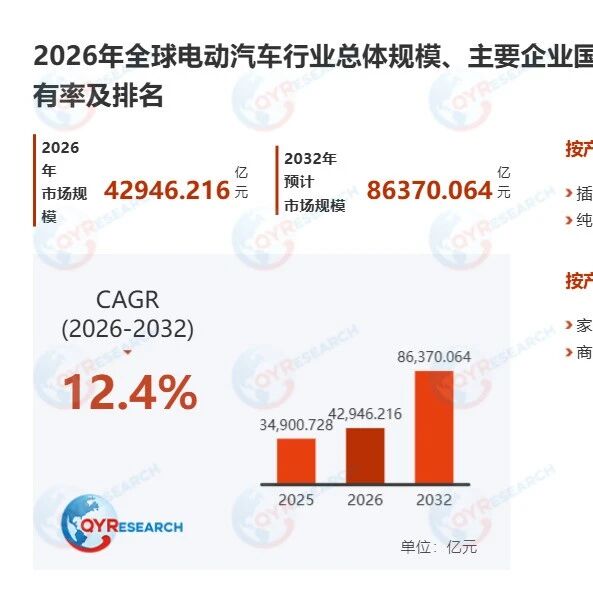
电动汽车市场洞察,全球前20强生产商排名及市场份额
QYResearch· 2026-02-27 02:23
Core Viewpoint - Electric vehicles (EVs) are essential for decarbonizing the transportation sector, offering higher energy conversion efficiency, instant torque, lower noise, and zero tailpipe emissions [2] Market Size - The global electric vehicle market is projected to reach $1,269.9 billion by 2032, with a compound annual growth rate (CAGR) of 12.35% over the coming years [3] Market Landscape - Major global electric vehicle manufacturers include BYD, Tesla, BMW, Volkswagen, Li Auto, Seres Group, Geely, Mercedes-Benz, Volvo, SAIC Motor, Hyundai-Kia, Stellantis, Great Wall Motors, Renault, Chery, NIO, Toyota, GAC Group, Xpeng, Leap Motor, Xiaomi, Ford, and BAIC Group [5][6] - The top five manufacturers hold approximately 47% of the market share [6] Industry Development Opportunities - Advancements in battery technology, thermal management systems, 800V high-voltage architecture, and vehicle electronic platforms provide opportunities for performance enhancement and cost reduction, allowing electric vehicles to penetrate a broader price range [11] - The integration of vehicles with energy systems is expanding application boundaries, promoting a shift from one-time vehicle sales to ongoing service models [11] - The acceleration of electrification in light commercial vehicles, logistics, shared mobility, and emerging markets creates new growth paths for companies with scalable manufacturing, cost control, and localized operations [11] Key Obstacles - Uneven progress in charging network construction across regions affects user experience and convenience [10] - Price fluctuations of key battery materials, supply chain geopolitical risks, and an immature recycling system challenge cost control and long-term stability [10] - Consumer expectations regarding range performance, low-temperature operation, maintenance costs, and second-hand value, along with subsidy policy reductions and electricity price volatility, slow market penetration [10]