
NIO(09866)

Search documents
港股异动 | 汽车股今日普涨 行业有望迎来金九银十行情 反内卷利好强产品周期头部主机厂
智通财经网· 2025-09-30 07:28
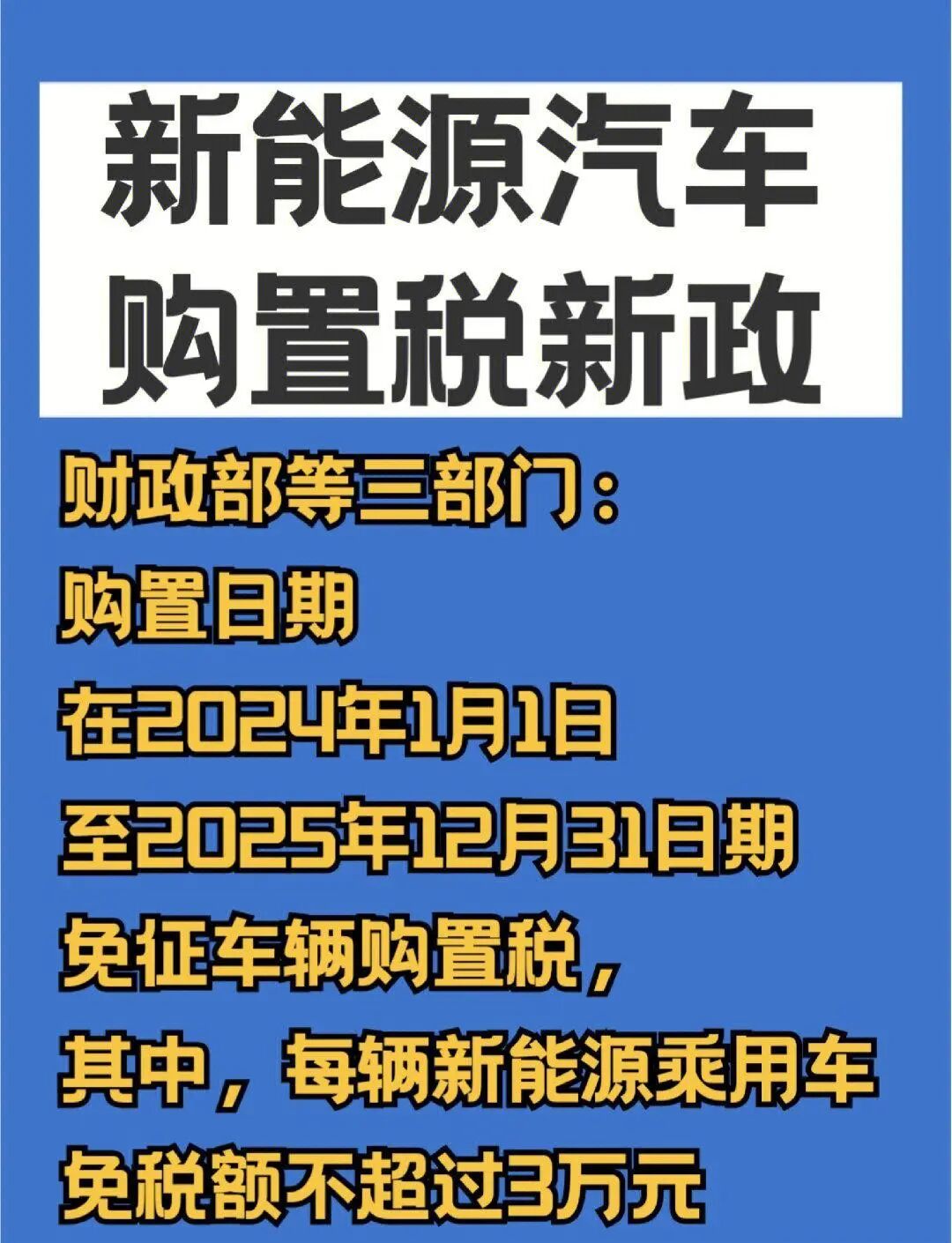
消息面上,9月28日,江苏省宣布暂停汽车置换更新补贴,同步对报废更新补贴实行"先领资格再申 报"的限额管理。其余政策延续省市均改为"先领先得、领完即止"模式。同时,补贴退坡背景下,除汽 车置换补贴外,新能源汽车车辆购置税政策的调整成为行业关注焦点。 中信建投指出,随着市场高低切换,下半年国补落地、行业反内卷和新能源购置税退坡预期背景下,行 业有望迎来"金九银十"行情。该行指出,当前汽车行业反内卷利好强产品周期头部主机厂,自主高端品 牌仍是蓝海市场,2026年将是30万元以上赛道加速自主渗透率提升的一年,新车产品力及品牌成为胜负 手。 智通财经APP获悉,汽车股今日普涨,截至发稿,吉利汽车(00175)涨4.03%,报19.38港元;小鹏汽车- W(09868)涨3.56%,报93.1港元;蔚来-SW(09866)涨2.6%,报57.15港元;理想汽车-W(02015)涨2.59%, 报101.1港元。 ...



汽车股今日普涨 行业有望迎来金九银十行情 反内卷利好强产品周期头部主机厂
Zhi Tong Cai Jing· 2025-09-30 07:27
消息面上,9月28日,江苏省宣布暂停汽车置换更新补贴,同步对报废更新补贴实行"先领资格再申 报"的限额管理。其余政策延续省市均改为"先领先得、领完即止"模式。同时,补贴退坡背景下,除汽 车置换补贴外,新能源汽车车辆购置税政策的调整成为行业关注焦点。 中信建投(601066)指出,随着市场高低切换,下半年国补落地、行业反内卷和新能源购置税退坡预期 背景下,行业有望迎来"金九银十"行情。该行指出,当前汽车行业反内卷利好强产品周期头部主机厂, 自主高端品牌仍是蓝海市场,2026年将是30万元以上赛道加速自主渗透率提升的一年,新车产品力及品 牌成为胜负手。 汽车股今日普涨,截至发稿,吉利汽车(00175)涨4.03%,报19.38港元;小鹏汽车-W(09868)涨3.56%, 报93.1港元;蔚来-SW(09866)涨2.6%,报57.15港元;理想汽车-W(02015)涨2.59%,报101.1港元。 ...
港股午后涨幅扩大,科指涨近2%,恒指涨0.7%
Mei Ri Jing Ji Xin Wen· 2025-09-30 07:21
每经AI快讯,9月30日,港股午后涨幅扩大,科指涨近2%,恒指涨0.7%;科指成分股中,华虹半导体大 涨超11%,快手涨超6%,哔哩哔哩涨近6%,商汤涨近5%,中芯国际、小鹏汽车、蔚来涨超3%,阿里 巴巴涨超2%。 ...


收评:A股9月收官!创业板指本月涨超12% 科创50指数本月涨超11%创近4年新高
Xin Lang Cai Jing· 2025-09-30 07:10
Core Insights - The A-share market showed a fluctuating upward trend in September, with the ChiNext Index rising over 12%, reaching a three-year high, and the Sci-Tech 50 Index increasing over 11%, marking a nearly four-year high [1] Market Performance - All three major indices closed higher for the month, with the Shanghai Composite Index up 0.52%, the Shenzhen Component Index up 0.35%, and the ChiNext Index remaining flat [1] - The total trading volume in the Shanghai and Shenzhen markets reached 2.18 trillion yuan, an increase of 20 billion yuan compared to the previous trading day [1] Sector Highlights - Key market hotspots included the semiconductor industry, robotics, and energy storage sectors [1] - In the semiconductor sector, stocks such as Demingli doubled in price, while companies like SMIC, Huahong, and Zhangjiang Hi-Tech reached historical highs [1] - In the robotics sector, Shoukai Co. experienced a remarkable performance with 11 consecutive trading limits in 12 days [1] - The energy storage sector saw companies like CATL and Sungrow hitting historical highs, with CATL's total market capitalization surpassing Kweichow Moutai in mid-month [1] Overall Market Sentiment - The market displayed active fluctuations in various themes, with non-ferrous metals and storage chip sectors leading in gains, while sectors like liquor and large financials faced declines [1]


蔚来城商业广场十一开业,德州商业格局再迎新变化
Qi Lu Wan Bao Wang· 2025-09-30 06:53
Group 1 - The core viewpoint of the article highlights the opening of the NIO City Commercial Plaza in Dezhou, which is expected to bring significant changes to the local commercial market and has garnered widespread attention from citizens [1] Group 2 - The commercial landscape in Dezhou has been dominated by major players such as Debai Group, which operates several supermarkets and shopping centers, and the foreign brand Yinzuo Mall, indicating a competitive environment [2] - The entry of Wanda Plaza has increased foot traffic for its supermarket brand, Shenghao Supermarket, but the recent closure of Shenghao Supermarket and the potential takeover by Hema Fresh illustrates the intense competition and market turnover [2][3] - Smaller chain supermarkets like Shangchu Supermarket and Chunfeng Supermarket are thriving by being community-oriented and flexible, contributing to a diverse commercial ecosystem in Dezhou [2] Group 3 - The entry of NIO City Commercial Plaza presents both opportunities and challenges; the vibrant consumer market and the exit of Shenghao Supermarket create openings for new entrants, but established players like Debai Group maintain strong customer loyalty [3] - To succeed, NIO City Commercial Plaza must differentiate itself through brand mix, consumer experience, and innovative services, as traditional shopping and dining models may no longer attract consumers [3] Group 4 - The opening of NIO City Commercial Plaza reflects the ongoing development of commercial real estate in Dezhou, providing citizens with new shopping and leisure options while potentially stimulating regional commercial vitality and upgrading local services [4] Group 5 - The introduction of new commercial entities is seen as a test and stimulus for the existing market, with the opening celebration of NIO City Commercial Plaza featuring an extended 8-day event designed to engage the local community [5]
港股新能源车企股午后回升,吉利汽车涨超3%
Mei Ri Jing Ji Xin Wen· 2025-09-30 06:47
Group 1 - The core viewpoint of the article highlights a rebound in Hong Kong's new energy vehicle stocks, with notable increases in share prices for companies like Geely Automobile, NIO, Xpeng Motors, Li Auto, and BYD [1] Group 2 - Geely Automobile's stock rose by over 3% during the afternoon trading session [1] - Other new energy vehicle stocks, including NIO, Xpeng Motors, Li Auto, and BYD, also experienced upward movement in their share prices [1]
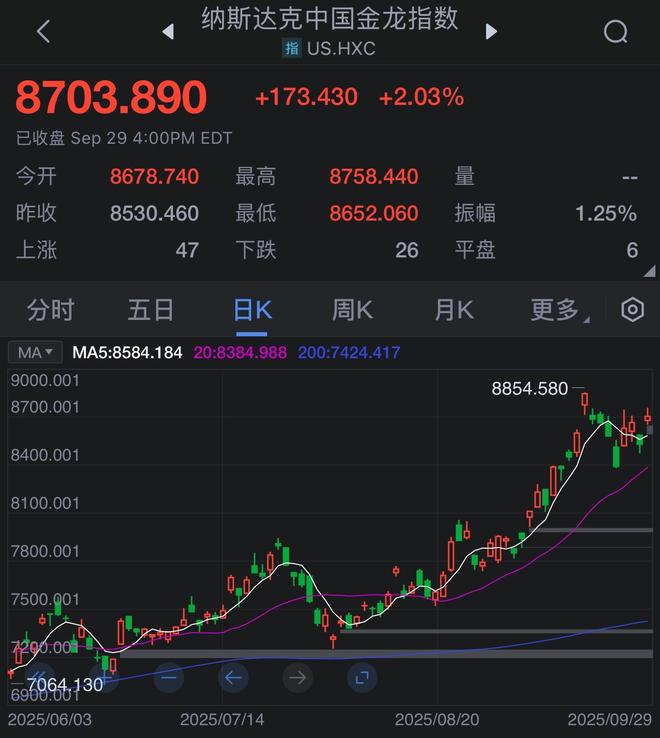
周一热门中概股多数上涨 阿里巴巴涨超4%



Xin Lang Cai Jing· 2025-09-29 20:32
Core Viewpoint - The majority of popular Chinese concept stocks experienced an increase on Monday, with the Nasdaq Golden Dragon China Index rising by 2.03% [1] Group 1: Stock Performance - Xunlei saw a significant increase of over 9% [1] - Bilibili, Alibaba, New Oriental, Sohu, and Youdao each rose by over 4% [1] - Li Auto and JD.com increased by over 3% [1] - Baidu, NetEase, and NIO rose by over 2% [1] - XPeng experienced an increase of over 1% [1]

新能源车最后的疯狂?补贴退坡的末班车经济学
3 6 Ke· 2025-09-29 11:37
Core Insights - The Chinese electric vehicle (EV) market is experiencing unprecedented demand as consumers rush to place orders before the expiration of tax exemptions and subsidies by the end of 2025 [1][3][9] - Major automakers like Li Auto, AITO, and NIO are witnessing significant order volumes, with Li Auto's i6 receiving over 20,000 orders within hours of its launch, and NIO's new ES8 exceeding its production capacity of 40,000 orders [1][10] - The impending reduction of purchase tax exemptions and subsidies starting January 1, 2026, is driving consumers to make quick purchasing decisions, leading to a surge in orders [3][6][9] Group 1: Policy and Market Dynamics - The purchase tax exemption for electric vehicles has been in place for ten years, increasing the market penetration from 0.3% to over 50% [3][6] - Starting in 2026, the purchase tax will shift from full exemption to a 50% reduction, with a maximum exemption of 15,000 yuan per vehicle, significantly increasing the cost of purchasing EVs [5][6] - Local subsidies are also being reduced, with many cities offering limited-time incentives that can be combined with the national tax exemption, further motivating consumers to buy before the deadline [6][9] Group 2: Consumer Behavior and Market Response - The urgency created by the policy changes has led to a "last-minute rush" in the EV market, with consumers eager to secure their orders before the benefits diminish [9][10] - Automakers are employing marketing strategies such as limited-time price guarantees and delivery commitments to enhance consumer urgency [11][14] - Despite the impressive order numbers, there are concerns about the authenticity of these figures, as many orders are small deposits that can be easily canceled, leading to inflated statistics [15][17] Group 3: Supply Chain and Delivery Challenges - The surge in orders is putting immense pressure on the supply chain and delivery systems of automakers, with key components like batteries and chips facing increased demand [17][18] - Companies like NIO and Tesla are struggling to meet order demands, leading to potential delays in vehicle deliveries [17][18] - NIO has introduced a policy to compensate customers for tax differences if their orders are delayed into 2026, highlighting the challenges faced by manufacturers in fulfilling orders on time [18][20] Group 4: Consumer Risks and Market Outlook - Consumers face risks related to the timing of subsidies and potential delays in vehicle delivery, which could lead to financial losses if not managed properly [22][25] - The increase in complaints related to delivery delays and false advertising indicates that the rapid sales growth is straining after-sales service capabilities [25][26] - The current market dynamics reflect a combination of policy incentives, product advancements, and consumer psychology, creating both opportunities and challenges for the EV industry [25][26]
汽车代工的“进与退”
Zhong Guo Qi Che Bao Wang· 2025-09-29 06:22
Core Viewpoint - The automotive industry in China is transitioning away from the OEM (Original Equipment Manufacturer) model, as companies like NIO and XPeng are moving towards independent production capabilities, reflecting a shift in market dynamics and production strategies [2][5][8]. Group 1: Industry Trends - NIO and JAC's joint venture, Jianglai Company, has been dissolved as NIO has achieved its own vehicle manufacturing qualifications, indicating a move towards self-sufficiency in production [2][5]. - The automotive industry is witnessing a divergence in the OEM model, with domestic companies moving away from it while international firms, like XPeng, are leveraging OEM partnerships to enhance local production in foreign markets [2][4]. - The collaboration between XPeng and Magna in Austria aims to accelerate the localization of electric vehicle production in Europe, highlighting the importance of established manufacturing capabilities in entering new markets [3][4]. Group 2: Historical Context and Evolution - Initially, many Chinese automotive startups opted for the OEM model to overcome stringent production qualifications and to quickly establish market presence [3][4][8]. - The early partnerships, such as XPeng with Haima and NIO with JAC, allowed these companies to leverage existing production systems and supply chains to achieve rapid market entry [4][8]. - As companies like NIO and XPeng have matured and obtained necessary production qualifications, they are now focusing on building their own manufacturing capabilities, marking a significant shift in their operational strategies [5][8]. Group 3: Future Outlook - Experts suggest that while the OEM model was a necessary step for early-stage companies, the future of the automotive industry will likely see a reduction in reliance on OEM partnerships as companies enhance their production capabilities [5][7]. - The Chinese automotive market is expected to continue evolving, with a potential need for policy adjustments to allow for a balanced approach to OEM partnerships, enabling companies to choose the most suitable production strategies for their growth [11][12]. - The emphasis on self-manufacturing is driven by the need for quality control and brand reputation, as consumer perception of vehicle quality is closely tied to the manufacturing source [7][8].

汽车周报:正视挑战,国补额度压力下的新矛盾-20250928
Shenwan Hongyuan Securities· 2025-09-28 12:44
Investment Rating - The report maintains a "Positive" outlook on the automotive industry, highlighting potential investment opportunities in high-quality component manufacturers and strong vehicle manufacturers [4]. Core Insights - The report emphasizes that technological advancements are igniting market sentiment, and there is a strong interest in high-quality component manufacturers as well as new vehicle models that are expected to capture orders during the upcoming holiday season [4]. - The report notes that the automotive industry is facing challenges due to insufficient national subsidies, which may pressure future sales [4]. - The report provides an update on the automotive market, indicating that retail sales of passenger cars reached 508,000 units in the 38th week of 2025, with a month-on-month increase of 12.89% and a year-on-year increase of 10.29% [2]. Market Situation Update - The total transaction value of the automotive industry for the week was 851.59 billion yuan, reflecting a week-on-week decrease of 7.71% [4]. - The automotive industry index closed at 8106.63 points, with no change over the week, underperforming compared to the Shanghai Composite Index, which rose by 1.07% [4][19]. - The report highlights that 122 stocks in the automotive sector rose while 168 fell, with the largest gainers being Xincidian, Kebo Da, and Tiangong Co., which increased by 25.0%, 22.6%, and 21.0% respectively [23]. Key Events - The report discusses significant events such as the launch of the new electric SUV i6 by Li Auto, which is priced starting at 249,800 yuan and features advanced driving assistance systems [7][52]. - The report mentions the delivery commencement of the new AITO M7, which has a monthly production capacity of over 30,000 units and has received strong market demand with over 230,000 pre-orders [11][12]. - The report also highlights the launch of the Shangjie H5, which targets the mainstream market with a price range of 159,800 to 199,800 yuan and features advanced driving assistance technology [14][41]. Investment Recommendations - The report recommends focusing on domestic leading manufacturers such as NIO, Xiaomi, Xpeng, and Li Auto, as well as component manufacturers with strong performance and overseas expansion capabilities [4]. - It suggests monitoring companies involved in the integration of state-owned enterprises, such as SAIC Motor and Dongfeng Motor [4]. - The report identifies potential investment opportunities in component manufacturers like Fuyao Glass, New Spring, and others that have strong growth prospects and are involved in robotics [4].
