XPENG-W(09868)

Search documents
小鹏汽车法务部:公司充电站电被盗刷 部分案件已成功侦破
Feng Huang Wang· 2025-12-18 07:31
Group 1 - The core issue involves illegal activities related to electricity theft at Xiaopeng Motors' charging stations, where criminals have used illegal devices and fake user accounts to commit these acts [1][4] - Xiaopeng Motors has reported these illegal activities to law enforcement and has successfully resolved some cases, with key suspects apprehended for theft and fraud [1] - Official documents indicate that the electricity theft case meets the criteria for criminal prosecution, and the main facts of the case have been established [4]

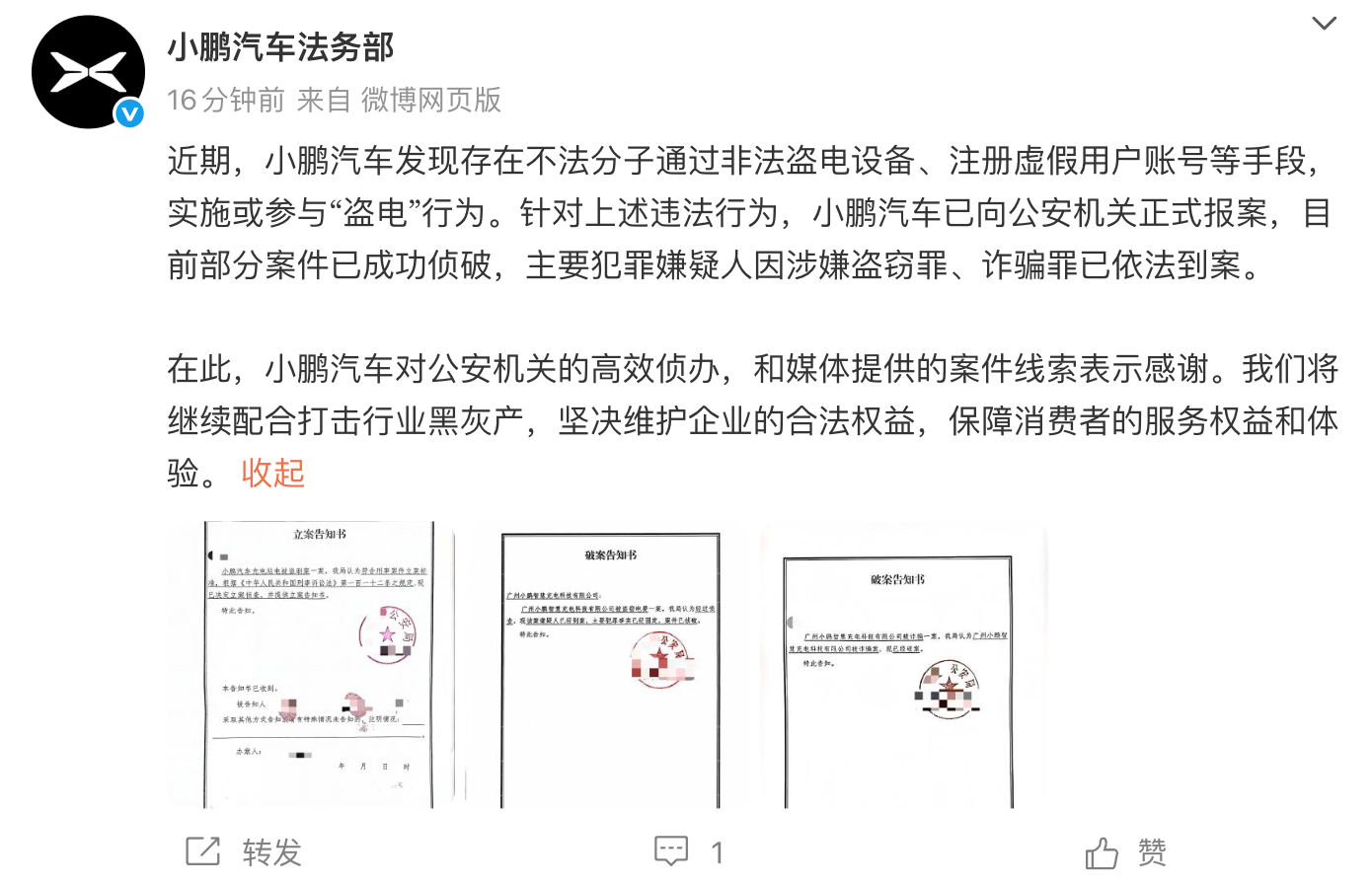
小鹏汽车法务部:已就“盗电”违法行为报案,部分案件已成功侦破
Xin Lang Cai Jing· 2025-12-18 06:50
Group 1 - The core issue involves illegal activities related to electricity theft, where individuals have used unauthorized devices and fake user accounts to commit these acts [1] - Xiaopeng Motors has reported these illegal activities to law enforcement and has successfully assisted in the arrest of key suspects involved in theft and fraud [1] - The company expresses gratitude to the police for their efficient handling of the case and acknowledges the media's role in providing leads [1] Group 2 - The police have confirmed the resolution of the electricity theft case involving Guangzhou Xiaopeng Smart Charging Technology Co., with the main suspects apprehended [3] - The case has been officially documented, indicating that the primary criminal facts have been established and the case is considered solved [4]
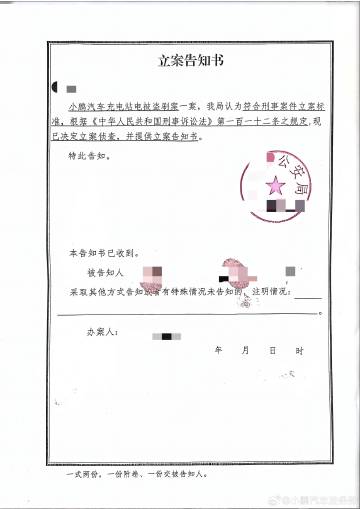
创业板、深成指跌超1%,沐曦下跌,中金、东兴、信达证券大涨,军工、存储芯片午后拉升,恒科指跌超1%,焦煤 、焦炭期货涨超5%
Sou Hu Cai Jing· 2025-12-18 06:45
A股指数表现分化,沪指红盘震荡,创业板指跌超1%。AI医疗、商业航天、大消费、军工等板块领涨;海南、电池、券商、工程机械等板块领 跌。中金公司拟换股吸收合并东兴证券与信达证券,东兴证券涨停,中金涨超5%,信达证券涨4.55%,沐曦下跌3.85%。 国债期货午盘全线上涨,30年期主力合约涨0.37%报112.400元,10年期主力合约涨0.06%报108.075元,5年期主力合约涨0.03%报105.860元,2年期 主力合约涨0.01%报102.448元。 14:18 焦煤期货主力合约、焦炭期货主力合约均涨超5%,铁矿石期货主力合约涨近2%。 12月18日,A股市场早间走势分化,截至发稿,沪指涨0.2%,深成指跌1.04%,创业板跌1.82%。盘面上,指数黄白二线分化,个股涨多跌少,沪 深京三市超3600股飘红,上午半天成交1.06万亿。具体来看,商业航天概念再度爆发,中国卫星、上海沪工等多股涨停。AI医疗概念走势活跃, 华人健康、塞力医疗等封板。零售、IP经济等消费股拉升,百大集团6连板,德艺文创等涨停。下跌方面,券商股高开低走,中银证券、中信建投 跌超3%。 港股低开,恒指跌0.44%,报25357.69 ...




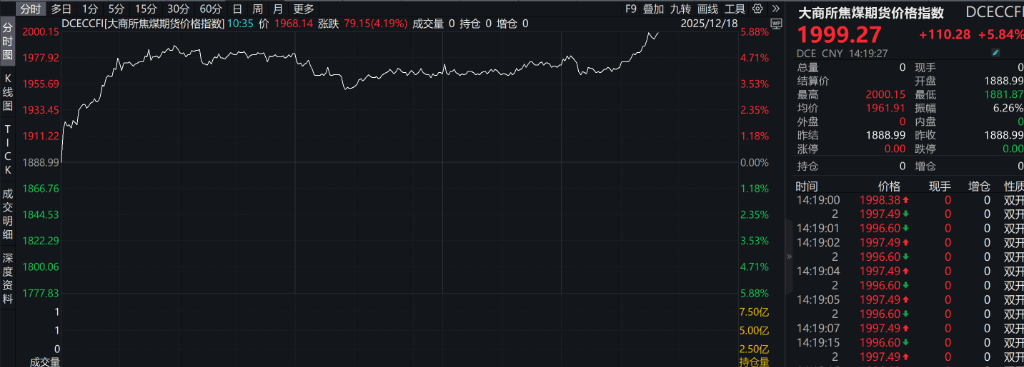
小鹏汽车重拳打击“盗电”黑灰产:已报案,坚决维护企业与用户权益
Xin Lang Cai Jing· 2025-12-18 06:39
Core Viewpoint - Xiaopeng Motors has reported illegal activities involving theft of electricity through unauthorized devices and fake user accounts, leading to a formal police report and successful arrests of key suspects for theft and fraud [1][6][8]. Group 1: Company Actions - Xiaopeng Motors has filed a formal complaint with law enforcement regarding the theft of electricity [1][6]. - The company is actively cooperating with authorities to combat illegal activities in the industry and protect its legal rights and consumer service experiences [1][6][8]. Group 2: Legal Developments - The police have determined that the case meets the criteria for criminal investigation and have initiated formal proceedings [3][8]. - A notification has been issued confirming that the main suspects have been apprehended and the case has been resolved [4][9].
港股止跌,整个早盘都维持在中轴附近窄幅盘整




Ge Long Hui· 2025-12-18 04:56
Group 1 - The Hong Kong stock market has stabilized, maintaining a narrow range around the mid-axis during the morning session, with slight gains in consumer and technology sectors, while the internet and healthcare sectors experienced a downturn [1] - The consumer sector showed signs of recovery, with a slight increase of 0.32% by midday, driven by stocks such as Li Ning up 4.37%, Shenzhou International up 2.26%, and several others like Stone Pharmaceutical, Lao Pu Gold, WuXi Biologics, and Pop Mart all rising over 1% [3] - The technology sector also saw a minor increase of 0.14% by midday, with Meituan up 1.21%, while major players like JD Group, Alibaba, Tencent Holdings, and SMIC posted slight gains; however, BYD and NetEase faced minor declines [3] Group 2 - The healthcare sector had a lackluster performance, with Stone Pharmaceutical up 1.9% and WuXi Biologics up 1.68%, while other stocks like BeiGene, Innovent Biologics, and 3SBio saw slight increases; in contrast, companies like CanSino Biologics, China Biologic Products, JD Health, and Hansoh Pharmaceutical experienced minor declines [3]
「二次创业」大戏拉开帷幕
3 6 Ke· 2025-12-18 03:31
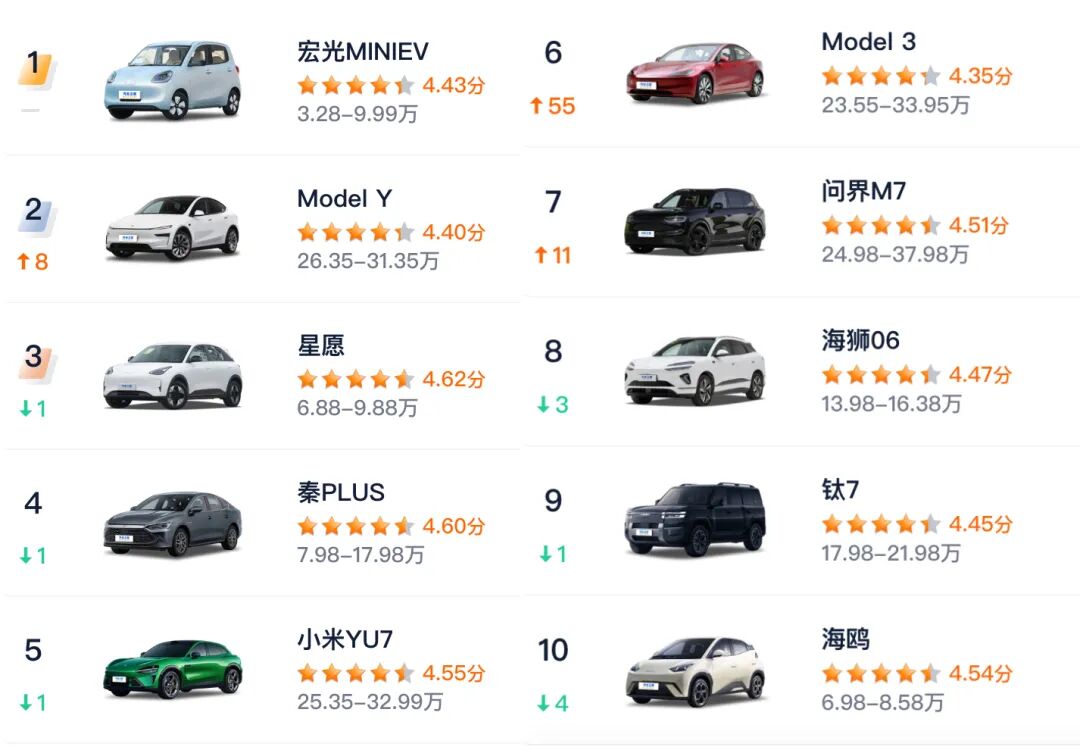
Core Insights - The rapid growth of the new energy vehicle market in China has led to a significant division in the automotive market, with distinct trends emerging in the price segments below and above 200,000 yuan [1][2][5] Market Trends - In November, vehicles priced above 200,000 yuan occupied four spots in the sales rankings, with the Model Y selling over 47,000 units and the AITO M7 selling over 25,000 units [1] - Conversely, vehicles priced below 100,000 yuan also claimed four spots, with the Hongguang MINIEV selling over 56,000 units and the BYD Seagull selling over 21,000 units [2] - The market has bifurcated into segments below 100,000 yuan and above 200,000 yuan, leaving the 100,000-200,000 yuan segment relatively quiet [2][5] Sales Performance - The top-selling models in the overall automotive market for November included the Hongguang MINIEV, Model Y, and others, with significant sales figures indicating a preference for lower-priced vehicles [4] - The sales figures for electric vehicles showed a notable increase, with pure electric vehicles selling 7,155 units and plug-in hybrids 28,213 units [4] Consumer Behavior - The shift in consumer behavior reflects a change from purchasing vehicles out of necessity to buying based on emotional appeal, particularly in the above 200,000 yuan market [7] - The lower-priced market is seeing a mix of consumption downgrade and upgrade, with traditional brands like Geely and BYD dominating this segment, while new entrants struggle to penetrate [7][8] Competitive Landscape - New energy vehicle brands such as Xiaomi and Hongmeng Zhixing are gaining traction, with Xiaomi achieving over 40,000 units sold in November, marking its entry into the top three for the first time [9][10] - Traditional automakers are facing challenges in the above 200,000 yuan market, where they need to enhance their overall offerings to regain competitive advantage [19][20] Industry Evolution - The automotive industry is undergoing a "second entrepreneurship," with traditional manufacturers transitioning from fuel vehicles to smart new energy vehicles, while new entrants are establishing themselves in the market [20]





港股早评:三大指数低开,科技股集体下跌,中金公司复牌高开7%
Ge Long Hui· 2025-12-18 01:29
Core Viewpoint - Oracle's significant decline has triggered a collective drop in major tech stocks, leading to a more than 400-point drop in the Nasdaq index [1] Group 1: Market Reaction - The Hong Kong stock market opened lower after a brief rebound, with the Hang Seng Index down 0.54%, the Hang Seng China Enterprises Index down 0.62%, and the Hang Seng Tech Index down 1.11% [1] - Major tech stocks experienced a collective downturn, with Xiaomi and Alibaba both falling by 2% [1] Group 2: Sector Performance - Software stocks, automotive stocks, and duty-free concept stocks also declined, with XPeng Motors down 2.3% and China Duty Free Group down 2% [1] - In contrast, some sectors showed resilience, with CICC's stock rising 7% as it plans to merge with Dongxing Securities and Xinda Securities, while biopharmaceutical and high-speed rail infrastructure stocks saw partial gains [1]
可靠吗?苹果考虑在印度封装iPhone芯片;腾讯升级大模型研发架构,姚顺雨出任首席AI科学家;小米发布最新MiMo大模型
雷峰网· 2025-12-18 00:45
Key Points - Apple is in talks with Indian semiconductor manufacturers to assemble and package iPhone chips in India, marking a shift from just final assembly to more complex semiconductor packaging [4][5] - Tencent has upgraded its large model research architecture, establishing new departments to enhance its AI capabilities, with a former OpenAI researcher appointed as chief AI scientist [7][8] - Xiaomi's new model, MiMo-V2-Flash, was launched by "genius girl" Luo Fuli, achieving a top 2 ranking among global open-source models [12] - MiniMax and Zhiyu have passed the Hong Kong Stock Exchange hearing, aiming to become the first publicly listed large model companies [21][22] - Neta Auto has established a new company named "Qianhe Auto" for restructuring purposes amid financial difficulties [24][25] - OPPO's executive shared a humorous experience of meeting a fan while undergoing dental surgery, highlighting the company's engagement with consumers [27][28] - Meta is planning layoffs in its metaverse department, reallocating resources towards AI smart glasses due to better market performance [44][45] - BYD has commenced comprehensive testing of its L3 autonomous driving technology, having completed over 150,000 kilometers of road validation [34] - Xiaomi plans to invest approximately 400 billion yuan in R&D in 2026, as part of a larger 2 trillion yuan investment over the next five years [40][41] - iRobot has entered bankruptcy and is being acquired by its main manufacturer, Sunkwan Group, which will retain the iRobot brand and continue operations in China [39][40]




小米自研大模型MiMo-V2-Flash正式开源上线;腾讯混元世界模型1.5发布丨AIGC日报
创业邦· 2025-12-18 00:07
Group 1 - Xiaomi has officially launched its self-developed AI model Xiaomi MiMo-V2-Flash, marking a new language foundation towards the Agent era [2] - Xiaopeng Motors' chairman He Xiaopeng believes there is currently no AI bubble and sees significant future opportunities in the AI market [2] - Tencent has released its HY WorldPlay model 1.5, allowing users to create interactive worlds through text descriptions or images [2] - OpenAI announced that Apple Music will soon integrate with ChatGPT, expanding its application ecosystem [2]
马斯克预测某车企:必死;“天才少女”罗福莉首秀,称小米开源模型全球前二;好特卖回应新加盟叫停;玛莎拉蒂APP遭下架丨邦早报
创业邦· 2025-12-18 00:07
Group 1 - Elon Musk predicts Ford's electric strategy will lead to its demise, citing a $19.5 billion asset impairment and the halt of F-150 Lightning production as key factors [3] - Tesla's market value surpassed $1.6 trillion, with a single-day increase of $48.5 billion, reflecting investor confidence in electric vehicle technology [3] - Xiaomi's new model, MiMo-V2-Flash, has been released and is capable of deep thinking and real-time data retrieval, indicating advancements in AI capabilities [18] Group 2 - Luckin Coffee is reportedly considering acquiring Blue Bottle Coffee, although Blue Bottle has not confirmed this information [13] - OpenAI is in talks with Amazon for a potential investment of at least $10 billion, which could elevate OpenAI's valuation to over $500 billion [14] - Databricks has completed over $4 billion in Series L funding, raising its valuation to $134 billion, indicating strong investor interest in data and AI sectors [17] Group 3 - BYD has initiated comprehensive testing for L3 autonomous driving in Shenzhen, completing over 150,000 kilometers of real-world validation [18] - The Chinese music theater market is projected to generate over 1.8 billion yuan in ticket revenue by 2025, with a growing number of performances and audience engagement [22] - The foldable smartphone panel shipment is expected to grow by 46% in 2026, driven by Apple's first foldable device, with Samsung Display likely to capture over 50% market share [22]