BIDU(09888)

Search documents
深夜,“万物普涨”,仿佛暴跌从未发生
Feng Huang Wang Cai Jing· 2025-10-20 23:22
Group 1: Market Performance - The three major U.S. stock indices rose over 1%, with the Dow Jones up 1.12% to 46,706.58 points, the S&P 500 up 1.07% to 6,735.13 points, and the Nasdaq up 1.37% to 22,990.54 points, driven by easing trade tensions and a significant increase in Apple’s stock price [1] - European blue-chip stocks also saw gains, with a 1.3% rise to a record closing high, led by Infineon and German defense stock RHM, which both increased over 5% [1] - Major technology stocks generally rose, with Apple increasing by 3.94%, while Nvidia saw a slight decline of 0.32% [1] Group 2: Gold Market Dynamics - The proportion of gold in global central bank reserves has surpassed 30%, while the dollar's share has decreased to 40%, indicating a historic shift in reserve asset allocation [2] - Deutsche Bank estimates that if gold prices exceed $5,790 per ounce, gold and the dollar will each account for 36% of global reserves, marking a significant milestone [2] - A recent survey by the World Gold Council revealed that 43% of central banks plan to increase their gold holdings, up from 29% the previous year, suggesting a strong long-term support for gold prices [2]


深夜,“万物普涨”,仿佛暴跌从未发生
凤凰网财经· 2025-10-20 22:44
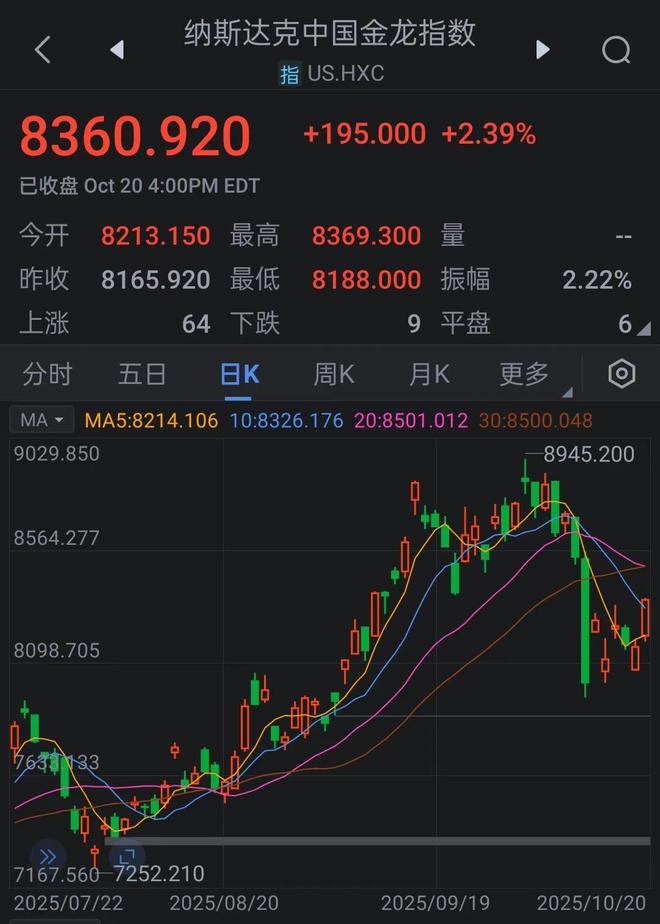
Market Performance - Major U.S. stock indices rose over 1%, with the Dow Jones up 1.12% to 46,706.58 points, the S&P 500 up 1.07% to 6,735.13 points, and the Nasdaq up 1.37% to 22,990.54 points, driven by easing trade tensions and a surge in Apple stock [1] - European blue-chip stocks increased by 1.3%, reaching a record closing high, with Infineon and German defense stock RHM leading gains over 5% [1] Technology Stocks - Large tech stocks generally saw gains, with Apple rising 3.94%, Microsoft up 0.63%, Google up 1.28%, Amazon up 1.61%, Meta up 2.13%, and Tesla up 1.85% [2] - Chinese concept stocks also experienced a collective rise, with the Nasdaq Golden Dragon China Index up 2.39%, Alibaba up 3.84%, and NIO up 4.59% [2] Gold Market Dynamics - The proportion of gold in global foreign exchange reserves has surpassed 30%, while the dollar's share has decreased to 40% [3] - Deutsche Bank estimates that if gold prices exceed $5,790 per ounce, gold and the dollar will each represent 36% of global reserves, marking a historic shift [3] - A recent survey indicated that 43% of central banks plan to increase gold holdings, up from 29% the previous year, suggesting a long-term support for gold prices [3]



热门中概股周一普涨 阿里涨超3%


Xin Lang Cai Jing· 2025-10-20 20:39
Core Viewpoint - Chinese concept stocks experienced a significant rally on Monday, with the Nasdaq Golden Dragon China Index rising over 2% [1] Group 1: Stock Performance - Alibaba's stock increased by over 3% [1] - Pinduoduo's stock rose by over 2% [1] - NetEase's stock gained over 3% [1] - JD.com's stock went up by over 2% [1] - Ctrip, Baidu, and Tencent Music each saw an increase of over 1% [1] - Beike's stock rose by over 2% [1] - NIO's stock surged by over 4% [1]
恒生科技大爆发,工商、石油紧随其后;内银行、内房地相对弱势

Ge Long Hui· 2025-10-20 20:08
Core Viewpoint - The Hong Kong stock market experienced a strong rally, with the Hang Seng Index closing up by 2.42%, driven primarily by gains in technology and oil sectors [1][3]. Group 1: Market Performance - The Hang Seng Technology Index opened significantly higher and saw a peak increase of 3.9% during the day, ultimately closing up by 3% [3]. - Notable performers in the technology sector included NetEase, which surged by 5.18%, and Alibaba, which rose by 4.86%. Over ten stocks, including JD Health, SMIC, Baidu, NIO, and Tencent, recorded gains exceeding 3% [3]. - The oil sector also showed strong performance, with the index closing up by 2.54%. China Petroleum led the gains with a rise of 5.05%, followed by China National Offshore Oil Corporation (CNOOC) at 2.31%, and Sinopec at 1.49% [3]. Group 2: Weak Sectors - The real estate and banking sectors underperformed, with the real estate index closing up by only 0.62% and the banking index by 1.04%. Both sectors experienced a rebound after initial declines but could not maintain momentum [3]. - Specific companies in the real estate sector, such as Longfor Group and Jianfa International Group, saw declines of 1.63% and 1.61%, respectively. In the banking sector, Chongqing Rural Commercial Bank fell by 1.51% [3].
园区行走进中关村软件园,首都学子沉浸体验创新生态与科创文化
Xin Jing Bao· 2025-10-20 11:27
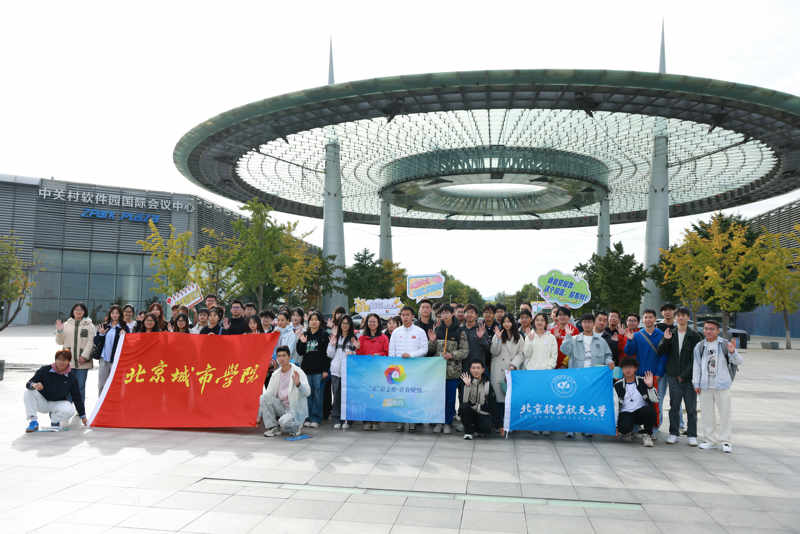
Group 1 - The event on October 17 involved over sixty students and teachers from Beijing University of Aeronautics and Astronautics and Beijing City University visiting the Zhongguancun Software Park, highlighting the integration of technology and culture in the area [1][2][4] - Zhongguancun Software Park is recognized as a high-end specialized park within the national independent innovation demonstration zone, housing over 700 renowned IT companies and global R&D centers, focusing on areas such as artificial intelligence, quantum technology, cloud computing, and big data [5][8] - The park serves as a vibrant hub for innovation, showcasing the latest technological advancements and their applications in various fields, which is crucial for students' understanding of the intersection between their studies and real-world technology [7][9] Group 2 - Students experienced hands-on applications of high-tech innovations, such as AI voice imitation technology and virtual imaging, which enhanced their understanding of the practical implications of their academic knowledge [4][5][6] - The event provided students with insights into how emerging technologies can address societal issues, such as the use of technology to assist elderly individuals in case of falls, demonstrating the potential for technology to improve quality of life [7][8] - The integration of AI in various fields, including biomedicine, was emphasized, with students exploring the potential for AI to enhance their future careers and research opportunities [8][9]



百度崔玲玲:中国AI专利占全球60%
Guan Cha Zhe Wang· 2025-10-20 10:49
Core Insights - China has become the world's largest holder of artificial intelligence (AI) patents, accounting for 60% of the global total, indicating a robust innovation environment in the AI sector [1] - The rapid growth of AI patents, particularly in generative AI, reflects China's enhanced intellectual property capabilities, with 14,000 new patents filed globally in 2023, a 17.5-fold increase over the past decade [1][2] - Major Chinese companies like Baidu and Tencent are leading in AI patent applications, with Baidu holding 283 patents related to large models, the highest globally [3] AI Patent Landscape - By April 2025, China's total AI patent applications are projected to reach 1.576 million, representing 38.58% of the global total [2] - In the generative AI sector, China has filed over 38,000 patents from 2014 to 2023, six times more than the United States [2] - The top ten patent applicants include Tencent, Ping An, Baidu, and others, with China holding 11 out of the top 20 global AI patent applicants [2] Innovation and Governance - The Chinese government has been proactive in enhancing intellectual property protection and utilization to support AI innovation, with recent updates to patent examination guidelines [3][4] - A flexible governance approach is adopted to balance interests, ensuring that AI technologies can develop without excessive restrictions [4] - The Shanghai AI Industry Association has established a rights protection station and a "green channel" for services, promoting collaboration in intellectual property governance [4] Challenges Ahead - Despite leading in patent numbers, China faces challenges in core technologies, with the U.S. maintaining an advantage in foundational algorithms and AI chips [5] - The disparity in R&D investment is notable, with U.S. companies projected to invest $67.2 billion in AI R&D in 2024, significantly surpassing Chinese investments [5] - There are concerns regarding the quality of patents, as many may not translate into practical productivity or core competitiveness [5]
尾盘异动,301158,20%涨停!000626,“天地天板”→
证券时报· 2025-10-20 10:12
Market Overview - A-shares experienced a significant rally on October 20, with the ChiNext Index surging nearly 4% to surpass 3000 points, while the Hang Seng Index rose over 2% [1] - The Shanghai Composite Index closed up 0.63% at 3863.89 points, and the Shenzhen Component Index increased by 0.98% to 12813.21 points, with the ChiNext Index gaining 1.98% to 2993.45 points [1] - Total trading volume in the Shanghai and Shenzhen markets reached 175.15 billion yuan, a decrease of over 20 billion yuan compared to the previous day [1] Sector Performance Coal and Gas Sector - The coal and gas sectors saw substantial gains, with multiple stocks hitting the daily limit, including Shaanxi Black Cat, Antai Group, and Zhengzhou Coal Electricity [12] - Daya Energy achieved six limit-up days in the past seven trading days, indicating strong momentum in the coal sector [12][14] - Recent data shows that coal prices have risen significantly, with a cumulative increase of 34 yuan/ton since October, driven by seasonal demand fluctuations [14] CPO Concept - The CPO concept stocks surged, with Yuanjie Technology rising over 14% and Cambridge Technology hitting the daily limit [16] - The demand for 1.6T optical modules is expected to increase, with industry forecasts adjusting total demand from 1 million to 2 million units due to rapid growth in AI training and inference network bandwidth [18] Robotics Sector - The humanoid robotics concept became active again, with stocks like Zhuhai Gree and Ruineng Technology hitting the daily limit [20] - Zhiyuan Robotics launched a new generation of industrial-grade interactive robots, showcasing significant advancements in technology and market potential [22] Notable Stocks - Deshi Co., Ltd. (301158) saw a sharp increase, closing with a 20% limit-up, with significant trading volume concentrated in the last 15 minutes of trading [5][8] - Yuanjie Technology and Cambridge Technology were highlighted for their strong performance in the CPO sector, indicating investor interest in technology-driven growth [16][18]




今年的诺贝尔经济学奖,藏着一个选股模型
雪球· 2025-10-20 08:12
Core Viewpoint - The article discusses the "Competition-Innovation Inverted U-Curve" model, which illustrates the relationship between competition and innovation, suggesting that moderate competition fosters the highest level of innovation, while excessive competition can hinder it [4][6][9]. Group 1: Competition and Innovation in Internet Industry - The article highlights that companies like Tencent, which hold a monopolistic position, may not necessarily excel in innovation, as they often wait for others to validate new business models before entering the market [11][12]. - In contrast, Alibaba operates in a moderately competitive environment, which has driven its innovation in cloud computing and financial services, allowing it to maintain a strong market position despite challenges [16][17]. - The analysis confirms the "Competition-Innovation Inverted U-Curve," where moderate competition leads to the strongest innovation incentives [17]. Group 2: Comparison of Lithium Battery and Photovoltaic Industries - The article explains that CATL, a leader in the lithium battery sector, remains in the middle of the competition-innovation curve, allowing it to maintain growth, while photovoltaic leaders are positioned on the right side, facing intense competition that hampers innovation [21][23]. - Key differences between lithium batteries and photovoltaic technology include customer sensitivity to pricing and the nature of their respective supply chains, which affect their cash flow characteristics and market concentration [23][24]. - CATL's strong cash flow and stable profit margins enable significant R&D investment, while photovoltaic companies struggle with high debt and low margins, leading to a focus on defensive innovation rather than groundbreaking advancements [24][25]. Group 3: Innovation Impact Function - The article introduces the "Innovation Impact Function," which indicates that the benefits of innovation are greater for monopolistic firms compared to those in highly competitive markets [32][34]. - In industries with high concentration, such as lithium batteries, innovations can lead to substantial profit increases, while in more competitive sectors like photovoltaics, the benefits of innovation are quickly eroded due to rapid imitation [36][37]. - The article concludes that the choice of industry significantly influences a company's ability to innovate and maintain profitability, emphasizing the importance of selecting industries with steeper innovation impact functions for long-term investment success [37].


从“工具”到“搭子”,AI搜索走向个性化
Bei Jing Ri Bao Ke Hu Duan· 2025-10-20 07:57
Group 1 - The search industry is undergoing unprecedented transformation challenges and opportunities due to the wave of artificial intelligence, with Baidu Search aiming to evolve from a mere tool to a "universal partner" for users [1] - Baidu Search has upgraded its Wenxin Assistant AIGC creation capabilities, now supporting AI-generated content in eight modalities, including images, videos, music, and podcasts, with daily AIGC content generation exceeding 10 million [1] - Baidu has launched the industry's first open real-time interactive digital human agent, featuring high realism, low latency, real-time interaction, and emotional recognition capabilities [1] Group 2 - The new generation of search products is evolving towards "personalized, individualized, and companion-like" experiences, moving beyond traditional efficiency and functionality [2] - Baidu's Wenxin Assistant currently features 28 different personas, allowing users to interact with AI in a more emotionally engaging manner, such as using a specific zodiac character to address personal issues [2]
IDC:预计到2029年全球智能眼镜市场出货量将突破4000万台
智通财经网· 2025-10-20 05:49
Core Insights - The global smart glasses market is projected to reach 4.065 million units shipped in the first half of 2025, representing a year-on-year growth of 64.2%, driven by advancements in AI technology, supply chain optimization, and the entry of major players into the ecosystem [1][3] - By 2029, global shipments of smart glasses are expected to exceed 40 million units, with China's market share steadily increasing and a compound annual growth rate (CAGR) of 55.6% from 2024 to 2029, the highest globally [1] Market Overview - In the first half of 2025, Chinese smart glasses manufacturers shipped over 1 million units, capturing 26.6% of the global market share, with a year-on-year growth of 64.2% [3] - Despite the dominance of international brands in the consumer market, Chinese manufacturers are gaining significant ground through aggressive marketing and channel expansion [3] - The supply chain advantages of Chinese firms in optical modules, sensors, and assembly are facilitating their overseas expansion, particularly in North America, Europe, and Southeast Asia [3] Competitive Landscape - The smart glasses market is entering a phase of restructuring, characterized by intense competition among major players and innovative breakthroughs by tech companies in niche segments [5] - The audio and audio-capturing glasses segment saw shipments surpassing 2.4 million units in the first half of 2025, with audio glasses being the primary growth driver [6] - Meta continues to dominate the global market, while Chinese brands like Xiaomi are enhancing market activity, achieving a 35.5% market share in China, surpassing the U.S. [6] Product Segmentation - The extended reality (ER) glasses market experienced a shipment growth rate of 95.2% in the first half of 2025, with Chinese manufacturers holding over 97% of the market share [7] - Non-binary full-color glasses are being optimized for weight reduction, with Chinese firms like Yiwentech and Yingmu Technology capturing over 65% of the global market [9] - The augmented reality (AR) glasses market saw a 1.3% year-on-year growth, with China holding a 57.3% market share, as domestic companies build competitive advantages through rapid product iterations [10] Future Outlook - The mixed reality (MR) headset market is currently experiencing a decline in shipments, influenced by product updates from Meta, while Chinese firms are exploring commercial applications to drive growth [11] - The virtual reality (VR) headset market is witnessing regional disparities, with Chinese manufacturers expanding their influence, particularly in the B2B sector, which accounts for over 50% of the market [12] - As core component costs decrease and display technologies mature, more manufacturers are expected to diversify their product lines to capture market opportunities [14]